%20%20--%3E%0A%3Csvg%20version%3D%221.1%22%20id%3D%22Layer_1%22%20xmlns%3D%22http%3A%2F%2Fwww.w3.org%2F2000%2Fsvg%22%20xmlns%3Axlink%3D%22http%3A%2F%2Fwww.w3.org%2F1999%2Fxlink%22%20x%3D%220px%22%20y%3D%220px%22%0A%09%20width%3D%2239px%22%20height%3D%2240px%22%20viewBox%3D%220%200%2039%2040%22%20enable-background%3D%22new%200%200%2039%2040%22%20xml%3Aspace%3D%22preserve%22%3E%0A%3Cpath%20fill%3D%22%23FFFFFF%22%20d%3D%22M38.5%2C7H28.2v26h10.3V7z%22%2F%3E%0A%3Cpath%20fill-rule%3D%22evenodd%22%20clip-rule%3D%22evenodd%22%20fill%3D%22%23FFFFFF%22%20d%3D%22M26.1%2C25.5c0%2C5.8-4.1%2C7.5-12.9%2C7.5C3.9%2C33%2C0%2C31.2%2C0%2C25.2v-1.1h11.6%0A%09v2.4c0%2C0.7%2C0.1%2C1.4%2C1.2%2C1.4c1%2C0%2C1.2-0.4%2C1.2-1.3v-0.9c0-1.6-0.9-1.6-3.5-2.2C2.2%2C21.7%2C0%2C19.7%2C0%2C15.3v-0.9C0%2C9.3%2C5.5%2C7%2C12.9%2C7%0A%09c10.2%2C0%2C12.8%2C2.6%2C12.8%2C7.4v1.8h-11v-2.9c0-0.6-0.4-1.1-1.2-1.1c-0.6%2C0-1.2%2C0.4-1.2%2C1.1v0.9c0%2C1.5%2C0.9%2C2%2C3.3%2C2.5%0A%09c8%2C1.6%2C10.5%2C3.3%2C10.5%2C7.5V25.5z%22%2F%3E%0A%3C%2Fsvg%3E%0A)
Watching baseball on TV with Dad is a game within the game

If you watch enough baseball with my father, who watches baseball every night, you'll eventually hear his disquisition on the goatees, soul patches and other dubious chinscaping beloved by professional ballplayers. "Look at all these goofy little beards," he was saying last Saturday night as Rangers outfielder Nelson Cruz dug in at the plate against the Twins. "Why do baseball players wear them? What could they possibly be thinking? Doesn't this guy realize that it takes more effort to maintain that funny little goatee than it does to shave?"
My father is to clean chins what James Harden is to full beards. He is ostentatiously clean-shaven, and believes everyone should be similarly inclined. Because they're not, he favors compulsory military conscription. Never mind that the Uncle Sam in the UNCLE SAM WANTS YOU FOR THE U.S. ARMY recruiting posters wears the kind of long narrow beard once favored by Jeff Bagwell. In Dad's world view, a disposable Bic, a can of Barbasol and a bottle of Ice Blue Aqua Velva is all a man needs to conquer the world. "You stood too far from your razor this morning," he'll tell me, at the airport, by way of greeting, when we haven't seen each other for six months.
To watch my father watch baseball is to observe a man in a state of deep contentment. Except when the hero of the game gets a shaving cream pie in the face. Then he can't abide the squandered Barbasol. It saddens him that those postgame pies are the principal reason -- often the only reason -- shaving cream is kept in a baseball clubhouse. Seeing a freshly pied player being interviewed after a walk-off home run, my father is secretly shaving him with his eyes.
Young and vital at 78, he's not a get-off-my-lawner. On the contrary, Dad has no lawn, and watches the Twins each night from a three-room condo in suburban Minneapolis, from a lounge chair that can render him supine with a single pull of the stick shift. In that chair, he finds an equilibrium somewhere between upright and horizontal, an angle that suggests he's about to be shaved in a barber's chair. It's a fantasy that sustains him through his occasional slumbers, in the desert of the middle innings, when some bearded setup man might otherwise be marring his view.
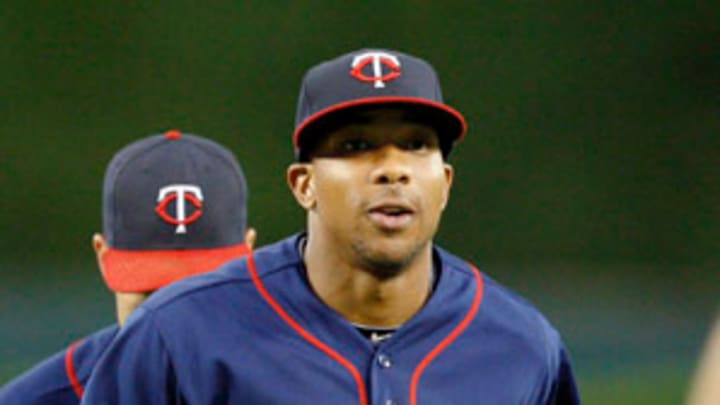
And yet his favorite baseball player is not Razor Shines or Sal (The Barber) Maglie or Morrie Schick, but always some current Minnesota Twin who has earned his mercurial affection, regardless of facial hair. These days, that player is 24-year-old outfielder Ben Revere, because "Revere plays hard and always has a smile on his face." It's the same thing he used to say about former Twins outfielder Torii Hunter, who was for many years his favorite ballplayer, a role Hunter inherited from former Twins catcher A.J. Pierzynski, whom my father liked because he always made the sign of the cross at home plate.
It's an act of religious devotion that Dad now finds difficult to square with Pierzynski, for how can a man claim simultaneous allegiance to God and the Chicago White Sox? Never mind that God Himself is, in almost every depiction, possessed of an abundant white beard, the photographic negative of the one worn by Giants pitcher Brian Wilson.
Pierzynski's White Sox are not well liked in Minnesota, and haven't been since at least 1991, when Sox announcer Hawk Harrelson suggested that Twins first baseman Kent Hrbek "Grab some bench" after striking out swinging. Hrbek took umbrage, his fellow Minnesotans rallied to his defense and the Twins won a World Series that my father didn't watch. My mother died during that September's pennant race, and Dad went to Ireland in October, on a trip he was supposed to have taken with Mom.
It would be an exaggeration to say that he has seen every Twins game in the 20 years since then, but not much of one. He spends winters in Fort Myers, as do the Twins, and summers in Minnesota, nightly regaling me over the phone with accounts and descriptions of games without the express written consent of Major League Baseball. I sit in Connecticut wondering if -- just by listening -- I'm a party to his crime.
I can hear announcers Dick Bremer and Bert Blyleven in the background, the TV volume cranked up. But my Dad is the Voice of the Twins, exploring familiar themes every evening: A ridiculous lack of pitching, say, or the virtues of Trevor Plouffe, who plays 16 different positions, hits for power and has a name -- "Ploof" -- like a magician's puff of smoke. That the Twins have, in the last four years, employed players named Boof and Plouffe is the kind of only-in-baseball symmetry that my father appreciates, and one of the consolations of being a Twins fan in 2012.
I think he secretly likes the beards, too, though he'd never say so, and I never ask. I'm content just to listen to him listen, to watch him watch, to enjoy him enjoy the games.

Special Contributor, Sports Illustrated Steve Rushin was born in Elmhurst, Ill. on September 22, 1966 and raised in Bloomington, Minn. After graduating from Bloomington Kennedy High School in 1984 and Marquette University in 1988, Rushin joined the staff of Sports Illustrated. He is a Special Contributor to the magazine, for which he writes columns and features. In 25 years at SI, he has filed stories from Greenland, India, Indonesia, Antarctica, the Arctic Circle and other farflung locales, as well as the usual locales to which sportswriters are routinely posted. His first novel, The Pint Man, was published by Doubleday in 2010. The Los Angeles Times called the book "Engaging, clever and often wipe-your-eyes funny." His next book, a work of nonfiction, The 34-Ton Bat, will be published by Little, Brown in 2013. Rushin gave the commencement address at Marquette in 2007 and was awarded an honorary Doctor of Letters for "his unique gift of documenting the human condition through his writing." In 2006 he was named the National Sportswriter of the Year by the National Sportswriters and Sportscasters Association. A collection of his sports and travel writing—The Caddie Was a Reindeer—was published by Grove Atlantic in 2005 and was a semifinalist for the Thurber Prize for American Humor. The Denver Post suggested, "If you don't end up dropping The Caddie Was a Reindeerduring fits of uncontrollable merriment, it is likely you need immediate medical attention." A four-time finalist for the National Magazine Award, Rushin has had his work anthologized in The Best American Sports Writing, The Best American Travel Writing and The Best American Magazine Writing collections. His essays have appeared in Time magazine andThe New York Times. He also writes a weekly column for SI.com. His first book, Road Swing, published in 1998, was named one of the "Best Books of the Year" by Publishers Weekly and one of the "Top 100 Sports Books of All Time" by SI. He and his wife, Rebecca Lobo, have four children and live in Connecticut.