%20%20--%3E%0A%3Csvg%20version%3D%221.1%22%20id%3D%22Layer_1%22%20xmlns%3D%22http%3A%2F%2Fwww.w3.org%2F2000%2Fsvg%22%20xmlns%3Axlink%3D%22http%3A%2F%2Fwww.w3.org%2F1999%2Fxlink%22%20x%3D%220px%22%20y%3D%220px%22%0A%09%20width%3D%2239px%22%20height%3D%2240px%22%20viewBox%3D%220%200%2039%2040%22%20enable-background%3D%22new%200%200%2039%2040%22%20xml%3Aspace%3D%22preserve%22%3E%0A%3Cpath%20fill%3D%22%23FFFFFF%22%20d%3D%22M38.5%2C7H28.2v26h10.3V7z%22%2F%3E%0A%3Cpath%20fill-rule%3D%22evenodd%22%20clip-rule%3D%22evenodd%22%20fill%3D%22%23FFFFFF%22%20d%3D%22M26.1%2C25.5c0%2C5.8-4.1%2C7.5-12.9%2C7.5C3.9%2C33%2C0%2C31.2%2C0%2C25.2v-1.1h11.6%0A%09v2.4c0%2C0.7%2C0.1%2C1.4%2C1.2%2C1.4c1%2C0%2C1.2-0.4%2C1.2-1.3v-0.9c0-1.6-0.9-1.6-3.5-2.2C2.2%2C21.7%2C0%2C19.7%2C0%2C15.3v-0.9C0%2C9.3%2C5.5%2C7%2C12.9%2C7%0A%09c10.2%2C0%2C12.8%2C2.6%2C12.8%2C7.4v1.8h-11v-2.9c0-0.6-0.4-1.1-1.2-1.1c-0.6%2C0-1.2%2C0.4-1.2%2C1.1v0.9c0%2C1.5%2C0.9%2C2%2C3.3%2C2.5%0A%09c8%2C1.6%2C10.5%2C3.3%2C10.5%2C7.5V25.5z%22%2F%3E%0A%3C%2Fsvg%3E%0A)
Nation can't ignore pride, passion for college football in the South

Well, the Southeastern Conference season has begun. I have it on good authority that other college football teams around the country will also be playing games this fall.
I don't know when exactly the SEC took over America. I know this is hard to believe, but the epicenter of college football used to be in the Midwest. I'm so old I can remember when Notre Dame actually mattered, and the real tough players were supposed to come from Western Pennsylvania and Ohio.
Now, this is not to say that college football in the South hasn't always been important. Football is the war game, and Dixie has always produced a disproportionate number of our warriors. Major league professional sports were late in coming to the South, so college football down there has, even now, less competition.
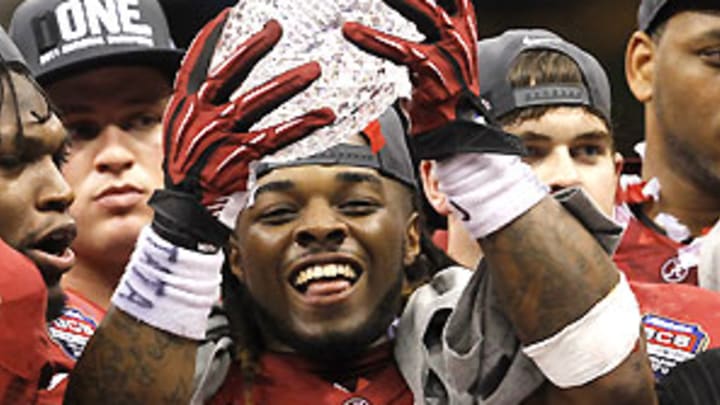
But the national primacy of the SEC is relatively new. SEC teams have won the last six BCS titles, and the SEC not only has a huge multi-billion dollar contract with ESPN, but a backup one with CBS, so both networks swoon over the SEC. The national hype now exists alongside the regional passion. The SEC is ubiquitous.
And it's also expanding. The SEC has moved out into Texas and up into Missouri. Basically, though, the SEC has always been the Deep South, plus Kentucky. Kentucky is apparently allowed in the conference so that everybody else but Vanderbilt gets a guaranteed win -- plus Kentucky bourbon can fuel those famous Southern tailgate parties.
But, of course, it's impossible to ignore the pride the South feels for its football. As no other section of the country remains so closely connected -- "Save your Confederate money boys!" -- so does no other section of the country boast of a regional predominance in any sport. Just because the Yankees have won all these years, the Northeast has never said, "Hey, we got the best baseball up here." All the years UCLA won the NCAA basketball tournament -- after Cal and San Francisco -- nobody in that neck of the woods cried out, "Hey basketball is best in the West." It's impossible not to sense that because the South usually brings up the rear in important things like health, education and income, it looks to college football to enhance its national standing. We're number one... well, in something else besides beauty pageants.
In the new book, Better Off Without 'Em, in which the author, Chuck Thompson, argues that the rest of the country would be improved if the South really did secede, he quotes Colin Cowherd, an ESPN host, as accounting for the SEC's success primarily because the region is so high in "poverty and obesity." The South's pride in its college football success is really quite analogous to what Notre Dame used to mean to Roman Catholics back when there was tremendous prejudice against the religion, and its parishioners were viewed as second-class citizens.
But what is different today is that southerners are not just loyal to their particular football school. The team's league has earned an allegiance that truly matters and is unique in American sport. Of course, it also helps, as always, that the SEC is a winner.

Frank Deford is among the most versatile of American writers. His work has appeared in virtually every medium, including print, where he has written eloquently for Sports Illustrated since 1962. Deford is currently the magazine's Senior Contributing Writer and contributes a weekly column to SI.com. Deford can be heard as a commentator each week on Morning Edition. On television he is a regular correspondent on the HBO show Real Sports With Bryant Gumbel. He is the author of 15 books, and his latest,The Enitled, a novel about celebrity, sex and baseball, was published in 2007 to exceptional reviews. He and Red Smith are the only writers with multiple features in The Best American Sports Writing of the Century. Editor David Halberstam selected Deford's 1981 Sports Illustrated profile on Bobby Knight (The Rabbit Hunter) and his 1985 SI profile of boxer Billy Conn (The Boxer and the Blonde) for that prestigious anthology. For Deford the comparison is meaningful. "Red Smith was the finest columnist, and I mean not just sports columnist," Deford told Powell's Books in 2007. "I've always said that Red is like Vermeer, with those tiny, priceless pieces. Five hundred words, perfectly chosen, crafted. Best literary columnist, in any newspaper, that I've ever seen." Deford was elected to the National Association of Sportscasters and Sportswriters Hall of Fame. Six times at Sports Illustrated Deford was voted by his peers as U.S. Sportswriter of The Year. The American Journalism Review has likewise cited him as the nation's finest sportswriter, and twice he was voted Magazine Writer of The Year by the Washington Journalism Review. Deford has also been presented with the National Magazine Award for profiles; a Christopher Award; and journalism honor awards from the University of Missouri and Northeastern University; and he has received many honorary degrees. The Sporting News has described Deford as "the most influential sports voice among members of the print media," and the magazine GQ has called him, simply, "The world's greatest sportswriter." In broadcast, Deford has won a Cable Ace award, an Emmy and a George Foster Peabody Award for his television work. In 2005 ESPN presented a television biography of Deford's life and work, You Write Better Than You Play. Deford has spoken at well over a hundred colleges, as well as at forums, conventions and on cruise ships around the world. He served as the editor-in-chief of The National Sports Daily in its brief but celebrated existence. Deford also wrote Sports Illustrated's first Point After column, in 1986. Two of Deford's books, the novel, Everybody's All-American, and Alex: The Life Of A Child, his memoir about his daughter who died of cystic fibrosis, have been made into movies. Two of his original screenplays have also been filmed. For 16 years Deford served as national chairman of the Cystic Fibrosis Foundation, and he remains chairman emeritus. He resides in Westport, CT, with his wife, Carol. They have two grown children – a son, Christian, and a daughter, Scarlet. A native of Baltimore, Deford is a graduate of Princeton University, where he has taught American Studies.