%20%20--%3E%0A%3Csvg%20version%3D%221.1%22%20id%3D%22Layer_1%22%20xmlns%3D%22http%3A%2F%2Fwww.w3.org%2F2000%2Fsvg%22%20xmlns%3Axlink%3D%22http%3A%2F%2Fwww.w3.org%2F1999%2Fxlink%22%20x%3D%220px%22%20y%3D%220px%22%0A%09%20width%3D%2239px%22%20height%3D%2240px%22%20viewBox%3D%220%200%2039%2040%22%20enable-background%3D%22new%200%200%2039%2040%22%20xml%3Aspace%3D%22preserve%22%3E%0A%3Cpath%20fill%3D%22%23FFFFFF%22%20d%3D%22M38.5%2C7H28.2v26h10.3V7z%22%2F%3E%0A%3Cpath%20fill-rule%3D%22evenodd%22%20clip-rule%3D%22evenodd%22%20fill%3D%22%23FFFFFF%22%20d%3D%22M26.1%2C25.5c0%2C5.8-4.1%2C7.5-12.9%2C7.5C3.9%2C33%2C0%2C31.2%2C0%2C25.2v-1.1h11.6%0A%09v2.4c0%2C0.7%2C0.1%2C1.4%2C1.2%2C1.4c1%2C0%2C1.2-0.4%2C1.2-1.3v-0.9c0-1.6-0.9-1.6-3.5-2.2C2.2%2C21.7%2C0%2C19.7%2C0%2C15.3v-0.9C0%2C9.3%2C5.5%2C7%2C12.9%2C7%0A%09c10.2%2C0%2C12.8%2C2.6%2C12.8%2C7.4v1.8h-11v-2.9c0-0.6-0.4-1.1-1.2-1.1c-0.6%2C0-1.2%2C0.4-1.2%2C1.1v0.9c0%2C1.5%2C0.9%2C2%2C3.3%2C2.5%0A%09c8%2C1.6%2C10.5%2C3.3%2C10.5%2C7.5V25.5z%22%2F%3E%0A%3C%2Fsvg%3E%0A)
How Karim López Became Mexico’s Biggest NBA Prospect in Decades
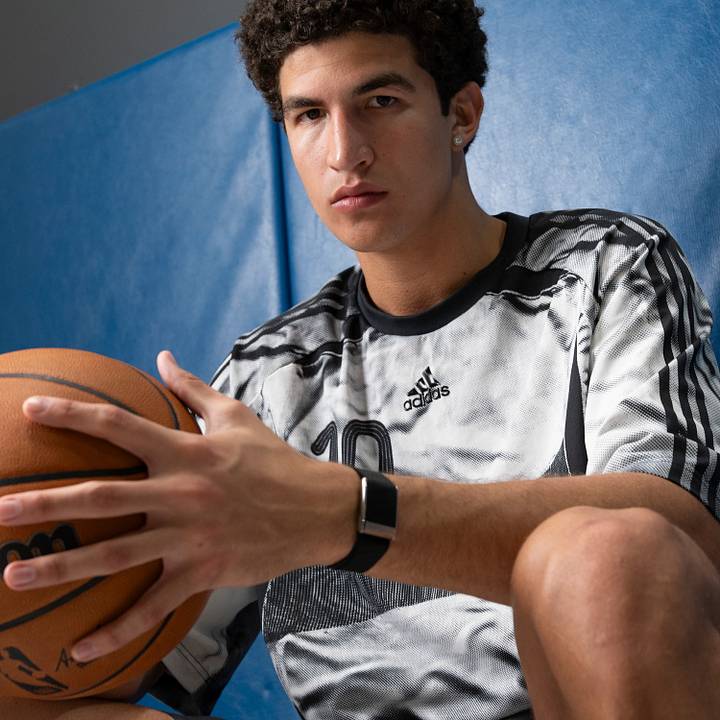
Hermosillo is a bustling city in the northwestern Mexican state of Sonora, a desert metropolis 175-ish miles from the Arizona border. To locals it’s considered something of a foodie nirvana, with street vendors dishing out buttery flour tortillas and bacon-wrapped hot dogs, serving a population that hovers around one million in a region where temperatures routinely reach triple digits. “That’s part of what builds our character,” says Karim López. “You’ve got to tough it out.” As a kid, López spent countless sun-scorched afternoons in his driveway battling his uncles in games of one-on-one, playing until exhaustion. During the pandemic in 2020, López, then 13, was a fixture at a nearby public park, running sprints on the burnt, brown grass of a soccer field before spending hours in drills and pickup games on a blistering blacktop. “He knew what he wanted,” says López’s father, Hiram. “He had a dream and he was willing to work for it.”
Hiram is familiar with the dream. Decades earlier, he had a similar one. Growing up in Hermosillo, Hiram can still remember the day his mother took him to his first indoor gym. The sounds of the ball hitting the wood, the squeaking sneakers, the crisp snap of shots going through the net. It began a journey that took him to a pair of U.S. colleges, the Mexican national team and 13 years playing pro ball in Mexico, as a burly, 6'9" forward with a little bit of a mean streak. In 2012, he ruptured his right Achilles tendon. He had surgery, rehabbed for 10 months and resumed his career. In 2018, he popped his other Achilles. Again: Surgery, rehab, back on the floor. He smiles as he recalls it, seemingly realizing in real time how crazy it sounds. “I don’t know,” says Hiram. “I just had a real love for the game.”
In Karim, Hiram sees that same passion. He never pushed basketball on him. Instead, he put him in everything: soccer, track, even taekwondo. But basketball just stuck. In the years Hiram played close to home, Karim would routinely tag along to practices or morning shootarounds. He would dribble a ball in the stands before games and sneak onto the floor to fire up shots after. When Karim was 8, Hiram enrolled him in his first basketball academy. “Because he wanted it,” Hiram insists. When he was 10, his mother, Claudia, weary of being a full-time driver for Karim and his sister, Brianna, asked him to choose a sport. “And he didn’t hesitate,” says Hiram. “It was basketball. Thank God it worked out.”

On June 23, López will hear his name called in the first round of the NBA draft. In some ways it’s an unremarkable story: The 19-year-old López is a solid prospect, a sturdy, 6'9", 225-pound wing with Thanos-sized hands who averaged 11.9 points per game in Australia’s National Basketball League last season. Most mock drafts project him to go in the back end of the lottery. “He has that blend of size, physicality, feel for the game, the ability to play both ends,” says Jonathan Givony, an NBA draft analyst for DraftExpress. “The big question is shooting. But he’s a positionless player. That’s just what everybody’s looking for.”
Here’s what is remarkable: López will become the first Mexican-born player selected in the first round, joining Eduardo Nájera as the only Mexican-born players ever drafted. Nájera was a reliable role player who appeared in 619 games over 12 NBA seasons. López has the potential to be much more. Coming from a country of 133 million people, is López the first of a new wave of Mexican basketball talent? Or a diamond in the rough unearthed by the right scouts?
Mexico is famed for its athletes. The country is known for its boxers (Julio César Chávez, Canelo Álvarez) and soccer, sorry fútbol, stars (Hugo Sánchez, Rafael Márquez), while last summer for the first time four Mexican-born players were selected for the MLB All-Star Game. Basketball, though, has been woefully underrepresented: Only four players (Nájera, Horacio Llamas, Gustavo Ayón and Jorge Gutiérrez) have cracked NBA rosters— and none since 2016.
When this is pointed out to him, López can only shrug. To him, Mexico is basketball country. Drive around Sonora, he says, and you will see “thousands of basketball courts, parks everywhere.” A group of teenagers playing on one surface. A 40-something men’s league battling on another. “It’s truly amazing,” says López. “And I think that passion really helped me, just seeing it every day.”
When López was 8, his dad installed a basket in the driveway. On weekends, López’s uncles, who were around six years older, came over to play pickup. If López jumped out to an early lead, his uncles would take him to the post and overpower him. “You learn to be physical,” says López. When he was 12, the family moved to a new home. The driveway basket didn’t make the trip, but there was a public park just a couple of minutes away. Just a half court with a metal hoop, no net. When he started shooting, he quickly noted the rim was about six inches lower than regulation. Not great for shooting drills, says López. “But,” he adds, “it’s where I first learned to dunk.”
By 2020, López was pretty good. Decent handle. Strong legs. Improving shot. In March, when the pandemic ground everything to a halt, López seized the opportunity. In the mornings he would duck into a makeshift gym—or whatever you want to call an empty room with some three-pound hand weights, an exercise bike and a couple of resistance bands—and consume workout videos on YouTube. Jumping drills. Core work. When the family rolled out of bed at 7 a.m., Karim was often mid-workout.

Hiram took notice. Out of work, he suddenly found himself with free time. He challenged his son: Do you want to get serious? Karim agreed. They mapped out a plan. Strength and conditioning in the morning, 5:30 a.m., sharp. Agility training, sprints, change-of-direction drills. Afternoons, they played pickup. Hiram would call around for players, mostly older kids. He wanted opponents who were bigger, stronger and faster than his son. “He never forced anything on me,” says Karim. “I wanted to do it. But he made me work.”
It paid off. As the year wound down, López had demonstrably improved. Around the same time, López experienced a growth spurt, sprouting from 5'8" to 6'2". Suddenly, his size matched his skills. In ’21, as the world surged back to life, López competed in a national team tournament in Aguascalientes. Over several games, he says, “I balled out.” He shot threes. He ran fast breaks. He dunked. Kids he used to consider his competition couldn’t match up with him.
“My game had evolved a lot,” says López. “I was good, but I wasn’t standing out or nothing. And then we came back and I was looking at other kids like, ‘Oh, what happened to him?’ I wouldn’t say everybody got worse, but I just got exponentially better. And everybody was kind of shocked.”
Among them: International scouts. In attendance for the tournament was one from Spain. López spotted him in the stands early. “I was trying to show out,” he says. As basketball evolved into a bigger part of his life, López knew he needed to get out of Mexico. The Spanish scout was impressed. He sent López’s tapes to several teams. Joventut Badalona, whose alumni include ex-NBA guard Ricky Rubio, was one of them. The club invited López in for a workout. After a couple of failed trips to the airport—international travel post-pandemic required a lot of paperwork—López made it over. A week later, the 14-year-old had an offer to play there.

The next three years were a blur. In Badalona, López shared a house with his teammates. Six kids, with a tutor around to supervise. It was a United Nations for teenagers. There was a kid from Belgium. Another from the Netherlands. A Croatian stayed there for a while. They played video games. Tried different foods. French was a popular language in the house, so López picked up a few words “in case they were talking smack about someone. [Or] about me.” The Croatian became one of his best friends. “I like languages,” says López in near flawless English. “I think I’m pretty good at them.”
Mostly, though, it was about basketball. Practices started late, around 5:30 p.m. Two hours with the U-16 team. Then another two with the U-18s before hitting the weight room. After a year, López started practicing with the senior team. In an early scrimmage, he found himself with an open lane in transition. When he elevated to dunk, a teammate leveled him, sending his head bouncing off the base of the stanchion. No whistle. Play on. “Those practices,” says López, “made me tougher.”
By 2023, the NBA was squarely on López’s mind. He followed AJ Dybantsa and Darryn Peterson, top prospects he had played against in the FIBA U-16 Americas Championship. They were headed to U.S. colleges. López was looking for something different. “A competitive advantage,” says Hiram. That summer, the Australian league reached out. The Aussie “Next Star” program—which recruits top overseas players—wanted him. To López, it was a perfect fit. “I wanted to get out of my comfort zone,” says López. “I wanted to get better. I needed something to get me closer to my goal.”
In recent years, the NBL had become a pipeline for NBA talent, with alumni including LaMelo Ball and Josh Giddey. Teams played fast. They were physical. After signing, López was allocated to the New Zealand Breakers, whose head coach was Petteri Koponen, a Finnish ex-sharpshooter who was drafted in the first round by the 76ers in 2007. “It’s intense,” says Justin Tatum, the head coach of the Illawarra Hawks. “In a 33-game season, every game means something. It’s not the NBA, but the guys here are really freaking good.”

The adjustment wasn’t easy. The Breakers were the only team in the league not based in Australia. That meant regular five-plus-hour commercial flights. Luxury was landing a seat in the exit row. Still, the experience proved educational. From older teammates, he learned about taking care of his body. About the importance of hydration. About eating a high-protein diet. He invested in compression boots to help with his blood flow.
In an NBA-style system, López thrived. Last season he set the single-season points record (358) for draft-eligible Next Stars. He tied the record for total steals and blocks (66). He dropped 32 points in a January win over Melbourne and helped the Breakers win the Ignite Cup, the league’s in-season tournament. “He has a confidence about him,” says Tatum. “And he’s a constant competitor.”
Tatum likens López to the Thompson twins, Amen and Ausar, two relentless, athletic wings who now play for the Rockets and the Pistons, respectively. “He gets the ball, pushes it downhill and finds a way to finish at the rim,” says Tatum. “He’s not afraid of the moment.” Tatum has seen that swagger before: In his son, Jayson, the Celtics’ All-NBA forward. “You got the ones who are cocky that haven’t done anything, but then you have the ones who are like, ‘I have to believe in myself because I put the work in,’ ” says Tatum. “That’s Karim. He has that type of confidence.”
For López, New Zealand offered something else: A chance to bond with his father. Karim and Hiram always had a good relationship. But the peripatetic life of a professional basketball player often kept them apart. When Hiram retired for good in 2022, Karim was living in Spain. When he signed with the NBL, Hiram went with him. They lived together. On days off, they would hang out at the beach. “We became real friends,” says Karim. Shortly after his first season started, a welcoming local Mexican restaurateur reached out. The father and son became regulars, feasting on tacos, enchiladas and ceviche. In Karim’s second season, the visits got less frequent. All that Mexican food didn’t align with his strict diet. “He’s so conscious of all of it,” says Hiram. “You got to be a little crazy to make the NBA. He checks all the boxes.”
The question seemed benign enough: Was the emergence of López a sign of basketball’s growth in Mexico? “I disagree with that assessment,” says Eduardo Nájera. It’s mid-May and Nájera is speaking from Chihuahua, his hometown, where he just wrapped up a kids’ hoops camp. Nájera grew up wanting to play baseball, like his father, a powerhitting first baseman. As a high school freshman, Nájera stood 6'8". His baseball coach told him to try a different sport. Basketball was it. A few years as an exchange student in San Antonio led to a scholarship offer at Oklahoma, where he played well enough to be drafted 38th overall by Houston in 2000. “I was an anomaly,” says Nájera. “So is Karim. The growth in Mexico is just starting.”
Basketball in Mexico needs infrastructure, Nájera says. The country treats sports like a public service. “In the U.S., it’s an industry,” he says. Businesses invest in coaches and platforms and facilities. In Mexico, it’s all government funded. And it’s not enough. There is a need for more camps. For better leagues. For more refurbished courts. There shouldn’t be one Karim López, Nájera says. There should be seven to 10 competing for NBA spots.

The NBA is doing its part. The league has had boots on the ground since 2009, when it opened its first regional office. In 2021, the Mexico City Capitanes debuted as part of the G League. The NBA has played 34 games in Mexico—where they regularly sell out the arena— with another slated for November. It hosts camps, runs junior programs and blasts out content through broadcast and streaming partners. No one loves untapped markets more than commissioner Adam Silver, and basketball-starved Mexico, with 33 million NBA fans by league estimates, is one.
López can help tap it. “We need role models,” Nájera says. He did his part during his NBA career and continues to, digging into his own pocket to run programs while pitching business leaders for more. A potential All-Star with Mexican roots, Nájera notes, could inspire a generation. The more success López has, the more pressure will fall on the government to beef up its investment in the sport. “Then the media starts talking about why we don’t have more Karim Lópezes,” says Nájera. “And it builds from there.”
For his part, López doesn’t shy away from the responsibility. He still remembers the driveways, the parks, the hours in the sweltering heat shooting on 9 ½-foot rims.
“I want to show people that come from the same situation I come from that it’s possible,” says López. Not just the NBA, he says. Baseball, soccer, running a construction company. Whatever it is, he wants to be proof that it’s achievable. “That there’s someone that’s just like them, had the same struggles, and [still made] it,” says López. “That’s what really motivates me.”
More NBA Draft From Sports Illustrated
Listen to SI’s NBA podcast, Open Floor, below or on Apple and Spotify. Watch the show on SI’s YouTube channel.
 Add us as a preferred source on Google
Chris Mannix is a senior writer at Sports Illustrated covering the NBA and boxing beats. He joined the SI staff in 2003 following his graduation from Boston College. Mannix is the host of SI’s “Open Floor” podcast and serves as a ringside analyst and reporter for DAZN Boxing. He is also a frequent contributor to NBC Sports Boston as an NBA analyst. A nominee for National Sportswriter of the Year in 2022, Mannix has won writing awards from the Boxing Writers Association of America and the Pro Basketball Writers Association, and is a longtime member of both organizations.
Follow sichrismannix