%20%20--%3E%0A%3Csvg%20version%3D%221.1%22%20id%3D%22Layer_1%22%20xmlns%3D%22http%3A%2F%2Fwww.w3.org%2F2000%2Fsvg%22%20xmlns%3Axlink%3D%22http%3A%2F%2Fwww.w3.org%2F1999%2Fxlink%22%20x%3D%220px%22%20y%3D%220px%22%0A%09%20width%3D%2239px%22%20height%3D%2240px%22%20viewBox%3D%220%200%2039%2040%22%20enable-background%3D%22new%200%200%2039%2040%22%20xml%3Aspace%3D%22preserve%22%3E%0A%3Cpath%20fill%3D%22%23FFFFFF%22%20d%3D%22M38.5%2C7H28.2v26h10.3V7z%22%2F%3E%0A%3Cpath%20fill-rule%3D%22evenodd%22%20clip-rule%3D%22evenodd%22%20fill%3D%22%23FFFFFF%22%20d%3D%22M26.1%2C25.5c0%2C5.8-4.1%2C7.5-12.9%2C7.5C3.9%2C33%2C0%2C31.2%2C0%2C25.2v-1.1h11.6%0A%09v2.4c0%2C0.7%2C0.1%2C1.4%2C1.2%2C1.4c1%2C0%2C1.2-0.4%2C1.2-1.3v-0.9c0-1.6-0.9-1.6-3.5-2.2C2.2%2C21.7%2C0%2C19.7%2C0%2C15.3v-0.9C0%2C9.3%2C5.5%2C7%2C12.9%2C7%0A%09c10.2%2C0%2C12.8%2C2.6%2C12.8%2C7.4v1.8h-11v-2.9c0-0.6-0.4-1.1-1.2-1.1c-0.6%2C0-1.2%2C0.4-1.2%2C1.1v0.9c0%2C1.5%2C0.9%2C2%2C3.3%2C2.5%0A%09c8%2C1.6%2C10.5%2C3.3%2C10.5%2C7.5V25.5z%22%2F%3E%0A%3C%2Fsvg%3E%0A)
From 14 Wins to NBA Title Contender: How the Pistons Found Their Identity
Rick Mahorn’s history with Detroit spans five decades, an off-and-on, sweet-and-sour relationship with the Motor City that includes two stints as a player (1985–89 and again from ’96 to 98), one more as a coach (with the WNBA’s Shock) and over 20 years in the Pistons’ radio booth—a role Mahorn, now 67 and fresh off back surgery, still enjoys today. He’s won an NBA championship and collected two more rings with the Shock, brawled with a handful of Bulls after flinging Michael Jordan to the floor during his playing days and watched in horror as Ron Artest leaped over his broadcast position at the scorer’s table to mix it up with fans at the Palace of Auburn Hills. Mahorn has been around so long that Detroit’s current head coach (J.B. Bickerstaff) is the son of one Mahorn used to play for (Bernie Bickerstaff, when he was a Wizards assistant). Mahorn likes J.B. and the feeling is mutual. On the road, Mahorn, technically a member of the media, is welcomed into the team’s meal rooms, where he’s often flanked by one of Detroit’s many 20-somethings with ears perked up for a few war stories. After all, who better for members of the New Bad Boys to learn from than one of the originals.
The New Bad Boys. In Detroit, it’s not entirely a new concept. In the early 2000s, the Pistons assembled another physical, blue-collar roster. The Goin’ to Work era was built around a collection of unheralded stars—Ben Wallace, Chauncey Billups, Tayshaun Prince—who believed effort mattered more than talent. The organization created a marketing campaign around them, connecting the identity of the team to the work ethic of people in Detroit. “And it worked,” says Rick Carlisle, who coached the Pistons from 2001 to ’03 and now is on the Indiana bench. “This fan base really responds to a team that reflects their values.”

Bickerstaff, 46, has no direct connection to the Bad Boys era. Later on he coached with Bill Laimbeer in Minnesota for a couple of seasons, has crossed paths with Isiah Thomas over the years and has known Mahorn “for literally my entire life.” But when he was hired in June 2024 he knew the team needed … something. The talent was there, far more than the 14-win group he inherited suggested. In Cleveland, where Bickerstaff had coached the previous 4 ½ seasons, he remembered the wins against Detroit not coming so easily. “They competed at a high level,” says Bickerstaff, then recalling one game when the Cavs built a 20-point lead. “And they didn’t give up.” Bickerstaff needed to keep his starters in to close it out. “They just didn’t have an understanding of how to finish,” he adds. “Getting over the hump was figuring out how to win.”
That meant finding an identity. Two months after accepting the job, Bickerstaff sat in on a team scrimmage. Immediately, he noted the physicality. “Little scraps, dustups,” he says. “And it was real. It wasn’t that fake phony stuff you see around the league a bunch now.” When training camp opened, Bickerstaff saw more of it. Cade Cunningham grappling with Ausar Thompson. Jalen Duren and Isaiah Stewart wrestling in the paint. It wasn’t just that the team was physical. They liked being physical. “How they embraced it,” says Bickerstaff, “that made it easy to build an identity that our fans were used to seeing.”
Bickerstaff didn’t need to sell his boss. In Trajan Langdon, he found a kindred spirit. Langdon, who took over Detroit’s front office in 2024, believed in structure. He spent four seasons at Duke playing under Mike Krzyzewski. His first front office job was in San Antonio. With the Spurs, says Langdon, “It was all about being consistent with an approach.” In college, Langdon was known as a shooter. In nine seasons in Europe, he developed a reputation as a dogged defender.

As is often the case when a new person takes over a front office, one of Langdon’s first moves was to change coaches. In the ensuing search after Monty Williams was let go, Langdon vibed with Bickerstaff instantly; the first interview was eight hours long. Langdon grew up a Lakers fan. He remembers the 1989 NBA Finals, when the Pistons outmuscled L.A. to win their first championship. It was eye-opening. “Here was this rough-and-tumble team from the Midwest beating a team with that much talent,” says Langdon. In Detroit, he saw a roster with a similar makeup.
Ownership didn’t need any convincing. Tom Gores bought a controlling interest in the Pistons in 2011. The team had made the playoffs twice between then and Langdon’s hiring, getting swept in the first round both times. In 2023, during a 28-game losing streak, chants of “Sell the team” echoed through the arena. Gores made the unusual move of calling a news conference to apologize to the fans.
Gores, who made his billions running a private equity firm, believed in Langdon. Early in the interview process, he was impressed when Langdon asked to change a scheduled Zoom call to an in-person meeting. There, Langdon presented Gores with a 15-page plan for the franchise. He believed in Bickerstaff, whom he calls “an amazing communicator.” And he believed in the core players. Even at the depths of the 14-win season the players “didn’t blame anybody,” says Gores. Whatever could spark a turnaround, Gores was all for it.
The results were immediate—and extraordinary. The Pistons won 44 games last season, a 30-win improvement that was the most by any team with fewer than 20 victories the prior season. The defense, 25th in the NBA in 2023–24, jumped to 10th in ’24–25. This season it’s been even better: At midseason Detroit trailed only Oklahoma City in defensive rating. Two years ago, the Pistons endured that seemingly never-ending 28-game losing streak. This season they were the second team in the league to break 30 wins. “They are tough, they are physical and they play with an attitude,” says Carlisle. “And they are mowing people down.”
Hanging from the rafters of Little Caesars Arena are three Pistons banners: two honoring the pair of titles from the Bad Boys era and another from the Wallace-led team that beat the Kobe-and-Shaq Lakers in 2004. The championship banners serve as a proof of concept, evidence that a commitment to grinding out wins can work. But a lot has changed in a generation. The NBA has gone to great lengths to legislate excessive physicality out of the game. Offenses are more free-flowing. Teams touch the paint now less to score but to set up threes. The Pistons, says a veteran assistant, are “Model Ts in a league full of Ferraris.” That’s fine by Detroit. Classics often stick around longer. “Sometimes it’s hard to be as physical as we want to be,” says Cunningham. “But we’re always going to try to toe that line and be the more physical team. Be the low man and see if the other team wants to deal with it.”
Bickerstaff has a comp for Cunningham. “Neo,” he says. “From The Matrix.” Not early Neo, the overwhelmed character played by Keanu Reeves who was red-pilled into reality. The one in the later films, says Bickerstaff, “who realized he was The One.”
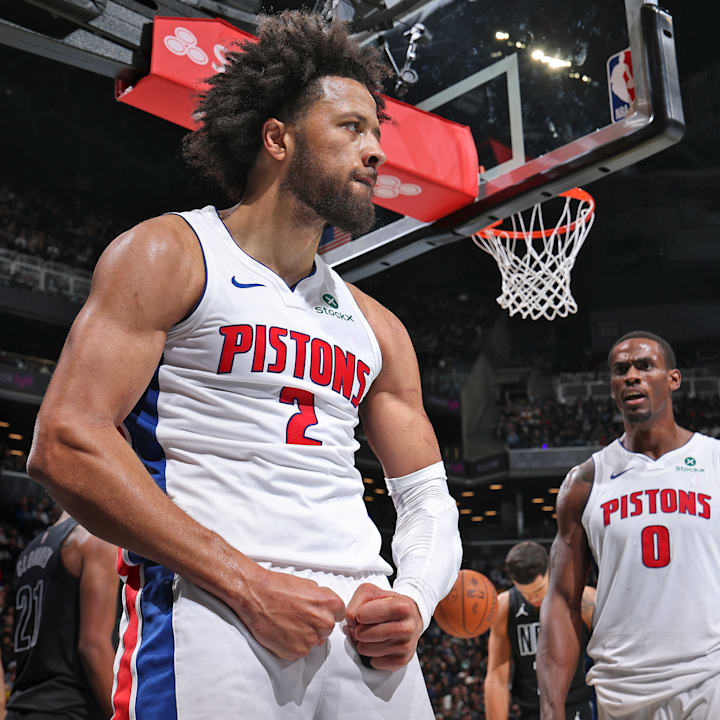
Cunningham can’t pinpoint any Neo-Agent Smith moment. (Look it up.) “I don’t know,” he says. “I feel like everything has just slowed down.” The 6' 6" point guard picked up his first All-Star nod last season, finished seventh in MVP voting and earned a spot on the All-NBA third team. In the offseason he bulked up, using yoga and mixed martial arts to get stronger. Five years of being at the top of opposing teams’ scouting reports has prepared him to dissect any defense thrown at him. “Every year I feel more and more sharp,” he says. “I feel like I’m one of the best processors to have the ball.”
Langdon was a longtime fan of Cunningham’s, dating to his lone season at Oklahoma State. “I didn’t think that there was anything he was incapable of with his size, length, with his understanding of the game,” says Langdon. But when Langdon accepted the Pistons’ job, he had a question: Did Cunningham, who had been the top pick in 2021, still want to be there? Three years of declining win totals would tax any player. And Cunningham was set to have his third coach in three seasons. Langdon remembered Cunningham’s first TV interview after he was drafted. “You could tell he was excited to be in this city,” says Langdon. Now he wanted to know if that was still the case.

It was, a message Cunningham delivered emphatically. “I just want to win so bad here,” he says. “That was what I was trying to relay to him. Trying to let him know that I’m dedicated to Detroit and making sure that the Pistons take the next step. I just wanted us to be on the same page as far as what that would look like.” According to Cunningham, Langdon said that he “was going to make sure that the culture is going in the right direction and going to put guys in the room that help drive that.”
Some of them were already there. The cupboard wasn’t empty. Duren was a rugged, 6' 10" wall of a screen setter who gobbled up rebounds. Stewart was a brash, trash-talking big man with the tools to be a versatile defender. Thompson was a versatile defender, able to effortlessly guard three positions as a rookie. To Langdon, Detroit’s defensive numbers in the 2023–24 season—25th in efficiency, 24th in opponent field goal percentage, 19th in three-point percentage—didn’t match the ability of the personnel. “We had people on this team that could guard,” says Langdon. “We just didn’t.”
In Bickerstaff, the Pistons had a proven player development coach, with plenty of references. His was the strongest voice in the locker room. But Detroit needed others. Langdon set about acquiring veterans. He signed Malik Beasley and Tobias Harris. He acquired Tim Hardaway Jr. in a trade. Each brought value on the floor. But they brought more off it. “Professional know-how,” says Langdon. Last summer, he added Duncan Robinson and Javonte Green to the mix. “You can preach it from the coaches,” says Langdon. “But if you don’t have the guys in the locker room, it makes that learning curve longer.”
Harris, a 33-year-old forward who signed a two-year, $52 million deal, has a sterling reputation. His early conversations with Langdon focused on leadership. “We had to establish many habits, day in and day out,” says Harris. “Making sure everybody was in the gym, getting work in, making sure we’re focused on the right things.” It’s worked. In January, Cunningham was asked about Harris’s impact. Pausing, he asked the reporter, “How long do I have?”
Langdon had high hopes for a quick turnaround. “We believed it was realistic,” he says, though he didn’t see this coming. Bickerstaff got the defense in order. “We probably practice defense more than 85% of the league,” says Harris, who has played for five NBA teams in 15 seasons. Langdon has equipped Bickerstaff with waves of players who have bought in. “However many guys they play, they are going to be physical,” says Celtics coach Joe Mazzulla. “There’s no real place to hide and there’s no real place to relax when it comes to the physicality that they play with on both ends of the floor.”
On both ends. As the NBA has zigged to a more three-point heavy offense, the Pistons have zagged into the paint, where Cunningham has become an elite finisher and Duren scores roughly three-quarters of his 17.8 points per game. The Pistons were fifth in the league in points in the paint last season. They are tracking to be ranked higher in this one. Around 60 points in the paint is a big number. In an early-season game against Brooklyn, Detroit scored 80. In a December win over the Lakers, they racked up 74.

“All things related to the paint, we want to win,” says Bickerstaff. “And I think that’s part of the grit and the toughness and the physicality, because typically in the paint, one way or another, you’re going to run into another body and it’s now how do you react when you run into that body? Do you demand the space or do you allow your space to get eaten type of thing? And I think that’s our mindset: try to eat up as much space as we can.”
Players love it. Inside the Pistons’ locker room the dawg pound is painted on a wall above Duren’s and Stewart’s lockers. It’s a phrase popularized by former assistant Drew Jones, who would bark it after a hustle play. Lately, it’s evolved into a club. Membership is earned through toughness. “We all are a bunch of dogs,” says Duren. “Nobody shies away from physicality on this team. Everybody invites it. And our coaching staff encourages it.” Sometimes that means crossing the line. On Feb. 9, a scuffle broke during the game between Detroit and Charlotte. Duren was suspended two games for initiating an altercation with Hornets forward Moussa Diabaté. Stewart got seven for racing off the bench to start one with Miles Bridges. As he headed back to the locker room, Stewart was unapologetic. “You don’t expect me to stay on the bench,” Stewart said. “The f--- I was drafted to Detroit for.”
In the late 1980s, the Pistons changed the game. To defeat Chicago, then led by a rising Michael Jordan, Detroit created “The Jordan Rules,” an unofficial guide to defending MJ. Double teams, traps, steering him to his left. Anything to break his rhythm. When Jordan did get in the paint, make sure he felt it. Or, as Dennis Rodman put it, “Every time he goes to the f---ing basket, put him on the ground.”
Detroit ushered in an era of physicality. In the years that followed, the NBA efforted to usher it out, implementing a series of rules and points of emphasis to promote player movement and unclog the paint. The changes opened the door to a small-ball revolution that pushed offenses beyond the three-point line. In 2004, the Pistons won the title averaging 11.8 three-point attempts per game. In 2024, Boston won jacking up 42.5.
In recent years the league, sensing the pendulum has swung too far, has allowed more physicality back in the game. Langdon noticed. Bickerstaff did, too. In Cleveland, Bickerstaff utilized a double-big starting lineup with Evan Mobley and Jarrett Allen, defensive-minded centers with paint-oriented offensive games. “You have to have the courage to try to be unique to yourself and [do] what’s best for your personnel,” says Bickerstaff. He notes that the Lakers, Spurs and Warriors, whose dynasties defined this era, didn’t worry about adapting to other teams. They forced other teams to adapt to them. Says Bickerstaff, “It’s more difficult to figure out on a night-by-night basis something that’s unique and something that’s different than what the rest of the league is trying to do.”
Mahorn gets it. He’s on a group chat with his old Bad Boys teammates. They don’t talk about basketball. “Mostly,” says Mahorn, “it’s just talking s---.” But he knows they would be proud of what they see. He sees similarities between Bickerstaff and Chuck Daly, the dapper coach of those rough-and-tumble Pistons. “Thank God we have a coach that relates to players like Chuck did,” says Mahorn.

And who’s willing to go to bat for them. Last month, Bickerstaff took exception to a hard foul from Boston’s Luka Garza. When referee Jacyn Goble wouldn’t review it, Bickerstaff sneered, “That’s what you want, we’ll get it back.” Goble slapped him with a tech moments later.
The players have that same fire, Mahorn says. After a tough early-season loss, Mahorn crossed paths with Stewart after the game. Stewart, 24, has forged the strongest connection with Mahorn. He gobbles up stories from the Bad Boys era. He texts Mahorn regularly, “picking his brain for everything.” He’ll grin when Mahorn talks about the tactics used to defend Jordan or Larry Bird and nods when Mahorn adds, “But you don’t do that s---.” When Stewart saw Mahorn, he apologized for the loss. Flanked by Duren, Stewart told Mahorn, “I’m ashamed. We’re better than that.”
Mahorn was stunned. “Guys today have money,” says Mahorn. “And that’s good. But these guys want more. They are here to f---ing win.”
More NBA from Sports Illustrated
Listen to SI’s NBA podcast, Open Floor, below or on Apple and Spotify. Watch the show on SI’s YouTube channel.
 Add us as a preferred source on Google
Chris Mannix is a senior writer at Sports Illustrated covering the NBA and boxing beats. He joined the SI staff in 2003 following his graduation from Boston College. Mannix is the host of SI’s “Open Floor” podcast and serves as a ringside analyst and reporter for DAZN Boxing. He is also a frequent contributor to NBC Sports Boston as an NBA analyst. A nominee for National Sportswriter of the Year in 2022, Mannix has won writing awards from the Boxing Writers Association of America and the Pro Basketball Writers Association, and is a longtime member of both organizations.
Follow sichrismannix