%20%20--%3E%0A%3Csvg%20version%3D%221.1%22%20id%3D%22Layer_1%22%20xmlns%3D%22http%3A%2F%2Fwww.w3.org%2F2000%2Fsvg%22%20xmlns%3Axlink%3D%22http%3A%2F%2Fwww.w3.org%2F1999%2Fxlink%22%20x%3D%220px%22%20y%3D%220px%22%0A%09%20width%3D%2239px%22%20height%3D%2240px%22%20viewBox%3D%220%200%2039%2040%22%20enable-background%3D%22new%200%200%2039%2040%22%20xml%3Aspace%3D%22preserve%22%3E%0A%3Cpath%20fill%3D%22%23FFFFFF%22%20d%3D%22M38.5%2C7H28.2v26h10.3V7z%22%2F%3E%0A%3Cpath%20fill-rule%3D%22evenodd%22%20clip-rule%3D%22evenodd%22%20fill%3D%22%23FFFFFF%22%20d%3D%22M26.1%2C25.5c0%2C5.8-4.1%2C7.5-12.9%2C7.5C3.9%2C33%2C0%2C31.2%2C0%2C25.2v-1.1h11.6%0A%09v2.4c0%2C0.7%2C0.1%2C1.4%2C1.2%2C1.4c1%2C0%2C1.2-0.4%2C1.2-1.3v-0.9c0-1.6-0.9-1.6-3.5-2.2C2.2%2C21.7%2C0%2C19.7%2C0%2C15.3v-0.9C0%2C9.3%2C5.5%2C7%2C12.9%2C7%0A%09c10.2%2C0%2C12.8%2C2.6%2C12.8%2C7.4v1.8h-11v-2.9c0-0.6-0.4-1.1-1.2-1.1c-0.6%2C0-1.2%2C0.4-1.2%2C1.1v0.9c0%2C1.5%2C0.9%2C2%2C3.3%2C2.5%0A%09c8%2C1.6%2C10.5%2C3.3%2C10.5%2C7.5V25.5z%22%2F%3E%0A%3C%2Fsvg%3E%0A)
Top 15 Teams To Not Win The Super Bowl

Top 15 Teams To Not Win The Super Bowl
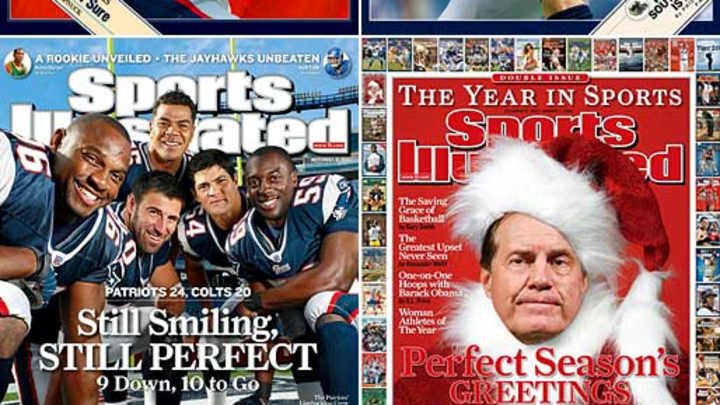
2007 New England Patriots (16-0)
The Patriots' perfect regular season in 2007 was more than just an unblemished record, it was an across-the-board reckoning for a club that genuinely wanted to win every game 45-7, no exceptions. How else does one reconcile otherworldly production in point differential (plus 19.7), turnover margin (plus 16), wins by 10 points or more (12) and a 6-0 mark against playoff teams -- including three division champions. But alas, there's a fine line between being universally hailed as the greatest club in NFL history (on the precipice of 19-0) ... and begrudgingly accepting SI's award for Best Team To Not Win A Super Bowl (only one entry per franchise). But that's a reality of the ultimate bittersweet season.
1983 Washington Redskins (14-2)
Forget the near-meltdown against the 49ers in the NFC title game. Forget the futile showing against the Raiders in Super Bowl XVIII (losing 38-9). From a regular-season perspective, the '83 Redskins trump nearly all comers in this countdown -- even the high-powered Vikings of 1998. Looking at the numbers, Minnesota had a better overall record, more points scored and one additional blowout victory. But the Redskins, led by Joe Theismann, John Riggins, Art Monk, rookie Darrell Green and coach Joe Gibbs, prevailed in the end, thanks to an eye-popping turnover margin (plus 43), a 5-1 mark versus playoff teams and an actual Super Bowl appearance.
1998 Minnesota Vikings (15-1)
The Vikings were a viable powerhouse in that 15-1 season, amassing 556 points (predating the '07 Patriots), registering 12 blowout wins and dismantling the opposition by 16.2 points per game. Perhaps more impressive, the offense didn't really click until after QB Randall Cunningham took over in Week 3 (due to a Brad Johnson injury). Of course, Minnesota 's championship hopes were dashed by Atlanta in the NFC title game -- remember Gary Anderson's only missed field goal in a two-year span? -- precluding a titanic clash with the eventual champion Broncos in Super Bowl XXXIII (John Elway's swan song).
1968 Baltimore Colts (13-1)
We could break down the Colts' Super Bowl III loss to the Jets in myriad ways. But it's more fun to wonder how NFL history would have been written if Baltimore had not been party to the most storied upset of all time. Something like ... 1) The AFL never earns the pre-merger respect of the NFL; 2) Coach Don Shula never leaves Baltimore for the still-in-expansion-mode Dolphins in 1970; 3) Joe Namath never gets the chance to visit Bobby Brady, on his phony death bed, in a campy but memorable episode of TV's The Brady Bunch ; 4) And Namath never signs a landmark deal to endorse pantyhose for Beauty Mist in the mid-70s.
1976 Pittsburgh Steelers (10-4)
At the very least, the 1976 Steelers are the greatest team to start 1-4 in any NFL season. In their ensuing nine games that year -- all Pittsburgh victories -- the famed Steel Curtain defense allowed a total of 39 points (or 4.3 per game), an awe-inspiring run that included three consecutive shutouts (an NFL record). In the playoffs, the Steelers demolished the Colts in Baltimore, 40-14 ... before bowing out to the eventual champion Raiders in the AFC title game, a consequence of playing without injured running backs Franco Harris and Rocky Bleier. Of course, this ranking comes with some controversy, as Pittsburgh is the only club here to go winless against playoff teams in the regular season, and it was a pedestrian 4-3 away from the friendly confines of expansive Three Rivers Stadium.
1984 Miami Dolphins (14-2)
The 1982 Dolphins reached Super Bowl XVII on the strength of a dominating defense, affectionately dubbed The Killer B's. But when Miami reached the Big Game two years later, it had seamlessly morphed into an offensive machine, coinciding with the emergence of Mark Duper, Mark Clayton and QB Dan Marino, who would break new ground with 48 TD passes in 1984 (an NFL record that stood for 20 years). With Marino (the fifth and final QB taken in Round 1 of the heralded '83 draft) leading the charge, the '84 Fins were virtually unstoppable, notching 10 blowout victories and a sizable point differential (13.4).
1992 San Francisco 49ers (14-2)
The 1992 Niners were as dynamic as their dynastic forebears of the 1980s, with Steve Young succeeding Joe Montana at quarterback and George Seifert seamlessly handling the coaching reins after Bill Walsh retired from the pro game in February 1989. Looking at the numbers, the '92 Niners earned strong marks in point differential (10.4), turnover margin (plus 7), blowout wins (8) and overall record against playoff teams (5-1). For good measure, Young & Co. capped the regular season with eight straight victories -- a necessity for holding off the eventual champion Cowboys in the race for home-field advantage in the NFC playoffs. Not that Dallas needed it to capture its first Lombardi Trophy in 15 years.
1990 Buffalo Bills (13-3)
The 1990 Bills ruled the AFC through fear ... and a devastating, quick-strike offense (27 points per game) that had no peer. Behind Hall of Famers Jim Kelly, Thurman Thomas and Bruce Smith (sorry, Andre Reed), the '90 Bills enjoyed a problem-free run to the East title and AFC championship, thumping the Dolphins and Raiders in the playoffs before suffering a gut-wrenching loss to the Giants in Super Bowl XXV. But that franchise-defining defeat -- capped by kicker Scott Norwood's wide-right miss at the gun -- doesn't obscure double-digit excellence in point differential and turnover margin, the nine blowout victories or a 4-2 mark against playoff teams (including the Giants in December). Unfortunately for the Bills, New York got its revenge in January.
1998 Atlanta Falcons (14-2)
There's plenty to love about the 1998 Falcons, from their perfect home record and monster turnover margin (plus 20) to the eight decisive victories against top-notch competition. Throw in a major upset win (over the aforementioned Vikings) in the NFC title game and a respectable loss to John Elway's greatest Broncos team in Super Bowl XXXIV ... and you have one of history's most undervalued clubs. How unsung was this group? The Dirty Birds' three biggest offensive weapons were QB Chris Chandler, RB Jamal Anderson and WR Tony Martin.
1999 Jacksonville Jaguars (14-2)
It's not a stretch to draw parallels between the 1999 Jaguars and 2007 Patriots, the kingpins of this countdown. Both clubs proffered double-digit excellence in point differential and turnover margin, while winning at least nine games by 10 points or more. The two head coaches, Tom Coughlin (Jags) and Bill Belichick (Patriots), were prominent branches from the Bill Parcells coaching tree. And both teams, curiously, only lost to one franchise during their near-flawless campaigns. Of course, New England lost to the Giants in the waning moments of Super Bowl XLII ... whereas Jacksonville went 0-for-3 against division rival Tennessee (including the AFC title game). That, in a nutshell, explains why the Jags aren't sitting at No. 2.
1979 San Diego Chargers (12-4)
With Dan Fouts, Kellen Winslow, Charlie Joiner and John Jefferson executing the high-powered Air Coryell offense, the 1979 Chargers are likely this countdown's hippest cats. But they also had substance -- notching nine blowout wins, scoring at least 26 points in 10 games and sporting a plus-11 turnover margin. Oh, and did we mention the Bolts whipped that year's Super Bowl combatants -- the Steelers and Rams -- by a combined score of 75-23 during the season? Of course, it's fair to wonder, how did San Diego fall at home to Houston in the divisional playoff round? Try as they might, modern-day Chargers fans cannot blame the '79 flameout on Marty Schottenheimer, a then-unknown linebackers coach with the Detroit Lions.
1994 Dallas Cowboys (12-4)
The 1994 Cowboys were just as solid as the '92 and '93 squads that captured titles -- with one notable exception. Instead of Jimmy Johnson vying to become the first coach in NFL history to win three straight Super Bowls, Cowboys owner/GM Jerry Jones hand-picked the excitable Barry Switzer to helm the club after Johnson's shocking dismissal before the April draft. Under Switzer, Dallas started the year with six straight wins (on the way to a 12-4 mark) but could never seize the upper hand on the 49ers' all-star cast of veterans, in the regular season or NFC championship game. All in all, it was a commendable effort in the wake of such turmoil. In fact, only a 2-3 record against playoff teams justifies the Cowboys' lukewarm spot in this countdown.
1967 Los Angeles Rams (11-1-2)
The 1967 Rams, led by QB Roman Gabriel and the Fearsome Foursome (Lamar Lundy, Roger Brown and Hall of Famers Merlin Olsen and Deacon Jones), enjoyed a sublime regular season -- 10 blowout victories, one signature win over the eventual champion Packers and impressive margins with point differential (14.4) and turnovers (plus 16). Simply put, this might have been the Rams' second-greatest team of their 48-year stay in Los Angeles (after the 1951 NFL champions, of course).
2004 Philadelphia Eagles (13-3)
The 2004 Eagles played in a haggard NFC East that season, and their margins with point differential (7.9) and turnovers (plus 6) were anything but stellar. But there's no disputing Philly's greatness with Terrell Owens in the starting lineup -- try 13-1. And it could have been 15-1 if a broken leg hadn't shelved Owens for most of December and all of January -- but not the Super Bowl in February, as T.O. defied the medical odds and caught nine balls for 122 yards in the Eagles' 24-21 loss to the Patriots.
1986 Cleveland Browns (12-4)
Cleveland ranked only fifth in scoring, 11th in scoring defense, sixth in point differential and fourth in turnover margin for that gleeful 1986 season -- average rankings for this countdown. But the Browns warrant the final slot based on one undeniable truth: In the Super Bowl era, no team has ever experienced a bigger punch-in-the-gut defeat than Cleveland in the AFC championship game ... surrendering a 98-yard touchdown drive in the final minute to John Elway's Broncos to force overtime. Soon after that, Browns fans had to endure Rich Karlis's game-winning field goal for Denver -- without any video confirmation of the ball sailing through the uprights. Send comments to siwriters@simail.com
