%20%20--%3E%0A%3Csvg%20version%3D%221.1%22%20id%3D%22Layer_1%22%20xmlns%3D%22http%3A%2F%2Fwww.w3.org%2F2000%2Fsvg%22%20xmlns%3Axlink%3D%22http%3A%2F%2Fwww.w3.org%2F1999%2Fxlink%22%20x%3D%220px%22%20y%3D%220px%22%0A%09%20width%3D%2239px%22%20height%3D%2240px%22%20viewBox%3D%220%200%2039%2040%22%20enable-background%3D%22new%200%200%2039%2040%22%20xml%3Aspace%3D%22preserve%22%3E%0A%3Cpath%20fill%3D%22%23FFFFFF%22%20d%3D%22M38.5%2C7H28.2v26h10.3V7z%22%2F%3E%0A%3Cpath%20fill-rule%3D%22evenodd%22%20clip-rule%3D%22evenodd%22%20fill%3D%22%23FFFFFF%22%20d%3D%22M26.1%2C25.5c0%2C5.8-4.1%2C7.5-12.9%2C7.5C3.9%2C33%2C0%2C31.2%2C0%2C25.2v-1.1h11.6%0A%09v2.4c0%2C0.7%2C0.1%2C1.4%2C1.2%2C1.4c1%2C0%2C1.2-0.4%2C1.2-1.3v-0.9c0-1.6-0.9-1.6-3.5-2.2C2.2%2C21.7%2C0%2C19.7%2C0%2C15.3v-0.9C0%2C9.3%2C5.5%2C7%2C12.9%2C7%0A%09c10.2%2C0%2C12.8%2C2.6%2C12.8%2C7.4v1.8h-11v-2.9c0-0.6-0.4-1.1-1.2-1.1c-0.6%2C0-1.2%2C0.4-1.2%2C1.1v0.9c0%2C1.5%2C0.9%2C2%2C3.3%2C2.5%0A%09c8%2C1.6%2C10.5%2C3.3%2C10.5%2C7.5V25.5z%22%2F%3E%0A%3C%2Fsvg%3E%0A)
NFL's West coast teams have the Pacific Time Zone on their side

Hi! Are you a gambler? Do you like to bet football? Then this is your lucky day, for if you'll just stay tuned, I'm gonna offer you a free money-back-guarantee how you too can pick an NFL winner. Just don't turn that dial and listen to this important message.
******
You know, folks, it ain't easy betting the NFL. Just look at any newspaper where so-called insiders pick games against the spread. Very few of these, uh, experts are even right half the time, and you really need to hit 55 percent winners to break even, because the house or the bookie needs his vigorish. No, to win betting against the spread, you need a real edge.
Like ... sleep. As I said, stay tuned.
The point spread was created by a former math teacher named Charles K. McNeil, who opened a bookmaking operation in the 1940s, offering what he called "wholesaling odds." Instead of taking bets on a team to win as you would a horse in a race -- getting six to one or seven-to-two, whatever -- McNeil, in effect, borrowed the handicap from golf, giving so many imaginary points to the underdog, so the gambler could eschew complicated odds and make an even bet on any game -- in the vernacular, taking the points or giving them. Jimmy the Greek popularized what had become known as "the spread" on TV in the 70s.
Okay, stay awake.
In his book about sleep, Dreamland, the author David Randall reports on a football study at Stanford. Now what we know is that, typically, human energy flags during the day, but for some primordial reason, picks up again around 6:00 p.m. By 10 p.m., though, the sandman has started his siren song.
Now, a few times each NFL season, an Eastern team plays a Western team in a night game. For television reasons, all the games start around 8:30 p.m., Eastern time. That means, for an East Coast home game, the West Coast players still have their body clocks set at 5:30 p.m. -- ready to perk up, as the Eastern boys will soon run down. If the West Coast team is home, same thing -- it's 5:30 for the Pacific boys, but the Atlantic guys' body-clocks are 8:30.
Follow me? It doesn't matter where the game is played, the West Coast bodies are coming to life as the East Coast bodies are feeling nature's circadian cues to sleep.
And guess what the researchers found? Over a quarter-century span, the West Coast teams beat the East an amazing 70 percent of the time against the spread. Hello! Seventy per cent!
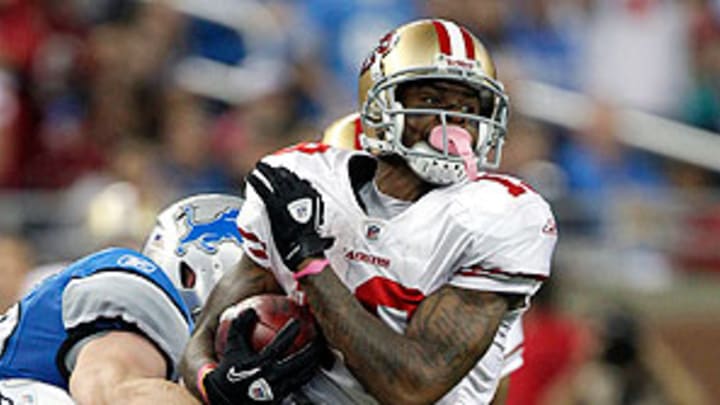
Okay, write this down and call your bookie. This Sunday night, Detroit plays at San Francisco. On December 16th, the 49ers">49ers play at New England. On December 23rd, San Diego plays the Jets in New Jersey.
Hey, I'm giving you people winners. So Sunday, take San Francisco and give six and a half points, then stay awake and cash in.
You're welcome.

Frank Deford is among the most versatile of American writers. His work has appeared in virtually every medium, including print, where he has written eloquently for Sports Illustrated since 1962. Deford is currently the magazine's Senior Contributing Writer and contributes a weekly column to SI.com. Deford can be heard as a commentator each week on Morning Edition. On television he is a regular correspondent on the HBO show Real Sports With Bryant Gumbel. He is the author of 15 books, and his latest,The Enitled, a novel about celebrity, sex and baseball, was published in 2007 to exceptional reviews. He and Red Smith are the only writers with multiple features in The Best American Sports Writing of the Century. Editor David Halberstam selected Deford's 1981 Sports Illustrated profile on Bobby Knight (The Rabbit Hunter) and his 1985 SI profile of boxer Billy Conn (The Boxer and the Blonde) for that prestigious anthology. For Deford the comparison is meaningful. "Red Smith was the finest columnist, and I mean not just sports columnist," Deford told Powell's Books in 2007. "I've always said that Red is like Vermeer, with those tiny, priceless pieces. Five hundred words, perfectly chosen, crafted. Best literary columnist, in any newspaper, that I've ever seen." Deford was elected to the National Association of Sportscasters and Sportswriters Hall of Fame. Six times at Sports Illustrated Deford was voted by his peers as U.S. Sportswriter of The Year. The American Journalism Review has likewise cited him as the nation's finest sportswriter, and twice he was voted Magazine Writer of The Year by the Washington Journalism Review. Deford has also been presented with the National Magazine Award for profiles; a Christopher Award; and journalism honor awards from the University of Missouri and Northeastern University; and he has received many honorary degrees. The Sporting News has described Deford as "the most influential sports voice among members of the print media," and the magazine GQ has called him, simply, "The world's greatest sportswriter." In broadcast, Deford has won a Cable Ace award, an Emmy and a George Foster Peabody Award for his television work. In 2005 ESPN presented a television biography of Deford's life and work, You Write Better Than You Play. Deford has spoken at well over a hundred colleges, as well as at forums, conventions and on cruise ships around the world. He served as the editor-in-chief of The National Sports Daily in its brief but celebrated existence. Deford also wrote Sports Illustrated's first Point After column, in 1986. Two of Deford's books, the novel, Everybody's All-American, and Alex: The Life Of A Child, his memoir about his daughter who died of cystic fibrosis, have been made into movies. Two of his original screenplays have also been filmed. For 16 years Deford served as national chairman of the Cystic Fibrosis Foundation, and he remains chairman emeritus. He resides in Westport, CT, with his wife, Carol. They have two grown children – a son, Christian, and a daughter, Scarlet. A native of Baltimore, Deford is a graduate of Princeton University, where he has taught American Studies.