%20%20--%3E%0A%3Csvg%20version%3D%221.1%22%20id%3D%22Layer_1%22%20xmlns%3D%22http%3A%2F%2Fwww.w3.org%2F2000%2Fsvg%22%20xmlns%3Axlink%3D%22http%3A%2F%2Fwww.w3.org%2F1999%2Fxlink%22%20x%3D%220px%22%20y%3D%220px%22%0A%09%20width%3D%2239px%22%20height%3D%2240px%22%20viewBox%3D%220%200%2039%2040%22%20enable-background%3D%22new%200%200%2039%2040%22%20xml%3Aspace%3D%22preserve%22%3E%0A%3Cpath%20fill%3D%22%23FFFFFF%22%20d%3D%22M38.5%2C7H28.2v26h10.3V7z%22%2F%3E%0A%3Cpath%20fill-rule%3D%22evenodd%22%20clip-rule%3D%22evenodd%22%20fill%3D%22%23FFFFFF%22%20d%3D%22M26.1%2C25.5c0%2C5.8-4.1%2C7.5-12.9%2C7.5C3.9%2C33%2C0%2C31.2%2C0%2C25.2v-1.1h11.6%0A%09v2.4c0%2C0.7%2C0.1%2C1.4%2C1.2%2C1.4c1%2C0%2C1.2-0.4%2C1.2-1.3v-0.9c0-1.6-0.9-1.6-3.5-2.2C2.2%2C21.7%2C0%2C19.7%2C0%2C15.3v-0.9C0%2C9.3%2C5.5%2C7%2C12.9%2C7%0A%09c10.2%2C0%2C12.8%2C2.6%2C12.8%2C7.4v1.8h-11v-2.9c0-0.6-0.4-1.1-1.2-1.1c-0.6%2C0-1.2%2C0.4-1.2%2C1.1v0.9c0%2C1.5%2C0.9%2C2%2C3.3%2C2.5%0A%09c8%2C1.6%2C10.5%2C3.3%2C10.5%2C7.5V25.5z%22%2F%3E%0A%3C%2Fsvg%3E%0A)
NFL prospect watch: Ranking the top five players at each position
There are 131 days between the kickoff of the first bowl game on Dec. 20 and the time that a to-be-decided team goes on the draft clock on April 30. That's 131 days for NFL teams to sort out their prospect boards, settle on their targets and plan for the seven-round, three-day madness.
• NFL Power Rankings: Week 15 | NFL playoff picture following Week 14
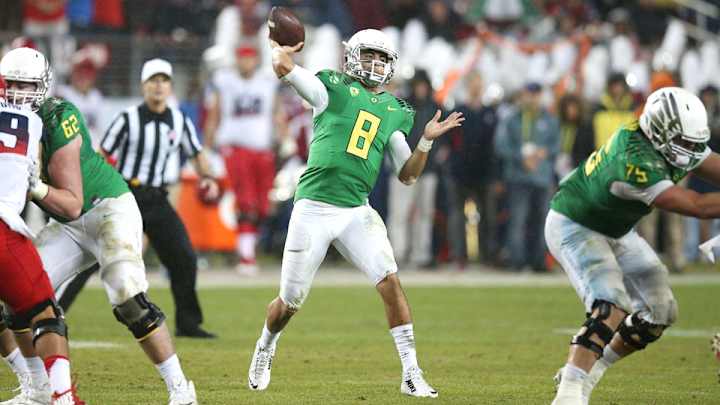
From Hawaii to Eugene, how Oregon's Marcus Mariota rose to become a star
With the NFL season winding down, scouts sharpen their focus on the prospects, closely examining their play in the college football regular season and bowl games and analyzing their performances at the combine and Pro Days. Some prospects will climb, others will falter.
There should be fewer wild fluctuations than there are from college season to college season, though, so it's time to take our first look at the draft class' positional rankings.
Included below are the top five at each spot, as of Dec. 12, 2014. Aside from two players (Jameis Winston and Gerod Holliman), redshirt sophomores have been omitted due to the likelihood that they return to school.
(* denotes underclassman)
Quarterback
1. Marcus Mariota, Oregon *
2. Jameis Winston, Florida State *
3. Connor Cook, Michigan State *
4. Bryce Petty, Baylor
5. Brett Hundley, UCLA *
Heisman Watch: No controversy this year -- Marcus Mariota will win
Shy of winning the national championship and being handed the Heisman Trophy, what more can Mariota do as a college quarterback? He has thrown a touchdown pass in all 39 of his starts for Oregon, with 101 touchdowns to just 12 interceptions over his career. Mariota has thrown two picks this year, one each in back-to-back games vs. Cal and Stanford; the Ducks won both games as Mariota accounted for nine total touchdowns.
Winston makes too many mistakes, on and off the field. But his physical tools plus the lack of upper-echelon quarterback prospects in this class could land him in the top five, should he leave Florida State. Cook has said he plans to stay at Michigan State, which might be a good move so he can work out kinks in his decision-making. If he changes his mind, though, he might be the only other quarterback to sniff Round 1.
From there, teams will have their pick of guys who might require several seasons as a backup or third-string quarterback.
Running back
1. Melvin Gordon, Wisconsin *
2. Todd Gurley, Georgia *
3. Ameer Abdullah, Nebraska
4. Duke Johnson, Miami *
5. Tevin Coleman, Indiana *
An adjustment up top from this Big Board, with Gordon leapfrogging Gurley and Abdullah to claim the top spot. Gurley still would be No. 1 had it not been for the knee injury, but Gordon is a deserving candidate. He can morph short gains into home-run plays in the blink of an eye. Equally as important for his NFL hopes, he's shown more ability to catch passes out of the backfield than we ever had seen before.
If Gurley comes back healthy, the injury setback could turn him into a colossal steal late in Round 1 or early in Round 2. The Georgia star is the type of back teams can build offenses around, even now in the more pass-happy NFL.
Abdullah is a three-down guy, while Johnson -- despite being 5-foot-9 and around 200 pounds -- has the look of a workhorse back with big-play potential. Coleman fits that bill, too. Shy of Gordon, there might not be a back in the country that hits the hole with as much authority as Coleman does.
• HAMILTON: How Melvin Gordon ran towards college football history
Wide receiver
1. Amari Cooper, Alabama *
2. DeVante Parker, Louisville
3. Rashad Greene, Florida State
4. Kevin White, West Virginia
5. Devin Funchess, Michigan *
Constant motion keeps Alabama's Amari Cooper one step ahead
Cooper could step into an NFL lineup Sunday and get 10 catches. He may not be in the Calvin Johnson/Julio Jones draft stratosphere, but he is a pro-ready product. Greene is in the same camp, though he may not have as much explosiveness. I'd compare him to Keenan Allen as a wide receiver whose advanced route-running and willingness to go over the middle will make him a hit immediately.
A boatload of intriguing athleticism exists outside of the Cooper-Greene duo. Parker was injured early in the season but came back to remind everyone how unstoppable he can be when the ball's in the air. White is reminiscent of Anquan Boldin with how ferociously he fights for the ball and his ability to catch and go.
Funchess remains something of a wild card (as does Dorial Green-Beckham, an extraordinary talent who has not played in a season). The Michigan product was plagued by inconsistency this season, his first making the permanent move to wide receiver from tight end. Was that a product of the Wolverines' plight on offense or are there larger issues concerning Funchess' focus and motor at play here?
Tight end
1. Jeff Heuerman, Ohio State
2. Clive Walford, Miami
3. Ben Koyack, Notre Dame
4. Nick O'Leary, Florida State
5. E.J. Bibbs, Iowa State
This underwhelming class could receive a boost if Minnesota redshirt sophomore Maxx Williams enters the draft. Heuerman, his conference mate, stands out as a plus-blocker who has been sharp downfield on the infrequent occasion Ohio State asks him to get open. Both Walford and Koyack, meanwhile, have shown flashes as inline options. They likely will have to open as complementary players, rather than No. 1 tight ends.
What to make of O'Leary? He has more than 1,500 yards receiving in his Florida State career and is one of Winston's favorite targets. Yet, his size (6-foot-3, 247), limited athleticism and so-so blocking figure to lock him in as an H-back or slot tight end. He could be a nice fit there, but the team that drafts O'Leary will need a specific plan for how to utilize him.
• Your perfect bowl season: Breaking down the top 20 bowl games to watch
Offensive tackles
1. Brandon Scherff, Iowa
2. Cedric Ogbuehi, Texas A&M
3. La'El Collins, LSU
4. Andrus Peat, Stanford *
5. T.J. Clemmings, Notre Dame
Another position where the rankings hinge on a redshirt sophomore's decision -- Notre Dame OT Ronnie Stanley could break through the Scherff/Ogbuehi ceiling if he heads to the pros. For now, the top two names stay consistent.
Scherff is a mauler who plays with an edge. The dilemma here is whether or not an NFL team can trust him on the blindside or if he has to slide to right tackle or guard. If it's the latter, Scherff could slide a bit in the draft. Same goes for Ogbuehi, who struggled shifting to the left side after playing on the right. He's still a high-upside blocker with outstanding length.
Guards
1. Josue Matias, Florida State
2. A.J. Cann, South Carolina
3. Jarvis Harrison, Texas A&M
4. Arie Kouandjio, Alabama
5. Tre Jackson, Florida State
This solid if unspectacular group could produce several rookie starters before all is said and done. Matias and Jackson entered 2014 on fairly even footing, but Matias has been far better throughout the year; Jackson has had issues picking up blitzers, among other things. Both will be drafted, with Matias possibly climbing as high as Round 2.
Cann could join him there. He plays with good strength along the interior and can overpower defensive linemen when he gets the first step. Harrison and Kouandjio (brother of the Bills' Cyrus Kouandjio) are far from technically sound -- both tend to lunge their ways off-balance. A little work there could lead to long-term jobs in the NFL.
[pagebreak]
Center
1. Reese Dismukes, Auburn
2. Cameron Erving, Florida State
3. Hronnis Grasu, Oregon
4. Andy Gallik, Boston College
5. B.J. Finney, Kansas State
Erving is the name to watch here. A promising offensive tackle prospect, Erving's stock plummeted out of the gate, only to bounce back once the Seminoles moved him to center. He's only there for about a month, so the playoff matchup with Oregon will be important for his draft hopes. The quickness he brings to the center position is unique, and the versatility that comes from playing OT will appeal to NFL teams.
Dismukes and Grassu are the other top-tier options. It may be Dismukes who appeals to a heavier run-based team -- he's been an anchor for Auburn's ground game.
• Can Johnny Manziel carry the Browns to victory in his first NFL start?
Defensive tackles
1. Leonard Williams, USC
2. Danny Shelton, Washington
3. Eddie Goldman, Florida State
4. Michael Bennett, Ohio State
5. Carl Davis, Iowa
College Football Playoff needs expansion, automatic bids to improve
Here sits the potential No. 1 overall pick -- Williams -- along with several other Round 1 possibilities. Shelton has been a favorite of mine all season; he could appeal to a 3-4 team as a nose tackle but also is quick enough to handle 4-3 DT duties. (I'd probably lean toward Plan A.)
Goldman at times has been the best player on Florida State's loaded roster, thanks to his ability to push the pocket. We've seen flashes of similar dominance from Bennett, who could be the next rising star at the three-technique spot.
Davis did not live up to the hype given him in our way-too-early 2015 mock -- he landed at No. 11 overall back in May. Don't sleep on him as a rotational force right out of the gate.
Edge rushers
1. Randy Gregory, Nebraska *
2. Vic Beasley, Clemson
3. Shane Ray, Missouri *
4. Dante Fowler, Florida *
5. Shawn Oakman, Baylor *
Given the way he prepares, Tom Brady won't be slowing down anytime soon
In reality, there is some overlap in the next three categories -- edge rusher, outside linebacker and inside linebacker. I've tried to separate out the players listed in each based on where they could best fit at the next level.
But Gregory, a legitimate candidate for the No. 1 overall pick, is a perfect example. He can play a 4-3 end spot or drop back to a 3-4 OLB role, and Nebraska also has used him as a stand-up inside linebacker, a spot from which he can be a blitzing terror. Beasley and Ray are explosive rushers -- there may not be much separating the two once the draft arrives. Fowler has less of that get-up-and-go off the snap, but he brings more of a refined approach to the table.
And then there's Oakman, with perhaps the most untapped potential of anyone here. The massive 6-foot-9, 270-pound DE is almost astonishingly quick for his size, and there is room for him to get much better.
Outside linebackers
1. Shaq Thompson, Washington *
2. Bernardrick McKinney, Mississippi State *
3. Eric Striker, Oklahoma *
4. Hau'oli Kikaha, Washington
5. Paul Dawson, TCU
Washington's approach with Thompson is the way to go: just get him on the field and let the situation work itself out. That's been true both on defense, where Thompson has excelled as a linebacker; and on offense, where he's stepped in and played running back.
McKinney is a totally different animal. Whereas Thompson makes plays by flying to the football, McKinney is best coming downhill and using his power.
Striker actually may belong in the edge rusher category, though at 6-foot-0 and 220, his size will be the most analyzed X-factor. Dawson has opened everyone's eyes as the season has gone along, showing three-down capabilities against some explosive offenses.
• Troy Aikman opens up on J.J. Watt, Jim Harbaugh, the Cowboys and more
Inside linebackers
1. Eric Kendricks, UCLA
2. Denzel Perryman, Miami (Fla)
3. Ramik Wilson, Georgia
4. Hayes Pullard, USC
5. A.J. Johnson, Tennessee
Again, the subject of size will come up with Kendricks (6-foot-0, 228). How many more Chris Borlands have to slip through the cracks before it's not longer an issue? Kendricks can straight-up play, with enough of a well-rounded game to slot in just about anywhere a team wants him.
Perryman is going to be a hammer for some NFL team as a 4-3 MLB or 3-4 ILB. Wilson may wind up pushing back outside in a 4-3, though his status will rely on how he performs at the Senior Bowl and combine -- the play did not always match the potential.
Cornerbacks
1. Ifo Ekpre-Olomu, Oregon
2. Trae Waynes, Michigan State *
3. P.J. Williams, Florida State *
4. Kevin Johnson, Wake Forest
5. Marcus Peters, Washington *
Nothing much new among the top three: Ekpre-Olomu was one of SI's top-rated cornerbacks last year before he opted to stay at Oregon; Waynes and Williams are both potential Round 1 picks because they can lock down receivers and step up on the run.
After playoff snub, what are the Big 12's best options moving forward?
The big riser is Johnson, a standout on a bad team. There were long stretches of games where Johnson was not visible mainly because opposing offenses tried to avoid him.
On the opposite end of the spectrum is Peters, whose stock has taken a self-inflicted hit. Talent-wise, he is a top-20 prospect with traits of an NFL starter. But he was dismissed from Washington's program last month and a report emerged in December that, "He tried to strangle a coach on the sidelines". The red flags will be numerous.
Safeties
1. Landon Collins, Alabama *
2. Derron Smith, Fresno State
3. Anthony Harris, Virginia
4. Kurtis Drummond, Michigan State
5. Gerod Holliman, Louisville *
There are certain positions on which teams are not afraid to wait in the draft because there's an abundance of talent. This is not one of those positions, nor is the safety spot usually flush with clear Round 1 talent. So, front offices frequently overdraft for need, bumping safeties up the board.
The same thing may happen in 2015 once Collins is snatched up. The Alabama defender is the clear frontrunner at this position, a sideline-to-sideline defender with the potential to be an elite in-the-box safety.
Smith could have entered the '13 draft, then stumbled some this season. He still finished with 80 tackles and a Senior Bowl invite, despite plucking just one interception. Harris dipped to two interceptions after leading the nation with eight in '13, but he topped 100 tackles and definitely should find an NFL home in the mid-rounds.
Drummond was a bit up and down -- Oregon exposed him on a couple big plays, then he bounced back in Big Ten play.
Holliman is the only redshirt sophomore other than Winston present in our positional rankings for now. He's reportedly leaning toward the draft after an NCAA-best 14 interceptions this season. That number overshadows weakness in Holliman's tackling, but again, teams might have to overlook blemishes if they want talent at safety.
Heisman winners with the best NFL careers
Paul Hornung
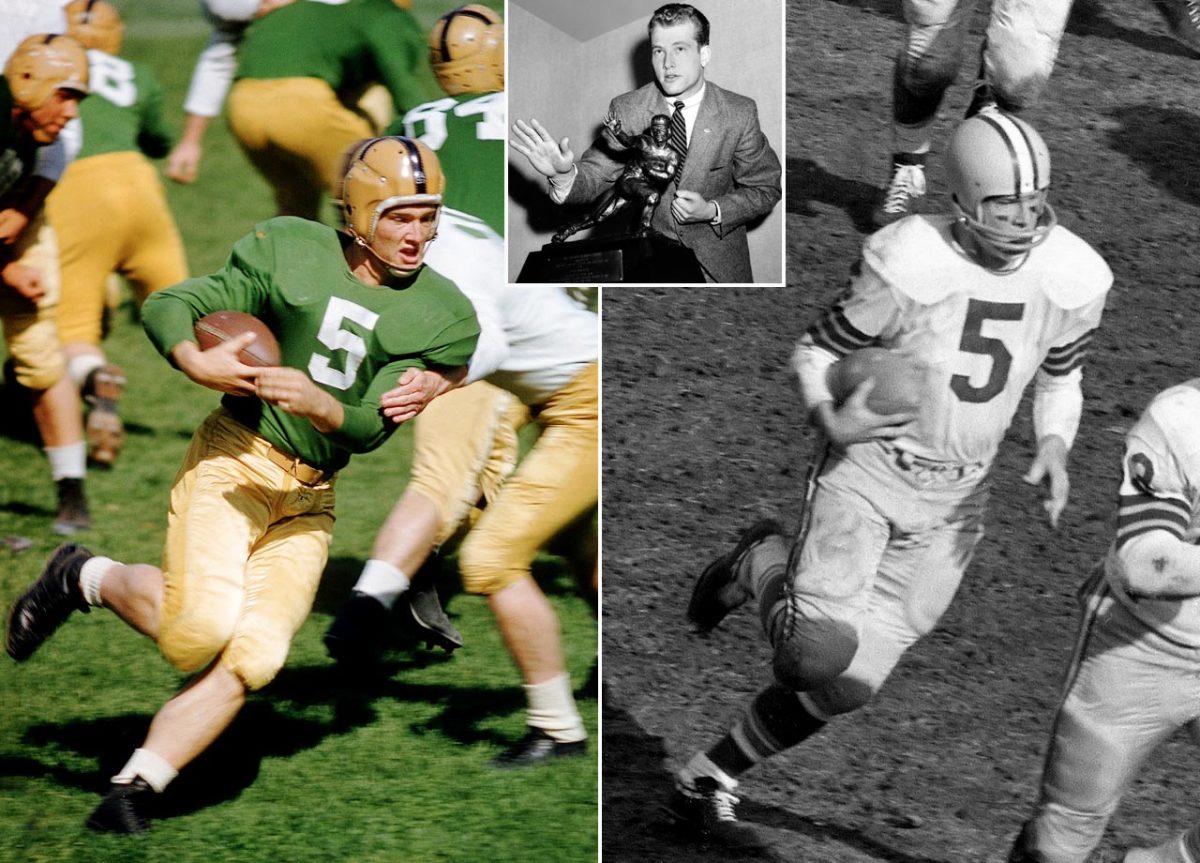
After winning the 1956 Heisman Trophy, Hornung became a key component in the Packers dynasty of the 1960s, earning Player of the Year honors in 1960 and 1961. He played multiple positions, including halfback, quarterback and placekicker. He retired with 3,711 yards rushing and 1,480 receiving yards.
Roger Staubach
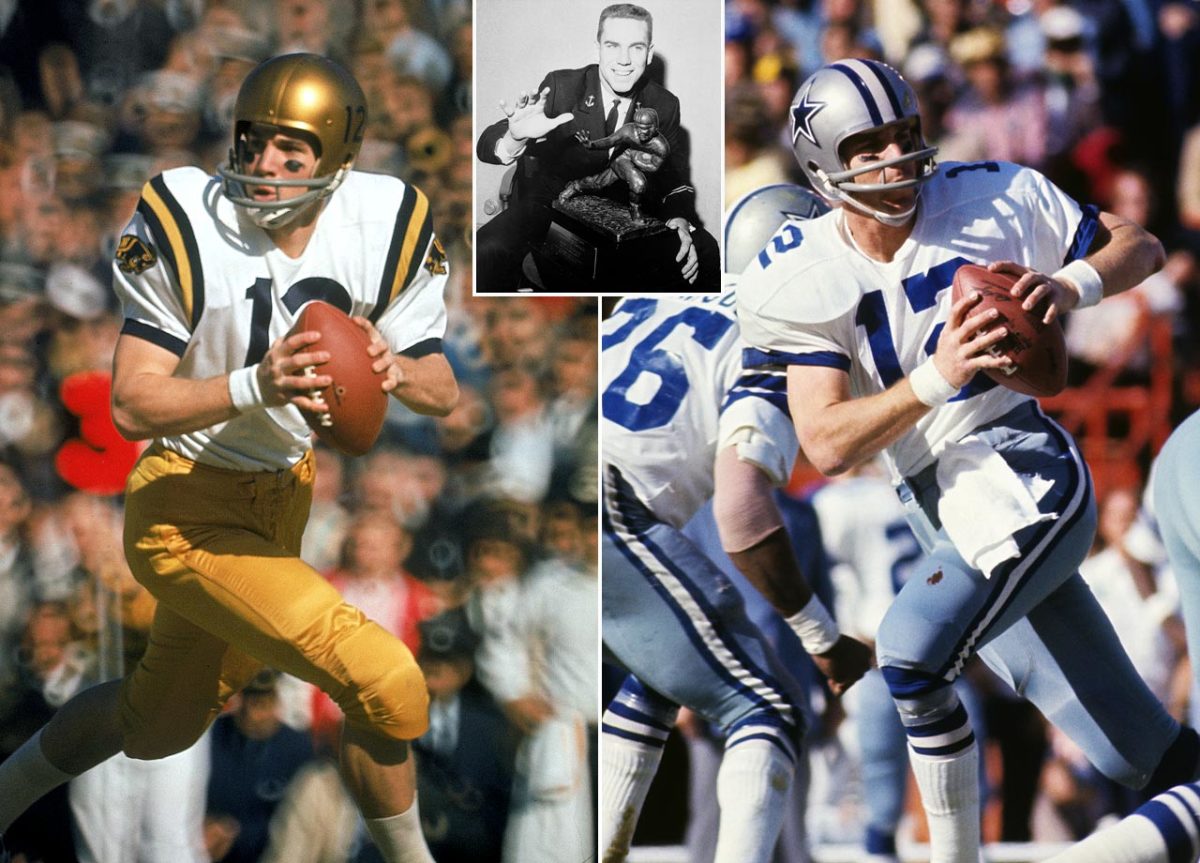
After excelling at Navy, Staubach spent four years in military service, including a tour in Vietnam. He didn't play an NFL down until he was 27. Despite the late start, Staubach led the Cowboys to four Super Bowls and two titles. He was a six-time Pro Bowl pick, led the NFL in passer rating four times and retired with 22,700 passing yards and 174 touchdowns.
O.J. Simpson
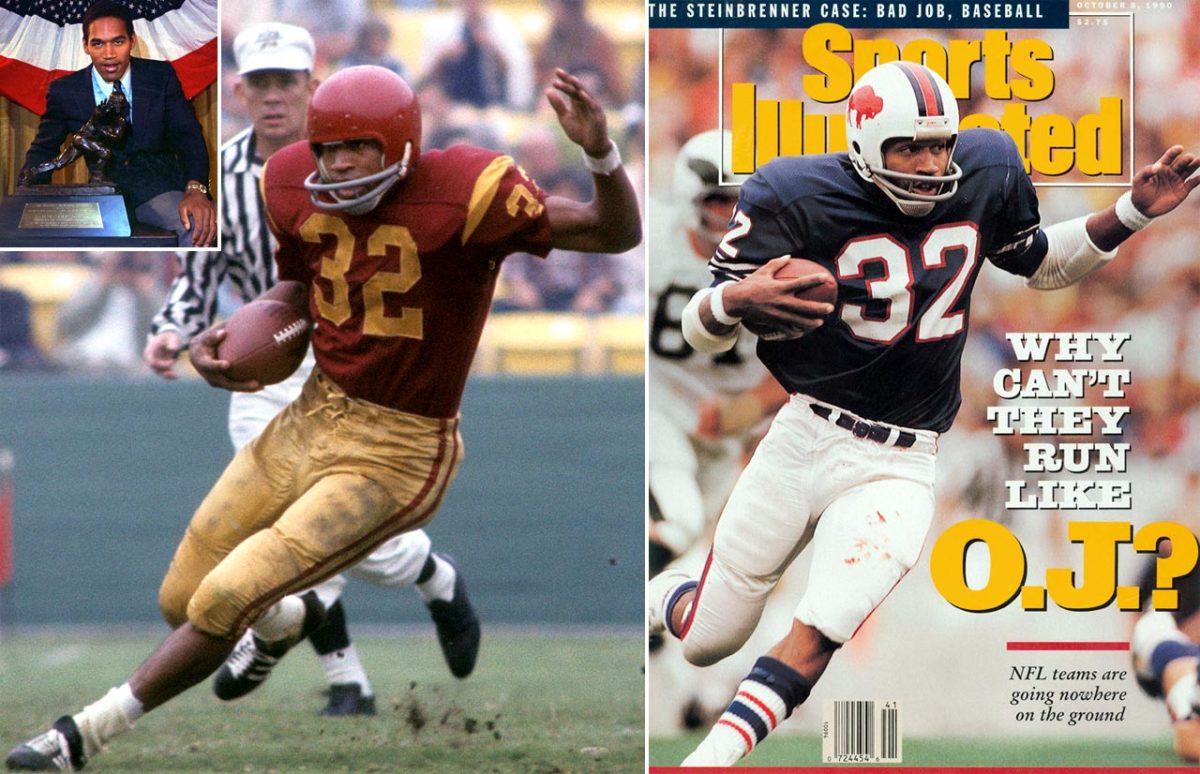
The Juice was a star at USC before joining the Bills in 1969. He struggled early in his career, but finally reached the 1,000-yard mark in 1972. He broke through in 1973, setting the all-time single season record with 2,003 yards in 1973. He continued to be one of the league's best runners until injuries caught up with him in 1977. He played two uneventful seasons in San Francisco before retiring.
Tony Dorsett
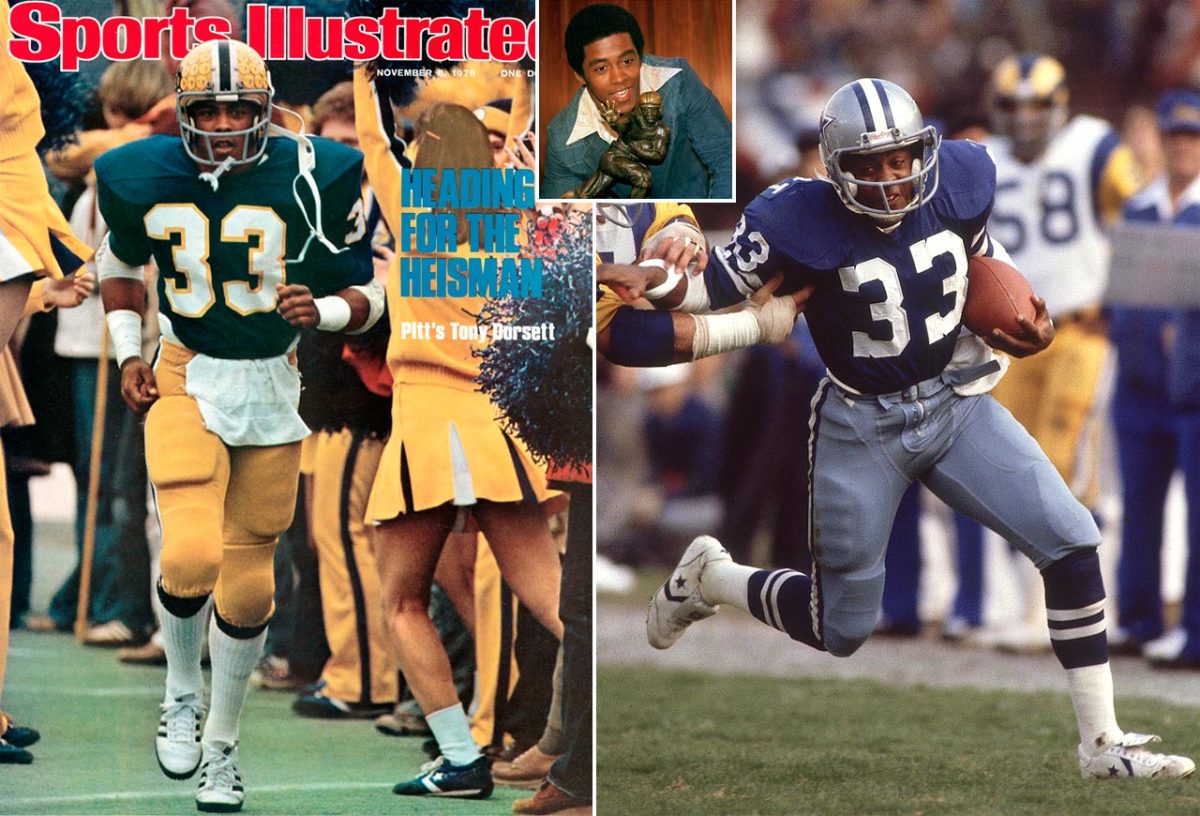
Dorsett, a first-round selection of the Cowboys in 1977, won Rookie of the Year when he ran for 1,007 yards and 12 touchdowns. He would continue his torrid pace, reaching the 1,000-yard mark in eight of his first nine seasons. Dorsett totaled 16,326 yards from scrimmage and scored 546 points on 91 touchdowns in 12 seasons.
Earl Campbell
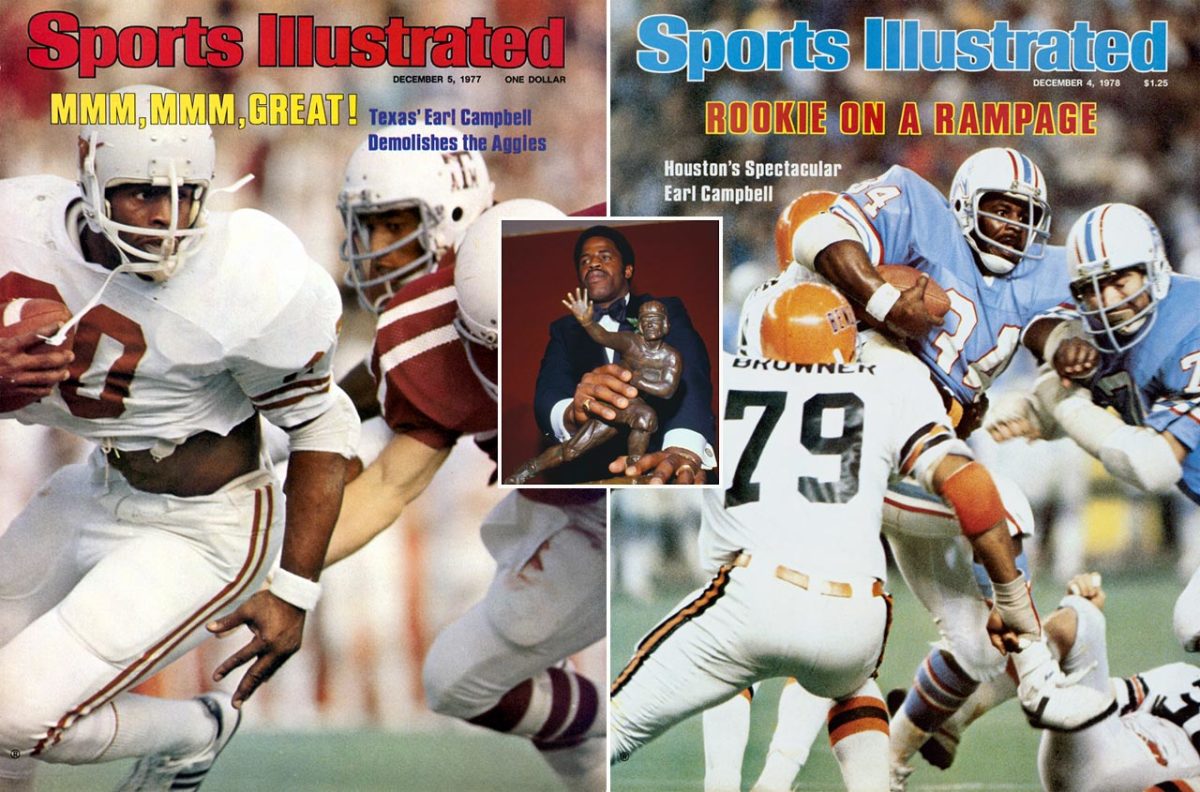
After winning the Heisman while at Texas, Campbell was drafted by Houston with the first overall pick in 1978. The bruising back made an immediate impact, rushing for 1,450 yards and 13 touchdowns in his rookie season. He led the league in rushing his first three seasons, made the Pro Bowl five times and retired with 9,407 yards and 74 touchdowns.
Billy Sims
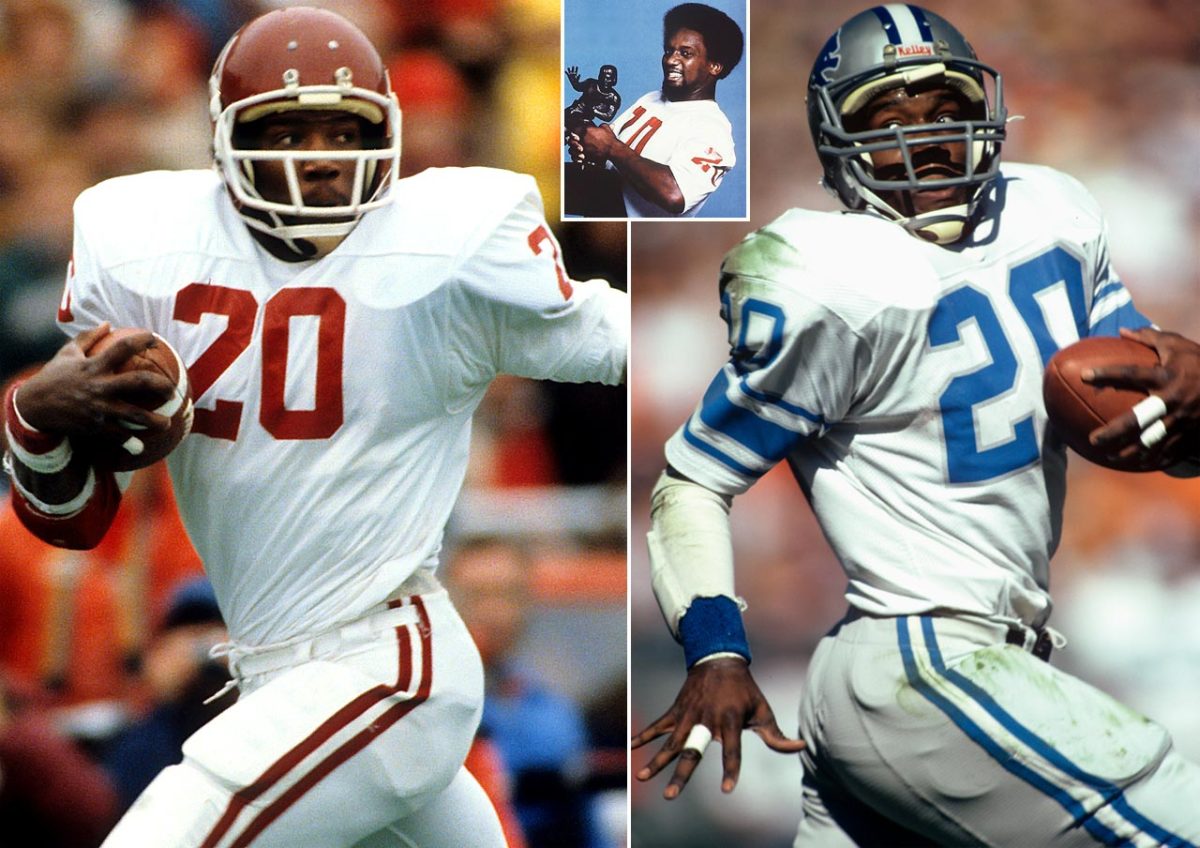
He set the Oklahoma rushing record en route to winning the 1978 Heisman, and Sims was taken with the first overall pick by Detroit in 1979. He had a strong start to his career, making the Pro Bowl team in three of his first four seasons before a knee injury cut his career short in 1984. Despite the injury, He retired with 5,106 career yards and 42 touchdowns.
Marcus Allen
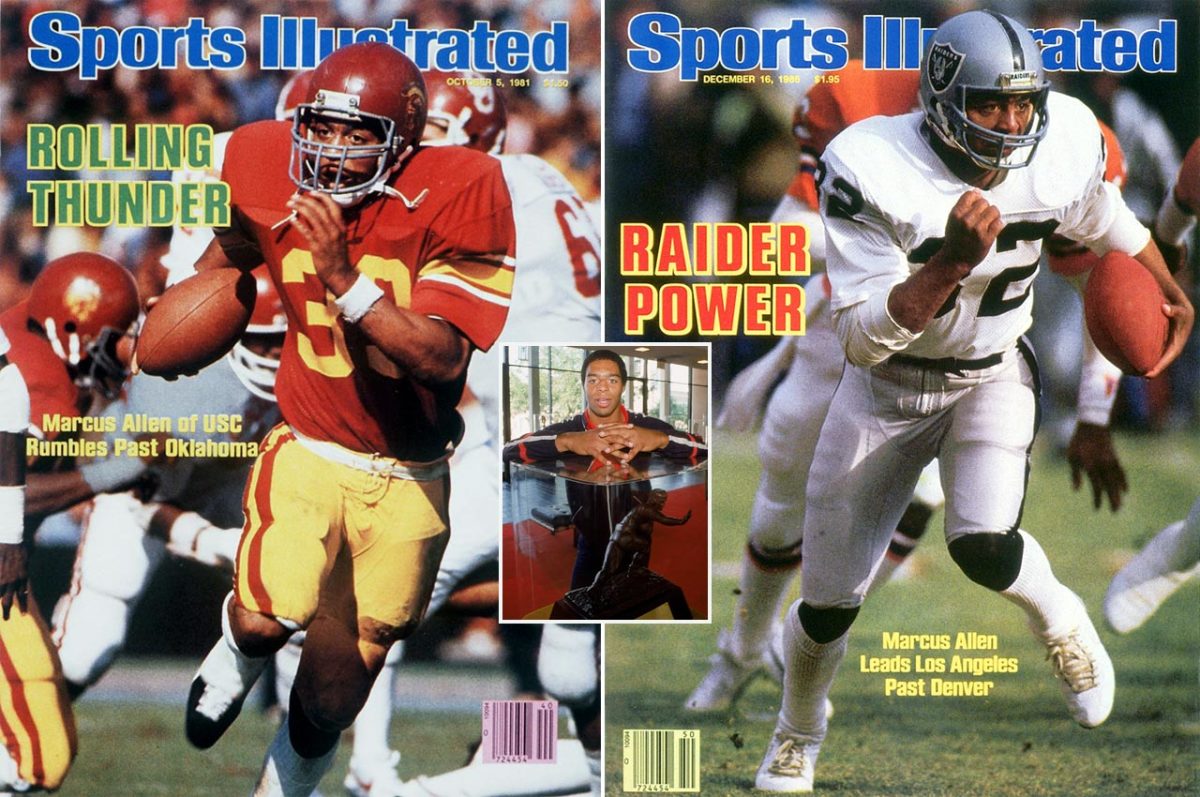
After winning the 1981 Heisman, Allen went on to star with the Raiders and Chiefs. He was the first to compile 10,000 rushing and 5,000 receiving yards. A six-time Pro Bowl back, he finished with a then-record 123 rushing touchdowns among his 145 total touchdowns.
Herschel Walker
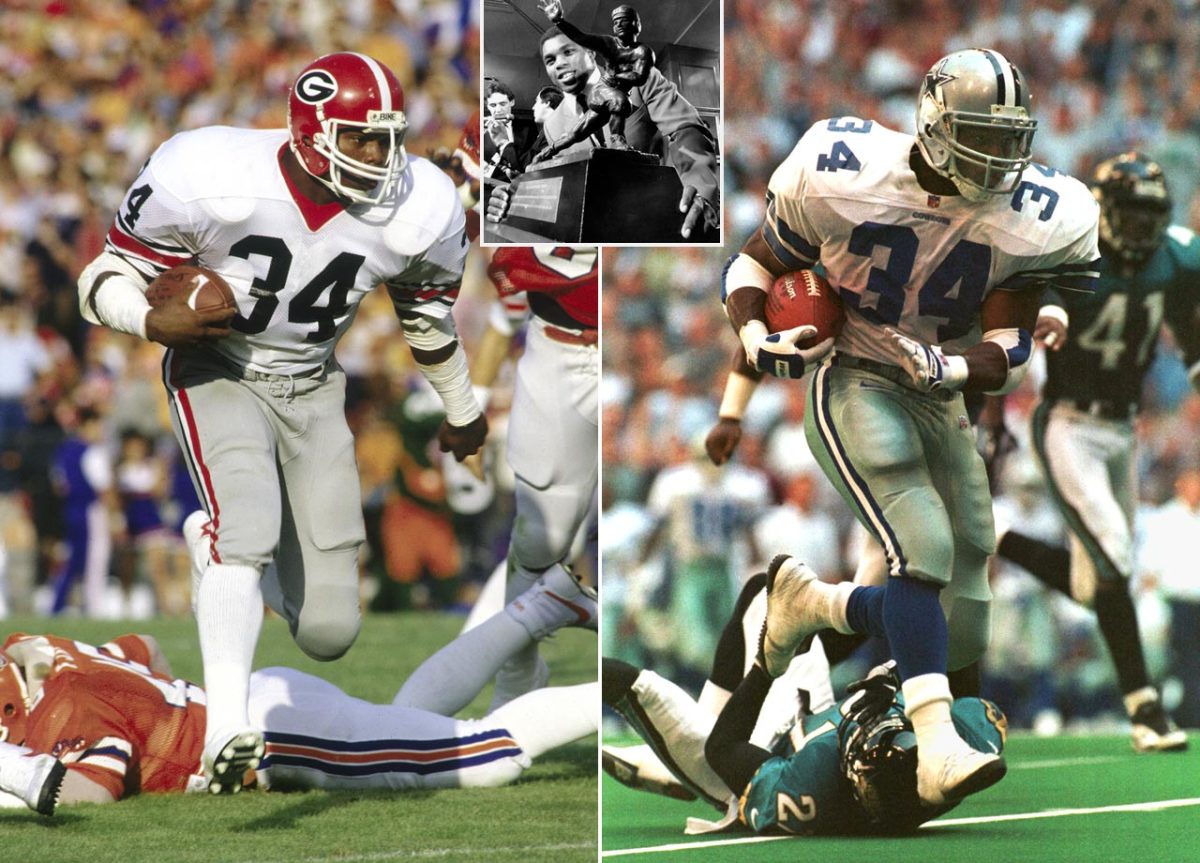
Walker won the Heisman his junior year and was drafted by the New Jersey Generals of the USFL. He played three seasons in the upstart league before joining the Cowboys in 1986. After three solid seasons in Dallas, he was moved to Minnesota for five players and six draft picks. He never lived up to expectations with the Vikings and would play for the Eagles and Giants before returning to Dallas in 1996. Counting his seasons in both the NFL and USFL. Walker finished his professional career with a total of 8,225 yards and 61 rushing touchdowns. He also caught 512 passes for 4,859 yards and 21 scores.
Tim Brown
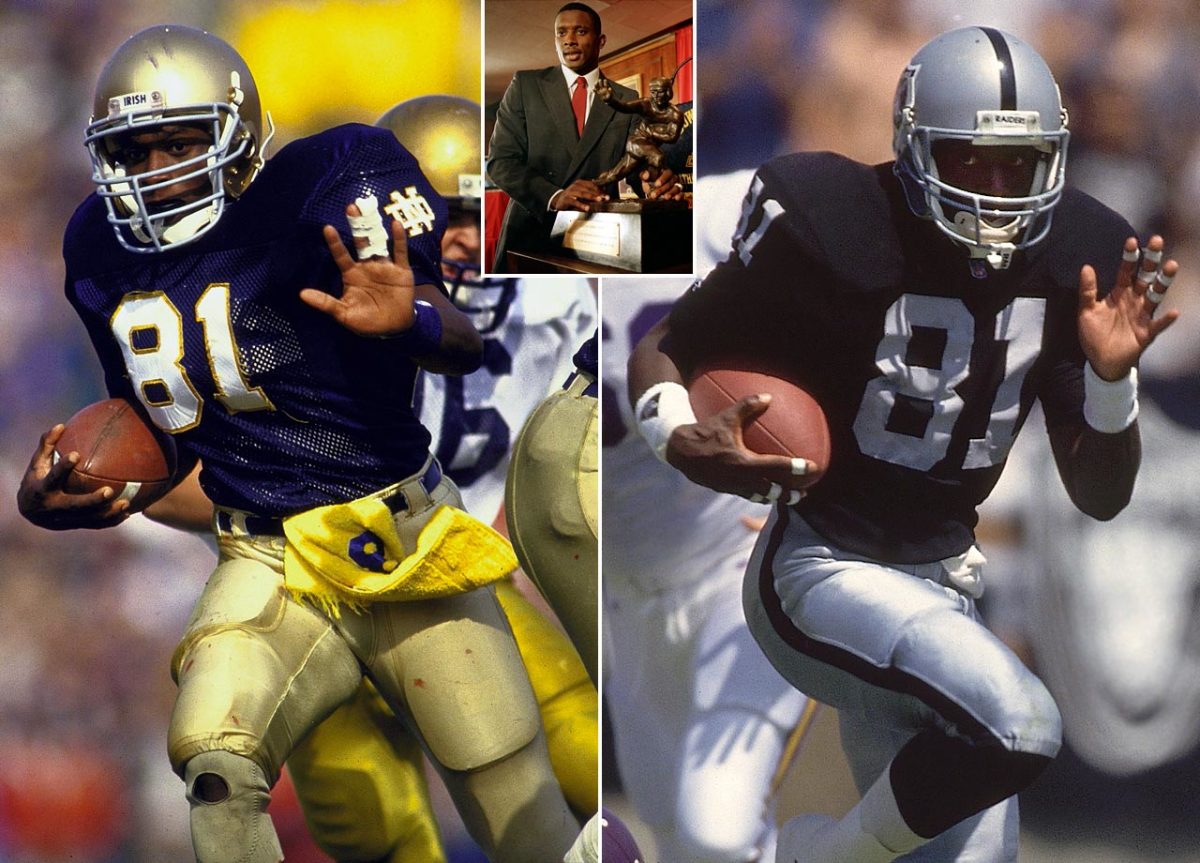
The Notre Dame standout gained 1,937 all-purpose yards in 1987 and became the first wide receiver to win the Heisman. He was drafted by the Raiders and played 17 seasons with the franchise. Brown was a nine-time Pro Bowl selection and set Raiders franchise records for receptions, receiving yards and punt return yards.
Barry Sanders
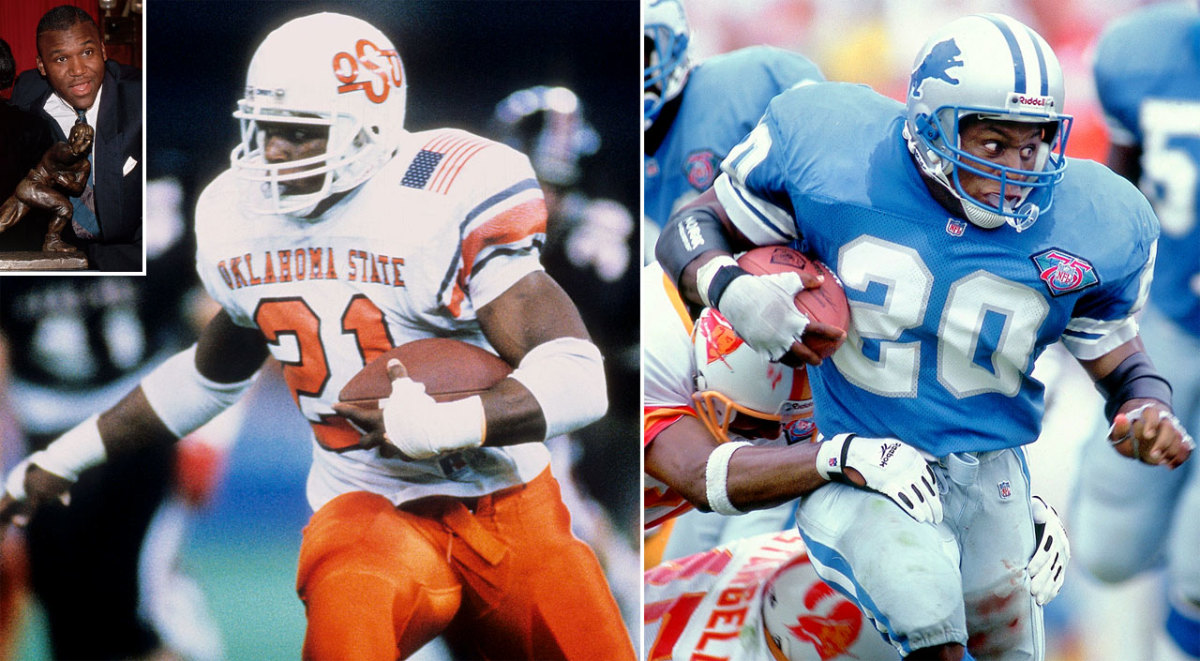
Sanders had arguably the greatest season in NCAA history in 1988, setting single-season records with 2,628 yards rushing, 3,249 total yards, 234 points and 39 touchdowns on the way to the Heisman. He continued the torrid pace in the NFL, making the Pro Bowl all 10 of his seasons and finishing his career with over 15,000 yards before retiring in 1999.
Eddie George
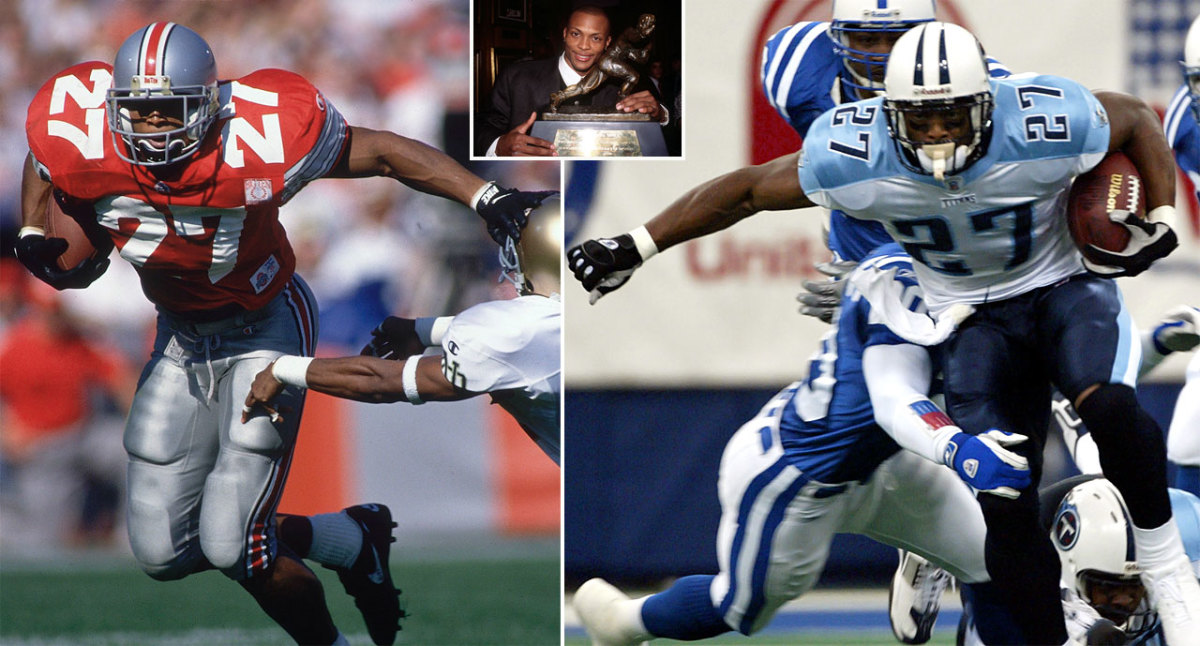
George ran for a school-record 1,927 yards and 24 touchdowns during his Heisman campaign of 1995. He was drafted by the Oilers with the 14th overall pick and went on to win Rookie of the Year honors. He started every game for the Oilers/Titans for eight seasons. He played his final season in Dallas and retired with 10,441 rushing yards, 268 receptions, 2,227 receiving yards and 78 touchdowns.
Charles Woodson
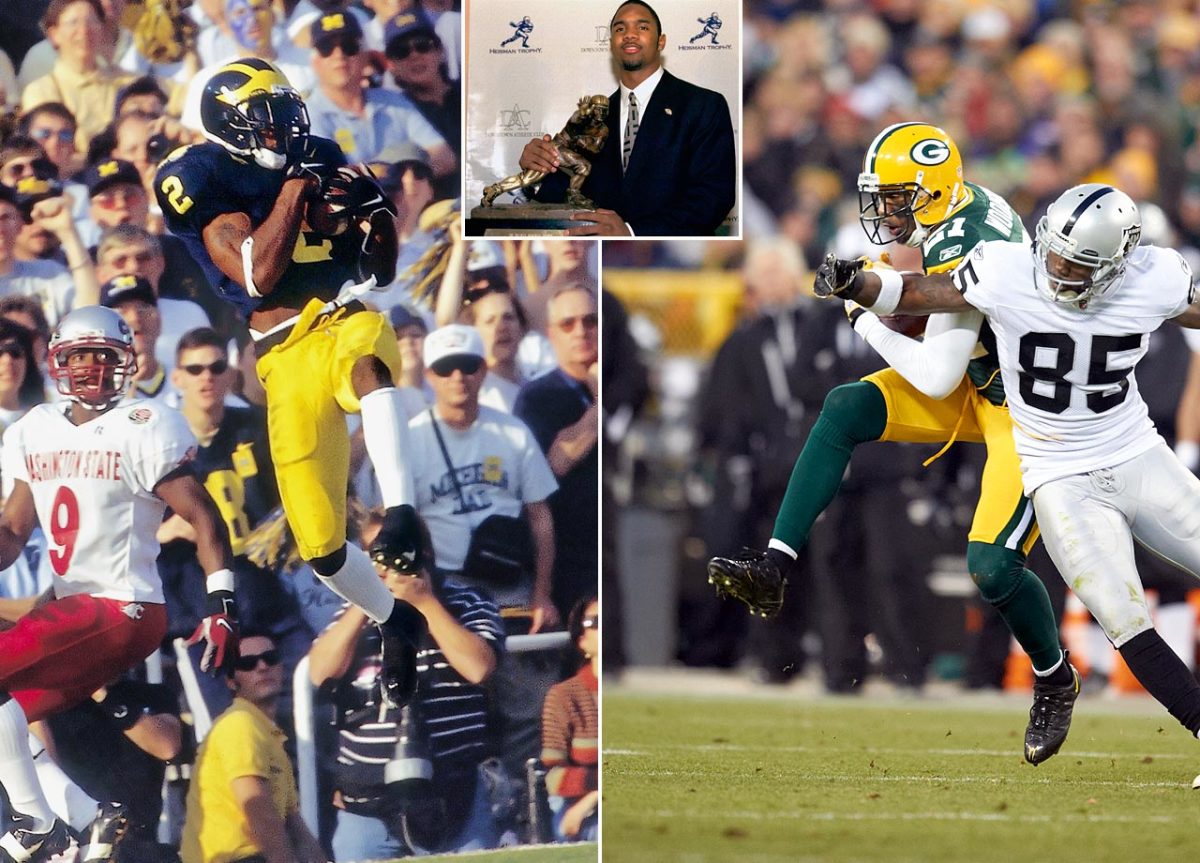
The first primarily defensive player to win the Heisman (1997), Woodson played 18 seasons in the NFL, 11 with the Raiders and seven with the Packers. He is in a three-way tie for first in career defensive touchdowns (13), along with Rod Woodson and Darren Sharper.
Cam Newton
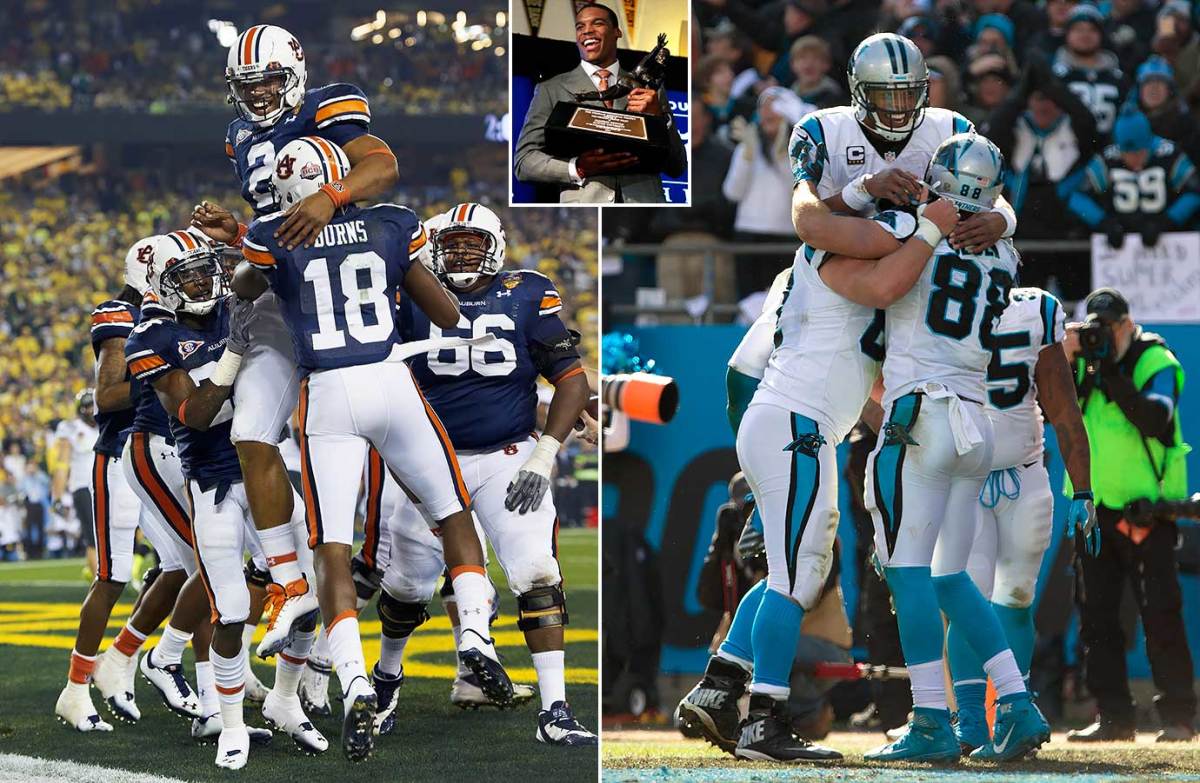
Though he only played one year at Auburn, Cam Newton made his presence felt, posting 2,854 passing yards 1,473 rushing yards and a combined 51 touchdowns. He led the Tigers to the National Championship after the 2010 season and then was selected first overall in the NFL Draft by the Carolina Panthers. In his first five years in the NFL, he passed for 18,263 yards and 117 touchdowns. He led the Panthers to a 15-1 regular season record in 2015, culminating in an appearance in Super Bowl 50 against the Denver Broncos.
 Add us as a preferred source on Google
Chris Burke covers the NFL for Sports Illustrated and is SI.com’s lead NFL draft expert. He joined SI in 2011 and lives in Ann Arbor, Mich.