%20%20--%3E%0A%3Csvg%20version%3D%221.1%22%20id%3D%22Layer_1%22%20xmlns%3D%22http%3A%2F%2Fwww.w3.org%2F2000%2Fsvg%22%20xmlns%3Axlink%3D%22http%3A%2F%2Fwww.w3.org%2F1999%2Fxlink%22%20x%3D%220px%22%20y%3D%220px%22%0A%09%20width%3D%2239px%22%20height%3D%2240px%22%20viewBox%3D%220%200%2039%2040%22%20enable-background%3D%22new%200%200%2039%2040%22%20xml%3Aspace%3D%22preserve%22%3E%0A%3Cpath%20fill%3D%22%23FFFFFF%22%20d%3D%22M38.5%2C7H28.2v26h10.3V7z%22%2F%3E%0A%3Cpath%20fill-rule%3D%22evenodd%22%20clip-rule%3D%22evenodd%22%20fill%3D%22%23FFFFFF%22%20d%3D%22M26.1%2C25.5c0%2C5.8-4.1%2C7.5-12.9%2C7.5C3.9%2C33%2C0%2C31.2%2C0%2C25.2v-1.1h11.6%0A%09v2.4c0%2C0.7%2C0.1%2C1.4%2C1.2%2C1.4c1%2C0%2C1.2-0.4%2C1.2-1.3v-0.9c0-1.6-0.9-1.6-3.5-2.2C2.2%2C21.7%2C0%2C19.7%2C0%2C15.3v-0.9C0%2C9.3%2C5.5%2C7%2C12.9%2C7%0A%09c10.2%2C0%2C12.8%2C2.6%2C12.8%2C7.4v1.8h-11v-2.9c0-0.6-0.4-1.1-1.2-1.1c-0.6%2C0-1.2%2C0.4-1.2%2C1.1v0.9c0%2C1.5%2C0.9%2C2%2C3.3%2C2.5%0A%09c8%2C1.6%2C10.5%2C3.3%2C10.5%2C7.5V25.5z%22%2F%3E%0A%3C%2Fsvg%3E%0A)
Lines of Change Over The Last Five Decades
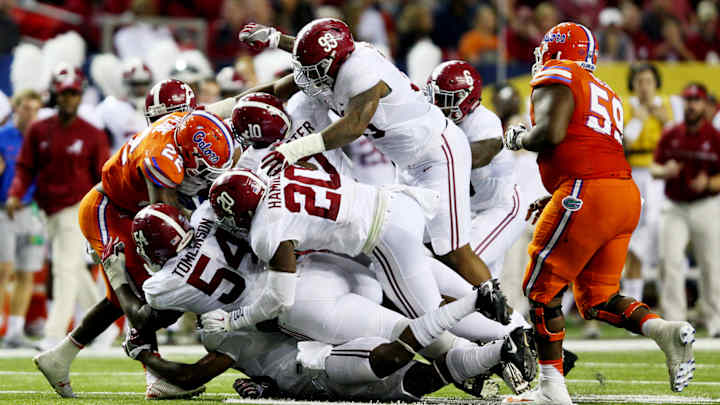
Alabama - 2010's
Led by 6' 4", 322-pound tackle A’Shawn Robinson and 6' 3", 294-pound defensive end Jonathan Allen, the Tide boasted a versatile combination of run stoppers and pass rushers who punished opponents during a 14–1 season that ended with a national championship in 2015.
Nebraska - 2000's
The 2000s saw the ascendancy of a number of dominant defensive lines, but none were more intimidating than the Cornhuskers’ unit led by Ndamukong Suh and fellow All- America Jared Crick. The Nebraska D rarely blitzed, but instead stayed in a dime package and launched a furious pass rush. This way they were able to keep six DBs in the game to stifle the Air Raid offenses proliferating in the Big 12.
Florida State - 1990's
The rise of the spread offense sparked an increase in 4–3 defenses that relied on skilled linemen. There was an emphasis on the pass rush and moving upfield to the quarterback. The Seminoles had three standouts: freakishly fast Peter Boulware and Reinard Wilson, and hybrid end-tackle Andre Wadsworth.
Miami - 1980's
By the late 1980s offenses were opening up, and the need for a run- stopping defensive tackle who could also rush the passer was at a premium. The Hurricanes had two: 300-pounders Cortez Kennedy and Russell Maryland, who could jump off the ball and had receivers’ speed.
Oklahoma - 1970's
Offenses in the 1970s relied on the ground game, and no defense did a better job of stopping the run than the Sooners’ unit starring the All-America Selmon brothers: Dewey, Lee Roy and Lucious.
Michigan State - 1960's
The Gang Green D allowed just 49.2 rushing yards and 7.6 points per game as the team went 19-1-1 over two seasons. The leader was 6' 7", 265-pound defensive end Bubba Smith, who faced triple teams but could not be stopped.
 Add us as a preferred source on Google