%22%3E%0A%3Cpath%20d%3D%22M0%209H6.73992C13.734%209%2017.2358%2012.4453%2017.2358%2017.6508V17.6979C17.2358%2022.9034%2013.6681%2026.6029%206.54224%2026.6029H0V9ZM5.89273%2014.1302V21.4726H6.87171C9.56391%2021.4726%2011.296%2020.3619%2011.296%2017.8203V17.7732C11.296%2015.2316%209.56391%2014.1208%206.87171%2014.1208H5.89273V14.1302Z%22%20fill%3D%22white%22%2F%3E%0A%3Cpath%20d%3D%22M18.375%2019.8159V19.7688C18.375%2015.6646%2021.3214%2012.5488%2025.4444%2012.5488C30.3299%2012.5488%2032.5891%2015.947%2032.5891%2020.1171C32.5891%2020.4183%2032.5891%2020.7761%2032.5608%2021.0679H23.7312C24.1359%2022.2728%2025.0867%2022.9035%2026.3198%2022.9035C27.3553%2022.9035%2028.2025%2022.4234%2029.1156%2021.4915L32.1843%2023.9295C30.8288%2025.6898%2028.8897%2026.9229%2025.9245%2026.9229C21.4249%2026.9229%2018.375%2024.0801%2018.375%2019.8065V19.8159ZM27.3741%2018.5545C27.2517%2017.2461%2026.4704%2016.493%2025.4632%2016.493C24.456%2016.493%2023.8253%2017.3025%2023.6559%2018.5545H27.3835H27.3741Z%22%20fill%3D%22white%22%2F%3E%0A%3Cpath%20d%3D%22M33.944%2012.869H39.6579V14.7799C40.5427%2013.6503%2041.9265%2012.5396%2043.8562%2012.5396C46.7461%2012.5396%2048.5628%2014.4505%2048.5628%2017.5474V26.603H42.849V19.383C42.849%2018.1969%2042.143%2017.5192%2041.2864%2017.5192C40.4297%2017.5192%2039.6484%2018.1969%2039.6484%2019.383V26.603H33.9346V12.869H33.944Z%22%20fill%3D%22white%22%2F%3E%0A%3Cpath%20d%3D%22M48.9205%2012.8691H54.9074L57.1195%2019.7597L59.3599%2012.8691H65.2715L59.7082%2026.7067H54.4744L48.9111%2012.8691H48.9205Z%22%20fill%3D%22white%22%2F%3E%0A%3Cpath%20d%3D%22M64.9238%2019.8159V19.7688C64.9238%2015.6646%2067.8702%2012.5488%2071.9932%2012.5488C76.8787%2012.5488%2079.1379%2015.947%2079.1379%2020.1171C79.1379%2020.4183%2079.1379%2020.7761%2079.1097%2021.0679H70.28C70.6848%2022.2728%2071.6355%2022.9035%2072.8687%2022.9035C73.9041%2022.9035%2074.7513%2022.4234%2075.6644%2021.4915L78.7331%2023.9295C77.3776%2025.6898%2075.4385%2026.9229%2072.4733%2026.9229C67.9737%2026.9229%2064.9238%2024.0801%2064.9238%2019.8065V19.8159ZM73.9229%2018.5545C73.8006%2017.2461%2073.0193%2016.493%2072.012%2016.493C71.0048%2016.493%2070.3741%2017.3025%2070.2047%2018.5545H73.9324H73.9229Z%22%20fill%3D%22white%22%2F%3E%0A%3Cpath%20d%3D%22M80.4932%2012.8689H86.207V15.6364C86.9883%2013.7726%2088.2497%2012.5677%2090.5089%2012.6712V18.7334H89.9065C87.4872%2018.7334%2086.207%2020.0701%2086.207%2023.1106V26.6123H80.4932V12.8783V12.8689Z%22%20fill%3D%22white%22%2F%3E%0A%3Cpath%20d%3D%22M98.2373%209H108.102C110.54%209%20112.075%209.55538%20113.11%2010.5814C113.741%2011.2121%20114.193%2012.1158%20114.193%2013.3207V13.3678C114.193%2015.4575%20112.931%2016.7377%20111.049%2017.3967C113.317%2018.0556%20114.776%2019.2605%20114.776%2021.6703V21.7174C114.776%2024.5319%20112.461%2026.6029%20108.008%2026.6029H98.2467V9H98.2373ZM108.394%2014.6574C108.394%2013.8761%20107.764%2013.4525%20106.502%2013.4525H103.961V15.9188H106.53C107.792%2015.9188%20108.394%2015.4952%20108.394%2014.7139V14.6668V14.6574ZM106.935%2019.5429H103.97V22.1598H106.916C108.197%2022.1598%20108.856%2021.6326%20108.856%2020.8796V20.8325C108.856%2020.0795%20108.225%2019.5523%20106.945%2019.5523L106.935%2019.5429Z%22%20fill%3D%22white%22%2F%3E%0A%3Cpath%20d%3D%22M115.99%2012.8689H121.704V15.6364C122.485%2013.7726%20123.747%2012.5677%20126.006%2012.6712V18.7334H125.404C122.984%2018.7334%20121.704%2020.0701%20121.704%2023.1106V26.6123H115.99V12.8783V12.8689Z%22%20fill%3D%22white%22%2F%3E%0A%3Cpath%20d%3D%22M126.533%2019.7877V19.7406C126.533%2015.8623%20129.753%2012.5488%20134.28%2012.5488C138.808%2012.5488%20141.98%2015.8152%20141.98%2019.6935V19.7406C141.98%2023.6189%20138.761%2026.9324%20134.233%2026.9324C129.705%2026.9324%20126.533%2023.6659%20126.533%2019.7877ZM136.502%2019.7877V19.7406C136.502%2018.3851%20135.495%2017.3025%20134.233%2017.3025C132.972%2017.3025%20132.021%2018.3851%20132.021%2019.6935V19.7406C132.021%2021.0961%20133.028%2022.1786%20134.29%2022.1786C135.551%2022.1786%20136.502%2021.0961%20136.502%2019.7877Z%22%20fill%3D%22white%22%2F%3E%0A%3Cpath%20d%3D%22M143.374%2012.869H149.088V14.7799C149.972%2013.6503%20151.356%2012.5396%20153.286%2012.5396C156.176%2012.5396%20157.993%2014.4505%20157.993%2017.5474V26.603H152.279V19.383C152.279%2018.1969%20151.573%2017.5192%20150.716%2017.5192C149.859%2017.5192%20149.078%2018.1969%20149.078%2019.383V26.603H143.364V12.869H143.374Z%22%20fill%3D%22white%22%2F%3E%0A%3Cpath%20d%3D%22M159.273%2019.816V19.7689C159.273%2015.9189%20162.295%2012.5771%20166.766%2012.5771C169.788%2012.5771%20171.925%2014.1398%20172.979%2016.3801L168.875%2018.6958C168.395%2017.8109%20167.792%2017.312%20166.861%2017.312C165.656%2017.312%20164.752%2018.3663%20164.752%2019.7313V19.7783C164.752%2021.2091%20165.656%2022.2446%20166.795%2022.2446C167.802%2022.2446%20168.376%2021.7457%20168.931%2020.8609L173.083%2023.2236C171.85%2025.511%20169.76%2026.9701%20166.493%2026.9701C162.314%2026.9701%20159.273%2023.6754%20159.273%2019.8254V19.816Z%22%20fill%3D%22white%22%2F%3E%0A%3Cpath%20d%3D%22M173.261%2019.7877V19.7406C173.261%2015.8623%20176.48%2012.5488%20181.008%2012.5488C185.536%2012.5488%20188.708%2015.8152%20188.708%2019.6935V19.7406C188.708%2023.6189%20185.489%2026.9324%20180.961%2026.9324C176.433%2026.9324%20173.261%2023.6659%20173.261%2019.7877ZM183.22%2019.7877V19.7406C183.22%2018.3851%20182.213%2017.3025%20180.961%2017.3025C179.709%2017.3025%20178.749%2018.3851%20178.749%2019.6935V19.7406C178.749%2021.0961%20179.756%2022.1786%20181.017%2022.1786C182.279%2022.1786%20183.229%2021.0961%20183.229%2019.7877H183.22Z%22%20fill%3D%22white%22%2F%3E%0A%3Cpath%20d%3D%22M188.991%2024.9463L190.93%2021.6987C192.587%2022.7247%20194.451%2023.2331%20196.014%2023.2331C196.569%2023.2331%20196.842%2023.1107%20196.842%2022.7812V22.7342C196.842%2022.4612%20196.588%2022.2823%20195.204%2021.9246C191.73%2021.068%20189.594%2020.1361%20189.594%2017.2933V17.2462C189.594%2014.2245%20192.013%2012.5396%20195.581%2012.5396C197.849%2012.5396%20200.08%2013.1138%20201.746%2014.121L199.939%2017.5192C198.48%2016.7096%20196.72%2016.239%20195.562%2016.239C195.006%2016.239%20194.752%2016.3896%20194.752%2016.6626V16.7096C194.752%2016.9826%20195.053%2017.1615%20196.437%2017.5192C199.911%2018.3758%20202%2019.3265%20202%2022.1505V22.1976C202%2025.191%20199.76%2026.9231%20196.042%2026.9231C193.378%2026.9231%20190.959%2026.2453%20189.001%2024.9369L188.991%2024.9463Z%22%20fill%3D%22white%22%2F%3E%0A%3Cpath%20fill-rule%3D%22evenodd%22%20clip-rule%3D%22evenodd%22%20d%3D%22M211.368%204.36764C217.191%20-1.45588%20226.632%20-1.45588%20232.456%204.36764C238.279%2010.1912%20238.279%2019.6324%20232.456%2025.4559L221.912%2036L211.368%2025.4559C205.544%2019.6324%20205.544%2010.1912%20211.368%204.36764ZM214.009%207.55761C213.948%207.86849%20213.916%208.39718%20213.916%209.14566V10.4189C213.916%2011.1832%20213.948%2011.7198%20214.013%2012.0267C214.078%2012.3317%20214.278%2012.6168%20214.617%2012.8762C214.956%2013.1376%20215.403%2013.3316%20215.958%2013.4623C216.512%2013.593%20217.1%2013.6584%20217.837%2013.6584C218.573%2013.6584%20219.217%2013.591%20219.769%2013.4524C220.322%2013.3158%20220.761%2013.1178%20221.086%2012.8604C221.411%2012.6029%20221.605%2012.3178%20221.666%2012.0069C221.728%2011.6961%20221.759%2011.1674%20221.759%2010.4189V9.14566C221.759%208.38134%20221.728%207.84473%20221.662%207.53781C221.597%207.23287%20221.397%206.94971%20221.058%206.68834C220.72%206.42696%20220.272%206.23291%20219.718%206.10223C219.163%205.97154%20218.536%205.90619%20217.839%205.90619C217.102%205.90619%20216.459%205.97352%20215.906%206.11213C215.352%206.24875%20214.914%206.44677%20214.589%206.70418C214.265%206.9616%20214.071%207.24673%20214.009%207.55761ZM219.276%2024.8638C222.876%2024.8638%20224.557%2024.2064%20224.557%2021.862V21.858V21.3155C224.557%2019.6581%20223.516%2018.971%20220.252%2018.3136C219.278%2018.1136%20218.908%2017.9136%20218.908%2017.3136V16.9414C218.908%2016.6543%20219.177%2016.5117%20219.413%2016.5117C219.749%2016.5117%20219.918%2016.7137%20219.918%2016.9414V18.1136H224.391V17.3988C224.391%2015.4563%20223.347%2014.4266%20219.177%2014.4266C216.15%2014.4266%20213.896%2015.3414%20213.896%2017.3711V17.7433C213.896%2019.5155%20214.805%2020.3155%20218.201%2021.0303C218.28%2021.0472%20218.355%2021.063%20218.427%2021.0781C219.329%2021.2674%20219.647%2021.3341%20219.647%2021.9174V22.2897C219.647%2022.6619%20219.546%2022.8045%20219.142%2022.8045C218.67%2022.8045%20218.637%2022.5471%20218.637%2022.262V21.2897H213.894V21.7471C213.894%2024.149%20215.476%2024.8638%20219.276%2024.8638ZM225.424%2024.5569H229.925V14.7355H225.424V24.5569ZM226.955%2013.5019H229.925V6.06064H227.092V9.411L225.193%206.06064H222.359V13.5019H225.193V10.1199L226.955%2013.5019ZM218.269%2012.152C218.204%2012.2688%20218.055%2012.3262%20217.825%2012.3262L217.827%2012.3282C217.604%2012.3282%20217.459%2012.2767%20217.398%2012.1758C217.336%2012.0748%20217.305%2011.8074%20217.305%2011.3758V7.90068C217.305%207.51852%20217.352%207.28684%20217.445%207.20962C217.538%207.13239%20217.675%207.09279%20217.851%207.09279C218.059%207.09279%20218.198%207.14031%20218.265%207.23734C218.332%207.33239%20218.366%207.55416%20218.366%207.90068V11.3203C218.366%2011.7579%20218.334%2012.0352%20218.269%2012.152Z%22%20fill%3D%22white%22%2F%3E%0A%3C%2Fg%3E%0A%3Cdefs%3E%0A%3CclipPath%20id%3D%22clip0_15232_3035%22%3E%0A%3Crect%20width%3D%22237%22%20height%3D%2236%22%20fill%3D%22white%22%2F%3E%0A%3C%2FclipPath%3E%0A%3C%2Fdefs%3E%0A%3C%2Fsvg%3E%0A)
Historical Analysis Reveals Which Round Broncos Should Draft an Offensive Tackle
Last week, I examined the success rate of wide receivers drafted since 2011. Plenty of us here at Mile High Huddle advocate for the Denver Broncos landing a top receiver in the first round if at all possible.
But then there's another position at which Broncos fans have been eager — some might say impatient — to find a quality starter, and that's offensive tackle. I believed it was only fair to do the same analysis as I did with the wide receivers and look at teams' success rate drafting offensive tackles.
I went back and examined all drafts since 2011 to look for OTs who became quality starters. I didn't list every single player in this case, but stuck with listing players taken in the first two rounds in most cases, then notable players taken after those rounds.
There were several instances in which some players were drafted as tackles, but moved to the interior. In these cases, while I certainly call them players who were hits as far as draft picks go, I didn't include them as a hit at the tackle position.
Only if the player has had a productive career at either left or right tackle did I call them a 'hit' as a tackle. After all, if Broncos fans want to prioritize an OT, drafting one who gets moved to guard doesn't address that desire, even if that player becomes a quality starting guard
Let's go over the highlights among offensive tackles from drafts since 2011.
Recent Draft History of OTs
2011: The first three OTs off the board became long-term starters: Tyron Smith, Nate Solder and Anthony Castonzo. After that was James Carpenter, who moved to guard and hasn't turned into a top guy, while Gabe Carimi and Derek Sherrod were busts.
In the second round, Orlando Franklin was a good starter at right tackle for three seasons in Denver, then moved to guard after that, while Marcus Gilbert turned into a good starter, too. Ben Ijalani was the only round-two miss.
After that, there were nine more OTs taken, with only Joe Barksdale in the third, Marcus Cannon in the fifth, and Derek Newton in the seventh becoming starters. Newton was the only quality starter but his career ended prematurely because of a significant knee injury.
2012: First-round pick Matt Kalil started off well but quickly declined, while Riley Reiff has been solid but not a stud. The second round was where the best OT, Mitchell Schwartz, was taken, but two others in that round didn't pan out while two more, Jeff Allen and Kelechi Osemele, moved to the interior.
In the remaining rounds, 10 OTs were selected, with Bobby Massie in the fourth and Kelvin Beachum in the seventh becoming starting-caliber guys.
2013: Eric Fisher and Lane Johnson were the only first-round OTs who became quality starters. Both Justin Pugh and D.J. Fluker moved to guard and the latter hasn't been good. Meanwhile, Luke Joeckel was a bust, as was second-round pick Menelik Watson.
There were three good starters found in the third round or later, including Terron Armstead in the third, David Bakhtiari in the fourth and Ricky Wagner in the fifth. J.C. Tretter, a fourth-round pick, and Ryan Jansen, a fifth-round pick, both moved to the interior as pros. They represent five of nine OTs selected after the first two rounds.
2014: Jake Matthews and Taylor Lewan were first-round picks who have played well for the most part, while Greg Robinson has never lived up to his lofty draft pedigree. Ja'Wuan James' case is debatable, thanks to his injury history. In the second round, three OTs were taken and only Justin Britt, who moved to the interior, remains an active player.
After those rounds, there were five OTs taken. Seventh-round pick Charles Leno has been a good starter, while fourth-round pick Cameron Fleming has been a good swing tackle. Old friends Michael Schofield and Billy Turner, both third-round picks, moved to guard.
2015: The only OT taken in the first round who you can argue has been at least solid is D.J. Humphries. Brandon Scherff did become a top player, but he was moved to guard. The same happened with Andrus Peat. Meanwhile, Ereck Flowers has never panned out as an elite player (and he's moved to guard) and neither has Cedric Ogbuehi.
The second round had two solid OTs in Donovan Smith and Rob Havenstein, but Jake Fisher and Ty Sambrailo didn't live up to expectations. After the second round, 13 OTs were selected, but none became quality starters.
2016: This was a good year to find a starting-caliber OT in the first round, with Ronnie Stanley, Jack Conklin, Laremy Tunsil, and Taylor Decker all playing well to start their careers. After that, though, there's not a starting OT to be found among the remaining 14 selected, unless you think fifth-round pick Halapoulivaati Vaitai will prove otherwise this year.
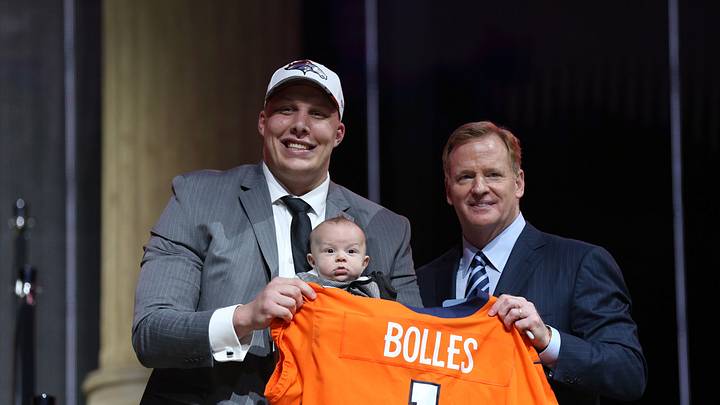
2017: A weak overall class, with first-round pick Ryan Ramczyk the only quality starter, though maybe fellow first-rounder Garett Bolles and second-rounder Cam Robinson can turn things around in 2020. Sixth-round pick Sam Tevi has been solid, but not a top guy. Out of the other 11 OT taken, you have depth players at best.
2018: First-round picks Mike McGlinchey and Kolton Miller have been at least solid, while Isaiah Wynn has battled injuries. Second-round pick Brian O'Neill is contributing as a starter, while the other second-round pick, Connor Williams, moved to guard. Out of the remaining 16 OTs taken, Orlando Brown fell to the third round after being considered worthy of a high pick earlier in his collegiate career. He has since emerged into a quality starter.
2019: Among the first seven OTs taken in the first two rounds, the following have started a lot of games as rookies: Kaleb McGary, Jawaan Taylor, Cody Ford and Max Scharping (though Scharping has started at guard more often). It remains to be seen what happens with first-round picks Andre Dillard and Tytus Howard. After the first two rounds, 14 OTs were selected, but most appear to be depth players.
The Tally
So what's the rate of success per round for OTs since 2011? Sticking with those who didn't get moved to guard by the time their rookie deals expired, here's what it looks like.
Round 1: 17/33 - 51.5%
Round 2: 7/23 - 30.4%
Round 3: 3/25 - 12%
Round 4: 2/17 - 11.8%
Round 5: 2/21 - 9.5%
Round 6: 1/19 - 5.3%
Round 7: 3/18 - 16.7%
The success rate of first-round OTs surprised me a bit, especially when you look at some of the highly-touted prospects who became busts. You still have a good chance for a hit in the second round, though, and there have been some good finds there.
Of course, if you include players such as Scherff who moved to guard, the hit rate for the first round goes even higher, but the same could be said for other rounds, too. The same thing applies if certain players taken from 2017 to 2019 either improve or claim starting jobs, regardless of which round they were selected.
What also surprised me was the hit rate for capable starters in the seventh round was higher than I expected. That doesn't mean the Broncos can wait until the final round to take a tackle, but it's not out of the question to find somebody who can develop into a starter.
With all of this said, what really helps an OT to have a quality career is quality coaching. That's something the Broncos had when John Elway first came on board the front office, when Dave Magazu coached the line and got the most out of Franklin, plus got a solid season out of Chris Clark when Ryan Clady was lost to injury.
But after Magazu left, the Broncos have gone through failed stints with Clancy Barone and Jeff Davidson and received less-than-desirable results with Chris Strausser. Now the Broncos have Mike Munchak, one of the best O-line coaches in the NFL, and we saw how his work with Bolles got him into a better position than he's been his first two seasons.
OT not Imperative in Round 1
With a good O-line coach in the fold, it's not imperative that the Broncos take an OT in the first round. Denver might be able to find one in the second round who can be developed into a starter by 2021.
While I still favor taking a WR in the first round if at all possible, I'm certainly not going to rule out an OT, particularly if the best WRs are off the board when it comes time for the Broncos to pick. If those WRs are gone, and a top OT is there, I'm inclined to take him.
But if the Broncos either find a top receiver falling into their laps or are able to trade up without giving up a lot of capital, then the team absolutely needs to look at OT on Day 2, with the second round being the preferred spot. The Broncos would still have a good chance to find one who becomes a starter.
And while I won't count on the seventh round to find a starter, I'm giving serious thought to drafting a second OT then. Getting one in the first two rounds allows you the opportunity to roll the dice in the seventh to see if maybe you can find a guy who Munchak can develop — at the very least, that player could become a good swing tackle. And if you manage to find a guy who becomes a starter, give yourself a pat on the back.
I will give fans pushing for OT this; the evidence does show you have good odds of hitting at the position early in the draft. But as with any position, it all depends on how the draft board takes shape. And even if the Broncos don't take an OT at No. 15 overall, they still have a solid chance to find a quality starter on Day 2.
Follow Bob on Twitter @BobMorrisSports and @MileHighHuddle.
 Add us as a preferred source on Google
Bob Morris has served as Denver Broncos On SI's resident cap analyst covering the Denver Broncos and NFL since 2017. His works have been featured on Scout.com, 247Sports.com, CBSSports.com, and BleacherReport.com.
Follow BobMorrisSports