%20%20--%3E%0A%3Csvg%20version%3D%221.1%22%20id%3D%22Layer_1%22%20xmlns%3D%22http%3A%2F%2Fwww.w3.org%2F2000%2Fsvg%22%20xmlns%3Axlink%3D%22http%3A%2F%2Fwww.w3.org%2F1999%2Fxlink%22%20x%3D%220px%22%20y%3D%220px%22%0A%09%20width%3D%2239px%22%20height%3D%2240px%22%20viewBox%3D%220%200%2039%2040%22%20enable-background%3D%22new%200%200%2039%2040%22%20xml%3Aspace%3D%22preserve%22%3E%0A%3Cpath%20fill%3D%22%23FFFFFF%22%20d%3D%22M38.5%2C7H28.2v26h10.3V7z%22%2F%3E%0A%3Cpath%20fill-rule%3D%22evenodd%22%20clip-rule%3D%22evenodd%22%20fill%3D%22%23FFFFFF%22%20d%3D%22M26.1%2C25.5c0%2C5.8-4.1%2C7.5-12.9%2C7.5C3.9%2C33%2C0%2C31.2%2C0%2C25.2v-1.1h11.6%0A%09v2.4c0%2C0.7%2C0.1%2C1.4%2C1.2%2C1.4c1%2C0%2C1.2-0.4%2C1.2-1.3v-0.9c0-1.6-0.9-1.6-3.5-2.2C2.2%2C21.7%2C0%2C19.7%2C0%2C15.3v-0.9C0%2C9.3%2C5.5%2C7%2C12.9%2C7%0A%09c10.2%2C0%2C12.8%2C2.6%2C12.8%2C7.4v1.8h-11v-2.9c0-0.6-0.4-1.1-1.2-1.1c-0.6%2C0-1.2%2C0.4-1.2%2C1.1v0.9c0%2C1.5%2C0.9%2C2%2C3.3%2C2.5%0A%09c8%2C1.6%2C10.5%2C3.3%2C10.5%2C7.5V25.5z%22%2F%3E%0A%3C%2Fsvg%3E%0A)
Joe Brady's Hire Reveals the Full Picture of What Actually Happened in Buffalo
In this story:
It feels eerily similar, doesn’t it? A successful defensive-minded head coach pushed out in what seems a little more like a private equity takeover than a head coaching search? Mike Vrabel found the other side and is competing for a Super Bowl next week with the Patriots. Sean McDermott will have his chance to begin his own Vrabel story, perhaps as a consultant on another team in 2026 and a head coach the following year.
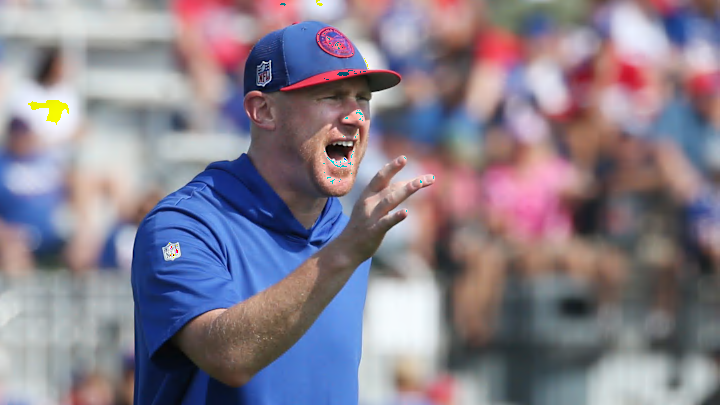
The full picture of what happened in Buffalo didn’t come into view until Tuesday’s hiring of Joe Brady, the team’s offensive coordinator, as the Bills’ next head coach. By walking into next season with almost everything identical, save for the head coach, management is making an overt statement about the 51-year-old, college-wrestler-sized roadblock it felt was in its way.
The most beautiful aspect of the NFL is that we’ll find out who was right without shades of gray. How wonderfully the Patriots’ dynasty came undone, allowing a crystal-clear window into how much of it was Bill Belichick (maybe not as much as we thought), how much of it was Tom Brady (perhaps way more than we thought) and what room for credit remained with owner Robert Kraft (about as much as we thought, though deserving of credit for how he’s handled the aftermath and the patience he showed during the dynastic run).
Either Bills owner Terry Pegula and GM Brandon Beane took a page from the Howie Roseman and Jeffrey Lurie book, realizing that they’d reached an impasse with a good-but-not-great-right-now head coach, or they yanked one right out of Tennessee, where the Titans bought into the idea that a culture-setting head coach’s increased power and influence was a net negative, opting instead for that ever-elusive corporate buzz word alignment.
By hiring Brady, the Bills are ensuring that this is not one of those classic “both things can be true” situations. Take, for example, the Eagles moving on from Andy Reid and then both the coach and his former franchise finding immeasurable success. Instead, it’s a decision of force, even more apparent than the owner-general manager press conference that took place a week ago, and shoveled more blame onto McDermott than a Lake Erie snowstorm. Either the Bills will win double-digit games again next year and retake the throne in the AFC East, or they won’t. Either McDermott will turn another program around in two years without Josh Allen … or he won’t.
After ensuring that Allen was included in the process, the Bills can easily spin this as being about the immediate future. And, in many ways, the decision is meant to maximize the critical next five years of Allen’s career (which, factoring in his cowboy-playing style, would seem to make up the peak of his remaining powers is a smart one). If Allen can handle his dual role as a team leader with one foot in the management office—a job description Russell Wilson struggled mightily with in Seattle, for what it’s worth—the effect could be wonderfully positive. Don’t get me wrong in saying that this is a bad decision, as the Bills could very well harness the tailwind of tossing out the crotchety, old professor and replacing him with the fun, young substitute teacher. I’d just be curious as to what Allen, who operates an offense that allows for an almost peak LeBron level of power, thinks he needs, versus what a strong outside voice may have suggested he needs to be at his best.
In passing up the opportunity to bring a fresh look into the building, Buffalo is placing an immense onus on what it feels is already in place. That means the path taken by the general manager for one, whose power increased with the decision to move on from McDermott. That means the offense, which, again, was undeniably successful in building a running game around Allen but, perhaps, not as harmonious within the context of the offense. That means confidence that Brady can be the voice that ends the Bills’ almost mythical series of deep playoff runs that have ended in games that necessitate nicknames.
That also means allowing McDermott to showcase his skill set somewhere else and shine a mag lamp flashlight into the corners of the Bills’ franchise, for better or worse.
Around the league, surprise isn’t necessarily the word attached to this decision. In many ways, if we weren’t so interested in dissecting every move like it was a high school science class toad, we would have applauded a team empowering its players (or player). Sensible, yes. Underwhelming, maybe. But bold, no doubt.
With the franchise at its most critical juncture, seesawing between a Super Bowl contender opening a new stadium to usher in a crucial era of Bills football and one of those heartbreaking woulda-shoulda-coulda Dan Marino stories, Buffalo felt like patchwork and paint, not a full-scale renovation.
Time, as it did with Vrabel, Doug Pederson, Belichick and Reid, will most certainly tell.
More NFL on Sports Illustrated
 Add us as a preferred source on Google
Conor Orr is a Senior Writer for Sports Illustrated with more than 15 years of experience covering the NFL. His work has been cited in Best American Sportswriting and has won a PFWAA award. Prior to Sports Illustrated, he covered both the Giants and Jets for The Star-Ledger. Conor lives in New Jersey with his amazing wife and three children.
Follow author