%20%20--%3E%0A%3Csvg%20version%3D%221.1%22%20id%3D%22Layer_1%22%20xmlns%3D%22http%3A%2F%2Fwww.w3.org%2F2000%2Fsvg%22%20xmlns%3Axlink%3D%22http%3A%2F%2Fwww.w3.org%2F1999%2Fxlink%22%20x%3D%220px%22%20y%3D%220px%22%0A%09%20width%3D%2239px%22%20height%3D%2240px%22%20viewBox%3D%220%200%2039%2040%22%20enable-background%3D%22new%200%200%2039%2040%22%20xml%3Aspace%3D%22preserve%22%3E%0A%3Cpath%20fill%3D%22%23FFFFFF%22%20d%3D%22M38.5%2C7H28.2v26h10.3V7z%22%2F%3E%0A%3Cpath%20fill-rule%3D%22evenodd%22%20clip-rule%3D%22evenodd%22%20fill%3D%22%23FFFFFF%22%20d%3D%22M26.1%2C25.5c0%2C5.8-4.1%2C7.5-12.9%2C7.5C3.9%2C33%2C0%2C31.2%2C0%2C25.2v-1.1h11.6%0A%09v2.4c0%2C0.7%2C0.1%2C1.4%2C1.2%2C1.4c1%2C0%2C1.2-0.4%2C1.2-1.3v-0.9c0-1.6-0.9-1.6-3.5-2.2C2.2%2C21.7%2C0%2C19.7%2C0%2C15.3v-0.9C0%2C9.3%2C5.5%2C7%2C12.9%2C7%0A%09c10.2%2C0%2C12.8%2C2.6%2C12.8%2C7.4v1.8h-11v-2.9c0-0.6-0.4-1.1-1.2-1.1c-0.6%2C0-1.2%2C0.4-1.2%2C1.1v0.9c0%2C1.5%2C0.9%2C2%2C3.3%2C2.5%0A%09c8%2C1.6%2C10.5%2C3.3%2C10.5%2C7.5V25.5z%22%2F%3E%0A%3C%2Fsvg%3E%0A)
Why Nate Scheelhaase Could Skip a Step in the Head Coach Hiring Cycle
In this story:
Not long after Nate Scheelhaase arrived at Iowa State as a running backs coach in 2018, he was in the office of athletic director Jamie Pollard a few times a month. The program thought it best to install these mentorship sessions to give Scheelhaase a chance to talk about his coaching vision and how he might run a program one day.
Specifically, the hope was that he’d run their program.
Then Iowa State head coach Matt Campbell (recently named the head coach at Penn State) was receiving head coaching interest from multiple Power 5 programs and with both the NFL’s Jets and Lions. Meanwhile, Scheelhaase became a kind of Forest Gump–like figure in the background of arguably the best era of football in Cyclones history.
He recruited Breece Hall. He developed Jaylin Noel. He became the offensive coordinator in time to call plays for the rise of a future seventh-round pick named Brock Purdy. Despite being just over 30 years old, he was the heir apparent. That is, until the NFL got eyes on him.
“I remember Coach Campbell, after meeting him for the first time, called me and said: ‘This guy’s the real deal. He’s going to have a bright future,’” Pollard says. “And I think it really was born on, he just has a very mature presence about him that’s very sincere.”
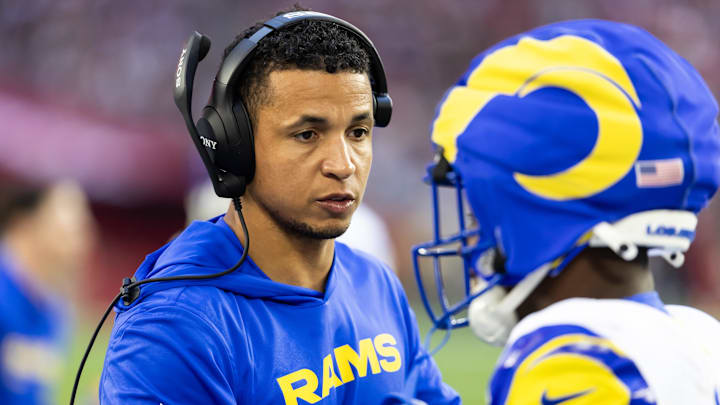
By the time Campbell finally left Iowa State, Scheelhaase was entrenched on one of the NFL’s most-studied coaching staffs as a passing-game coordinator for the Rams.
“My understanding was the Rams had him targeted. I mean, I don’t think it was any secret around college sports that Nate was really good, was a rising star,” Pollard says. “I mean, he walks into a room and—some guys walk into the room and they’re salesmen. Nate can just walk into the room and he’s kind of just got that glow, that twinkle in his eye. He can let his actions do all his talking, and some people just have that and he’s got it.”
In many ways, Scheelhaase defines the great promise of the 2026 coaching cycle. Alongside Broncos passing-game coordinator and quarterbacks coach Davis Webb, the pair are primed to possibly jump the traditional play-calling coordinator pipeline and directly into the head coaching seat. According to a source briefed on Scheelhaase’s interview schedule, he’ll meet with the Ravens, Raiders and Browns about their respective head coach openings. This, after being requested for multiple offensive coordinator opportunities a year ago.
Webb has already interviewed with the Ravens and Raiders, the latter of which generated some serious buzz around the industry.
Scheelhaase, 35, and Webb, 30, are both a symptom and a promising cure. For more than a decade straight, at a feverish pace, NFL teams have rapidly cycled through play-callers with any semblance of promise as head coaches. However, NFL turnover remains at an all-time high as owners view a coaching change as often the least expensive way to pacify a fan base that sits on a spectrum ranging from bored to outraged.
That leaves coaches like Mike McDaniel, who had one of the league’s most efficient offenses from 2022 to ’25, currently looking for another job despite posting an offensive passing success rate only two percentage points lower than the Chiefs’ with Patrick Mahomes (McDaniel had Tua Tagovailoa, Skylar Thompson, Snoop Huntley and Quinn Ewers).
It also leaves very specific gaps of time—like the one we are in now—where only a handful of offensive coordinators are in a position to warrant head coaching interest, having not been trampled by the “retread” label, or been boxed out of the coordinator title by a play-calling head coach who has never relinquished those duties. Only the Bills’ Joe Brady and 49ers’ Klint Kubiak fit the ascension plan that we have become familiar with.
But that also leaves teams curious—and rightfully so—about the staff at levels just below offensive coordinator or head coach, especially on teams with Super Bowl–winning play-callers such as the Broncos and Rams. In the case of Scheelhaase, he’s a former Division I quarterback at Illinois who has held a critical position focused in part on innovation. Scheelhaase is able to take what is relevant leaguewide or at the collegiate level and fit it into the Rams’ ever-evolving offense.
According to Pollard, though, what truly impressed him about the young coach was his ability to read people. There is nothing inauthentic about Scheelhaase, he says. There is never a sense of ulterior motive, proven in part, he says, by the fact that Scheelhaase actually wanted to pursue a career in campus ministry before he was pulled into coaching. Instead, during a series of conversations about the Iowa State football program, he clinically laid out a vision for the team’s future. When part of that conversation came to which coaches Scheelhaase would keep and why, Pollard was taken aback by how closely their visions had aligned. In short, Scheelhaase could understand the rhythm and harmony of a group of grown men and lay out a cogent plan to get there.
“I didn’t want him to tell me what I wanted to hear,” Pollard says. “I wanted to hear what he really thought, and you could just tell he had put a lot of time and thought into who fits the culture of what Nate would want to be leading. And I think that’s an art. It’s not a science. A lot of people go, ‘Oh, go hire this person, hire that person, hire that person.’ But if all the pieces don’t fit together culturally, you’re not going to achieve at the highest level. And so I think he was mature enough to understand that.”
Webb has already gotten his chance to prove that teams might not have to wait. Indeed, McVay, arguably the best head coaching hire of this century, was 30 when he became the Rams’ head coach (albeit after three years as an offensive coordinator behind Jay Gruden). Scheelhaase will make his case this week.
And maybe we’ll see the narrative shift from there being no good candidates on the offensive side of the ball, to that we’re just not looking in the right places anymore.
More coaching analysis from Conor Orr
 Add us as a preferred source on Google
Conor Orr is a Senior Writer for Sports Illustrated with more than 15 years of experience covering the NFL. His work has been cited in Best American Sportswriting and has won a PFWAA award. Prior to Sports Illustrated, he covered both the Giants and Jets for The Star-Ledger. Conor lives in New Jersey with his amazing wife and three children.
Follow author