%20%20--%3E%0A%3Csvg%20version%3D%221.1%22%20id%3D%22Layer_1%22%20xmlns%3D%22http%3A%2F%2Fwww.w3.org%2F2000%2Fsvg%22%20xmlns%3Axlink%3D%22http%3A%2F%2Fwww.w3.org%2F1999%2Fxlink%22%20x%3D%220px%22%20y%3D%220px%22%0A%09%20width%3D%2239px%22%20height%3D%2240px%22%20viewBox%3D%220%200%2039%2040%22%20enable-background%3D%22new%200%200%2039%2040%22%20xml%3Aspace%3D%22preserve%22%3E%0A%3Cpath%20fill%3D%22%23FFFFFF%22%20d%3D%22M38.5%2C7H28.2v26h10.3V7z%22%2F%3E%0A%3Cpath%20fill-rule%3D%22evenodd%22%20clip-rule%3D%22evenodd%22%20fill%3D%22%23FFFFFF%22%20d%3D%22M26.1%2C25.5c0%2C5.8-4.1%2C7.5-12.9%2C7.5C3.9%2C33%2C0%2C31.2%2C0%2C25.2v-1.1h11.6%0A%09v2.4c0%2C0.7%2C0.1%2C1.4%2C1.2%2C1.4c1%2C0%2C1.2-0.4%2C1.2-1.3v-0.9c0-1.6-0.9-1.6-3.5-2.2C2.2%2C21.7%2C0%2C19.7%2C0%2C15.3v-0.9C0%2C9.3%2C5.5%2C7%2C12.9%2C7%0A%09c10.2%2C0%2C12.8%2C2.6%2C12.8%2C7.4v1.8h-11v-2.9c0-0.6-0.4-1.1-1.2-1.1c-0.6%2C0-1.2%2C0.4-1.2%2C1.1v0.9c0%2C1.5%2C0.9%2C2%2C3.3%2C2.5%0A%09c8%2C1.6%2C10.5%2C3.3%2C10.5%2C7.5V25.5z%22%2F%3E%0A%3C%2Fsvg%3E%0A)
NFL Grievance Win May Not Stop Public Shaming From NFLPA Report Cards
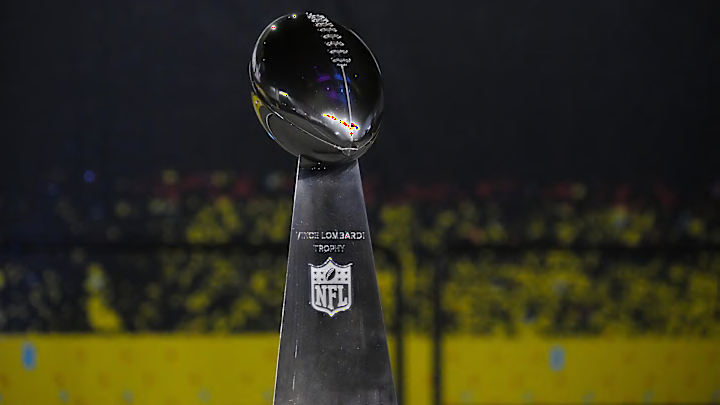
With the Super Bowl now in the rearview mirror, we have moved past the “games” part of the NFL calendar. But it is the “no games” part of the calendar that I have always found more interesting. Even as the confetti landed on the Seahawks, there were pressing issues facing the league, as there always are.
The ultimate team sport
A lot of the clichés about football, as boring as they are, sometimes turn out to be true. Defenses travel well, and the Seahawks’ defense is elite. Experience matters, especially at quarterback, and Sam Darnold possessed a lot of experience, on his fifth team through ups and downs; Drake Maye did not have much of it, and it showed. And while Patriots fans dismissed the narrative all season around their team having the easiest schedule in the NFL, that proved to be a factor, as they were no match for the battle-tested Seahawks.
And a pet peeve of mine: While it is hard not to be a fan of Darnold and give him all the attention he is getting after what his career has looked like, football is the ultimate team game. The best players play half the game, at best, and every player is dependent on every other player on the field. I’ve seen players like Aaron Rodgers and Josh Allen have great playoff games and lose. Darnold had an O.K. game, at best, and won. Should we not say Darnold is “better” than Allen or Dan Marino or Lamar Jackson or someone else who has not won a Super Bowl? Of course not. It’s the ultimate team sport.
Congrats to the Seahawks’ team as a whole, masterfully assembled and architected by my old friend and colleague from the Packers, John Schneider.
Hiding the report cards
With the NFLPA releasing its report cards every year, fans and media gravitated toward focusing on the failing grades of certain teams for whatever deficiencies they had: facilities, medical treatment, food, etc. It became a public shaming for teams such as the Jets and Bengals, and sometimes showed some surprisingly low marks for successful teams, even the Chiefs while they were winning Super Bowls.
No more, at least legally. The NFL brought the matter to an arbitrator, who ruled for the league in mandating that while the union could keep having the report cards, they could only be used internally and not sent out to the media. While that win for the league brought a loud boo from the public, I think the league would rather accept that than face more public humiliation from the cards.
We will now see a couple of things, specifically whether the public shaming that brought on positive change from teams will continue, and/or the leaking to the media will continue, with denials by the NFLPA that they were the source of the leaking. I am not sure about the first one, but I have little hope that the future report cards will stay in-house.
A final note: Maybe the NFLPA, currently without a long-term leader, should spend more time fighting things like the imposition of a 17th game (or an 18th game) than publicizing report cards.
Lack of diversity among coaches
There were 10 head coach openings in the NFL in this cycle and only one of them was filled by a minority candidate: Titans coach Robert Saleh, who is of Lebanese descent. None of the 10 are Black.
In past years, we have heard more about this lack of diversity among head coaches in a league that is 75% Black and more discussion of the Rooney Rule. I am not sure why we don’t hear more of it now. Perhaps there is some fatigue in talking about it, maybe influenced by the change in leadership nationally and the administration’s thoughts on DEI. But with 10 openings, it does stand out.
Unless we haven’t heard, every team with an opening did “satisfy” the Rooney Rule, requiring an interview with a minority candidate. But we don’t know the seriousness of those interviews. And, as I say every year, it is impossible for the rule to have real teeth when decision-makers—owners, GMs, etc.—have their eyes fixed on one candidate, as many teams seem to have.
For instance, with the Giants’ ownership driving down to John Harbaugh’s house the day after he was fired by the Ravens, how was any other candidate—minority or not—going to have a true and meaningful interview for that position?
There are some things the Rooney Rule can’t fix, but this cycle was not a good look for the NFL’s continuing efforts toward diversity in hiring.
A growing international schedule
I have said this for years: I never expected the NFL to have an overseas team, but I always expected the NFL to have an overseas schedule. And now it will: In 2026, there will be nine international games, meaning more than half the league will play in one of these games this season and my assumption is that the rest of the teams will play in one of them in ’27.
Of note in 2026 will be a return engagement in Madrid, as the game last year was a success and a long way from our venture in Barcelona 30 years ago where fans cheered at all the wrong times. There will also now be a Paris game, between the Saints and the Browns; and a game in Melbourne, with the Rams and 49ers; and a game in Mexico. And there will be three games in London, another game in Rio (featuring the Cowboys) and one in Munich.
The nine games are two more than the seven played last year, with more markets on the way, maybe even Saudi Arabia.
With the NFL making no secret of wanting to expand to an 18-game regular season at some point soon, we can easily envision one, or even two, “international weeks” of the season. The NFL doesn’t want a team in any of these markets; life is too good now with these one-offs selling out and creating the buzz that the NFL loves.
More NFL on Sports Illustrated
 Add us as a preferred source on Google
Andrew Brandt is the executive director of the Moorad Center for the Study of Sports Law at Villanova University and a contributing writer at Sports Illustrated. He has written a "Business of Football" column for SI since 2013. Brandt also hosts a "The Business of Sports" podcast and publishes a weekly newsletter, "The Sunday Seven." After graduating from Stanford University and Georgetown Law School, he worked as a player-agent, representing NFL players such as Boomer Esiason, Matt Hasselbeck and Ricky Williams. In 1991, he became the first general manager of the World League's Barcelona Dragons. He later joined the Green Bay Packers, where he served as vice president and general counsel from 1999 to 2008, negotiating all player contracts and directing the team's football administration. He worked as a consultant with the Philadelphia Eagles and also has served as an NFL business analyst for ESPN.