%20%20--%3E%0A%3Csvg%20version%3D%221.1%22%20id%3D%22Layer_1%22%20xmlns%3D%22http%3A%2F%2Fwww.w3.org%2F2000%2Fsvg%22%20xmlns%3Axlink%3D%22http%3A%2F%2Fwww.w3.org%2F1999%2Fxlink%22%20x%3D%220px%22%20y%3D%220px%22%0A%09%20width%3D%2239px%22%20height%3D%2240px%22%20viewBox%3D%220%200%2039%2040%22%20enable-background%3D%22new%200%200%2039%2040%22%20xml%3Aspace%3D%22preserve%22%3E%0A%3Cpath%20fill%3D%22%23FFFFFF%22%20d%3D%22M38.5%2C7H28.2v26h10.3V7z%22%2F%3E%0A%3Cpath%20fill-rule%3D%22evenodd%22%20clip-rule%3D%22evenodd%22%20fill%3D%22%23FFFFFF%22%20d%3D%22M26.1%2C25.5c0%2C5.8-4.1%2C7.5-12.9%2C7.5C3.9%2C33%2C0%2C31.2%2C0%2C25.2v-1.1h11.6%0A%09v2.4c0%2C0.7%2C0.1%2C1.4%2C1.2%2C1.4c1%2C0%2C1.2-0.4%2C1.2-1.3v-0.9c0-1.6-0.9-1.6-3.5-2.2C2.2%2C21.7%2C0%2C19.7%2C0%2C15.3v-0.9C0%2C9.3%2C5.5%2C7%2C12.9%2C7%0A%09c10.2%2C0%2C12.8%2C2.6%2C12.8%2C7.4v1.8h-11v-2.9c0-0.6-0.4-1.1-1.2-1.1c-0.6%2C0-1.2%2C0.4-1.2%2C1.1v0.9c0%2C1.5%2C0.9%2C2%2C3.3%2C2.5%0A%09c8%2C1.6%2C10.5%2C3.3%2C10.5%2C7.5V25.5z%22%2F%3E%0A%3C%2Fsvg%3E%0A)
Sean Payton Passed Up Three Points That Could’ve Swung an AFC Championship Game
In this story:
DENVER — All at once they were inside a snow globe; this entire little world of 76,000 people here in Denver, whipped up in a cyclone of powdery fluff. In the gap between the south end zone and the start of the west stands that usually offers a window into the universe beyond, there was no visibility. The sky took on the color of stagnant pond water and offered as much visibility as a thick hotel privacy curtain.
And what a place it became. Snow blowers on the field revealing lines that would be covered again in seconds. The chorus of Bohemian Rhapsody blaring through the stadium speakers. A digital billboard at Mile High advertising skiing in the Swiss Alps, as if the action wouldn’t have been better on the slick and slushy exit ramps out of the stadium.
Sadly for the Broncos, the postgame press conference room after a 10–7 AFC championship game loss to the Patriots was a different kind of world altogether. Similarly isolating but drastically different in tenor. The reason this wasn’t a Broncos party—the reason Mike Vrabel was another 75 yards down the corridor, walking through the locker room with a crushed Miller Lite can between his paws while one of his offensive linemen stuffed extras in his hand warmer for safe keeping—came down to a few moments of regret.
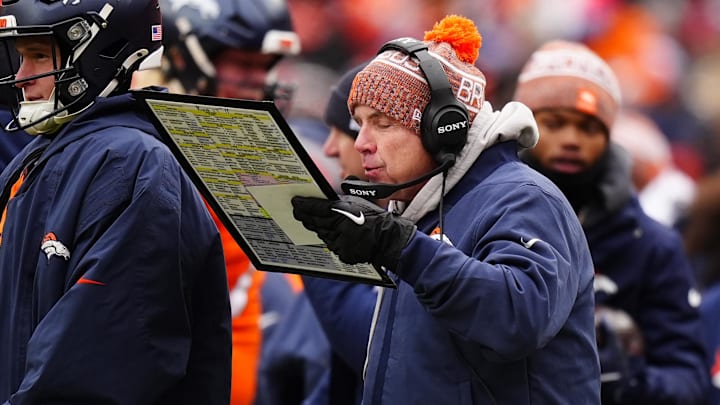
Admirably, Sean Payton, eyeing that ever-elusive return trip to the Super Bowl more than a dozen years in the making, labeled it as self-regret with regard to his decision making. One call in particular completely altered the game. Before the whistling snow made offense a laughable proposition, back when the field was still a predictable shade of green and didn’t resemble Irkutsk in deep winter, Denver had the ball at the Patriots’ 14-yard line with a 7–0 lead and 9:28 to go in the second quarter.
While it was impossible to know what the second half would bring, taking a field goal and going up 10 points on the Patriots would have been backbreaking, given how lifeless New England had looked to that point. It would have placed Drake Maye into more obvious passing situations—a horrific proposition given the surging Vance Joseph defense that had forced Maye into taking some perilous sacks and bad pressure decisions. New England had just one first down in the first quarter. Payton gambled, and a Jarrett Stidham incompletion on fourth-and-1 gave New England the ball, still down only seven points.
Multiple Patriots players in the locker room noted the moment as the instant the game changed. On the Broncos’ next possession, Stidham was forced into a backward pass that resulted in a turnover, a short field and New England’s only touchdown of the game.
“The feeling was, Let’s be aggressive,” Payton said after the game. “You know, to get up 14, just watching the way our defense was playing.”
It’s worth noting that, in 2025, Payton has been one of the least aggressive fourth-down coaches in the NFL, going for it just a handful of times more than the Chargers, Dolphins and Texans, respectively.
Payton came under the microscope less for his abandonment of a running game that had a relatively high success rate. The Broncos had 17 rushing attempts at halftime and 24 at the end of the game. While Stidham only had 10 second-half passing attempts, it outlined the size of the rut that Denver had become lodged in, the struggle to move the ball in a snowstorm and how magnified taking the points ultimately became. On the other side of the field, Patriots offensive coordinator Josh McDaniels was able to bust open a Broncos defense with a flea-flicker.
Payton also challenged a suspect Patriots fourth-down conversion that removed a critical timeout from his holster toward the end of the game. Because Maye was boxed in on all sides following the quarterback sneak, there was almost no way a camera angle existed that could provide contrary evidence to the call that was made on the field.
While it seems like minutiae, this is the reason the Broncos traded for one of the highest-paid coaches in the NFL and expected to roll into the Super Bowl with a backup quarterback.
On the fourth-down call, which was called “Slipper Naked,” Payton said it was a change from what the Broncos had initially dialed up. Before a Broncos timeout, Payton had a run call because he expected New England to come out in its nickel package. The Patriots came back from the break in a six-man front, which prompted the audible.
After the snap, two of New England’s defensive tackles—Milton Williams and Cory Durden—immediately rushed counter to the Broncos’ run-fake blocking, forcing Stidham to drift in the pocket. His intended receiver, running back RJ Harvey, was blanketed by a defender and another was sitting just outside Harvey ready to jump the pass. It wasn’t the first time that New England’s defense seemed to know exactly what was coming (a screen call to Evan Engram later in the game was blown up after New England’s defense grew animated and started calling it out).
“There’s always regrets,” Payton said, taking one of several long, pregnant pauses as he tried to carve out a sentence. “It’s a call you make based on the team you’re playing and what you’re watching on the other side of the ball. So, yeah, there will always be second thoughts back and forth.”
In this case, it’s the one tangible call that Broncos fans can point to as to why their team won’t be playing in the Super Bowl two weekends from now. It propelled the Patriots into the second-half snow globe; into a world where nothing made sense anymore and the direction of wind, the soundness of footing and the grip on a ball mattered far more than what Payton felt he could get out of his game plan.
More NFL From Sports Illustrated
 Add us as a preferred source on Google
Conor Orr is a Senior Writer for Sports Illustrated with more than 15 years of experience covering the NFL. His work has been cited in Best American Sportswriting and has won a PFWAA award. Prior to Sports Illustrated, he covered both the Giants and Jets for The Star-Ledger. Conor lives in New Jersey with his amazing wife and three children.
Follow author