%20%20--%3E%0A%3Csvg%20version%3D%221.1%22%20id%3D%22Layer_1%22%20xmlns%3D%22http%3A%2F%2Fwww.w3.org%2F2000%2Fsvg%22%20xmlns%3Axlink%3D%22http%3A%2F%2Fwww.w3.org%2F1999%2Fxlink%22%20x%3D%220px%22%20y%3D%220px%22%0A%09%20width%3D%2239px%22%20height%3D%2240px%22%20viewBox%3D%220%200%2039%2040%22%20enable-background%3D%22new%200%200%2039%2040%22%20xml%3Aspace%3D%22preserve%22%3E%0A%3Cpath%20fill%3D%22%23FFFFFF%22%20d%3D%22M38.5%2C7H28.2v26h10.3V7z%22%2F%3E%0A%3Cpath%20fill-rule%3D%22evenodd%22%20clip-rule%3D%22evenodd%22%20fill%3D%22%23FFFFFF%22%20d%3D%22M26.1%2C25.5c0%2C5.8-4.1%2C7.5-12.9%2C7.5C3.9%2C33%2C0%2C31.2%2C0%2C25.2v-1.1h11.6%0A%09v2.4c0%2C0.7%2C0.1%2C1.4%2C1.2%2C1.4c1%2C0%2C1.2-0.4%2C1.2-1.3v-0.9c0-1.6-0.9-1.6-3.5-2.2C2.2%2C21.7%2C0%2C19.7%2C0%2C15.3v-0.9C0%2C9.3%2C5.5%2C7%2C12.9%2C7%0A%09c10.2%2C0%2C12.8%2C2.6%2C12.8%2C7.4v1.8h-11v-2.9c0-0.6-0.4-1.1-1.2-1.1c-0.6%2C0-1.2%2C0.4-1.2%2C1.1v0.9c0%2C1.5%2C0.9%2C2%2C3.3%2C2.5%0A%09c8%2C1.6%2C10.5%2C3.3%2C10.5%2C7.5V25.5z%22%2F%3E%0A%3C%2Fsvg%3E%0A)
The Two Super Bowl GMs Share a Background
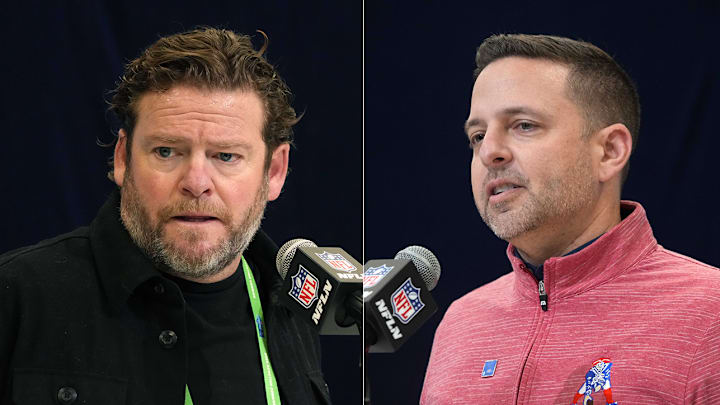
Super Bowl LX does not feature the Packers, but does feature two general managers developed in Green Bay. Also, the Patriots advanced to Santa Clara, Calif., by playing through a whiteout in Denver, the Bills showed another side to their organization and the head coach hiring cycle has been, well, safe.
The Packers in the Super Bowl (sort of)
I know the architects of these two teams, and it is nice to see their success.
I knew Eliot Wolf, the son of former Packers general manager Ron Wolf, someone who hired and mentored me, since he was a teenager. He was quiet but confident and never came off as “the boss’s son” who didn’t work hard. He knew players inside and out, and even at a very young age, was a trusted evaluator for all of us working for the Packers. He is as humble as they come, preferring to be out of the spotlight and leaving that to the coaches and players. And he’s quietly built quite a team this year in New England.
Seahawks GM John Schneider is more boisterous and extroverted than Eliot, but similarly focused on bringing the best players he can to his team and staying out of the spotlight. I worked with John for several years in Green Bay, and he was highly skilled both in evaluations and relationships, with players, agents and coaches. Everyone liked John, who was a Green Bay native that left his hometown team to run the show in Seattle, where he is now NFL Executive of the Year.
It is great to see both of these hardworking, ethical and selfless executives reach the pinnacle of success in the sport.

Bad weather for playoffs, but not Super Bowl
The weather in Sunday’s AFC championship game turned frightful as the second half, especially the fourth quarter, turned into a hard-to-see whiteout, compounded by the fact that the Patriots wore white jerseys. It was a test to see if anyone could stay upright, let alone play football.
And the NFL was lucky on Sunday; the games could have been played in the Northeast or the Midwest, where the weather there was even heavier snow. And Seattle was downright balmy compared to most of the country.
It has always struck me that the NFL allows, even hopes for, its playoff games to be played in places like Green Bay, Chicago, Foxborough, Buffalo, Kansas City, Philadelphia, Pittsburgh, etc, but would never allow a Super Bowl to be played there. I know, I know: There was a game outside of New York and there were domed games in Minnesota and Detroit. But, as I was told by a high-ranking league executive after Super Bowl LII in Minnesota, never again. Those were “payoffs” for taxpayer support of publicly funded stadiums, and there may be another one or two of those in Washington, D.C., and maybe even Chicago down the road, but after that, no more.
The Super Bowl is different than the other playoff games. Those are about football. The Super Bowl is also about football; but about a lot more than that: sponsorships, advertising, hospitality, parties, entertainment, etc. The NFL wants people in happy and spending moods, and warm weather facilitates that far more than cold.
Bills mafia indeed
Just when we thought the NFL firing cycle was complete, a major surprise came with the Bills firing head coach Sean McDermott after a playoff loss filled with controversy and four turnovers from Josh Allen. I’ve known McDermott for a long time; he is a good man and a good coach. I was always impressed with his stoic leadership in a tough business with lofty expectations. He now appears to have lost an internal power struggle.
General manager Brandon Beane was not only kept on board, but promoted. A press conference after the firing featured owner Terry Pegula placing the blame for at least one bad decision, the drafting of receiver Keon Coleman in the second round, on “the coaching staff,” even though Beane was on record wanting that player.
That press conference exposed a deeper issue with the Bills: infighting between the two important sides of the football operation, coaching and scouting. I’ve seen this in several organizations, where coaches complain about the players they’ve been given and/or scouts complain about the coaching staff messing up the players. The best organizations, of course, don’t have these fissures between the divisions and, more importantly, don’t have people that seek to take credit or assign blame.
To be fair, it was Pegula, not Beane, pointing the finger at the coaches, but we wonder where Pegula was getting that information, and it certainly wasn’t from McDermott. The Pegula comment pulled back the curtain on some finger pointing in the organization, a problem resolved in favor of the general manager.
I figured the Bills would be hard-pressed to find a coach as good as McDermott and they went with an internal candidate, promoting OC Joe Brady.
More of the same
I think the hirings so far have been primarily “safe,” albeit uninspiring. That does not mean that they won’t work out and have success, but there seems to be little risk in these hirings, perhaps due to my point about these franchise values now averaging $7.7 billion and the ownership need to “get it right.”
As discussed here previously, I like former Browns coach and new Falcons coach Kevin Stefanski, but the Falcons needed a search firm—sure to be paid hundreds of thousands of dollars—to settle on him, a name everyone knew? The Titans interviewed 17 people and came up with Robert Saleh. And the Giants and Steelers, two iconic franchises, played it safe and chose name brands John Harbaugh and Mike McCarthy.
As for McCarthy, it has been 20 years since he was hired in Green Bay. And I’ll never forget him describing himself as something to the effect of “just a football guy from Pittsburgh.” I smiled thinking back to that when he was hired this week, as he gets to go home and coach his third legacy franchise: Packers, Cowboys and now Steelers.
The only hirings that seemed to take a bit more risk so far are the Dolphins’ hire of former Packers defensive coordinator Jeff Hafley and the Ravens’ hire of former Chargers defensive coordinator Jesse Minter. In all interactions I have seen with them, they seem destined for success. Greater risk than the names above? Perhaps, but possibly for greater reward.
More NFL From Sports Illustrated
 Add us as a preferred source on Google
Andrew Brandt is the executive director of the Moorad Center for the Study of Sports Law at Villanova University and a contributing writer at Sports Illustrated. He has written a "Business of Football" column for SI since 2013. Brandt also hosts a "The Business of Sports" podcast and publishes a weekly newsletter, "The Sunday Seven." After graduating from Stanford University and Georgetown Law School, he worked as a player-agent, representing NFL players such as Boomer Esiason, Matt Hasselbeck and Ricky Williams. In 1991, he became the first general manager of the World League's Barcelona Dragons. He later joined the Green Bay Packers, where he served as vice president and general counsel from 1999 to 2008, negotiating all player contracts and directing the team's football administration. He worked as a consultant with the Philadelphia Eagles and also has served as an NFL business analyst for ESPN.