%20%20--%3E%0A%3Csvg%20version%3D%221.1%22%20id%3D%22Layer_1%22%20xmlns%3D%22http%3A%2F%2Fwww.w3.org%2F2000%2Fsvg%22%20xmlns%3Axlink%3D%22http%3A%2F%2Fwww.w3.org%2F1999%2Fxlink%22%20x%3D%220px%22%20y%3D%220px%22%0A%09%20width%3D%2239px%22%20height%3D%2240px%22%20viewBox%3D%220%200%2039%2040%22%20enable-background%3D%22new%200%200%2039%2040%22%20xml%3Aspace%3D%22preserve%22%3E%0A%3Cpath%20fill%3D%22%23FFFFFF%22%20d%3D%22M38.5%2C7H28.2v26h10.3V7z%22%2F%3E%0A%3Cpath%20fill-rule%3D%22evenodd%22%20clip-rule%3D%22evenodd%22%20fill%3D%22%23FFFFFF%22%20d%3D%22M26.1%2C25.5c0%2C5.8-4.1%2C7.5-12.9%2C7.5C3.9%2C33%2C0%2C31.2%2C0%2C25.2v-1.1h11.6%0A%09v2.4c0%2C0.7%2C0.1%2C1.4%2C1.2%2C1.4c1%2C0%2C1.2-0.4%2C1.2-1.3v-0.9c0-1.6-0.9-1.6-3.5-2.2C2.2%2C21.7%2C0%2C19.7%2C0%2C15.3v-0.9C0%2C9.3%2C5.5%2C7%2C12.9%2C7%0A%09c10.2%2C0%2C12.8%2C2.6%2C12.8%2C7.4v1.8h-11v-2.9c0-0.6-0.4-1.1-1.2-1.1c-0.6%2C0-1.2%2C0.4-1.2%2C1.1v0.9c0%2C1.5%2C0.9%2C2%2C3.3%2C2.5%0A%09c8%2C1.6%2C10.5%2C3.3%2C10.5%2C7.5V25.5z%22%2F%3E%0A%3C%2Fsvg%3E%0A)
Iconic Flyers
Iconic Flyers
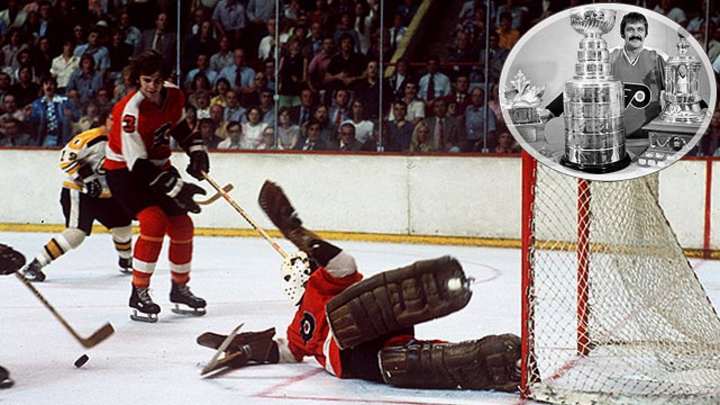
Bernie Parent
The man who backstopped the franchise's two Stanley Cup champions (1974, '75), winning the Vezina and Conn Smythe trophies in both seasons, got his stand-up style from boyhood hero and mentor, Jacques Plante. After a brief stint with Boston, Parent arrived in Philly for the 1967-68 season. He was briefly dealt to Toronto for '70-'72, but soon returned to the City of Brotherly Love. And love he felt from Flyers fans whose cars carried the sticker "Only the Lord saves more than Bernie Parent." A neck injury sidelined him for most of 1975-76, including the Cup final, in which the Flyers were swept by Montreal. Parent retired in '79 after suffering an eye injury. He was inducted into the Hockey Hall of Fame in 1984.
Bill Barber
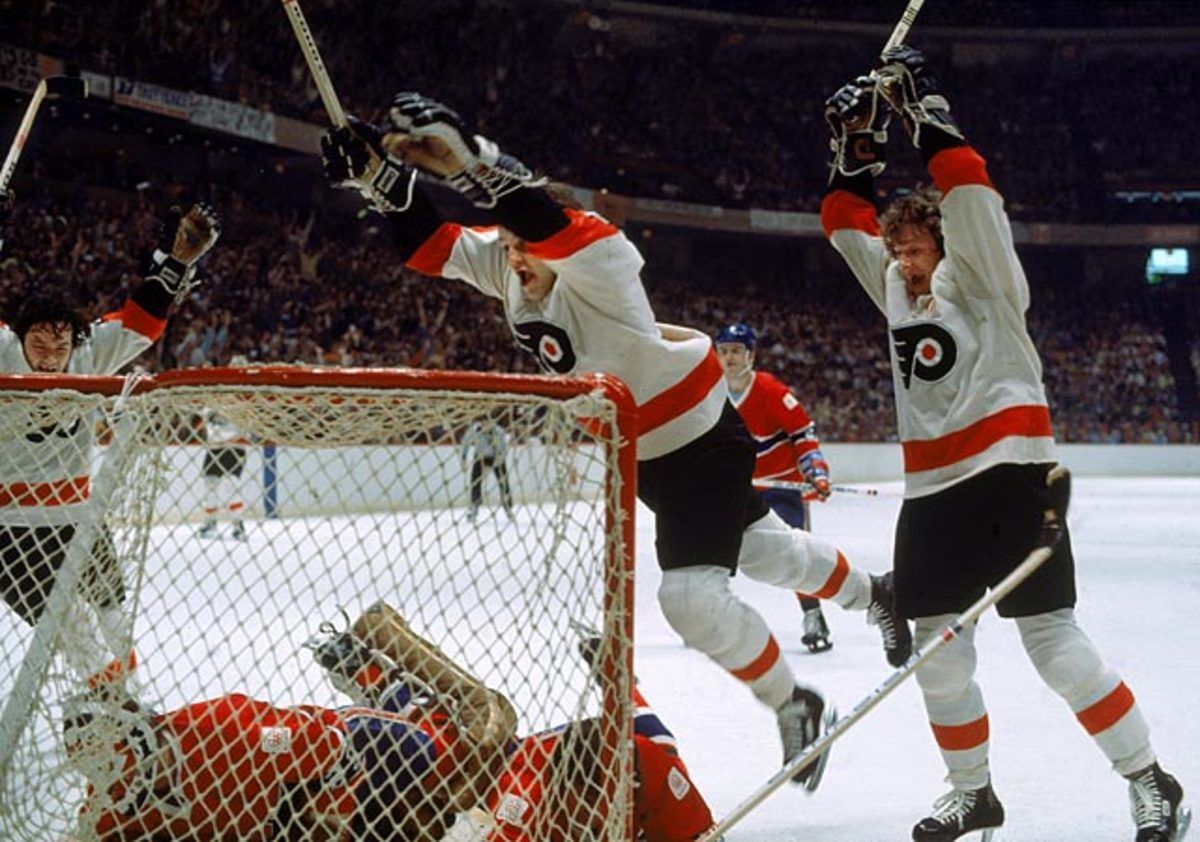
In 1972, the Flyers drafted one of the best forwards of the era with the seventh overall pick. Usually a center, Barber (center) was moved to left wing on a line with Bobby Clarke, and he excelled, scoring 30 goals as a rookie in 1972-73. His strength, superb hands and excellent shot were key components of the Flyers' two Stanley Cup teams, and he scored a career-high 50 goals and 112 points during their third straight run to the final. Unfortunately, a weak left knee forced Barber to retire during the 1983-84 season. He was inducted into the Hockey Hall of Fame in 1990 and won the 2001 Jack Adams Award as coach of the Flyers.
Bobby Clarke
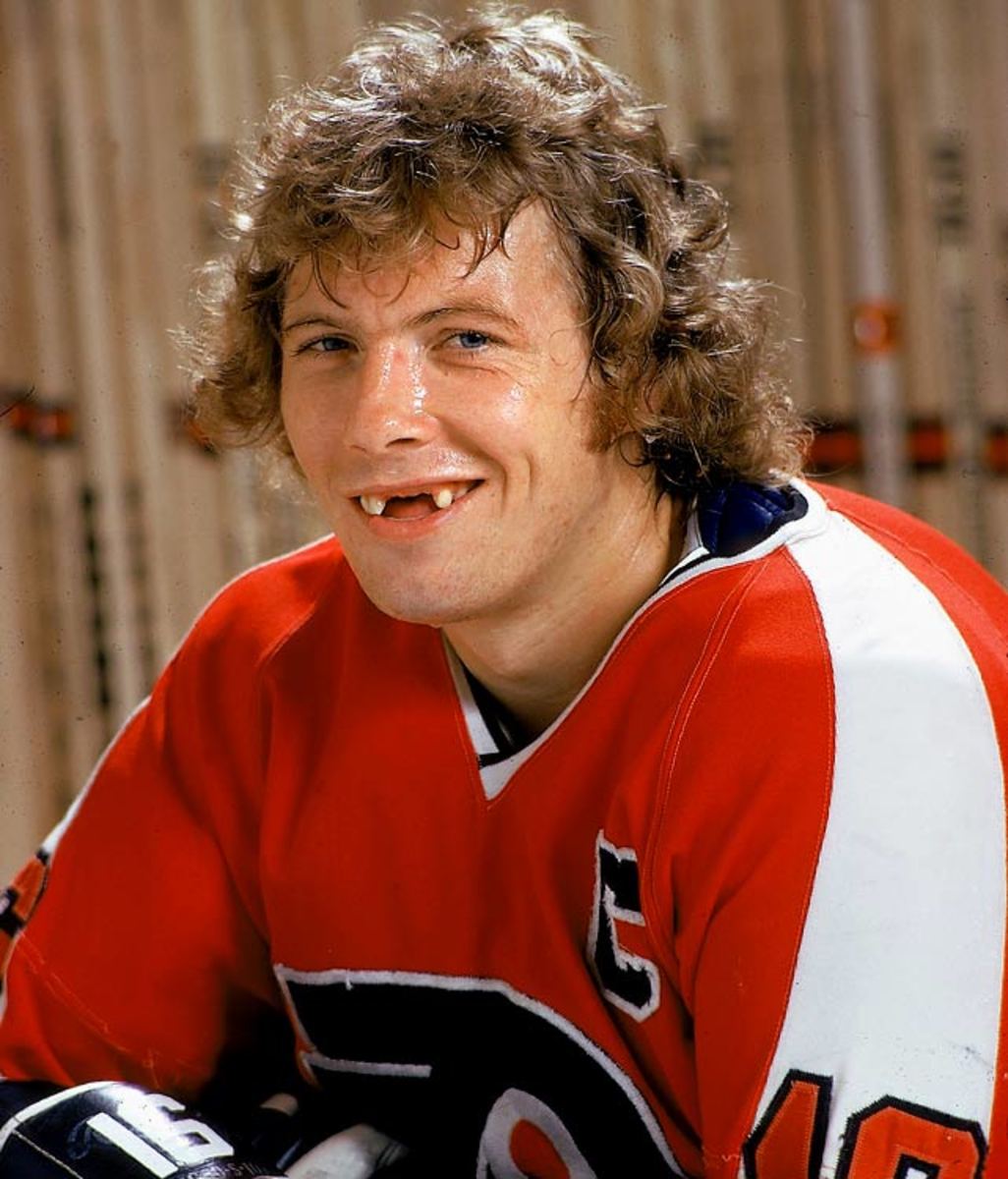
Due to his diabetes, many teams were skeptical about drafting Bobby Clarke. He was still available in the second round of the 1969 draft when the Flyers took him 17th overall. So began his 15 seasons with the club. He proved to be a fierce competitor with an unparalleled work ethic and was named team captain at age 23. His rough and, at times, controversial style of play gave him the title of one of hockey's most hated villains on the sport's most hated team, but he was beloved in Philly where he led the Broad Street Bullies to two Stanley Cups. Upon retirement, he had amassed 358 career goals and 1,453 penalty minutes. He was inducted into the Hockey Hall of Fame in 1987 and served as the Flyers' GM from 1994 to 2006.
Dave Schultz
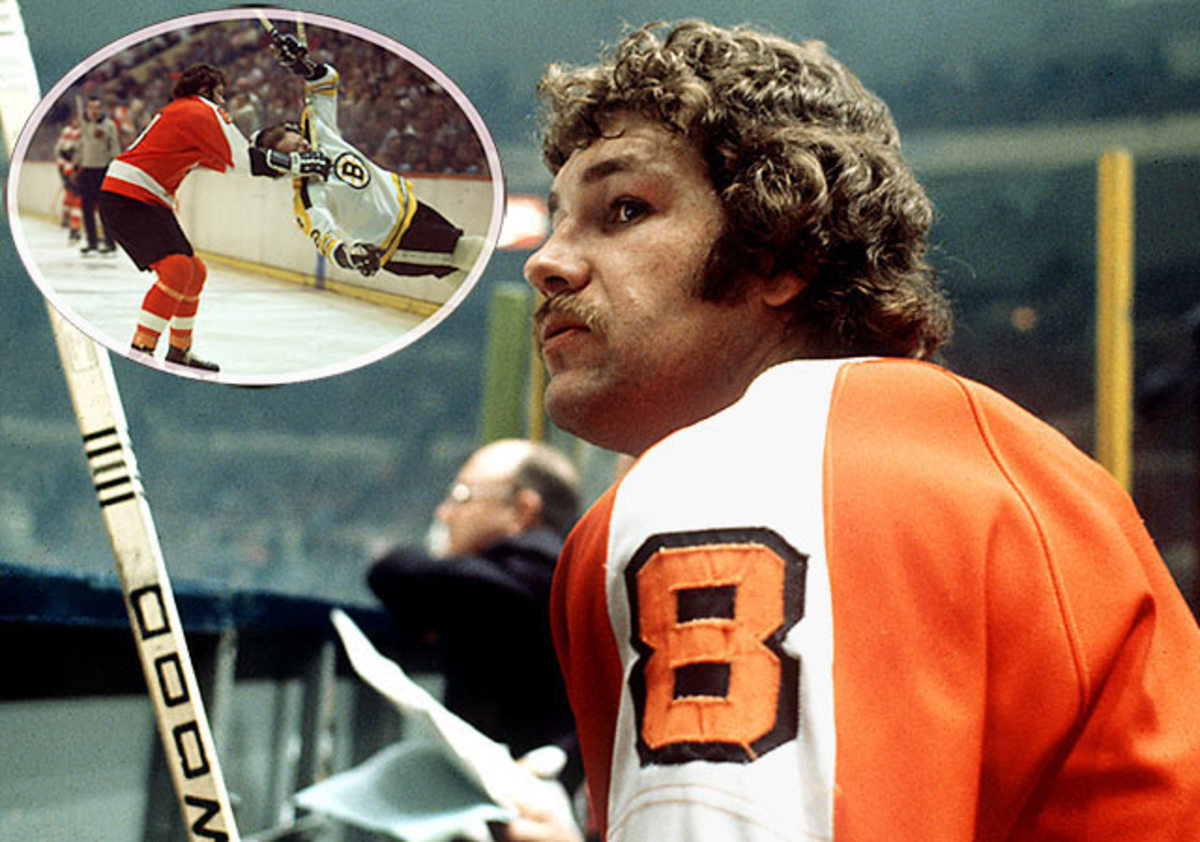
Although he spent only five years with the Flyers, Dave Schultz sure left an impression. The most notorious member of the Broad Street Bullies, the enforcer was never one to shy away from dropping the gloves with brutes like Chicago's Keith Magnuson, and he earned the appropriate nickname "The Hammer." Schultz led the NHL in penalty minutes from 1972-75, recording 259, 348 and 472, respectively. When he retired in 1980, he left with 2,294 regular season penalty minutes and 412 playoff minutes in the sin bin. But the left winger contributed in other ways as well. During the '73-'74 season, he scored 20 goals during the Flyers' first run to the Cup.
Reggie Leach
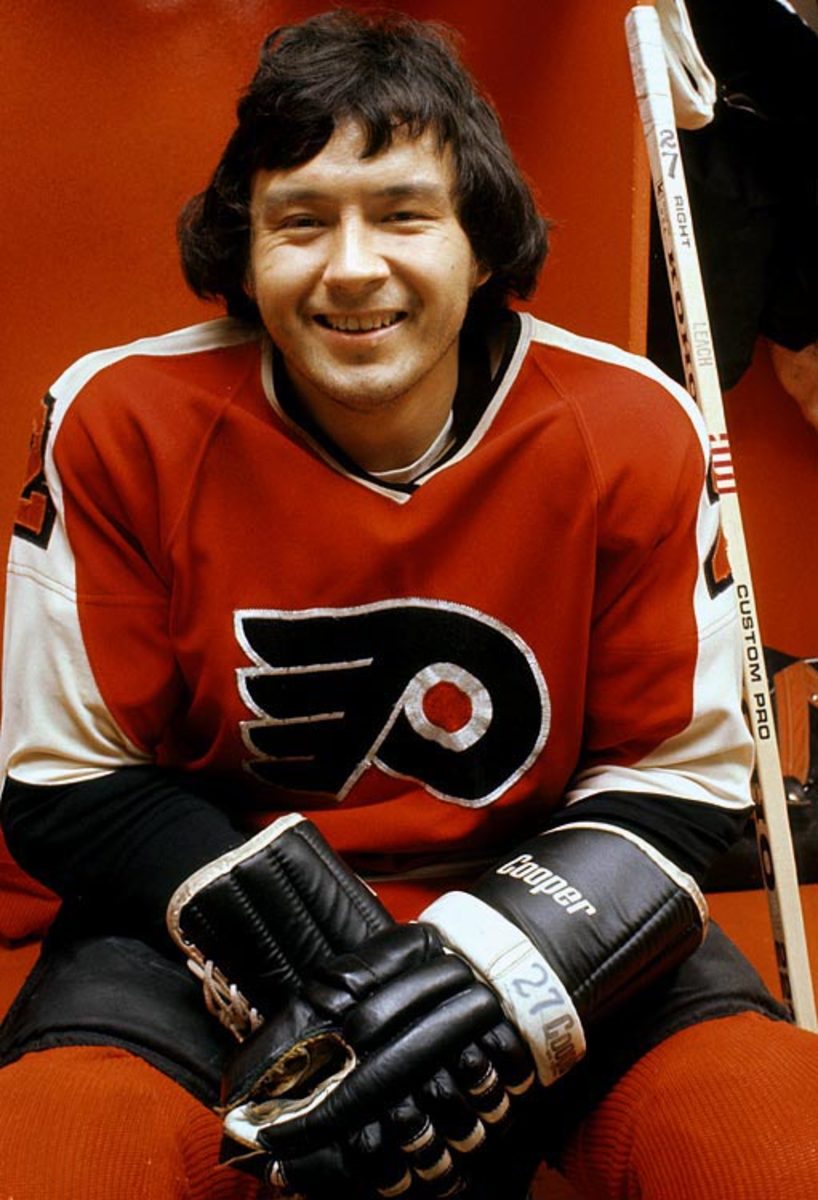
When facing Philadelphia, it was easy for teams to focus on Bobby Clarke and Bill Barber, but "The Riverton Rifle" often made them pay. Drafted by Boston third overall in 1970, Leach was traded to the Flyers by the California Golden Seals in '74 and blossomed during Philly's run to a second successive Cup. Playing on a line with Clarke and Barber, he scored 45 regular season goals and another eight in 17 postseason games. In 1975-76, he tallied 61 and earned the Conn Smythe Trophy by netting 19 in 16 playoff games, even though the Flyers were swept in the Cup final. He had another 50-goal season in `79-`80 when he helped the Flyers go a record 35 games without a loss and reach the Cup final, where they fell to the Islanders.
Rick MacLeish
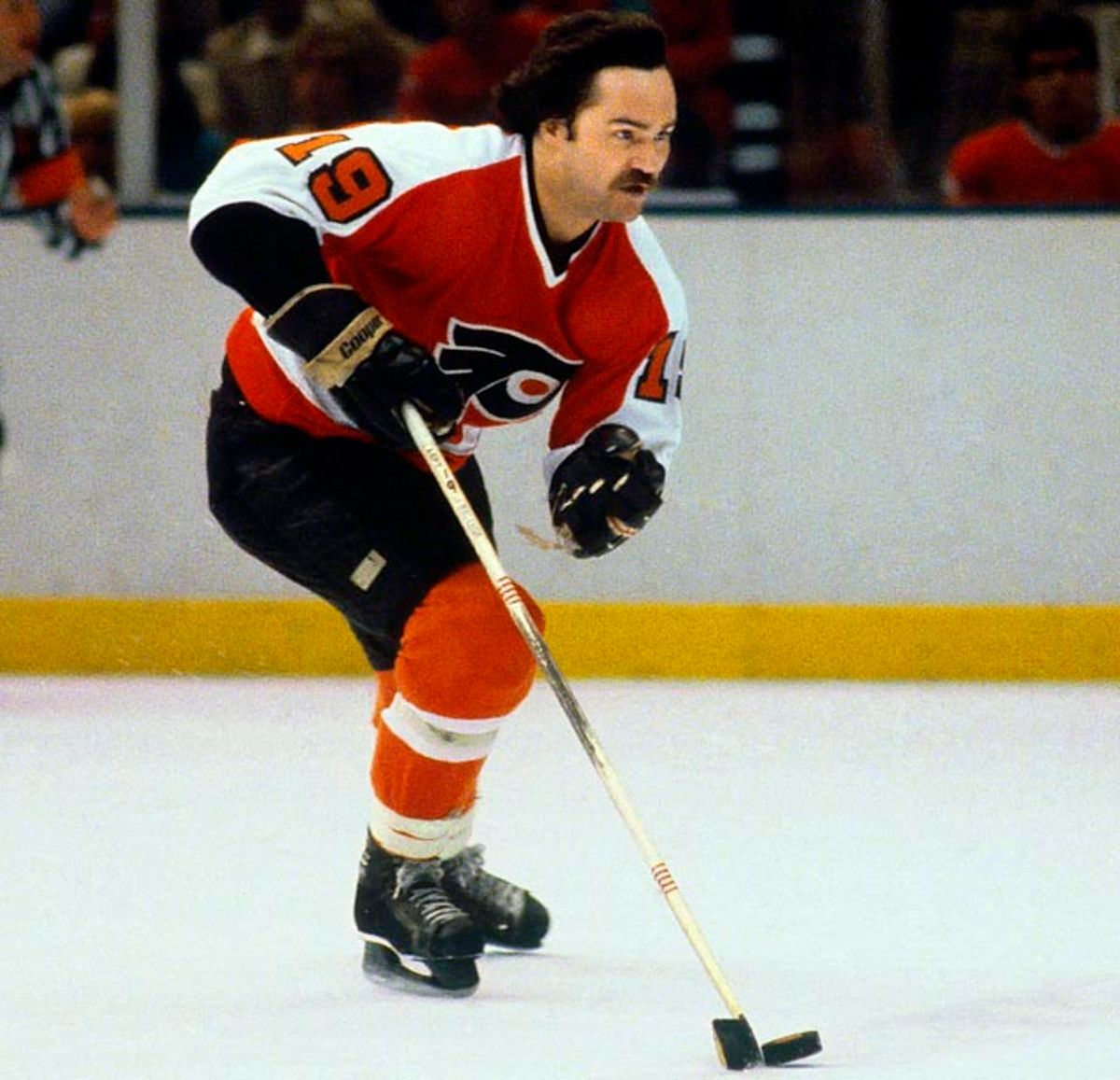
The clutch, versatile left winger was a four-time All-Star and top two-way player in Philly for 10 seasons, as well as a mainstay on the Flyers' two Stanley Cup teams. An occasionally prolific scorer, MacLeish reached the 50-goal mark in 1972-73 and was the Flyers' leading playoff scorer (13 goals, 22 points) during the run to their first Cup, in 1974. He is best known for scoring perhaps the most important goal in Flyers' history: the only tally in a 1-0 Game 6 win over Boston that delivered the Cup in a major upset.
John LeClair
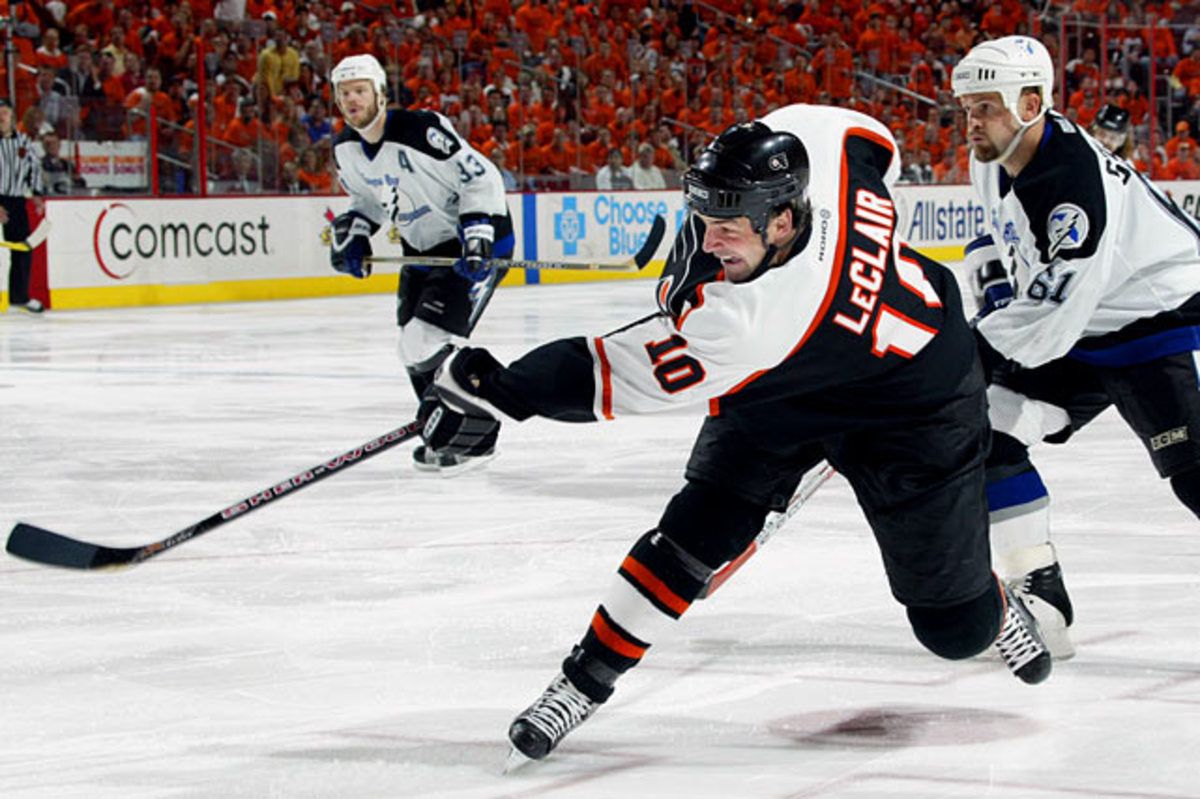
At 6-foot 3-inches and 226 pounds, the Vermont-born LeClair was a menace in the corners and in front of the net, personifying the Flyers' tough, physical style. After being traded from Montreal in 1994, he had an impressive start in Philadelphia, amassing 12 goals and 11 assists in his first 13 games with the club. Playing on a line with Eric Lindros and Mikael Renberg, the trio earned the nickname "Legion of Doom." LeClair scored 51 goals in 1995-96 en route to becoming the first American-born player to score 50 or more in a season three times. In 1996-97, he helped the Flyers reach the Cup final, where they were swept by Detroit.
Eric Lindros
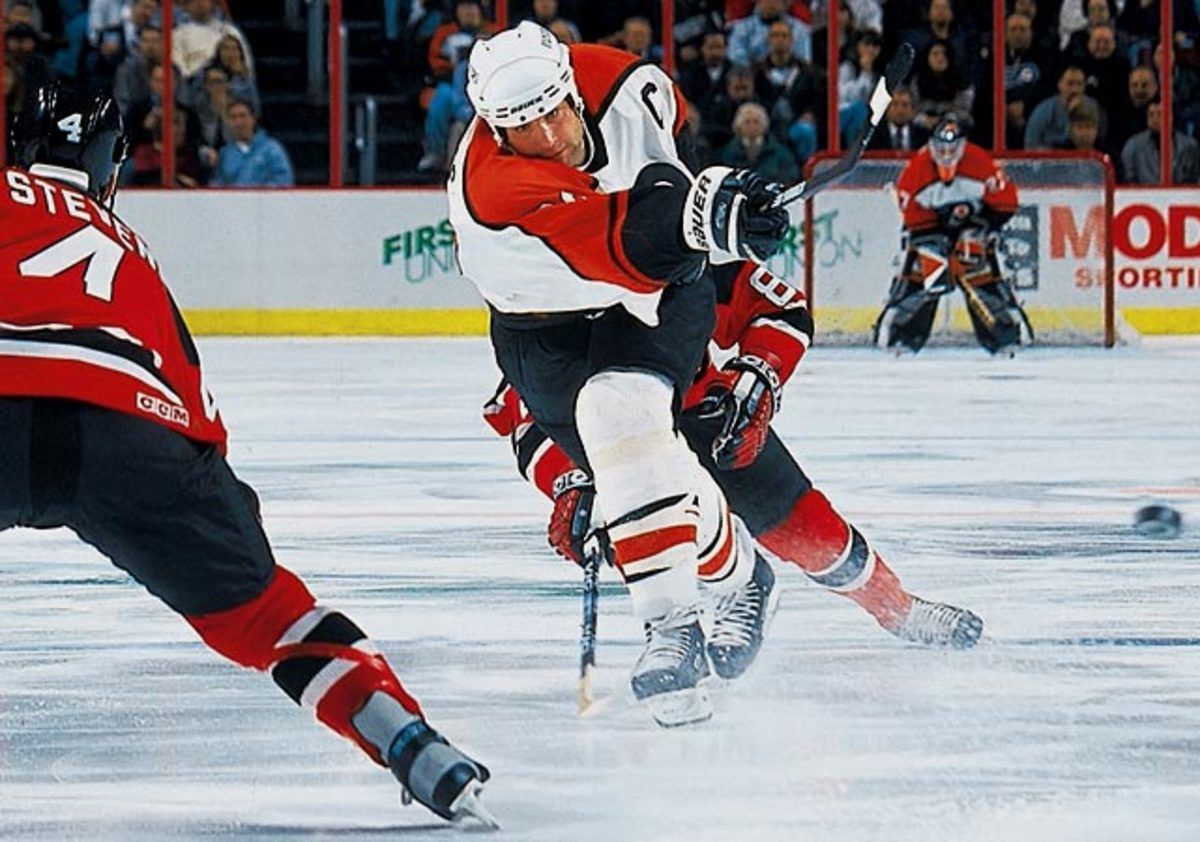
The Canadian junior sensation was a household name even before he played one NHL game. "The Next One" was drafted first overall by Quebec in 1991 but refused to play for them, forcing a trade to Philadelphia where he became the cornerstone of the formidable Flyers teams of the `90s. At 6-4 and 230 pounds, Lindros scored a franchise rookie record 41 goals in 1992-93 and won the Hart Trophy as NHL MVP for 1994-95. He was only 25 when The Hockey News ranked him 54th on its list of the 100 Greatest Hockey Players of All Time. He led the Flyers to the 1997 Stanley Cup final, but injuries -- especially a series of concussions -- blunted and ultimately ended a career in which he scored 372 goals and 865 points. Yet, during his nine seasons as a Flyer, he was the league's premier power forward.
Ron Hextall
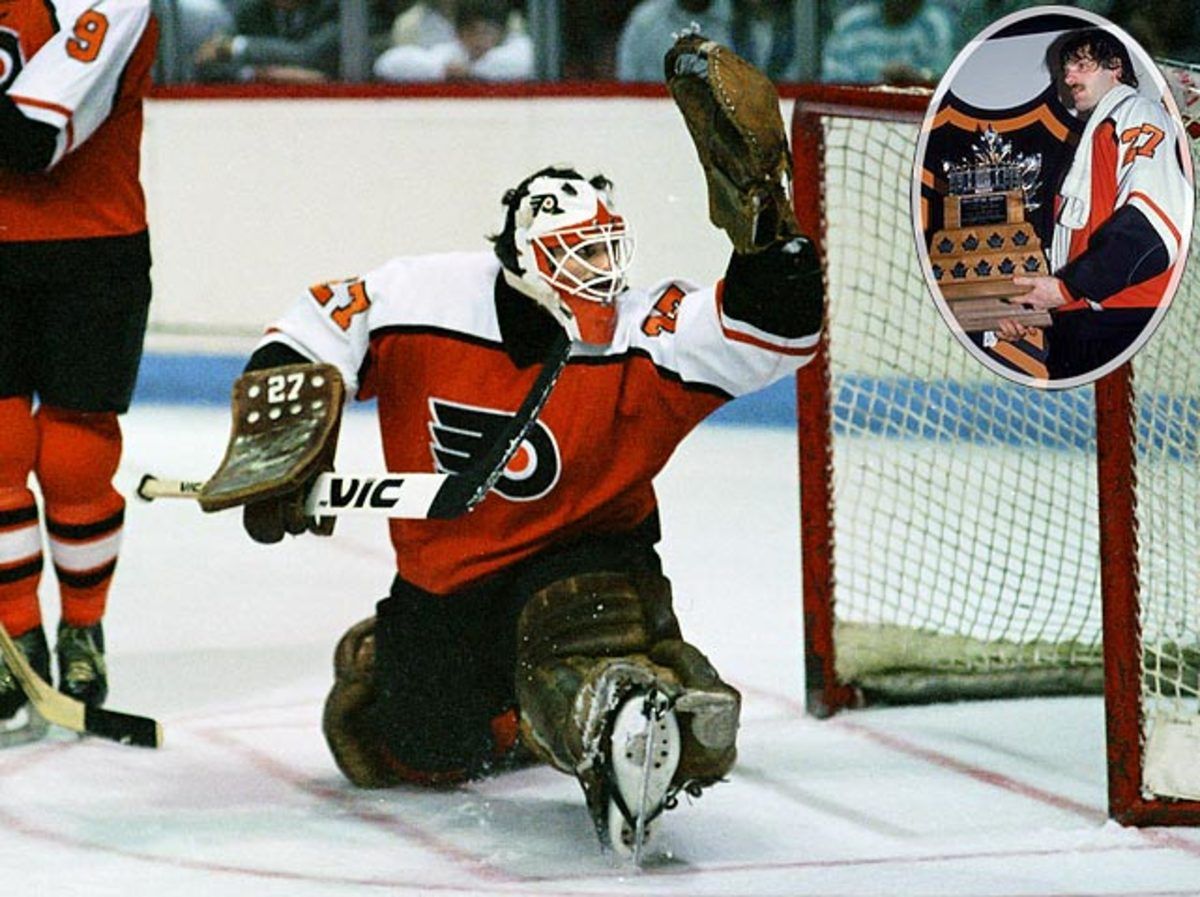
Extremely mobile, Hextall often left the net to chase and distribute pucks, a skill that essentially made him a third defenseman as well as an offensive threat. He was the first goalie to score a goal by shooting the puck into the opposing team's net (vs. Boston in 1987), and the first to net one in a playoff game (vs. Washington in `89). And like a true Flyer, he was notorious for his aggressive, sometimes over-the-top play, receiving an unheard-of-for-a-goalie 100 or more penalty minutes in two separate seasons. Hextall won the Vezina and Conn Smythe trophies in 1987 while backstopping the Flyers to a seven-game loss to Edmonton the Stanley Cup Final. He returned with them 10 years later, but fell to Detroit in four.
Fred Shero
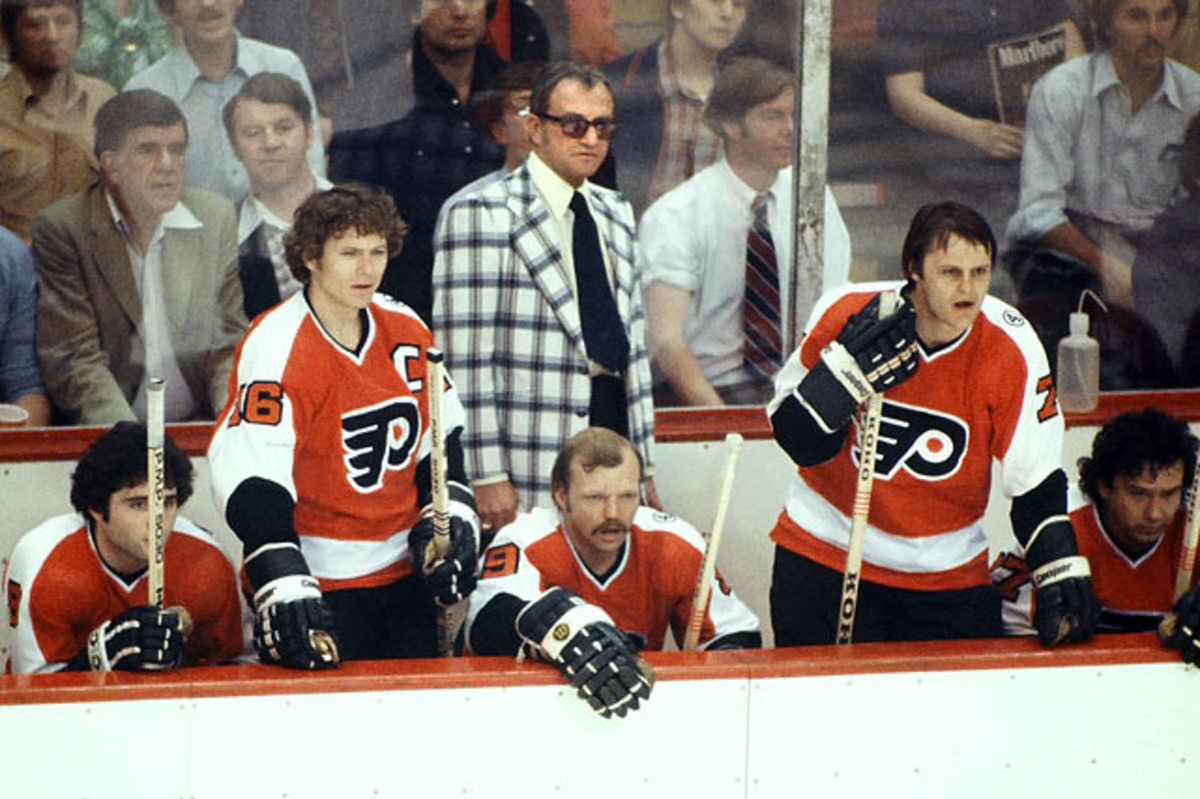
Known as "Fog" for his propensity to get lost in thought, Shero coached the Flyers for seven years (1971-78) and is credited with molding the infamous "Broad Street Bullies." This could have been the result of his being a decorated boxer while serving in the Canadian Navy. Shero was known for encouraging his players with edicts written on the locker room blackboard, perhaps the most famous being "Take the shortest route to the puck carrier and arrive in ill humor." He would also make his team practice with tennis balls instead of pucks, while the goalies sat in folding chairs. His unorthodox, pugnacious style worked as the Flyers won back-to-back Stanley Cups and made three successive trips the Cup final.
 Add us as a preferred source on Google