%20%20--%3E%0A%3Csvg%20version%3D%221.1%22%20id%3D%22Layer_1%22%20xmlns%3D%22http%3A%2F%2Fwww.w3.org%2F2000%2Fsvg%22%20xmlns%3Axlink%3D%22http%3A%2F%2Fwww.w3.org%2F1999%2Fxlink%22%20x%3D%220px%22%20y%3D%220px%22%0A%09%20width%3D%2239px%22%20height%3D%2240px%22%20viewBox%3D%220%200%2039%2040%22%20enable-background%3D%22new%200%200%2039%2040%22%20xml%3Aspace%3D%22preserve%22%3E%0A%3Cpath%20fill%3D%22%23FFFFFF%22%20d%3D%22M38.5%2C7H28.2v26h10.3V7z%22%2F%3E%0A%3Cpath%20fill-rule%3D%22evenodd%22%20clip-rule%3D%22evenodd%22%20fill%3D%22%23FFFFFF%22%20d%3D%22M26.1%2C25.5c0%2C5.8-4.1%2C7.5-12.9%2C7.5C3.9%2C33%2C0%2C31.2%2C0%2C25.2v-1.1h11.6%0A%09v2.4c0%2C0.7%2C0.1%2C1.4%2C1.2%2C1.4c1%2C0%2C1.2-0.4%2C1.2-1.3v-0.9c0-1.6-0.9-1.6-3.5-2.2C2.2%2C21.7%2C0%2C19.7%2C0%2C15.3v-0.9C0%2C9.3%2C5.5%2C7%2C12.9%2C7%0A%09c10.2%2C0%2C12.8%2C2.6%2C12.8%2C7.4v1.8h-11v-2.9c0-0.6-0.4-1.1-1.2-1.1c-0.6%2C0-1.2%2C0.4-1.2%2C1.1v0.9c0%2C1.5%2C0.9%2C2%2C3.3%2C2.5%0A%09c8%2C1.6%2C10.5%2C3.3%2C10.5%2C7.5V25.5z%22%2F%3E%0A%3C%2Fsvg%3E%0A)
FIFA proposes confederation allocation, final playoff for 48-team 2026 World Cup
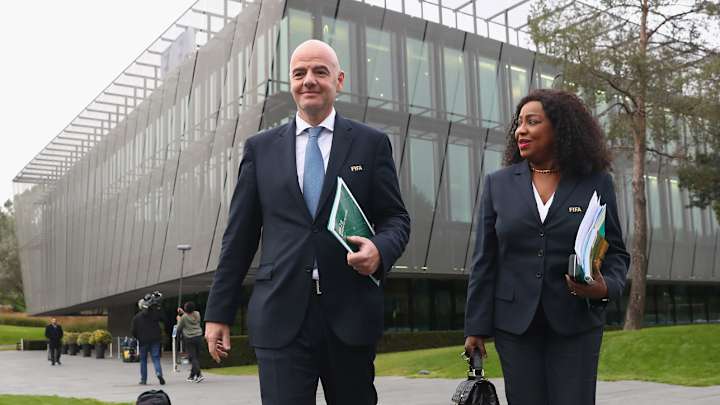
ZURICH (AP) — FIFA wants to hold a new six-team playoff round in the 2026 World Cup host country to complete the expanded 48-team tournament lineup.
The final two qualifying slots would be decided in the proposed mini-tournament played in the November before the World Cup as a test event, a move that puts the Confederations Cup's long-term future at risk.
The idea was announced Thursday as part of the FIFA Bureau's proposal to award each of the six continental confederations extra places at the World Cup, which will expand starting in 2026 when North America is the expected host.
UEFA is set to get the three extra guaranteed slots it wanted, bringing its total to 16 qualifying slots. The proposal also increases Africa to nine, Asia to eight, South America to six, North America to six and Oceania to one guaranteed slot.
Excluding Europe, the other five confederations would send one team for the playoffs. The World Cup host continent would provide the sixth playoff team.
Insider Notes: USA's joint bid for World Cup 2026 could come in April
Before coming into effect, the FIFA Council must approve the proposal on May 9 in Bahrain. The council, chaired by FIFA President Gianni Infantino, agreed in January to expand the World Cup from 32 teams starting with the 2026 edition.
FIFA also said its bureau—comprising Infantino and six confederations presidents—wants automatic entry for host nations to come from a confederation's quota.
With the United States, Mexico and Canada weighing a co-hosting bid for 2026, the decision on which hosts will get direct entry is set to be made by the council and not individual confederations, FIFA said.
The playoff proposal to qualify for the 2026 edition would replace a format for 2018 of two intercontinental, two-leg playoffs—South America vs. Oceania, and CONCACAF vs. Asia—plus a European round of two-leg playoffs that allocates the last four of UEFA's quota of 13 qualifying slots.
World Cup Winners
1930: Uruguay
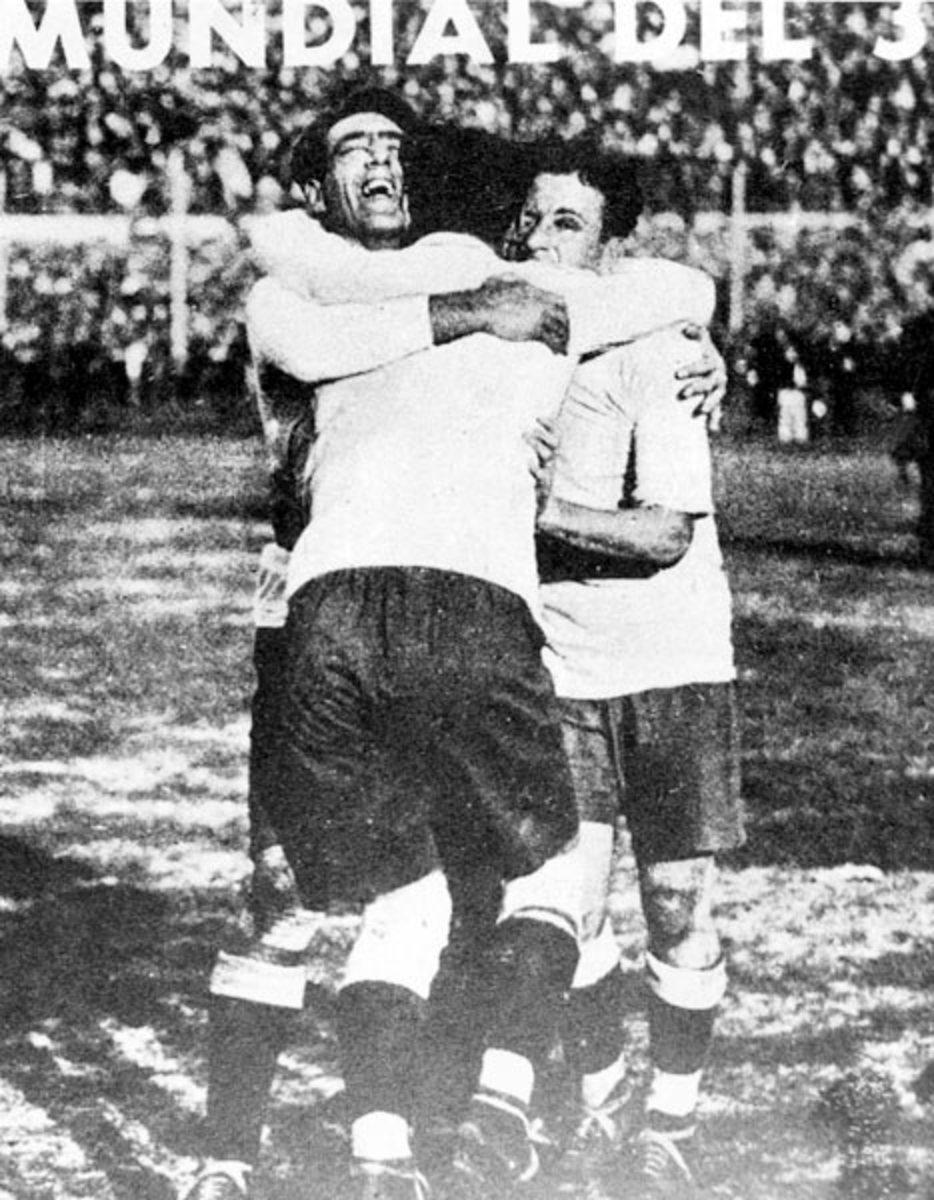
The hosts won the first World Cup, beating Argentina 4-2 in the final. Uruguay's victory in the 13-team tournament was the start of a trend: The host nation has won six of 18 World Cups, and even lesser sides that have hosted usually have exceeded expectations.
1934: Italy
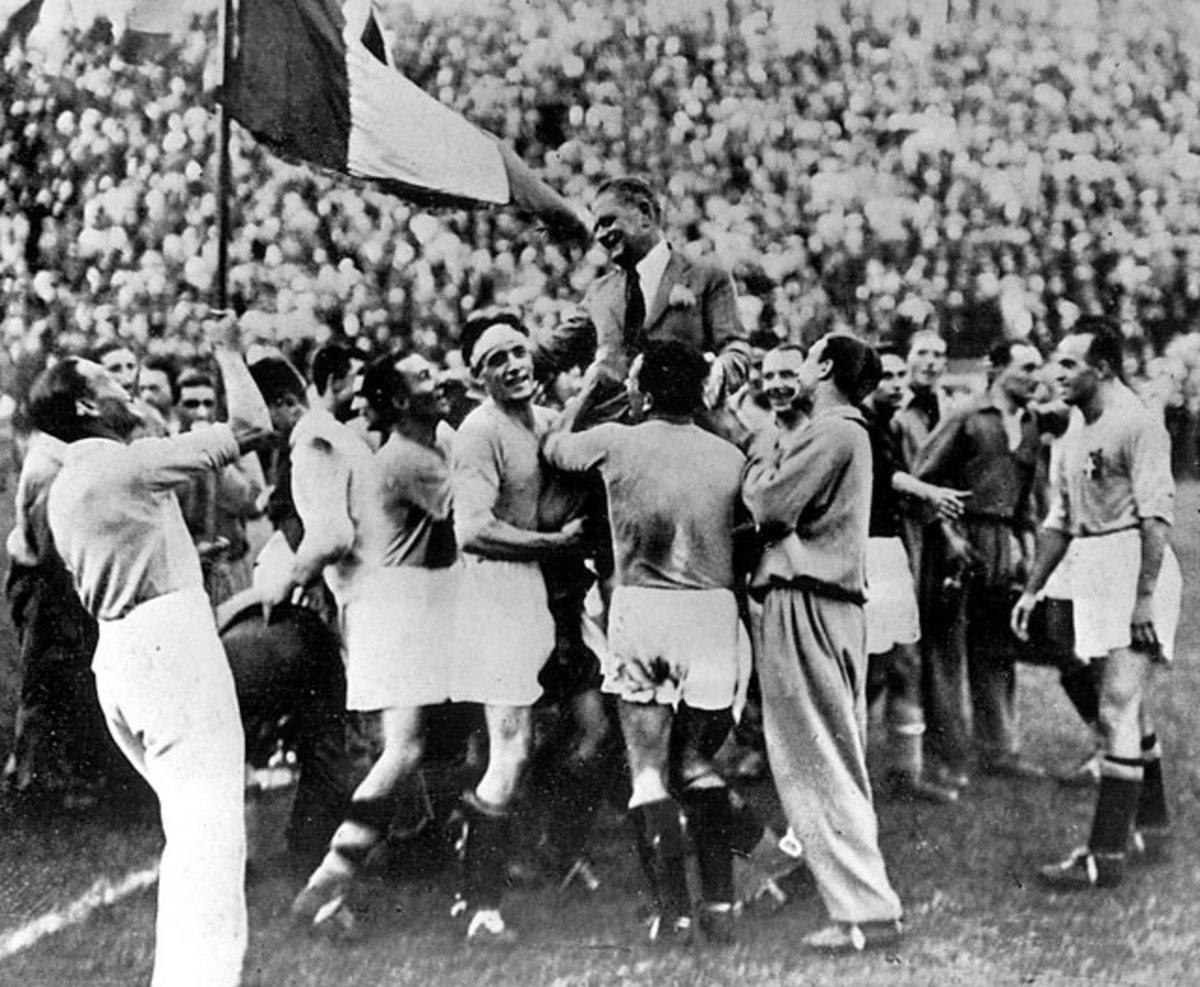
The host nation delivered again as Italy beat Czechoslovakia 2-1 in the final thanks to an extra-time goal from Angelo Schiavo. The Italians had opened the tournament with a 7-1 rout of the United States before beating Spain and Australia en route to the final.
1938: Italy
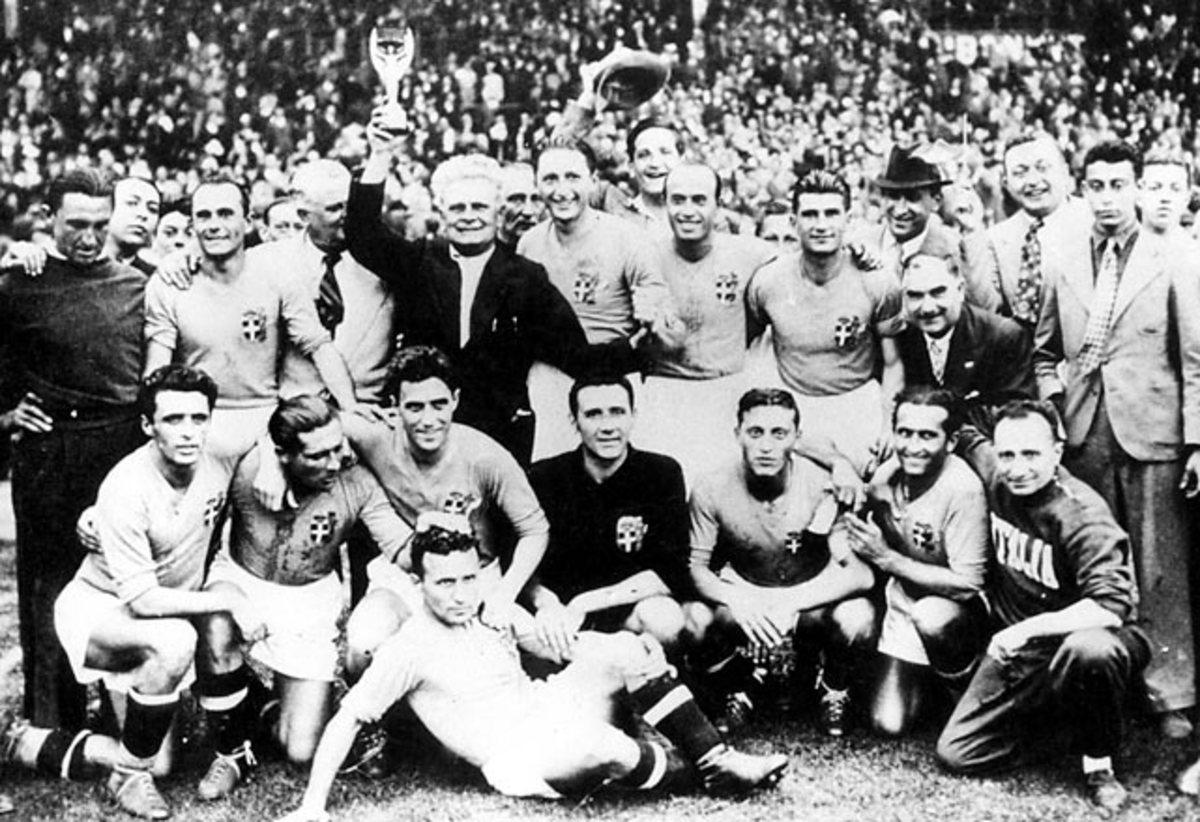
Italy won its second consecutive World Cup behind striker Silvo Piola, who scored twice and set up another goal in a 4-2 victory over Hungary in the final. The tournament included Brazil's epic 6-5 win over Poland in the first round in which Ernest Wilimowski scored four goals in a losing effort and Leonidas countered with a hat trick.
1950: Uruguay
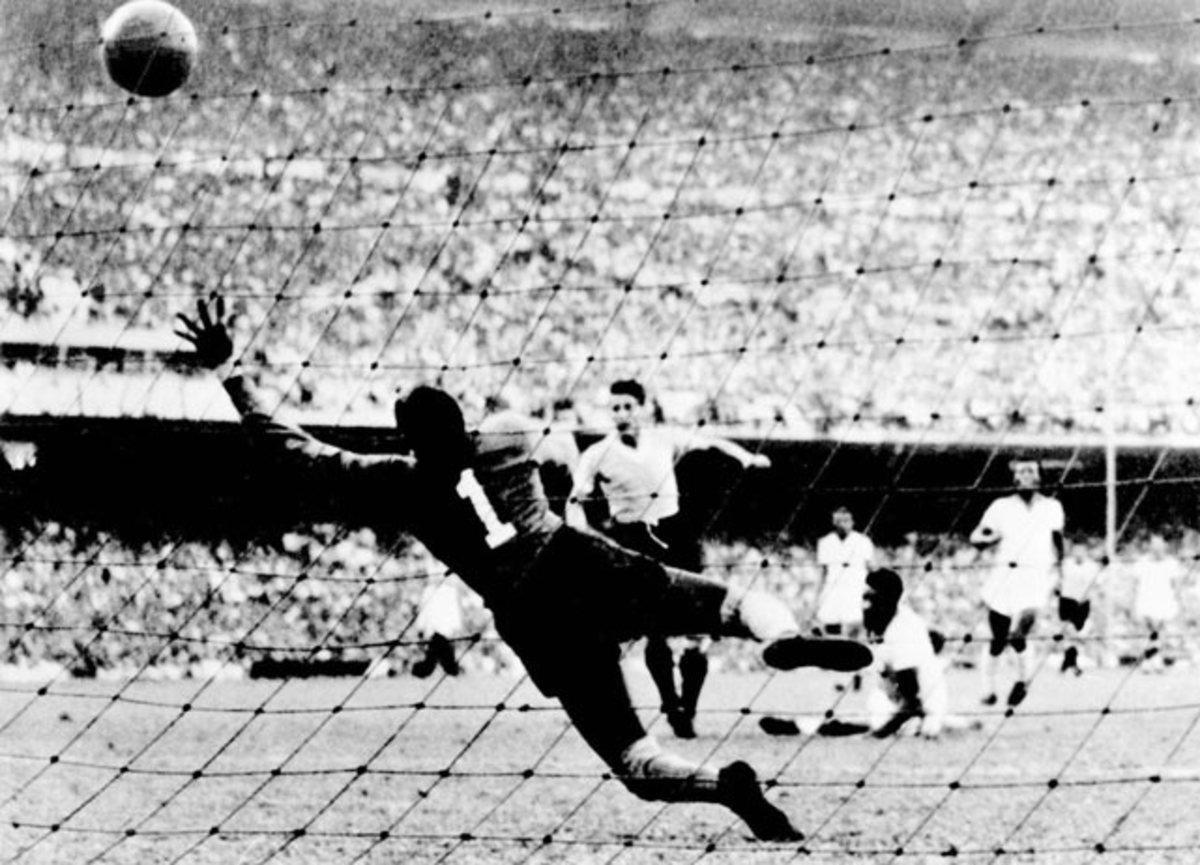
While the United States pulled off the shocker of the competition by beating England, Uruguay joined Italy as two-time World Cup winners. Alcides Ghiggia scored in every game for Uruguay, including the game-winner in the final against host Brazil.
1954: West Germany
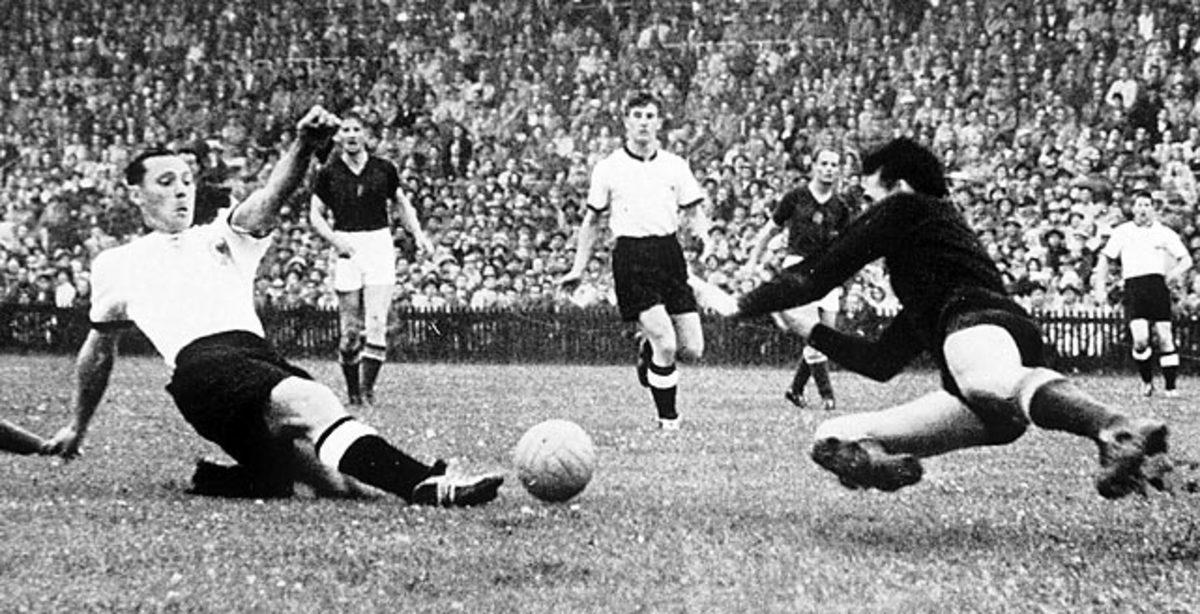
West Germany lost 8-3 to Hungary in the second game of the tournament, but exacted revenge in the final when it overcame an early two-goal deficit to win 3-2. This was the highest-scoring World Cup in history (5.38 goals-per-game average), with Hungary accounting for 26 in five games.
1958: Brazil
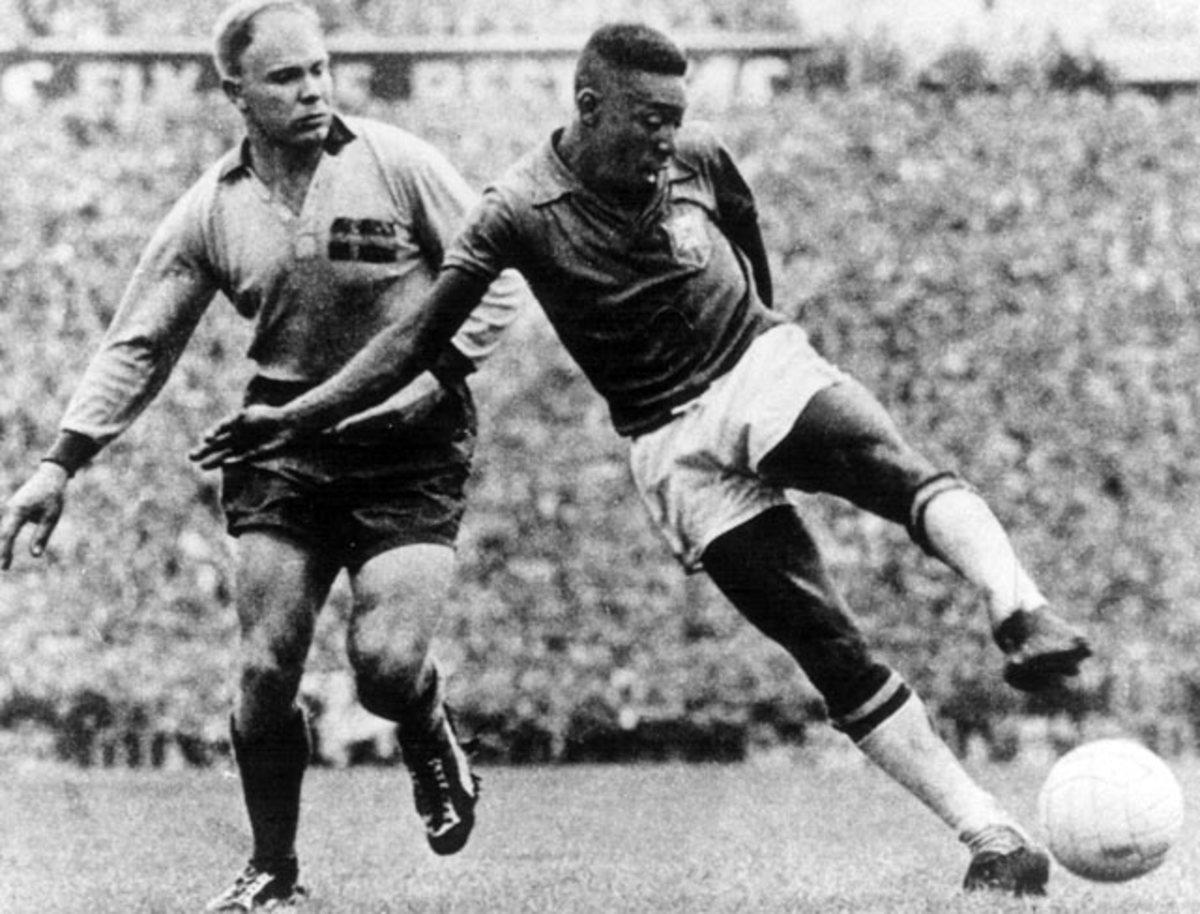
The first internationally televised World Cup gave us Brazil's Samba soccer and 17-year-old sensation Pele, who scored six goals in the tournament. It also provided the first winner outside its home continent, Brazil, which defeated host Sweden 5-2 in the final.
1962: Brazil
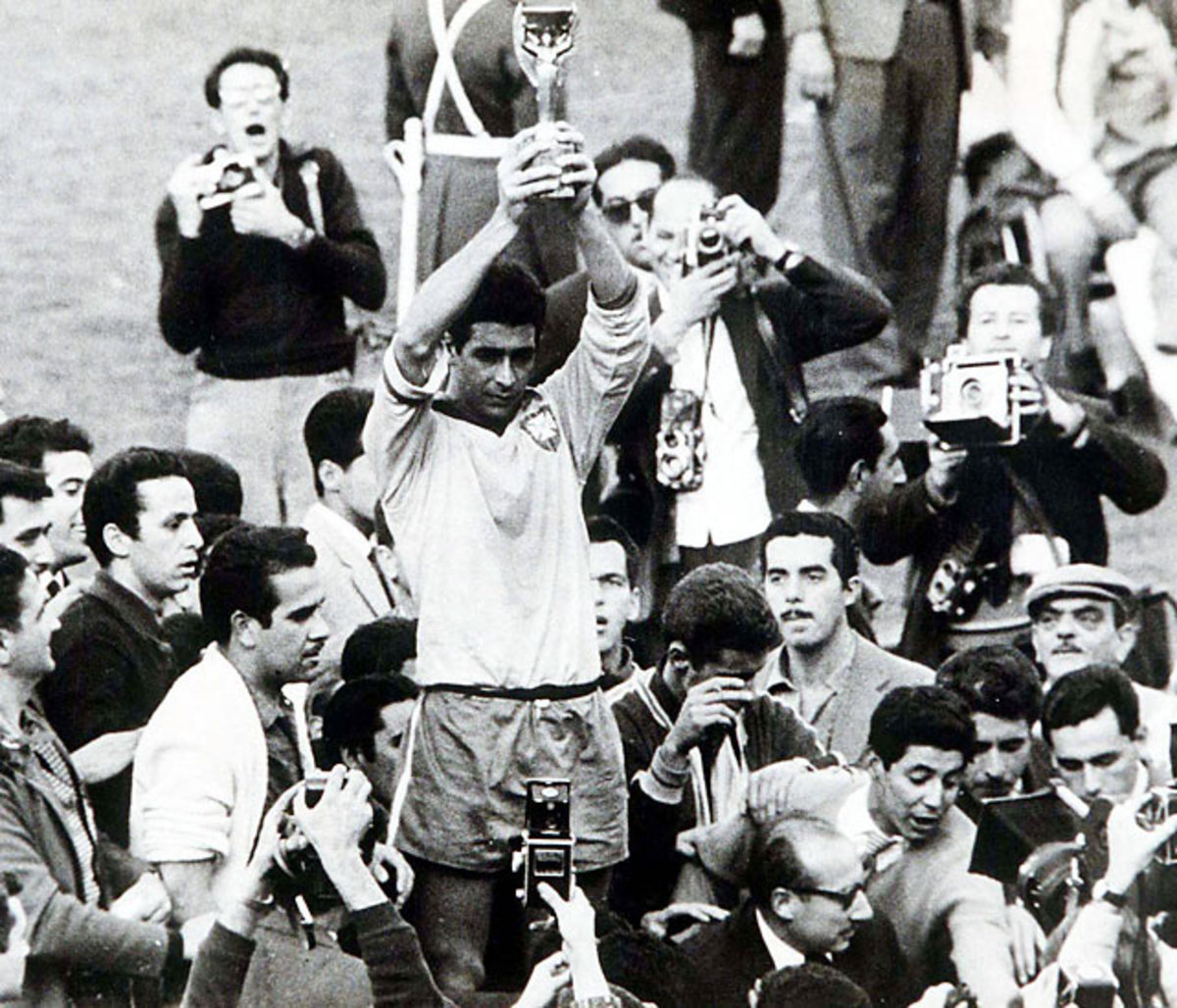
Despite the loss of Pele to injury, the Brazilians looked as dazzling as ever, overwhelming Chile 4-2 in the semifinal. The Czechs put up more of a fight in the final, but were overcome by two second-half goals as the Brazilians repeated as champions.
1966: England
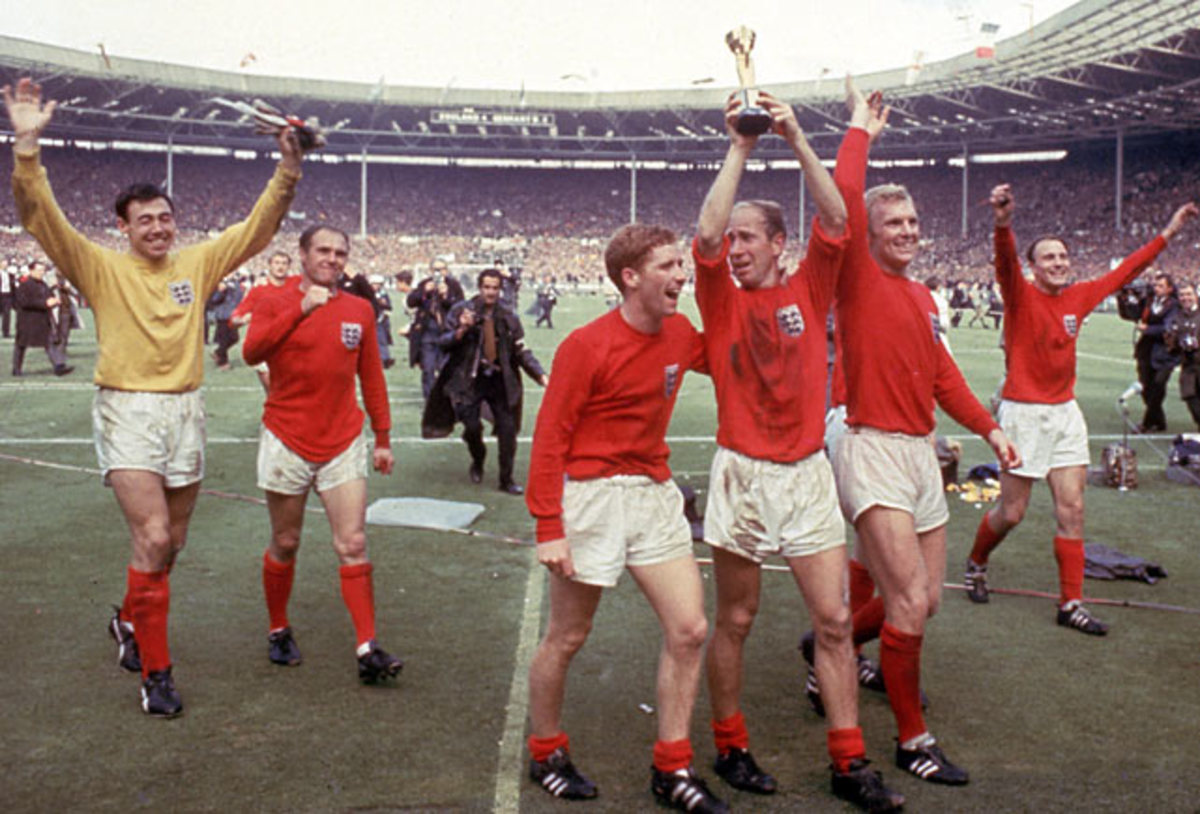
England triumphed on home soil under Alf Ramsey, who'd revolutionized the national team. The 4-2 win over West Germany after extra time in the final remains the defining moment in English soccer, though the containment of Portugal a game earlier was equally decisive.
1970: Brazil
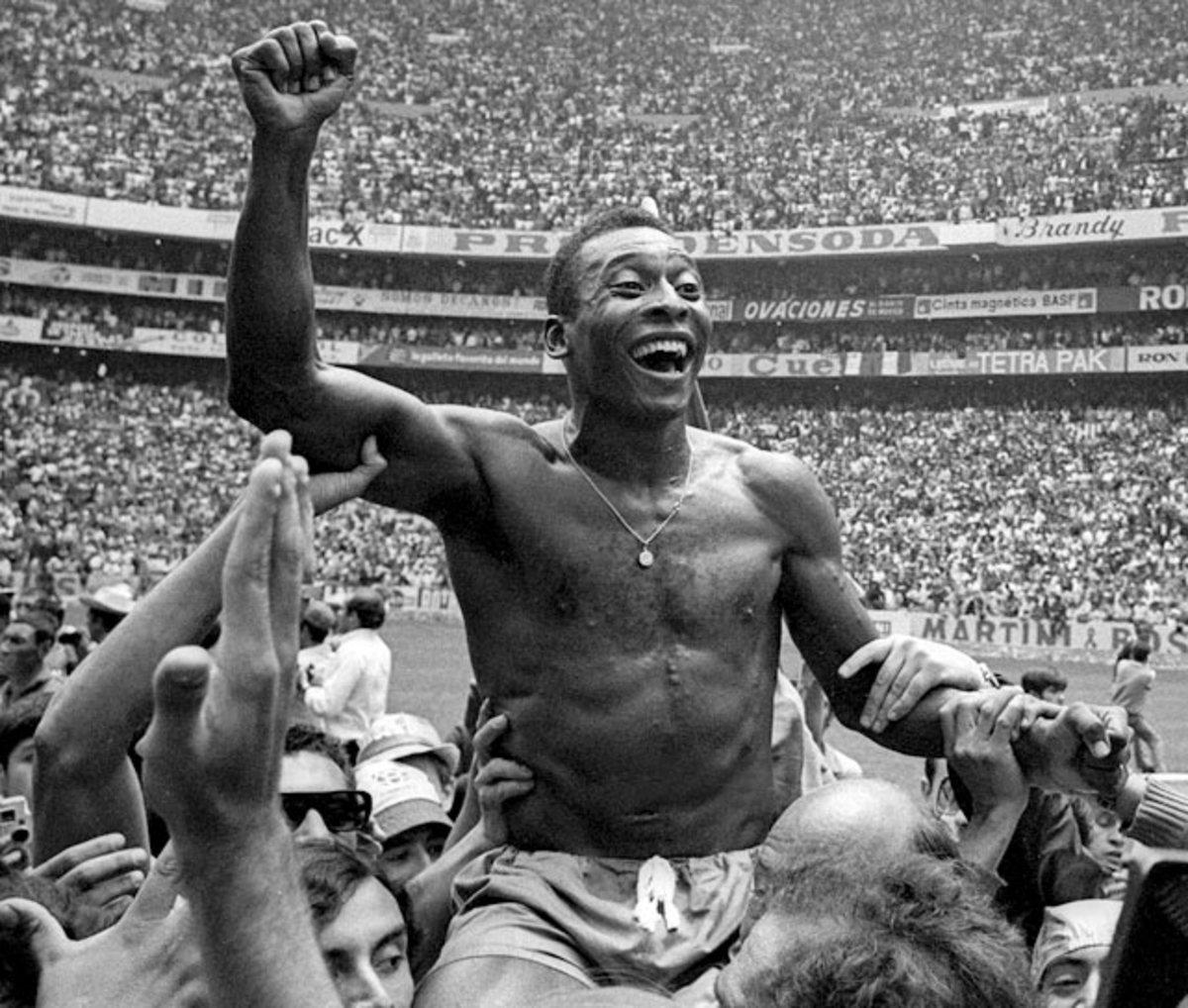
Brazil's free-scoring run through the rounds, a scintillating semifinal between Italy and Germany and Gordon Banks' "save of the century" against Pele in Brazil's classic group victory over England helped make this what is widely viewed as the best World Cup ever. Brazil downed Italy 4-1 in the final.
1974: West Germany
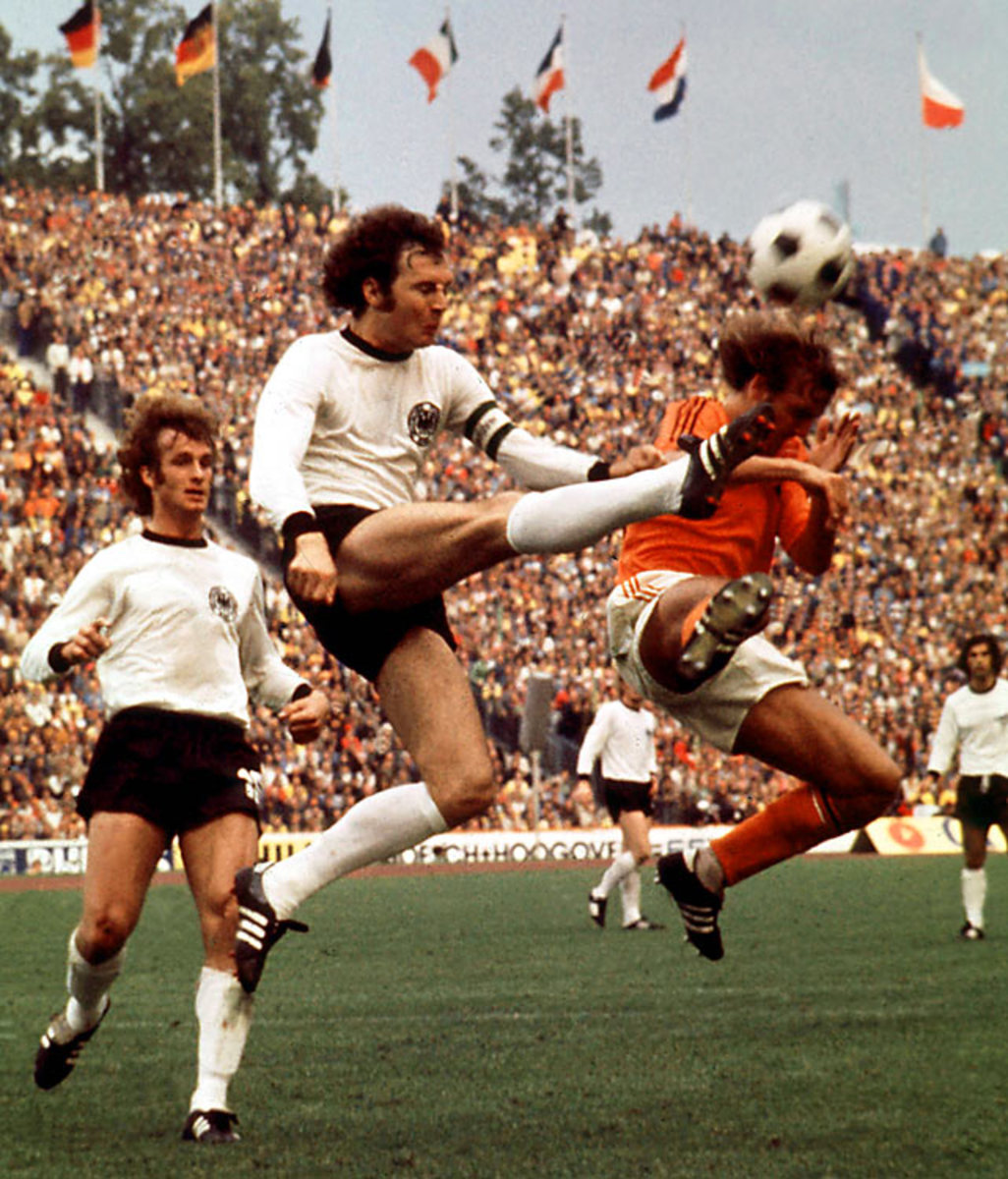
Led by Sepp Maier, Franz Beckenbauer and Gerd Müller, West Germany overcame a classy Dutch side in the final to win the title on home soil.
1978: Argentina
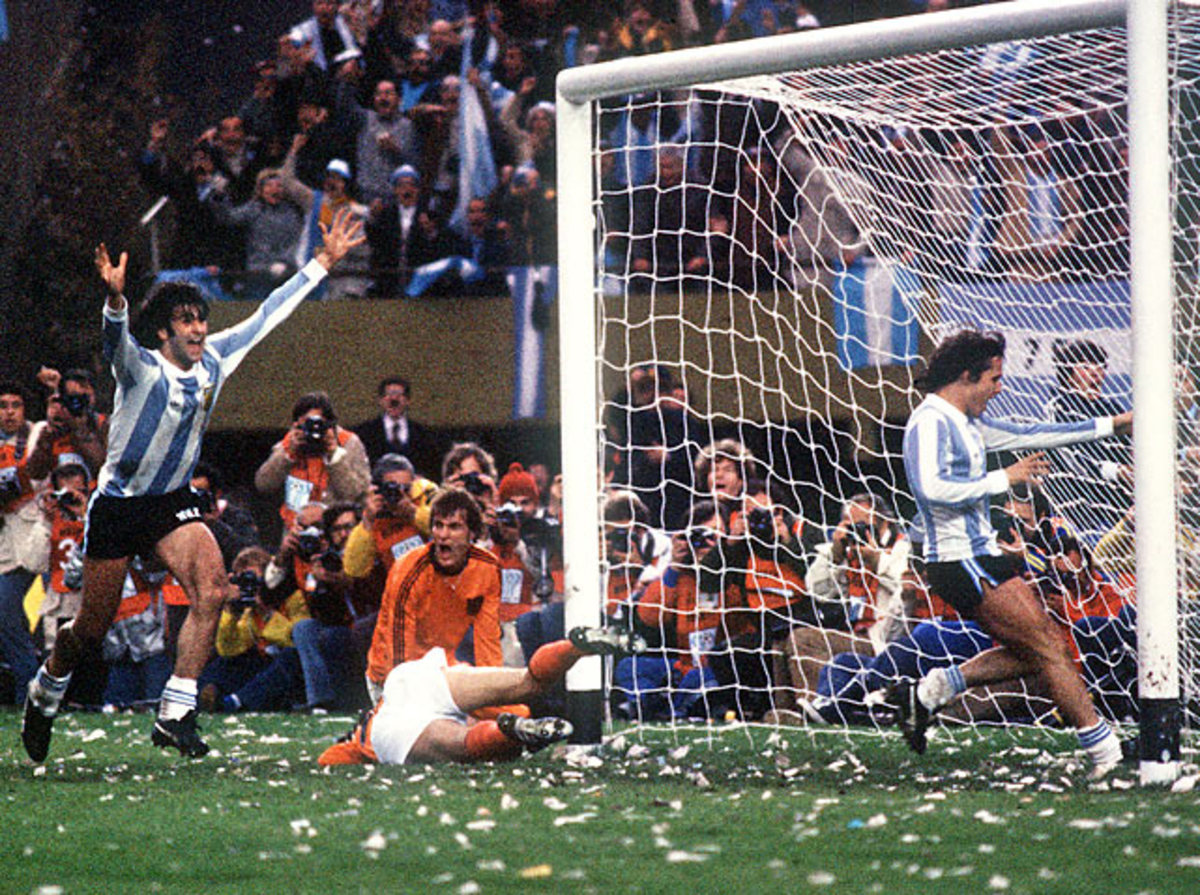
The first World Cup in Argentina ended with a fifth title for a host nation. Mario Kempes won the Golden Boot with six goals, including two (to go with one assist) in Argentina's 3-1 victory over the Netherlands in the final. This was Holland's second consecutive loss in a World Cup final.
1982: Italy
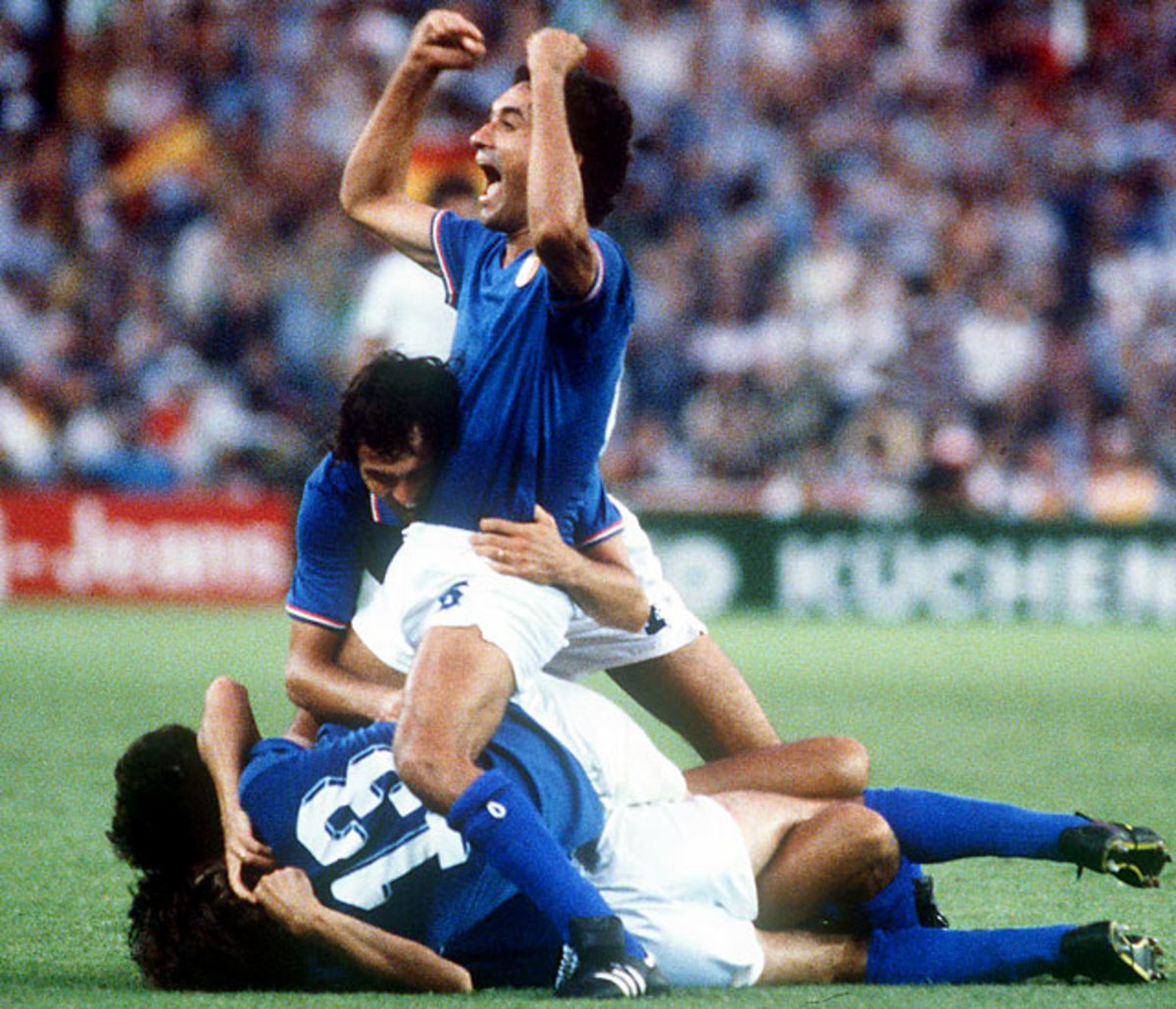
In the first 24-team finals (eight more than in '78), Italy unexpectedly matched Brazil with its third title. West Germany and Brazil were the favorites and both won every game in qualifying, but Italy, led by Paolo Rossi, who had recently returned from a match-fixing suspension, knocked off both en route to victory.
1986: Argentina
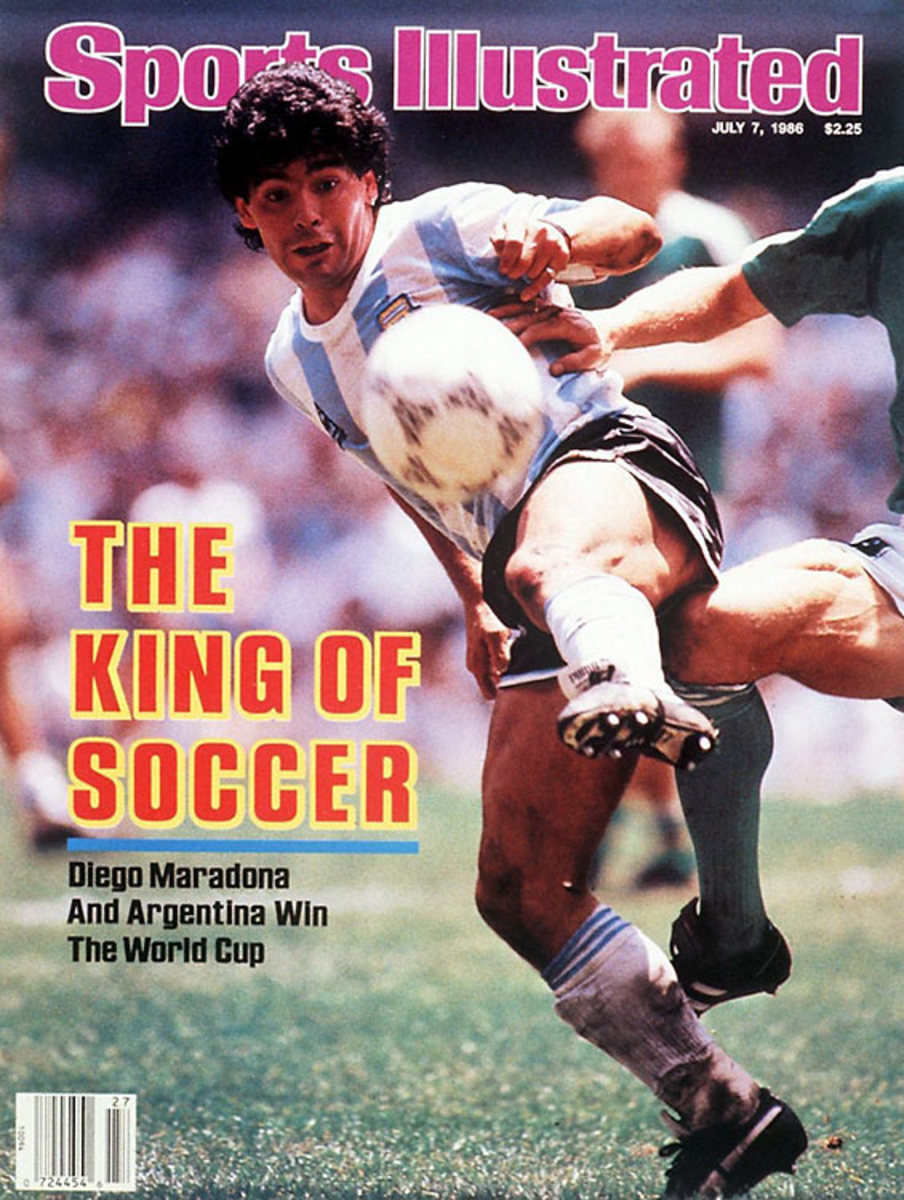
Maradona owned the 1986 finals in Mexico, playing with fearlessness and guile–and a little luck, too, as his Hand of God goal helped Argentina slip past England in the quarterfinals. His performance against Belgium in the semis (two second-half goals) was incredible, and though the Germans kept him quiet for most of the final, it was his cross that set up Jorge Barruchaga for the winner.
1990: West Germany
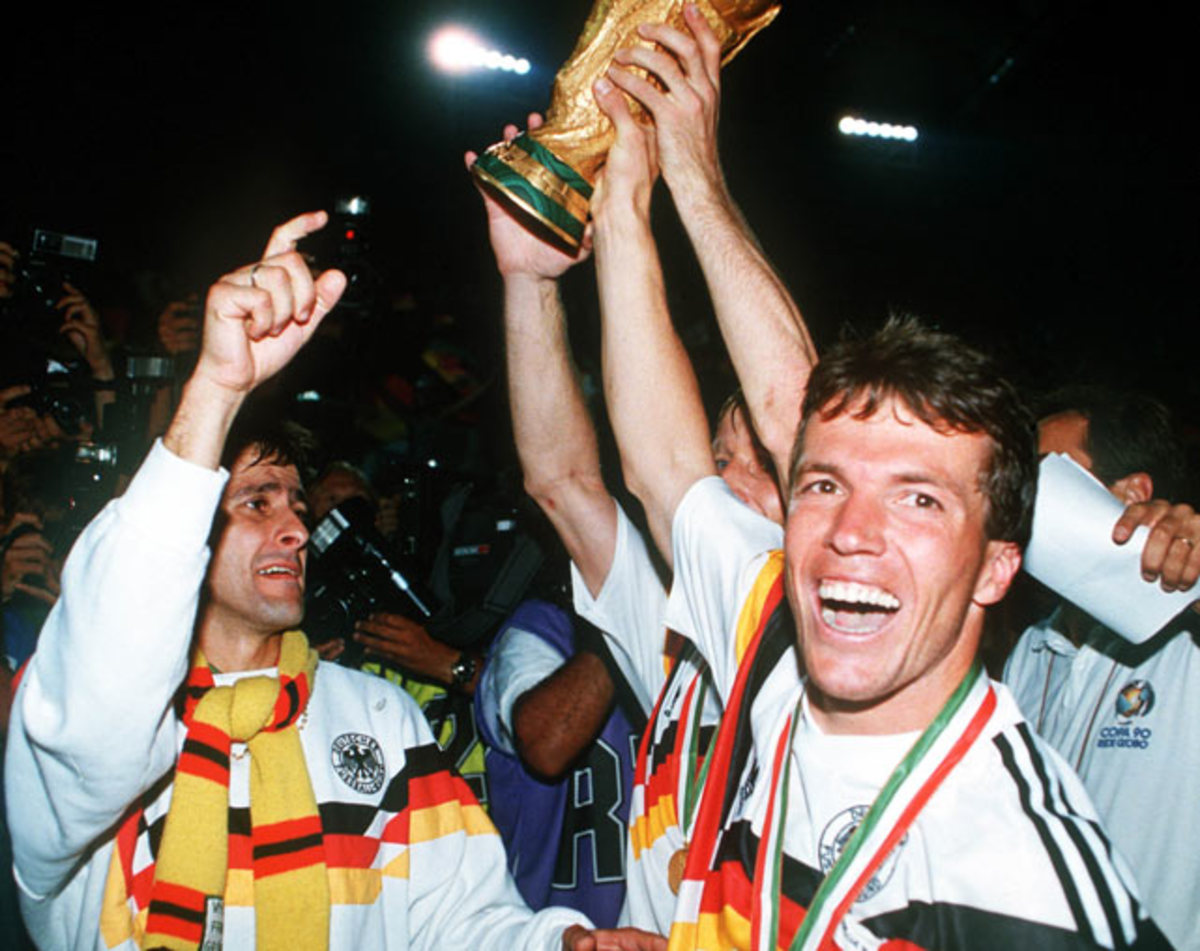
In a rematch of the '86 final, West Germany got the best of Argentina 1-0 in a physical match (an appropriate finish to a rough-and-tumble tournament short on goals) in Italy.
1994: Brazil
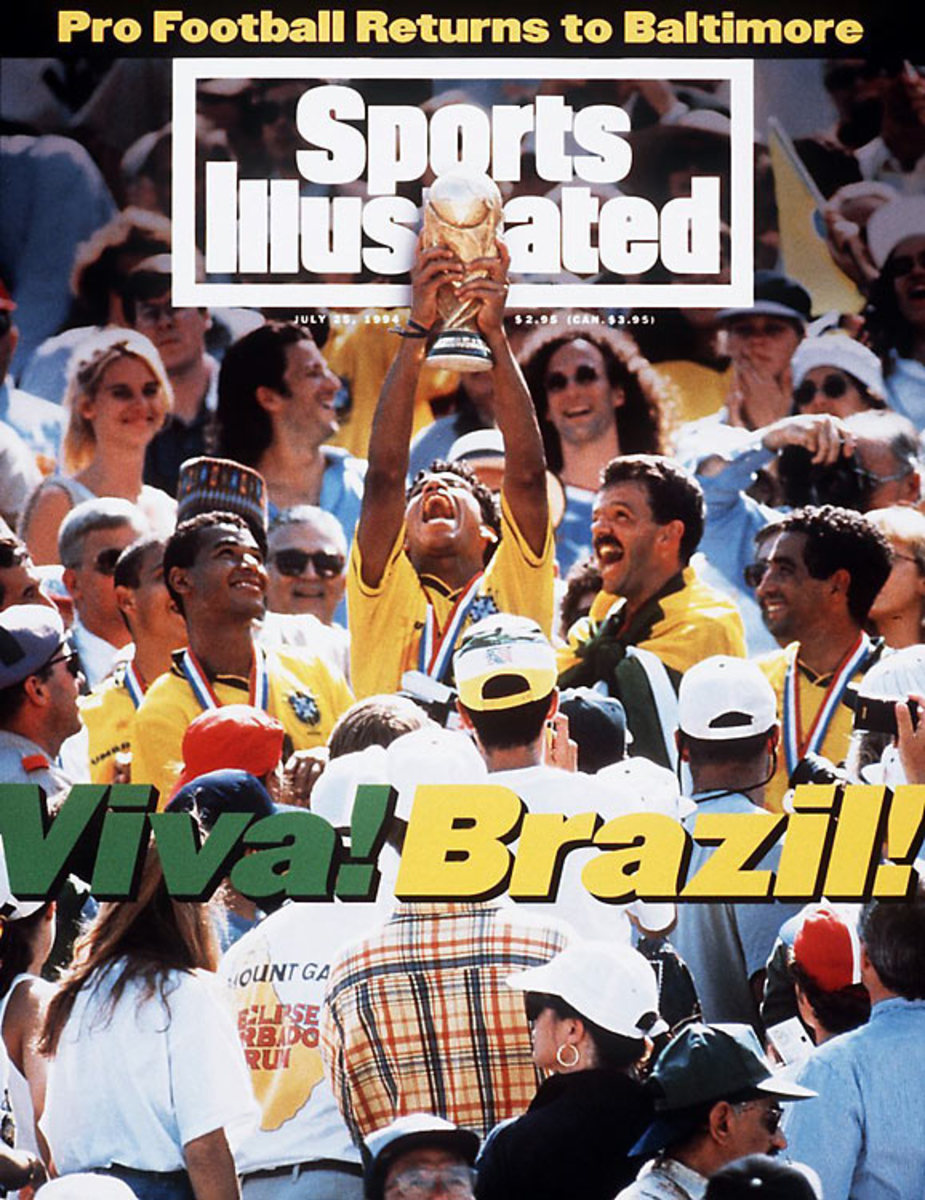
Brazil and Italy played a mediocre final in the first tournament hosted by the United States, with the Brazilians winning in a penalty shootout after a 0-0 finish following extra time. Brazil became the World Cup's first four-time winner.
1998: France
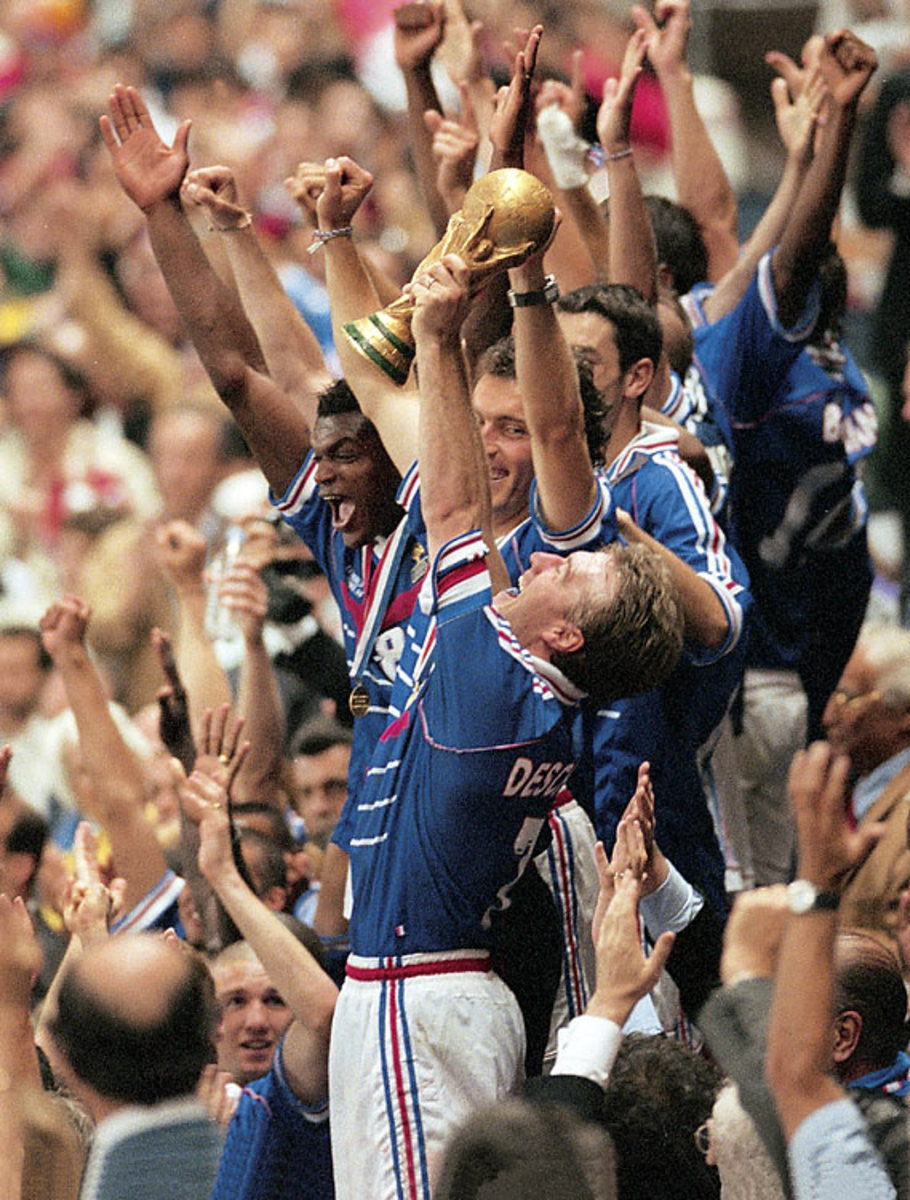
France came back from a goal down against Croatia in the semifinal to set up its first final appearance, against Brazil. Rumors abounded that Ronaldo suffered a fit immediately before the match, but host France deserved its win after completely dominating the match thanks to two first-half headers from Zinedine Zidane.
2002: Brazil
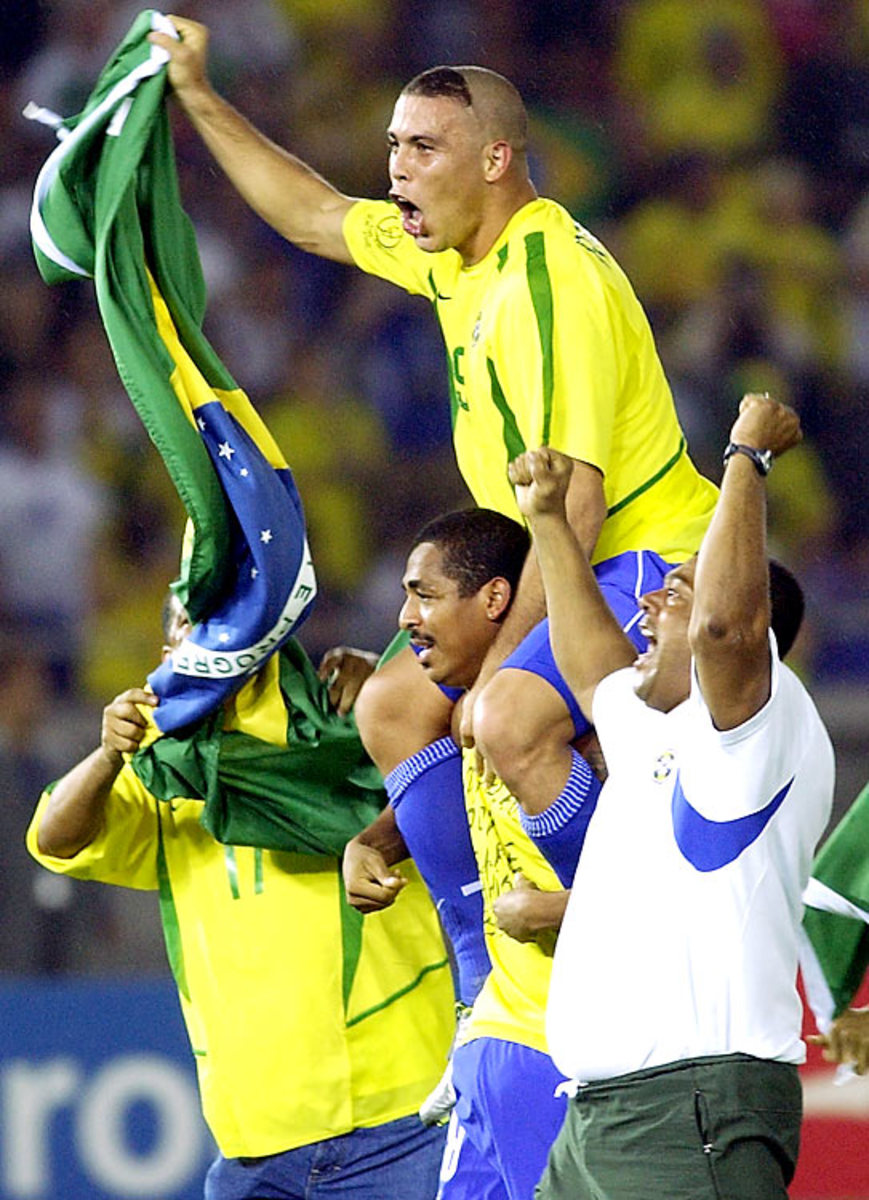
Japan and South Korea became the World Cup's first co-hosts, and the first in Asia, and they produced a tournament full of surprises, if not amazing soccer from the usual suspects. The unexpected success of newcomer Senegal, as well as Turkey, the United States and South Korea, added to the novelty of the event. In the end, though, the final was contested between old faces Brazil and Germany, despite the relative weakness of their lineups. Ronaldo scored both goals in Brazil's 2-0 victory.
2006: Italy
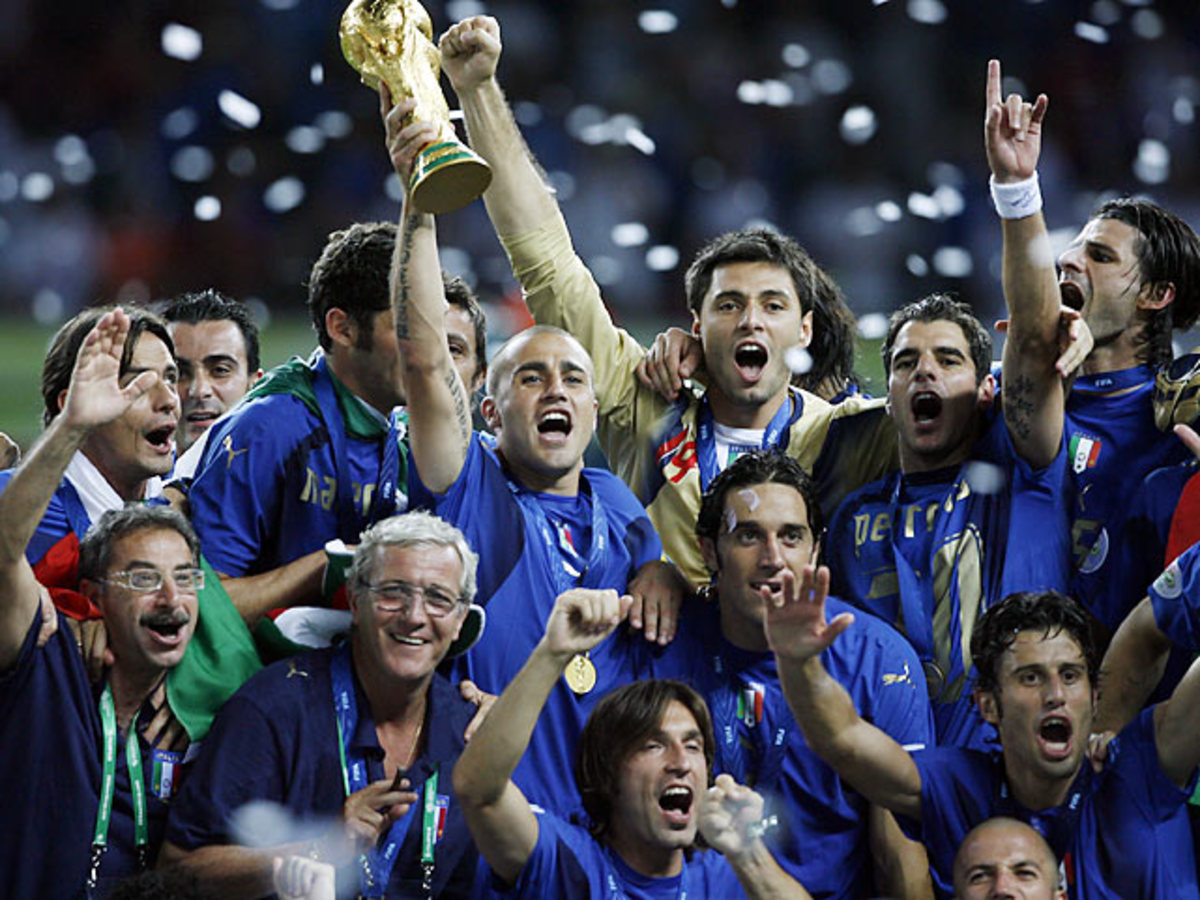
Italy went unbeaten in the group stages and was then inconsistent through the knockouts, but deservedly took an extra-time victory over host Germany in the semis before beating France on penalties in the final. The French had started to dominate into extra time, but Zinedane Zidane's headbutt on Marco Materazzi left it a man down, and David Trezeguet's missed penalty handed Italy a fourth World Cup.
2010: Spain
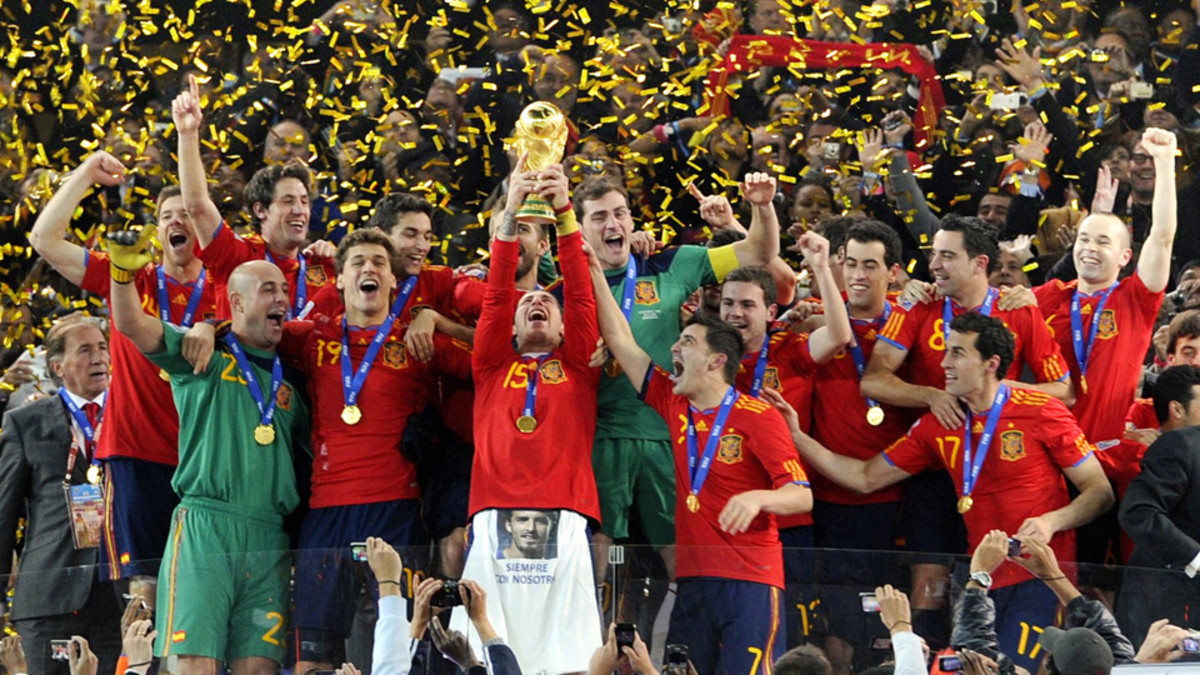
Spain capped its golden era with a World Cup triumph, following its Euro 2008 title with another on the grand stage. Andres Iniesta's goal in extra time of a physical final led Spain over the Netherlands and allowed La Furia Roja to lift the trophy.
2014: Germany
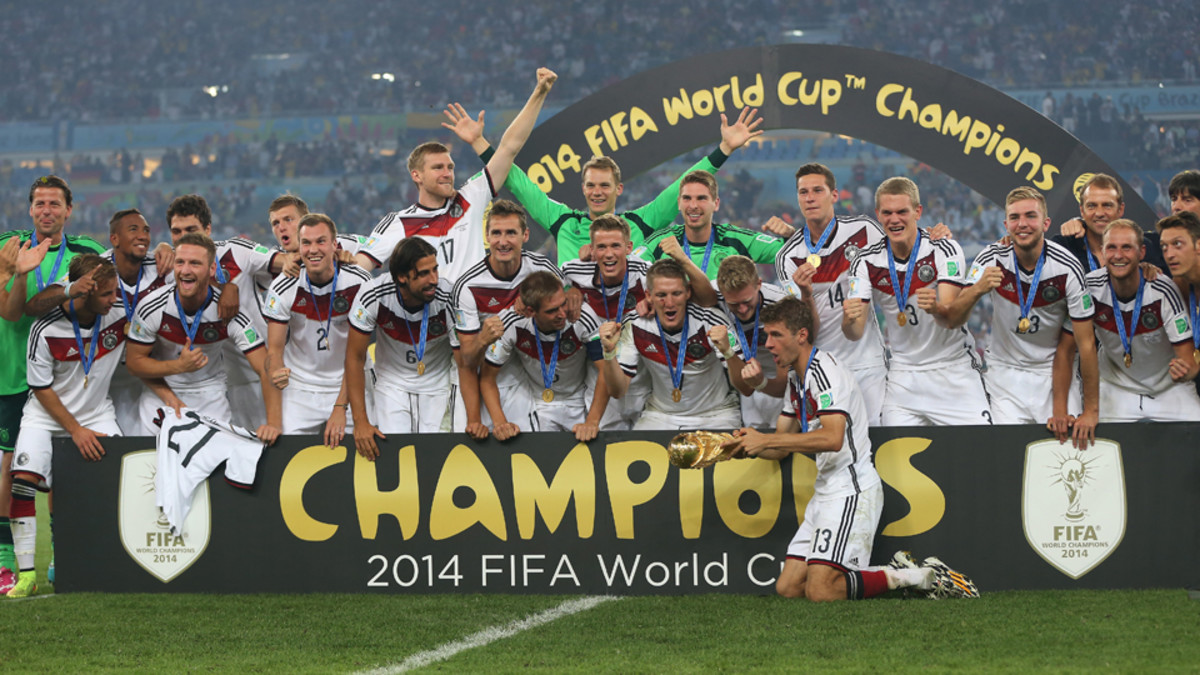
Germany's run concluded with an extra-time triumph over Lionel Messi's Argentina, with Mario Gotze supplying a sensational winner to crown the Germans once again.
FIFA hopes to generate buzz among fans in the 2026 host country, or countries, but bringing in six teams to play three matches over several days that will decide the final two of 48 slots.
The suggested format would see the four lower-ranked teams paired for single knockout matches. The winners would advance in the bracket to face the two higher-ranked teams.
Using the current FIFA rankings, a theoretical playoff lineup in November 2025 in the United States would be: China, Curacao, Ecuador, Morocco, Saint Kitts and Nevis, and Tahiti.
The Confederations Cup already faced an uncertain future after this year's edition in Russia.
With the 2022 World Cup in Qatar being played in November and December, a Club World Cup in November 2021 has become the preferred test event.
 Add us as a preferred source on Google