%20%20--%3E%0A%3Csvg%20version%3D%221.1%22%20id%3D%22Layer_1%22%20xmlns%3D%22http%3A%2F%2Fwww.w3.org%2F2000%2Fsvg%22%20xmlns%3Axlink%3D%22http%3A%2F%2Fwww.w3.org%2F1999%2Fxlink%22%20x%3D%220px%22%20y%3D%220px%22%0A%09%20width%3D%2239px%22%20height%3D%2240px%22%20viewBox%3D%220%200%2039%2040%22%20enable-background%3D%22new%200%200%2039%2040%22%20xml%3Aspace%3D%22preserve%22%3E%0A%3Cpath%20fill%3D%22%23FFFFFF%22%20d%3D%22M38.5%2C7H28.2v26h10.3V7z%22%2F%3E%0A%3Cpath%20fill-rule%3D%22evenodd%22%20clip-rule%3D%22evenodd%22%20fill%3D%22%23FFFFFF%22%20d%3D%22M26.1%2C25.5c0%2C5.8-4.1%2C7.5-12.9%2C7.5C3.9%2C33%2C0%2C31.2%2C0%2C25.2v-1.1h11.6%0A%09v2.4c0%2C0.7%2C0.1%2C1.4%2C1.2%2C1.4c1%2C0%2C1.2-0.4%2C1.2-1.3v-0.9c0-1.6-0.9-1.6-3.5-2.2C2.2%2C21.7%2C0%2C19.7%2C0%2C15.3v-0.9C0%2C9.3%2C5.5%2C7%2C12.9%2C7%0A%09c10.2%2C0%2C12.8%2C2.6%2C12.8%2C7.4v1.8h-11v-2.9c0-0.6-0.4-1.1-1.2-1.1c-0.6%2C0-1.2%2C0.4-1.2%2C1.1v0.9c0%2C1.5%2C0.9%2C2%2C3.3%2C2.5%0A%09c8%2C1.6%2C10.5%2C3.3%2C10.5%2C7.5V25.5z%22%2F%3E%0A%3C%2Fsvg%3E%0A)
The Best Soccer Teams in History to Miss Out on Qualifying for the World Cup

The Best Soccer Teams in History to Miss Out on Qualifying for the World Cup
Scotland, 1950
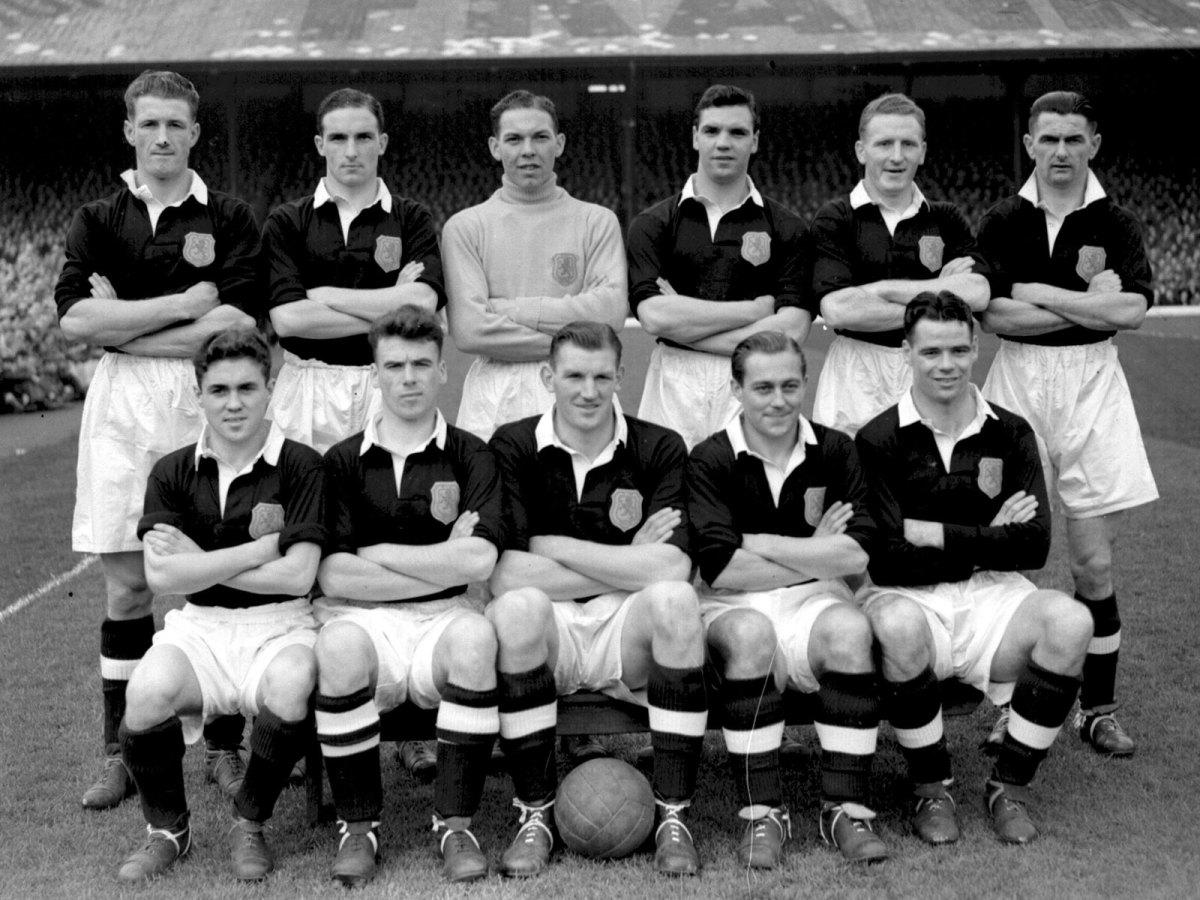
The four British nations had had an awkward relationship with FIFA, withdrawing in a protest over definitions of amateurism in 1928 but, with a spirit of post-War internationalism prevailing over their skepticism about Francophone bureaucracy, they rejoined in 1946. Partly to keep costs down in the austerity years of the late 1940s, and partly to keep the British onside, FIFA decided the annual Home Championship for 1949-50 would serve as a qualifying series, with the top two sides making it to Brazil. Scotland, through stubbornness and pride, said it would travel only if it won the championship, and after losing its final game to England to finish second behind the auld enemy, it was true to its word, denying the likes of Willie Waddell and Billy Liddell a taste of the World Cup.
Italy, 1958

Italy didn’t enter the World Cup in 1930, but has played at every World Cup since, apart from 1958. Drawn in a group with Northern Ireland and Portugal, from which the top team would qualify, the Azzurri went into their final game, against Northern Ireland in Belfast, needing only to avoid defeat to make it to Sweden. The game was initially scheduled for December 4, 1957, but when Hungarian referee–Istvan Zsolt, the stage manager of the Budapest Opera House–was held up by heavy fog in London, it was rearranged for January 15, 1958. With the two sides already in Belfast, a friendly was arranged, a violent game ending 2-2 amid serious crowd trouble that might have been even worse had Northern Irish captain Danny Blanchflower not ordered his players to escort the Italians from the field while police dealt with the rioters. Northern Ireland then won the qualifier 2-1, eliminating a nation that could have called on Giampiero Boniperti (pictured, left), Eddie Firmani and Gino Pivatelli.
Yugoslavia, 1966
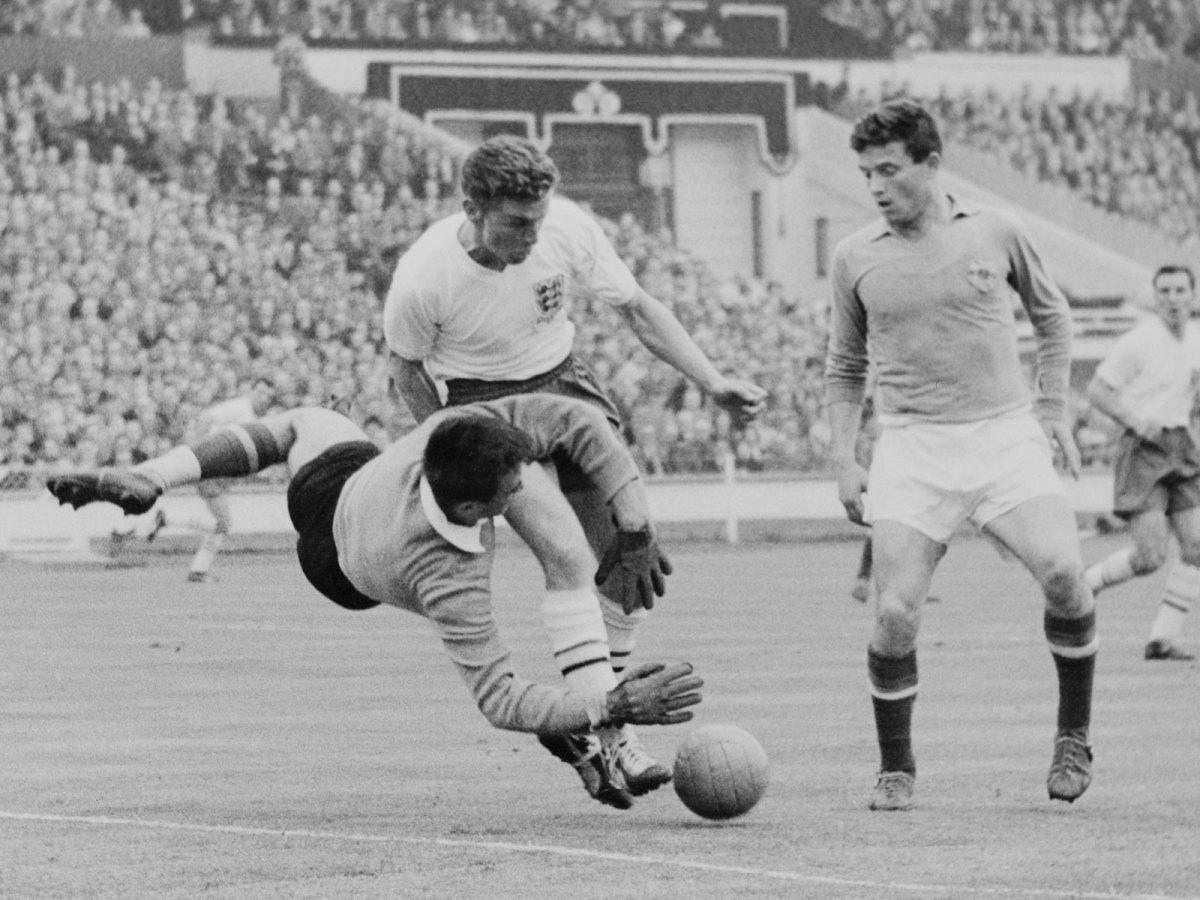
Yugoslavia had reached the semi-inal of the 1962 World Cup and it would go on to reach the final of the European Championship in 1968 after eliminating world champion England in the semifinal. A month before the World Cup, Partizan, having beaten Manchester United in the European Cup semifinal, lost to Real Madrid in the final. That was a fine generation, featuring the likes of goalkeeper Milutin Soskic (pictured, left), great libero Velibor Vasovic and winger Dragan Dzajic, but it missed out on the 1966 World Cup. Qualifying had begun well enough with wins over Luxembourg and France, but then, in June 1965, it was hammered 3-0 in Norway. A 5-2 win in Luxembourg got Yugoslavia back on track, but a 1-0 defeat in France effectively ensured its elimination.
Argentina, 1970

Two weeks before qualifying for the 1970 World Cup began, the president of Argentina, General Juan Carlos Ongania, forced the head of the Argentinian Football Association, Armando Ramon Ruiz, to resign. His whole staff went with him, including the national coach, Humberto Maschio. He was replaced by Adolfo Pedernera, who ignored the preparations that had been made for the game at altitude in Bolivia, which, along with Peru, comprised a three-team group from which only the top side qualified for Mexico. Argentina lost both away games and, although it beat Bolivia at home a 2-2 draw in the final qualifier, ensured it was Peru that went to the 1970 World Cup. There was criticism both of the preparation and of the whole style of Argentinian football, which many believed had been damaged by the influence of the anti-futbol practiced by Estudiantes. “The Argentinian player had lost all joy in playing football,” said defender Roberto Perfumo (pictured). “Moreover, those who join the national team know their fate to be only one thing: to be made a fool of.”
England, 1974

The writing for England had been on the wall since the quarterfinal of the European Championship in 1972, when it was comprehensively outplayed at Wembley by West Germany. The same side had eliminated England at the same stage of the World Cup in Mexico two years earlier, but where that had been a tight game that could have gone either way, there was a half-hour period at Wembley in which England couldn’t get close to the side of Gunter Netzer and Franz Beckenbauer. But Alf Ramsey, England’s World Cup-winning manager, was slow to change his approach and remained loyal to many of the players who had brought success in 1966. A Bobby Moore mistake cost England a defeat away to Poland, but a win against the Poles in the final qualifier at Wembley would still have taken a squad including Peter Shilton, Roy McFarland and Colin Bell to West Germany. As it was, England found Poland’s unorthodox goalkeeper Jan Tomaszewski in almost unbeatable form and, despite creating chance after chance, was able to draw only 1-1.
USSR, 1974

The winners of groups 1-8 of UEFA qualifying and Groups 10-11 of CONMEBOL qualifying went to West Germany, while the winners of UEFA Group 9 faced a playoff against the winner of CONMEBOL Group 12, which is why the USSR faced Chile over a two-legged, home-and-away qualifier. This was a very strong Soviet side, based around the team that had reached the final of the European Championship two years earlier, featuring the likes of Oleh Blokhin, Revaz Dzodzuashvili and Evgeny Lovchev. But it was also a gifted Chile team, including both Elias Figueroa and Carlos Caszely. Tensions had been heightened when, 15 days before the first leg in Moscow, Salvador Allende’s democratically elected leftist government was overthrown by a military coup led by Augusto Pinochet, which immediately declared itself opposed to Communism. Figueroa and Caszely were both detained at the airport in Moscow because of supposed irregularities in their passports, but were released to play in the game, which, to the intense frustration of the Soviets, finished 0-0. The USSR refused to travel for the return leg, making the not unreasonable point that they couldn’t play in the Estadio National in Santiago, which had been used as a torture and detention center by the Pinochet regime. FIFA awarded the game as a walkover to Chile, which qualified at the Soviets’ expense.
Czechoslovakia, 1978
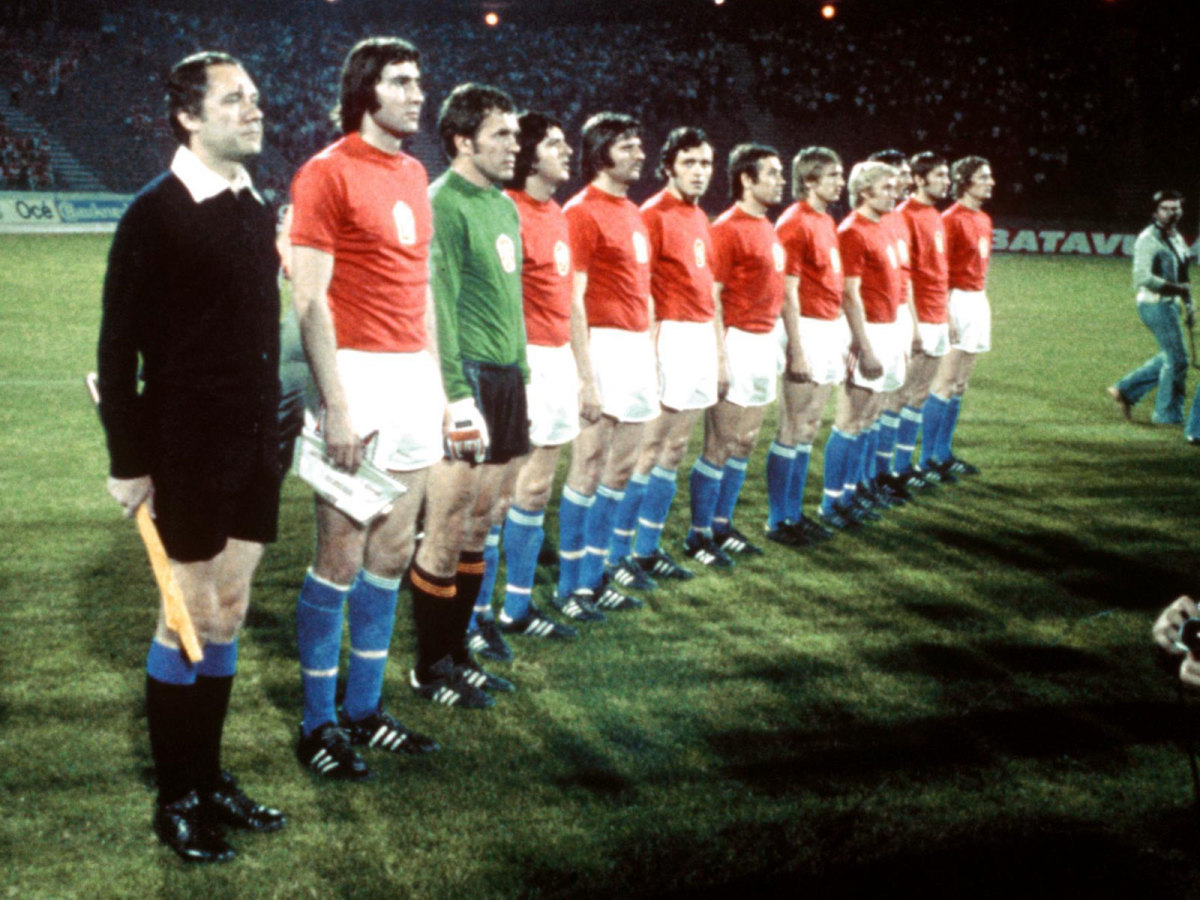
Czechoslovakia won the European Championship in 1976 thanks to Antonin Panenka’s ground-breaking penalty in the shootout in the final against West Germany, and it had been widely admired for the way it had beaten the Netherlands in the semifinal. This was the side of Jaroslav Pollak, Karol Dobias and Zdanak Nehoda. Its group for World Cup qualifying, though, was hard, with just one to qualify from a three-team group also including Wales and Scotland, which had qualified ahead of it four years earlier after a famous 2-1 win at Hampden. The Czechoslovakians began well, beating Scotland 2-0, but a 3-0 reverse in Wales shook confidence and they went to Glasgow knowing another defeat would effectively eliminate them. Goals from Joe Jordan, Asa Hartford and Kenny Dalglish gave Scotland a 3-1 win, and it sealed qualification with a controversial victory over Wales at Anfield after being awarded a penalty for a handball seemingly committed by Jordan.
Ireland, 1982

There are those who would argue that the Ireland squad of the early 1980s was even better than the team Jack Charlton took to the World Cup quarterfinal in Italia 90, featuring Liam Brady, Frank Stapleton, Steve Heighway, Mark Lawrenson, David O’Leary, Michael Robinson, Chris Hughton and Tony Grealish. It was also hugely unlucky. It had had goals mysteriously disallowed in the 1978 qualification campaign in France and Bulgaria and was again undone by a disallowed goal in France four years later. But the biggest disgrace came in Belgium. This was a time at which, it was later proven, Anderlecht, the leading Belgian side, systematically bought off referees in UEFA competition. Stapleton (pictured, left) had a volley from a Brady free kick ruled out. Before the 2002 World Cup, Sunday Tribune journalist Paul Howard tracked down Portuguese referee Raul Navare and sat through a video of the game with him. At first Navarre claimed the goal was offside, but seeing it again he accepted that was impossible, so changed his story to say it had been an indirect free kick and the goal had been ruled out because Stapleton hadn’t touched the ball at him at all but had actually deflected in off his own back. The tape, shall we say, tells its own story. Even worse followed as Belgium scored an 88th-minute winner from a free kick awarded for an obvious dive by Eric Gerets. A draw there, and Ireland would have gone through at the top of the group.
Netherlands, 1982

The Netherlands had reached the final of the previous two World Cups, but the problem for a country of its size will always be maintaining the flow of talent. No matter how good its youth system, when a nation has a population of only 14 million, there will always be fallow periods. Even if this wasn’t quite the side of the 1970s, the squad that took part in qualifying for the 1982 World Cup still featured players of the class of Hans van Breukelen, Johnny Metgod, Ruud Krol and Arnold Muhren. The draw, though, was impossibly tough, grouping the Dutch with a Belgium side that had reached the final of the European Championship in 1980, a France side that would go on to win the European Championship in 1980 and one of the best Ireland sides in history. A 3-0 win over Belgium in the penultimate qualifier meant a win in Paris in its final game would have sealed qualification, but goals from Michel Platini and Didier Six secured a 2-0 win that carried France to Spain.
France, 1994
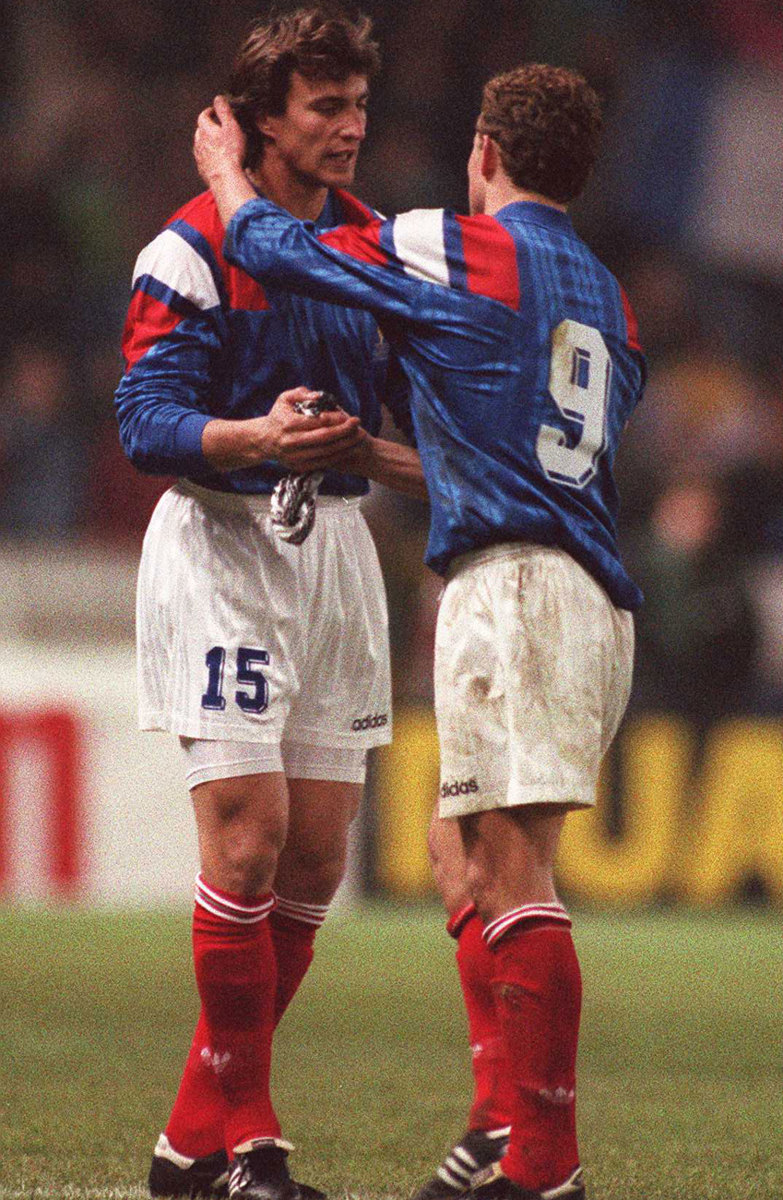
Bernard Lama, Laurent Blanc, Marcel Desailly, Didier Deschamps, Emmanuel Petit, Frank Sauzee, Eric Cantona, Jean-Pierre Papin–that France’s qualification for the 1994 World Cup ever came into doubt was vaguely ridiculous, but failing to reach major tournaments with star-packed squads is a peculiarly French trait. With two games of qualifying remaining, France led Sweden by two points and Bulgaria by four, with the top two sides to go through. But then Bulgaria hammered Austria 4-1 and France, shockingly, lost 3-2 at home to Israel. Sweden beat Finland and drew in Austria to secure its place in the USA, meaning France needed only to draw in Paris against Bulgaria to go through. It took the lead through Cantona after 32 minutes, and although Emil Kostadinov leveled before halftime, everything seemed secure as, with the clock showing 89:46, substitute David Ginola gathered the ball by the right corner flag at the Bulgarian end of the pitch. But then Ginola committed the act for which France’s manager Gerard Houllier has never forgiven him. Rather than wasting time, he sent in a cross. It was overhit, and Bulgaria broke. Luboslav Penev chipped a 40-yard ball into the path of Kostadinov, and cutting into the box from a narrow angle, he thumped an improbable shot in off the underside of the bar. The clock showed 89:59. France was out, and Bulgaria was through. Bizarrely, both Penev and Kostadinov were in the country illegally; because of an administrative oversight, the Bulgarian FA simply hadn’t applied for visas for them and they had been smuggled into France through an undermanned border point near Mulhouse, for which Borislav Mihailov and Georgi Georgiev both played. So as not to arouse suspicion at a hotel, they had stayed at Georgiev’s house before carrying on to Paris, where the whole squad was put up at the Trianon Palace by a French travel agency that was angered by losing a deal with the French federation. Ginola got the blame, but with tighter security, Bulgaria would never have had a chance.
Egypt, 2010

Between 2006 and 2010, Egypt won three successive African Cup of Nations titles with a largely home-based squad that included the likes of Mohamed Aboutreika, Mohamed Hosny, Ahmed Hassan and Amr Zaki. Under Hassan Shehata, they played an attractive, passing style of play, underpinned by a ruthless pragmatism. Yet Egypt’s last World Cup appearance came in 1990. It missed out in 2006 having finished a distant third behind Ivory Coast and Cameroon, but in 2010 it should have been at the peak of its powers. A sloppy draw at home Zambia in the first game of the final game of qualifying proved vital, particularly when it was immediately followed by a 3-1 defeat away to its bitter rival Algeria. But Egypt won its next three games, meaning it had to win its final game, at home to Algeria by three goals, or by two goals while scoring three, to make it to South Africa. After 90 minutes in Cairo, it led 1-0, but five minutes into injury time, Emad Moteab made it 2-0, meaning the two sides had identical records, and that meant a playoff in Omdurman, Sudan. In a predictably tight game, a volley from Algeria central defender Antar Yahia just before halftime, proved decisive.
 Add us as a preferred source on Google