%20%20--%3E%0A%3Csvg%20version%3D%221.1%22%20id%3D%22Layer_1%22%20xmlns%3D%22http%3A%2F%2Fwww.w3.org%2F2000%2Fsvg%22%20xmlns%3Axlink%3D%22http%3A%2F%2Fwww.w3.org%2F1999%2Fxlink%22%20x%3D%220px%22%20y%3D%220px%22%0A%09%20width%3D%2239px%22%20height%3D%2240px%22%20viewBox%3D%220%200%2039%2040%22%20enable-background%3D%22new%200%200%2039%2040%22%20xml%3Aspace%3D%22preserve%22%3E%0A%3Cpath%20fill%3D%22%23FFFFFF%22%20d%3D%22M38.5%2C7H28.2v26h10.3V7z%22%2F%3E%0A%3Cpath%20fill-rule%3D%22evenodd%22%20clip-rule%3D%22evenodd%22%20fill%3D%22%23FFFFFF%22%20d%3D%22M26.1%2C25.5c0%2C5.8-4.1%2C7.5-12.9%2C7.5C3.9%2C33%2C0%2C31.2%2C0%2C25.2v-1.1h11.6%0A%09v2.4c0%2C0.7%2C0.1%2C1.4%2C1.2%2C1.4c1%2C0%2C1.2-0.4%2C1.2-1.3v-0.9c0-1.6-0.9-1.6-3.5-2.2C2.2%2C21.7%2C0%2C19.7%2C0%2C15.3v-0.9C0%2C9.3%2C5.5%2C7%2C12.9%2C7%0A%09c10.2%2C0%2C12.8%2C2.6%2C12.8%2C7.4v1.8h-11v-2.9c0-0.6-0.4-1.1-1.2-1.1c-0.6%2C0-1.2%2C0.4-1.2%2C1.1v0.9c0%2C1.5%2C0.9%2C2%2C3.3%2C2.5%0A%09c8%2C1.6%2C10.5%2C3.3%2C10.5%2C7.5V25.5z%22%2F%3E%0A%3C%2Fsvg%3E%0A)
Five from Iran Women’s Soccer Team Offered Visas, Safety Talks Continue
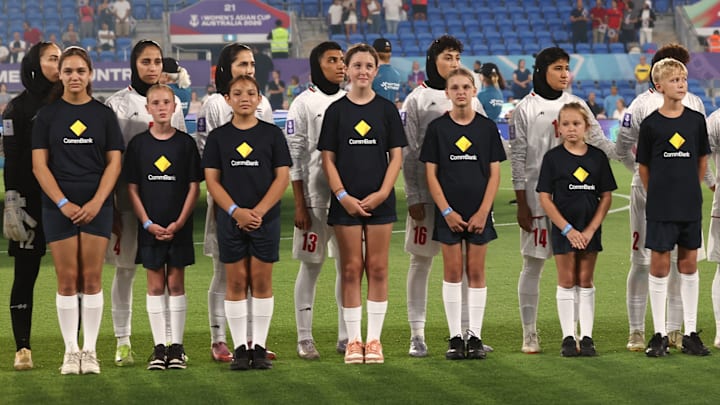
U.S. President Donald Trump, FIFA and the Australian government continue to pursue safety options for the Iran women’s soccer players, who were branded “wartime traitors” by state television after refusing to sing the national anthem before a March 2 friendly.
The Iranian team arrived in Australia for the Asian Football Confederation (AFC) Women’s Asian Cup prior to the U.S. and Israel’s initial airstrikes on their homeland Feb. 28. They were supposed to depart the Gold Coast on Monday, but The Athletic reports there are currently no flights booked back to Iran.
The women remained silent during the national anthem before their opening match against South Korea, in presumed protest against the government, and presenter Mohammad Reza Shahbazi warned on air: “Anyone who takes a step against the country under war conditions must be dealt with more severely. ... The stigma of dishonor and betrayal must remain on their foreheads, and separately they must be dealt with properly.”
According to BBC, five players—Fatemeh Pasandideh, Zahra Ghanbari, Zahra Sarbali, Atefeh Ramazanzadeh and Mona Hamoudi— defected from the team Monday evening local time and relocated to a safe house in the care of the Australian federal police. They have been granted humanitarian visas, the government in Canberra confirmed Tuesday, granting permanent protection and the ability to live, work and study in the country.
“I say to the other members of the team, the same opportunity is there,” immigration minister Tony Burke said. “Australia has taken the Iranian women’s soccer team into our hearts. These women are tremendously popular in Australia, but we realize they are in a terribly difficult situation with the decisions that they’re making.”
What Safety Measures Are Being Taken?

Despite an inability to get in touch with the remaining Iran women’s players directly due to increased repression, the region’s players’ union is in contact with the Australian government, FIFA and the AFC about efforts to deliver them “agency.”
“It’s a really challenging situation,” FIFPRO Asia/Oceania president Beau Busch said in a general assembly Monday. “There may be players who want to return. There may be some players within the group who would like to seek asylum, or would like to stay in Australia for longer. There may be some who are incredibly concerned about the potential journey home.
“...If they do want to return, how do we do that safely? Then obviously ensuring that they’re incredibly safe when they get back to Iran. That’s going to be really difficult, but FIFA has a statutory obligation in relation to human rights to ensure that they exert that leverage, and we expect them to do so.”
Iran manager Marziyeh Jafari said post-match Sunday: “Personally, I would like to return to my country as soon as possible and be with my compatriots and family.”
What Role Has President Donald Trump Played?

President Donald Trump advocated for the Iranian women’s team on social media, posting to Truth Social on Monday: “Australia is making a terrible humanitarian mistake by allowing the Iran National Woman’s Soccer team to be forced back to Iran, where they will most likely be killed. Don’t do it, Mr. Prime Minister, give ASYLUM.
“The U.S. will take them if you won’t. Thank you for your attention to this matter.”
Trump’s appeal came after his administration imposed the most restrictive travel bans of any country on Iranians last summer and deemed Iran “a state sponsor of terrorism.”
President Trump later posted that he had been in contact with Australian prime minister Anthony Albanese: “He’s on it! Five [players] have already been taken care of, and the rest are on their way. Some, however, feel they must go back because they are worried about the safety of their families, including threats to those family members if they don’t return.”
Mojtaba Khamenei assumed power as Iran’s new supreme leader Sunday, following the death of his father, Ayatollah Ali Khamenei, in the initial airstrikes.
READ THE LATEST SOCCER NEWS, ANALYSIS AND INSIGHT FROM SI FC
 Add us as a preferred source on Google
Sophia Vesely is a writer, reporter and editor for SI FC, with an emphasis on North American coverage. Her experience comes from regional journalism as a former sports reporter for the Orlando Sentinel, Dallas Morning News and Seattle Times. Vesely graduated from Swarthmore College, where she played collegiate soccer as a wingback. She specializes in MLS, NWSL and NCAA soccer.