%20%20--%3E%0A%3Csvg%20version%3D%221.1%22%20id%3D%22Layer_1%22%20xmlns%3D%22http%3A%2F%2Fwww.w3.org%2F2000%2Fsvg%22%20xmlns%3Axlink%3D%22http%3A%2F%2Fwww.w3.org%2F1999%2Fxlink%22%20x%3D%220px%22%20y%3D%220px%22%0A%09%20width%3D%2239px%22%20height%3D%2240px%22%20viewBox%3D%220%200%2039%2040%22%20enable-background%3D%22new%200%200%2039%2040%22%20xml%3Aspace%3D%22preserve%22%3E%0A%3Cpath%20fill%3D%22%23FFFFFF%22%20d%3D%22M38.5%2C7H28.2v26h10.3V7z%22%2F%3E%0A%3Cpath%20fill-rule%3D%22evenodd%22%20clip-rule%3D%22evenodd%22%20fill%3D%22%23FFFFFF%22%20d%3D%22M26.1%2C25.5c0%2C5.8-4.1%2C7.5-12.9%2C7.5C3.9%2C33%2C0%2C31.2%2C0%2C25.2v-1.1h11.6%0A%09v2.4c0%2C0.7%2C0.1%2C1.4%2C1.2%2C1.4c1%2C0%2C1.2-0.4%2C1.2-1.3v-0.9c0-1.6-0.9-1.6-3.5-2.2C2.2%2C21.7%2C0%2C19.7%2C0%2C15.3v-0.9C0%2C9.3%2C5.5%2C7%2C12.9%2C7%0A%09c10.2%2C0%2C12.8%2C2.6%2C12.8%2C7.4v1.8h-11v-2.9c0-0.6-0.4-1.1-1.2-1.1c-0.6%2C0-1.2%2C0.4-1.2%2C1.1v0.9c0%2C1.5%2C0.9%2C2%2C3.3%2C2.5%0A%09c8%2C1.6%2C10.5%2C3.3%2C10.5%2C7.5V25.5z%22%2F%3E%0A%3C%2Fsvg%3E%0A)
Memorable Collapses
Memorable Collapses
Atlanta Falcons (2017)
Leading New England by 25 points in Super Bowl 51, the Atlanta Falcons lost 34-28 in overtime as the Patriots completed the biggest comeback in Super Bowl history. The Falcons seemed to be comfortably ahead 28-3 with 8:36 remaining in the third quarter but couldn’t stop New England from putting up 19 points in the fourth quarter, including a pair of two-point conversions.
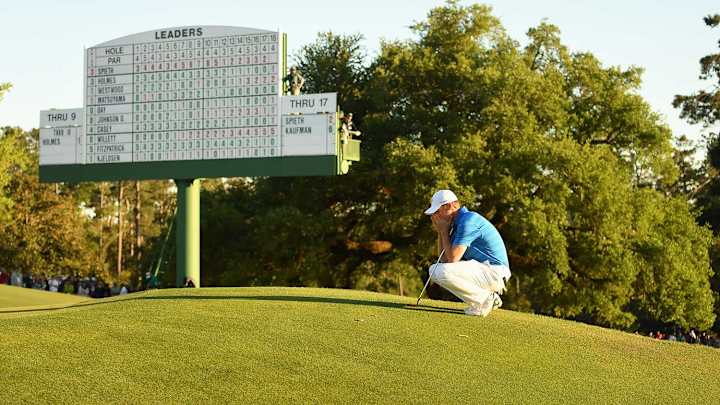
Jordan Spieth (2016)
Spieth shot a final-round 73 and finished T2, three shots behind Danny Willett at Augusta. The costly swing of momentum occured as Spieth made the turn on Sunday, when he was seven under and in total control of the tournament. Entering the round, Spieth had played 10-11-12 a combined one over par. The result on Sunday? Bogey-bogey-quad, and his Masters hopes were dashed.
Northern Iowa (2016)
Despite a 12-point lead with 38 seconds remaining in the second half of their second round tournament game, Northern Iowa turned the ball over four times in the final minute and surrendered a 14–2 run in a 31-second span. Two overtimes later, the exhausted Panthers were headed home after an astonishing 92–88 loss to No. 3 Texas A&M in double overtime.
Los Angeles Clippers (2015)
The Houston Rockets overcame a 19-point third-quarter deficit in Game 6 to stay alive, and they overcame a 3-1 series deficit to eliminate the Los Angeles Clippers and advance to the Western Conference finals for the first time since 1997.
Toronto Maple Leafs (2013)
Playing in their first playoff series in nine years, the Maple Leafs looked like they had things sewn up with a 4-1 lead and 14 minutes remaining in the third period. That's when Boston found the magic. The Bruins scored three straight goals to close out the third, with Patrice Bergeron potting the tying tally as well as the winner six minutes into a tense overtime period. For the Leafs, who came back from 3-1 down in the series to force a Game 7, it was perhaps the cruelest end to a playoff run that had the city of Toronto hanging on every play and in ecstatic anticipation.
Boston Red Sox (2011)
The Red Sox led not just the wild card, not just the division but the entire American League going into September. Boston went 7-20 the rest of the way, seeing the hated Yankees pass them for the East lead and, on the final day of the season, the Rays complete their comeback from nine games down to snatch the wild card. On the final night, the Red Sox lost on an Orioles walk-off in the ninth inning, and the Rays, down 7-0 in the eighth, walked off on an Evan Longoria home run in the 12th to beat the Yankees. The two games finished within minutes of each other. The Red Sox's September collapse, squandering a nine-game lead, is the greatest in MLB history. Only one team, the Twins (6-20), was worse over the final month.
Atlanta Braves (2011)
The Braves had almost no chance of winning the NL East on Sept. 1, but they led the wild card by 8 1/2 games over the Cardinals. Their collapse mirrored that of the Red Sox. Atlanta entered the final night tied with the Cardinals and lost in heartbreaking fashion. Facing the Phillies, stellar Braves closer Craig Kimbrel surrendered the tying run with two outs in the ninth inning. The Phillies went on to win in 13 innings. Earlier, the Cardinals had beaten the Astros 8-0. The Braves' season was over. The Cardinals went an NL-best 18-8 in September. The Braves? 9-18, worst in the NL.
JR Hildebrand (2011)
JR Hildebrand was one turn away from winning the Indianapolis 500 and within sight of the checkered flag when the 23-year-old rookie made the ultimate mistake. On the 800th and final turn of the race, Hildebrand crashed into the wall, allowing Dan Wheldon to cruise to the finish line for his second career victory at Indy and leaving Hildebrand in a gut-wrenching second place.
Rory McIlroy (2011)
The 21-year-old from Northern Ireland entered the final round of the Masters with a four-stroke lead, but finished 10 strokes back of champion Charl Schwartzel after shooting a final-round score of 80. The trouble started for McIlroy on the 10th hole, where he hit his drive left, got back onto the fairway, only to later hit a tree on his pitch shot as he scored a triple bogey. He then three-putted the 11th and four-putted the 12th before hitting his tee shot into a creek on the 13th. McIlroy's final round score was the worst by a third-round leader since Ken Venturi in 1956.
New York Giants (2010)
The Giants led the Dec. 19 regular-season game 24-3 at the half and 31-10 after a field goal with 8:23 remaining in the fourth quarter. From there, Philadelphia scored 28 consecutive points, in this order: Michael Vick threw a 65-yard TD pass to Brent Celek with 7:43 to go; Vick, after a successful onside kick, scored on a 4-yard run at the 5:32 mark; Vick hit Jeremy Maclin for a 13-yarder to tie it with 1:24 to play; and, on the last play from scrimmage, DeSean Jackson first fumbled a Matt Dodge punt and then returned it 65 yards for the game-winner. "I've never been around anything like this in my life," Giants coach Tom Coughlin said afterward. "It's about as empty as you can feel in this business."
Boston Bruins (2010)
Down 3-0 in games, Philadelphia rallied. Down 3-0 in Game 7, Philadelphia rallied again. Simon Gagne's power-play goal in the third lifted the Flyers to an improbable 4-3 win over the Bruins. It was humiliating for the Bruins, who became the third team in NHL history to lose a series after winning the first three games. The only other teams to win a series after trailing 3-0 were the 1942 Toronto Maple Leafs, who beat Detroit, and the 1975 New York Islanders, who eliminated Pittsburgh. The other 159 teams that won the first three games in a series all won them.
Detroit Tigers (2009)
Trying to win their first division title since 1987, the Tigers owned a seven-game division lead over Minnesota on Sept. 6. But the pennant eluded Detroit, thanks to an 11-16 finish to the season, culminating in a heartbreaking, 12-inning loss to Minnesota in a one-game tiebreaker. The Tigers became the first team since 1901 to miss the playoffs after holding a three-game lead with just four to play. The Twins went 17-4 down the stretch to claim the division title and an ALDS date with the Yankees.
Memphis Tigers (2008)
Leading 60-51 lead with 2:12 remaining, Memphis missed crucial free throws and watched Kansas hit a pair of three-pointers, including a game-tying dagger by Mario Chalmers with 2.1 seconds left. The Tigers eventually lost 75-68 in overtime.
New York Mets (2007)
Having staked a seven-game lead over the Phillies with 17 games remaining, New York seemed like a lock for a second straight division title. But Philadelphia's mid-September sweep at Shea Stadium would catalyze one of the most monumental September meltdowns in major league history. The Mets dropped six of seven results in a final home stand against teams with losing records to miss the playoffs completely.
Phil Mickelson (2006)
Phil Mickelson's double bogey at Winged Foot that cost him the U.S. Open will go down as one of golf's biggest meltdowns, as Lefty frittered away a chance to win his third consecutive major.
Dallas Mavericks (2006)
The Dallas Mavericks won the first two games of the 2006 NBA Finals and were ahead 89-76 in Game 3. They ended up losing 98-96 and dropped the next three games too, becoming the 10th NBA team to squander a 2-0 lead in a best-of-seven series.
AC Milan (2005)
And you thought the U.S. soccer team losing to Ghana was tough. In the 2005 UEFA Champions League final, heavily favored AC Milan led Liverpool F.C. 3-0 at halftime thanks to Paolo Maldini and Hernan Crespo. But Liverpool engineered what some call the greatest comeback in soccer history, returning the favor and then winning on penalty shots, 3-2.
New York Yankees (2004)
Three outs away from sweeping the Boston Red Sox and advancing to the World Series, the Yankees lost 6-4 in 12 innings and proceeded to become the first team in baseball history to blow a best-of-seven series after leading 3-0.
Chicago Cubs (2003)
Leading 3-0 and just five outs away from going to their first World Series in 58 years, the Cubs suffered a stroke of bad luck when Steve Bartman grabbed a foul ball off the bat of Luis Castillo before Moises Alou could catch it. Castillo drew a walk, and the Florida Marlins scored eight runs in the inning and went on to win Game 6 and later the series.
Miami Dolphins (2000)
The Miami Dolphins led the New York Jets 30-7 entering the fourth quarter of the Monday Night game, but then quarterback Vinny Testaverde went to work. The Jets stormed back to tie the game at 30 before Miami quarterback Jay Fiedler threw a 46-yard touchdown to Leslie Shepherd to give the Fins a 37-30 lead. The Jets responded by marching down the field, with Testaverde eventually lofting a pass to eligible tackle Jumbo Elliott in the end zone. Elliott juggled the ball, but then pulled down the game-tying touchdown. The Jets won 40-37 in overtime, and the game became known as the Monday Night Miracle.
Buffalo Bills (2000)
Steve Christie hit a 51-yard field goal to give Buffalo a 16-15 lead with 16 seconds remaining in an January 2000 AFC wild-card game. The Bills squibbed the ensuing kickoff and Tennessee's Lorenzo Neal picked it up and handed it to Frank Wycheck. The Tennesse tight end then lateraled the ball to Kevin Dyson on the other side of the field. Dyson dashed down the sideline for the game-winning touchdown.
Jean Van de Velde (1999)
He stood on the 18th tee Sunday at Carnoustie with a three-shot lead, hoping — expecting — to become the first Frenchman since 1907 to win the Open. But Van de Velde decided not to make the safe play with his approach shot. Instead, in one of the biggest decision-making gaffes in golf history, Van de Velde attacked the green ... and found trouble. He had to make a six-foot putt for triple bogey just to get into a three-man playoff, but there was no redemption, as Paul Lawrie emerged as the winner.
Greg Norman (1996)
The world's top-ranked golfer owned a six-shot lead going into the final day at Augusta. But in a round that would unfortunately define his career, the Shark carded five bogeys and two double bogeys for a six-over 78, with Nick Faldo shooting 67 to win by five shots. "I made a lot of mistakes today," Norman said in his mea culpa afterward. "I put all the blame on myself. You pay the price. That's all there is to it."
Jana Novotna (1993)
In the 1993 Wimbledon women's singles final, Jana Novotna dropped a tight first set against Steffi Graf, but charged back for a 6-7, 6-1, 4-1, 40-15 lead in the deciding set. As victory neared, she became unnerved and missed easy shots, which included hitting the ball out by wide margins. Graf took the next five games and the title.
Houston Oilers (1992)
On Jan. 3, in an AFC wild-card playoff, the Houston Oilers blew a 35-3 third-quarter lead to the Buffalo Bills and lost 41-38 on Steve Christie's 32-yard field goal in overtime. The greatest comeback in NFL history helped propel the Bills to their third straight Super Bowl.
Boston Red Sox (1986)
If the Red Sox had won Game 7 against the New York Mets, no one would have recalled Bill Buckner's gaffe in Game 6. But they didn't, so the image of the first baseman allowing Mookie Wilson's squibber to dribble through his legs as Ray Knight ran home with the winning run will forever be remembered. Boston had been up a pair of runs and were a strike away from winning the World Series before the collapse.
California Angels (1986)
Maybe Red Sox fans shouldn't complain about Bill Buckner. The Angels led 5-4 in the 1986 ALCS and were one strike away from that fateful World Series before Boston's Dave Henderson launched a two-run blast off Donnie Moore. Then, in the bottom of the ninth, California actually loaded the bases after tying it up again, but to no avail. The Angels would lose in extra innings, and drop the remaining two games to the Sox.
John McEnroe (1984)
John McEnroe was in his prime in 1984 (he would go 82-3), but even he couldn't prevent a momentous collapse against Ivan Lendl in the French Open. After jumping out to a swift lead, two sets to none, McEnroe's temper took over as the Czech star dramatically fought back to win in five sets. Ultimately, McEnroe's 39-match winning streak was snapped, and a French Open victory would never be so close.
Chicago Cubs (1969)
The summer of '69 is certainly special to the city of Chicago, but not for the same reasons as musician Bryan Adams. Hall of Famers Ernie Banks, Ferguson Jenkins, and Billy Williams steered the Cubs to a massive 8 1/2 lead over St. Louis and a 9 1/2 advantage over the Mets in August, but the Amazin's would steamroll them while Chicago faded in September. The Cubs missed out on the playoffs by eight games.
Philadelphia Phillies (1964)
The ''Phold'' of '64 still has Philadelphia waking up in a cold sweat. Up 6 1/2 games in the standings with 12 to go, the Phillies then proceeded to lose 10 straight to relinquish a seemingly insurmountable lead in the National League. If the Cardinals lost on the final day of the season, an unprecedented three-team playoff between St. Louis, the Reds, and the Phillies would have resulted. Of course, the Cards won, and Phillies fans received nightmares as their parting gift.
Detroit Red Wings (1942)
The Detroit Red Wings were up three games to none in the Stanley Cup finals, on the brink of sending Toronto home. But the Leafs completed arguably the greatest comeback in sports history, winning Lord Stanley's Cup by taking the final four games
 Add us as a preferred source on Google