%20%20--%3E%0A%3Csvg%20version%3D%221.1%22%20id%3D%22Layer_1%22%20xmlns%3D%22http%3A%2F%2Fwww.w3.org%2F2000%2Fsvg%22%20xmlns%3Axlink%3D%22http%3A%2F%2Fwww.w3.org%2F1999%2Fxlink%22%20x%3D%220px%22%20y%3D%220px%22%0A%09%20width%3D%2239px%22%20height%3D%2240px%22%20viewBox%3D%220%200%2039%2040%22%20enable-background%3D%22new%200%200%2039%2040%22%20xml%3Aspace%3D%22preserve%22%3E%0A%3Cpath%20fill%3D%22%23FFFFFF%22%20d%3D%22M38.5%2C7H28.2v26h10.3V7z%22%2F%3E%0A%3Cpath%20fill-rule%3D%22evenodd%22%20clip-rule%3D%22evenodd%22%20fill%3D%22%23FFFFFF%22%20d%3D%22M26.1%2C25.5c0%2C5.8-4.1%2C7.5-12.9%2C7.5C3.9%2C33%2C0%2C31.2%2C0%2C25.2v-1.1h11.6%0A%09v2.4c0%2C0.7%2C0.1%2C1.4%2C1.2%2C1.4c1%2C0%2C1.2-0.4%2C1.2-1.3v-0.9c0-1.6-0.9-1.6-3.5-2.2C2.2%2C21.7%2C0%2C19.7%2C0%2C15.3v-0.9C0%2C9.3%2C5.5%2C7%2C12.9%2C7%0A%09c10.2%2C0%2C12.8%2C2.6%2C12.8%2C7.4v1.8h-11v-2.9c0-0.6-0.4-1.1-1.2-1.1c-0.6%2C0-1.2%2C0.4-1.2%2C1.1v0.9c0%2C1.5%2C0.9%2C2%2C3.3%2C2.5%0A%09c8%2C1.6%2C10.5%2C3.3%2C10.5%2C7.5V25.5z%22%2F%3E%0A%3C%2Fsvg%3E%0A)
The 0-2 Comebacks to Win Championships
The 0-2 Comebacks to Win Championships
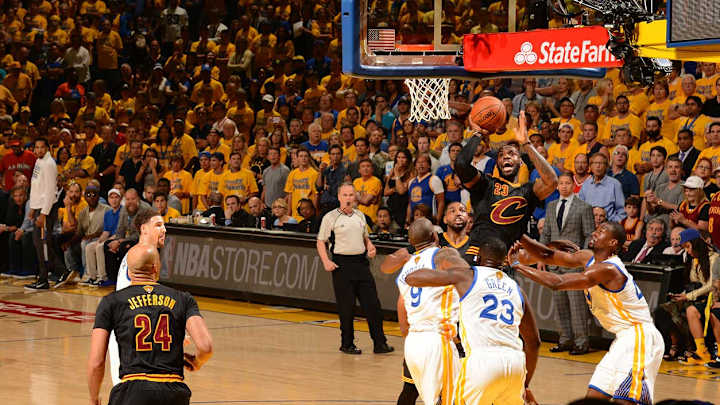
Cleveland Cavaliers (2016)
LeBron James and his relentless, never-count-them-out Cavaliers pulled off an improbable NBA Finals comeback as the Cavs not only fell behind 0-2 in the Finals, but became the first team to rally from a 3-1 finals deficit by beating the defending champion Golden State Warriors 93-89 in Game 7 to end a 52-year major sports championship drought in Cleveland. James almost single-handedly carried the Cleveland back into the series as the Cavs captured their first championship in franchise history and gave their city its first major sports winner since the Browns won the NFL title in 1964.
Boston Bruins (2011)
After losing the first two games in Vancouver, the Bruins went home and laid the lumber to the Canucks, throttling them 8–1 in Game 3 and shutting them out 4-0 two nights later. Roberto Luongo’s 1-0 shutout in Game 5 gave the Canucks the lead again in the rugged, chippy series, but they couldn’t hold it for long. Boston blitzed them with four goals in a 4:14 span of the first period of Game 6, en route to an easy 5-2 win. With Conn Smythe-winner Tim Thomas shining in net, the Bruins cruised to a 4-0 Game 7 win in Vancouver that set off rioting in the streets outside the arena.
Pittsburgh Penguins (2009)
In a rematch of the 2008 Stanley Cup Final, the defending champion Red Wings took the first two games by identical 3–1 scores. Game 3 in Pittsburgh was tied 2-2 in the third period when Sergei Gonchar’s power play goal turned the tide. The Penguins later fell behind again, three games to two, but gutted out a 2-1 win at home in Game 6. Max Talbot was the unlikely hero in Game 7, scoring twice in the Pens’ 2-1 Cup-clinching victory in Detroit.
Miami Heat (2006)
After dropping the first two NBA Finals games in Dallas, Heat star Dwayne Wade took over the series. He averaged 34.7 points for the entire series and scored 36 points in a taut 95-92 Game 6 win. The victory gave Miami its first championship in franchise history and added additional hardware for Pat Riley (his fifth title as a coach) and center Shaquille O'Neal (No. 4 as a player).
New York Yankees (1996)
The Yankees won their 23rd title by becoming one of only three teams to win the World Series after losing the first two games at home. After a rough start for pitcher Andy Pettitte in Game 1 (7 ER in 2 1/3 innings), he came back strong in Game 5, pitching 8 1/3 shutout innings against the Braves for a 1-0 win in Atlanta. Jimmy Key and John Wetteland combined for the Game 6 win, with Wetteland earning the Series MVP with saves in all four of New York's victories.
New York Mets (1986)
"The pitch by Stanley...And a ground ball trickling...It's a fair ball. It gets by Buckner! Rounding third is Knight...The Mets will win the ballgame...They win! They win!" That's how Mets announcer Bob Murphy called New York's now-legendary victory in Game 6 of the 1986 World Series. After losing the first two games in Boston, the Mets eventually won the series with an 8-5 Game 7 win at Shea Stadium.
Kansas City Royals (1985)
No team had ever won the World Series after losing the first two games at home. But 21-year-old Bret Saberhagen changed the course of history in this all-Missouri World Series. He won two games against the Cardinals, including a five-hit shutout in Game 7, and finished with an 0.50 ERA.
Los Angeles Dodgers (1981)
It was the 11th time the Dodgers and Yankees had met in the Fall Classic, but this one proved particularly memorable. The Yankees won the first two games — extending their postseason winning streak against the Dodgers to six — before Los Angeles starter Fernando Valenzuela went the distance in a crucial Game 3 win. The Dodgers eventually won the series on New York's turf, winning Game 6 by seven runs, 9-2.
New York Yankees (1978)
After catching the Boston Red Sox in a dramatic pennant chase, the Yankees dropped the first two games of the World Series at Dodger Stadium. But New York roared back with four straight wins thanks to previous light-hitting infielders Bucky Dent and Brian Doyle (pictured). Dent won the MVP with a .417 average and seven RBI. Doyle hit .438 and scored four runs.
Portland Trail Blazers (1977)
With Jack Ramsey behind the bench and Bill Walton in the pivot, Portland rebounded after losing its first two Finals games to Philadelphia. The Blazers swept the final four games of the series, including wins at home in Games 3, 4 and 6 and Game 5 in Philadelphia. Walton was named the Finals MVP with 23 points and eight blocks in the Game 6 win.
Pittsburgh Pirates (1971)
The series was defined by Roberto Clemente, who at 37, finally was given the national stage he craved. The Orioles won the first two games at home but with Clemente tearing up the baseball (he hit .414 in the series with 12 hits in 29 at-bats), the Pirates won Game 7 in Baltimore behind a complete-game victory by Steve Blass.
Montreal Canadians (1971)
It was the last Stanley Cup for Jean Beliveau and the first for Ken Dryden. Chicago took a surprising 2-0 lead before goaltender Dryden (the Finals MVP) and brothers Frank and Peter Mahovlich took control of the series.
Boston Celtics (1969)
The Lakers were heavily favored (Jerry West averaged 38 points in the series on a squad that also had Wilt Chamberlain) and jumped out to an early 2-0 lead. But the Celtics came back to hand player-coach Bill Russell his final championship. Boston won games 3, 4 and 6 at home and held on for a 108-106 Game 7 win in Los Angeles.
Montreal Canadians (1966)
A series famous for Henri Richard's goal at 2:20 of overtime in Game 6 (he also scored the winner in Game 7 of the 1971 final versus the Blackhawks), Montreal swept the final four games of the series.
Los Angeles Dodgers (1965)
It was a stunning start to the series: losses by Don Drysdale in Game 1 and Sandy Koufax in Game 2. But L.A.'s third best pitcher (lefthander Claude Osteen) blanked the Twins in Game 3 to start the comeback, and Koufax ended up winning Games 5 and 7 (Drysdale won Game 6). It was L.A.'s second World Series title in three years.
New York Yankees (1958)
The Braves outscored the Yankees 17-8 over the first two games in Milwaukee to open up a 2-0 series lead. But the hot bat of Hank Bauer (four home runs, eight RBI) and clutch pitching by Bob Turley (2-1, 2.76 ERA) earned the Yanks the honor of being only the second team in history (along with the 1925 Pirates) to rally from a 3-1 deficit and win a seven-game series.
New York Yankees (1956)
The series is best remembered for Don Larsen's perfect game in Game 5, but few recall that New York was smacked around by Brooklyn in the first two games. Yogi Berra's two home runs in Game 7 completed the comeback.
Brooklyn Dodgers (1955)
Finally, there was no more "wait till next year" for Brooklyn. The Dodgers had won the NL pennant seven times but had never gone on to win the World Series. After the first two games of the 1955 Fall Classic — tight wins by the Yankees — most Brooklyn fans expected the worse again. But Johnny Podres outdueled Bob Turley in Game 3 and the Dodgers won the following two games. New York captured Game 6 before Podres performed heroics again in a 2-0 Game 7 win.
Toronto Maple Leafs (1942)
The patron saints of finals comebacks, few expected the Leafs to defeat the Red Wings after losing the first three games of the Stanley Cup. Looking to change the pace of the series, Toronto coach Hap Day benched his regulars for Game 4 and inserted a number of rookies, who responded with a win. The rest of the series belonged to goaltender Turk Broda, who shut out Detroit 3--0 in Game 6 and stoned them again in Game 7 (a 3-1 victory in front of nearly 17,000 people in Maple Leaf Gardens, at the time the largest crowd ever to see a hockey game).
New York Giants (1921)
This was the franchise's first championship appearance as well as the World Series debut of the game's signature star. With a record 59 home runs during the 1921 regular season, Babe Ruth had established himself as baseball's Sultan of Swat. Ruth and Co. jumped all over the Giants in the best-of-nine series, winning the first two games without giving up a run. But John McGraw's team won the next two, and with Ruth hobbled with a knee and arm injury, the Giants took games 6, 7 and 8 to win the series, five games to three.
 Add us as a preferred source on Google