%20%20--%3E%0A%3Csvg%20version%3D%221.1%22%20id%3D%22Layer_1%22%20xmlns%3D%22http%3A%2F%2Fwww.w3.org%2F2000%2Fsvg%22%20xmlns%3Axlink%3D%22http%3A%2F%2Fwww.w3.org%2F1999%2Fxlink%22%20x%3D%220px%22%20y%3D%220px%22%0A%09%20width%3D%2239px%22%20height%3D%2240px%22%20viewBox%3D%220%200%2039%2040%22%20enable-background%3D%22new%200%200%2039%2040%22%20xml%3Aspace%3D%22preserve%22%3E%0A%3Cpath%20fill%3D%22%23FFFFFF%22%20d%3D%22M38.5%2C7H28.2v26h10.3V7z%22%2F%3E%0A%3Cpath%20fill-rule%3D%22evenodd%22%20clip-rule%3D%22evenodd%22%20fill%3D%22%23FFFFFF%22%20d%3D%22M26.1%2C25.5c0%2C5.8-4.1%2C7.5-12.9%2C7.5C3.9%2C33%2C0%2C31.2%2C0%2C25.2v-1.1h11.6%0A%09v2.4c0%2C0.7%2C0.1%2C1.4%2C1.2%2C1.4c1%2C0%2C1.2-0.4%2C1.2-1.3v-0.9c0-1.6-0.9-1.6-3.5-2.2C2.2%2C21.7%2C0%2C19.7%2C0%2C15.3v-0.9C0%2C9.3%2C5.5%2C7%2C12.9%2C7%0A%09c10.2%2C0%2C12.8%2C2.6%2C12.8%2C7.4v1.8h-11v-2.9c0-0.6-0.4-1.1-1.2-1.1c-0.6%2C0-1.2%2C0.4-1.2%2C1.1v0.9c0%2C1.5%2C0.9%2C2%2C3.3%2C2.5%0A%09c8%2C1.6%2C10.5%2C3.3%2C10.5%2C7.5V25.5z%22%2F%3E%0A%3C%2Fsvg%3E%0A)
Aryna Sabalenka Sent Blunt Message to Critics Amid ‘Battle of the Sexes’ Controversy
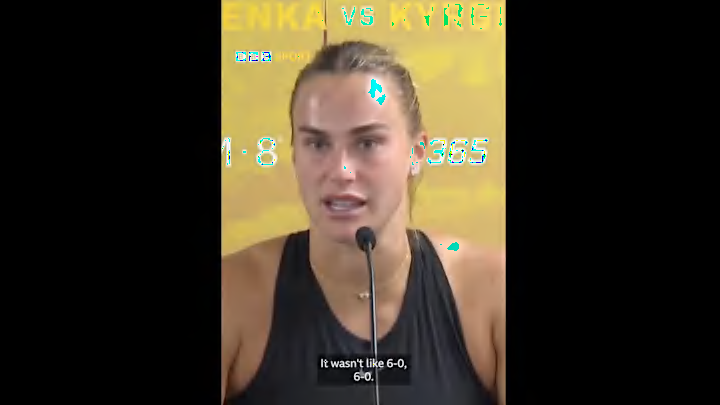
Aryna Sabalenka lost the "Battle of the Sexes" against Nick Kyrgios in their high-profile exhibition event on Sunday. She also may have lost the war.
Sabalenka played in the modern version of the "Battle of the Sexes" in Dubai this weekend, taking the court opposite Australian Nick Kyrgios. Kyrgios, who has played only seven matches in the past three years due to injuries, ended up besting the world No. 1 women's player 6-3, 6-3 in a low-stakes showdown that arguably didn't live up to its billing.
The match takes its name from a 1973 iconic showdown between Billie Jean King and Bobby Riggs, when King was championing for women's rights in tennis—including a female tour and equal pay—amid a starkly different cultural era. King won in straight sets.
After Sabalenka's "Battle of the Sexes" loss, she fired back at critics of the match, saying that she didn't understand how the event could be viewed in a negative light.
"I don't understand how people were able to find something negative in this event," Sabalenka said. "I was playing great tennis. It was an entertaining match. Yeah, he won the match, but I showed great tennis. It wasn't like 6-0, 6-0. It was a great fight. It was interesting to watch. It brought more eyes on tennis. ... I felt like we just brought more attention to our sport, I don't see how it can be bad, how you can talk negative about this."
"I think the idea behind it is to help our sport and show tennis from a different side, that tennis events can be more fun, more entertaining, and we can make it almost as big as Grand Slam matches. I think that the attention we built up to this event was not less than a Grand Slam final."
"I don't understand how people were able to find something negative in this event."
— BBC Sport (@BBCSport) December 29, 2025
Battle of the Sexes has sure got people talking 😅 Agree with Aryna Sabalenka? pic.twitter.com/GBB12OyVoV
Kyrgios agreed with Sabalenka, telling reporters after the match, "There's nothing but positives that can be taken away from this."
Sabalenka and Kyrgios's clash may have been a marquee spectacle for casual and die-hard tennis fans alike, but it could hardly be considered a watershed moment for gender equality, as King and Riggs's was.
King herself said as much when discussing the modern iteration of the "Battle of the Sexes":
"The only similarity is that one is a boy and one is a girl. That's it. Everything else, no," King told BBC. "Ours was about social change; culturally, where we were in 1973. This one is not. I hope it's a great match—I want Sabalenka, obviously, to win—but it's just not the same."
Whereas Sabalenka's event was tied to engagement and entertainment value, King's was rooted in the very real social battle taking place during the height of the women's rights movement in the 70s. Not helping matters was the fact that Kyrgios has previously spoken out against equal pay in tennis, and that the rules of their "Battle of the Sexes" match were slightly modified: Sabalenka's side of the court was roughly 10% smaller than Kyrgios's.
Over 50 years after King famously won her "Battle of the Sexes" showdown, there seems to be more controversy about the diminished significance and relevance of the event and what it represents—or fails to represent—in the modern era. It'll be interesting to see if there'll be another like it in the future.
More on Sports Illustrated
 Add us as a preferred source on Google
Kristen Wong is a staff writer on the Breaking and Trending News team at Sports Illustrated. She has been a sports journalist since 2020 and has a bachelor’s in English and linguistics from Columbia University. Before joining SI in November 2023, Wong covered four NFL teams as an associate editor with the FanSided NFL network and worked as a staff writer for the brand’s flagship site. She is a lifelong Liverpool fan who enjoys solving crossword puzzles and hanging out at her neighborhood dive bar in NYC.
Follow kriscwong