%20%20--%3E%0A%3Csvg%20version%3D%221.1%22%20id%3D%22Layer_1%22%20xmlns%3D%22http%3A%2F%2Fwww.w3.org%2F2000%2Fsvg%22%20xmlns%3Axlink%3D%22http%3A%2F%2Fwww.w3.org%2F1999%2Fxlink%22%20x%3D%220px%22%20y%3D%220px%22%0A%09%20width%3D%2239px%22%20height%3D%2240px%22%20viewBox%3D%220%200%2039%2040%22%20enable-background%3D%22new%200%200%2039%2040%22%20xml%3Aspace%3D%22preserve%22%3E%0A%3Cpath%20fill%3D%22%23FFFFFF%22%20d%3D%22M38.5%2C7H28.2v26h10.3V7z%22%2F%3E%0A%3Cpath%20fill-rule%3D%22evenodd%22%20clip-rule%3D%22evenodd%22%20fill%3D%22%23FFFFFF%22%20d%3D%22M26.1%2C25.5c0%2C5.8-4.1%2C7.5-12.9%2C7.5C3.9%2C33%2C0%2C31.2%2C0%2C25.2v-1.1h11.6%0A%09v2.4c0%2C0.7%2C0.1%2C1.4%2C1.2%2C1.4c1%2C0%2C1.2-0.4%2C1.2-1.3v-0.9c0-1.6-0.9-1.6-3.5-2.2C2.2%2C21.7%2C0%2C19.7%2C0%2C15.3v-0.9C0%2C9.3%2C5.5%2C7%2C12.9%2C7%0A%09c10.2%2C0%2C12.8%2C2.6%2C12.8%2C7.4v1.8h-11v-2.9c0-0.6-0.4-1.1-1.2-1.1c-0.6%2C0-1.2%2C0.4-1.2%2C1.1v0.9c0%2C1.5%2C0.9%2C2%2C3.3%2C2.5%0A%09c8%2C1.6%2C10.5%2C3.3%2C10.5%2C7.5V25.5z%22%2F%3E%0A%3C%2Fsvg%3E%0A)
The 2026 Winter Olympics Will Give an Untraditionally Italian Region Its Moment
It’s mid-November in Sesto, a rustic town of nearly 2,000 people in Italy’s Dolomite mountains, and the cows are still out to pasture.
Within the week, the first big snowfall of the winter season will blanket the meadows, but for now, everything is rosy—literally, everything.
The haze of the alpenglow seeps into every sight, and it seems to melt upon the Dolomites’ pale, jagged peaks. In local legend, the alpenglow is a crepuscular love letter, a dwarf king’s tribute to a Dolomite princess, unfurled only at sunrise and sunset.

As in most Italian villages, the heart of Sesto (or in German, Sexten) can be found at the local coffee bar, along with the lone, communal national newspaper to be shared amongst customers. But rather than the usual buongiorno, you’re greeted with something unexpected: grüß gott. This is still Italy, but it doesn’t feel like Italy.
In Südtirol, Italy’s northernmost state, German is the native language. The same goes for Sesto’s most revered citizen: tennis star Jannik Sinner. On the newspaper’s front page, Sinner shares space with the 2026 Winter Olympics, which will soon dominate the area, with cohost Cortina d’Ampezzo less than 30 miles away. The site of the 1956 Winter Games, the ski resort town also defies the blanket Italian label—nearly 75% of its population knows Ladin, a mix of an ancient Alpine language and the Latin spoken by legions of the Roman Empire that has continued to thrive for centuries due to the Dolomites’ isolation. In this northern Alpine region of Italy, pizza is an impostor, beer is often preferred to wine and the meat in your red sauce is most likely venison. Wielding a chainsaw is as routine a chore as taking out the trash, and kids learn to ski before they can read. Which brings us back to Sinner, who began his athletic career as a junior ski champion and could have been slaloming down the slopes at his home Olympics if not for the fact that he is the owner of four Grand Slam titles.
Sinner, who is anything but stereotypically Italian, will be all over these Winter Games as an ambassador. Sure, he has a pasta, an espresso and a Parmesan cheese among his sponsors, but Sinner is not an Italian icon as much as he is a Dolomites legend. He is a bashful star whose humble beginnings can be traced to the shadow of the Tre Cime di Lavaredo, a spectacular three-headed massif that is the Dolomites’ main attraction. Sinner grew up 10 miles from the Austrian border; his first name is bookended with letters that don’t even exist in the Italian alphabet. He speaks Italian with a strong German accent. Now, he represents an entire culture—previously trampled upon by both World Wars and the suffocating throes of fascism—that is about to have its moment.
Italy annexed the region when the Austro-Hungarian Empire collapsed after World War I. Within 20 years, Benito Mussolini made every attempt to eradicate Südtirolese and Ladin culture in favor of newly created, homogenized Italian standards. The Südtirolese people were given a choice: Leave for Nazi Germany or integrate as purely “Italian” in the eyes of the fascist regime. German and Ladin were banned in schools and public service, and towns were rebranded with Italian names.

Generations later, the Südtirol region and Ladin people will get a chance to showcase their once-endangered traditions and unique folklore beneath an Olympic cauldron on a global stage, as Cortina d’Ampezzo (or Ampëz, as it was known before being renamed) will cohost the Games with Milan. The 2026 Olympics will offer a rare depiction of Italy as a collage of cultures, rather than the usual red, white and green monolith.
After decades of overcrowding and overspending, packed public transport and post-Olympic ghost towns, this, in fact, will be the most expansive Winter Games ever as Milan and Cortina d’Ampezzo are separated by more than 250 miles. Following the pandemic chill of isolation in Beijing and the glorious pageantry of Paris, the theme of these Games is “the more, the merrier,” with events taking place across five clusters dotted across 8,500 square miles of northern Italy.
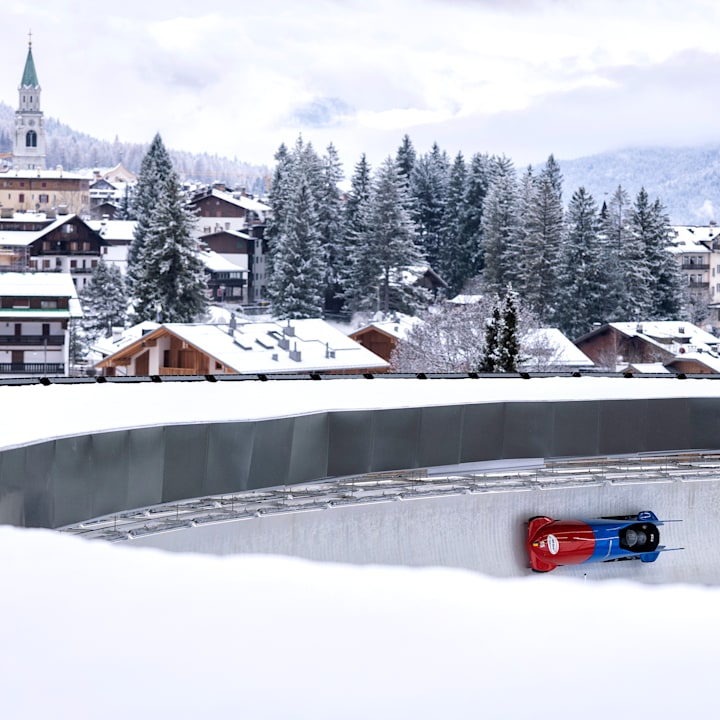
Rather than forcing events into random venues, these Olympics have bestowed stewardships upon winter havens that already hold deep traditions in the sports they will be hosting: snowboarding along the Swiss border in the party town of Livigno; cross-country skiing in Tesero, through the Predazzo prairies; curling and bobsled in Cortina’s Stadio Olimpico del Ghiaccio, or Olympic Ice Stadium, originally built in 1954; and biathlon in the stark wilderness of Südtirol’s Rasun-Anterselva, known locally as Rasen-Antholz, where less than 2% of the population identify as Italian.
While the main opening ceremony will be held in Milan at San Siro, the home of two of Italy’s most renowned soccer clubs, there will be three other ceremonies unfolding simultaneously across the mountain regions. This cluster plan could be a model for future Olympics; after all, the next Winter Games have been deemed French Alps 2030.
If this truly is a blueprint, Milan has quite the stage for a premiere. Outside the city’s sky-piercing Duomo cathedral, 221 years after Napoleon crowned himself king of Italy, Olympians will also don gold in front of crowds of adoring fans. Just steps away, Vivaldi concertos will echo across the glass ceilings and mosaic floors of the resplendent Galleria Vittorio Emanuele II shopping arcade. Armonia, Italian for harmony, is the motto for these Games and, with La Scala having debuted the operas of Verdi, Puccini and Mozart, it hits all the right notes. The closing ceremony will be held at the Arena di Verona, a nearly 2,000-year-old amphitheater that is both better-kept and older than its near-identical twin in Rome.

These Games coincide with the 70th anniversary of the 1956 Cortina d’Ampezzo Olympics, a turning point in history as the first Winter Games to be broadcast internationally on live television. (The technology was so new that speedskater Guido Caroli nearly extinguished the Olympic flame during the opening ceremony when he tripped on a TV cable while skating the torch into the stadium.) Those Cortina Games also marked the last Olympics to hold speedskating and figure skating outside on natural ice, on a frozen-over Lake Misurina with the snowcapped Dolomites looming like stone castles on the horizon.
This month, the majesty of the Dolomites will serve as the stage for the winter’s finest competitors once again. And this unique, untraditionally Italian region will provide a fitting backdrop for a much-needed reminder to the world that it can vanquish stereotypes, that diversity can enhance the richness of what we try to label as culture.
More Olympics on Sports Illustrated
 Add us as a preferred source on Google
Andrew Gastelum is an editor and writer at Sports Illustrated who specializes in soccer, the Olympics and international sports. He is a graduate of the University of Notre Dame and lives in Italy.
Follow aogastelum