%20%20--%3E%0A%3Csvg%20version%3D%221.1%22%20id%3D%22Layer_1%22%20xmlns%3D%22http%3A%2F%2Fwww.w3.org%2F2000%2Fsvg%22%20xmlns%3Axlink%3D%22http%3A%2F%2Fwww.w3.org%2F1999%2Fxlink%22%20x%3D%220px%22%20y%3D%220px%22%0A%09%20width%3D%2239px%22%20height%3D%2240px%22%20viewBox%3D%220%200%2039%2040%22%20enable-background%3D%22new%200%200%2039%2040%22%20xml%3Aspace%3D%22preserve%22%3E%0A%3Cpath%20fill%3D%22%23FFFFFF%22%20d%3D%22M38.5%2C7H28.2v26h10.3V7z%22%2F%3E%0A%3Cpath%20fill-rule%3D%22evenodd%22%20clip-rule%3D%22evenodd%22%20fill%3D%22%23FFFFFF%22%20d%3D%22M26.1%2C25.5c0%2C5.8-4.1%2C7.5-12.9%2C7.5C3.9%2C33%2C0%2C31.2%2C0%2C25.2v-1.1h11.6%0A%09v2.4c0%2C0.7%2C0.1%2C1.4%2C1.2%2C1.4c1%2C0%2C1.2-0.4%2C1.2-1.3v-0.9c0-1.6-0.9-1.6-3.5-2.2C2.2%2C21.7%2C0%2C19.7%2C0%2C15.3v-0.9C0%2C9.3%2C5.5%2C7%2C12.9%2C7%0A%09c10.2%2C0%2C12.8%2C2.6%2C12.8%2C7.4v1.8h-11v-2.9c0-0.6-0.4-1.1-1.2-1.1c-0.6%2C0-1.2%2C0.4-1.2%2C1.1v0.9c0%2C1.5%2C0.9%2C2%2C3.3%2C2.5%0A%09c8%2C1.6%2C10.5%2C3.3%2C10.5%2C7.5V25.5z%22%2F%3E%0A%3C%2Fsvg%3E%0A)
Events of the Winter Olympics: A Complete Breakdown of Every Sport and Discipline
The 2026 Milan Cortina Olympic Games are less than two weeks away.
The 2026 Winter Olympics will see over 3,500 athletes from 93 countries competing for medals across 16 different disciplines. This year’s Olympic Games will take place in Italy for the second time, with Milan and Cortina d’Ampezzo serving as co-host cities of the games from Feb. 6 to Feb. 22.
Before the games begin, here is a breakdown of every sport and event that will take place in this year’s Olympics.
Every Event at the 2026 Winter Olympics
- Alpine Skiing
- Biathlon
- Bobsled
- Cross-Country Skiing
- Curling
- Figure Skating
- Freestyle Skiing
- Hockey
- Luge
- Nordic Combined
- Short-track Speedskating
- Skeleton
- Ski Jumping
- Ski mountaineering
- Snowboarding
- Speedskating
Alpine Skiing
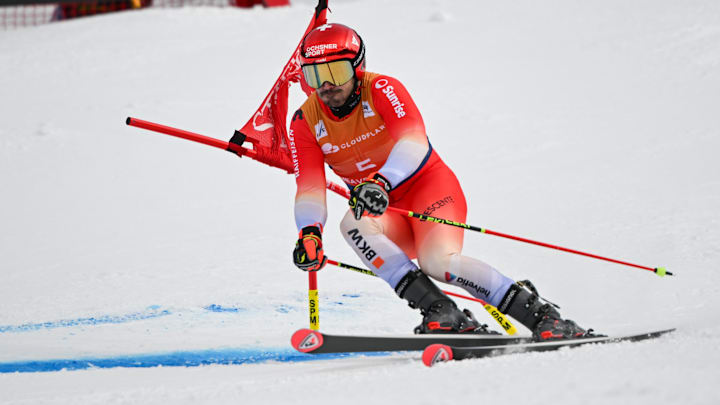
There are five different medal events for both men and women in alpine skiing at the Olympics. Both Downhill and Super-G are speed events while Giant Slalom and Slalom are technical events. Here is a closer look at each event:
- Downhill: The simplest of the alpine skiing events, the downhill sees athletes try to ski down the slope once at the fastest speed, often reaching speeds around 130 kilometers per hour. The skier with the fastest time wins the gold medal.
- Super-G: The Super-G combines the speed of the downhill with the sharper turns of the giant slalom. Each skier gets one run down the slope and the fastest time wins.
- Giant Slalom: The giant slalom features two rounds for each athlete. The skier with the fastest two times combined earns the win and gold medal.
- Slalom: The most technical alpine skiing event, the slalom features the shortest course and sharpest turns. The event takes place in one day over two rounds and two different courses. The final standings are determined by the two times added together.
- Team Combined: The team combined sees teams of two compete together. One athlete completes the downhill and the other athlete races the slalom. The team with the fastest combined times win.
Biathlon
Originating from Scandinavia, the biathlon is an event combining a cross country skiing race and rifle shooting. The biathlon first appeared at the Winter Olympics as a military patrol event in 1924, and emerged as a standard annual event in 1960. Athletes race across a course while stopping to shoot at targets along the way. If an athlete misses a shot, they receive a penalty which varies depending on the event.
- Individual: In the individual biathlon, women traverse over a 15-kilometer course while men compete over 20 kilometers with the athlete recording the lowest net time winning the event. The athletes stop four times on the course to try and shoot five targets. Every missed shot results in a one-minute penalty.
- Sprint: The shortest of the biathlon events, the sprint sees women complete a 7.5-kilometer course while the men compete over a 10-kilometer course. The sprint sees athletes stop twice to shoot at five different targets, with each miss requiring athletes to complete a 150 meter penalty loop.
- Pursuit: Held the day after the sprint, the pursuit sees athletes start in order of their time behind the winner in the sprint event. Athletes stop for four shooting sessions during the race and have to hit five targets at each stop. If an athlete misses a shot, they must complete an 150 meter penalty lap. The fastest athlete is crowned the champion.
- Mass Start: The mass start sees all athletes in the event compete at the same time, stopping four times to shoot at five targets. The penalty for a missed shot is once again a 150 meter penalty lap. The women’s mass start takes is a 12.5 kilometer race while the men’s is a 15 kilometer race.
- Relay: The relay sees four athletes from each team compete together, with each woman traversing six kilometers in the women’s relay as each man covers 7.5 kilometers. Each athlete stops twice to try and hit five targets, but in the relay they receive three extra bullets in case they miss a shot. Once an athlete completes their portion of the relay, they tag their next teammate to start and the fastest team to finish wins.
- Mixed Relay: The mixed relay follows a similar format to the traditional relay, with two men and two women from each team competing over six kilometers. It is newest biathlon event, first appearing in the Olympics in 2014.
Bobsled
The bobsled sees teams race down an icy track on a sled. Athletes begin by sprinting and pushing the sled before jumping in and racing to toward the finish. The “pilot” is in charge of steering the sled, using two steering ropes to do so. There are four medal events in the bobsled—the two-man, two-woman, four-man and women’s monobob. In each event, every team completes the track four times over two days, and the team with the fastest combined time is the winner.
In the two-man and two-woman events, there is one pilot and one brakeman on each team. In the four-man, there are two additional athletes to help push the sled.
The women’s monobob, which debuted at the 2022 Winter Olympics, sees just one woman compete solo. She is responsible for steering, pushing and braking on her own in the race.
Cross-Country Skiing
Cross-country skiing races sees athletes ski using one of two techniques: classic and free. In classic technique, athletes use a traditional striding technique while in free technique, or skating, skiers can use lateral movements in the direction they’re traveling.
There are six different cross country races with medal events for both men and women. The sprint and the mass start races both use classic technique while the team sprint and interval races use free technique. The skiathlon and relay see both classic and free technique used in the same race.
- Sprint: As the name suggests, the sprint is the shortest course and fastest race at 1,585 meters. The sprint uses a knockout format, with the 30 fastest skiers in the qualifying round advancing to elimination rounds. The two fastest skiers from each quarterfinal move on to the semifinal along with two “lucky losers,” or the two fastest athletes outside of the skiers that already advanced. The two fastest skiers in each semifinal advance to the final along with two more lucky losers. In the final, the first to finish the race wins.
- Team Sprint: Like the individual sprint, the team sprint utilizes a knockout format. The team sprint sees teams of two alternate skiing laps of a 1,585 meter course. There are two semifinals that see the top two teams advance from each semifinal along with six lucky losers. In the final, the skiers complete six laps and the fastest team wins.
- Interval/Individual (10km): In the 10km interval race, athletes ski in the free technique. This event uses interval starts, meaning whoever completes the race with the fastest time wins the event, not whoever crosses the finish line first.
- Mass Start (30km/50km): In the mass start, all the athletes begin the race at the same time and ski 50km. The first to cross the finish line wins.
- Skiathlon: In the skiathlon, skiers race in the classic technique for 10km before switching to the free technique for the next 10km. Whoever crosses the finish line first wins.
- Relay: The relay sees each of the four team members ski 7.5 km. The first two legs of the race are done in classic technique while the final two are completed using free technique. The first team to finish wins.
Curling
There are three Olympic events in curling—the men’s tournament, women’s tournament and mixed doubles event. Curling first appeared at the Winter Olympics in 1924, and did not return as a competitive sport until 1998. Mixed doubles did not become an Olympic event until 20 years later in 2018.
Curling sees teams of four slide granite stones on an ice sheet towards a target called the “house.” Each team designates a captain, or “skip,” who helps direct the team as they sweep the ice in front of the stone to reach the house. The team with the stone closest to the center of the house earns a point, and garners an additional point for every stone they have closer to the center and than one of their opponent’s in the house.
In curling matches there are 10 rounds, called “ends,” and each team slides eight stones every end. In the mixed doubles event, there are eight ends instead of team and each team plays five stones per end.
Figure Skating
One of the most popular events at the Winter Olympics, there are five different events in figure skating—men’s singles, women's singles, pairs, ice dance and the team event.
Both the singles and pairs include two parts, the short program and the free skate. The short program lasts about 2:40 while the free skate about 4:30 for men’s singles and pairs and four minutes for women’s singles. Skaters must complete jumps, spins and jump sequences. In pairs, the male and female skater must perform their jumps in unison as well as complete throw jumps, overhead lifts and the death spiral.
This forward outside death spiral is *chef's kiss* 🤌😍
— U.S. Figure Skating (@USFigureSkating) January 3, 2025
Watch Alisa Efimova and Misha Mitrofanov's stunning free skate live in Wichita, Kansas, at the #PrevagenUSChamps
🎟️: https://t.co/OdAyKqtQmG pic.twitter.com/hJS9ARgjgP
In the ice dance, athletes complete both a rhythm dance and free dance that see a male and female partner perform spins, lifts, step sequences and a series of traveling spins in unison, also known as “twizzles.”
The team takes place over eight parts, including a short program and free skate for each of the disciplines. After each segment of the competition, first place receives 10 points, second receives nine points, third place receives eight points and so on. After each part is complete, the team with the most points wins.
Scoring in figure skating at the Olympics is made up by two groups, the technical panel and the judges. The technical panel notes elements performed and assigns levels of difficulty for the spins, jumps and sequences. The nine judges come up with both a technical element score (TES) and program component score (PCS). The TES is based off of execution of skills while the PCS is determined by skating skills, transitions, performance, composition and interpretation of the music. The TES and PCS are then equally weighted before being combined for the final score.
Freestyle Skiing
Aerials: Aerial skiing has been an Olympic medal event since 1994. The event sees athletes ski off of two to four meter jumps and perform flips and twists before coming down on an inclined landing hill. The results are determined by judging and skiers are judged based on their performance in the air, form and landing.
Moguls: In the moguls event, athletes ski around a mogul course and perform tricks such as flips, loop jumps, straight rotations, off-axis rotations and upright tricks. A trick cannot be repeated during a run. Athletes can receive up to 100 points for each run. Sixty percent of their score is based off turns, or how well they carved the moguls, 20% is determined by air, or how well the skiers performed their tricks, and another 20% is determined by speed. There are seven total judges, with five evaluating the turns and two evaluating air scores.
Dual Moguls: The dual moguls event sees two skiers compete head-to-head on side-by-side courses with the winner of the two advancing and the loser being eliminated from the competition. There are seven judges, with four evaluating turns, two evaluating air performance and one evaluating speed. Each judge gets five votes that they can divide between the two skiers how they like. Whichever skier earns the most votes is the winner.
Ski Cross: Ski cross sees athletes race across a course featuring jumps, rollers and berms. Thirty-two skiers take place in the elimination competition format, which sees the athletes divided into four-person heats. The top-two fastest finishers in each Round of 32, quarterfinal and semifinal heat move on to the next round. The fastest skier in the final wins the gold.
Halfpipe: The halfpipe sees athletes ski through the halfpipe while performing tricks on both sides. There are six judges who evaluate each skiers’ run based with a score between 0-100. The highest and lowest scores are dropped, and the remaining four are averaged. Athletes are judged based off their amplitude, difficulty, variety, execution and progression. They must grab their skis during each trick and maintain their control while performing skills and landings. In the final, each skier gets three runs and their best score counts toward the final standings.
Slopestyle: In the slopestyle event, athletes ski down a course featuring at least six sections that typically include three jumps and three rounds. There are two rounds, the quarterfinal and the final, with 12 athletes advancing to the final. Like in the halfpipe, athletes are judged based off their amplitude, difficulty, variety, execution and progression and must grab their skis during every skill. The overall judging differs from the halfpipe though. There are nine total judges with three scoring the run based on overall impression and the remaining six divdied up to judge tricks completed on specific sections of the course. Overall impression makes up 40% of the final score while trick scores make up the remaining 60%.
Big Air: The big air event ski down a hill and perform a trick off of a ramp. In the final, each skier gets three runs and athletes must perform at least two different tricks. The athlete’s top two scores from different skills are added together to make up their total score. There are six judges who score the jumps on a scale of 0-100 based off of impression, amplitude, difficulty, execution, landing and progression. The highest and lowest scores are dropped, and the remaining are averaged together.
Hockey
Men’s Hockey: Feb. 11 to Feb. 22.
The 12 countries competing in the men’s hockey tournament are Canada, Czech Republic, France, Denmark, Finland, Germany, Italy, Latvia, Slovakia, Switzerland, Sweden and the United States. Italy qualifies as the host country, while seven other teams qualify through the International Ice Hockey Federation rankings. The final four teams clinched their spots through qualifying tournaments that were played over the summer.
The tournament begins with a preliminary round that see three groups of four teams all face each other to determine their seeding in the group. Four teams get byes through the first round and straight to the quarterfinals. The tournament follows a knockout elimination bracket all the way to the finals, where the remaining two teams face off for the gold. The losers in the semifinal compete for the bronze medal.
Women’s Hockey: Feb. 5 to Feb. 19.
The 10 countries competing in the women’s hockey tournament are Canada, Czech Republic, France, Finland, Germany, Italy, Japan, Switzerland, Sweden and the United States.
The 10 teams that qualify to the Olympics are divided into groups A and B. All five teams from Group A and the top three teams from Group B advance to the quarterfinals. From there, the four winners in the quarterfinals move on to the semifinals and the two semifinal winners advance to the finals for a shot at the gold.
Luge
Luge sees athletes race down an icy track on a sled feet first, relying on subtle movements from their shoulders and legs to guide them through the course. There are five separate medal events in luge.
- Men’s/Women’s Singles: In both the men’s and women’s singles events, athletes complete four runs down the track over two days. The athlete with the fastest combined time earns the win.
- Men’s/Women’s Doubles: In men’s and women’s doubles, teams of two men or two women complete two runs in one day, with the fastest combined time notching the win. This Olympic Games will mark the debut of the women’s doubles event.
- Team Relay: The team relay sees a team comprised of a women’s singles, women’s doubles, men’s singles and men’s doubles race to finish first. Once each leg of the relay completes their part of the race, they touch a pad that opens the start gate for the next teammate to follow.
Nordic Combined
Nordic combined involves both cross country skiing and ski jumping in one event. The Nordic combined has three medal events, the Individual Gundersen normal hill, Individual Gundersen large hill and the team event. It is the only sport in the Winter Olympics without a women’s event.
In the Nordic combined, athletes first complete the ski jump, where they are judged based on distance. The score from the ski jump then determines the starting order for the cross country race, with the highest scorer starting the race first and the first to finish the race wins the event.
As the names indicate, the Individual Gundersen normal hill and large hill differ based on the size of the hill. In the team event, two athletes compete together. They each complete one jump on a large hill and are then seeded for the race, where they both complete alternate skiing five laps as they try to finish the race first.
Short-track Speedskating
Short-track speedskating sees skaters race along across a 111.12 meter track, navigating tight curves to try and finish first. Athletes wear helmets in short-track speedskating and skates with smaller blades.
In short-track speedskating, there are both women’s and men’s medal events for the 500m, 1000m and 1500m. There is additionally a 3000m relay for women, 5000m relay for men and a mixed relay which sees two men and two men compete on the same team.
Short-track speedskating is an elimination competition. Five skaters compete in each of the 500m and 1000m meter heats while seven skaters take part in each 1500 heat. The top two finishers from each heat advance to the next round.
Skeleton
The men’s and women’s skeleton event sees athletes race headfirst on a sled over an icy track, relying on subtle body movements to guide them down the course as fast as they can. Each athlete gets four runs down the course, and all four times are combined. The athlete with the fastest combined time is the winner.
The Milan Cortina Olympics will see the addition of the skeleton mixed team relay. The mixed team relay features one man and one woman on each team completing a single run. The woman goes first and the man follows immediately after.
Ski Jumping
Ski jumping sees athletes ski down a hill and jump off a ramp, with the results being determined by the athletes’ final scores. There are four categories—the men’s and women’s normal hill individual, the men’s and women’s large hill individual, the men’s super team and the mixed team.
In the individual events, there are 50 athletes who compete. The top 30 athletes from the first round move on to the second.
In the men’s super team, each team features two athletes that perform a jump in every round. The top 12 teams from the first round move on to the next, and the top eight teams reach the final.
The mixed team even sees two men and two women compete for each competing squad. There are two rounds in the competition, and the top-eight teams from the first round advance to the final.
Ski jumpers are scored primarily off of distance and style. If an athlete reaches the K point, or the spot marked by two thick red lines, they earn 60 points. If an athlete falls short of the K point, they receive fewer points. If they land past the K point, they receive more points. Judges can also add or subtract points based off wind and gate compensation.
Style points are decided on by a panel of five judges, who score each jump between 0-20. The highest and lowest scores are dropped before putting together the final score. Judges examining the ski jumpers’ flight and landing, looking for athletes to show power, precision, fluidity and a smooth landing.
Ski mountaineering
Ski mountaineering is making its debut as an Olympic sport in the Milan Cortina Olympics. There will be three medal events—a men’s sprint, women’s spring and mixed relay.
The men’s and women’s sprints feature a three-part ascent followed by a descent. Athletes begin the competition by wearing skis with skins that prevent sliding downward. Midway through the ascent when skiers reach the steeper section, they take off their skis and put them in their backpacks so they can continue climbing on foot. For the last part of the ascent, athletes place their skis back on until they reach the top of the mountain. At the top, they take off their skins and ski down the mountain, with the first athlete to finish the race winning.
The mixed relay includes teams made up of one man and one woman. They each complete the course twice and the fastest team earns the win.
Snowboarding
Halfpipe: In the halfpipe event, snowboarders complete a series of tricks while snowboarding down a slope with a halfpipe. The winner is the athlete who earns the best score, with judges giving scores ranging from 0-100. In the final, each athlete takes three turns down the halfpipe and their best score counts toward the final standings. Snowboarders are judged off their amplitude, difficulty, variety, execution and progression. There are six judges and both the highest and lowest score are dropped. The remaining four scores are averaged to determine the final score for each athlete.
Slopestyle: This event sees each snowboarder perform tricks down a slopestyle course. These courses feature at least six sections, typically three jump sections and three rail sections. Every snowboarder gets three runs down the course, with their highest score counting toward the final standings.
A total of nine judges help score each run from 0-100. Three judges score the run based on overall impression, while the other six judges are broken up into three groups of two and judge tricks done in specific sections of the course. Potential deductions include failing to grab the snowboard during every jump trick, failing to land tricks cleanly and coming off the rail early.
Big Air: In the Big Air event, snowboarders go off one ramp and perform one massive skill. They have three turns down the ramp and must complete a different trick on their other runs. Their two highest scores from those three runs are then added and make up their final score.
Snowboard Cross: During the snowboard cross, athletes race against each other on a course with jumps, rollers and berms. Snowboarders first compete to be seeded from 1-32, with all 32 athletes advancing to the elimination rounds. In the knockout rounds, four athletes compete in each heat and the top two finishers move on to the next round.
Parallel Giant Slalom: In the parallel giant slalom, two athletes race against each other on side-by-side courses, with the winner of each race moving on to the next round. During the race, athletes must make their way around gates on the course, and if they miss a gate they will be disqualified.
Speedskating
Speedskating sees athletes race around a 400m track, competing to finish with the fastest time. There are 14 medal events in speedskating, including the 500m, 1,000m, 1,500m and 5,000m, mass start and team pursuit for both men and women, the 3,000 meter for women and the 10,000 race for men.
During the individual events outside of the mass start, two skaters compete at a time and attempt to finish with the fastest time. The skaters must change lanes during each lap at the crossing straight, except for in the first lap of the 1,000m and 1,500m events.
In the mass start, all athletes begin the race at the same time. Athletes can collect sprint points during the race, which are rewarded after laps 4, 8 and 12. The winner of these sprints in the middle of the race collects five points, second place earns three points and third wins one point. The winner of the entire race receives 60 points, second place garners 40 points and third place earns 20 points. The remaining skaters who do not make the podium will be ranked based on their sprint points from the middle of the race.
The team pursuit takes place over three rounds, the quarterfinals, semifinals and final. Women compete over 2,400 meters while the men compete over 3,200 meters. Each team has three athletes, and they begin the race on opposite sides of the oval. The team to see all three of their athletes cross the finish line first claims the win.
More on Sports Illustrated
 Add us as a preferred source on Google
Eva Geitheim is an NFL writer at Sports Illustrated. Prior to joining SI in December 2024, she wrote for Newsweek, Gymnastics Now and Dodgers Nation. A Bay Area native, she has a bachelor’s in communications from UCLA. When not writing, she can be found baking or rewatching Gilmore Girls.
Follow EGeitheim