%20%20--%3E%0A%3Csvg%20version%3D%221.1%22%20id%3D%22Layer_1%22%20xmlns%3D%22http%3A%2F%2Fwww.w3.org%2F2000%2Fsvg%22%20xmlns%3Axlink%3D%22http%3A%2F%2Fwww.w3.org%2F1999%2Fxlink%22%20x%3D%220px%22%20y%3D%220px%22%0A%09%20width%3D%2239px%22%20height%3D%2240px%22%20viewBox%3D%220%200%2039%2040%22%20enable-background%3D%22new%200%200%2039%2040%22%20xml%3Aspace%3D%22preserve%22%3E%0A%3Cpath%20fill%3D%22%23FFFFFF%22%20d%3D%22M38.5%2C7H28.2v26h10.3V7z%22%2F%3E%0A%3Cpath%20fill-rule%3D%22evenodd%22%20clip-rule%3D%22evenodd%22%20fill%3D%22%23FFFFFF%22%20d%3D%22M26.1%2C25.5c0%2C5.8-4.1%2C7.5-12.9%2C7.5C3.9%2C33%2C0%2C31.2%2C0%2C25.2v-1.1h11.6%0A%09v2.4c0%2C0.7%2C0.1%2C1.4%2C1.2%2C1.4c1%2C0%2C1.2-0.4%2C1.2-1.3v-0.9c0-1.6-0.9-1.6-3.5-2.2C2.2%2C21.7%2C0%2C19.7%2C0%2C15.3v-0.9C0%2C9.3%2C5.5%2C7%2C12.9%2C7%0A%09c10.2%2C0%2C12.8%2C2.6%2C12.8%2C7.4v1.8h-11v-2.9c0-0.6-0.4-1.1-1.2-1.1c-0.6%2C0-1.2%2C0.4-1.2%2C1.1v0.9c0%2C1.5%2C0.9%2C2%2C3.3%2C2.5%0A%09c8%2C1.6%2C10.5%2C3.3%2C10.5%2C7.5V25.5z%22%2F%3E%0A%3C%2Fsvg%3E%0A)
For Veterans Like Alysha Clark, This New WNBA Era Just Means More
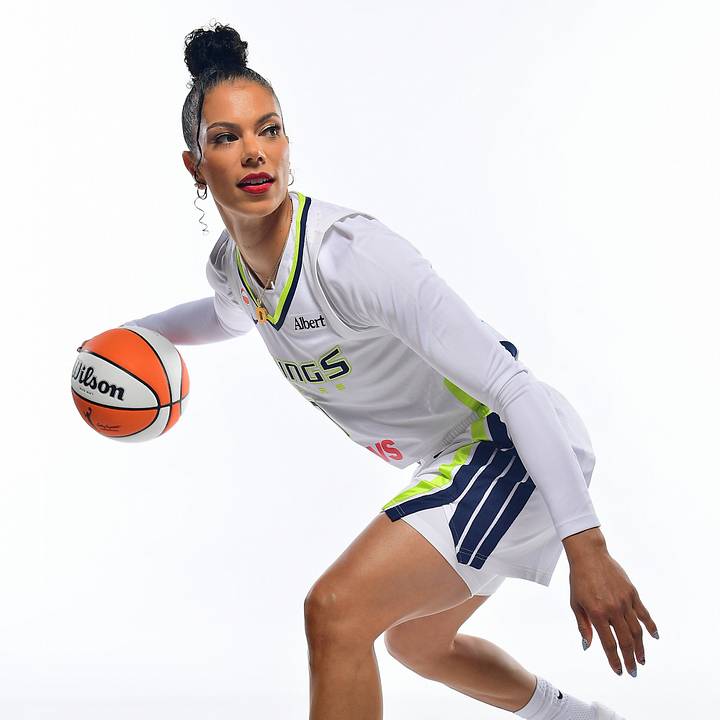
Alysha Clark can measure her WNBA career in points and games and championships. But there is nothing that marks the passage of time here quite like her 15-year-old chihuahua Sly.
She adopted him when she was desperate to land her first roster spot and he was just a puppy. Now, she’s wrapping up her 16th training camp and he’s “a little deaf and a little blind,” Clark says affectionately. As she grew more established in the WNBA, she felt secure enough to start bringing the dog to occasional team events like Media Day, and he’s unfazed by lights or music or noisy teammates. (Even if Clark now has to pick up Sly and carry him to reach the court for a photoshoot: He can’t navigate steps in mood lighting.) He’s made himself just as comfortable across the league as his mom has.
Which means that the two of them have seen the WNBA through striking change, and even after so long in the league, they have some wholly new experiences in store for 2026.

The WNBA and its players signed a landmark collective bargaining agreement in March. It marks a transition into a new era of million-dollar player salaries and billion-dollar franchise valuations. The league is enormously different than it was just a few years ago in ways both financial and cultural—reflected in the new supermax contract signed by A’ja Wilson, the soldout crowds of Caitlin Clark, the fact that Angel Reese is a regular at the Met Gala. But if much of the national focus has centered on stars like these, the changing fortunes of the league have been even more profoundly transformative for players with far less recognizable names. And there is perhaps no individual player who can sketch the full arc of that change more capably than Alysha Clark.
Clark is the oldest player in the WNBA. At 38, she has watched the league transform around her, and she’s helped drive some of that same transformation herself as a union leader. It took years for her to crack a roster. She is the last player standing from the 2010 draft class, with a career built on thankless defensive work, and she is now the resident veteran on a young, fun roster for the Wings.
“She’s a player who’s been around so long and seen the league through so many different iterations,” says Dallas coach Jose Fernandez. “She’s just been very, very impressive in every single way.”
Clark has borne witness to enormous, radical change for players like her. She’s now set to enjoy the result.
It did not occur to Clark that she might play in the WNBA until she was almost finished with college. She had led Division I in scoring as a junior at Middle Tennessee and was on pace to do it again as a senior. But the idea of going from the Sun Belt conference to the WNBA felt so unlikely that she did not entertain it until her coach sat her down midway through her final college season: There’s a real chance that you could get drafted. What she did not grasp then was just how much of a grind there would be in between draft night and her league debut.
Clark did indeed get drafted, in the middle of the second round, by the San Antonio Silver Stars in 2010. Her first training camp was a whirlwind. She got waived on the final day. It was not exactly surprising—training camp battles were especially fierce that season, after years of contraction in the league, and half of the players drafted in the second round with Clark never played a single minute in the WNBA—but it stung all the same. She went to play overseas in Israel and got another training camp invitation from the Silver Stars the following year. The result was the same: Clark made it to the final day and then was cut. She began thinking about how a basketball career might look without a spot in the WNBA.
“I couldn’t even fathom to think that this would be my livelihood, the way I would make my living,” Clark says now. “I had no idea.”
She returned for a third year at training camp in 2012, this one with the Storm, and once again was called in by the head coach on the final day of camp. Her standing felt slightly more secure during this camp but mostly as a product of simple luck—one player battling for a spot had been called away by her national team and one more had just gone down with an injury. Clark felt like she had done as much as she could with that luck. She just was not sure if that had been enough.

Yes and no: She had made the roster for Opening Day, she learned, but Seattle executives were upfront that some transactions would happen following the midseason break for the 2012 Olympics, and she was first in line to be cut.
Clark had made it to the league and been given a potential expiration date at the same time.
“I made a promise to myself that I would never take any of this journey for granted,” she says. “Anything that comes with it.”
And so Clark began cultivating the skills that would come to define her career. In college, she had been a dominant frontcourt presence despite her relative lack of size, a remarkably efficient scorer in the paint although she was just 5'11". (She averaged 28.3 points per game as a senior at Middle Tennessee on 61% shooting.) She had always known that going pro would require a change of position. But she now realized how much else would have to change. Clark dedicated herself to being a master of the little things—a dedicated, versatile defender, willing to pick up any (or every) assignment, a capable screener, a player constantly studying and preparing and volunteering to do the dirty work. Clark spent most of her time on the end of the bench. But she managed to stick the whole season with the Storm.
Clark spent another season grinding on the bench. She then became a spot starter, and finally a regular, eventually starting for every game of one championship playoff run with Seattle in 2018 and then for another in 2020. Her path never came with much security: Clark was not on a multi-year deal until she was almost 30. She continued to play overseas for the additional paycheck, spending most of her winters in Israel, where she had become a citizen. Her game was still built on the unflashy defensive skills that she honed in her early years. But she became a testament to how vital those skills could be to a team. Clark picked up more recognition, more playing time, All-WNBA defensive honors and finally her first major individual award: Clark was named WNBA Sixth Player of the Year with the Las Vegas Aces in 2023. She was 36.
If her career felt like it could be a children’s book about the power of hard work and perseverance, Clark saw that it could also be a statement about working conditions and job security and what might happen if players had a chance to prove themselves. The WNBA’s historically low pay and fierce roster competition made that difficult.

Clark decided it was something that she wanted to help change. She became a team union representative in 2018. Years later, eying what could be a potentially huge negotiation for a new CBA, she decided to run for the executive committee as union VP in 2023. The application required a paragraph describing why she was interested. Clark thought about everywhere she had been in the league and what it had asked of her.
“I know what it feels like to be at the bottom,” Clark says. “I was like, there’s no other player here who has the firsthand experience of not making a roster, of being last on the bench, to playing a little bit off the bench, to then becoming a crucial impact role player… I know what it feels like, and so I wanted to be a voice for the players like me.”
The WNBPA executive committee behind this CBA included multiple No. 1 picks (Nneka Ogwumike, Breanna Stewart, Kelsey Plum) and All-Star Olympians (Napheesa Collier). The players who were not necessarily stars were still first-round picks from major programs who had carved out steady careers: Elizabeth Williams and Brianna Turner. There was no perspective on the committee quite like Clark’s.
As the WNBA continued to break records for attendance, viewership and merchandise sales, the stakes grew higher. The resulting negotiations could be alternately maddening and invigorating. Clark has always been curious about systems of power and inequity—she had no choice, she says, growing up with a Black father and white mother in Tennessee—and she was struck by the experience that she found inside the boardroom. “Sitting across the table and understanding how the league and the people on their side think about the players … I’m always somebody who wants to learn,” Clark says. She quickly realized that she would have plenty of those learning opportunities here.
“I want to help make things better,” she says. “And the only way to do that is by having an open mind and learning and trying to just understand other people’s perspectives.”
That was true both for the people across the table and for those on her own side. Such is the nature of any major union negotiation. The WNBPA was representing players who could spend years operating in this new reality of huge contracts and those at the very end of their careers. It was representing players who had made themselves household names and those who might spend only days on a roster. To help organize a group this large and with this many disparate interests was not so different from being a glue player tapped into everyone in the locker room. It was a role that Clark knew well. This was just much, much bigger, and with much more at stake.

Most discussion of their eventual agreement focused on the big numbers. It’s now possible for top players to make seven figures. The salary cap sits all the way up at $7 million. But the smaller numbers and more practical benefits are what sparked the most pride for Clark. The minimum salary is roughly $270,000—a world of difference from the previous figure of $66,079. Retired players have access to league benefits. Every team has two developmental roster spots for young players. (Outside those developmental spots, teams must also carry a full roster of 12, unlike when Clark entered the league, when some would maximize cap space by rostering just 11 or even 10.) Teams must employ multiple athletic trainers and will be required to have a physical therapist on staff. In short, there are more opportunities for players to stick in the league, and those opportunities are far more lucrative and safer and better-resourced.
There will always be players grinding for roster spots and grappling with disappointment on the final day of training camp. But their experiences will look markedly different.
“It means everything to know that these players coming in aren’t going to have to have the same struggles,” Clark says. “That’s what it’s about, right? Any time someone is pursuing change… that’s what you want. You want them not to know the same struggles that you did.”
Her role in negotiations turned out to be not so different from her role on the court. Clark handled the unglamorous but essential work of note-taking. For every hour of their marathon bargaining sessions in the final weeks of the process, Clark was filling up pages and pages of a little red notebook. (She prefers taking notes by hand to using a laptop.) But she expanded that work to documenting the whole experience. Clark took pictures and videos, too, of the committee getting delirious together in the wee hours of the morning and going on group coffee runs. She wanted to make sure they all remembered the connective tissue and little moments between their big moments at the bargaining table.
When they all grabbed souvenirs from the final, successful day of bargaining, some players picked up corks from the champagne they had just popped. Clark took a pen instead. She did not have to grab anything else. She had her notebook, full of hours of hard work, captured in her own writing.

WNBA free agency began as soon as the CBA was finalized. Clark thought carefully about the contract that she would sign under the league deal that she had just helped negotiate. She knew that she would likely sign for roughly the veteran minimum and come off the bench no matter where she went. (She has stuck in the league so long that she has seen her role come full-circle.) But she knew that even within that framework, she would still have choices, and Clark wanted to be thoughtful about them.
“I don’t want to do a disservice to this process, and to the opportunity that’s in front of me,” Clark describes her thinking. “People who are used to having freedom of choice, maybe it comes a lot easier and they go a lot faster, but for me … I had to earn this, and it took a long time.”
Clark took a call from the new Wings coach, Fernandez. He anticipated a quick call as he headed to dinner with his wife. They instead stayed on the phone for quite a while, and the next morning, Fernandez went to Wings general manager Curt Miller and pressed to sign her.
“We need someone like her with this group, her versatility, her leadership,” Fernandez says. “She’s been great for me, just bouncing things off her, Hey, what do you think about this? ... Because she’s been through different coaches, different teammates, different teams, she knows when to take the foot off the gas pedal a little, when to press, how the teaching’s been going, how everybody’s grasping different terminology.”
Much is new this season in Dallas. The Wings moved quickly to build around reigning Rookie of the Year Paige Bueckers and incoming No. 1 pick Azzi Fudd—bolstering their frontcourt in free agency with Alanna Smith and Jessica Shepard as they installed a new system under Fernandez. With all of that turnover, they wanted to add a steadying, veteran presence committed to small contributions, and they wanted that to be Clark.
“What she’s able to bring to our young group is huge,” says Wings forward Maddy Siegrist. “She’s always just in your ear, saying little things, whether it's encouraging or just trying to help you be in the right spots.”

The league can look almost unrecognizable from what it was back when she started. It’s evident in the style of play—faster, younger, higher-scoring—and in virtually everything else. A preseason event like Media Day looks nothing like it did back in, say, 2015. The Wings have one day for traditional external media—with far more reporters than were here just a few years ago—followed by a separate day set aside for internal team content. Clark and her teammates are attended to by a team of hair and makeup professionals before spending hours filming segments for social media and for team sponsors.
She brings along Sly, and her other dog, a two-year-old Maltipoo named Cecil. They get doted on by teammates and staffers as they wander around the gym. Clark estimates this is the 10th Media Day to which she has brought Sly. It’s never looked quite like this.
“You’ve earned your paychecks today, boys,” she coos to him and his brother at the end of the day.
So has she.
More WNBA from Sports Illustrated
 Add us as a preferred source on Google
Emma Baccellieri was a staff writer focused on women’s basketball for Sports Illustrated. She previously covered MLB. She has also written for Baseball Prospectus and has been honored with multiple awards from the Society of American Baseball Research. A graduate of Duke University, she lives in Washington, D.C.
Follow emmabaccellieri