%20%20--%3E%0A%3Csvg%20version%3D%221.1%22%20id%3D%22Layer_1%22%20xmlns%3D%22http%3A%2F%2Fwww.w3.org%2F2000%2Fsvg%22%20xmlns%3Axlink%3D%22http%3A%2F%2Fwww.w3.org%2F1999%2Fxlink%22%20x%3D%220px%22%20y%3D%220px%22%0A%09%20width%3D%2239px%22%20height%3D%2240px%22%20viewBox%3D%220%200%2039%2040%22%20enable-background%3D%22new%200%200%2039%2040%22%20xml%3Aspace%3D%22preserve%22%3E%0A%3Cpath%20fill%3D%22%23FFFFFF%22%20d%3D%22M38.5%2C7H28.2v26h10.3V7z%22%2F%3E%0A%3Cpath%20fill-rule%3D%22evenodd%22%20clip-rule%3D%22evenodd%22%20fill%3D%22%23FFFFFF%22%20d%3D%22M26.1%2C25.5c0%2C5.8-4.1%2C7.5-12.9%2C7.5C3.9%2C33%2C0%2C31.2%2C0%2C25.2v-1.1h11.6%0A%09v2.4c0%2C0.7%2C0.1%2C1.4%2C1.2%2C1.4c1%2C0%2C1.2-0.4%2C1.2-1.3v-0.9c0-1.6-0.9-1.6-3.5-2.2C2.2%2C21.7%2C0%2C19.7%2C0%2C15.3v-0.9C0%2C9.3%2C5.5%2C7%2C12.9%2C7%0A%09c10.2%2C0%2C12.8%2C2.6%2C12.8%2C7.4v1.8h-11v-2.9c0-0.6-0.4-1.1-1.2-1.1c-0.6%2C0-1.2%2C0.4-1.2%2C1.1v0.9c0%2C1.5%2C0.9%2C2%2C3.3%2C2.5%0A%09c8%2C1.6%2C10.5%2C3.3%2C10.5%2C7.5V25.5z%22%2F%3E%0A%3C%2Fsvg%3E%0A)
What Are Three-Way Odds?

Three-way betting is an intriguing way to increase your odds on a moneyline bet or hit bigger odds if you think a game will end in a tie or be tied at the end of regulation. Because there are three outcomes instead of two, the odds are typically longer for a moneyline wager and because games ending in a tie are rarer, those odds are even higher.
Here's everything you need to know about three-way betting.
What is A Three-Way Bet?
A three-way bet is a moneyline wager when you can bet on either team to win a game or for the game to end in a tie. This is most commonly found in soccer, where you can bet on Team A to win or Team B to win and can also wager on the game ending in a tie score. This can also be applicable to hockey, baseball and other sports where a winner is determined in overtime, but you can wager on if a game will end in a tie in regulation at some sportsbooks.
These bets are not applicable to sports like basketball or tennis where games never end in a tie.
What is A Three-Way No Push Bet?
First, a push bet is a bet where you can get your inital wager back if the bet pushes. For instance, if you bet Team A -3 points and the final score is Team A 28, Team B 25, that's a push and you get your money back.
Based on that, there are never any pushes in a three-way moneyline bet. Either you win your bet (Team A wins, Team B wins, or there's a tie), or you don't. If you bet on a three-way spread with no push, it's the same thing. Either your bet wins, or the other two options win.
However, if you bet a three-way spread with a push, you can get your money back if your bet ends in a push. Using the example above, if you bet Team A -3 points and the final score is Team A 28, Team B 25, that's a push and you get your money back.
With three-way bets, odds can be higher because you only have one way to win and two ways to lose. As an example, if you bet Team A to win by thee, then you only win your bet if they win, but you lose your bet if Team B wins or there's a tie.
How do Three-Way and Two-Way Betting Odds Differ?
Simply put, three-way betting odds offer three wagering options that focus on regulation time results only. They differ from two-way odds as a TIE is added as a third betting choice. Three-way lines are offered in most competitions where a draw is a possible outcome. They are available on a variety of sports as moneyline, game total and point spread wagering choices.
Three-way moneylines and point spreads offer HOME - TIE - VISITOR as choices while game total odds offer OVER - TIE - UNDER options. Unlike two-way wagers, which are graded after a competition is fully complete, three-way bets are graded at the end of regulation time. If a match goes into extra time, players who bet on a TIE will cash winning tickets.
Which Sports Offer Three-Way Betting Odds?
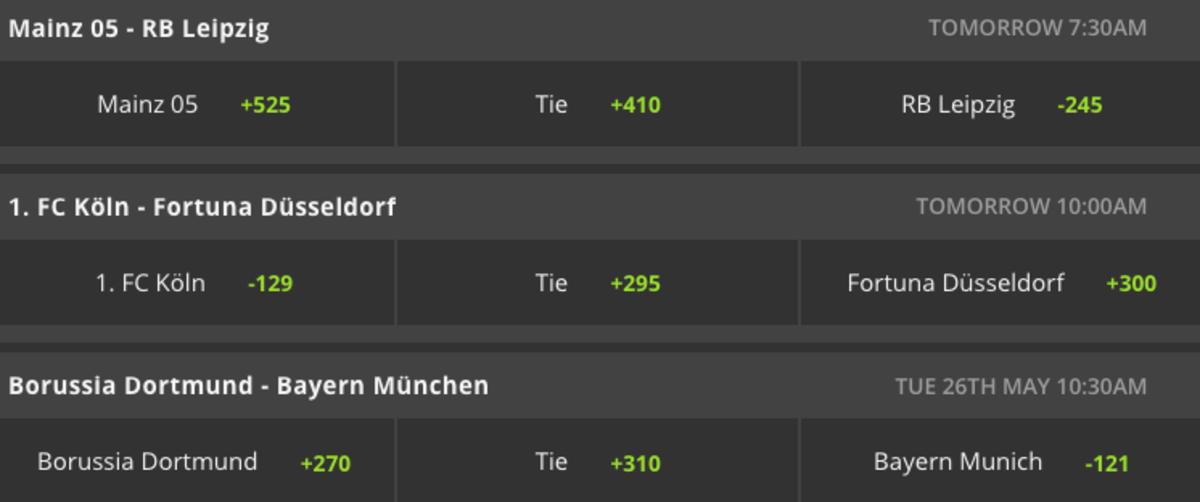
Also known as regulation time bets, three-way odds are popular soccer betting options as those contests often end in a draw. As displayed below, moneylines are the most common three-way betting odds. Bettors need to decide if either side will win outright or whether the score will be tied after regulation time. It’s wise to check two-way lines prior to placing three-way bets, as they display true favorite odds. If the two-way lines are close, consider a TIE bet.
Here are the two-way odds from the same Bundesliga matches:
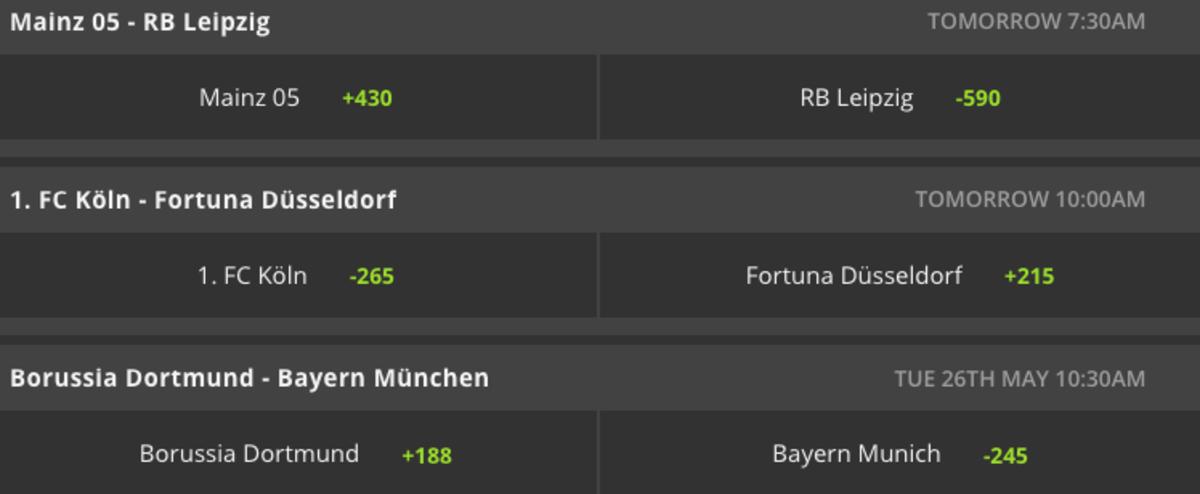
As illustrated, in the two examples above, moneylines change dramatically when a TIE is added to the three-way odds. If research has one side winning outright, three-way odds are the best betting option.
Soccer Three-Way Bet
For example, in the match against Mainz 05, the RB Leipzig -245 moneyline paid $100 on each $245 bet with three-way odds. Bettors using two-way lines had to wager $590 to earn a $100 return. That is a serious cost savings when betting on moneyline prices.
NHL Three-Way Bet
Three-way betting is prevalent in hockey as well. This is especially true since the NHL implemented new regular season shootout rules in 2005. However, since “ties” are less common in in than soccer, they are more difficult to predict.
Out of 1,271 games played, during the 2018-19 NHL season, 271 went into overtime. That works out to a 21.3% occurrence rate, so bettors need to pick their spots carefully when selecting a TIE on NHL three-way betting options.
NFL Three-Way Bet
There were only 16 overtimes out of 272 regular season games in the NFL in 2024, so the odds of a game going to OT are very low. That's why three-way odds in the NFL aren't as high for a winner as in soccer or other sports where ties are more common. However, if you bet on a game to end in a tie in the NFL, the odds are much higher. Three-way betting on the NFL works the same as above, however, where you bet either Team A or Team B to win or bet the game will end in a tie.
MLB Three-Way Bet
You can bet on an MLB game to end in a tie in regulation, which is much more common than the NFL but not as common as soccer. Same as above, you either bet Team A or Team B to win or bet the game will end in a tie in regulation. The challenge here is if you use three-way odds and bet on Team A to win but the game goes to extra innings, you lose the bet.
MORE GAMBLING TERMS YOU NEED TO KNOW
 Add us as a preferred source on Google