%20%20--%3E%0A%3Csvg%20version%3D%221.1%22%20id%3D%22Layer_1%22%20xmlns%3D%22http%3A%2F%2Fwww.w3.org%2F2000%2Fsvg%22%20xmlns%3Axlink%3D%22http%3A%2F%2Fwww.w3.org%2F1999%2Fxlink%22%20x%3D%220px%22%20y%3D%220px%22%0A%09%20width%3D%2239px%22%20height%3D%2240px%22%20viewBox%3D%220%200%2039%2040%22%20enable-background%3D%22new%200%200%2039%2040%22%20xml%3Aspace%3D%22preserve%22%3E%0A%3Cpath%20fill%3D%22%23FFFFFF%22%20d%3D%22M38.5%2C7H28.2v26h10.3V7z%22%2F%3E%0A%3Cpath%20fill-rule%3D%22evenodd%22%20clip-rule%3D%22evenodd%22%20fill%3D%22%23FFFFFF%22%20d%3D%22M26.1%2C25.5c0%2C5.8-4.1%2C7.5-12.9%2C7.5C3.9%2C33%2C0%2C31.2%2C0%2C25.2v-1.1h11.6%0A%09v2.4c0%2C0.7%2C0.1%2C1.4%2C1.2%2C1.4c1%2C0%2C1.2-0.4%2C1.2-1.3v-0.9c0-1.6-0.9-1.6-3.5-2.2C2.2%2C21.7%2C0%2C19.7%2C0%2C15.3v-0.9C0%2C9.3%2C5.5%2C7%2C12.9%2C7%0A%09c10.2%2C0%2C12.8%2C2.6%2C12.8%2C7.4v1.8h-11v-2.9c0-0.6-0.4-1.1-1.2-1.1c-0.6%2C0-1.2%2C0.4-1.2%2C1.1v0.9c0%2C1.5%2C0.9%2C2%2C3.3%2C2.5%0A%09c8%2C1.6%2C10.5%2C3.3%2C10.5%2C7.5V25.5z%22%2F%3E%0A%3C%2Fsvg%3E%0A)
Dusty May’s Departure Reveals a Huge Problem College Basketball Can’t Ignore
In this story:
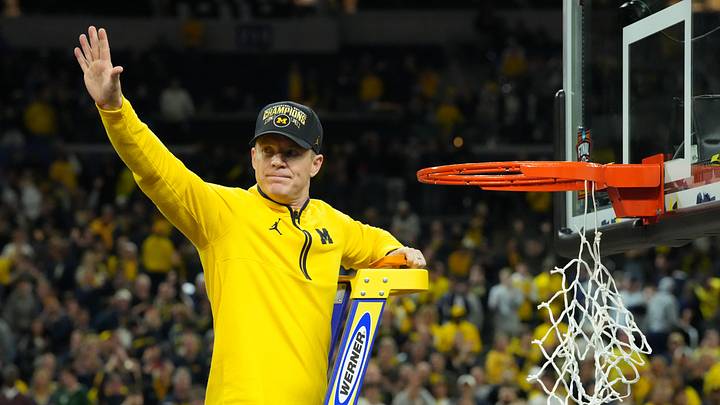
The maize and blue confetti was still fresh on the Lucas Oil Stadium floor when Michigan assistant Akeem Miskdeen, in between hugs from his family and handshakes with his players, came my direction and pointed to his Apple Watch. It read 11:41 p.m., and Miskdeen was in a hurry.
“Nineteen minutes until the transfer portal opens,” was Miskdeen’s message. He figured he’d send off a few texts and FaceTimes to potential future Wolverines in the locker room once the team left the floor.
Fast forward 10 weeks, and the Wolverines were still recruiting to round out their 2026–27 roster. In the days leading up to Monday morning’s shock announcement that Dusty May was bound for the NBA as the next head coach of the Dallas Mavericks, Michigan had been focusing its attention on adding one last piece to its roster in 17-year-old Serbian wing Nikola Kusturica. In between, the Wolverines staff had done dozens, if not hundreds, of Zoom calls with prospects, hosted visits, negotiated and re-negotiated contracts and waited out NBA decisions with bated breath. The time to celebrate reaching the pinnacle of college basketball was limited at best, nonexistent at worst.
“It’s almost impossible to even enjoy it,” May said in an April interview with Kyle Tucker of 247Sports.
May is getting an incredible opportunity in Dallas, one few coaches anywhere in the world could afford to turn down. The Mavericks are a well-resourced organization with an elite franchise cornerstone to build around in Cooper Flagg, another top-10 pick coming in Tuesday’s draft and a new front office with respected executives in Masai Ujiri and Mike Schmitz. NBA head coaching jobs, let alone good ones like the Mavericks’ gig, are incredibly difficult to get. May taking that gig, especially having already achieved the ultimate goal in college, is not some grand indictment of college basketball.
But losing one of the coaches who stood to be among the faces of the sport over the next two decades is without a doubt a massive blow. And if college basketball can’t find a way to make its offseason less chaotic and keep the soul of what makes the sport different from the NBA, it risks losing even more of its next generation of elite coaches.
Many have sounded the alarm in the past as some of the sport’s elder statesmen walked away and cited the changes to the transfer portal and NIL landscape as reasons why. In those cases, coaches either didn’t want to or couldn’t effectively adapt to the rapid roster movement and pay-for-play environment. May was the opposite, seeming to embrace and thrive in the chaos. His head wasn’t in the sand regarding player compensation, speaking openly about players deserving an even bigger piece of the pie and the return on investment of the NIL investment Michigan made a season ago being massive. The college game is nearly unrecognizable from the one he learned as a manager at Indiana under Bob Knight, but that never seemed to faze May. If anything, the changes are what allowed him to quickly turn around an 8–24 Michigan program in one year, then build his championship roster despite losing its three best players following that first season.
The same can be said for the game’s other emerging superstar coaches—Dan Hurley at UConn, Todd Golden at Florida, Jon Scheyer at Duke—all of whom have been connected to NBA jobs in the past and seem likely to receive more calls in the future. These are the names, along with a handful of other outstanding younger coaches, who stand to carry college basketball into the future. The biggest threat to that is losing them to the NBA, and the biggest thing the NBA can offer that college basketball can’t right now is a lifestyle that doesn’t require 365-days-per-year roster building. The feeling of winning the championship and having to pivot immediately into recruiting mode again is something Hurley, Golden and May have all experienced. You can be sure that Knicks coach Mike Brown (or executive Leon Rose for that matter) wasn’t calling around about free agency on Sunday morning after winning the NBA title in San Antonio on Saturday night.
And while the NBA will always have a more relaxed offseason calendar for coaches than college basketball, the current college status quo isn’t sustainable even for younger coaches who’ve grown up in this environment. May and his family loved Ann Arbor, raving about returning to the Midwest after years in Florida. They also loved Michigan. May said a big part of his decision to choose that job over others was that it was a place he could envision his children attending. But May also experienced firsthand the harsh realities of the current state of college hoops, a world where one can’t even appropriately celebrate a championship before they’re on to the next task. Coaches don’t take a few weeks off after completing their rosters for the next season, they pivot to high school recruiting and practice plans for when the players enroll in school, in many cases five-plus months before they’ll play their first competitive game. It’s an environment primed for burnout, to be blunt, and it doesn’t have to be this way.
College basketball has lost top coaches to the NBA before: Larry Brown, Rick Pitino and John Calipari all left and came back; Billy Donovan and Brad Stevens made their moves more permanent. But critically, college basketball never lost many of the names that were the faces of the sport for decades. Mike Krzyzewski turned down the Lakers in 2004. Roy Williams and Tom Izzo resisted overtures, as did Bill Self. In most cases, the reason why was they strongly believed in college basketball. They believed in shaping young men’s lives, leaving an impact that an NBA coach can’t. They believed in the college game itself. The more college basketball turns into NBA Lite, a pseudo-professional environment without any of the rules that make the NBA a stable workplace and prevent contracts being torn up and rewritten every six months, the less gravitational pull the college game will have to keep its elite coaches.
May might’ve left for Dallas anyway, and Golden or Scheyer might take an NBA gig in the coming years regardless of what level of order gets added to the college hoops calendar. But for a sport that relies so heavily on the personalities and brands of its top-tier coaches to shape the narrative more so than any individual player, the health of college basketball is clearly reliant on not losing this new generation of stars to the professional ranks. And other than massive contracts, right now those superstar coaches don’t have enough reasons to stay.
More College Basketball From Sports Illustrated
Listen to SI’s college sports podcast, Others Receiving Votes, below or on Apple and Spotify. Watch the show on SI’s College YouTube channel.
 Add us as a preferred source on Google
Kevin Sweeney is a staff writer at Sports Illustrated covering college basketball and the NBA draft. He joined the SI staff in July 2021 and also serves host and analyst for The Field of 68. Sweeney is a Naismith Trophy voter and ia member of the U.S. Basketball Writers Association. He is a graduate of Northwestern University’s Medill School of Journalism.
Follow CBB_Central