%20%20--%3E%0A%3Csvg%20version%3D%221.1%22%20id%3D%22Layer_1%22%20xmlns%3D%22http%3A%2F%2Fwww.w3.org%2F2000%2Fsvg%22%20xmlns%3Axlink%3D%22http%3A%2F%2Fwww.w3.org%2F1999%2Fxlink%22%20x%3D%220px%22%20y%3D%220px%22%0A%09%20width%3D%2239px%22%20height%3D%2240px%22%20viewBox%3D%220%200%2039%2040%22%20enable-background%3D%22new%200%200%2039%2040%22%20xml%3Aspace%3D%22preserve%22%3E%0A%3Cpath%20fill%3D%22%23FFFFFF%22%20d%3D%22M38.5%2C7H28.2v26h10.3V7z%22%2F%3E%0A%3Cpath%20fill-rule%3D%22evenodd%22%20clip-rule%3D%22evenodd%22%20fill%3D%22%23FFFFFF%22%20d%3D%22M26.1%2C25.5c0%2C5.8-4.1%2C7.5-12.9%2C7.5C3.9%2C33%2C0%2C31.2%2C0%2C25.2v-1.1h11.6%0A%09v2.4c0%2C0.7%2C0.1%2C1.4%2C1.2%2C1.4c1%2C0%2C1.2-0.4%2C1.2-1.3v-0.9c0-1.6-0.9-1.6-3.5-2.2C2.2%2C21.7%2C0%2C19.7%2C0%2C15.3v-0.9C0%2C9.3%2C5.5%2C7%2C12.9%2C7%0A%09c10.2%2C0%2C12.8%2C2.6%2C12.8%2C7.4v1.8h-11v-2.9c0-0.6-0.4-1.1-1.2-1.1c-0.6%2C0-1.2%2C0.4-1.2%2C1.1v0.9c0%2C1.5%2C0.9%2C2%2C3.3%2C2.5%0A%09c8%2C1.6%2C10.5%2C3.3%2C10.5%2C7.5V25.5z%22%2F%3E%0A%3C%2Fsvg%3E%0A)
Duke Escapes No. 16 Siena’s Upset Bid, but the Illusion of Invincibility Is Gone
In this story:
GREENVILLE, S.C. — Just off of center court at Bon Secours Wellness Arena, to the right of where CBS analyst Bill Raftery sits, is a giant monitor propped up so the broadcast can view any number of live feeds from the action in this marquee subregional of the first weekend of the men’s NCAA tournament. Tucked in alongside the back of the setup, barely visible unless coming from the baseline, was a fading yellow banana that sat untouched.
While it was undoubtedly there as a bit of quick sustenance for the primary broadcasters in the house, it very nearly was an apt symbol of what No. 1 overall seed Duke was in the midst of slipping on Thursday afternoon.
The building roared with every made basket by the plucky underdogs there to cause chaos, No. 16 seed Siena, who had sucked in every neutral—and much of the rest of the nation—to their cause in slaying the mighty Blue Devils. The Saints marched right in and started draining threes to eventually build up the first ever double-digit halftime lead for a No. 16 seed over a No. 1 seed in men’s March Madness history.
You could sense it. You could hear it. You could, at times, feel it as the pulsating Siena fans raised an octave at every timeout down the stretch with their yellow-sequined band director encouraging them at every turn.
The lone bit of calm amid such chaos, flying in the face of perhaps the greatest ever upset this event would have had, came directly across the court from that banana in Duke coach Jon Scheyer. He barked out sets to run louder than he expected to in his team’s opening game but never got overly emotional doing so.
Supreme confidence? Sure. A belief in the talent on hand that made the team the favorite to cut down the nets in Indianapolis? Probably. An ounce of worry? Even a World Series of Poker bracelet winner would be impressed by Scheyer not showing it amid suffocating pressure that comes with the job in such a moment.
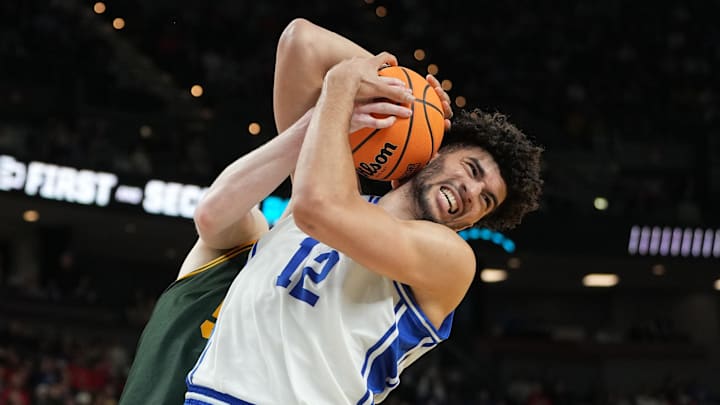
Because Duke very nearly wound up slipping up in its 71–65 victory over the Saints on Thursday that showed the margins for this group are as thin as it comes despite every metric saying they’re not this season. These Blue Devils are no longer the team to beat in March, they’re open to everyone’s best shot now.
“[Siena coach Gerry McNamara] had his guys way more ready to play than I did. He outcoached me, he outcoached us. That’s one of the hardest moments for me in sport, period, to not have your best stuff, they’re playing at a high level, you’re down double digits at half,” Scheyer said. “It doesn’t matter what you win by or how pretty or any of that stuff. It’s about getting it done, finding a way, and then learning and growing from it.”
Scheyer better hope that is the case, not just on Saturday against No. 9 TCU, but for the next three weeks that follow if the Blue Devils are lucky enough to rebound from such a scare.
This isn’t a No. 1 overall seed which is a colossus, it’s a mortal group that nearly came within a breath of suffering one of the most humiliating defeats the program had ever experienced.
“I feel like we were very sluggish, just the energy going around, we weren’t really playing. We weren’t doing what we usually do,” said center Maliq Brown after a six-point game where he navigated foul trouble in the second half. “The bench was pretty quiet, just coming at halftime, we all called each other out, coaches called each other out. We all responded well.”
In the surprisingly upbeat locker room afterward, Brown tried to ever so slightly walk back the comments he made during a halftime interview with Tracy Wolfson on the broadcast when he said the team expected a cakewalk in the game.
"We thought it was going to be a cakewalk going into this game so now we know what it is so we just have to respond back."
— CBS Sports College Basketball 🏀 (@CBSSportsCBB) March 19, 2026
Duke's Maliq Brown spoke with @TracyWolfson at halftime. pic.twitter.com/m5L8winCV9
Others felt similarly though, even as they were quickly upended of that notion after the Saints led for 28 minutes and 30 seconds (to Duke’s 8:30) and saw the Blue Devils behind by 13 points at one point in the second half—their largest deficit of the season.
“I mean, you’re the No. 1 overall seed, you’re playing a 16-seed, you’re gonna be confident,” Duke forward Cameron Boozer said. “I think we didn’t come out here ready to play with a defensive mindset. That’s why we were in the spot that we were in.”
It helps that Boozer is the national player of the year front-runner and could do just about what he pleased on his way to a 22-point, 13-rebound double-double. He drew 10 of the Saints’ 16 foul calls and did most of his damage at the line by going an efficient 13 of 14 to keep his team in it as they went 0 of 10 from the field at one point before halftime.

“I didn’t want to go home and nobody on this team wanted to lose this game,” said Cayden Boozer, the starting guard who chipped in a career-high 19 points. “So I was going to do whatever I can to help my team win, and that was just me being aggressive, understanding that they couldn’t guard me.
“We all have the mindset that we’re not going home, even if we don’t play our best basketball.”
That started largely on the defensive end, with one loose ball finding Isaiah Evans for a dunk that jumpstarted an 11–0 run that brought the MAAC tournament champions to within two points midway through the second half. It was part of a long stretch that saw the Blue Devils switch to a zone defense for one of the first extended stretches of the season and coincided with the Saints finally starting to feel the effects of their starters playing nearly every second of the game.
“I’ve been in that position before where you do have to make adjustments. You have to throw different pitches,” Scheyer said. “We did something we haven’t done in a long time, three-quarter court. We’ve had that defense in our back pocket for different moments. Preparing for the tournament, we said this could win us a game. I think it just got us back in the game and we went back to what our bread and butter has been.”
It’s a good thing Scheyer had it in his back pocket because he very nearly had the stain of two of the greatest tournament collapses ever in back-to-back games with last year’s Final Four loss to Houston.
That it didn’t could be described as a sign of how far the 38-year-old has come on the sideline and why he has been able to push all the right buttons in close games the past month with a team who is missing two of its starters due to injury in point guard Caleb Foster and center Patrick Ngongba II.
“They switched to zone and slowed us down a little bit. I went back and watched every time they’ve been scored on this season, this past week, going game by game. There are stretches where they don’t give up points, that’s who they are,” said McNamara, drained nearly as much as the five starters he played all 40 minutes. “It kind of bit us in the second half where we weren’t able to score or make a shot late and that kind of pushed the lead out. I love Jon. The job he’s done at Duke is remarkable. I wish them luck moving forward. They’re a tough group. They’re a No. 1 seed for a reason.”
That’s what every metric says. It’s what the schedule and, now, 33–2 record says, too. The NBA scouts in attendance would nod yes if they didn’t catch a second of Thursday’s action as well.
Yet, Duke’s near miss told college basketball that it is no longer the team to beat—the Blue Devils are actually quite beatable.
More March Madness from Sports Illustrated
Listen to SI’s college sports podcast, Others Receiving Votes, below or on Apple and Spotify. Watch the show on SI’s YouTube channel.
 Add us as a preferred source on Google
Bryan Fischer is a staff writer at Sports Illustrated covering college sports. He joined the SI staff in October 2024 after spending nearly two decades at outlets such as FOX Sports, NBC Sports and CBS Sports. A member of the Football Writers Association of America’s All-America Selection Committee and a Heisman Trophy voter, Fischer has received awards for investigative journalism from the Associated Press Sports Editors and FWAA. He has a bachelor’s in communication from USC.
Follow bryandfischer