%20%20--%3E%0A%3Csvg%20version%3D%221.1%22%20id%3D%22Layer_1%22%20xmlns%3D%22http%3A%2F%2Fwww.w3.org%2F2000%2Fsvg%22%20xmlns%3Axlink%3D%22http%3A%2F%2Fwww.w3.org%2F1999%2Fxlink%22%20x%3D%220px%22%20y%3D%220px%22%0A%09%20width%3D%2239px%22%20height%3D%2240px%22%20viewBox%3D%220%200%2039%2040%22%20enable-background%3D%22new%200%200%2039%2040%22%20xml%3Aspace%3D%22preserve%22%3E%0A%3Cpath%20fill%3D%22%23FFFFFF%22%20d%3D%22M38.5%2C7H28.2v26h10.3V7z%22%2F%3E%0A%3Cpath%20fill-rule%3D%22evenodd%22%20clip-rule%3D%22evenodd%22%20fill%3D%22%23FFFFFF%22%20d%3D%22M26.1%2C25.5c0%2C5.8-4.1%2C7.5-12.9%2C7.5C3.9%2C33%2C0%2C31.2%2C0%2C25.2v-1.1h11.6%0A%09v2.4c0%2C0.7%2C0.1%2C1.4%2C1.2%2C1.4c1%2C0%2C1.2-0.4%2C1.2-1.3v-0.9c0-1.6-0.9-1.6-3.5-2.2C2.2%2C21.7%2C0%2C19.7%2C0%2C15.3v-0.9C0%2C9.3%2C5.5%2C7%2C12.9%2C7%0A%09c10.2%2C0%2C12.8%2C2.6%2C12.8%2C7.4v1.8h-11v-2.9c0-0.6-0.4-1.1-1.2-1.1c-0.6%2C0-1.2%2C0.4-1.2%2C1.1v0.9c0%2C1.5%2C0.9%2C2%2C3.3%2C2.5%0A%09c8%2C1.6%2C10.5%2C3.3%2C10.5%2C7.5V25.5z%22%2F%3E%0A%3C%2Fsvg%3E%0A)
Meet the Mid-Major Power Paying Men’s College Basketball’s New Transfer Portal Tax
In this story:
The old price of success in mid-major college basketball was the threat of losing your coach to a bigger job. Many of the top mid-major programs over the years became some of the top coaching incubators in the sport. VCU, Xavier, Dayton, Murray State … their head coaching alumni have often launched from there to some of the best jobs in the country.
Belmont has become something of an exception in its 27-year Division I history. Legendary head coach Rick Byrd was never wooed away from the program he helped move up from NAIA to D-I, even after success (eight NCAA tournament bids from 2006 to ’19) few if anyone at Belmont’s level could match. Casey Alexander played for Byrd in the 1990s, coached under him for 16 years, then returned home, after stops at Stetson and Lipscomb, to be the program’s head coach when Byrd eventually retired in 2019. And under Alexander, the program has maintained similar success even after moving up into the much more difficult Missouri Valley Conference from the Ohio Valley Conference. Nineteen 20-plus-win seasons in 20 years (with multiple NBA draft picks along the way) is a near unprecedented run to go on without losing a coach to the sport’s highest level, but Belmont has managed it.
But the Bruins are now faced with a new cost, both literal and figurative, of all its winning: Their players have become perhaps the transfer portal’s hottest commodity.
Tennessee star point guard Ja’Kobi Gillespie? His college journey started at Belmont, playing two seasons there in 2022–23 and ’23–24. In his same recruiting class was Cade Tyson, a likely All–Big Ten player at Minnesota who also moved up after a two-year run with the Bruins. The leading scorer on that ’23–24 team, Malik Dia, now stars at Ole Miss. In the last four years Belmont has also lost transfers to Florida, Iowa and Xavier in addition to that star ’23–24 trio. It’s a hard-to-fathom talent drain from a program built almost exclusively on continuity, driven in large part by the exploding world of NIL and revenue sharing that makes transferring up in many cases a high-six-figure or even a million-dollar financial decision.
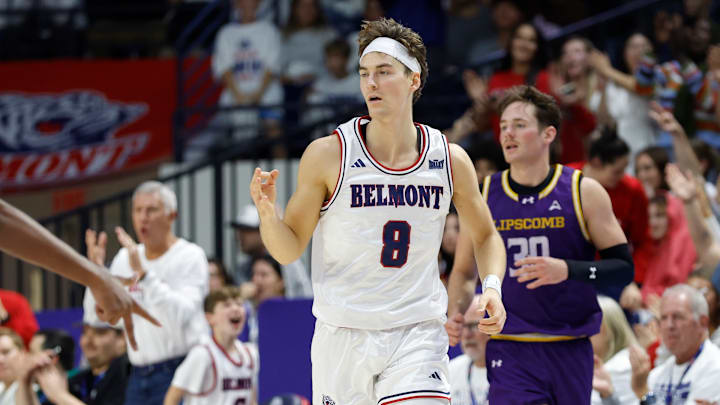
This year’s Belmont team is Alexander’s best yet. At 24–4, the Bruins are at the top of the MVC and look like one of the strongest Cinderella contenders should they crack the NCAA tournament field next month. Their roster is loaded, and all but one rotation mainstay has eligibility beyond this season. In the past, that would set up Belmont for a potentially dominant multiyear run. Instead, it has Alexander thinking “every day” about the reality that, without a significant injection of additional NIL/revenue-sharing resources, its roster could get picked over again this spring.
Despite being a well-funded program overall, Belmont, as Alexander says, has been “very resistant” to fully embrace the NIL and revenue-share world. Adjustments are coming, but this isn’t merely about keeping up with the power-conference schools with $10 million roster budgets. The top roster budget in the Missouri Valley is north of $2 million this season, several times what Belmont had at its disposal. The top teams in the Atlantic 10 cleared $3 million in revenue-share spending.
“Belmont doesn’t have to keep up with the Joneses to attract good players,” Alexander says. “It’s not a scenario in any way where I feel like we’re not competing if we’re not offering the most money. I think we have Nashville, facilities, winning, a great community, all those things still matter. We can get guys for less, but you also have to be in a competitive space, you know?”
All that brings something of a dueling focus to this time of year for both players and coaches. Two years ago, Alexander had Gillespie, Tyson and Dia on the same team, all as sophomores. The stretch run of that season was “miserable” for Alexander as he sat with the reality that the chances of retaining his star nucleus was slim and felt them slowly (albeit unintentionally) pulling away down the stretch.
“I don’t think any of them shortchanged Belmont at all,” Alexander says. “I don’t have any problems with what kind of teammates they were, how committed they were to our team being good. But at the same time, you know, you get to Arch Madness and you could just tell there was a lot going on [for them].”
That season taught Alexander some valuable lessons. The Bruins were good (20 wins, 12–8 in the league), but not great despite their immense talent, a product of being so reliant on freshmen and sophomores. He says he knew they couldn’t just replace them with a fresh crop of talented 18- and 19-year-olds: Going into the portal to get older and tougher was a must. The program would still be built on high school recruiting, but supplemented in the portal. And that summer, he landed a level of hidden gem from the portal that even he couldn’t have seen coming.
Tyler Lundblade had been given what he calls now a “basketball death sentence.” His career had been, until last year, a series of false starts and limited chances. The COVID-19 pandemic blew up his most important recruiting summer and quelled his chances of a D-I scholarship, but SMU invited him to walk on and compete for one. He earned the scholarship while redshirting, but his head coach Tim Jankovich retired that spring and the new man in charge pulled the scholarship. He took a shot at a similar offer from TCU and did the same thing: walked on, eventually earned the scholarship, but played just 52 total minutes over two seasons. He was set to be on scholarship for 2024–25, but saw on social media in May that TCU had signed a 14th player. He knew what that meant, and a trip to the basketball offices quickly confirmed it. He was off scholarship again and had no real hope of getting on the floor the next season. After some soul-searching, he decided to hit the portal again, armed with practice footage and stats to try to sell anyone on taking him.
“I was three years into my career. I just wanted to play. I didn’t care where it was,” Lundblade says. “I just wanted to have an opportunity to play and have a real opportunity. At TCU I felt like I was always slighted or pushed aside. I wasn’t getting paid. I had come there as a walk-on, they didn’t recruit me, so they were obviously going to try to play their guys ahead of me even though I thought I was deserving.”
Lundblade’s old coach Jankovich pitched him to Alexander, who responded that he didn’t have an open scholarship. Options were scarce. Jankovich circled back to Alexander and pleaded with him to take a second look … and told him Lundblade would even be willing to walk on again to audition. Lundblade visited campus on Belmont’s second-to-last day of summer practice and committed with nothing promised role-wise. He was just happy to compete.
“What did we have to lose?” Alexander recalls thinking. “4.0 student. Really good shooter, another good player, like, no harm done.”
He came off the bench at first, adjusting to Belmont’s system after missing all of summer practice. By the heart of conference play, he had emerged into a starter. And in early February, he went on a ludicrous shooting tear, knocking down 30 out of 46 threes over a four-game period. All of a sudden, the guy from the proverbial trash heap would now be a hot commodity if he entered the transfer portal, and Lundblade says plenty of schools were reaching out through intermediaries to try to coax him away from Nashville.
“I started getting texts from my old AAU coach: ‘Hey, this school’s going to pay you 500 grand,’ ” Lundblade says. “Nobody knew who I was three months ago.”
Lundblade was undeterred. He appreciated the vindication those offers gave him, proof he was good enough to play at the highest level after all. But he also valued the “stability” of knowing for the first time entering a season that he’d have the chance to play a lot more than the big check. He chose to stay, leaving five or even 10 times the money he could’ve made in the portal on the table. It’s not a decision many would make, but Lundblade’s unique experience of being chewed up and spat out by big-time college basketball informed him in ways someone who had starred at Belmont right out of high school might never have understood.
Alexander acknowledges Lundblade isn’t the only one leaving significant money on the table to be a part of this season’s team. It helped that others, like starting four man Sam Orme and center Drew Scharnowski, had been only part-time starters last season and wouldn’t have had the elite recruitments that Tyson and Gillespie had in the portal. Still, they were likely sacrificing some by not testing free agency and buying in to getting better at Belmont.
“For Tyler and Sam to come back [after last year] with the success they had, even everyone that came back, it meant a lot about what Belmont is and what we were trying to do this year,” junior forward Brigham Rogers says.
The tone was set from early in the summer that this group would be tougher, more competitive (“Everybody wanted to win every drill,” Lundblade recalls). But there’s also huge value in roster continuity for playing Alexander’s system, which isn’t as simple as memorizing a playbook. Belmont’s offense dating back to the Byrd years is as unstructured as any in college basketball; Alexander calls it “barely more than a pickup game.” What is taught is how to play the game the right way. To play basketball at Belmont is to get a Ph.D. in the game, becoming elite at cutting, screening and moving without the ball. Players are given immense freedom as long as they do those things well, and learning each other’s tendencies can take time.
“We’re so unpatterned,” Alexander says. “You’re not going to watch us play and figure out what we’re doing because we don’t know what we’re doing. We just know that when we screen, here are the things we can do. And we know that you’re a better screener and I’m a better shooter and he’s a better cutter, and I’m good off the dribble but you don’t need to dribble. We just try to play to personal strengths.”
The result is one of the nation’s sharpest offenses, ranking in the top five nationally in effective field goal percentage and producing quality shot after quality shot. The Bruins don’t have much more than a faint hope of an at-large bid despite their gaudy win-loss record, but you can be sure that no No. 5 seed wants to see Belmont’s name next to theirs on Selection Sunday assuming they break through in the Missouri Valley tournament. And that’s where Alexander is fixating as much of his attention as possible right now, even as the Bruins barrel toward the proverbial cliff that comes on the April 7 transfer portal open date for men’s basketball that threatens to break up their elite core of talent.
“The reality is that I know that I have far less control. So I try to strategize less than I used to, if that makes sense,” Alexander says. “More and more, it reminds me that all I can do, and all Belmont can do, is give them the best experience we can possibly give them. And then give them the greatest percentage of rev share we can possibly give them. And then what else can we do?”
More College Basketball from Sports Illustrated
Listen to SI’s college sports podcast, Others Receiving Votes, below or on Apple and Spotify. Watch the show on SI’s YouTube channel.
 Add us as a preferred source on Google
Kevin Sweeney is a staff writer at Sports Illustrated covering college basketball and the NBA draft. He joined the SI staff in July 2021 and also serves host and analyst for The Field of 68. Sweeney is a Naismith Trophy voter and ia member of the U.S. Basketball Writers Association. He is a graduate of Northwestern University’s Medill School of Journalism.
Follow CBB_Central