%20%20--%3E%0A%3Csvg%20version%3D%221.1%22%20id%3D%22Layer_1%22%20xmlns%3D%22http%3A%2F%2Fwww.w3.org%2F2000%2Fsvg%22%20xmlns%3Axlink%3D%22http%3A%2F%2Fwww.w3.org%2F1999%2Fxlink%22%20x%3D%220px%22%20y%3D%220px%22%0A%09%20width%3D%2239px%22%20height%3D%2240px%22%20viewBox%3D%220%200%2039%2040%22%20enable-background%3D%22new%200%200%2039%2040%22%20xml%3Aspace%3D%22preserve%22%3E%0A%3Cpath%20fill%3D%22%23FFFFFF%22%20d%3D%22M38.5%2C7H28.2v26h10.3V7z%22%2F%3E%0A%3Cpath%20fill-rule%3D%22evenodd%22%20clip-rule%3D%22evenodd%22%20fill%3D%22%23FFFFFF%22%20d%3D%22M26.1%2C25.5c0%2C5.8-4.1%2C7.5-12.9%2C7.5C3.9%2C33%2C0%2C31.2%2C0%2C25.2v-1.1h11.6%0A%09v2.4c0%2C0.7%2C0.1%2C1.4%2C1.2%2C1.4c1%2C0%2C1.2-0.4%2C1.2-1.3v-0.9c0-1.6-0.9-1.6-3.5-2.2C2.2%2C21.7%2C0%2C19.7%2C0%2C15.3v-0.9C0%2C9.3%2C5.5%2C7%2C12.9%2C7%0A%09c10.2%2C0%2C12.8%2C2.6%2C12.8%2C7.4v1.8h-11v-2.9c0-0.6-0.4-1.1-1.2-1.1c-0.6%2C0-1.2%2C0.4-1.2%2C1.1v0.9c0%2C1.5%2C0.9%2C2%2C3.3%2C2.5%0A%09c8%2C1.6%2C10.5%2C3.3%2C10.5%2C7.5V25.5z%22%2F%3E%0A%3C%2Fsvg%3E%0A)
RJ Luis Jr. Got His NBA Gamble Wrong, and College Hoops Is Letting Him Avoid the Consequences
In this story:
Moments after receiving an injunction in Louisiana state court that paved his way for an unprecedented return to college basketball, RJ Luis Jr. grinned on the steps of the courthouse in a video shared by LSU teammate Mouhamed Dioubate.
“Free that man!” Dioubate is heard saying on the video.
Whether Luis is actually free to play remains complicated. The injunction prevents the NCAA from stopping Luis from playing this season. But Tuesday, the SEC took measures to try to block Luis and other former pros from playing, announcing conference-wide rules that give commissioner Greg Sankey broad authority to sanction players, coaches and schools that play former NFL, NBA and WNBA players. Meanwhile, attorney Ryan Downton, who represents former NFL players attempting to suit up for LSU this season, said the new rules “put the NCAA in contempt of multiple court orders,” and described it as “cartel-like behavior.” Luis’s attorneys undoubtedly feel similarly.
NCAA rules have at times felt cruel, unnecessarily punitive to players seeking waivers for partially played seasons or strange applications of rules. Take last week, when the NCAA lost in court trying to prevent a football player who was cut from his team for missing practice after his mom’s funeral from transferring.
But no matter how much Luis and LSU attempt to paint the former Big East Player of the Year as a victim (Luis posted a video with 50 Cent’s “Many Men” in the background later Monday night), let’s be very clear: This is not one of those cases. And if Luis isn’t able to play this year (missing out on a multimillion-dollar payday in the process), he has no one to blame but himself.
Last spring, Luis went all-in on pursuing an NBA career. He ignored warnings both privately and publicly that his draft stock wasn’t strong, that despite his outstanding season at St. John’s he might not get drafted … and that even if he did, he’d likely be offered only a two-way contract worth hundreds of thousands. His market was much more robust in college. Had he withdrawn from the draft, he was expected to command at least $2 million to $3 million from some of the sport’s biggest programs. Despite Judge Ron Johnson concluding the NCAA didn’t prove that Luis knew that staying in the draft meant permanently forfeiting his eligibility, you can trust that Luis (and every other college player who has ever gone through the draft process) was well aware of the choice he was making. Luis chose to roll the dice on the NBA over the guaranteed college payday.
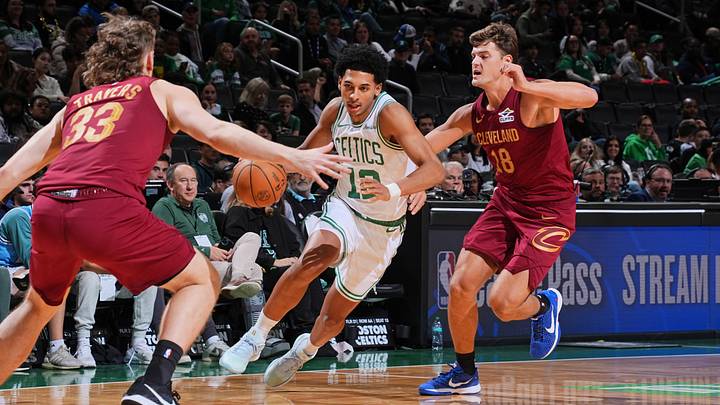
That decision unsurprisingly backfired. Luis went undrafted. He signed a two-way contract, got traded a handful of weeks later to the Celtics, played in garbage time of a few preseason games with Boston before getting cut before the regular season even started. He spent the season injured and by midseason was exploring college return options.
It was so unsurprising it bordered on cliche that the one program willing to take the dive on a player whose only avenue to playing in college again was via lawsuit was Will Wade and LSU. Of course the coach who has made a career almost entirely off flying in the face of the rules that attempt to govern the other 364 teams in Division I went this route.
The news that Luis is eligible has roiled coaches, who largely seem at their wit’s end with the lawless nature of the sport.
“It’s just all the worst people involved in college [basketball] benefitting off the chaos,” one power conference assistant says.
The only thing preventing the Luis case from being far more disruptive to college basketball is that rarely will a player make as catastrophically misguided a draft decision as Luis did. Assuming the NCAA’s five-year eligibility window holds up, very few players who elect to stay in the draft will flunk out of the NBA so quickly that they’ll be eager to make a college return. The only college early entrant in this year’s draft who didn’t get a multiyear guaranteed contract was Washington’s Bryson Tucker, whose unspectacular 5.7 ppg as a sophomore unsurprisingly didn’t get him much of an NBA look. Even if he’d like to sue his way back to college basketball in a couple of years, he might have trouble finding a school itching to bring him back.
The more damaging truth presented by the Luis situation (and illustrated almost daily at this stage by a different person in the LSU athletic department) is the reality that even the most common-sense rules aren’t enforceable in the eyes of the judges who now govern college sports. The idea that Luis didn’t know the ramifications of what he was doing when he stayed in the draft is so ludicrous to anyone who has spent a day around college sports that it’s almost laughable a judge actually bought it. This comes only a couple of months after a Texas judge briefly granted Brendan Sorsby, who broke arguably the most foundational rule in sports across the world, an injunction to play college football anyway.
The response so far by conferences (perhaps expedited by the ticking clock of NFL training camps about to wrap up) has been similar to the strong pushback to Sorsby. And perhaps the outcome will be the same: a chaotic week that ends in a player who obviously shouldn’t be eligible to play college sports having to turn pro. But speaking with certainty about what’s next in this saga would be foolish at this stage.
If Luis is able to play out his full season, congratulations are in order for him. It will be a lucrative year of college basketball for him with almost assuredly a seven-figure deal attached. Based on his rapid NBA washout in his first attempt, there’s a good chance it’s the most money he’ll ever make playing basketball. Same goes for LSU’s new point guard, Donovan Dent, who’s also eligible via injunction and came out of retirement (I wish I was kidding) for one final college payday.
That “Many Men” video posted by Luis on Monday night also included a handful of screenshotted tweets deriding his college return. If you were expecting that the player might be humbled by his second lease on college life, you clearly thought wrong. But accountability for your own poor decisions is no longer a requirement in today’s court-ordered college sports chaos. That Luis even has a chance of playing college basketball this season is just the latest example.
PODCAST: Listen to SI’s college sports podcast, Others Receiving Votes, hosted by Pat Forde, below or on Apple and Spotify. Watch the show on SI’s college YouTube channel or on SI TV.
 Add us as a preferred source on Google
Kevin Sweeney is a staff writer at Sports Illustrated covering college basketball and the NBA draft. He joined the SI staff in July 2021 and also serves host and analyst for The Field of 68. Sweeney is a Naismith Trophy voter and ia member of the U.S. Basketball Writers Association. He is a graduate of Northwestern University’s Medill School of Journalism.
Follow CBB_Central