%20%20--%3E%0A%3Csvg%20version%3D%221.1%22%20id%3D%22Layer_1%22%20xmlns%3D%22http%3A%2F%2Fwww.w3.org%2F2000%2Fsvg%22%20xmlns%3Axlink%3D%22http%3A%2F%2Fwww.w3.org%2F1999%2Fxlink%22%20x%3D%220px%22%20y%3D%220px%22%0A%09%20width%3D%2239px%22%20height%3D%2240px%22%20viewBox%3D%220%200%2039%2040%22%20enable-background%3D%22new%200%200%2039%2040%22%20xml%3Aspace%3D%22preserve%22%3E%0A%3Cpath%20fill%3D%22%23FFFFFF%22%20d%3D%22M38.5%2C7H28.2v26h10.3V7z%22%2F%3E%0A%3Cpath%20fill-rule%3D%22evenodd%22%20clip-rule%3D%22evenodd%22%20fill%3D%22%23FFFFFF%22%20d%3D%22M26.1%2C25.5c0%2C5.8-4.1%2C7.5-12.9%2C7.5C3.9%2C33%2C0%2C31.2%2C0%2C25.2v-1.1h11.6%0A%09v2.4c0%2C0.7%2C0.1%2C1.4%2C1.2%2C1.4c1%2C0%2C1.2-0.4%2C1.2-1.3v-0.9c0-1.6-0.9-1.6-3.5-2.2C2.2%2C21.7%2C0%2C19.7%2C0%2C15.3v-0.9C0%2C9.3%2C5.5%2C7%2C12.9%2C7%0A%09c10.2%2C0%2C12.8%2C2.6%2C12.8%2C7.4v1.8h-11v-2.9c0-0.6-0.4-1.1-1.2-1.1c-0.6%2C0-1.2%2C0.4-1.2%2C1.1v0.9c0%2C1.5%2C0.9%2C2%2C3.3%2C2.5%0A%09c8%2C1.6%2C10.5%2C3.3%2C10.5%2C7.5V25.5z%22%2F%3E%0A%3C%2Fsvg%3E%0A)
Texas Has Cruised to the Elite Eight. Now It’s Time for the Hard Part.
In this story:
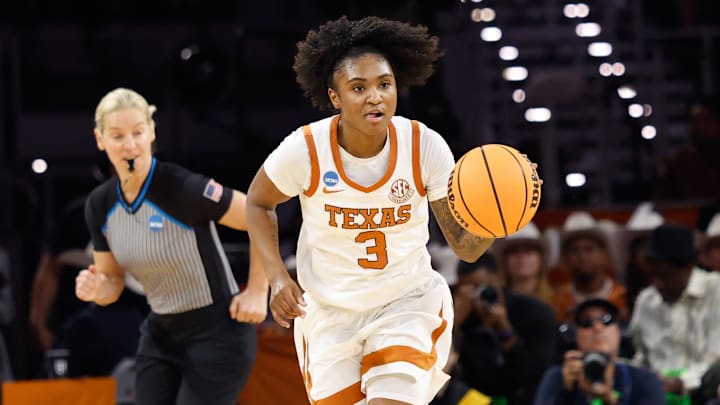
FORT WORTH — Vic Schaefer says he was not bothered by how his Texas team played in the second half of its 76–54 win over Kentucky in the Sweet 16. Give him credit for honesty, and also credit for watching the second half. That’s dedication, folks.
Kentucky took an early 3–0 lead and should have immediately called timeout to snap a picture of the scoreboard. Texas scored the next 15 points. The Longhorns led by 20 early in the second quarter and 22 at the break.
Schaefer is an old-school coach who began the game wearing a sportcoat and holding a rolled-up sheet of paper, as though he was simultaneously coaching his team and auditioning for “Boring As Hell: The Hank Iba Story.” Sometimes, Schaefer indulges himself by taking a break from watching film so he can watch more film. He wants his players to play every possession like the score is 0–0, and would you like to guess the problem with that?
“In their minds,” Schaefer said, “they’re like, ‘Coach, it’s not 0–0. We’re up 20.’ ”
Their minds are apparently connected to their eyes, which they use to look at the scoreboard. Even in the SEC tournament title game, Texas led South Carolina 45–28 at the half.
This Kentucky game was never in doubt—even when the Wildcats had that 3–0 lead. The Longhorns are so good that Kentucky and probably 58 other teams in this tournament would have to play out of their minds to beat them.
At halftime, the Wildcats had played six quarters of basketball against Texas this season and held Longhorns star Madison Booker to 16 points, total. Yet the Longhorns had outscored Kentucky by 33.
A year ago, you could fairly say that as Booker went, so went the Longhorns. South Carolina held Booker to 11 points in the Final Four and rolled Texas. But Texas is a better offensive team now. They can even beat you with threes, though it’s not their preference. Schaefer says “if it’s not my best offensive team, it’s my second best offensive team that I’ve ever had.” (His 2018–19 Mississippi State team finished second in the country in scoring.)
“Usually every team has one good defender,” Schaefer said. “Some have two. Not very many have three. It just makes it a tough match-up for people.”
Texas is 34–3. Getting to 37–3 would deliver Schaefer his first national title, but those last three wins will be tough to get. All those tournament teams that can’t beat Texas are gone now.
Michigan can beat Texas on Monday. South Carolina did it in November. UConn probably has a better team than Texas, and UCLA certainly has a better roster, though perhaps not a better team.

So yeah: Winning three more will be hard. But beating Texas is also hard. Scoring against Texas is hard. The Longhorns start by putting you in a headlock and then get serious.
“We definitely put a premium on starting fast, getting out, and punching first in the first five minutes,” Texas guard Jordan Lee said. “Definitely proud of us for that start.”
Booker insisted afterward that “winning is never easy.” She is right. For Texas, winning is expected, and it’s predictable, but that doesn’t mean it is easy. Like probably every team Schaefer has ever coached, the Longhorns take pride in the work and even the pain. Guard Rori Harmon jammed her middle finger on her right hand and said it was swollen afterward, but it didn’t seem to affect her.
“I just love how we opened the game,” Schaefer said. “I love how we came out ready to go. I love how we defended the first half. I just thought we were really, really locked in. Our transition was obviously very good early, and that was off of our defense …
“You know, you can usually tell with our group: If we’re locked in and focused, we’re usually creating some problems defensively for people.”
For the Longhorns, the second-half cruise-control phase of the tournament is probably over. It’s heavy-hitter time. They can’t wait.
More March Madness from Sports Illustrated
 Add us as a preferred source on Google
Michael Rosenberg was a senior writer for Sports Illustrated, covering any and all sports. He writes columns, profiles and feature stories and has covered almost every major sporting event. He joined SI in 2012 after working at the Detroit Free Press for 13 years, eight of them as a columnist. Rosenberg is the author of “War As They Knew It: Woody Hayes, Bo Schembechler and America in a Time of Unrest.” Several of his stories also have been published in collections of the year’s best sportswriting. He is married with three children.
Follow rosenberg_mike