%20%20--%3E%0A%3Csvg%20version%3D%221.1%22%20id%3D%22Layer_1%22%20xmlns%3D%22http%3A%2F%2Fwww.w3.org%2F2000%2Fsvg%22%20xmlns%3Axlink%3D%22http%3A%2F%2Fwww.w3.org%2F1999%2Fxlink%22%20x%3D%220px%22%20y%3D%220px%22%0A%09%20width%3D%2239px%22%20height%3D%2240px%22%20viewBox%3D%220%200%2039%2040%22%20enable-background%3D%22new%200%200%2039%2040%22%20xml%3Aspace%3D%22preserve%22%3E%0A%3Cpath%20fill%3D%22%23FFFFFF%22%20d%3D%22M38.5%2C7H28.2v26h10.3V7z%22%2F%3E%0A%3Cpath%20fill-rule%3D%22evenodd%22%20clip-rule%3D%22evenodd%22%20fill%3D%22%23FFFFFF%22%20d%3D%22M26.1%2C25.5c0%2C5.8-4.1%2C7.5-12.9%2C7.5C3.9%2C33%2C0%2C31.2%2C0%2C25.2v-1.1h11.6%0A%09v2.4c0%2C0.7%2C0.1%2C1.4%2C1.2%2C1.4c1%2C0%2C1.2-0.4%2C1.2-1.3v-0.9c0-1.6-0.9-1.6-3.5-2.2C2.2%2C21.7%2C0%2C19.7%2C0%2C15.3v-0.9C0%2C9.3%2C5.5%2C7%2C12.9%2C7%0A%09c10.2%2C0%2C12.8%2C2.6%2C12.8%2C7.4v1.8h-11v-2.9c0-0.6-0.4-1.1-1.2-1.1c-0.6%2C0-1.2%2C0.4-1.2%2C1.1v0.9c0%2C1.5%2C0.9%2C2%2C3.3%2C2.5%0A%09c8%2C1.6%2C10.5%2C3.3%2C10.5%2C7.5V25.5z%22%2F%3E%0A%3C%2Fsvg%3E%0A)
Ranking the Best UConn Women’s Basketball Teams of All Time
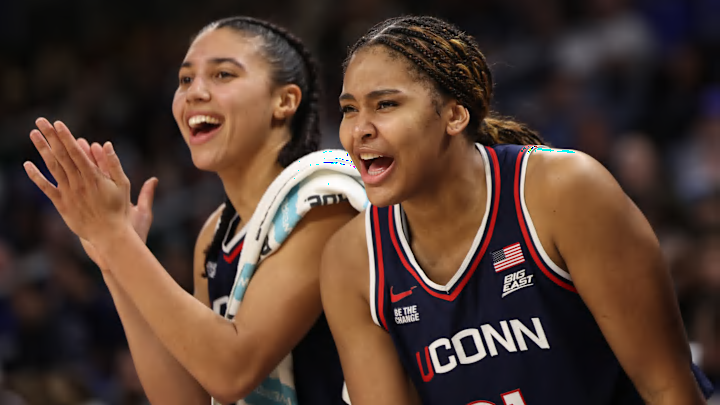
By any measure, UConn is a great team. Scoring margin? The Huskies have defeated opponents by 38.8 points per game, best in Division I and the third-best mark in program history. Talent? Sarah Strong and Azzi Fudd are the first teammates named to the All-American First Team since 2020. Ranking? The Huskies have been the wire-to-wire No. 1 team, the first UConn squad to do so since the 2017–18 season. NCAA tournament supremacy? UConn’s 53-point victory against Syracuse was just the second time in program history the Huskies have steamrolled a second-round opponent by 50-plus.
Their depth and dominance hearken back to some of the best teams that have walked through Storrs, which led us to ask: Which are the greatest Huskies teams across history?
A few ground rules: First, one team for each superstar’s primary run was considered. Second, metrics (like scoring margin, strength of schedule, regular season and tournament success, and number of All-Americans) were used to create a somewhat objective basis for ranking teams. With UConn’s rich, storied history, no list will ever be perfect. It can, at the very least, be interesting.
6. 2017–18 UConn Huskies
Scoring Margin: +36.0
All-Americans: Katie Lou Samuelson (First Team), Gabby Williams (Second Team), Napheesa Collier (Third Team)
Future WNBA Players: Seven
Once UConn’s NCAA-record 111-game winning streak finally collapsed under the weight of its own pressure, Geno Auriemma had felt almost liberated. “It didn’t take me long to realize right after that game, wow, this is the best thing that could’ve happened to us,” he told Sports Illustrated ahead of the 2017–18 season. “We were defying the laws of nature there for a while. And now we’re somewhat normal. That’s a good feeling.”
Somewhat normal is right. After sitting out a year, Azurá Stevens suited up in Storrs for the first time and gave the Huskies a true starting center. UConn played four Top 25 teams to open the season and won each game by at least 18 points. The Huskies beat No. 3 Notre Dame in December by nine. They entered the Big Dance undefeated for the third season in a row. Once there, UConn scored the most points in a single game (140) in the history of the women’s NCAA tournament. They also averaged the highest points per game of any Huskies team in the 21st century.
Footnotes, all. The arc of the season was condensed to one moment, held in the hands of Notre Dame guard Arike Ogunbowale. Collier had backed up one step too far. Ogunbowale crossed over, pulled up and did not miss. Notre Dame pulled ahead 91–89 with one second remaining and held on to win. (Samuelson nearly sent the game to overtime on a desperation layup.) UConn left Columbus, Ohio with the dubious distinction of being the best Huskies team to not win a title.

5. 2024–25 UConn Huskies
Scoring Margin: +29.5
All-Americans: Paige Bueckers (First Team), Sarah Strong (Second Team)
Future WNBA Players: Four (projected)
Last season’s title-winning team was cathartic, not perfect. The Huskies had not won it all in nearly a decade. They had made it to the championship game in 2022 and lost. In the following offseason, Paige Bueckers tore her ACL playing pickup. When she returned in ’23, Fudd tore her ACL. It took until late November ’24 for the Huskies to return to full health.
UConn lost to both South Carolina and Tennessee, even with Fudd back in the lineup. That loss to the Lady Vols, though, awakened a sleeping giant. The Huskies traveled to Columbia and walloped South Carolina, 87–58, ending the Gamecocks’ 71-game home winning streak. It soon became clear that Bueckers, Fudd and freshman Sarah Strong would be regarded as one of the Huskies’ best trios. They beat USC by 14 in the Elite Eight, UCLA by 34 in the Final Four and South Carolina by 23 in the championship game. That +71 differential across the final three rounds was the third highest in the women’s tournament since 1998. Bueckers & Co. had emerged from the wilderness with their storybook ending.
4. 1994–95 UConn Huskies
Scoring Margin: +33.2
All-Americans: Rebecca Lobo (First Team), Jennifer Rizzotti (Second Team), Kara Wolters (Third Team)
Future WNBA Players: Four
Without question, the 1994–95 Huskies are the most important team in the program’s history. Heading into the season, UConn was firmly on the rise. So much so that coach Pat Summitt decided it was important enough to play in Storrs for the good of the game, even if that meant the Lady Vols had to face off against Auburn on a Saturday, fly in on a Sunday and compete the next day. Her instinct proved to be correct. Both teams were undefeated heading into the game. Gampel Pavilion sold out. Eighty credentialed media members and a national TV audience watched as the No. 2 Huskies defeated the No. 1 Vols, 77–66, on Jan. 16, 1995. Auriemma was so overwhelmed by the response to the game that he stayed home from work the next day.
Winning would ensure the spotlight never strayed too far from Storrs. The Huskies beat No. 17 Kansas 12 days later in front of 17,000 fans and another national audience, this time watching the first men’s and women’s doubleheader broadcast on TV. Rebecca Lobo, Kara Wolters, Jennifer Rizzotti and Nykesha Sales—all either future WNBA All-Stars or WNBA champions—rolled through the NCAA tournament, beating AP No. 13 Alabama, No. 9 Virginia, No. 5 Stanford and, finally, No. 2 Tennessee en route to the program’s first national title. In the 31 years since, no UConn championship-winning team has averaged more points per game (89.5) than the 1994–95 Huskies. They sparked a rivalry and a standard that would define women’s basketball for decades to come.

3. 2008–09 UConn Huskies
Scoring Margin: +30.5
All-Americans: Maya Moore (First Team), Renee Montgomery (First Team), Tina Charles (Second Team)
Future WNBA Players: Five
Maya Moore had won three consecutive state championships for Georgia’s Collins Hill High. Leave it to UConn, of all programs, to snap her title-winning streak. Moore, Tina Charles, Renee Montgomery and Kalane Greene had lost in the 2008 Final Four. Charles had been benched during that year’s tournament.
Typical, then, that they responded with pure dominance against the strongest schedule in the program’s history. UConn beat No. 6 Oklahoma by 28. It trounced No. 2 North Carolina by 30. UConn won all three of its conference tournament games by at least 30 points—something that the Huskies wouldn’t do again until 2020. The Huskies then cruised through March Madness and forced Louisville to miss 21 of 22 shots during a stretch in the championship game. They became the first D-I team, men’s or women’s, to go undefeated while winning every game by at least 10 points
The truth is that the 2008–09 and 2009–10 teams will always be intertwined. Moore and Charles helped UConn become the only women’s program to win back-to-back championships and go unbeaten in each season. They won 78 straight games together, a streak that Moore would extend to 90 after Charles went to the WNBA. Hairs need to be split somewhere. The 2008–09 team gets the edge because it played a tougher schedule and had three first- or second-team All-Americans (Montgomery, Moore and Charles) while the 2009-10 team had two.
2. 2015–16 UConn Huskies
Scoring Margin: +39.8
All-Americans: Breanna Stewart (First Team), Moriah Jefferson (First Team), Morgan Tuck (Second Team)
Future WNBA Players: Eight
Breanna Stewart, Morgan Tuck and Moriah Jefferson achieved a level of sustained excellence that may never be replicated. Four of UConn’s top six seasons in terms of points against per game came during their tenure. They won four straight national championships. They lost five games, total. And there was no better team in their four years than the 2015–16 squad.
Yes, it had Stewart, Tuck and Jefferson as seniors. The team also had Williams, Kia Nurse, Collier and Samuelson as underclassmen. Together, they won more games by at least 40 points (25) than any other team in UConn history. They beat opponents by an average of 39.8 points. Stewart, for good measure, asserted her GOAT status by becoming the first player named Most Outstanding Player of the Final Four in all four of their seasons.
The Huskies’ success incited a moral panic that they were killing the women’s game. Killing? Not quite. Dominating? Absolutely.

1. 2001–02 UConn Huskies
Scoring Margin: +35.4
All-Americans: Sue Bird (First Team), Diana Taurasi (Second Team), Swin Cash (Second Team), Asjha Jones (Third Team)
Future WNBA Players: Seven
Disappointment has a funny way of producing champions in Storrs. Lobo had 11 turnovers in an Elite Eight loss to North Carolina in 1994. Moore was held scoreless for over 12 minutes before scoring her first points in UConn’s 2008 Final Four loss. Bueckers and the shorthanded Huskies lost by two to Caitlin Clark and the Hawkeyes in the 2024 Final Four. All three players won a title the next season. Diana Taurasi would suffer the same fate.
The 2000–01 Huskies may have been more talented. Until, at least, Svetlana Abrosimova tore a ligament in her left foot and Shea Ralph tore her left ACL. In their stead, Sue Bird and Taurasi shot a combined 8-for-36 from the floor as the Huskies fell to Notre Dame, 90–75, in the ’01 Final Four. That would provide more than enough motivation for the following season.
Having stars doesn’t hurt, either. Bird, Swin Cash, Asjha Jones and Tamika Williams would be selected first, second, fourth and sixth in the 2002 WNBA draft. That was the first—and only—time a school had four players selected in the top six. Taurasi would go on to be the No. 1 pick two years later. They formed what is perhaps the best starting five in women’s college basketball history, and they played like it.
UConn faced three top-three teams in the regular season and beat all of them by at least 14 points. The Huskies never trailed in the second half of a game all year. Numbers can only tell part of the story, though. They beat opponents in such a way that could only engender respect.
After Tennessee lost to UConn in the Final Four, Summitt asked to enter the Huskies’ locker room. “You guys are everything the game should be,” Summitt said. “You’re one of the best teams I’ve ever seen, and you need to go on and win the whole thing.” They would, of course, win the whole thing. Auriemma, forever a perfectionist, would also be left in awe. “I'm not sure we could have done it better,” he told Sports Illustrated’s Kelli Anderson after winning the title. “Every pass was right, every cut was right.”
It’s hard to be any more perfect than that.
Where does the 2025–26 team slot in?
It’s hard to say. As noted at the beginning, the Huskies +38.8 average margin of victory is the best of any UConn team without Stewart on its roster. They may have more depth than the 2024–25 squad, but they also don’t have Bueckers. It’s hard to make the case that this team is better than any of the top three in this list. So, here’s a cop-out answer: If only considering the best team of each star’s primary era, then the 2024–25 Bueckers-Fudd pairing will stand on its own. This team falls into a transition period. (A transition period most programs would sell their soul for.) With No. 3 recruit Olivia Vukosa slated to form a terrifying post pairing with Strong—and further development of Blanca Quiñonez, Kayleigh Heckel and Allie Ziebell—the best version of the young core could be yet to come.
More March Madness from Sports Illustrated
 Add us as a preferred source on Google
Dan Falkenheim is a fact checker for Sports Illustrated, where he may inundate you with numbers when he writes women's hoops. He joined the SI staff in September 2018 and also produces Faces in the Crowd for print. A graduate of Montclair State, Dan first got hooked on women’s basketball when covering the Red Hawks’ run to the 2015 Division III Final Four for the student newspaper. He lives in New Jersey with his wife and sweet rescue dog, Hari.
Follow thefalkon