%20%20--%3E%0A%3Csvg%20version%3D%221.1%22%20id%3D%22Layer_1%22%20xmlns%3D%22http%3A%2F%2Fwww.w3.org%2F2000%2Fsvg%22%20xmlns%3Axlink%3D%22http%3A%2F%2Fwww.w3.org%2F1999%2Fxlink%22%20x%3D%220px%22%20y%3D%220px%22%0A%09%20width%3D%2239px%22%20height%3D%2240px%22%20viewBox%3D%220%200%2039%2040%22%20enable-background%3D%22new%200%200%2039%2040%22%20xml%3Aspace%3D%22preserve%22%3E%0A%3Cpath%20fill%3D%22%23FFFFFF%22%20d%3D%22M38.5%2C7H28.2v26h10.3V7z%22%2F%3E%0A%3Cpath%20fill-rule%3D%22evenodd%22%20clip-rule%3D%22evenodd%22%20fill%3D%22%23FFFFFF%22%20d%3D%22M26.1%2C25.5c0%2C5.8-4.1%2C7.5-12.9%2C7.5C3.9%2C33%2C0%2C31.2%2C0%2C25.2v-1.1h11.6%0A%09v2.4c0%2C0.7%2C0.1%2C1.4%2C1.2%2C1.4c1%2C0%2C1.2-0.4%2C1.2-1.3v-0.9c0-1.6-0.9-1.6-3.5-2.2C2.2%2C21.7%2C0%2C19.7%2C0%2C15.3v-0.9C0%2C9.3%2C5.5%2C7%2C12.9%2C7%0A%09c10.2%2C0%2C12.8%2C2.6%2C12.8%2C7.4v1.8h-11v-2.9c0-0.6-0.4-1.1-1.2-1.1c-0.6%2C0-1.2%2C0.4-1.2%2C1.1v0.9c0%2C1.5%2C0.9%2C2%2C3.3%2C2.5%0A%09c8%2C1.6%2C10.5%2C3.3%2C10.5%2C7.5V25.5z%22%2F%3E%0A%3C%2Fsvg%3E%0A)
With Juke Harris Addition, Tennessee Goes All-in to Capitalize on Rick Barnes’s Title Window
In this story:
More than ever before, the current free-for-all state of college sports allows teams to push all the chips in on one big year.
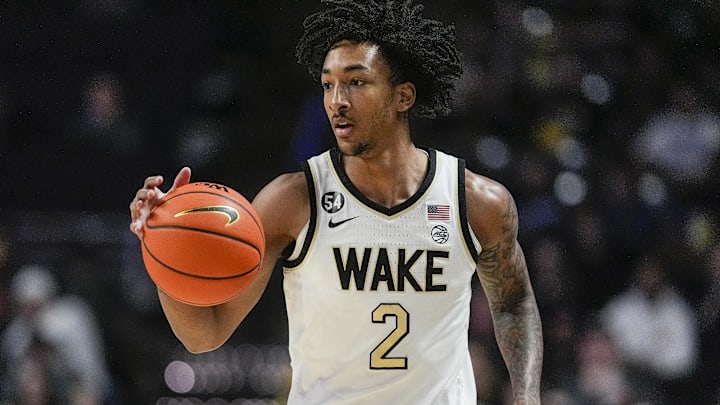
The way Tennessee men’s basketball has attacked this year’s transfer portal cycle certainly qualifies. The clearest evidence came Monday when Wake Forest transfer wing Juke Harris, one of the best players in the portal, picked the Vols over interest from the NBA, defending champion Michigan and blueblood North Carolina. Harris is Tennessee’s highest-profile portal pickup of what had already been a loaded transfer class, giving the Vols arguably the best group of newcomers in college basketball for next season. Adding Harris shows Tennessee is all in on winning big in 2027, trying to deliver the program its elusive first Final Four appearance.
Tennessee has been knocking on the door of men’s college basketball’s promised land for years as part of the strongest stretch in the program’s history. The Vols have reached the Elite Eight three straight years just to be turned away one win from playing in the season’s final weekend. Head coach Rick Barnes, the architect of all this success, will turn 72 in July and is clearly in the twilight of his career. The investment in this portal class is an obvious nod to the urgency to capitalize on Barnes’s waning tenure and an acknowledgement that this may be their best chance of finally breaking through.
Tennessee was staring down a roster reset already, with star PG Ja’Kobi Gillespie and C Felix Okpara out of eligibility and wing Nate Ament always likely headed to the NBA. That was accelerated when some of the role players from this past year’s squad hit the portal, leaving behind just two players on the roster in rising sophomores DeWayne Brown II and Troy Henderson. Seven transfers have helped replace them:
- Dai Dai Ames is a proven high-major bucket-getter in the backcourt who broke out this season at Cal, averaging nearly 17 points per game with the Bears. He’s small and not a point guard, but he can certainly create his own shot.
- Terrence Hill Jr. joins the party from VCU and is another big-time scorer. His 34-point masterpiece in the comeback win against North Carolina in the NCAA tournament is the most obvious example. He’s another smaller guard at 6' 3" and grades out poorly defensively.
- Juke Harris averaged north of 21 points per game at Wake Forest and had a legitimate chance to turn pro this year, but instead will stay in college and withdraw from the draft.
- And one more true bucket-getter: Jalen Haralson from Notre Dame was an elite recruit out of high school and put up more than 16 points per game as a freshman with the Irish. He has real positional size at 6' 7", but has traditionally been best in his career with the ball in his hands.
- Tyler Lundblade out of Belmont is a sharpshooter and a great fit in some of Tennessee’s more traditional offensive actions running off screens.
- Miles Rubin (Loyola Chicago) will hope to anchor the defense as a rim protector, with Braedan Lue (Kennesaw State) behind him as a depth piece at the five.

Combined, that’s 107.3 points per game a season ago from the seven transfers, with more than 80 of those coming from the five new guard additions. There was a clear emphasis on adding proven scoring and shotmaking talent, seemingly in direct response to how the Vols have failed in their three Elite Eight losses. Tennessee scored just 62 points in a 33-point romp at the hands of Michigan this season, mustered only 50 in an ugly 19-point loss to Houston with just 15 first-half points in 2025, and in ’24 needed an epic 37-point display from Dalton Knecht just to squeeze out 66 points in a crushing six-point loss to Purdue.
“This year, we knew that we wanted more offense,” Barnes said on The RTI Low-Down on Sunday. “We didn’t want to really rely on two or three guys. We felt like we needed to get some guys that as it gets down to late in the shot clock. … We want some guys that can create offense, that can break down defenses for you and get stuff done. … We wanted to get more lethal.”
It’s a smaller roster than Barnes is used to, and one far more oriented toward offense than his defense-first groups of old. Tennessee had five straight top-five defenses per KenPom before this past season’s drop to No. 14 nationally, and it’d take one of Barnes’s best coaching jobs yet to get this collection of historically mediocre defenders guarding like a top-15 group in 2026–27. This is much different than previous defensively lacking portal pickups like Knecht or Chaz Lanier who were insulated by plenty of Barnes-style defensive weapons. The roster construction as a whole looks completely different.
Still, that appears to have been a risk Barnes was willing to take after three years of finding himself in the same predicament. A Knecht, Lanier or Gillespie-level scoring prospect alone wasn’t going to be enough. If Tennessee comes up short one more time, it won’t be because it lacks the offensive firepower to hang with the best. And just because Barnes may be approaching retirement doesn’t mean he isn’t willing to adapt. This is clearly a pivot, and one that may not feel comfortable early on.
But it’s one that gives his program the best chance at finally breaking through. The first goal: getting Tennessee its first Final Four. And if all goes right, there’s a world this new-look roster gives Barnes a serious chance at his first national championship, more than 850 wins into his potential Hall of Fame career.
More College Basketball From Sports Illustrated
Listen to SI’s college sports podcast, Others Receiving Votes, below or on Apple and Spotify. Watch the show on SI’s College YouTube channel.
 Add us as a preferred source on Google
Kevin Sweeney is a staff writer at Sports Illustrated covering college basketball and the NBA draft. He joined the SI staff in July 2021 and also serves host and analyst for The Field of 68. Sweeney is a Naismith Trophy voter and ia member of the U.S. Basketball Writers Association. He is a graduate of Northwestern University’s Medill School of Journalism.
Follow CBB_Central