%20%20--%3E%0A%3Csvg%20version%3D%221.1%22%20id%3D%22Layer_1%22%20xmlns%3D%22http%3A%2F%2Fwww.w3.org%2F2000%2Fsvg%22%20xmlns%3Axlink%3D%22http%3A%2F%2Fwww.w3.org%2F1999%2Fxlink%22%20x%3D%220px%22%20y%3D%220px%22%0A%09%20width%3D%2239px%22%20height%3D%2240px%22%20viewBox%3D%220%200%2039%2040%22%20enable-background%3D%22new%200%200%2039%2040%22%20xml%3Aspace%3D%22preserve%22%3E%0A%3Cpath%20fill%3D%22%23FFFFFF%22%20d%3D%22M38.5%2C7H28.2v26h10.3V7z%22%2F%3E%0A%3Cpath%20fill-rule%3D%22evenodd%22%20clip-rule%3D%22evenodd%22%20fill%3D%22%23FFFFFF%22%20d%3D%22M26.1%2C25.5c0%2C5.8-4.1%2C7.5-12.9%2C7.5C3.9%2C33%2C0%2C31.2%2C0%2C25.2v-1.1h11.6%0A%09v2.4c0%2C0.7%2C0.1%2C1.4%2C1.2%2C1.4c1%2C0%2C1.2-0.4%2C1.2-1.3v-0.9c0-1.6-0.9-1.6-3.5-2.2C2.2%2C21.7%2C0%2C19.7%2C0%2C15.3v-0.9C0%2C9.3%2C5.5%2C7%2C12.9%2C7%0A%09c10.2%2C0%2C12.8%2C2.6%2C12.8%2C7.4v1.8h-11v-2.9c0-0.6-0.4-1.1-1.2-1.1c-0.6%2C0-1.2%2C0.4-1.2%2C1.1v0.9c0%2C1.5%2C0.9%2C2%2C3.3%2C2.5%0A%09c8%2C1.6%2C10.5%2C3.3%2C10.5%2C7.5V25.5z%22%2F%3E%0A%3C%2Fsvg%3E%0A)
Think Blowouts Make the College Football Playoff a Joke? It May Be Selective Memory
From the start, the College Football Playoff game was a rout. One team scored touchdowns the first three times it had the ball; the other team punted on its first three possessions. It was 21-0 in the first quarter. Game over.
Mississippi-Tulane? No. It was Ohio State-Tennessee last year. Yet there was no outcry declaring that the team from the Southeastern Conference being drilled didn’t belong.
Another playoff game: One team scored on six of its first seven possessions, while the opponent punted five times and turned the ball over on downs on a sixth drive. It was 34–0 in the second quarter. A complete dud of a game.
Oregon-James Madison? No. It was Ohio State-Oregon last year. But I didn’t hear a derisive chorus saying that the Big Ten Ducks were unfit for playoff inclusion.
This is the double standard the Group of 6 conference teams labor under in college football. The power-conference elites don’t want them included and use every decisive defeat as proof they should be excluded. When members of The Club get blown out? They just had a bad day.
It’s a corrosive mindset that eats away at the national fabric of college sports, as the Haves relentlessly seek to take more from the increasingly marginalized Have Nots. Owning every built-in advantage isn’t enough; they now begrudge the presence of any mid-major program in the playoff. They want all the bids and all the money. The only thing stopping them (for now) is the threat of an antitrust lawsuit.
Think about it: In a year when the Power 4 is operating normally (i.e., the Atlantic Coast Conference tiebreaker isn’t costing the league an automatic bid), 50% of FBS (68 teams) is fighting for 8.3% of the playoff spots (one bid). When it inevitably expands to 16 teams, it will be 50% competing for 6.3% of the spots. And that’s still too much for some people.
We are talking about a single spot in a single first-round game, and from the reaction you’d think the entire playoff is a joke. Deep breaths, everyone.
Here is how NCAA championships work, and have worked, in almost every sport: win your Division I conference and get a bid to the postseason. That means Bethune-Cookman and Rhode Island got to play in the 2025 NCAA baseball tournament. Eastern Illinois and Elon got to play in the softball tourney. Long Island and Wofford got to play in the volleyball playoff. And nobody said those tournaments were damaged because of it.
The only reason there were two G6 champions in this year’s playoff is because the ACC kept its best team, Miami, from playing in the league title game. If the ACC had its stuff together, the Hurricanes would have gotten the automatic bid that went to James Madison, and Notre Dame would have received the last at-large spot. Think how much less whining there would have been in that scenario.
But the Irish also had every opportunity to make the playoff field and didn’t do enough, period. No program has more control over its own schedule, and Notre Dame agreed to play two high-level opponents right out of the gate—and lost to both. The rest of the slate lacked quality wins. Start the year better—cover a few Texas A&M receivers, handle an extra-point snap—and you get to end it in the playoff.
(It did not help Notre Dame’s position when the Hurricanes and Aggies played a frankly brutal game Saturday, a 10–3 slog that was rife with kicking mishaps and pedestrian quarterback play. Miami is paying Carson Beck a lot of money to hand off to Mark Fletcher.

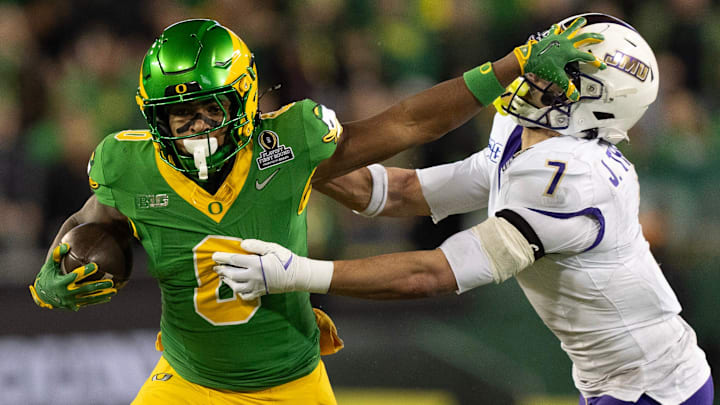
Unfortunately, Tulane and James Madison gave their critics additional ammunition Saturday. Both games got out of hand—although in the final analysis, the Dukes’ 17-point loss to Oregon was closer than Tennessee and SMU got in their first-round losses last year, and the Green Wave’s 31-point loss to Ole Miss was closer than, say, Oklahoma’s 35-point playoff humiliation against LSU six seasons ago.
Blowouts happen in every playoff, at every level, and in every sport. It’s the nature of a seeded tournament in which strong teams get the benefit of home-field advantage against a decided underdog. Wait until we get a 16-team field; first-round routs will increase even as the percentage of G6 playoff entrants decreases.
College football continues to trend toward an NFL Lite construct, and guess what happens in that league? First-round mismatches. The Broncos lost by 24 points to Buffalo last year, and it wasn’t as close as the score indicated. The Chargers lost by 20. The Vikings lost by 18.
Don’t like the champion of the American Athletic Conference getting a bid? In the NFL, the NFC South champion could be 9–8—and it will host a first-round playoff game against a better team that didn’t win its division. I don’t expect a lot of noise in the league about expelling the NFC South from playoff contention.
In fact, fans of those NFC South teams—particularly Tampa Bay and Carolina—have remained interested all season in their .500 squads. They’re still playing for something. The same was true into the latter stages of the season for fans of North Texas, Navy, South Florida, Memphis, East Carolina, Boise State and UNLV at the G6 level. The bids went to Tulane and James Madison, but a bunch of others were in the mix and that energized their fan bases.

Having hundreds of thousands of fans with playoff fever is a good thing for college football as a whole—if only anyone in charge cared about college football as a whole. The TV networks don’t and the power conferences don’t. But when people in Denton, Texas, and Greenville, N.C., and Las Vegas are caught up in the chase, don’t tell me that’s a net negative.
Problem is, the disparity between Haves and Have Nots is only widening.
The Big 12 took in four teams that previously had been in the Group of 6 pool: Cincinnati, Central Florida and Houston left the American, and BYU moved in from the independent ranks. The ACC grabbed SMU from the American. The top end of the G6 is a smaller pool now.
The combination of NIL dollars and transfer fluidity has created a leveling effect at the power-conference level, as Indiana, Vanderbilt and Texas Tech have showed. But those factors have widened the gap between the P4 and the G6, with the latter serving as an involuntary farm system for the former—the G6 develops young talents, then the P4 calls them up when they’re mature and ready to contribute.
It’s tough sledding. But 68 teams deserve a representative in a national playoff. There are plenty of blowouts to go around, not just for a Group of 6 conference champion.
More College Football from Sports Illustrated
Listen to SI’s college sports podcast, Others Receiving Votes, below or on Apple and Spotify. Watch the show on SI’s YouTube channel.
 Add us as a preferred source on Google
Pat Forde is a senior writer for Sports Illustrated who covers college football and college basketball as well as the Olympics and horse racing. He cohosts the Others Receiving Votes podcast for SI and is a regular contributor to the Tony Kornheiser Show podcast. He previously worked for Yahoo Sports, ESPN and The (Louisville) Courier-Journal. Forde has won 28 Associated Press Sports Editors writing contest awards, has been published three times in the Best American Sports Writing book series, and was nominated for the 1990 Pulitzer Prize. A past president of the U.S. Basketball Writers Association and member of the Football Writers Association of America, he lives in Louisville with his wife. They have three children, all of whom were collegiate swimmers.
Follow ByPatForde