%20%20--%3E%0A%3Csvg%20version%3D%221.1%22%20id%3D%22Layer_1%22%20xmlns%3D%22http%3A%2F%2Fwww.w3.org%2F2000%2Fsvg%22%20xmlns%3Axlink%3D%22http%3A%2F%2Fwww.w3.org%2F1999%2Fxlink%22%20x%3D%220px%22%20y%3D%220px%22%0A%09%20width%3D%2239px%22%20height%3D%2240px%22%20viewBox%3D%220%200%2039%2040%22%20enable-background%3D%22new%200%200%2039%2040%22%20xml%3Aspace%3D%22preserve%22%3E%0A%3Cpath%20fill%3D%22%23FFFFFF%22%20d%3D%22M38.5%2C7H28.2v26h10.3V7z%22%2F%3E%0A%3Cpath%20fill-rule%3D%22evenodd%22%20clip-rule%3D%22evenodd%22%20fill%3D%22%23FFFFFF%22%20d%3D%22M26.1%2C25.5c0%2C5.8-4.1%2C7.5-12.9%2C7.5C3.9%2C33%2C0%2C31.2%2C0%2C25.2v-1.1h11.6%0A%09v2.4c0%2C0.7%2C0.1%2C1.4%2C1.2%2C1.4c1%2C0%2C1.2-0.4%2C1.2-1.3v-0.9c0-1.6-0.9-1.6-3.5-2.2C2.2%2C21.7%2C0%2C19.7%2C0%2C15.3v-0.9C0%2C9.3%2C5.5%2C7%2C12.9%2C7%0A%09c10.2%2C0%2C12.8%2C2.6%2C12.8%2C7.4v1.8h-11v-2.9c0-0.6-0.4-1.1-1.2-1.1c-0.6%2C0-1.2%2C0.4-1.2%2C1.1v0.9c0%2C1.5%2C0.9%2C2%2C3.3%2C2.5%0A%09c8%2C1.6%2C10.5%2C3.3%2C10.5%2C7.5V25.5z%22%2F%3E%0A%3C%2Fsvg%3E%0A)
ESPN Floats 20-Team College Football Playoff With Four Play-in Games. Here’s How It Might Look.
In this story:
The upcoming 2026–27 season will conclude with the third-edition of the 12-team College Football Playoff, the first expanded format in the FBS playoff’s history after the sport’s top division shifted away from the BCS in favor of a four-team playoff beginning in 2014–15. And yet, there’s a good chance it is also the final 12-team CFP.
So far, the 12-team event has been positively received ... and yet, it has changed every year and may be on the precipice of expanding once again, if the Big Ten and SEC (and their television partners, ESPN and Fox, respectively) can settle on a new number of teams and a workable format.
That debate has raged on amid the other various changes to the sport being debated between school administrators, athletic directors and members of Congress, even if there doesn’t seem to be widespread appetite for a larger playoff. And yet, further expansion appears to be inevitable at some point in the near future.
The SEC, to this point, has held strong at a 16-team playoff, while the Big Ten is hoping to go all the way to 24 teams, doubling the current field. That proposal, which initially lacked broad support, seems to be gaining momentum, especially after the league dropped its hope for expanded automatic bids for power conferences.
Now, Ross Dellenger of Yahoo Sports reports that ESPN—the network with exlusive rights to the ACC, SEC and, in its current form, the CFP—is floating a compromise between the two numbers: a “16” (but really 20) team field, with the bottom four seeds determined by play-in games.
ESPN - the rights-holder of the playoff - is socializing with CFP leaders a 16-team format with four play-in games for the final four spots into the field (seeds 13-16). There is an expectation that it will be discussed during today’s meeting. https://t.co/QXBUJRY8PL
— Ross Dellenger (@RossDellenger) August 10, 2026
Dellenger added that the format does not have Big Ten support, and if that remains the case, they can’t move forward. The Big Ten and SEC have control over any future playoff formats, and as long as they can’t come to an agreement, the 12-team format will survive.
That might be O.K. with ESPN in the short term, as the network currently has exclusive broadcast rights and would retain them as long as the playoff remains at 14 or fewer teams, though it should be noted that ESPN has contracted out games that go head-to-head with the NFL out to Turner Sports, so it has been open to other networks broadcasting some CFP games. Expansion would open up bidding to the event, with the expectation that Fox and other networks would pursue CFP inventory.
If the Big Ten does wind up coming to the table with this 20-team format, however? Based on the 2025 regular season, here’s how things may have looked.
How the reported 20-team College Football Playoff format, with four play-in games, might have looked in 2025–26
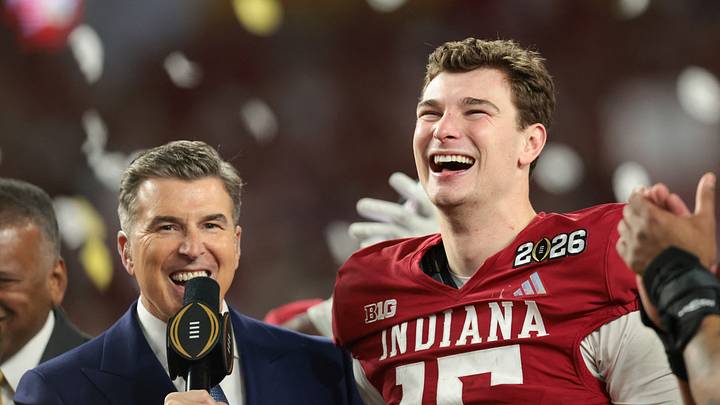
Last season, Indiana ran the table as the No. 1 seed in the 12-team CFP, followed by Ohio State, Georgia and Texas Tech rounding out the top four teams with byes. Because a five-loss Duke team won the ACC championship over Virginia, two of the five highest-ranked conference champions came from the Group of 5: No. 20 Tulane and No. 24 James Madison, who both made the field. Oregon, Ole Miss, Texas A&M, Oklahoma, Alabama and Miami rounded out the field as at-large teams.
This year, the 12-team format has been altered a bit, with the Power 4 conference champions receiving automatic bids, along with the highest-ranked Group of 6 program regardless of their conference championship status. For this exercise, we’ll assume that rule stays the same in a 20-team format, and that the highest-ranked G6 program would not be granted an automatic bid into the 16-team first-round.
An expansion to four full rounds of CFP play along with play-in games would likely necessitate the elimination of the conference championship games to make the calendar work, given the sport’s desire to finish the postseason earlier than last season’s Jan. 19 national title game (or the 2027 CFP title game, scheduled for Monday, Jan. 25.
Using last season’s post-Week 14 CFP rankings, before Indiana’s Big Ten championship win over Ohio State, here is how a 20-team field would have been seeded a year ago at the end of the regular season. This format also assumes that the play-in winners would not be re-seeded ahead of the round of 16.

Play-in round
- No. 13 Texas (9–3) vs. No. 20 Tulane (10–2, top-ranked Group of 6)
- No. 14 Vanderbilt (10–2) vs. No. 19 Michigan (9–3)
- No. 15 Utah (10–2) vs. No. 18 Arizona (9–3)
- No. 16 USC (9–3) vs. No. 17 Virginia (10–2)
First round
- No. 1 Ohio State (12–0) vs. No. 16 USC/Virginia
- No. 2 Indiana (12–0) vs. No. 15 Utah/Arizona
- No. 3 Georgia (11–1) vs. No. 14 Vanderbilt/Michigan
- No. 4 Texas Tech (11–1) vs. No. 13 Texas/Tulane
- No. 5 Oregon (11–1) vs. No. 12 Miami (10–2)
- No. 6 Ole Miss (11–1) vs. No. 11 BYU (11–1)
- No. 7 Texas A&M (11–1) vs. No. 10 Notre Dame (10–2)
- No. 8 Oklahoma (10–2) vs. No. 9 Alabama (10–2)
In this format, we certainly get some interesting matchups, including an all-Big 12 affair in the play-in between Utah and Arizona (the two teams did not face off in the regular season). Oklahoma and Alabama is the only real-life 2025–26 CFP matchup that would have been protected, though Alabama would not have faced buzzsaw Indiana, but instead Ohio State, assuming they advanced to the second round.
The chance to see Diego Pavia against Georgia would have been a blast. Texas Tech vs. Texas in the round of 16 would have been electric for obvious reasons. Oregon vs. Miami might be the best first-round matchup on the board, especially with how the Hurricanes were playing at the end of the year. And Texas A&M vs. Notre Dame—one of the best games of the regular season—would’ve had a first-round rematch.
This format would have been particularly strong last year. In other’s, it would be stocked with teams that don’t belong, and even last year, it would’ve been hard to argue with USC, Virginia, Arizona and Michigan as teams with a realistic chance at a national title at minimum. And of course even with expansion, the CFP likely won’t do anything to expand access for Group of 6 programs, as evidenced by this year’s rule-change that would have blocked James Madison from competing.
That much will almost certainly be the case, even if the Big Ten gets its way and the CFP ultimately doubles to 24 teams.
Listen to SI’s college sports podcast, Others Receiving Votes, below or on Apple and Spotify. Watch the show on SI’s College YouTube channel.
 Add us as a preferred source on Google
Dan Lyons is a staff writer and editor on Sports Illustrated's Breaking and Trending News team. He joined SI for his second stint in November 2024 after a stint as a senior college football writer at Athlon Sports, and a previous run with SI spanning multiple years as a writer and editor. Outside of sports, you can find Dan at an indie concert venue or movie theater.