%20%20--%3E%0A%3Csvg%20version%3D%221.1%22%20id%3D%22Layer_1%22%20xmlns%3D%22http%3A%2F%2Fwww.w3.org%2F2000%2Fsvg%22%20xmlns%3Axlink%3D%22http%3A%2F%2Fwww.w3.org%2F1999%2Fxlink%22%20x%3D%220px%22%20y%3D%220px%22%0A%09%20width%3D%2239px%22%20height%3D%2240px%22%20viewBox%3D%220%200%2039%2040%22%20enable-background%3D%22new%200%200%2039%2040%22%20xml%3Aspace%3D%22preserve%22%3E%0A%3Cpath%20fill%3D%22%23FFFFFF%22%20d%3D%22M38.5%2C7H28.2v26h10.3V7z%22%2F%3E%0A%3Cpath%20fill-rule%3D%22evenodd%22%20clip-rule%3D%22evenodd%22%20fill%3D%22%23FFFFFF%22%20d%3D%22M26.1%2C25.5c0%2C5.8-4.1%2C7.5-12.9%2C7.5C3.9%2C33%2C0%2C31.2%2C0%2C25.2v-1.1h11.6%0A%09v2.4c0%2C0.7%2C0.1%2C1.4%2C1.2%2C1.4c1%2C0%2C1.2-0.4%2C1.2-1.3v-0.9c0-1.6-0.9-1.6-3.5-2.2C2.2%2C21.7%2C0%2C19.7%2C0%2C15.3v-0.9C0%2C9.3%2C5.5%2C7%2C12.9%2C7%0A%09c10.2%2C0%2C12.8%2C2.6%2C12.8%2C7.4v1.8h-11v-2.9c0-0.6-0.4-1.1-1.2-1.1c-0.6%2C0-1.2%2C0.4-1.2%2C1.1v0.9c0%2C1.5%2C0.9%2C2%2C3.3%2C2.5%0A%09c8%2C1.6%2C10.5%2C3.3%2C10.5%2C7.5V25.5z%22%2F%3E%0A%3C%2Fsvg%3E%0A)
Iowa’s 2022 Tampering Case Resolution Proves NCAA’s Infractions Process Is Broken
In this story:
Here is a quaint NCAA crime-and-punishment story:
Cade McNamara was going to transfer from Michigan in 2022. He’d lost the starting quarterback job to J.J. McCarthy that fall and then was sidelined by injury. While rehabbing his injury at home in California that fall, he started weighing his options. He opted not to immediately put his name in the transfer portal out of deference to the Wolverines’ ongoing undefeated season.
In November 2022, McNamara had a series of phone conversations with Iowa assistant coach Jon Budmayr. That eventually led to a call with Hawkeyes head coach Kirk Ferentz. Because McNamara was not in the portal, Iowa violated NCAA tampering rules by having those conversations.
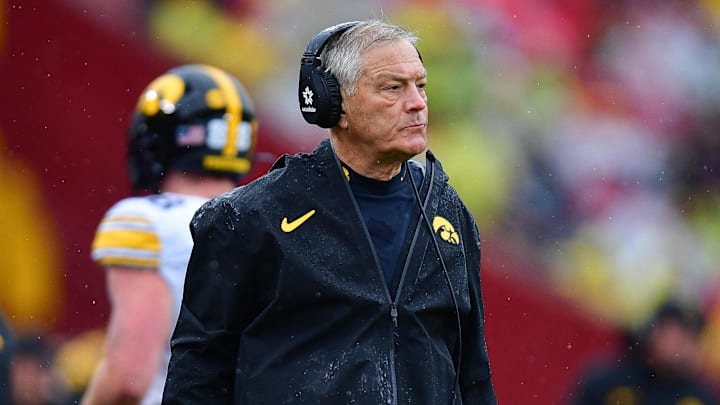
By August 2024, the Hawkeyes publicly owned up to it. Ferentz, the antithesis of an NCAA scofflaw, acknowledged at a news conference that he violated the rules. “There is a line, and I crossed that line,” Ferentz said. “I made a bad error in judgment and I’m just going to take ownership.”
He and Budmayr took one-game suspensions to start that season, and Iowa somehow overcame that to beat Illinois State 40–0. That’s pretty much the last anyone thought about the situation, but the case meandered on behind the scenes. At issue was the NCAA’s intent to vacate four Iowa victories in which McNamara played while technically ineligible in the 2023 season. The school pushed back vigorously—illustrating once again that the vacation of records seems meaningless until it’s your school that’s involved.
That’s when the outrage becomes real. And that’s when infractions cases become interminable.
With no agreement on penalties, the extremely deliberate NCAA infractions process ran its course—a Notice of Allegations, various filings by the school and NCAA Enforcement, and finally a Committee on Infractions hearing in March. Finally, on Tuesday, the COI ruling came down: Iowa must vacate the four wins. Ferentz’s Big Ten–record victory total drops from 213 to 209.
In a vacuum, the ruling is not terribly controversial and the sanctions are not terribly costly. But in the context of the modern college sports landscape, this is like settling the Bird vs. Magic debate 40 years later. With college sports awash in tampering and essentially powerless to contain it, this case feels antiquated.
“The fact that this one tampering case took four years shows just how much the process and rules need to change,” one college sports administrator tells Sports Illustrated. “This school managed to run out the clock for years over not wanting to vacate some games. It doesn’t have to be this way and there is a group working on making changes, but we will have to see if they go far enough.”
As with everything else in college sports, the infractions process is under review. And the Iowa case, while hardly the stuff of Connor Stalions and Jeremy Pruitt and fake classes at North Carolina, has subtly influenced the rhetoric surrounding the review.
It’s probably not coincidental that Big Ten commissioner Tony Petitti sent a letter to NCAA president Charlie Baker on March 11 pertaining to the investigation of tampering allegations. The Iowa COI hearing was nine days earlier.
Petitti wrote: “I am writing on behalf of the Big Ten membership to insist that the NCAA immediately impose a moratorium on all pending and prospective impermissible contact and tampering investigations, enforcement actions, and infractions proceedings … until the NCAA membership can comprehensively reevaluate these rules. The collegiate landscape has changed so fundamentally since these rules were adopted that the current framework cannot be credibly or equitably enforced against the backdrop of a collegiate marketplace that the rules’ drafters could not have anticipated, and continuing to apply rules designed for a world that no longer exists risks undermines the Association’s credibility and the membership’s confidence in the infractions process.”
Also worth noting this from an April 1 NCAA release: “At the direction of the Division I Board of Directors, an Infractions Process Task Force is reviewing the infractions process and associated penalties for violations of NCAA rules. Among the topics the task force will discuss are enforcement of transfer rules and penalties associated with tampering violations. The task force is expected to provide recommendations for modernizing the infractions process later this year.”
Reading between the lines: The Iowa ruling was coming, and nobody was going to be satisfied with it.
While it is convenient (and sometimes accurate) to portray the NCAA as the foot-dragging entity in slow-moving infractions cases, the accused rule breakers are just as likely to be the culprit. Coaches lawyer up, and lawyers slow down the process. Schools push back on charges. Deadlines for filing submissions are not met. Extensions are requested and often granted.
Everyone wants an expedited infractions process until they’re the school being charged. That’s how a 2022 violation becomes a ’26 ruling. From the timeline laid out in the COI ruling:
A news story published on Oct. 21, 2023, quoted McNamara talking about his transfer to Iowa and inadvertently implicating the Hawkeyes coaches. That triggered a notice of inquiry. From there, according to the ruling, it took until April 9, 2025, before Iowa and NCAA Enforcement submitted a negotiated resolution to the COI.
That nearly 18-month period is where the sausage is made—not just an enforcement investigation, but the process of all parties agreeing upon the facts of the case and negotiating penalties. Or, in this situation, disagreeing on the penalties.
In May 2025, a COI hearing panel reviewed the negotiated resolution and sent it back, arguing that the resolution lacked tangible penalty—sending a “message that tampering carries little risk.” NCAA Enforcement and Iowa were given a deadline to respond, and they asked for a three-week extension.
In late June, Iowa responded, arguing against vacating the wins. In early July, the enforcement staff responded, stating “that the [vacating records] penalty was appropriate to address the violations in this case, but it agreed to submit [a negotiated resolution] without the penalty in an effort to promote the NR process.”
In July, the COI rejected the negotiated resolution, setting the stage for a hearing and tacking an additional nine months onto the process. That’s how we got here.
The NCAA has a long way to go to figure out tampering—either getting its arms around it from an enforcement process or raising its hands behind its head, surrender cobra style. This Iowa case, a throwback to a simpler time, simply serves to reinforce the need to continue modernizing the entire infractions process.
More College Football From Sports Illustrated
Listen to SI’s college sports podcast, Others Receiving Votes, below or on Apple and Spotify. Watch the show on SI’s College YouTube channel.
 Add us as a preferred source on Google
Pat Forde is a senior writer for Sports Illustrated who covers college football and college basketball as well as the Olympics and horse racing. He cohosts the Others Receiving Votes podcast for SI and is a regular contributor to the Tony Kornheiser Show podcast. He previously worked for Yahoo Sports, ESPN and The (Louisville) Courier-Journal. Forde has won 28 Associated Press Sports Editors writing contest awards, has been published three times in the Best American Sports Writing book series, and was nominated for the 1990 Pulitzer Prize. A past president of the U.S. Basketball Writers Association and member of the Football Writers Association of America, he lives in Louisville with his wife. They have three children, all of whom were collegiate swimmers.
Follow ByPatForde