%20%20--%3E%0A%3Csvg%20version%3D%221.1%22%20id%3D%22Layer_1%22%20xmlns%3D%22http%3A%2F%2Fwww.w3.org%2F2000%2Fsvg%22%20xmlns%3Axlink%3D%22http%3A%2F%2Fwww.w3.org%2F1999%2Fxlink%22%20x%3D%220px%22%20y%3D%220px%22%0A%09%20width%3D%2239px%22%20height%3D%2240px%22%20viewBox%3D%220%200%2039%2040%22%20enable-background%3D%22new%200%200%2039%2040%22%20xml%3Aspace%3D%22preserve%22%3E%0A%3Cpath%20fill%3D%22%23FFFFFF%22%20d%3D%22M38.5%2C7H28.2v26h10.3V7z%22%2F%3E%0A%3Cpath%20fill-rule%3D%22evenodd%22%20clip-rule%3D%22evenodd%22%20fill%3D%22%23FFFFFF%22%20d%3D%22M26.1%2C25.5c0%2C5.8-4.1%2C7.5-12.9%2C7.5C3.9%2C33%2C0%2C31.2%2C0%2C25.2v-1.1h11.6%0A%09v2.4c0%2C0.7%2C0.1%2C1.4%2C1.2%2C1.4c1%2C0%2C1.2-0.4%2C1.2-1.3v-0.9c0-1.6-0.9-1.6-3.5-2.2C2.2%2C21.7%2C0%2C19.7%2C0%2C15.3v-0.9C0%2C9.3%2C5.5%2C7%2C12.9%2C7%0A%09c10.2%2C0%2C12.8%2C2.6%2C12.8%2C7.4v1.8h-11v-2.9c0-0.6-0.4-1.1-1.2-1.1c-0.6%2C0-1.2%2C0.4-1.2%2C1.1v0.9c0%2C1.5%2C0.9%2C2%2C3.3%2C2.5%0A%09c8%2C1.6%2C10.5%2C3.3%2C10.5%2C7.5V25.5z%22%2F%3E%0A%3C%2Fsvg%3E%0A)
Ole Miss and Trinidad Chambliss Prove the NCAA Can’t Wait for Congress Anymore
In this story:
Let the official records show that Mississippi’s first football victory of the 2026 season came not against Louisville in Nashville this September, but actually occurred in tiny Pittsboro, Miss., on Thursday.
It was all part of a home game that was witnessed by very few in person at a courthouse in remote Calhoun County, but was still celebrated just as much as any gridiron victory would be for a school which has no shortage of outlets to do so every fall.
Upon the clock expiring and the gavel hitting wood, the scoreline went as expected: Trinidad Chambliss and Mississippi 1, NCAA 0.
“This court is of the opinion that the NCAA fell short of its mission to foster the well-being and development of Trinidad Chambliss … and acted in bad faith,” Judge Robert Whitwell said in reading his opinion. “If not for his school’s intervention, Trinidad would be permanently and irrevocably deprived of the college football labor market and the culmination of a stellar college career in the 2026 football season.”
If you were one of the upwards of 30,000 fans watching a livestream of the proceedings—Vaught-Hemingway Stadium seats just more than double that—you probably let out a few choice words in celebration even beyond the typical “Hotty Toddy” that those in red and blue so often shout.
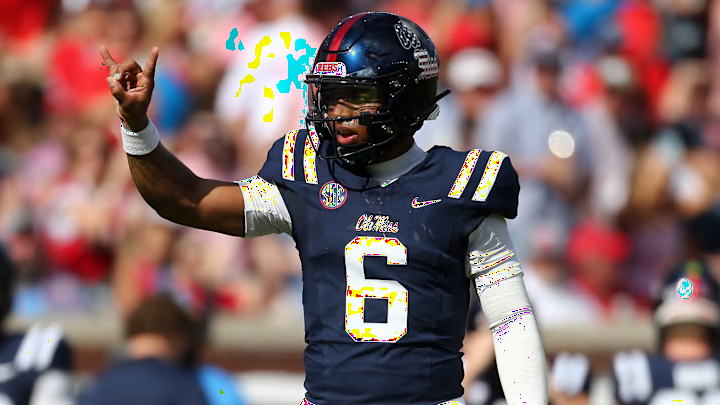
It’s a great thing for the program that Chambliss can play this coming year. He led the team to the College Football Playoff semifinals nearly single-handedly last season and would naturally be key to the program contending for a postseason berth again in 2026 with a schedule that features three tricky opponents in the first month.
Chambliss, who has been appearing in national TV commercials, has a chance to be an even bigger star as one of the faces of the sport this season. Originally set to be the team’s backup quarterback in 2025 thanks to some savvy recruiting out of the transfer portal by Lane Kiffin and staff, the former Division II starter became much more than just a guy thrust into unexpected playing time. He was a poster boy for being a dynamic dual threat who could win games and had the benefit of being a story that bordered on a Disney movie.
You can understand why the Rebels’ coaching staff and administration wanted that story to keep being written in Oxford, Miss., for another year.
In contrast to what SEC rival Alabama did to address roster shortcomings by going around clearly defined NCAA rules in its Charles Bediako eligibility case, Chambliss and the school decided to attack the opaque medical hardship waiver that has so often drawn ire over how nothing is straightforward in such a long and meticulous process.
The quarterback sought the waiver for the 2022 season when he was at Ferris State and dealing with respiratory issues that eventually required a tonsillectomy. The Bulldogs football coach, Tony Annese, told Chambliss that he was going to redshirt as a result of his slow-moving recovery. The court heard plenty of detailed evidence about the state of his tonsils at the time and the impact they had on him doing even daily things.
The NCAA initially denied the waiver, continually citing a lack of documentation; Whitwell seemed fairly convinced the NCAA erred in both its process and conclusion in denying Chambliss a waiver and doing the same to his appeal.
“This decision in a state court illustrates the impossible situation created by differing court decisions that serve to undermine rules agreed to by the same NCAA members who later challenge them in court,” the NCAA said in a statement Thursday night. “We will continue to defend the NCAA’s eligibility rules against repeated attempts to rob future generations of the opportunity to compete in college and experience the life-changing opportunities only college sports can create. The NCAA and its member schools are making changes to deliver more benefits to student-athletes, but the patchwork of state laws and inconsistent, conflicting court decisions make partnering with Congress essential to provide stability for current and future college athletes.”
While most could have predicted this result from Ole Miss pursuing the case in a favorable venue with a judge who is an alum of the Rebels’ law school, the stinging rebuke to the NCAA process should serve as yet another reminder that NCAA president Charlie Baker—along with the school presidents and conference commissioners he serves alongside in navigating such choppy waters—can’t keep relying on help from Congress right now.
They’ve all been begging for help for years, spending millions of dollars on lobbyists and making dozens of trips to Capitol Hill to meet with representatives who may listen and seem sympathetic in the moment, but have paid lip service to actually passing meaningful legislation that allows the NCAA to enforce its rules around things like eligibility.
It’s time to stop holding out hope that the white knight in this situation will be Congress, instead of doing something different from the current strategy that is suffering a thousand court-inflicted cuts. A nice bill which leads to an antitrust exemption—most administrators’ stated goal—should instead be a bonus if you can get it. It can’t be a hopeful set of crutches you lean on as the NCAA wobbles forward in this new era of player empowerment.
It might be time to attempt to collectively bargain instead of just hearing athletic directors bang the drum in support because they know massive change is needed. See if the power conferences actually want to step up and start enacting rules that impact and police their fiefdoms. Maybe those calls to NFL commissioner Roger Goodell and the NBA’s Adam Silver can include a petition to take pity on the NCAA along with a plea for them to step in to save their biggest avenue for free talent development.
Whatever it is, and there are plenty of roads to take, it has to be better than what is currently transpiring.
Case in point came Thursday after Whitwell adjourned the court and Chambliss used the free time to sign a football.
Trinidad Chambliss is signing a football in the courtroom during the current break. pic.twitter.com/9bkCcdUpOJ
— Michael Katz (@MichaelLKatz) February 12, 2026
In 2026, it somehow seems normal to spend hours on a February day watching a player put his NIL to use by signing a ball in court before watching a livestream of a judge eventually declaring the QB can play the following fall.
That’s not what college sports is supposed to be, but it is what much of it seems to be nowadays. As the NCAA attorneys scurried up to Tennessee to deal with another eligibility case this week involving Volunteers quarterback Joey Aguilar and his bid to play a fourth season of Division I football without his junior college seasons counting, perhaps that point will get hammered home as we go around and around on a hamster wheel that offers few positives in the long term.
More College Football from Sports Illustrated
Listen to SI’s college sports podcast, Others Receiving Votes, below or on Apple and Spotify. Watch the show on SI’s YouTube channel.
 Add us as a preferred source on Google
Bryan Fischer is a staff writer at Sports Illustrated covering college sports. He joined the SI staff in October 2024 after spending nearly two decades at outlets such as FOX Sports, NBC Sports and CBS Sports. A member of the Football Writers Association of America’s All-America Selection Committee and a Heisman Trophy voter, Fischer has received awards for investigative journalism from the Associated Press Sports Editors and FWAA. He has a bachelor’s in communication from USC.
Follow bryandfischer