%20%20--%3E%0A%3Csvg%20version%3D%221.1%22%20id%3D%22Layer_1%22%20xmlns%3D%22http%3A%2F%2Fwww.w3.org%2F2000%2Fsvg%22%20xmlns%3Axlink%3D%22http%3A%2F%2Fwww.w3.org%2F1999%2Fxlink%22%20x%3D%220px%22%20y%3D%220px%22%0A%09%20width%3D%2239px%22%20height%3D%2240px%22%20viewBox%3D%220%200%2039%2040%22%20enable-background%3D%22new%200%200%2039%2040%22%20xml%3Aspace%3D%22preserve%22%3E%0A%3Cpath%20fill%3D%22%23FFFFFF%22%20d%3D%22M38.5%2C7H28.2v26h10.3V7z%22%2F%3E%0A%3Cpath%20fill-rule%3D%22evenodd%22%20clip-rule%3D%22evenodd%22%20fill%3D%22%23FFFFFF%22%20d%3D%22M26.1%2C25.5c0%2C5.8-4.1%2C7.5-12.9%2C7.5C3.9%2C33%2C0%2C31.2%2C0%2C25.2v-1.1h11.6%0A%09v2.4c0%2C0.7%2C0.1%2C1.4%2C1.2%2C1.4c1%2C0%2C1.2-0.4%2C1.2-1.3v-0.9c0-1.6-0.9-1.6-3.5-2.2C2.2%2C21.7%2C0%2C19.7%2C0%2C15.3v-0.9C0%2C9.3%2C5.5%2C7%2C12.9%2C7%0A%09c10.2%2C0%2C12.8%2C2.6%2C12.8%2C7.4v1.8h-11v-2.9c0-0.6-0.4-1.1-1.2-1.1c-0.6%2C0-1.2%2C0.4-1.2%2C1.1v0.9c0%2C1.5%2C0.9%2C2%2C3.3%2C2.5%0A%09c8%2C1.6%2C10.5%2C3.3%2C10.5%2C7.5V25.5z%22%2F%3E%0A%3C%2Fsvg%3E%0A)
Ranking the 15 Most Hostile Games in College Football History
The football conditions in Baton Rouge on Nov. 8, 2008, were just about perfect—sunshine, temperatures in the mid-70s, with a nice breeze coming off of the Mississippi River. And yet, the 93,000-plus Tigers fans packed into Death Valley growled like it was a humid August day, blood boiling in anticipation for their first home date with former LSU coach Nick Saban, now the head man at hated rival Alabama.
“LSU is known for the excellence of its football teams and the passion of its fans. For the past couple of years, that passion, that anger, has been focused on one man—Nick Saban—almost to the exclusion of any other,” said legendary CBS play-by-play man Verne Lundquist in the opening of the network’s 3:30 p.m. ET broadcast.
“There’s a psychological theory that anger is fueled by fear. If that is true, LSU fanatic fans have had their worst fears realized. Nick Saban is back as the coach of a dreaded rival, and Nick Saban is here coaching the top-ranked team in the country.”
“You can taste it, can’t you?” analyst Gary Danielson quipped moments later.

Whether or not you could taste it, you could absolutely hear it, the thunderous boos in Saban’s direction as he led the Crimson Tide onto the field, where just five years earlier he led a national championship-winning program … and four, he left for a quick dip in the NFL waters before returning to another SEC powerhouse in need of a jolt.
It was also fewer than two years after Saban apologized for his use of a derogatory term for Cajun people in recounting a story he said he was told by a friend, about an angry LSU fan’s reaction to his decision to take the Alabama job. That wound was still fresh, made clear by Wright Thompson’s ESPN story about a group of Tigers fans preparing for that weekend’s epic showdown, who called him “Tricky Nick,” “Satan” and “Judas” in the piece. Others went with “turncoat,” “carpetbagger” and “crawdad,” a perfectly Cajun slang term for someone who backs out of or reneges on a promise, to local journalist Glenn Guilbeau after Saban denied his pursuit of the Alabama job.
The night before the game, LSU fans burned Saban in effigy. Saban called it “one of the most difficult homecomings in the history of ball” in July 2026. Fans packed Tiger Stadium hours early to lambast Saban as he walked onto the field well ahead of kickoff. And, as was so often the case during his untouchable run with the Crimson Tide, his team answered.
“The one thing that I think that people underestimate, is when your players and they understand the challenge, they look at it as a challenge. And sometimes the home team thinks, This is going to be an advantage for us, and it really isn’t. And we won that game in overtime thanks to the great competitive disposition that our team took into that game.”
Alabama won an overtime thriller 27–21, after Tide safety Rashad Johnson intercepted LSU’s Jarrett Lee to open the extra frame. A long John Parker Wilson pass to Julio Jones put the Alabama offense on the Tigers’ 2-yard line. Wilson punched in the game-winning touchdown with a quarterback sneak two plays later.

This week, the shoe is on the other foot. Last December, LSU poached Lane Kiffin—a former Alabama assistant under Saban—from another rival, Ole Miss. And where Saban had a stop in between Baton Rouge and Tuscaloosa, Kiffin left the Rebels on the cusp of a College Football Playoff run. In 2008, the Tigers were coming off of a national title under Saban replacement Les Miles, but would face the Tide a week after they reached No. 1 in the AP poll for the first time under their new coach. A year later, he delivered his first of six national titles—truly those worst fears prophesied by Lundquist on that November afternoon.
And now just three weeks into his first season at LSU, Kiffin returns to Oxford, Miss., with his team at No. 7 in the AP Top 25, exactly one spot ahead of the Ole Miss squad he left behind. Saban, at least, played his first game against LSU at home in 2007. Both teams have star-studded rosters (largely built by Kiffin) and legitimate CFP aspirations. Both are 2–0. And if Tigers fans felt jilted back in 2008, imagine how Ole Miss fans feel in 2026. The Rebels didn’t win a national title under Kiffin; LSU had two recent championships under their belts in 2008. Ole Miss has never been a program the level of Alabama or LSU, which finally realized its full potential under Saban. The Rebels were still climbing toward the sport’s mountaintop when its coach left, and now hope former defensive coordinator Pete Golding can finish the job.
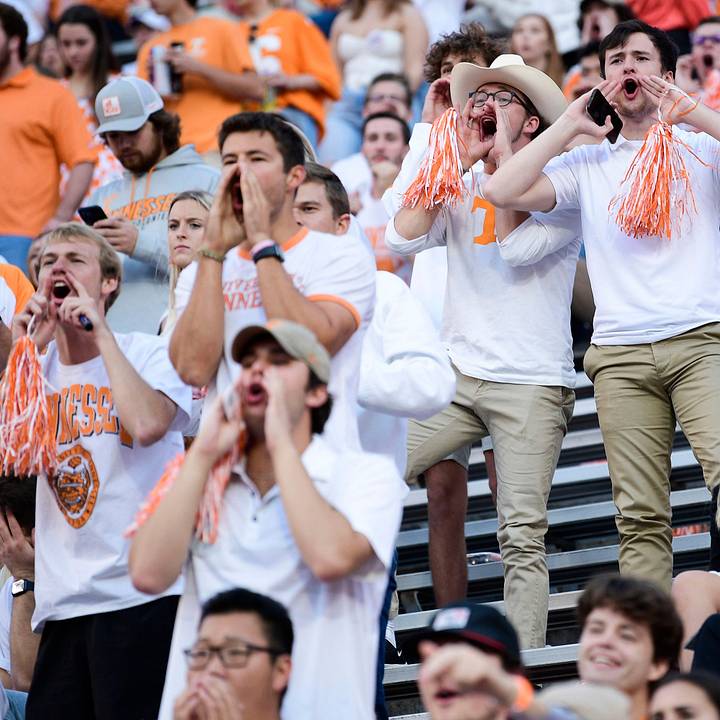
On Saturday, Oxford promises to be about as hostile as we’ve seen in the sport, and college football is no stranger to the sentiment, especially in the South where it is as much religion as recreation.
In anticipation of perhaps the most hyped game in Ole Miss history, let’s revisit the most hostile environments in the sport’s history. —Dan Lyons
15. Colorado State at Wyoming, 1899
Geography is responsible for many of the great rivalries in college football. That is certainly the case for the Border War between Colorado State and Wyoming, considered the oldest rivalry west of the Mississippi River. The two schools met for the first time in 1899 in Laramie, Wyo., the first road game of any kind for what was then Colorado Agricultural College. It took just one game to cement one of college football’s most historic rivalries, one now being contested in its third century.
The Fort Collins Express described the scene as “very loud and unruly,” according to Colorado State athletics historian John Hirn. At the time, each school would bring an official to the game, and Colorado Agriculture professor Edward House did so for the 1899 game, beginning as its referee, but was so harangued by the crowd that he opted to switch places with his home Wyoming counterpart E.D. McArthur. That decision came to a head in the game’s final moments, when House and McArthur disagreed on a penalty that would have awarded the CAC Aggies the ball. When McArthur disagreed and the Cowboys opted against giving the ball to their opponents, House called the game a Wyoming forfeit, while McArthur allowed the Cowboys to score a go-ahead touchdown.
Hirn describes “a bit of a riot” breaking out onto the field, during which the Aggies’ quarterback was hit on the head by a fan’s cane.
CAC initially pledged against facing Wyoming in any sporting event unless the school apologized for the incident, but sure enough the two sides played in 1900 and 36 more times before the game became a permanent fixture on the schedule in 1946. The series continued in 2026, a Colorado State win, even after the Rams moved to the Pac-12 while the Cowboys remain in the Mountain West conference. —D.L.
14. Mississippi State at Mississippi, 2018
The Egg Bowl has had its fair share of unsavory moments over the years, seeing as it’s one of the longest uninterrupted rivalries in the sport. It’s also fitting that one of its fiercest moments came in a blowout with a full quarter left to go.
Mississippi State galloped out to a 28–3 lead on the road in Oxford, and the crowd in Vaught-Hemingway Stadium was both dissipating and getting antsy. That’s when freshman quarterback Matt Corral connected with A.J. Brown, seemingly before time expired in the third quarter, for a touchdown. But Brown and Mississippi State defensive back Johnathan Abram both refused to let go of the football and frustrations boiled over. The pair exchanged punches, then Corral ran into the fray and had his helmet ripped off and the sidelines emptied. Then, at long last the Ole Miss–heavy crowd got back into the game, letting its displeasure be known.
It took several minutes and some haranguing to get the teams back to their respective sidelines. Every single player received an unsportsmanlike penalty for their roles in the brawl, even if the infraction was as miniscule as stepping an inch off the bench. Four players were ejected. And the best part? It was all for nothing. The clock hit zero before Ole Miss had snapped the ball, meaning the touchdown came off the board. Mississippi State rolled to a 35–3 victory and the Bulldogs were particularly thrilled to take the Egg Bowl trophy before the final seconds ticked off the clock, bringing it out to the Ole Miss logo to celebrate postgame.
The bad blood carried over into the next year when Ole Miss receiver Elijah Moore mimicked a dog urinating after scoring a touchdown with four seconds left. He earned an unsportsmanlike penalty that pushed back the extra point, which the Rebels would miss, resulting in the program’s second straight Egg Bowl loss. —Zach Koons
13. Texas at Ohio State, 2005

The first-ever meeting in football between Texas and Ohio State in 2005 was not only a battle of two top-five-ranked teams, but it was also a home game for the Buckeyes. Needless to say, the fans and the university were charged up.
To hear former Texas coach Mack Brown and quarterback Vince Young reminisce about the scene of the Longhorns’ hard-fought victory is to see the image of a riot or uprising being painted. Brown recalled the Buckeyes’ marching band heckling Texas during a walkthrough practice the day before the game. That was merely a precursor.
Young remembers Ohio State fans throwing things at the Texas team bus as it made its way to Ohio Stadium, and then fans hurling bottle tops at the Longhorns as they made their way out onto the field.
The hostility even seemed to spill into the stands themselves, as an Ohio State spokeswoman told The Lantern that the university received letters from both fans of the Longhorns and Buckeyes fans complaining about some Ohio State fans’ actions, which included bottle throwing and threats of violence.
Fortunately, nothing physical seemed to come of these incidents, though it does open a window into the emotions of the high-stakes game. The Longhorns trailed for nearly two quarters before Young led a 67-yard touchdown drive to take the lead for good with under five minutes to go in the fourth quarter. —Tim Capurso
12. Ohio State at Michigan, 1971
When former longtime Ohio State football coach Woody Hayes got angry, no one was safe, least of all the equipment on the field. During a Nov. 21, 1971, iteration of the always heated Ohio State–Michigan rivalry, it was hazardous to be a down marker on the field, especially late in the fourth quarter with the Buckeyes trailing and Hayes incensed about what he felt was a missed defensive pass interference call on a play in which his quarterback, Don Lamka, was intercepted by the Wolverines defense.
First, Hayes stormed onto the field and got into the face of the referee, arguing for so long that he was flagged for a 15-yard penalty and his players had to drag the national championship–winning coach back to the sideline, to the glee of the fans in Ann Arbor.

Like a baseball manager getting his money’s worth, Hayes wasn’t done. The Buckeyes coach ripped up a down marker and then grabbed another, tossing it onto the turf as the Michigan crowd jeered and booed.
Michigan eventually ran out the clock after the officials restored order, and Wolverines fans poured onto the field in celebration. Hayes would go on to write to Michigan and offer to pay for the down markers. —T.C.
11. Ohio State at Michigan, 1973

In a moment that foreshadowed future shenanigans between these two bitter rivals, the Buckeyes turned the temperature up on a battle of undefeated squads with a trip to the Rose Bowl on the line. As they ran out of the tunnel at Michigan Stadium, Ohio State ran right through and tore down the Wolverines’ iconic “Go Blue” sign, which was being held up by team boosters.
Wolverines fans jeered and Michigan announcer Bob Ufer skewered the Buckeyes on the broadcast. Then a hard-fought football game broke out in which the two rivals played to a 10–10 tie for the Big Ten Conference title, leading to an eventual vote from the league’s directors, who opted to side with the eventual national champion Buckeyes, to the chagrin of Wolverines coach Bo Schembechler.
And the banner incident? There was a sequel in 1977, when Buckeyes players attempted to again tear down the banner but were met with physical force from a Michigan delegation that included former Wolverines players from that 1973 team. —T.C.
10. Texas at Texas Tech, 2008
There’s never been any love lost in the Battle for the Chancellor’s Spurs, but the 2008 edition of the in-state rivalry was particularly meaningful—and thus, particularly spiteful—for both sides. Texas trooped into Lubbock as the No. 1 team in the country, while Texas Tech ranked No. 6, the latter’s best mark since the 1976 season. That also brought College GameDay to town for
the first time, and Lubbock rose to the occasion to greet them.
Texas Tech students camped outside of “The Jones” (now Galaxy Stadium) for days to try and get tickets and when Texas arrived, the Red Raider faithful were ready. Texas coach Mack Brown recalled fans, including a business professor, “screaming at you, yelling and throwing frozen tortillas.”
That crowd momentum didn’t slow down after kickoff and a back-and-forth contest unfolded with Texas Tech getting the ball back, down 33–32 with 1:29 remaining. Quarterback Graham Harrell powered the Red Raiders down the field, getting to the 28-yard line with eight seconds left for a potential game-winning field goal. But Tech, still with one timeout, had time for one last play and took a chance with Harrell flinging the ball to the sideline where junior receiver Michael Crabtree hauled in the catch, shook off a defender and scrambled into the end zone for the game-winning touchdown. If there was a roof on top of The Jones, it would have exploded.
Except there was one issue: There was one second left on the clock.
The field was cleared, security lowered the goalposts and the play still needed to be reviewed. Once it was confirmed—you guessed it—the fans rushed their way back on the field, meaning security had to do its job all over again.
Tech was penalized heavily for the field storms and had to kick off from its own 7-yard line. Fans were pushed back off the field, but not all the way to their seats as they were just too unruly by that point. Everyone waited one last final second for the clock to hit triple zeros, at which point the crowd rushed the field all over again. Leave it to the indomitable Brent Musburger to nail the scene: “No more penalties for this crowd.” —Z.K.

9. Oklahoma at Ohio State, 2017
When they locked horns for a home-and-home series in the mid-2010s, the Buckeyes and Oklahoma had not played each other in football since 1983. The 2016 game was no contest: Ohio State, riding an astounding four-touchdown performance from wide receiver Noah Brown, demolished the Sooners 45–24 in Norman, Okla. The game turned out to have seismic CFP stakes: It gave a trump card (and berth) to a Buckeyes team that didn’t win their division, while Oklahoma couldn’t neutralize it with an undefeated romp through the Big 12.
The 2017 season was a different story. In Columbus, the two teams fought to a 3–3 halftime draw before the Sooners pulled away to a 31–16 victory behind quarterback Baker Mayfield’s trio of second-half touchdown passes. Sealing his Oklahoma legend forever, Mayfield punctuated the victory by seizing a large Sooners flag and driving it into the Ohio Stadium turf. The incident popularized that specific victory gesture, which would rear its head in Columbus again seven years later … —Patrick Andres

8. Texas vs. Texas A&M, 2011 and ’24
Realignment has deprived us of a number of hate-filled rivalries over the years, but the loss of Texas and Texas A&M for a 13-year stint was one of the biggest. A&M, ahead of the curve, fled for the revenue in the SEC and no one handled it well: not Texas, not A&M, not state legislators and certainly not the fans.
What unfolded over the next decade-plus was constant bickering over scheduling, who said what when and general angst. Through various coaching and athletic director regimes, there was always some whisper of one side trying to get the rivalry back on the books, only for someone on the other side to blast them in the press or on social media. The best one-liner of the bickering came from Texas A&M chancellor John Sharp upon hearing the news that Texas would start selling beer and wine at its stadium. “Our athletic program has not reached the point where we require the numbing effects of alcohol,” Sharp said at the time in 2015.
Texas eventually shook the college football world in the next wave of realignment by announcing a move to the SEC, even though A&M AD Ross Bjork made clear he wanted his program to be the only school from the state in the league. That set the stage for a renewed rivalry in 2024 and after 13 years without a game, the crowd that arrived for that Saturday night matchup at Kyle Field had the juice.
The Longhorns would win that matchup in a slugfest and get the better of the undefeated Aggies in ’25. Thankfully for college football fans, the Lone Star Showdown has resumed its spot on the rivalry weekend calendar. —Z.K.
7. Michigan at Michigan State, 2018
Long a lightning rod for Michiganders’ class and occupational divides, the Wolverines and Spartans’ feud turned more sinister in the late 2010s. Example: 2018, when Michigan had revenge on its mind after a rain-soaked 14–10 upset loss to Michigan State a year prior. The Wolverines’ defensive leaders that year were lineman Rashan Gary, lineman Chase Winovich, and linebacker Devin Bush—the last of whom decided to make some mischief before kickoff against the Spartans.
Still clad in street clothes almost two hours before kickoff, Bush spent about 30 seconds attempting to ruin Michigan State’s midfield logo—one of numerous altercations between the two teams that morning. Michigan wound up doing most of the talking on the field as well, beating the Spartans 21–7 thanks to a 395 to 94 advantage in total yards. —Patrick Andres
6. South Carolina at Clemson, 2004
The rivalry now known as the Palmetto Bowl has long been one of college football’s most heated, yet unheralded, rivalries. The 2004 edition of the game, played at the Tigers’ Memorial Stadium, pit two programs floating around .500 against one another, and yet the atmosphere was tense from before the opening whistle.
One night after the infamous Malice at the Palace brawl in the NBA between the Detroit Pistons and Indiana Pacers, and shortly after Gamecocks coach Lou Holtz informed the team that it would be his final year coaching, a group of South Carolina players set the stage for the hostilities, gesturing toward their Clemson counterparts who were preparing for the program’s traditional run down the hill, leading to a bit of pregame shoving.
The game itself was filled with dirty plays and cheap shots from both sides, with Tigers and Gamecocks alike agreeing that the officials failed to take control of the game. The pent-up anger came to a head in the fourth quarter, when after an incomplete pass on fourth-and-11 with 5:48 left to play, South Carolina quarterback Syvelle Newton was hit late by Clemson defensive end Bobby Williamson.
The hit led to more shoving, and eventually the two full rosters were engaged in combat across the field, as the soon-to-be-retired Holtz and Tigers coach Tommy Bowden struggled to separate their teams.
The game was ultimately delayed, as state troopers worked to break the teams up, and Clemson would win their third straight game in the series 29–7, though the final score has been fully overshadowed by the on-field extracurriculars at this point.
Both teams would self-impose bowl bans, effectively ending Holtz’s Hall of Fame career on a deeply sour note. —D.L.
5. Mississippi at Tennessee, 2021
The clear antecedent to what we’ll see in Oxford on Saturday: Kiffin’s return to Tennessee, the program he cut and ran on after just one year as head coach in 2009. Kiffin took over the Volunteers guns-a-blazing, a brief tenure that set the stage for the rule-shirking run he’s had in Baton Rouge so far, but quickly fled for USC when the Trojans’ job opened with his mentor Pete Carroll leaving for the NFL.
His failure in Los Angeles knocked Kiffin down a few rungs in the coaching world, and after a stint on Saban’s staff at Alabama and three years leading FAU, Kiffin reemerged as an SEC head coach at Ole Miss. In 2021, his second year with the Rebels, he returned to Knoxville for the first time as opposing head coach, and despite the fact that more than a decade had passed since he left the Vols, the resentment was still clearly fresh.
Late in the fourth quarter of a 31–26 Ole Miss road win, home fans began throwing debris on the field in Kiffin’s direction, including beer cans, a golf ball and, most famously, a mustard bottle, causing a delay of nearly 20 minutes.
The field at Tennessee pic.twitter.com/SZXhC0YovW
— Ross Dellenger (@RossDellenger) October 17, 2021
Kiffin has cracked jokes about this game since, but it was a pretty dangerous situation on the field at the time. Now shorten the timeline from 12 years to just a few months, and add in the stakes of this Ole Miss situation. Tennessee was at the start of a rebuild, going 7–6 with a 4–4 record in the SEC before he left for USC. Last season’s Rebels were on the doorstep of the College Football Playoff and ultimately made a run to the semifinals. The scenes from Neyland Stadium in 2021 are a big reason why there is concern about what will transpire at Vaught-Hemingway Stadium on Saturday night. —D.L.
4. FIU at Miami, 2006
In 2004, the Hurricanes’ monopoly on Division I-A football in the Miami area ended as Florida International began play with a Vice City mailing address. The Golden Panthers, as they were then known, quietly took up residence in the Sun Belt (alongside top-division newcomer Florida Atlantic). They won three games in ’04 and five in ’05, but slid to 0–6 to start in ’06 (including a septuple-overtime loss to North Texas). And then they played the Hurricanes.
Miami, navigating its own lost weekend (it’d end the season in the MPC Computers Bowl), led Florida International 14–0 in the third quarter when all hell broke loose. A Hurricanes unsportsmanlike conduct penalty led to two Golden Panthers appearing to attack Miami quarterback and holder Matt Perrelli, which in turn ignited an all-out brawl requiring police to separate. As memorable as the fight itself: Ex-Hurricanes wide receiver Lamar Thomas egging his old team on from the Comcast/Charter Sports Southeast booth, declaring that, “You come into our house, you should get your behind kicked.” Miami won 35–0, and what had been intended as an annual series has been contested just three times since. —P.A.
3. Michigan at Ohio State, 2024
A string of particularly charged games between the Wolverines and Buckeyes hit a fever pitch in 2024 with one of the series’ greatest upsets. Ohio State entered the last game of the season No. 2 in the country; Michigan limped in at 6–5 just a year after winning the national title. The Wolverines stymied the Buckeyes for almost the entire contest, holding them scoreless for the duration of the second half and winning on a 21-yard field goal from kicker Dominic Zvada with 45 seconds to play.
The real action unfolded after the game, however. When a group of Michigan players attempted to plant a Wolverines flag in the frigid Ohio Stadium turf, a group of Ohio State players took exception, and a tussle ensued. Columbus’s police department responded by bombarding both teams with pepper spray, and television viewers saw members of both teams rubbing their eyes. The Buckeyes shook off the loss and subsequent embarrassment to win the national championship; their 27–9 win over Michigan in 2025 was a markedly quieter affair. —P.A.
2. Texas A&M at Baylor, 1926
Like Wyoming and Colorado State, 1899 marked the first meeting of Baylor and Texas A&M, two future Southwest and Big 12 Conference foes situated about 90 miles apart along the Brazos River. The 31st meeting between the two Texas programs came in 1926, and put the rivalry on pause due to tragedy that occurred at halftime of the game.
Texas A&M’s cadets would traditionally perform a halftime military calisthenics routine during the games, annually staged in Waco in the late 1910s through 1926. During a halftime homecoming show put on by Baylor students, an Aggie cadet rushed toward a float pulled by a Ford car, in what he later said was an attempt to steer it away from the rest of the cadets, after A&M had taken exception with a display the year before. The commotion caused some of the women riding on the float to fall off of it, causing other Baylor students to rush the field as well, ultimately resulting in a brawl.
“The two sides started fighting. They used folding metal chairs as well as two-by-fours and one-by-fours that were used as yard markers,” Baylor archivist Tommy Turner Sr. said, per the Houston Chronicle. “Some Aggies suggested there were a lot of one-by-fours that just happened to be there. They thought the Bears were expecting trouble.”
One cadet, Charles M. Sessums, died the day after the game as a result of a serious injury sustained in the brawl. According to the Chronicle, the cadets were so incensed that they planned to bring a cannon by rail from College Station to attack Baylor’s campus, until they were stopped by Texas Rangers.
All athletic events between the two schools were put on pause for five years, resuming only in 1931, this time in College Station. The series was played, without interruption, from 1945 to 2011, when the Aggies departed the Big 12 for the SEC. The two sides haven’t met on the gridiron since. —D.L.
1. Miami at Notre Dame, 1988
Two undefeated teams. Two top-five-ranked teams. The defending national champion Hurricanes, who had won 36 straight regular-season games, against the fourth-ranked Fighting Irish.
The Oct. 15, 1988, game pitting Miami against Notre Dame had a little bit of everything, especially bad blood between the programs. The Fighting Irish were out for revenge after getting embarrassed by Miami 82–7 in the last two meetings. Meanwhile, the Hurricanes had a bone to pick with the Fighting Irish after a Notre Dame student created T-shirts that read, “Catholics vs. Convicts,” essentially depicting the Hurricanes as thugs and the Fighting Irish as choir boys.
So you could say there was much anticipation—and tension—in the air when the two teams took the field. What ensued before the battle between the lines was an all-out brawl in the tunnel, as punches were thrown, helmets were torn off and a massive scrum of Fighting Irish and Hurricanes players came together.
The preceding tension and bad blood bubbling to a head is remembered just as much as the game, which was an instant classic. The back-and-forth affair came down to the final minute, when Miami coach Jimmy Johnson decided to go for a two-point conversion and the win down 31–30 after a Hurricanes touchdown.
Notre Dame safety Pat Terrell broke up Miami quarterback Steve Walsh’s pass, and the Fighting Irish were victorious. —T.C.
Editor’s note: Sports Illustrated writers Pat Forde and Bryan Fischer contributed to this list and ranking.
PODCAST: Listen to Sports Illustrated’s college sports podcast, Others Receiving Votes, hosted by Pat Forde, on Apple and Spotify. Watch the show on SI’s college YouTube channel or on SI TV.
 Add us as a preferred source on Google
Dan Lyons is a staff writer and editor at Sports Illustrated. He joined SI for his second stint in November 2024 after a season as senior college football writer at Athlon Sports and previous three-year run at SI as a writer and editor for the Breaking and Trending News team. When he’s not watching a game, you can find Dan at an indie concert venue or movie theater. Dan has a bachelor’s degree in writing and rhetoric from Syracuse.
Follow dan_lyons76
Patrick Andres is a staff writer on the Breaking and Trending News team at Sports Illustrated. He joined SI in December 2022, having worked for The Blade, Athlon Sports, Fear the Sword and Diamond Digest. Andres has covered everything from zero-attendance Big Ten basketball to a seven-overtime college football game. He is a graduate of Northwestern University's Medill School of Journalism with a double major in history .
Follow PAndres2001
Tim Capurso is a staff writer for Sports Illustrated, primarily covering MLB, college football and college basketball. Before joining SI in November 2023, Capurso worked at RotoBaller and ClutchPoints and is a graduate of Assumption University. When he's not working, he can be found at the gym, reading a book or enjoying a good hike. A resident of New York, Capurso openly wonders if the Giants will ever be a winning football team again.
Follow TimCapurso
Zach Koons is a programming editor at Sports Illustrated who frequently writes about Formula One. He joined SI as a Breaking and Trending News writer in February 2022 before joining the programming team in 2023. Koons previously worked at The Spun and interned for the Atlanta Journal-Constitution. He currently hosts the “Bleav in Northwestern” podcast and received a bachelor’s in journalism from Northwestern University.
Follow ZachKoons