%20%20--%3E%0A%3Csvg%20version%3D%221.1%22%20id%3D%22Layer_1%22%20xmlns%3D%22http%3A%2F%2Fwww.w3.org%2F2000%2Fsvg%22%20xmlns%3Axlink%3D%22http%3A%2F%2Fwww.w3.org%2F1999%2Fxlink%22%20x%3D%220px%22%20y%3D%220px%22%0A%09%20width%3D%2239px%22%20height%3D%2240px%22%20viewBox%3D%220%200%2039%2040%22%20enable-background%3D%22new%200%200%2039%2040%22%20xml%3Aspace%3D%22preserve%22%3E%0A%3Cpath%20fill%3D%22%23FFFFFF%22%20d%3D%22M38.5%2C7H28.2v26h10.3V7z%22%2F%3E%0A%3Cpath%20fill-rule%3D%22evenodd%22%20clip-rule%3D%22evenodd%22%20fill%3D%22%23FFFFFF%22%20d%3D%22M26.1%2C25.5c0%2C5.8-4.1%2C7.5-12.9%2C7.5C3.9%2C33%2C0%2C31.2%2C0%2C25.2v-1.1h11.6%0A%09v2.4c0%2C0.7%2C0.1%2C1.4%2C1.2%2C1.4c1%2C0%2C1.2-0.4%2C1.2-1.3v-0.9c0-1.6-0.9-1.6-3.5-2.2C2.2%2C21.7%2C0%2C19.7%2C0%2C15.3v-0.9C0%2C9.3%2C5.5%2C7%2C12.9%2C7%0A%09c10.2%2C0%2C12.8%2C2.6%2C12.8%2C7.4v1.8h-11v-2.9c0-0.6-0.4-1.1-1.2-1.1c-0.6%2C0-1.2%2C0.4-1.2%2C1.1v0.9c0%2C1.5%2C0.9%2C2%2C3.3%2C2.5%0A%09c8%2C1.6%2C10.5%2C3.3%2C10.5%2C7.5V25.5z%22%2F%3E%0A%3C%2Fsvg%3E%0A)
Ranking College Football’s 10 Greatest Storybook Seasons
In this story:
College football and Cinderella don’t mix.
With the possible exception of soccer, there might not be another sport more hostile to the mere suggestion of a changing of the guard at the top. Where college basketball revels in mid-majors’ occasional bids for relevance, college football seems eager to push interlopers out at every turn—antitrust laws and healthy competition be damned.
Sometimes, however, a usurper (to swipe a favorite word of ESPN’s Bill Connelly) slips through the cracks. Storybook seasons in college football are few and far between, and worth celebrating because of that fact. It takes a lot to cast aside the Alabamas, Notre Dames, Ohio States and Oklahomas—never mind that those schools were once Cinderellas, too.
Here is a look back at 10 storybook seasons that shaped college football. The list skews modern given the regionality of college football’s early days, with one notable exception at No. 10.
10. 1899 Sewanee
How good was the team before 1899? The Tigers—representatives of a small Episcopal school in Tennessee—went undefeated the year before, but only played four games, and Southern football as a whole was quite disorganized (and remained so for decades after).
What made 1899 a storybook season for Sewanee? From Nov. 9 to 14—a span of six days—the Tigers defeated Texas, Texas A&M, Tulane, LSU and Ole Miss. All of the wins came on the road—thank you, rail travel—and all were shutouts. Even then, the feat was recognized as extraordinary.
What happened next? Sewanee hung around major college football in some form or fashion until 1941, becoming the first team ever to leave the SEC in 1939. As far as its personnel, team manager Luke Lea attempted to kidnap ex-German Kaiser Wilhelm II in 1919.
9. 2010 Auburn

How good was the team before 2010? Auburn has a proud history and was just four years removed from an 11–2 season, but went 8–5 in Year 1 under coach Gene Chizik in 2009 and opened 2010 ranked No. 22.
What made 2010 a storybook season for Auburn? Chizik (and, more crucially, offensive coordinator Gus Malzahn) stumbled on a lightning-in-a-bottle talent at quarterback, turning relatively unheralded ex-Florida gunslinger Cam Newton into a Heisman winner and No. 1 draft pick. An Auburn team with very little talent by the standards of the SEC’s upper tier swiped classics from LSU and Alabama before downing Oregon to win the national title.
What happened next? Auburn slipped to 8–5 in 2011 and 3–9 in ’12, dismissing Chizik after the latter campaign. Malzahn replaced him, and led the team to another storybook season in ’13, falling just short of a national title after the Prayer at Jordan-Hare and Kick Six.
8. 2006 Boise State

How good was the team before 2006? Quite (the Broncos won 10 games four times in five years to start the 2000s), but in the long arc of college football history, Boise State—a junior college until the 1960s—was just a baby.
What made 2006 a storybook season for the Broncos? Boise State burnished its usual romp through the old WAC by picking off a genuinely good power-conference team in Oregon State. The Broncos then upset a talented Oklahoma team 43–42 in a transcendent Fiesta Bowl, capped by star running back Ian Johnson proposing to his girlfriend after scoring the winning points.
What happened next? The Fiesta Bowl in particular won Boise State the undying loyalty of many a millennial and older Gen Z’er, helping kick-start football’s mid-major representation movement in earnest. As for the Broncos, they routinely contended for national titles under coach Chris Petersen and fittingly became the 12-team College Football Playoff’s first Group of 5 flag bearer in 2024.
7. 1981 Clemson

How good was the team before 1981? Clemson had a respectable mid-20th century and went 11–1 in 1978, but a 6–5 season the year prior hurt and ACC football had long suffered in the shadow of basketball.
What made 1981 a storybook season for Clemson? Coach Danny Ford & Co. played survivor in one of the wildest seasons in college football history, becoming the last of seven teams to hold the No. 1 ranking after starting the year unranked. Clemson opened a 22–7 lead on Nebraska in the Orange Bowl and held on to become the ACC’s first football national champ since 1953.
What happened next? Clemson remained a player on the national scene for over a decade, finishing in the Top 10 in 1982, ’88 and ’90. Its best days were ahead of it, though: two more national titles would follow in 2016 and ’18 under coach Dabo Swinney.
6. 2022 TCU

How good was the team before 2022? Very good in the 1930s, very good in the ’50s, very good in the 2000s, very good in the ’10s … and quite mediocre in the ’20s in a Big 12 where it was financially outgunned by Oklahoma and Texas.
What made 2022 a storybook season for the Horned Frogs? Displaying an uncanny ability to pull rabbits from hats in close games, TCU downed both the Sooners and the Longhorns while cultivating an easy-to-root-for social media persona (all glory to the Hypnotoad). After falling to Kansas State in the Big 12 title game, the Horned Frogs topped Connor Stalions-era Michigan in a magnificent Fiesta Bowl before a 65–7 loss to Georgia in the national title game.
What happened next? TCU, 5–7 in 2021, immediately regressed to 5–7 in ’23. The Horned Frogs have since modestly recovered, going 9–4 in ’24 and ’25.
5. 1983 Miami
How good was the team before 1983? Like Clemson, the Hurricanes had some very good years on their résumé before their national title—three Top 10 finishes to be exact—but failed to make sustained national contention stick for more than a few seasons at a time.
What made 1983 a storybook season for Miami? The Hurricanes lost 28–3 to unranked Florida to start 1983, which could easily have been a death knell in the poll era. Instead, Miami ran the table, caught three breaks on New Year’s Day (No. 2 Texas lost the Cotton Bowl, No. 3 Auburn struggled in the Sugar Bowl and No. 4 Illinois lost the Rose Bowl) and held off Nebraska’s famous two-point conversion attempt to win the Orange Bowl and national title.
What happened next? The Hurricanes did something rare in sports: They turned their Cinderella story into a dynasty. Miami won four of the next 18 championships, becoming the late 20th century’s signature newcomer to college football’s elite.
4. 1995 Northwestern
How good was the team before 1995? Before 1995, the Wildcats had not had a winning season since ’71.
What made 1995 a storybook season for Northwestern? The Wildcats, led by running back Darnell Autry (fourth in the Heisman Trophy voting), spent the year stacking wins over teams they’d routinely lost to in the past—Notre Dame in a huge upset, Michigan, rival Illinois and Big Ten newcomer Penn State. Northwestern became one of the nation’s biggest sports stories, with its 41–32 loss to USC in the Rose Bowl drawing over 30 million television viewers.
What happened next? In the immediate aftermath, the Wildcats proved 1995 was no fluke by finishing No. 15 in the country in ’96. Over the long haul, Northwestern became a more consistent winner, with 15 bowl appearances in the 21st century so far.
3. 1990 Georgia Tech

How good was the team before 1990? The Yellow Jackets were one of Southern football’s foundational powers, but those days were long gone by 1989, when a bowl-less 7–4 season was cause for celebration.
What made 1990 a storybook season for Georgia Tech? It actually looked like 1990 would wind up a storybook season for a different ACC team—Virginia rose from a chaotic crop of contenders to No. 1 on Oct. 16. The Yellow Jackets, however, beat the Cavaliers 41–38 on Nov. 3, jumped from No. 16 to No. 7, and walked away from the Citrus Bowl in January with a share of the national title in hand.
What happened next? The fall came fast: Coach Bobby Ross left for the Chargers after an 8–5 campaign in 1991, and Georgia Tech was a 1–10 team by ’94. The Yellow Jackets have since settled into a comfortable middle-class existence, with eight Top 25 finishes since their last national title (most recently in 2014).
2. 1984 BYU

How good was the team before 1984? The Cougars had been gradually building to their 1983 breakthrough, which saw them go 11–1, win at Baylor and UCLA, take a classic Holiday Bowl 21–17 over Missouri, and finish a then-program-best No. 7.
What made 1984 a storybook season for BYU? As it turned out, 1983 was a mere prelude to the only widely recognized national championship by a team in a Group of 5-equivalent conference. Led by quarterback Robbie Bosco, the Cougars opened ‘84 by beating then-No. 3 Pitt, mostly dominated a light schedule, and got help from an anarchic national landscape to ice the AP crown on Dec. 21.
What happened next? College football had not seen the last of BYU, which would win 10 games on five more occasions under legendary coach LaVell Edwards. In 2023, after decades of waiting, the Cougars finally got the call to join a power conference and have thrived in the Big 12.
1. 2025 Indiana

How good was the team before 2025? Until this season, Indiana was the losingest team in the history of FBS football.
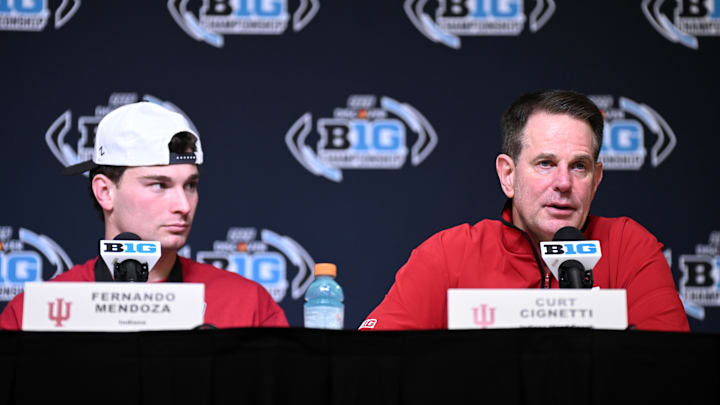
What has made 2025 a storybook season for the Hoosiers? Was it the landmark road win at then-No. 3 Oregon? Or the thrilling victory at Penn State? Or the razor-thin conquest of Ohio State in the Big Ten championship? Or the shellacking of Alabama, the class of 21st century college football in the Rose Bowl? Or the destruction of the Ducks, the century’s prime innovators, in a Peach Bowl rematch? Or will it yet be the national championship, where Heisman-winning quarterback Fernando Mendoza has the chance to slay his hometown team in Miami?
What will happen next? Time will tell, but coach Curt Cignetti’s two-year transformation of Indiana from doormats into national favorites in a plutocratic game is one of sports’ greatest stories. He and Mendoza will find themselves named alongside the decade’s premier athletic duos—Clark and Reese, Mahomes and Kelce, Ohtani and Judge, Alcaraz and Sinner. It’s foolish to count one’s chickens before they’ve hatched, and the Hurricanes winning Monday would be a great story in its own right. But it’s clear that, win or lose, the arc of history has smiled upon the Hoosiers like no other team in college football’s 156-year trek.
More College Football on Sports Illustrated
Listen to SI’s new college sports podcast, Others Receiving Votes, below or on Apple and Spotify. Watch the show on SI’s YouTube channel.
 Add us as a preferred source on Google
Patrick Andres is a staff writer on the Breaking and Trending News team at Sports Illustrated. He joined SI in December 2022, having worked for The Blade, Athlon Sports, Fear the Sword and Diamond Digest. Andres has covered everything from zero-attendance Big Ten basketball to a seven-overtime college football game. He is a graduate of Northwestern University's Medill School of Journalism with a double major in history .
Follow PAndres2001