%20%20--%3E%0A%3Csvg%20version%3D%221.1%22%20id%3D%22Layer_1%22%20xmlns%3D%22http%3A%2F%2Fwww.w3.org%2F2000%2Fsvg%22%20xmlns%3Axlink%3D%22http%3A%2F%2Fwww.w3.org%2F1999%2Fxlink%22%20x%3D%220px%22%20y%3D%220px%22%0A%09%20width%3D%2239px%22%20height%3D%2240px%22%20viewBox%3D%220%200%2039%2040%22%20enable-background%3D%22new%200%200%2039%2040%22%20xml%3Aspace%3D%22preserve%22%3E%0A%3Cpath%20fill%3D%22%23FFFFFF%22%20d%3D%22M38.5%2C7H28.2v26h10.3V7z%22%2F%3E%0A%3Cpath%20fill-rule%3D%22evenodd%22%20clip-rule%3D%22evenodd%22%20fill%3D%22%23FFFFFF%22%20d%3D%22M26.1%2C25.5c0%2C5.8-4.1%2C7.5-12.9%2C7.5C3.9%2C33%2C0%2C31.2%2C0%2C25.2v-1.1h11.6%0A%09v2.4c0%2C0.7%2C0.1%2C1.4%2C1.2%2C1.4c1%2C0%2C1.2-0.4%2C1.2-1.3v-0.9c0-1.6-0.9-1.6-3.5-2.2C2.2%2C21.7%2C0%2C19.7%2C0%2C15.3v-0.9C0%2C9.3%2C5.5%2C7%2C12.9%2C7%0A%09c10.2%2C0%2C12.8%2C2.6%2C12.8%2C7.4v1.8h-11v-2.9c0-0.6-0.4-1.1-1.2-1.1c-0.6%2C0-1.2%2C0.4-1.2%2C1.1v0.9c0%2C1.5%2C0.9%2C2%2C3.3%2C2.5%0A%09c8%2C1.6%2C10.5%2C3.3%2C10.5%2C7.5V25.5z%22%2F%3E%0A%3C%2Fsvg%3E%0A)
Ted Cruz Calls New Bipartisan Bill ‘Last, Best Hope’ to Save College Sports
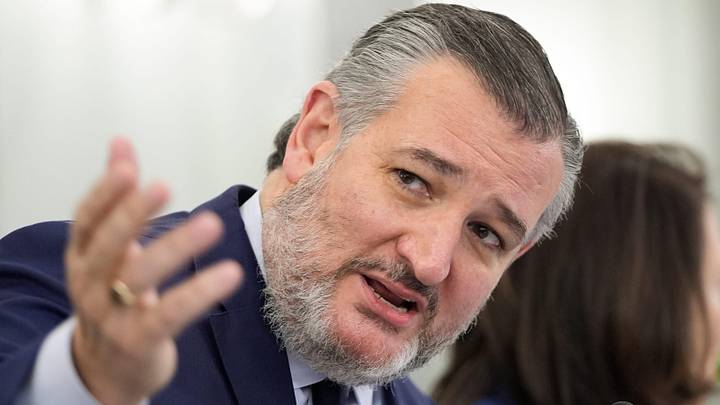
MIRAMAR BEACH, Fla. — Calling it “the last, best hope” for federal college athletics legislation, U.S. Sen. Ted Cruz tells Sports Illustrated he will urge his colleagues to get on board with the Protect College Sports Act that he co-authored with Sen. Maria Cantwell.
“I am very, very glad we got here,” Cruz says. “There were a lot of days it didn’t look like we would. But this is absolutely critical for the future of college sports.”
The 111-page bill, which was introduced Wednesday, is notable because of its bipartisan nature. Cruz, a Republican from Texas, and Cantwell, a Democrat from Washington, have also aligned Sens. Eric Schmitt (R.-Mo.) and Chris Coons (D.-Del.) in helping craft the legislation and advocate for the bill. A 60-member majority would be needed for the bill to pass the Senate; Cruz said that would mean seven Democrats joining a 100% Republican vote to reach that threshold.
“But my objective is to not just see it squeak by with 60 votes,” Cruz says. “I’d like to see a clear mandate. Sports shouldn’t be a partisan issue. In a time of deep partisan division, sports is the one thing that gets us coming together. College sports is a unique American treasure, and college sports today is in crisis.”
The bill, which Cruz said was the result of three years of negotiations with Democrats and an intense final month of talks with Cantwell, addresses a panoply of issues while providing the NCAA and its members with antitrust protection. Among the issues: player compensation and mobility; limits on eligibility; an end to in-season coach poaching; protection for Olympic sports; limits on any potential “super league” power play by the SEC and Big Ten; allowing for a “voluntary” pooling of media rights.
Most of those elements would satisfy what the majority of college sports leaders have been seeking for years. The latter two are a clear attempt at limiting the growing gap between the SEC and Big Ten and the rest of the Football Bowl Subdivision—most notably the Big 12 and ACC.
“In three to five years we could have 30 [to] 50 schools playing college football and the rest are priced out of the competition,” Cruz says. “That would be terrible. The powerhouse schools are going to be fine. My focus has been less on them and more on the other schools.
“I’m a Texan and I love the SEC. Some of the very best college football is in the SEC and Big Ten—I want to see both continue to thrive. What I don’t want is to see them merge together and leave everyone else behind. … We have an almost unlimited bidding war that allows the wealthiest conferees and institutions to outbid everyone else.”
The pooling of media rights has been a fervent public aim of Texas businessman (and Texas Tech booster) Cody Campbell. He’s a member of President Donald Trump’s committee on college sports, and this legislation certainly seems to reflect his interests and involvement.
Directly opposed to any such pooling of media rights: the SEC and the Big Ten, who have gained their current competitive advantages largely through funding based on lucrative media-rights deals with primary partners ESPN and Fox, respectively.
A statement from the SEC presidents and chancellors Thursday read in part: “The SEC has been intentional, through years of thoughtful planning and decision-making, in strategically positioning itself for future media negotiations. The conference must retain the ability to act in the best interests of its membership. As such, the SEC does not support assigning its media rights to a third party and remains firmly committed to independently conducting its media negotiations.”

In other words, whatever support the SEC has for the Protect College Sports Act will not extend to a pooling of media rights. But Cruz sees finding more money as one of the keys to maintaining healthy athletic departments across the FBS ranks and below, particularly when it comes to Olympic sports. In a revenue-sharing era when schools are displaying no interest in cost containment in football and basketball, the pressure points become funding the rest of an athletic department.
“The pooling of media rights is designed to improve revenue for everyone. It is voluntary, which means the other schools [outside the SEC and Big Ten] are going to have to come to you and make a deal that is attractive to you.
“What we don’t want are schools canceling programs because they can’t keep up. We want to slow cost increases, but on the revenue side make the pie substantially bigger.”
The most striking area of compromise between Cruz and Cantwell—and by extension Republicans and Democrats—is the lack of a prohibition on athletes being classified as employees. Republicans, and almost all college administrators, have fought that for years based on the fear of athletic departments being bankrupted by the cost. But many Democrats have pushed strongly for employment status or other athlete protections.
The Protect College Sports Act is largely neutral on athlete employment. It leaves open the possibility for it to happen, with collective bargaining over terms and conditions. Cruz acknowledged making a concession on that contentious issue.
“What I wish the bill said is that college athletes are not employees,” Cruz says. “But Senate Democrats were unwilling to say that. To get a bill into law, we have to be willing to compromise.”
There may be more necessary compromises ahead, and more headwinds, as politicians and other interested parties weigh in. Many officials here at SEC meetings were intrigued by the general premise of the bill and heartened by the bipartisan nature of it, but a couple of summer months of positioning and negotiating are likely ahead.
College sports legislation still might not happen. But as Ted Cruz said, this appears to be the last, best hope for it.
More College Football From Sports Illustrated
Listen to SI’s college sports podcast, Others Receiving Votes, below or on Apple and Spotify. Watch the show on SI’s College YouTube channel.
 Add us as a preferred source on Google
Pat Forde is a senior writer for Sports Illustrated who covers college football and college basketball as well as the Olympics and horse racing. He cohosts the Others Receiving Votes podcast for SI and is a regular contributor to the Tony Kornheiser Show podcast. He previously worked for Yahoo Sports, ESPN and The (Louisville) Courier-Journal. Forde has won 28 Associated Press Sports Editors writing contest awards, has been published three times in the Best American Sports Writing book series, and was nominated for the 1990 Pulitzer Prize. A past president of the U.S. Basketball Writers Association and member of the Football Writers Association of America, he lives in Louisville with his wife. They have three children, all of whom were collegiate swimmers.
Follow ByPatForde