%20%20--%3E%0A%3Csvg%20version%3D%221.1%22%20id%3D%22Layer_1%22%20xmlns%3D%22http%3A%2F%2Fwww.w3.org%2F2000%2Fsvg%22%20xmlns%3Axlink%3D%22http%3A%2F%2Fwww.w3.org%2F1999%2Fxlink%22%20x%3D%220px%22%20y%3D%220px%22%0A%09%20width%3D%2239px%22%20height%3D%2240px%22%20viewBox%3D%220%200%2039%2040%22%20enable-background%3D%22new%200%200%2039%2040%22%20xml%3Aspace%3D%22preserve%22%3E%0A%3Cpath%20fill%3D%22%23FFFFFF%22%20d%3D%22M38.5%2C7H28.2v26h10.3V7z%22%2F%3E%0A%3Cpath%20fill-rule%3D%22evenodd%22%20clip-rule%3D%22evenodd%22%20fill%3D%22%23FFFFFF%22%20d%3D%22M26.1%2C25.5c0%2C5.8-4.1%2C7.5-12.9%2C7.5C3.9%2C33%2C0%2C31.2%2C0%2C25.2v-1.1h11.6%0A%09v2.4c0%2C0.7%2C0.1%2C1.4%2C1.2%2C1.4c1%2C0%2C1.2-0.4%2C1.2-1.3v-0.9c0-1.6-0.9-1.6-3.5-2.2C2.2%2C21.7%2C0%2C19.7%2C0%2C15.3v-0.9C0%2C9.3%2C5.5%2C7%2C12.9%2C7%0A%09c10.2%2C0%2C12.8%2C2.6%2C12.8%2C7.4v1.8h-11v-2.9c0-0.6-0.4-1.1-1.2-1.1c-0.6%2C0-1.2%2C0.4-1.2%2C1.1v0.9c0%2C1.5%2C0.9%2C2%2C3.3%2C2.5%0A%09c8%2C1.6%2C10.5%2C3.3%2C10.5%2C7.5V25.5z%22%2F%3E%0A%3C%2Fsvg%3E%0A)
The Obvious College Football Playoff Format Tweak Has Nothing to Do With Layoff Rust
In this story:
When assessing the current college football landscape, it’s important to keep one thing in mind: Indiana is the extreme outlier. The trends and truisms of the sport do not apply to the Hoosiers. They are a unicorn galloping across the football field, defying all precedent.
Truism: You cannot go from historic futility to powerhouse status overnight. Indiana has done it.
Truism: You cannot compete for a national championship without a high percentage of four-star and five-star recruits. Indiana is doing so with hardly any.
Trend: You cannot win in the College Football Playoff quarterfinals if you’re coming off a bye. Except Indiana, which made it look easy while destroying Alabama in the Rose Bowl.
The last of those points is the topic today, as a sport prone to overreaction looks at a 1–7 quarterfinal record for top-four seeds and tries to decide if the system is broken. (Again.) It’s probably too small a sample size to make sweeping judgments, especially when digging a little deeper.
While the record of top-four seeds (excluding Unicorn University) is 0–7 in quarterfinals coming off a bye, the record of the betting favorites in those games is 5–2. It’s not like the quarterfinals produced a flood of fluky results.
Fifth-seed Oregon was favored against No. 4 Texas Tech in the Orange Bowl, and all four lower-seeded favorites won quarterfinal games last season under a flawed seeding criteria: No. 5 Texas over No. 4 Arizona State; No. 6 Penn State over No. 3 Boise State; No. 7 Notre Dame over No. 2 Georgia; and No. 8 Ohio State over No. 1 Oregon.
Boise State and Arizona State were fully expected to lose. Texas Tech this season and the 2024 Ducks and Bulldogs were narrowly expected to lose—all with spreads smaller than a field goal. Having a longer layoff than their opponents might not have had anything to do with it.
The surprises have been No. 2 seed Ohio State’s flop against No. 10 Miami on Wednesday in the Cotton Bowl and No. 3 Georgia against No. 6 Mississippi on Thursday in the Sugar Bowl. Layoff-related? Hard to say.
The Buckeyes’ floundering start, being shut out in the first half, could be an indicator of accumulated rust with 25 days between games. Georgia’s problem was the opposite, taking a nine-point halftime lead against the Rebels and then succumbing to the wizardry of quarterback Trinidad Chambliss in a classic shootout.
In addition to those two upsets, the performances by Texas Tech this season (losing 23–0) and Oregon last year (losing 42–20) were truly disappointing. They might not have been favored to win, but they weren’t supposed to be blown out. Both were.
But the same could be said for Alabama, which was not coming off a bye. Much more was expected than a 38–3 humiliation, the Crimson Tide’s worst postseason loss ever.

Two seasons of data don’t fully support the premise that teams with a first-round bye are at an inherent disadvantage. But there is still an obvious change to be made that would give top-four seeds the advantage they earned throughout the season:
On-campus quarterfinal games.
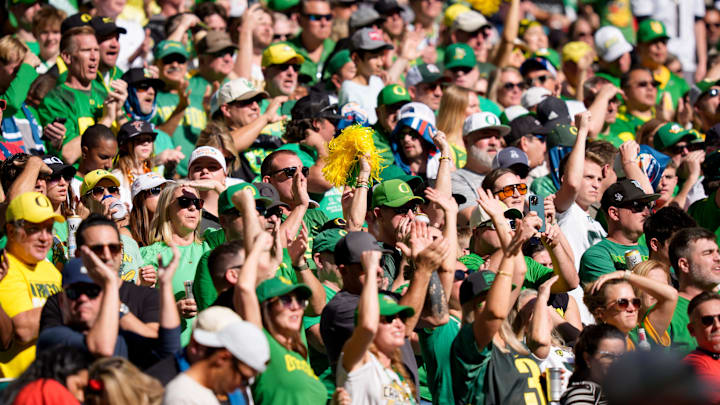
The first-round games that have been played at campus locations have been incredibly popular with the home fans and highly successful for the home teams—they’re 6–2. Shouldn’t the very best teams get the same benefit as those seeded five through eight?
Neutral-site quarterfinals are not just an added burden on those teams, but on their fans. Asking them to make three expensive trips to neutral-site locations, instead of having another home game, is one more way in which the current system takes the fans for granted.
Of course, moving those quarterfinal games out of neutral-site locations would require one thing that college sports leaders have resisted for decades—breaking up the bowl cabal, or at least reducing its stake in the proceedings.
The traditional big bowls could still be played, of course. But fewer of them would be part of the playoff—maybe just the semifinals and national championship game. Untangling the ties to the bowl industry shouldn’t be that difficult, but there is ingrained resistance to it.
In fact, it wouldn’t surprise me if College Sports Inc. takes a path of less resistance (and more money) by expanding the playoff to 16 teams. There is considerable support for that model already, and these quarterfinal results can be used as part of the argument for doing it.
If having a bye has become a perceived disadvantage, get rid of the byes. The playoff becomes four rounds for everyone.

The calendar would have to change to accommodate that, but the calendar needs to change anyway—ending the college season in late January doesn’t serve anyone. The NFL postseason has fully taken over by that point, and the teams are worn out. Indiana offensive line coach Bob Bostad said in Pasadena on Thursday that the Hoosiers are a tired team—and they could still have two games to go.
Eliminating conference championship games would start the playoff earlier, and frankly it’s a better alternative than pushing up the season start to Week Zero in late August. (Both are under consideration, and both could be part of a future playoff structure.)
The playoff plan for 2026 and beyond is still in flux, with an extended deadline looming later this month. The Big Ten, which has been entrenched around a foolish, 24-team model, would probably have to give in and agree to 16—which could happen. Otherwise, if the stalemate continues, staying at 12 for at least one more season would be the default result.
It wouldn’t be a bad outcome. Two years of 12 has produced a lot of compelling football. But if overreaction rules the day, the most obvious tweak to the model would be on-campus quarterfinals. Give the top four seeds the same advantage as those seeded Nos. 5–8.
More College Football from Sports Illustrated
Listen to SI’s college sports podcast, Others Receiving Votes, below or on Apple and Spotify. Watch the show on SI’s YouTube channel.
 Add us as a preferred source on Google
Pat Forde is a senior writer for Sports Illustrated who covers college football and college basketball as well as the Olympics and horse racing. He cohosts the Others Receiving Votes podcast for SI and is a regular contributor to the Tony Kornheiser Show podcast. He previously worked for Yahoo Sports, ESPN and The (Louisville) Courier-Journal. Forde has won 28 Associated Press Sports Editors writing contest awards, has been published three times in the Best American Sports Writing book series, and was nominated for the 1990 Pulitzer Prize. A past president of the U.S. Basketball Writers Association and member of the Football Writers Association of America, he lives in Louisville with his wife. They have three children, all of whom were collegiate swimmers.
Follow ByPatForde