%20%20--%3E%0A%3Csvg%20version%3D%221.1%22%20id%3D%22Layer_1%22%20xmlns%3D%22http%3A%2F%2Fwww.w3.org%2F2000%2Fsvg%22%20xmlns%3Axlink%3D%22http%3A%2F%2Fwww.w3.org%2F1999%2Fxlink%22%20x%3D%220px%22%20y%3D%220px%22%0A%09%20width%3D%2239px%22%20height%3D%2240px%22%20viewBox%3D%220%200%2039%2040%22%20enable-background%3D%22new%200%200%2039%2040%22%20xml%3Aspace%3D%22preserve%22%3E%0A%3Cpath%20fill%3D%22%23FFFFFF%22%20d%3D%22M38.5%2C7H28.2v26h10.3V7z%22%2F%3E%0A%3Cpath%20fill-rule%3D%22evenodd%22%20clip-rule%3D%22evenodd%22%20fill%3D%22%23FFFFFF%22%20d%3D%22M26.1%2C25.5c0%2C5.8-4.1%2C7.5-12.9%2C7.5C3.9%2C33%2C0%2C31.2%2C0%2C25.2v-1.1h11.6%0A%09v2.4c0%2C0.7%2C0.1%2C1.4%2C1.2%2C1.4c1%2C0%2C1.2-0.4%2C1.2-1.3v-0.9c0-1.6-0.9-1.6-3.5-2.2C2.2%2C21.7%2C0%2C19.7%2C0%2C15.3v-0.9C0%2C9.3%2C5.5%2C7%2C12.9%2C7%0A%09c10.2%2C0%2C12.8%2C2.6%2C12.8%2C7.4v1.8h-11v-2.9c0-0.6-0.4-1.1-1.2-1.1c-0.6%2C0-1.2%2C0.4-1.2%2C1.1v0.9c0%2C1.5%2C0.9%2C2%2C3.3%2C2.5%0A%09c8%2C1.6%2C10.5%2C3.3%2C10.5%2C7.5V25.5z%22%2F%3E%0A%3C%2Fsvg%3E%0A)
Marshall coach Doc Holliday talks 2015 season, Playoff SOS, more

Fourteen weeks into the 2014 season, Marshall and Florida State were the only unbeaten teams remaining in the FBS. Yet the Thundering Herd were barely clinging to their spot in the College Football Playoff’s top 25, trailing fellow Group of Five team Boise State even though the Broncos had lost twice.
As the college football world adapted to the playoff era, Marshall served as a harsh lesson of the increased weight strength of schedule now plays. The Herd’s loss to Western Kentucky knocked them out of the rankings entirely, but even if they had gone undefeated, they may have been unable to earn the New York’s Six bowl bid guaranteed to the highest-ranked conference champion from the Group of Five.
As Marshall prepares for 2015 seeking to defend its first Conference USA title, the Herd are adapting to their own new era: the post-Rakeem Cato era. Marshall’s star quarterback is gone, but its offense is still filled with explosive weapons. How its defense copes with the loss of six starters could determine whether the Herd will be back in the conversation for a New York’s Six bowl—if strength of schedule issues don’t weigh them down once again.
SI.com caught up with Marshall coach Doc Holliday to discuss who will step into bigger roles for the Herd this season, how Holliday feels strength of schedule should be used and his thoughts after year one of the College Football Playoff.
SI: Any discussion of Marshall this season has to start with filling Rakeem Cato’s shoes. What’s the most difficult aspect of his game to replace?
Games that will shape the 2015 College Football Playoff picture
Doc Holliday: Anywhere I’ve ever been where you have the opportunity to win championships starts at the quarterback position. When you’ve got that guy, you’ve got a chance to be great. We had him a year ago. He just had the “it factor.” He found a way to win games. He provided great leadership. As you know, the intangibles are the most important thing at the quarterback position, and he sure had those.
SI: What did Michael Birdsong do to put himself in position to win the starting job?
DH: Well, I think No. 1 is his leadership skills, the intangibles, his toughness, the way he prepared himself for practice. The other thing I liked about him is he played a few years at James Madison. His true freshman year he played there. As a sophomore he played there and actually played well with a really good football team. He’s been in the arena, so it’s not going to be his first time when we open up against Purdue in September.
SI: How does having Birdsong at QB instead of Cato change the offense?
DH: Not a lot. He’s a big guy, but he still can run well. He’s different than Cato. Cato was around 6’1” and about 175 pounds, whereas he’s 6’4” or 6’5”, 235, 240 [pounds]. He’s a little more physical. He doesn’t run well enough to what Cato did as far running the football without concern, but we don’t want to try to fit square pegs in round holes. Our offense is built to take advantage of his skills and to do what he does best, but that being said, he can take what the defense gives him and do some of the same things that Cato did.
SI: The skill-position players returning seem to leave you with plenty of big-play threats. How do you balance that with making sure you can also consistently move the chains now that Tommy Shuler and Eric Frohnapfel are gone?
DH: There are three guys on that offense that we’ve got to replace their production: Cato, of course Tommy Shuler—he walked out of here being the leading receiver in the Conference USA and also our school—and Chris Jasperse, who played more snaps that anybody else in college football as an offensive lineman. So those three guys all provided great leadership for us, they were all tremendous players. We’re going to work hard to replace that production that Tommy gave us. Michael Selby will replace Jasperse. Michael’s a tremendous player and a great leader. With Cato, we’ve got to get that production somehow. With our running back situation, Devon Johnson was a tremendous player for us a year ago. He’s back. I like our offensive line. So I think we’re in a good enough position where if we can just get Birdsong early on to take care of the football and manage the game and do what we ask him to do, I think we have enough weapons to be O.K.
SI: On both sides of the ball you lose at least one starter at every position group, guys that helped you get a Conference USA title last year. But you also have a wealth of mostly former three-star recruits set to step in for them. How confident are you that the new guys can match the high level of production of their predecessors?
Texas A&M leads dark horses who could make College Football Playoff
DH: Well, they have to. For us to win championships, you have to play great defense. At the end of the year last year, regardless of what we did offensively or what anybody did offensively in our league, the two best teams defensively were the ones that played in the championship. We were No. 1 in the conference, and the Louisiana Tech was No. 2. So for us to get to where we want to go and reach our goals, we have to play great defense. We lost Darryl Roberts in the secondary. He’s with the Patriots right now, a tremendous player. But we’ve got some really good young players coming in. [Antavis] Rowe was All-Conference USA freshman team a year ago. Corey Tindal is back. [Keith] Baxter is back. We’re adding Chris Williams-Hall, who’s a good player, so I think we have enough players there to get some good production out of them. We lost James Rouse up front. He was a tremendous player who signed with the Texans. We have to replace his production, but we’ve got good depth at defensive line. We lost Conference USA Defensive Player of the Year Neville Hewitt, but we also got [Evan] McKelvey back, who didn’t play most of the last year [due to a torn ACL]. He was our best defensive player going into the season.
SI: With the loss to Western Kentucky and the close wins over UAB and Louisiana Tech, it seemed like your team lost a little steam toward the end of last season before rebounding for the bowl game. How do you make sure you maintain a high level of performance for the entire season?
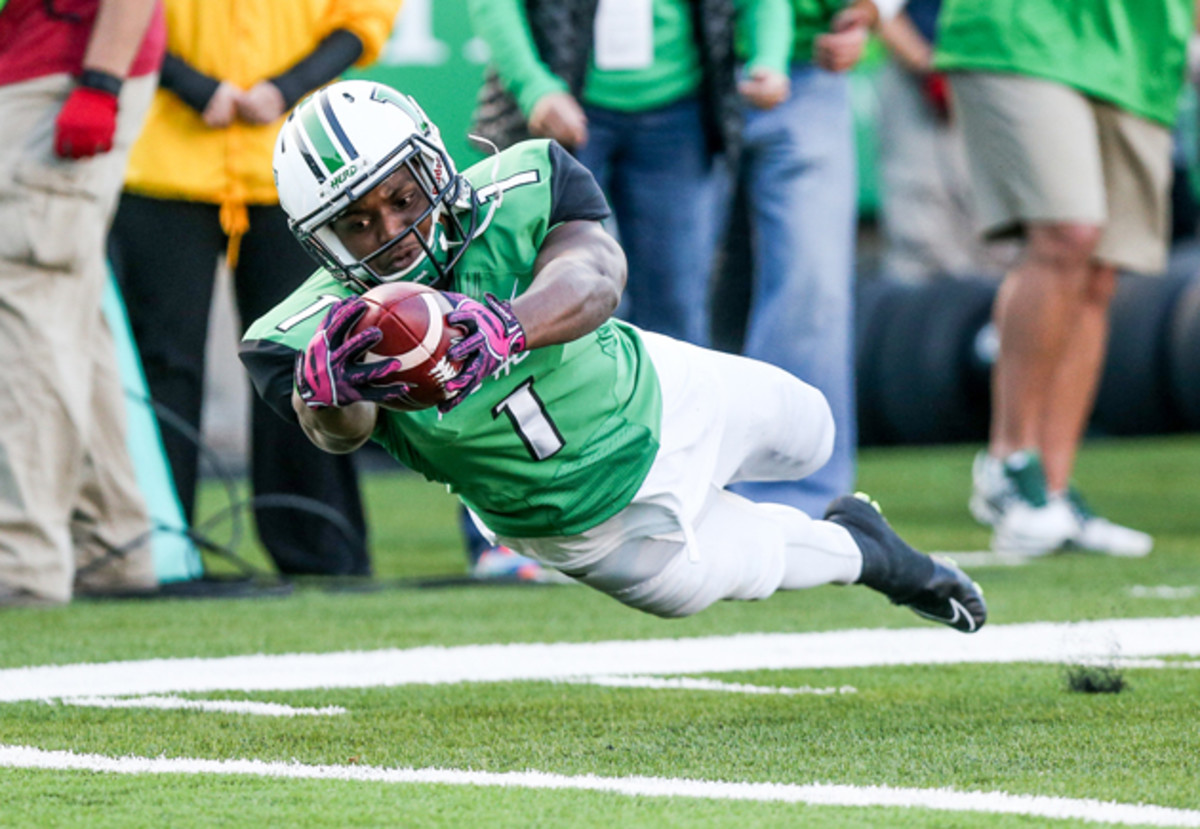
DH: Winning is hard. Those three teams you talked about were all three really good football teams. UAB was bowl eligible, and they had some good players and were a good football team. Western Kentucky went to a bowl game and won, and Louisiana Tech went to a bowl game and beat Illinois. They were good football teams.
It’s a long season. There wasn’t a team at the end of the year last season that was undefeated, so it’s hard to win them all. That being the said, the goal is always to win them all.
SI: I imagine this year’s matchup with Western Kentucky and Brandon Doughty on Nov. 28 holds a little extra significance?
Instant success: Georgia Southern's Willie Fritz talks prep for 2015, more
DH: Well, it’s a long way to go. We’ve got a lot of teams between now and Western Kentucky. But they’ve done a tremendous job. Jeff Brohm has done a tremendous job there. They’ve got that quarterback back who is a tremendous player. We’ve got a lot of challenges. We’ve got to worry about us right now.
SI: Last year the College Football Playoff selection committee seemed to send a pretty clear message about the importance of strength of schedule by not ranking Marshall even when you were undefeated late in the season. How do you feel about how that played out in the first year of the playoff system?
DH: What bothers me a little bit is people look at strength of schedule at the beginning of the year. That should be looked at at the end of the year. At the end of the day, we played eight or nine bowl-eligible teams. We played an excellent Northern Illinois team in the bowl that was ranked in the top 25. So if you look at the entire body of work throughout our schedule and also look at the bowls—there’s not a conference out there that won at a higher rate than Conference USA did. We took a little flak about schedule. We can’t worry about that. We’ve just got to worry about what we can control. I know at the end of the day Conference USA was the second-ranked conference in the Group of Five. Our Rice team beat a team from the Mountain West that played for the championship game (Fresno State). If you look at our overall body of work, I think our schedule was, as it turned out, a pretty daggone good schedule.
SI: Going forward, do you consider perceptions of your schedule out of your hands and there’s not much you can do other than win the games that you do play?
College Football Podcast: Breaking down off-season winners and losers
DH: There’s no question you’ve got to take care of your own business. At the end of the day there were zero undefeated teams in the entire country. So you’ve got to worry about what you can control, and that’s going out and playing every week and playing well.
We’re working as hard as we can work to get people to play us. We’ve got a home-and-home scheduled with NC State, a home-and-home scheduled with Pitt, a home-and-home scheduled with Navy, so we’re working hard to try to schedule the best possible teams we can play. That’ll never change.
SI: Some of the advanced stats had Marshall in the top 10 when you were undefeated last year. Do you look advanced stats and would you like to see the committee use them?
DH: There were a lot of things that I heard last year out of that committee that I had never heard before. I had never heard of a “good loss,” to be honest with you. To me, if you lose, you lose. I’m not sure what a good loss is. There are a lot of things that they factored in that I didn’t quite understand. But I’m sure they’re doing the best that they can.
Greatest College Football Players by Jersey Number
No. 1 — Anthony Carter, WR, Michigan (1979-82)
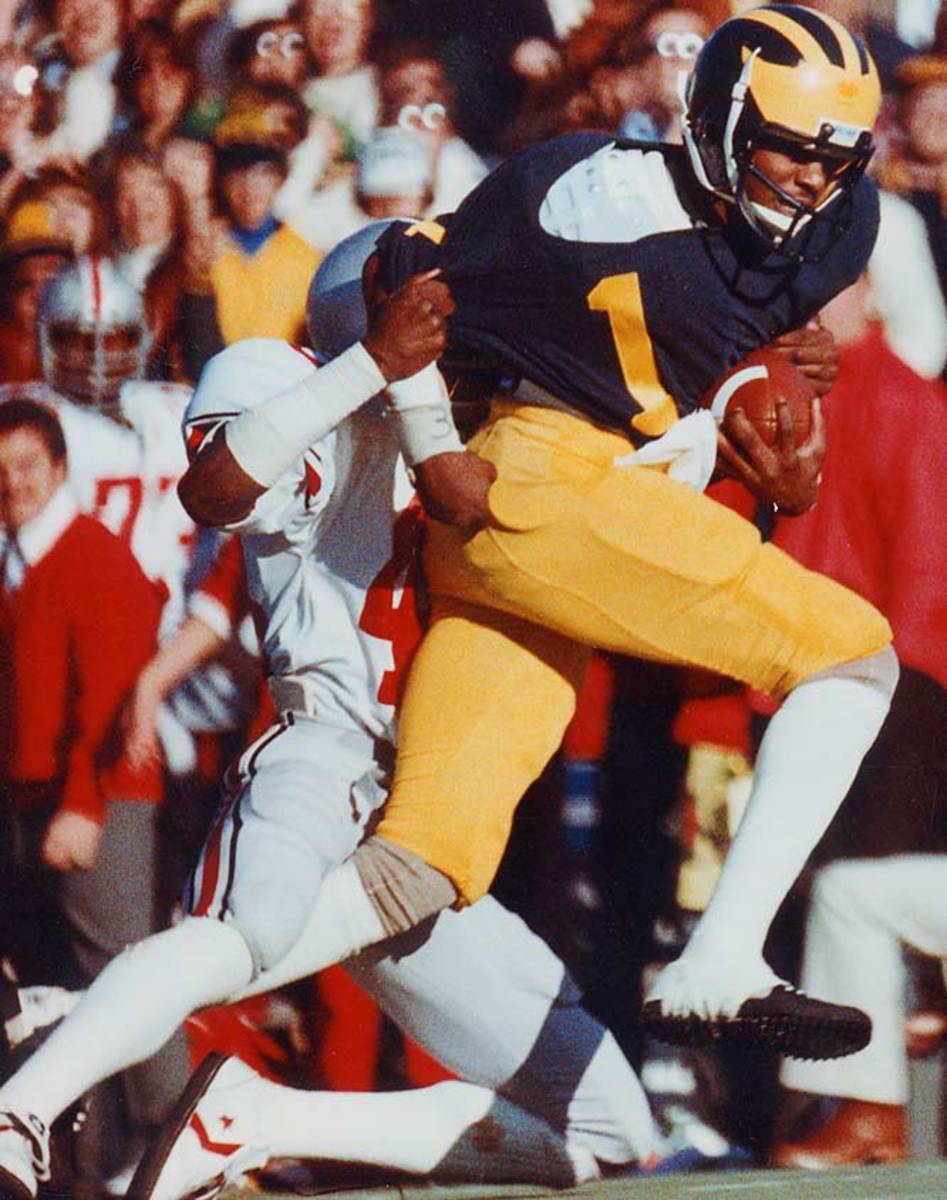
The most exciting football player I've ever seen. That's how Michigan coach Lloyd Carr, then an assistant for Bo Schembechler, described the three-time All-America wideout. Carter was a touchdown-making machine for the Wolverines (he had 36 in his career) and finished in the top 10 in the Heisman Trophy voting his final three seasons. — Runner-up: Ernie Nevers, FB, Stanford (1923-25)
No. 2 — Deion Sanders, CB, Florida State (1985-88)
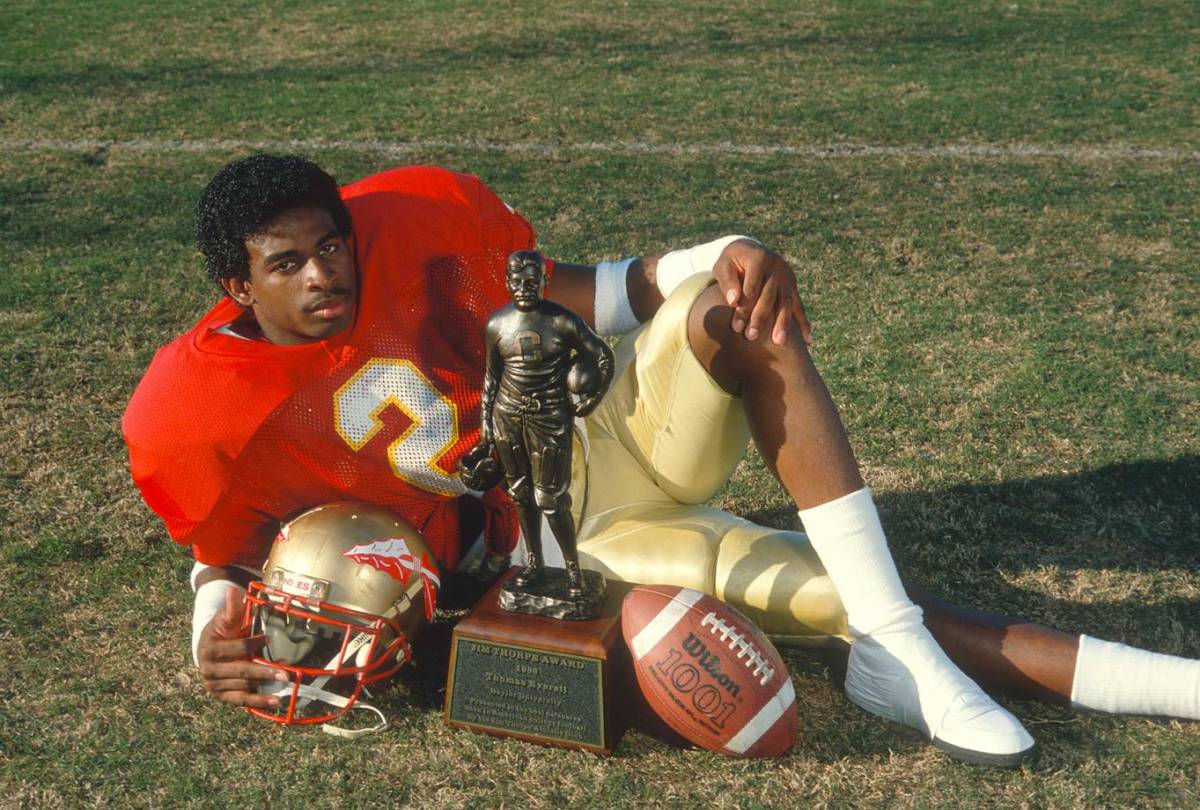
The Neon legend was born in Tallahassee, where Sanders was a two-time consensus All-America, and a Jim Thorpe Award winner in 1988. He intercepted 14 passes, including three in bowl games. His jersey was retired by the school in 1995. — Runner-up: Charles Woodson, DB, Michigan (1995-98)
No. 3 — Joe Montana, QB, Notre Dame (1975-78)
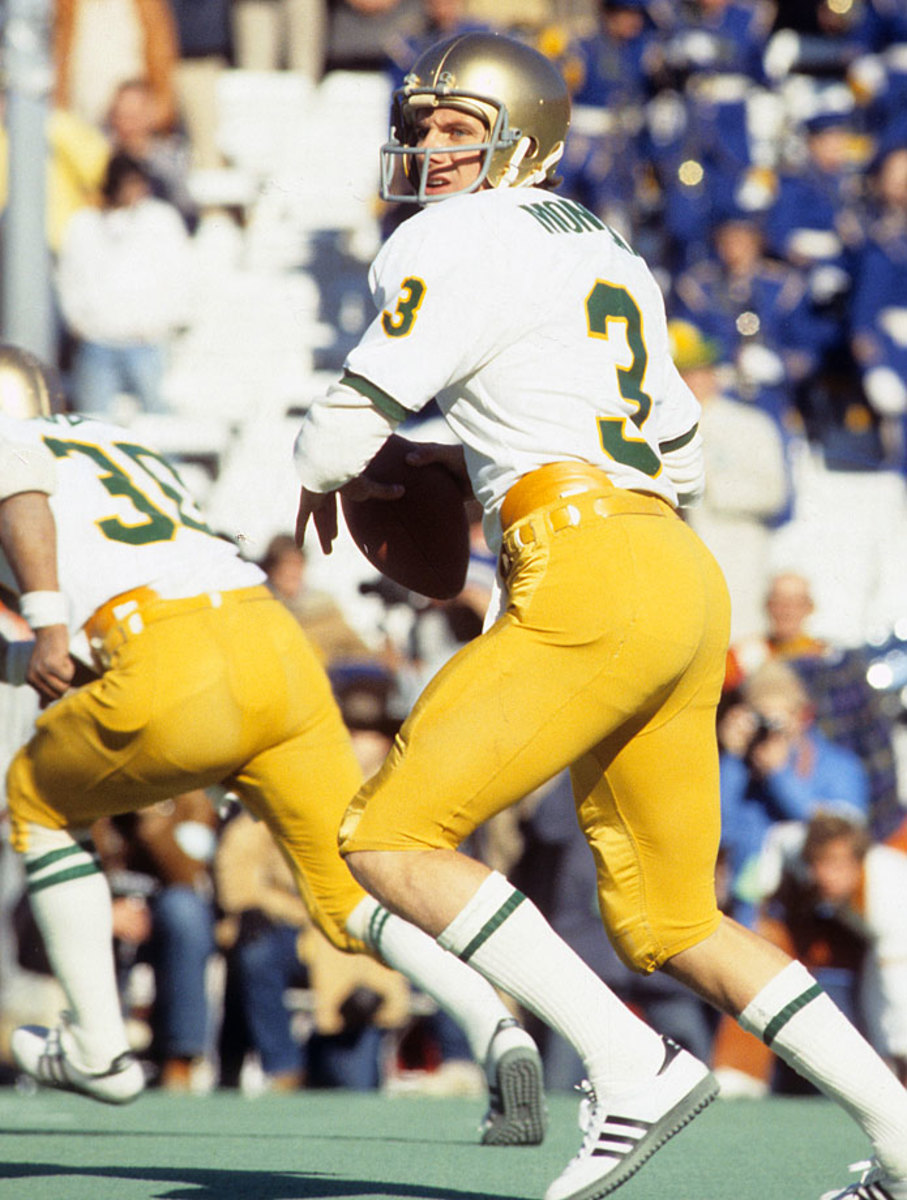
His career was full of memorable comebacks. As a junior he led the Irish to a national championship and a victory over No. 1 Texas in the Cotton Bowl. The next year, with his team trailing 34-12 after three quarters against Houston, Montana led the Irish to a dramatic 35-34 win in the Cotton Bowl. — Runner-up: Carson Palmer, QB, USC (1999-02)
No. 4 — Brett Favre, QB, Southern Miss (1987-90)
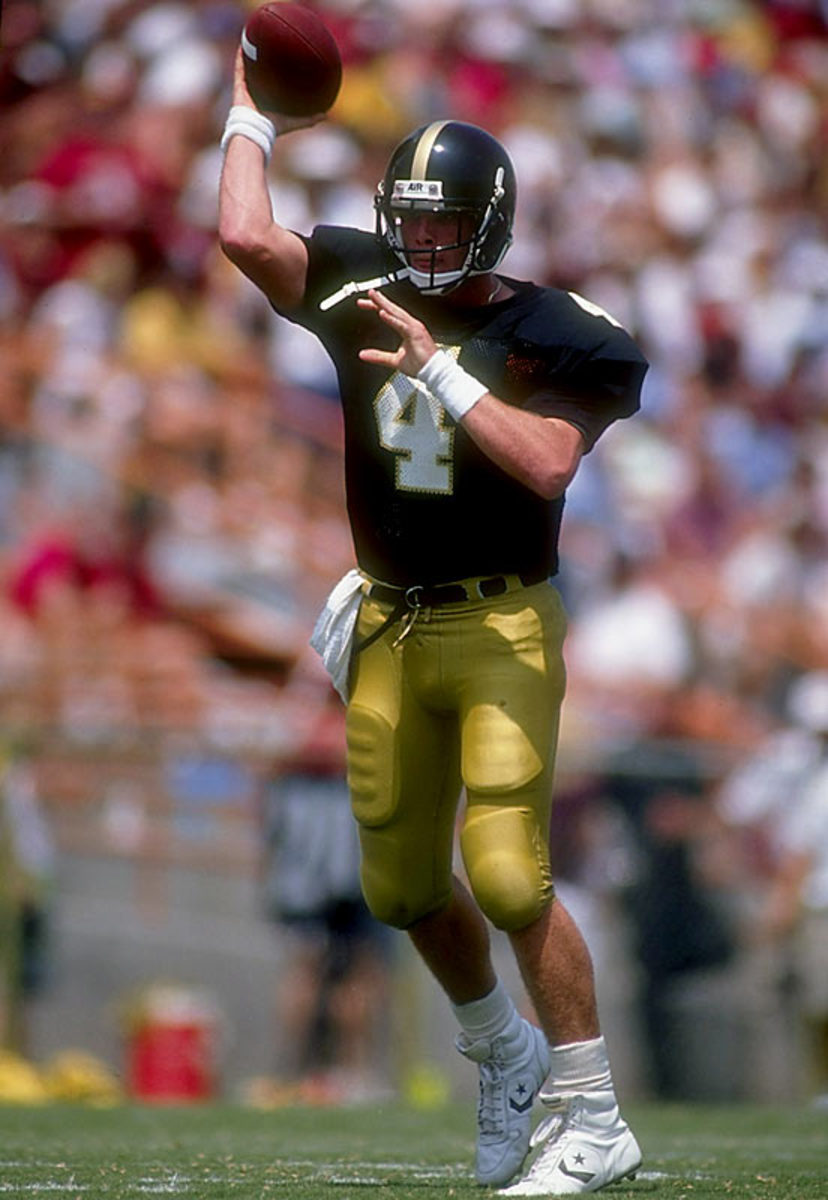
Favre led the Golden Eagles to dramatic come-from-behind wins over Florida State, Alabama and Tulane. ''You can call it a miracle or a legend or whatever you want to,'' said then Crimson Tide coach Gene Stallings. ''I just know that on that day (Sept. 8, 1990), Brett Favre was larger than life.'' — Runner-up: Terrence Newman, DB, Kansas State (1999-02)
No. 5 — Reggie Bush, RB, USC (2003-05)
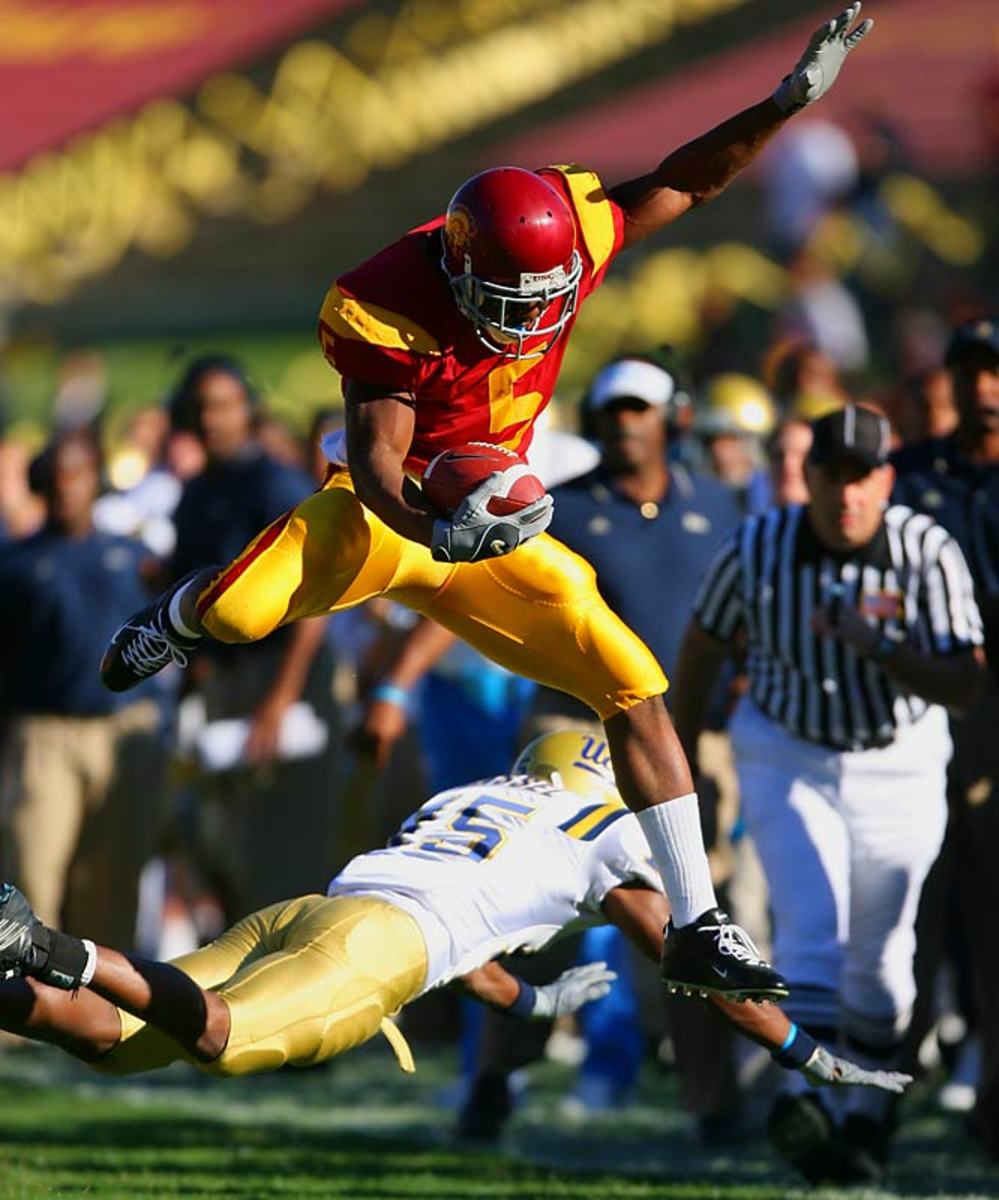
An electrifying open-field runner, Bush won the Heisman Trophy in 2005 by averaging 8.7 yards per carry (200 carries for 1,740 yards) and scoring 16 touchdowns. He ranks 10th in NCAA Division I-A history with 6,551 all-purpose yards. — Runner-up: Paul Hornung, QB, Notre Dame (1954-56)
No. 6 — Robbie Bosco, QB, BYU (1983-85)
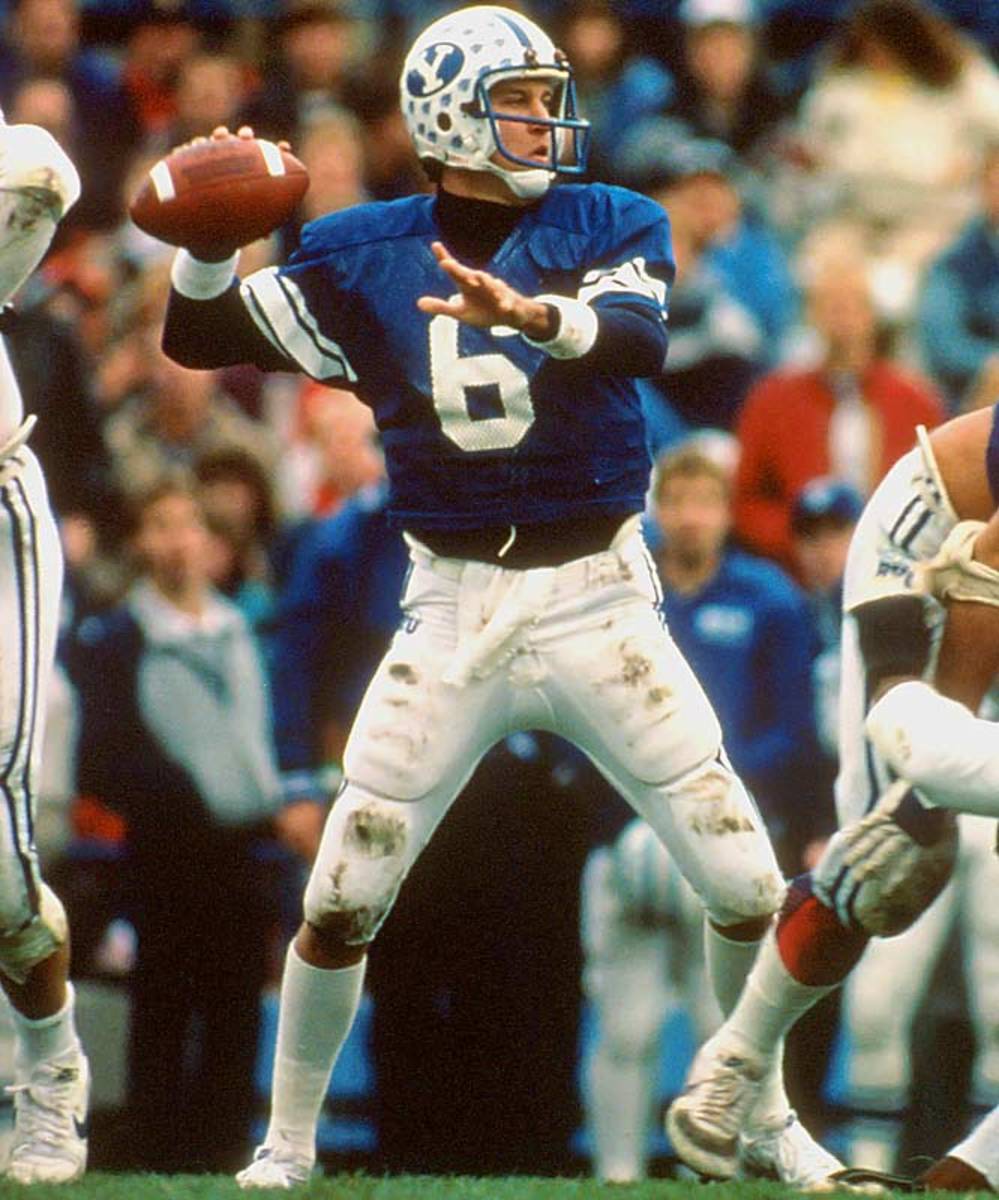
Bosco's teams went 24-3 in his two years as a starter, including a 13-0 national championship season in 1984. He threw for 8,148 passing yards as a collegian. — Runner-up: Harry Kipke, HP-P, Michigan (1921-23)
No. 7 — Danny Wuerffel, QB, Florida (1993-96)
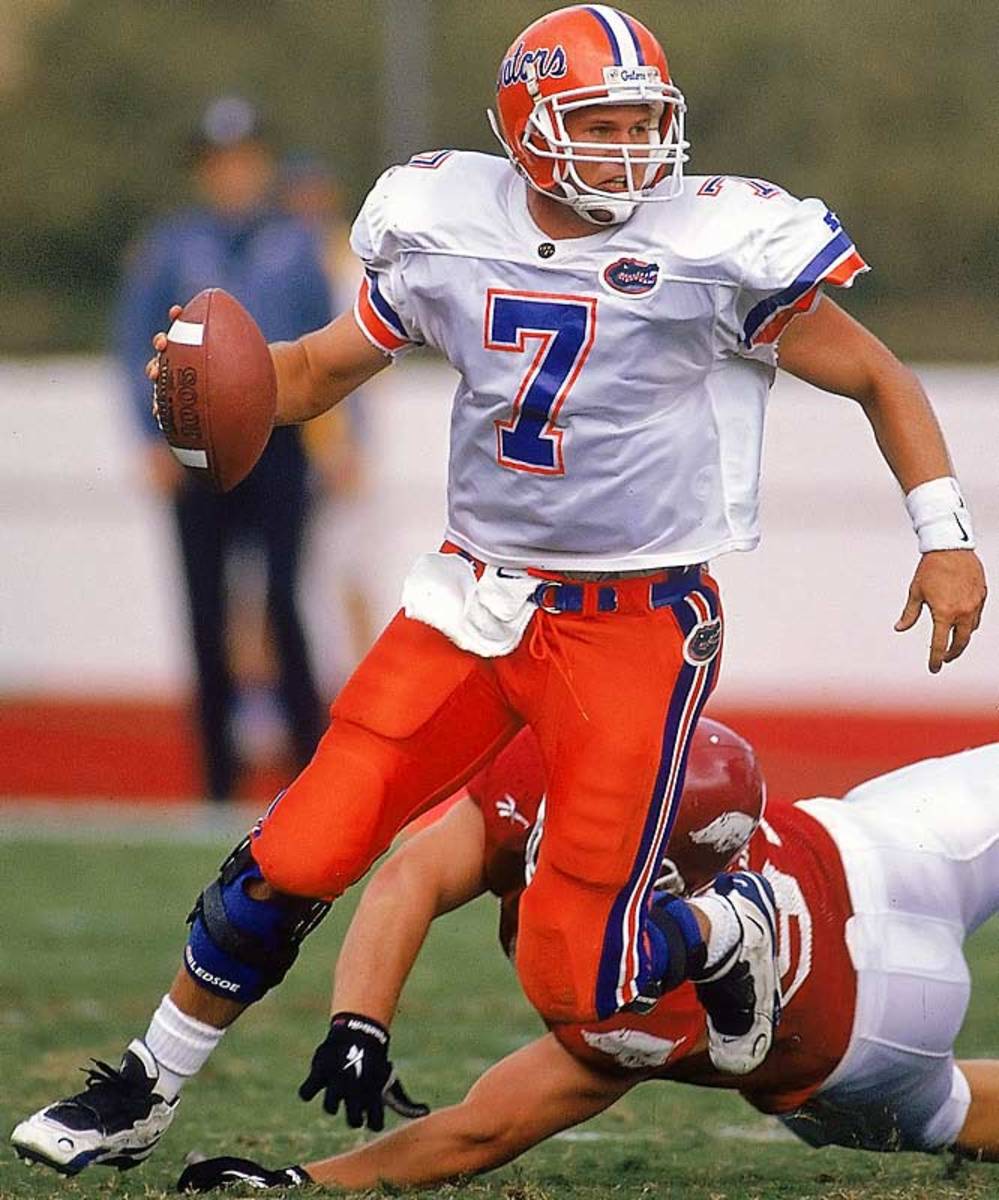
Here's the guy Tim Tebow was shooting for when it came to Gator legacy: Wuerffel completed 708 of 1,170 passes for 10,875 yards and 114 touchdowns at Florida. He won the Heisman Trophy in 1996 and led the Gators to four consecutive Southeastern Conference titles and the 1996 national title. — Runner-up: John Elway, QB, Stanford (1979-82)
No. 8 — Davey O'Brien, QB, TCU (1935-38)
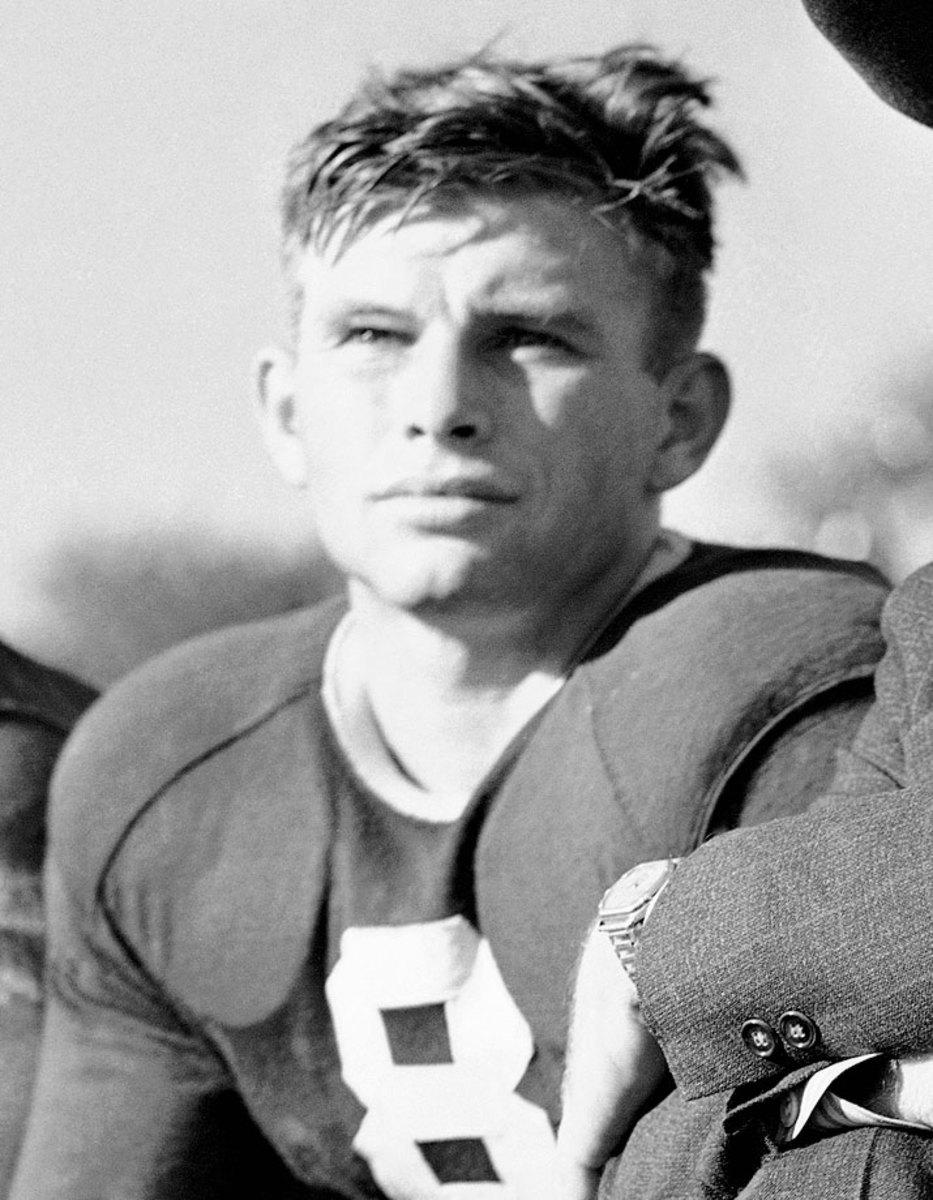
O'Brien led the Horned Frogs to an undefeated season in 1938, including a 15-7 victory over Carnegie Tech in the Sugar Bowl. That year, he became the first player to win the Heisman, Maxwell and Walter Camp trophies in the same year. The award for the country's best quarterback is named in his honor. — Runner-up: Harold Muller, End, Cal (1921-23)
No. 9 — Steve McNair, QB, Alcorn State (1991-94)
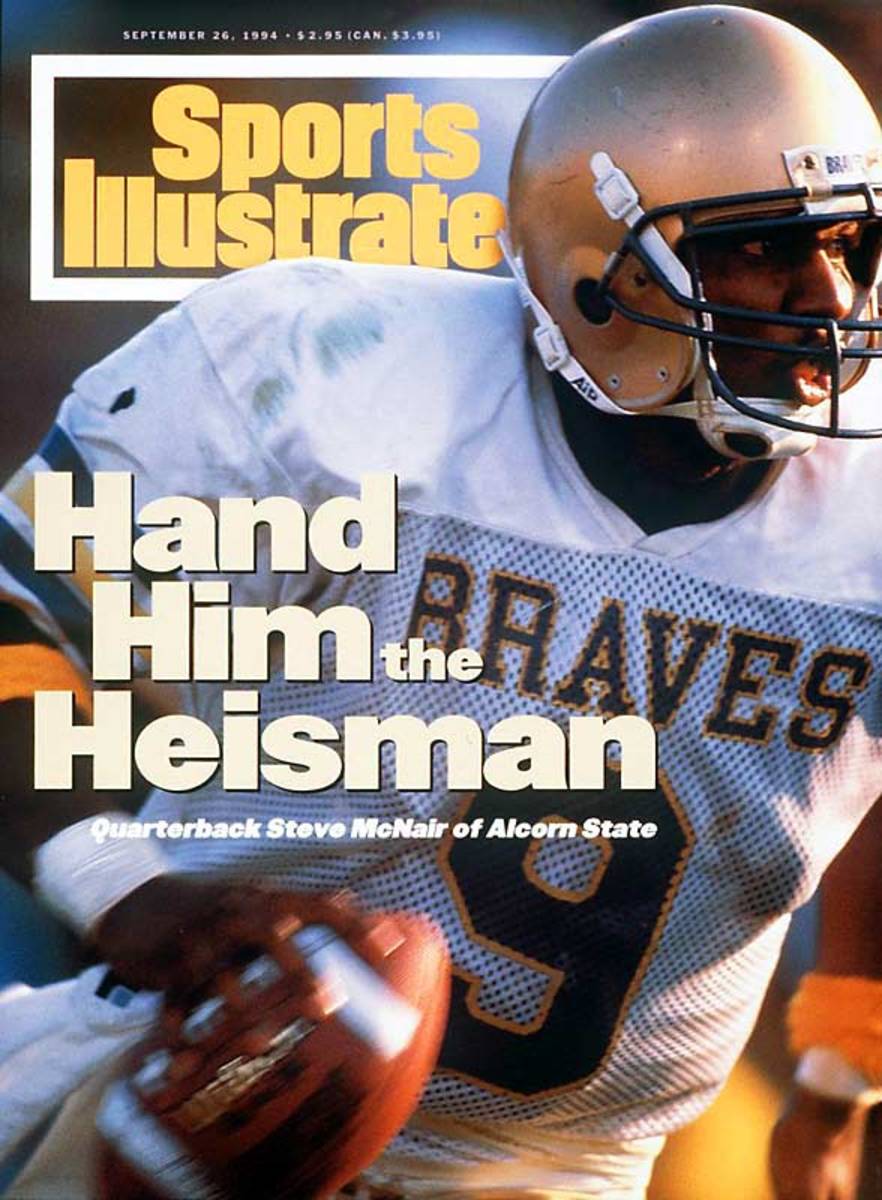
Nicknamed Air for his aerial show at Alcorn State, McNair is the only player in NCAA history to gain more than 16,000 yards (16,823) in total offense during his college career. He finished third in the Heisman Trophy voting in 1994. — Runner-up: Don McPherson, QB, Syracuse (1985-87)
No. 10 — Vince Young, QB, Texas (2003-05)
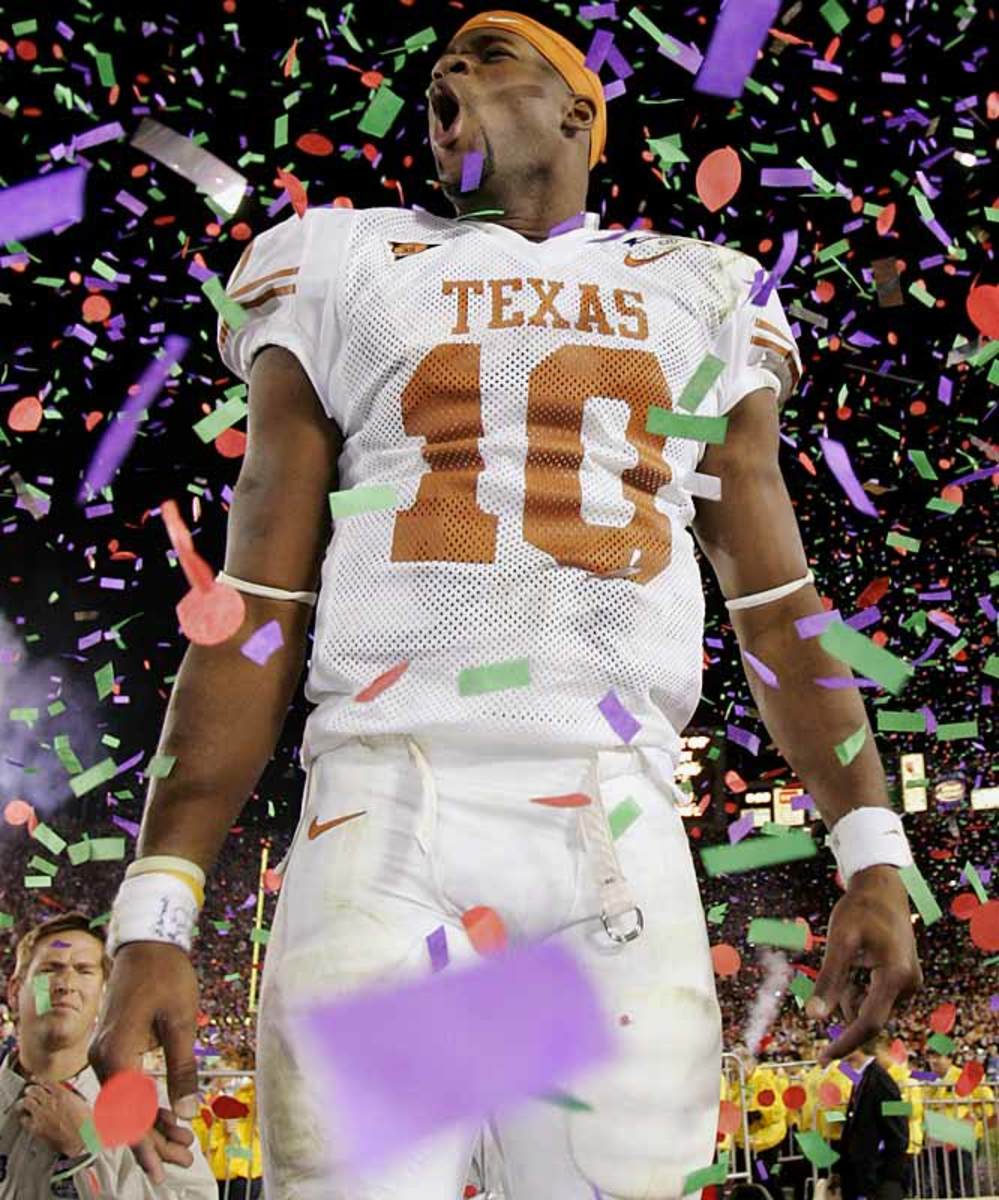
Few college players are more associated with winning. Young finished with a 30-2 career record and his .938 winning percentage as a starting quarterback ranks sixth best in Division I-A history. In what many consider the greatest Rose Bowl performance, Young ran for 200 yards and threw for 267 in a 41-38 win over USC. — Runner-up: Babe Parilli, QB, Kentucky (1949-51)
No. 11 — Matt Leinart, QB, USC (2002-06)
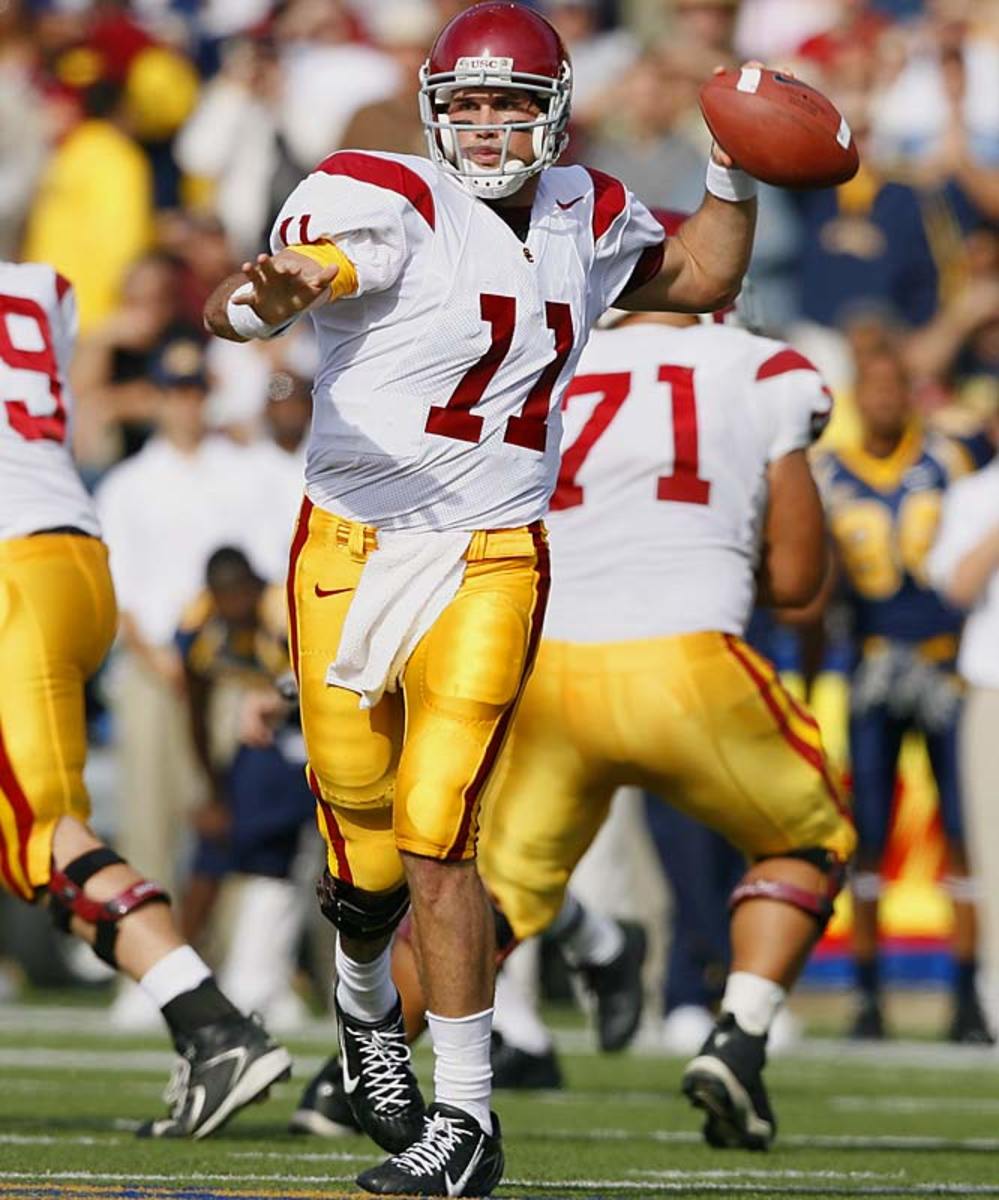
Holding the title of Tailback U's greatest passer, Leinart completed 807-of-1,245 passes for 10,693 yards and 99 touchdowns with just 23 interceptions. He was 37-2 as a starter and won the 2004 Heisman Trophy. — Runner-up: Steve Spurrier, QB, Florida (1963-66)
No. 12 — Roger Staubach, QB, Navy (1962-64)
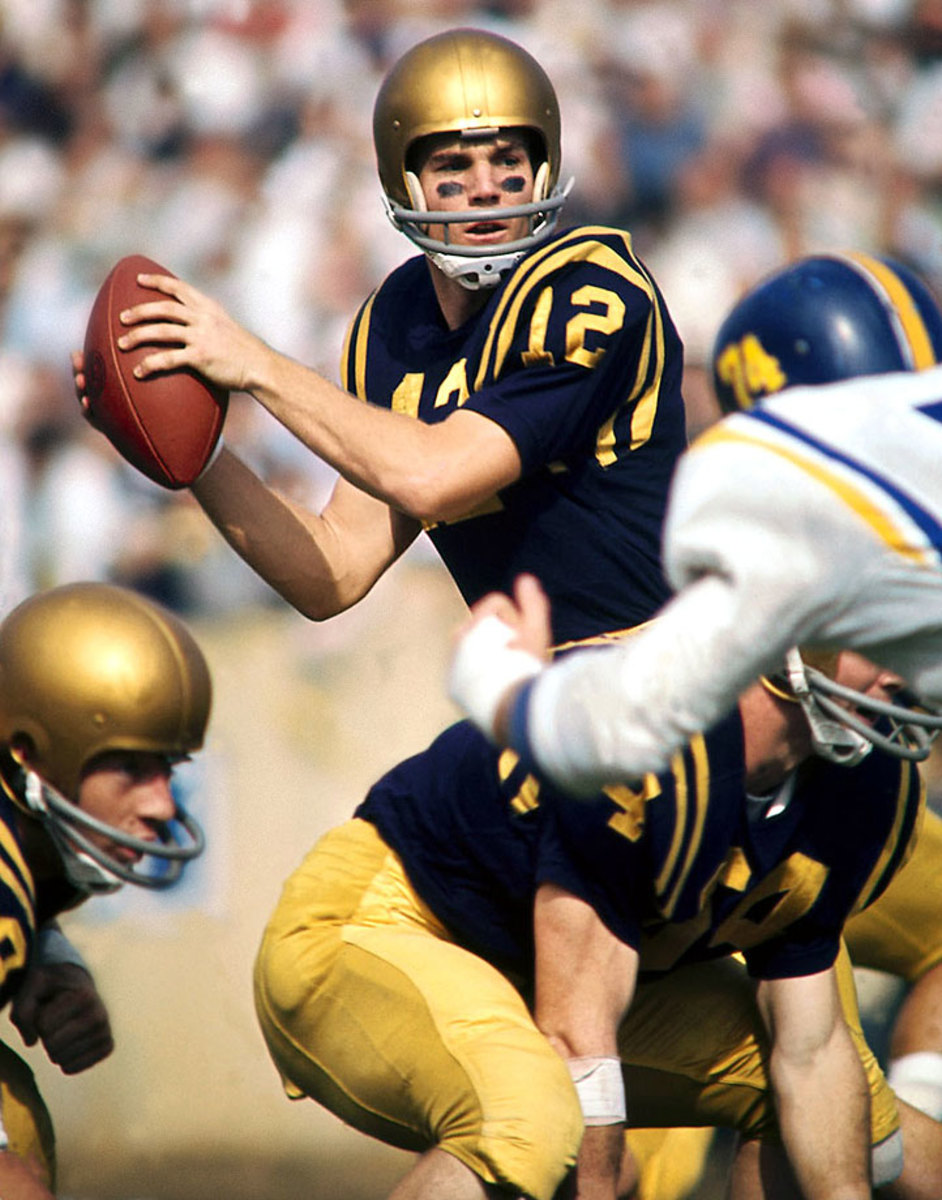
Staubach led Navy to a 9-1-0 record in 1963 before losing to Texas in the Cotton Bowl. He won the Heisman and Maxwell Trophy that season and later starred for the Cowboys in the NFL. — Runner-up: Joe Namath, QB, Alabama (1962-64)
No. 13 — Dan Marino, QB, Pittsburgh (1979-82)
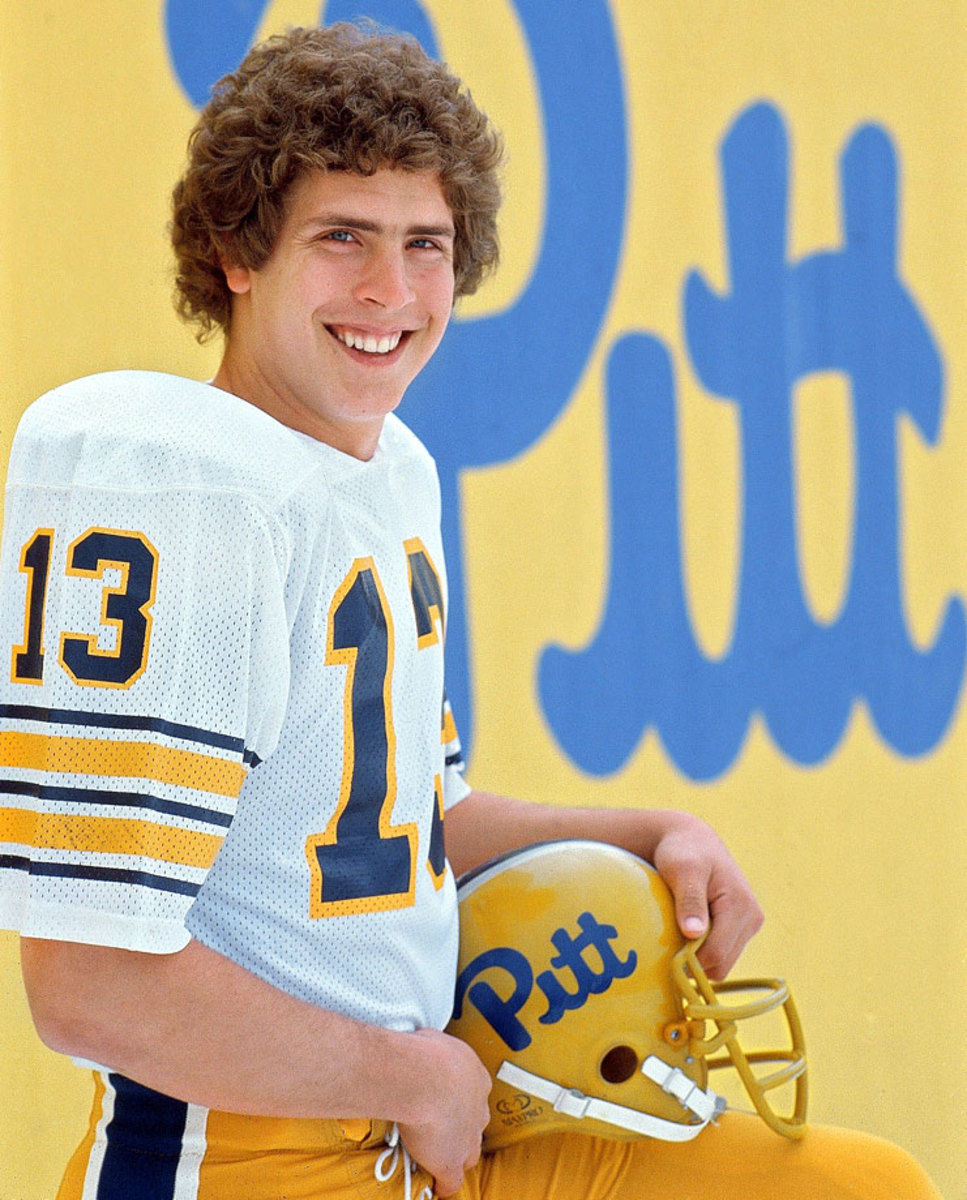
The Panthers were 40-7 in the four years Marino played at Pitt, including two No. 2 finishes in the final AP Poll. He threw a touchdown pass in 19 consecutive games. — Runner-up: Gino Torretta, QB, Miami (1989-92)
No. 14 — Sam Bradford, QB, Oklahoma (2007-09)
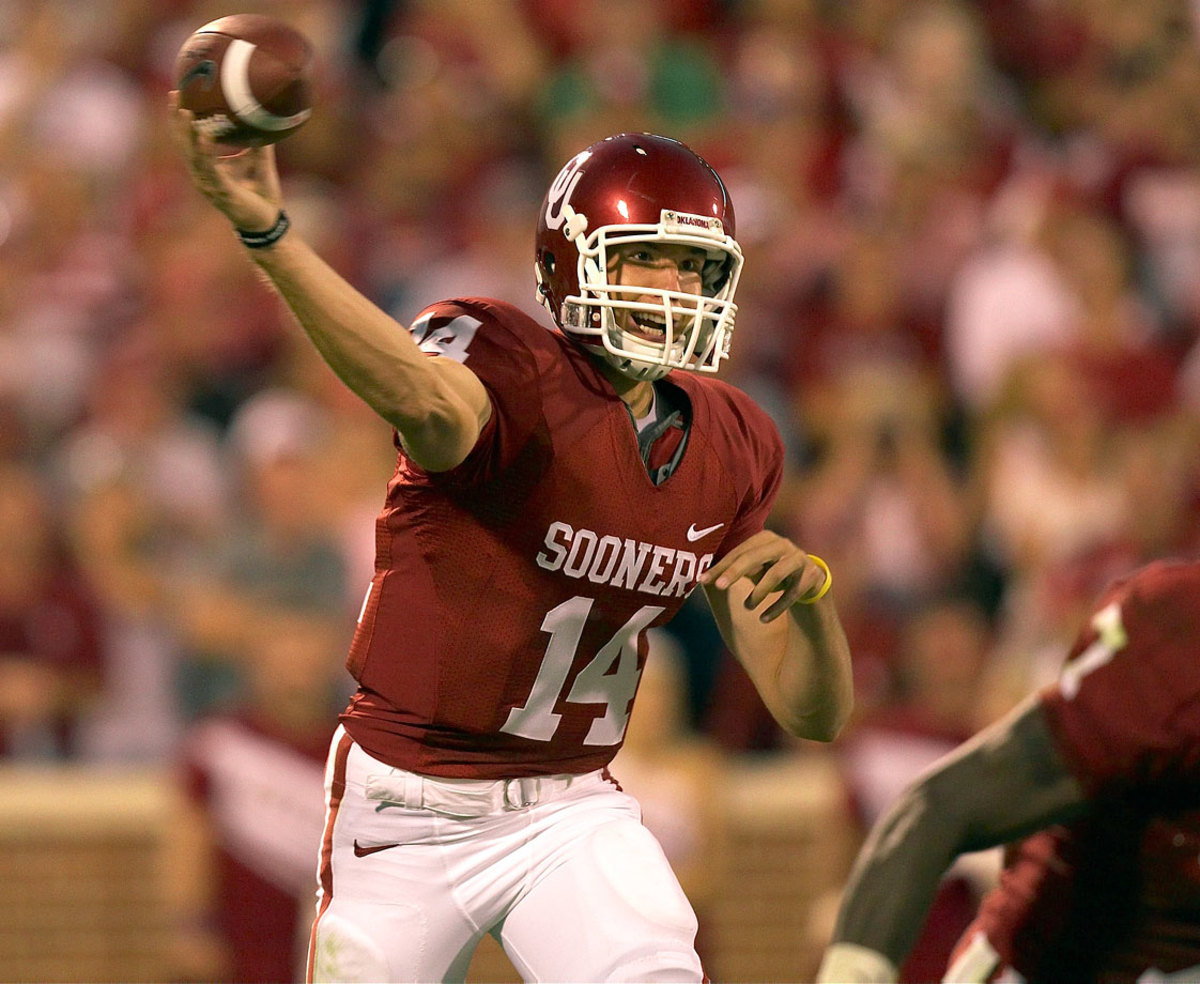
He piloted one of the most explosive offenses in college football history. With Bradford under center in 2008, Oklahoma led the nation with 99 touchdowns and 716 points over 14 games. Bradford won the Heisman Trophy that season but played in only three games in 2009 because of a shoulder injury. That didn’t stop the Oklahoma City, Okla., native from breaking several school passing records before the end of his college career. — Runner-up: Don Hutson, End, Alabama (1932-34)
No. 15 — Tim Tebow, QB, Florida (2006-09)
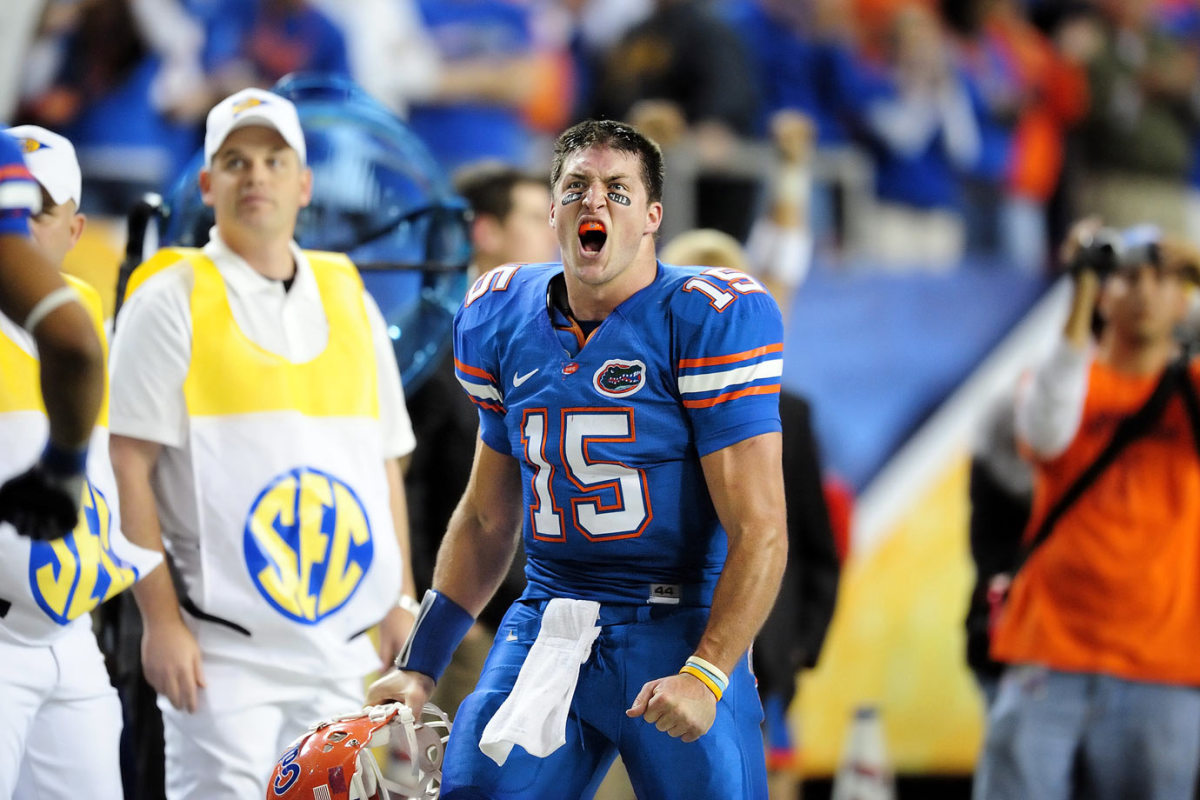
Before becoming one of the most polarizing players in the NFL, Tebow starred at Florida. In 2007, after throwing for 29 touchdowns and recording 22 scores on the ground, he became the first sophomore to win the Heisman Trophy. Tebow served as a run-first backup to Chris Leak during Florida’s run to the national championship the previous season before becoming the starter in 2007 and leading the Gators to another title as a junior. — Runner-up: Tommie Frazier, QB, Nebraska (1992-95)
No. 16 — Peyton Manning, QB, Tennessee (1994-97)
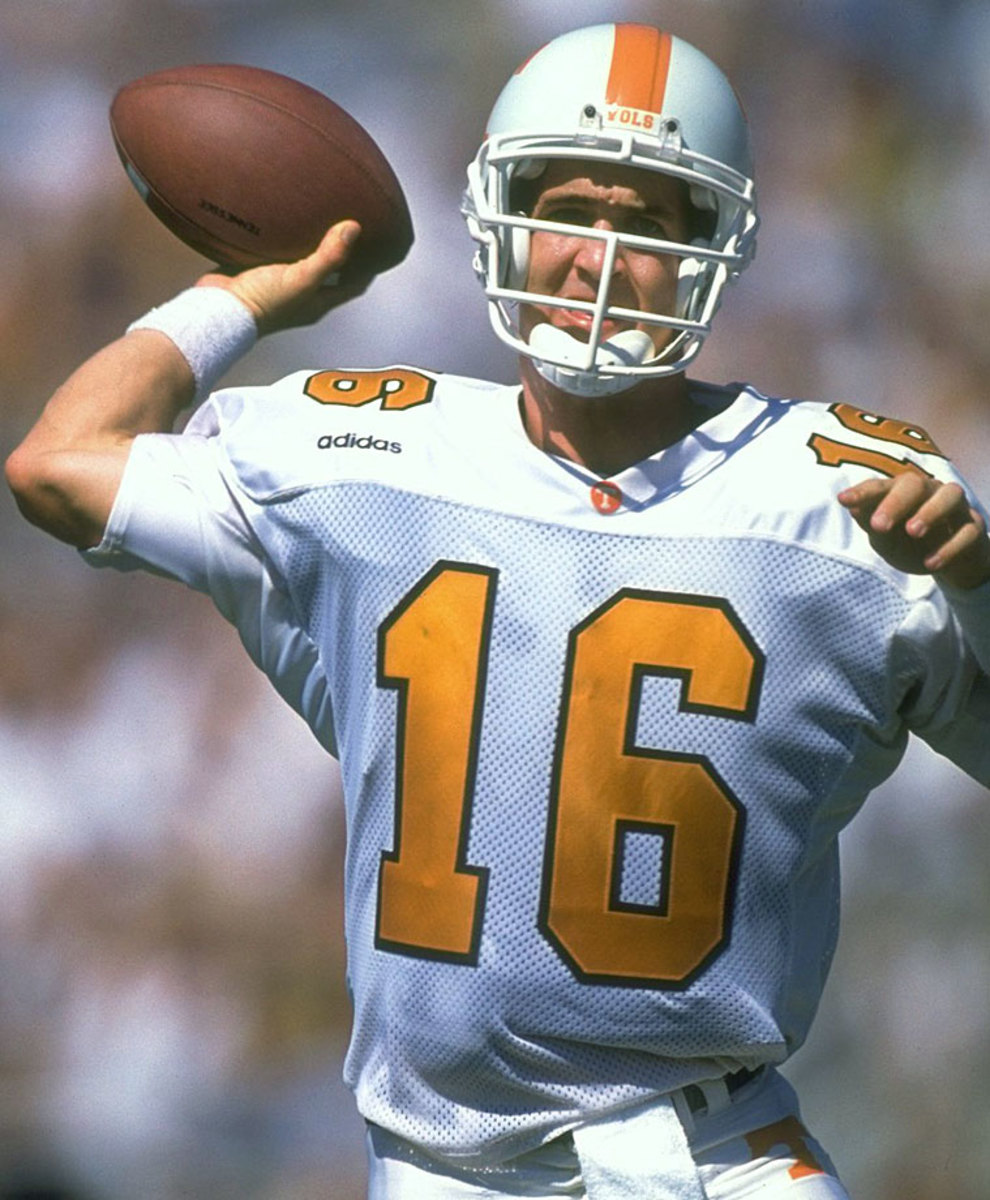
He made an immediate impact at Tennessee after arriving as a highly-regarded recruit from New Orleans, La. Manning was named the SEC Freshman of the Year in 1994 and helped the Volunteers win a combined 32 games over the next three seasons. As a senior, Manning threw for 3,819 yards with 36 touchdowns and 11 interceptions, won the Johnny Unitas Golden Arm Award and finished second, behind Michigan’s Charles Woodson, in the Heisman Trophy voting. — Runner-up: Gary Beban, QB, UCLA (1965-67)
No. 17 — Charlie Ward, QB, Florida State (1989-93)
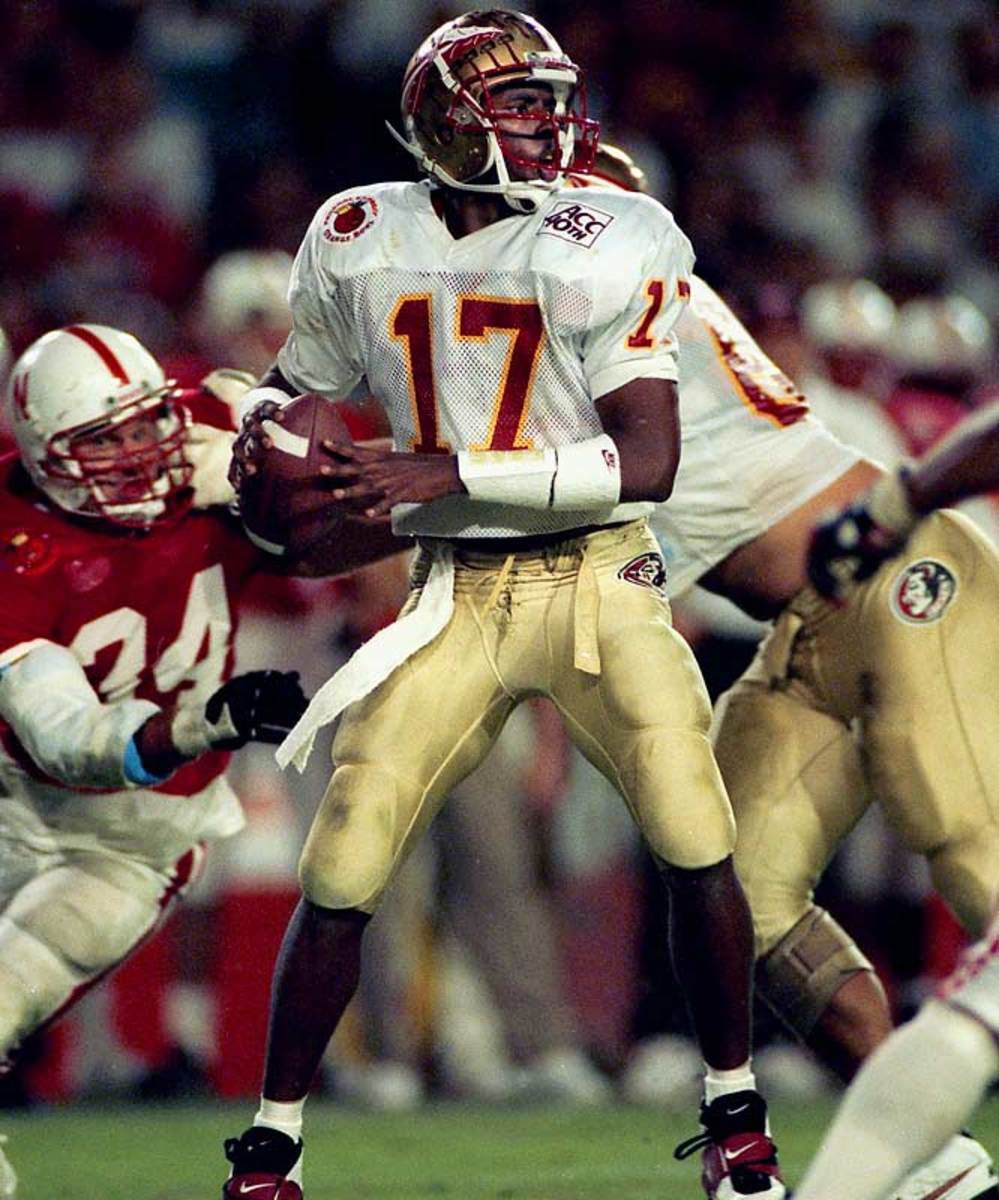
He set 19 school records and seven ACC records as a two-year starter for the Seminoles. Ward led Florida State to the school's first national championship and became Florida State's first Heisman Trophy winner in 1993. — Runner-up: Bobby Dodd, QB, Tennessee (1928-30)
No. 18 — Archie Manning, QB, Mississippi (1968-70)
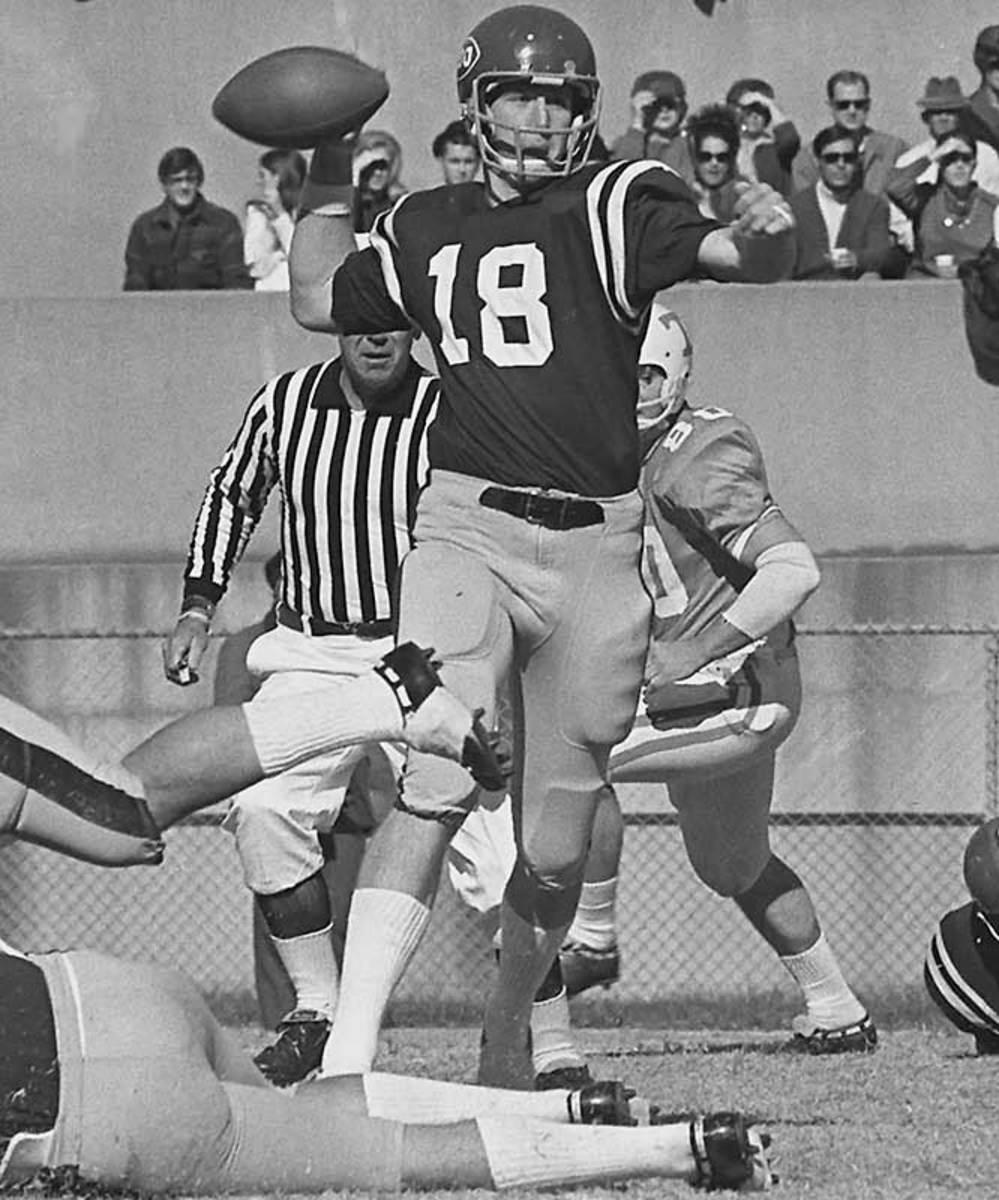
The legend of the elder Manning still rings across the South. He finished fourth in the Heisman in 1969 and was the Most Valuable Player in the Southeastern Conference. His 540 total yards against Alabama in a loss was an SEC record, later tied by LSU's Rohan Davey. — Runner-up: Roman Gabriel, QB, N.C. State (1959-61)
No. 19 — Eric Dickerson, RB, SMU (1979-82)
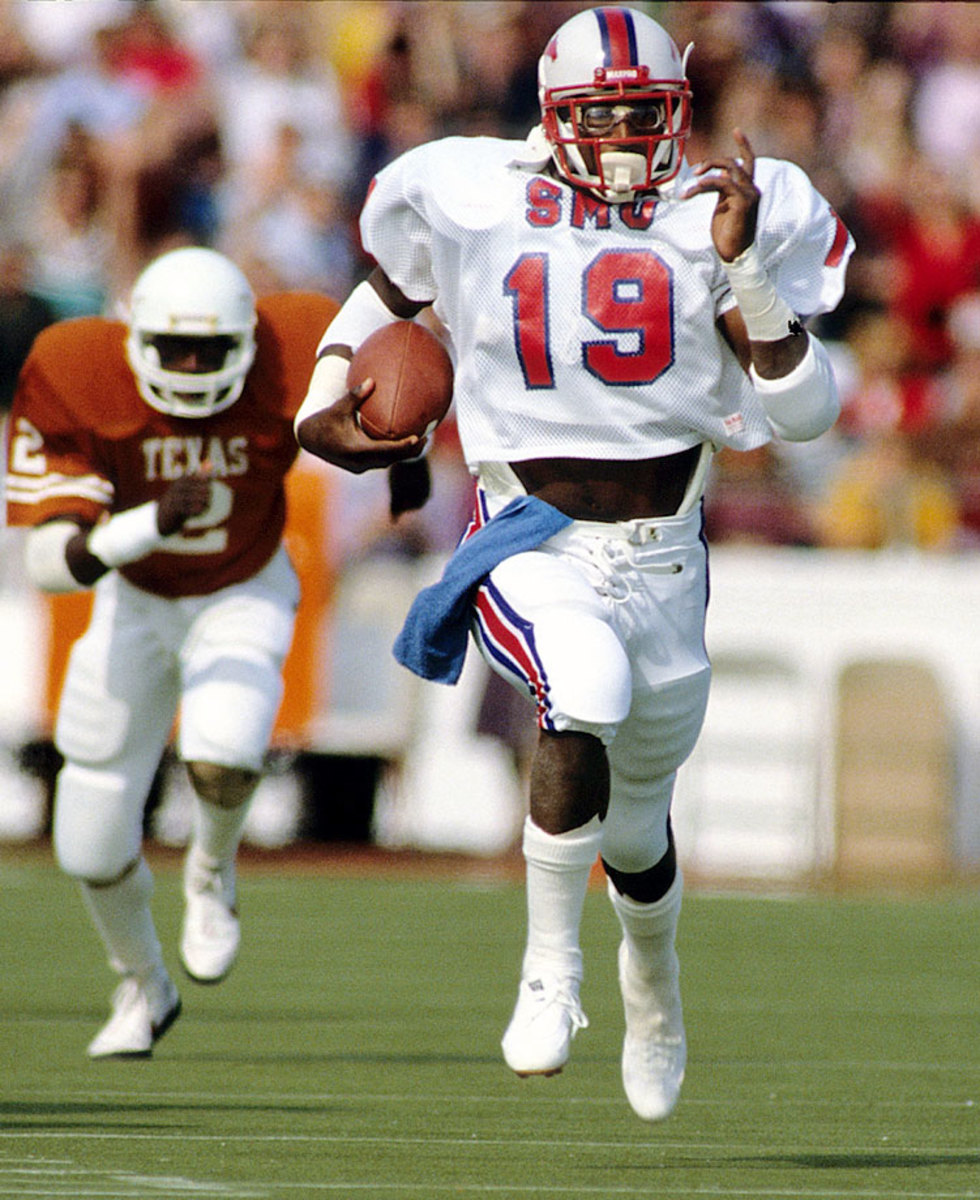
He scored 19 touchdowns in 1981 and 48 for his career, despite splitting time with ''Pony Express'' mate Craig James. Dickerson helped lead the Mustangs to an 11-0-1 record in 1982 and a No. 2 final AP ranking, its highest final ranking since 1947. He finished his college career with 4,450 yards on 790 carries. — Runner-up: Rashaan Salaam, TB, Colorado (1992-94)
No. 20 — Earl Campbell, RB, Texas (1974-77)
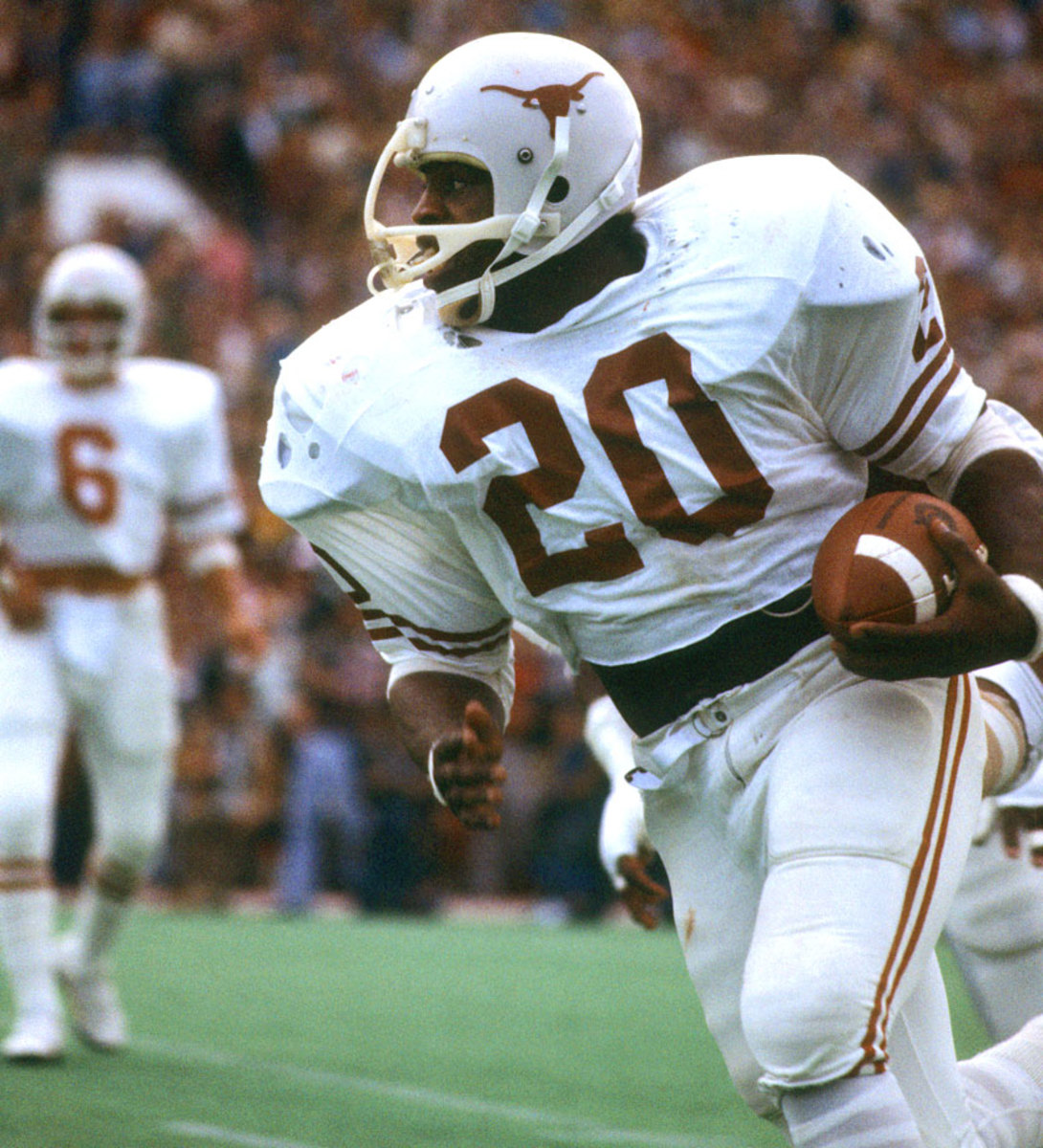
The Tyler Rose dominated like few running backs before him. He rushed for 4,443 rushing yards, 41 touchdowns and won the 1977 Heisman Trophy. — Runner-up: Johnny Rogers, KR/WR, Nebraska (1970-72)
No. 21 — Barry Sanders, HB, Oklahoma State (1985-88)
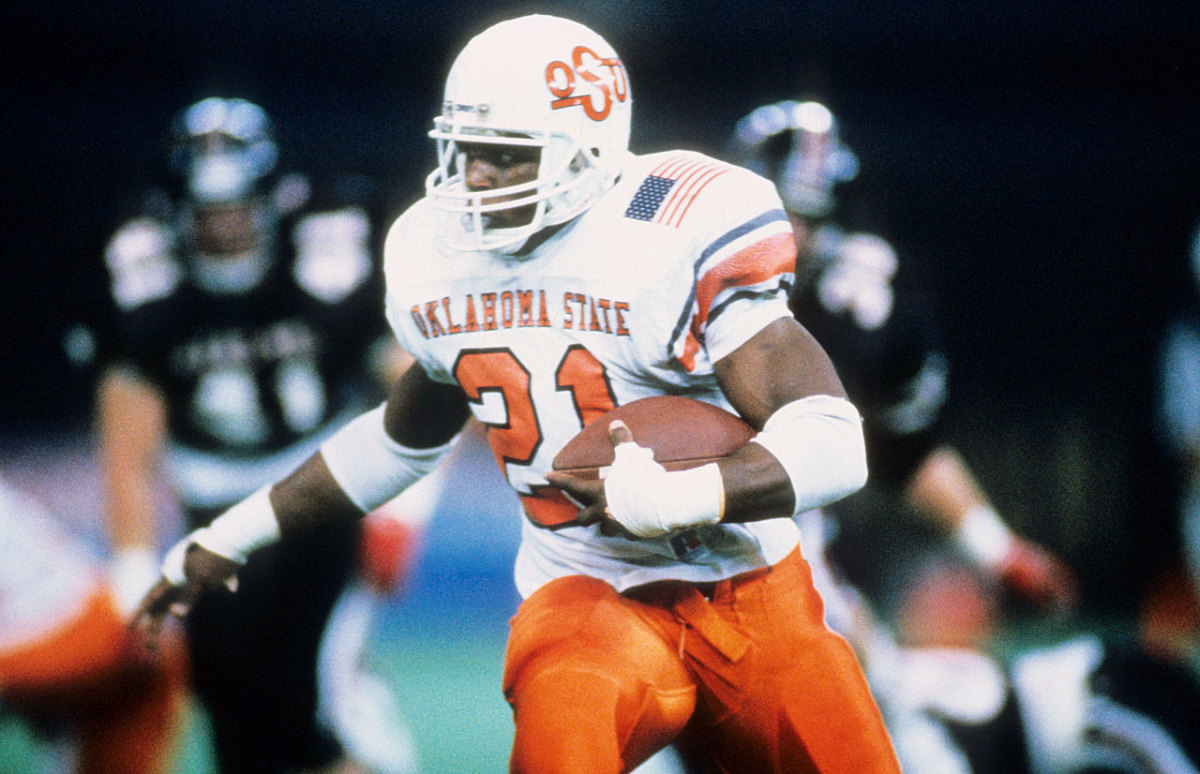
He played behind Thurman Thomas but when he got his chance ... wow. In 1988 Sanders set 34 NCAA records — he led the nation in rushing (2,628), all-purpose yards (3,250) and scoring (234 points) — and won the Heisman Trophy, Walter Camp and Maxwell Awards. — Runner-up: Desmond Howard, WR/KR, Michigan (1989-91)
No. 22 — Doug Flutie, QB, Boston College (1981-84)
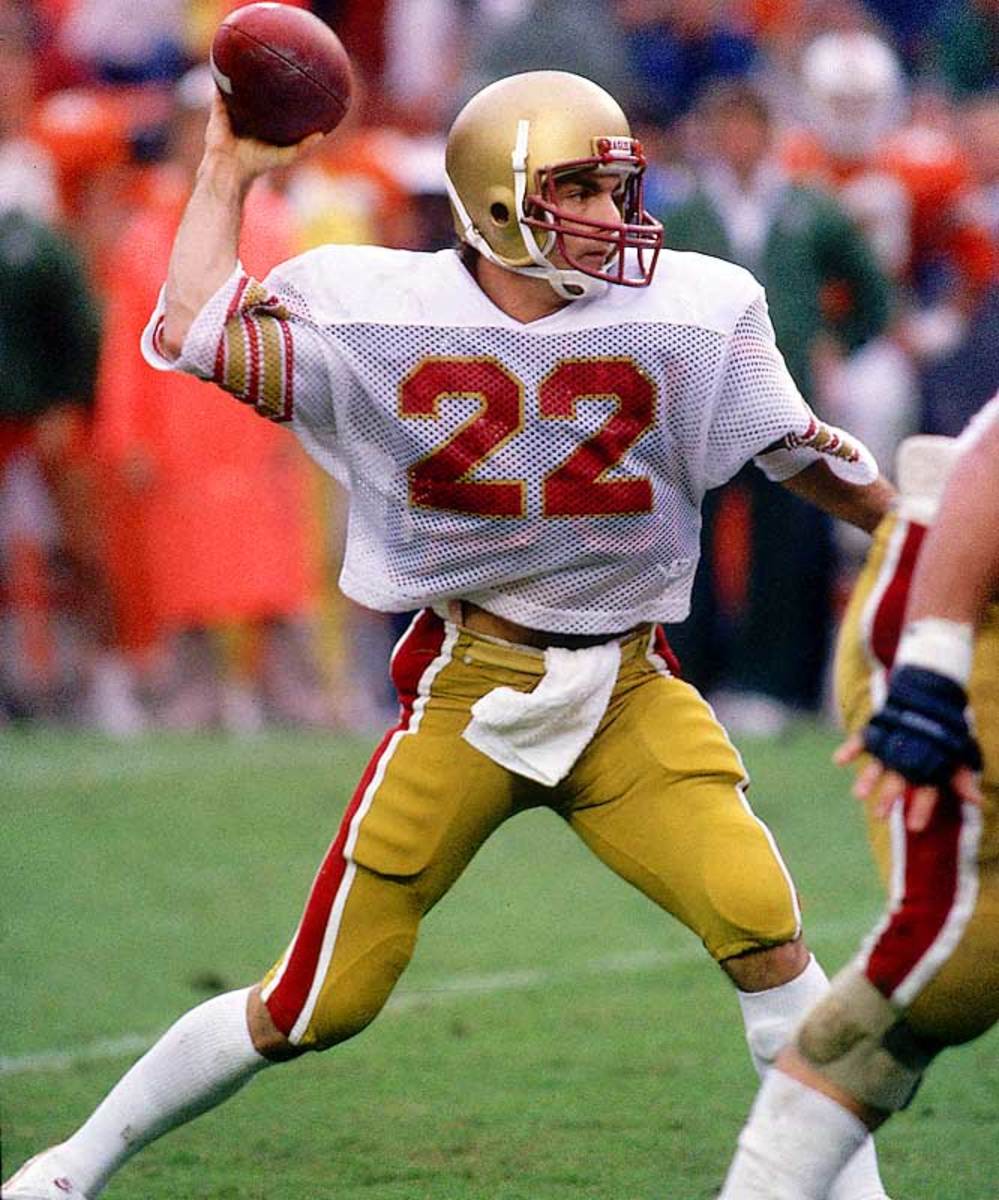
Flutie left Boston College as the NCAA's all-time passing yardage leader with 10,579 yards. His famed ''Hail Mary'' pass in 1984 against Miami sealed his Heisman Trophy award. — Runner-up: Emmitt Smith, RB, Florida (1987-89)
No. 23 — Jim Swink, RB, TCU (1954-56)
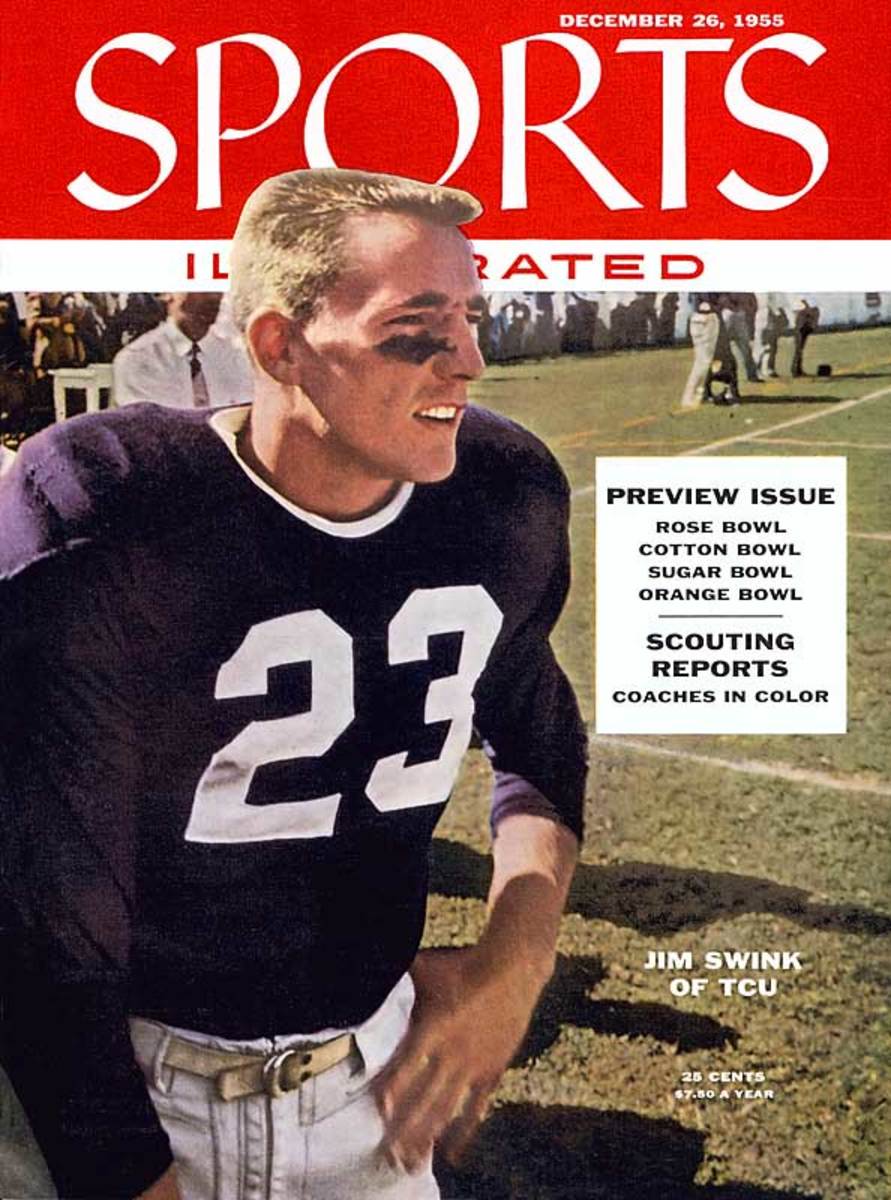
A two-time All-America, Swink was the nation's leading scorer and second-leading rusher as a junior in 1955. He scored a school-record 26 points in a 47-20 rout over Texas. — Runner-up: Leroy Keyes, RB, Purdue (1966-68)
No. 24 — Nile Kinnick, HB, Iowa (1937-39)
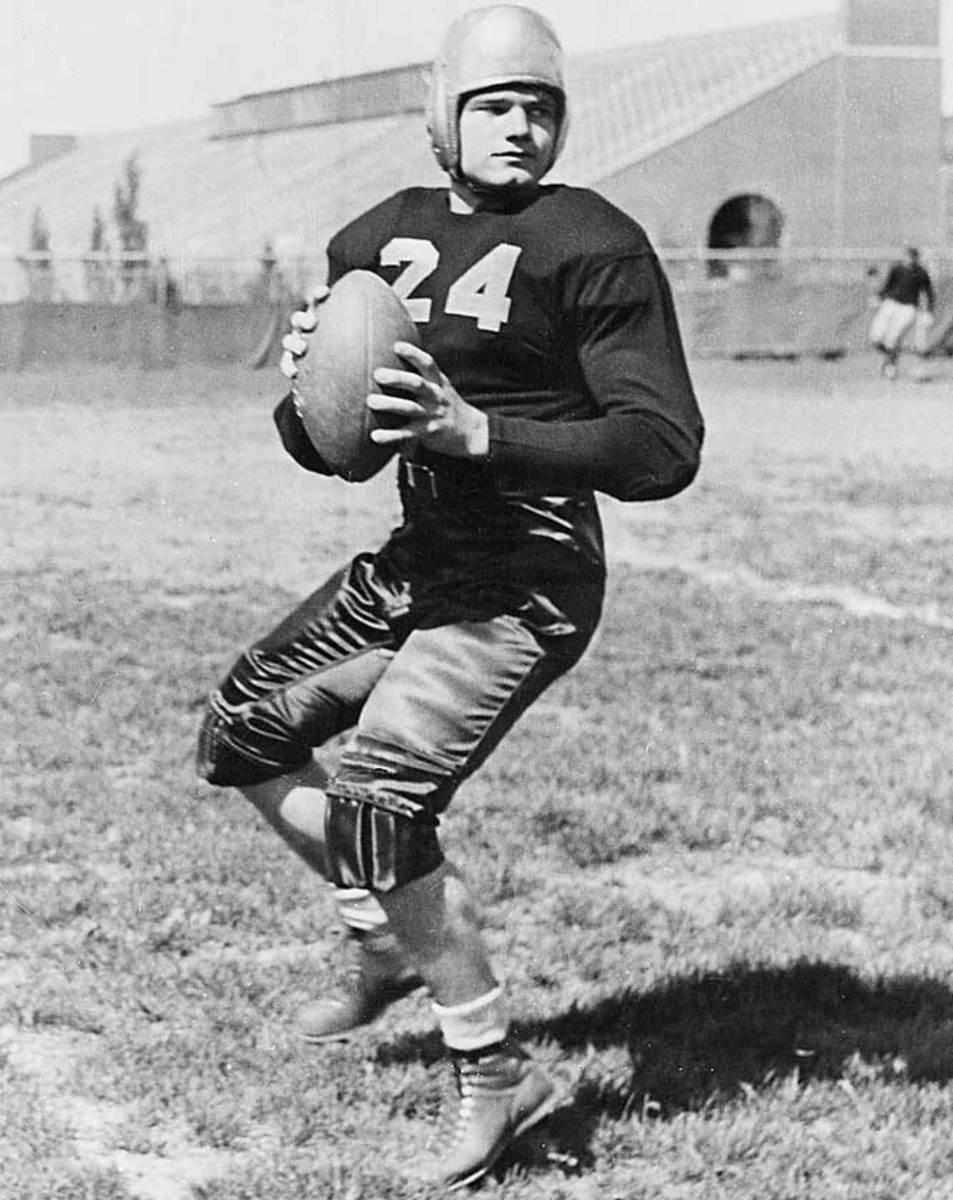
Kinnick led the Hawkeyes to a 6-1-1 record in 1939 and was responsible for 107 of the Hawkeyes' 130 points that season. — Runner-up: Pete Dawkins, HB, Army (1957-59)
No. 25 — Tommy McDonald, RB, Oklahoma (1954-56)
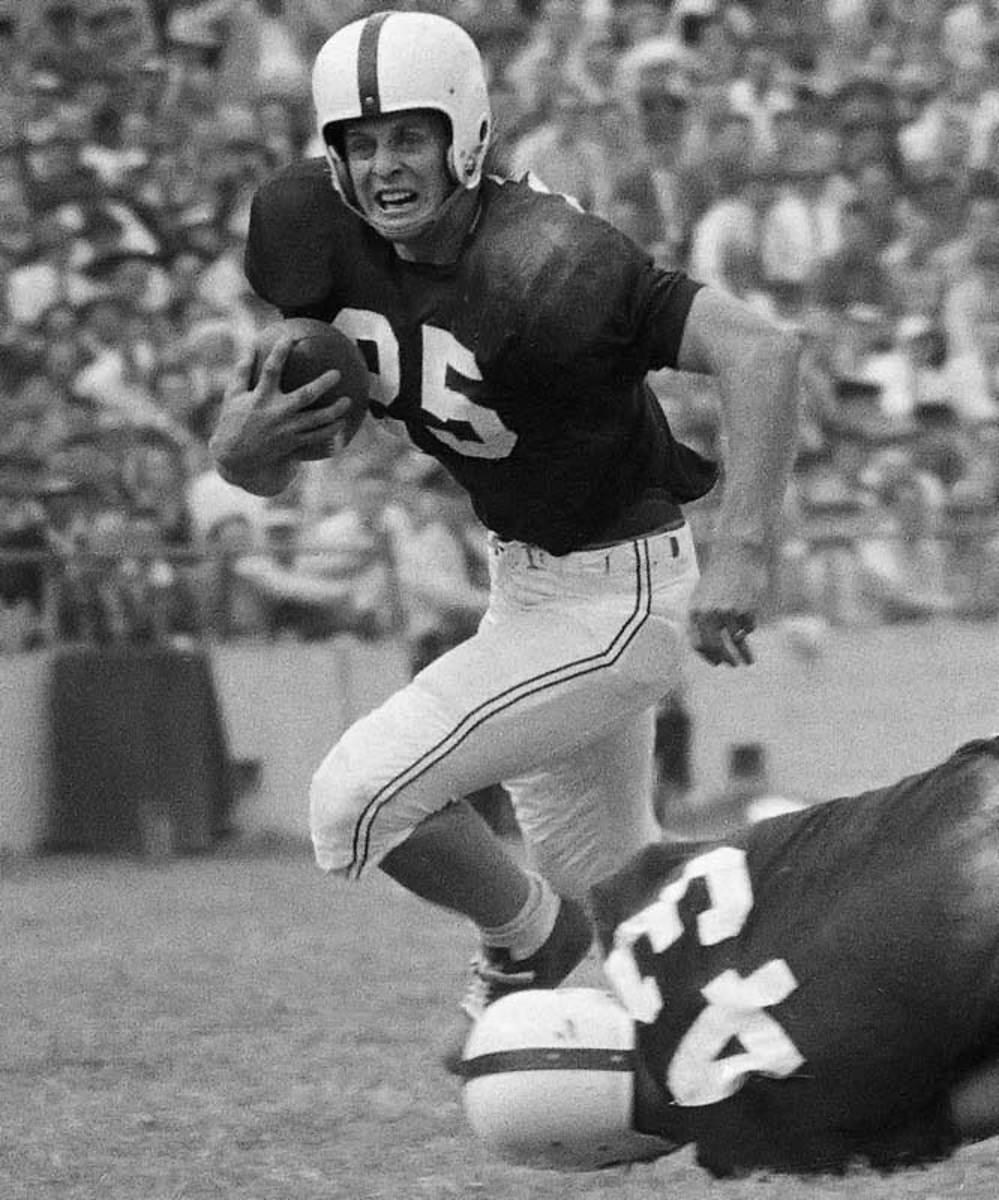
Though McDonald was slight of stature (5-foot-9 and 175 pounds), few played bigger him. He scored touchdowns in 20-of-21 games during his junior and senior seasons. In 1955, he became the first Sooner to score from scrimmage in every game. He had the most first-place votes for the Heisman in 1956 but lost the trophy to Notre Dame's Paul Hornung. — Runner-up: Raghib Ismail, HB, Notre Dame (1988-90)
No. 26 — Riley Smith, QB/FB, Alabama (1933-35)
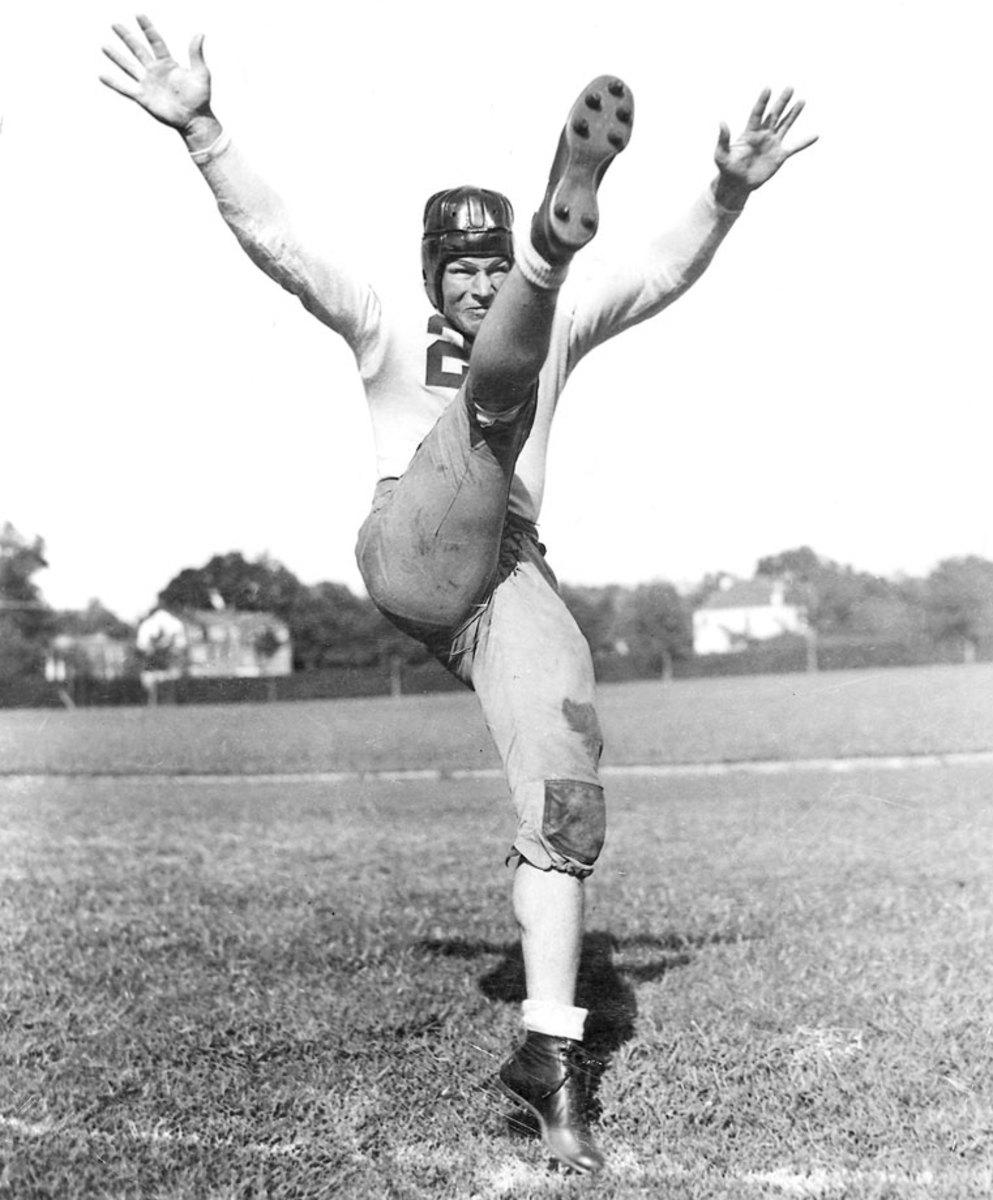
A remarkable multi-faceted talent — he played safety, punter and kicker — Smith quarterbacked Alabama to a national title in 1934. He was a two-time All-America and part of the famed '34 team that defeated Stanford in the Rose Bowl. — Runner-up: Jack Mitchell, QB, Oklahoma (1946-48)
No. 27 — Eddie George, RB, Ohio State (1992-95)
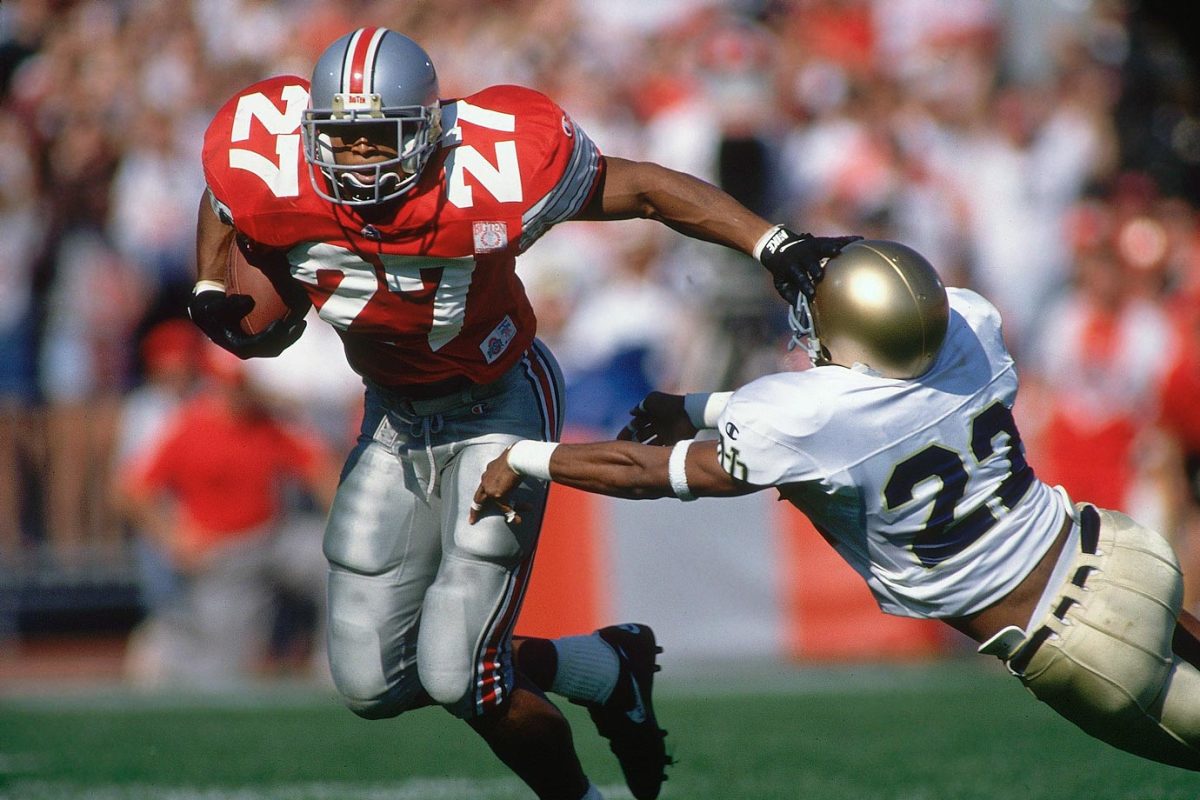
As a senior George rushed for a school-record 1,927 yards and 24 touchdowns, including 314 yards and three touchdowns against Illinois. He won the Heisman Trophy and Maxwell Award in 1995. — Runner-up: Joe Belino, HB, Navy (1958-60)
No. 28 — Adrian Peterson, RB, Oklahoma (2004-06)
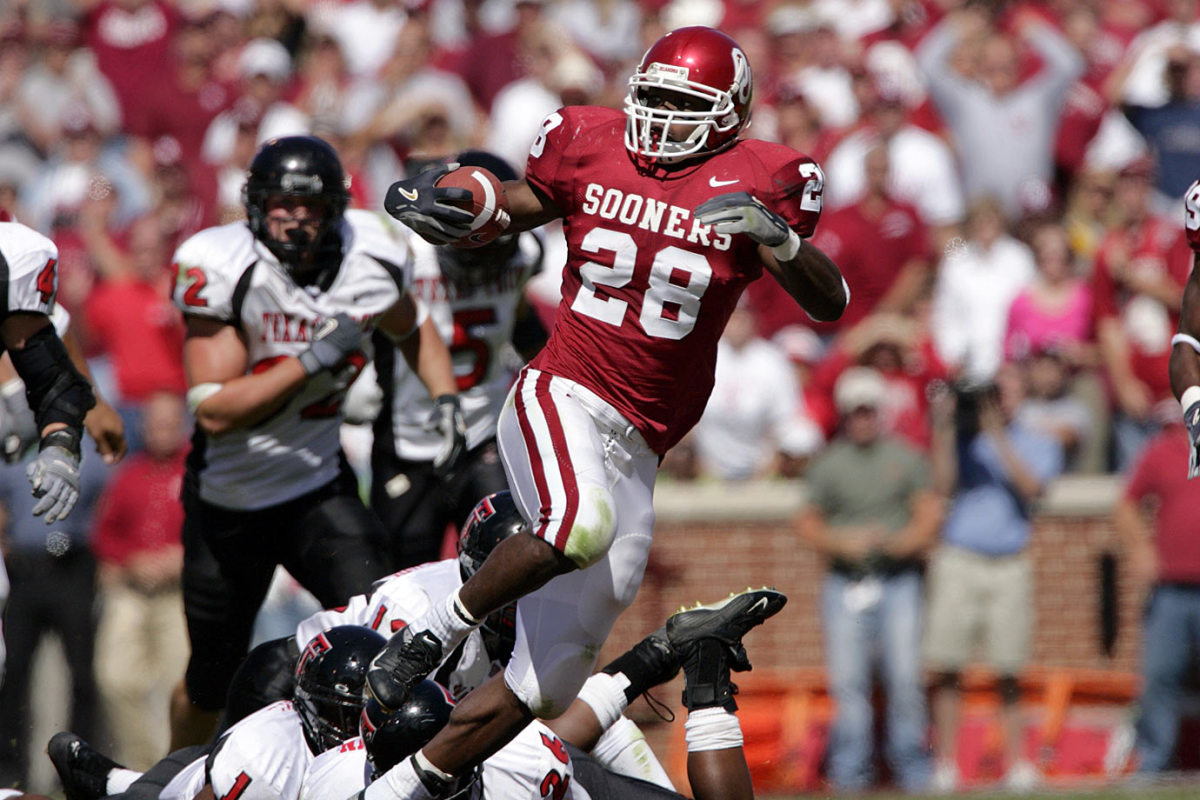
After being rated as the top overall recruit in the country by Rivals.com out of Palestine (Texas) High, Peterson set a freshman record by rushing for 1,925 yards in 2004. That season he helped Oklahoma compile a 12-1 record and he finished second in the Heisman Trophy voting. Peterson missed part of his final college season after breaking his collarbone on a touchdown run against Iowa State before declaring for the draft in 2007. — Runner-up: Anthony Davis, RB, USC (1972-74)
No. 29 — Eric Turner, S, UCLA (1987-90)
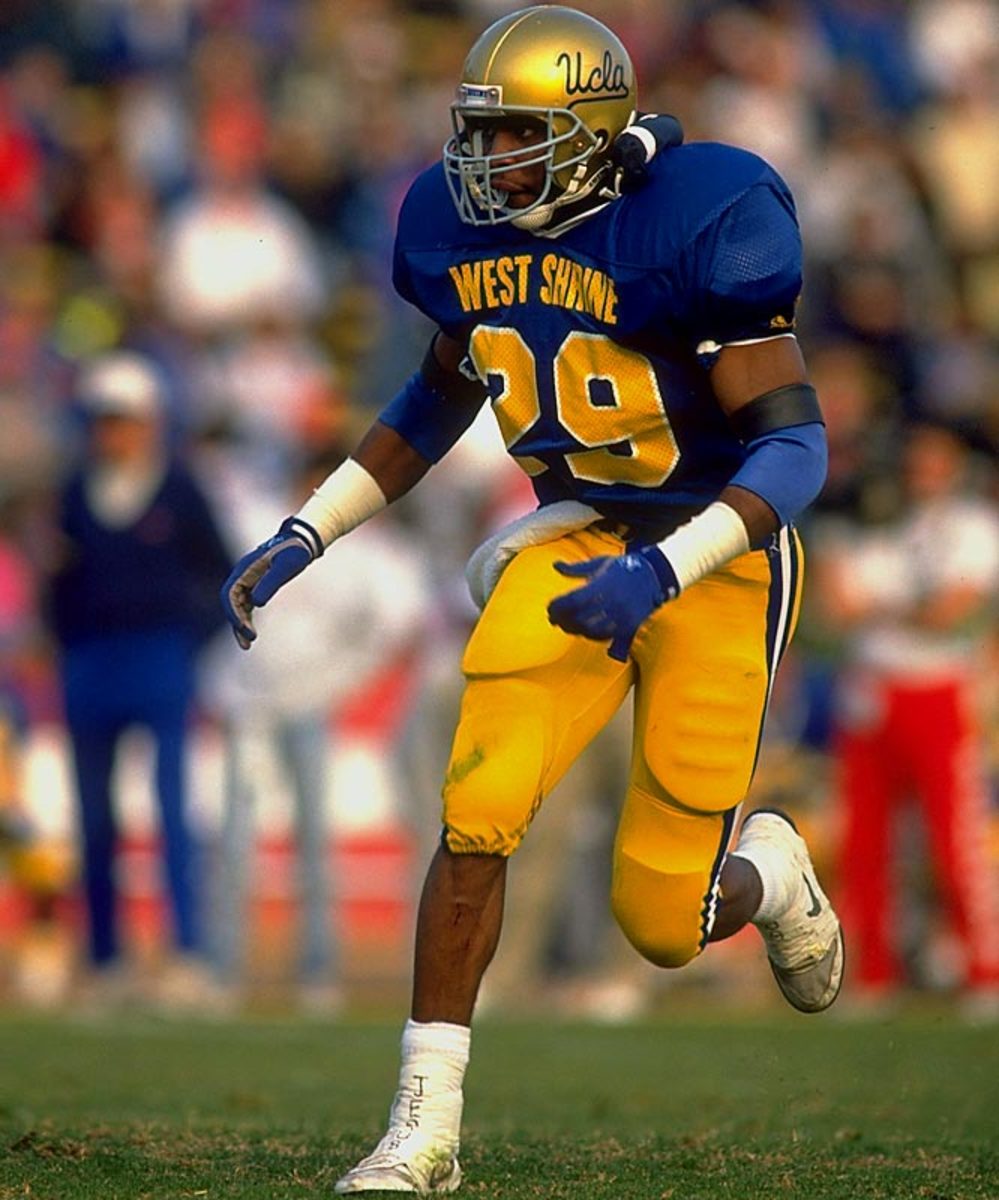
A free safety for the Bruins, Turner earned All-America honors in 1990 and ranks fourth in career tackles (369) and interceptions (14) at UCLA. — Runner-up: Bruce Smith, Great Lakes Naval Training Station (1942)
No. 30 — Mike Rozier, RB, Nebraska (1981-83)
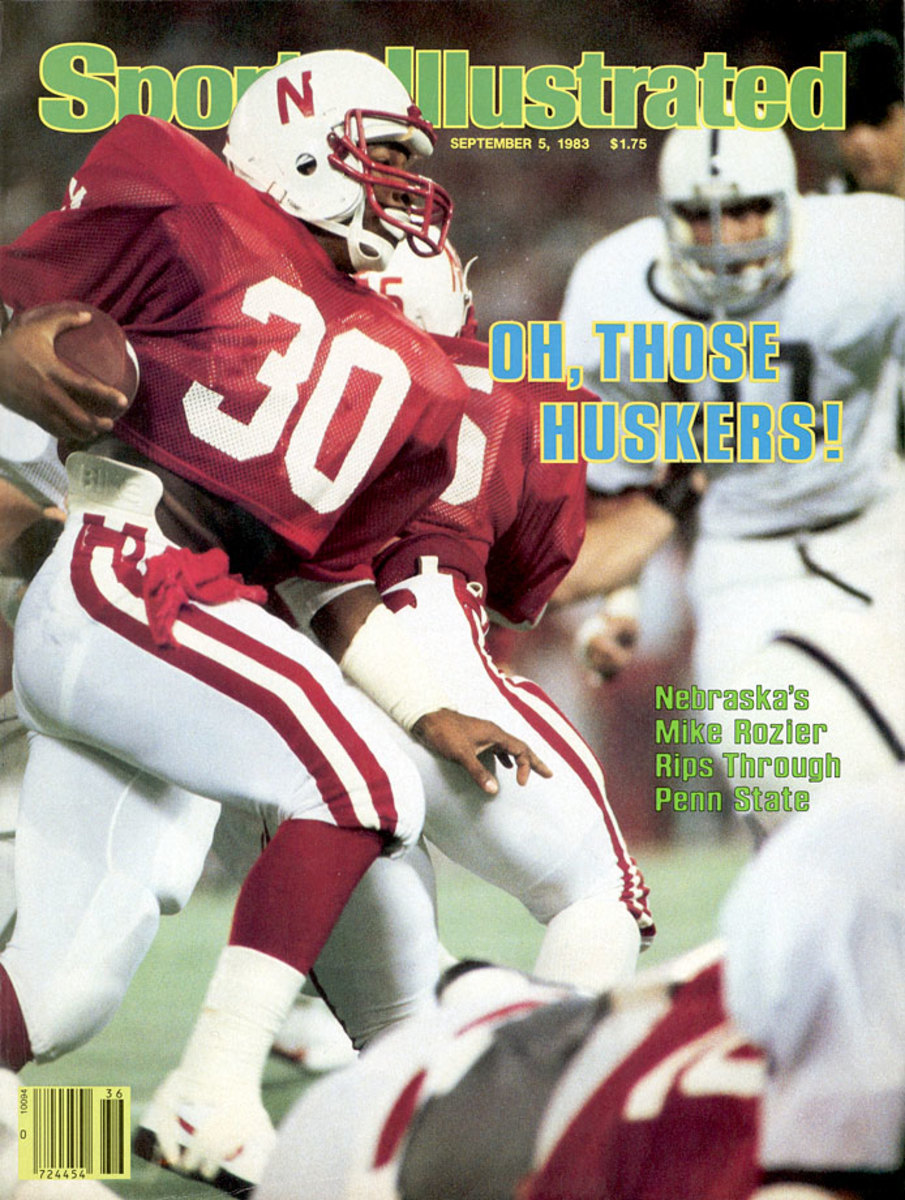
Has anyone ever had a better senior season? Rozier won the Heisman in 1983 by rushing for 2,148 yards on 275 carries scoring a school-record 29 touchdowns. He averaged 179 yards per game and rushed for more than 100 yards in 11 straight contests. Rozier ran for a school-record 4,780 rushing yards in his three-year career. — Runner-up: Alex Wojciechowicz, C (1935-37)
No. 31 — Vic Janowicz, HB, Ohio State (1949-51)
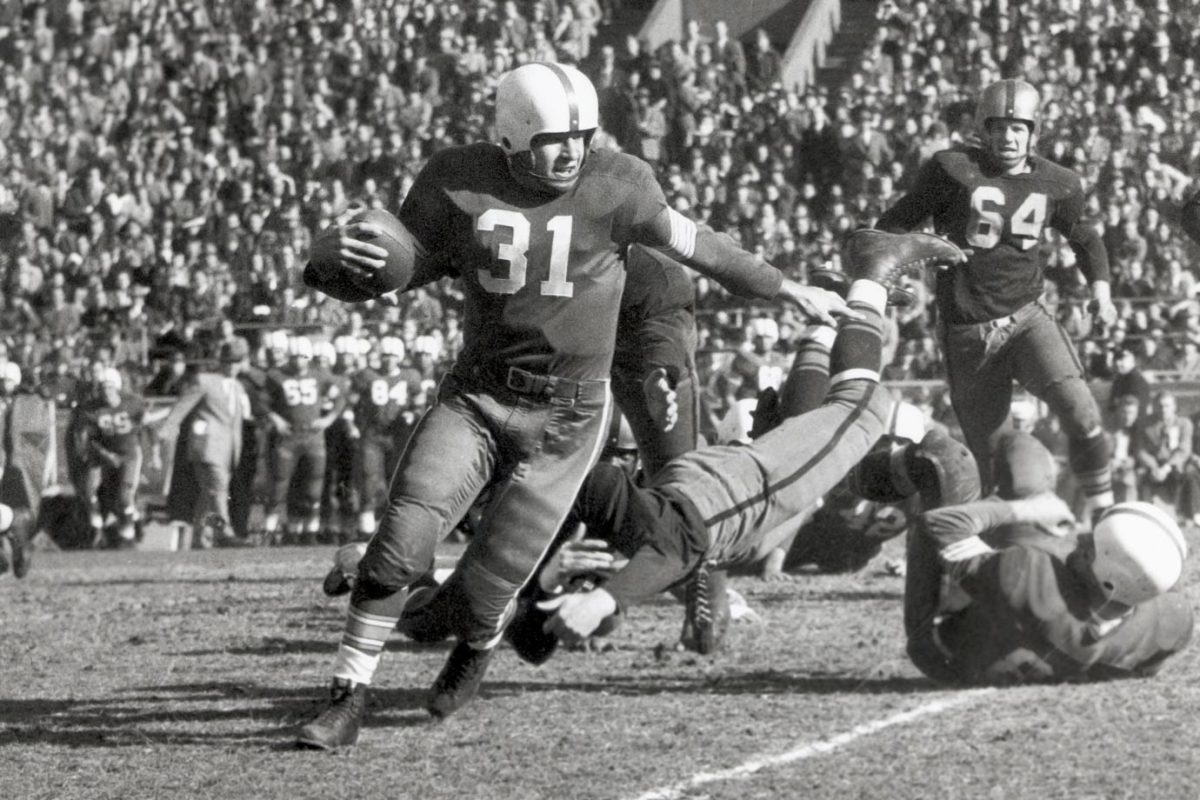
A threat from anywhere on the field — he was a place-kicker, punter, played safety on defense and was an outstanding blocker — Janowicz became the third junior to win the Heisman in 1950. Many consider him the greatest athlete in Buckeye history. — Runner-up: Shane Conlan, LB, Penn State (1982-86)
No. 32 — O.J. Simpson, TB, USC (1967-68)
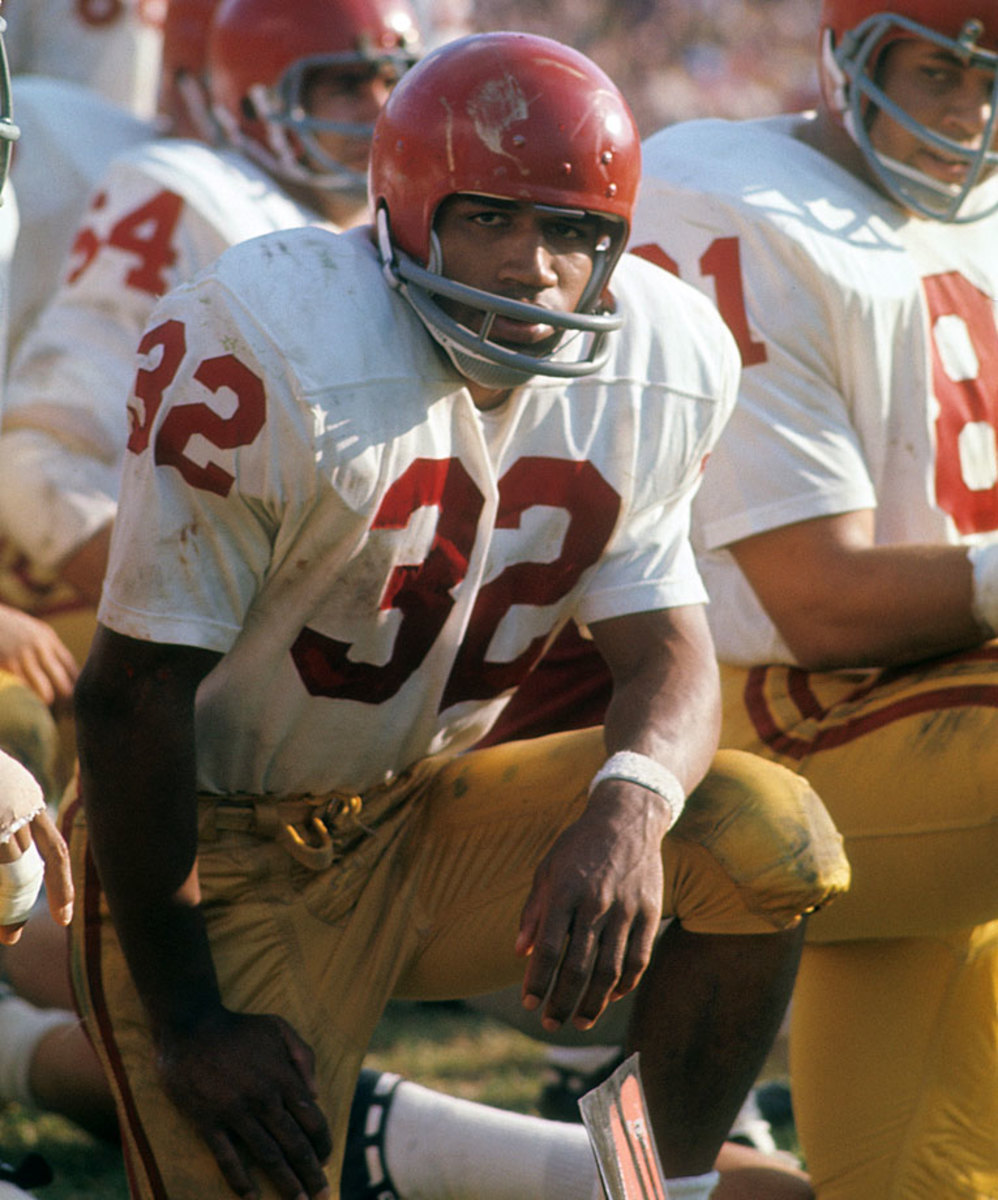
Before the court cases and eternal infamy, Simpson was a once-in-a-generation college running back. In 1967 he led the country in rushing with 1,451 yards on 266 carries and 11 touchdowns. The following year — en route to winning the Heisman Trophy — he ran for 1,709 yards and 22 touchdowns while leading USC to a 9-0-1 regular season record. — Runner-up: Johnny Lujack, Notre Dame (1943, 46-47)
No. 33 — Tony Dorsett, TB, Pittsburgh (1973-76)
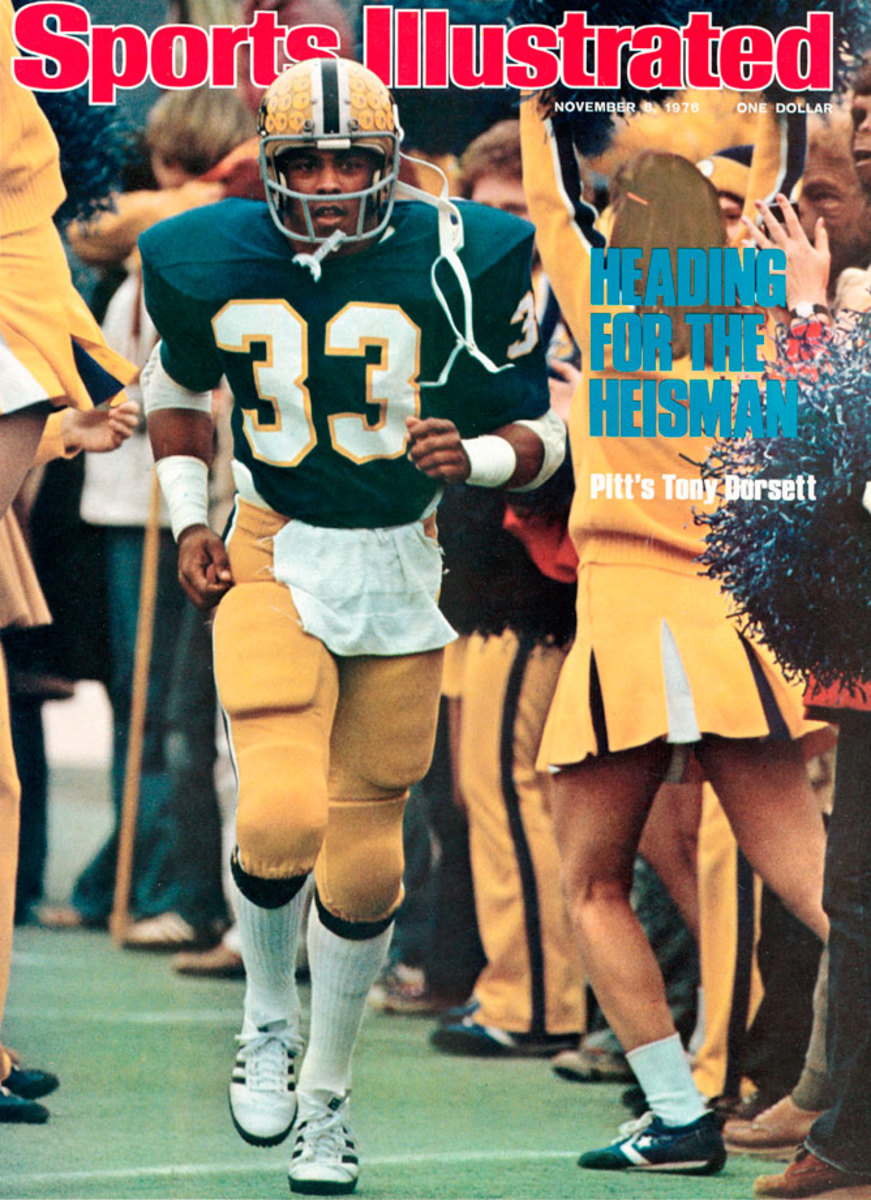
Dorsett owned most of the NCAA's rushing records at the end of his four-year career, from most yards gained to most rushes. He had a four-year total of 6,082 rushing yards. As a Junior, Dorsett ran for 303 yards against Notre Dame. A year later, he led his team to a national championship win over Georgia in the Sugar Bowl. — Runner-up: Herb Joesting, FB, Minnesota (1925-27)
No. 34 — Herschel Walker, RB, Georgia (1980-82)
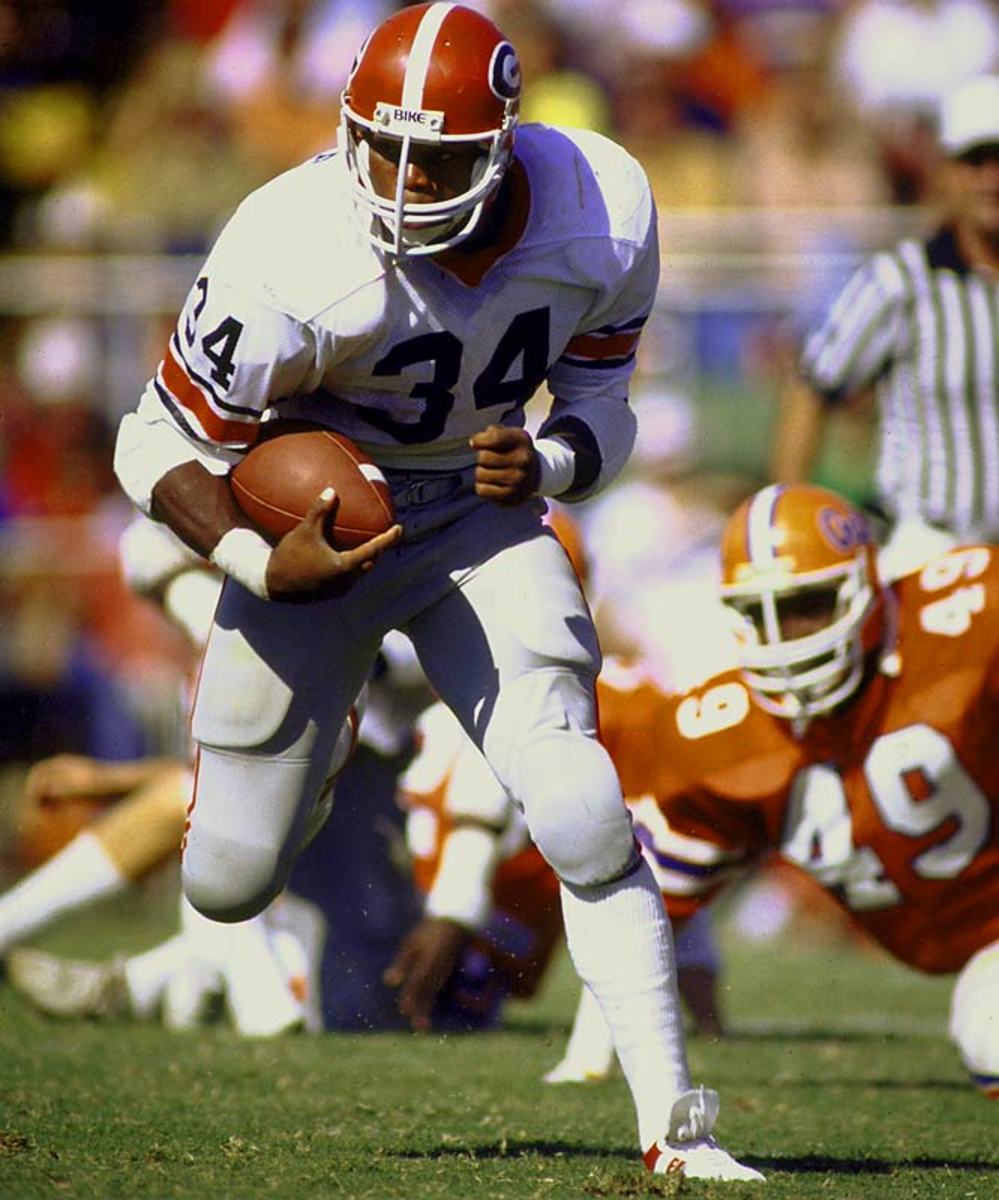
Walker rushed for 5,259 yards in three seasons and scored 55 touchdowns in 33 regular season games. In 1982 Walker became the seventh junior to win the Heisman Trophy, one place ahead of John Elway. He's on the short list for the greatest college football player ever. — Runner-up: Bo Jackson, RB, Auburn (1982-85)
No. 35 — Felix "Doc" Blanchard, FB, Army (1944-46)
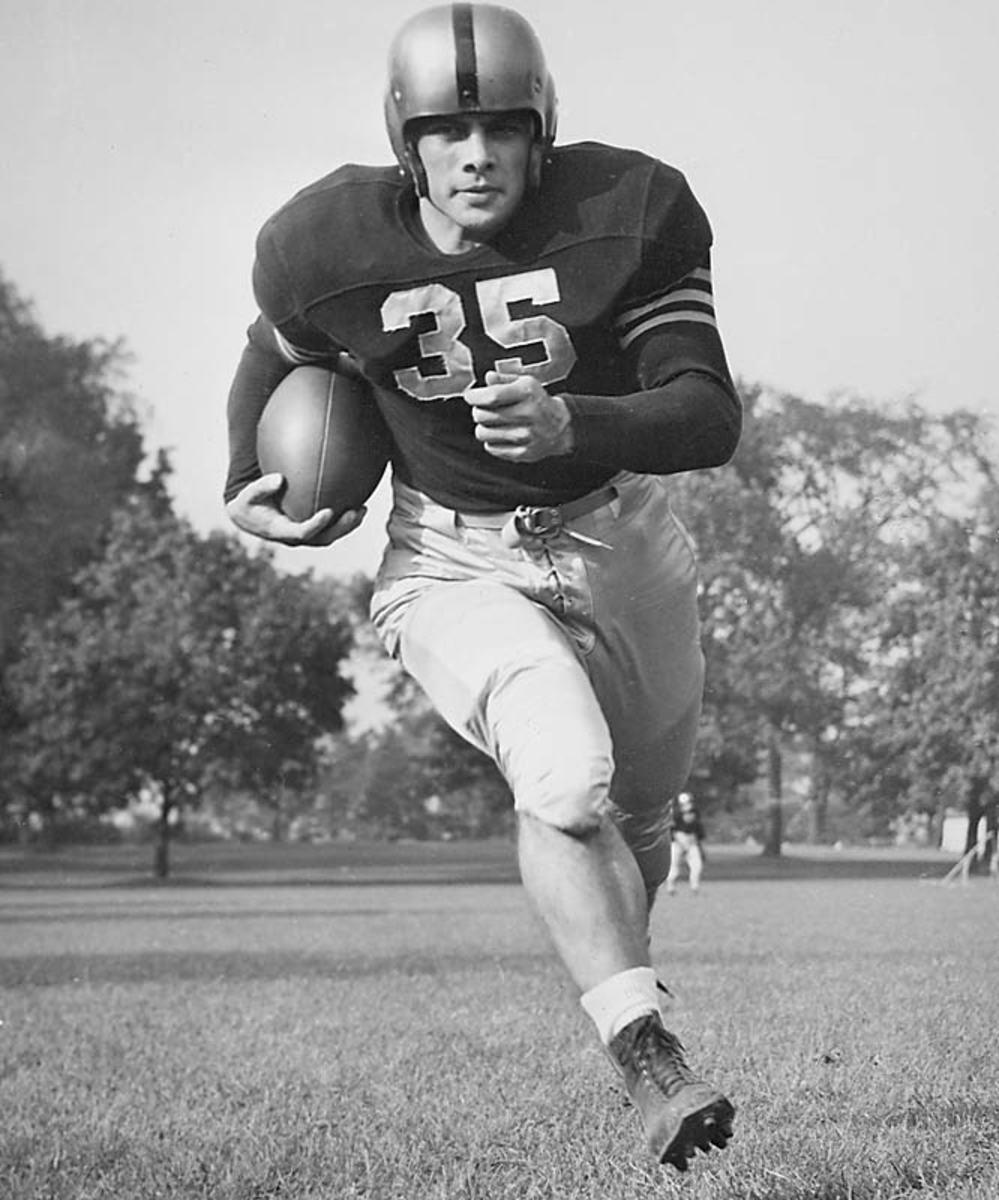
His Mr. Inside teamed with Glenn Davis (Mr. Outside) to form one of the great running back tandems. Blanchard never lost a game as a collegian (27-0-1) — his only blemish was a 0-0 tie in 1946 against Notre Dame — and in 1944 he won the Heisman Trophy and Maxwell. — Runner-up: Tank Younger, RB, Grambling (1945-48)
No. 36 — Steve Owens, HB, Oklahoma (1967-69)
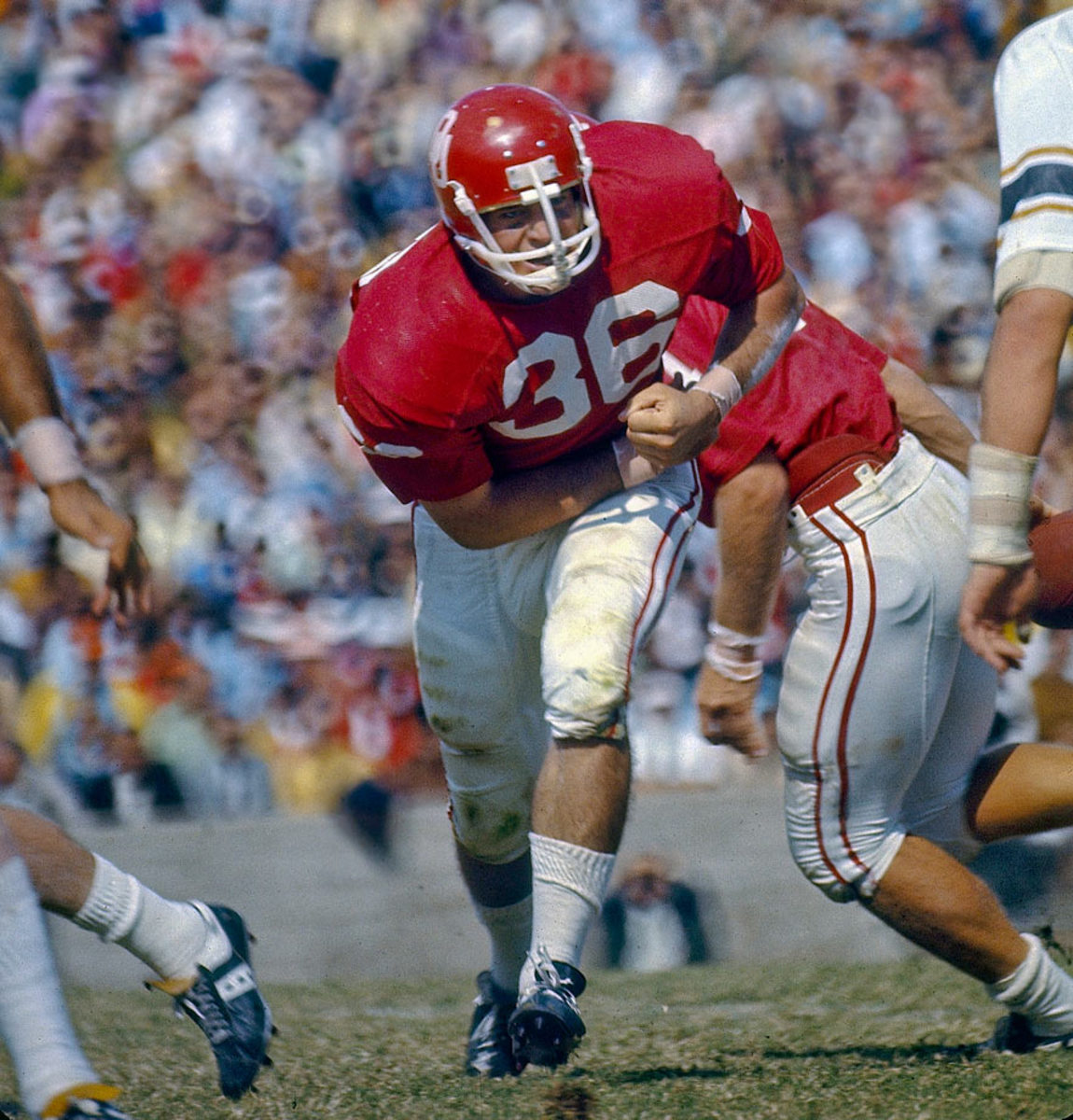
A two-time All-America, Owens was the second player in OU history to win the Heisman (1969). He scored 57 touchdowns, including 23 in 1969. — Runner-up: Chris Spielman, LB Ohio State (1984-87)
No. 37 — Doak Walker, RB, SMU (1945, '47-49)
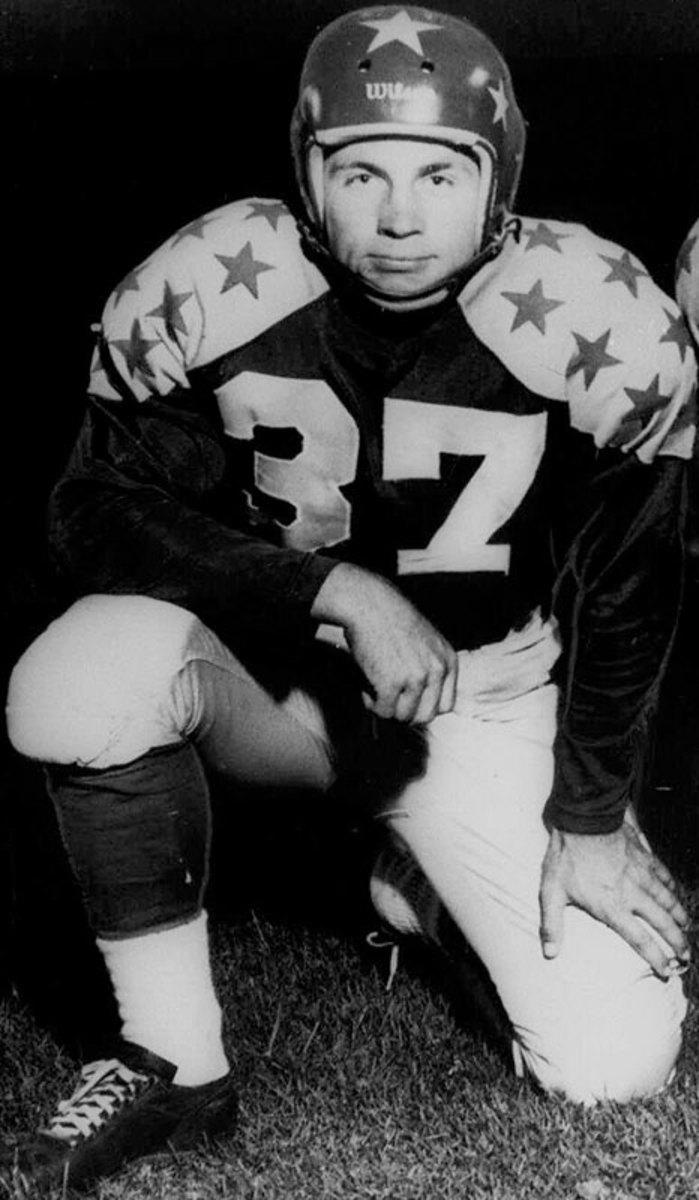
An all-everything player for SMU — he played running back, defensive back, punted and returned kicks, among other things — Walker won the Heisman in 1948 and was a three-time All-America. In one memorable 1947 game against Texas Christian, he had runs of 80, 61 and 56 yards. — Runner-up: Creighton Miller, HB, Notre Dame (1941-43)
No. 38 — George Rogers, RB, South Carolina (1977-80)
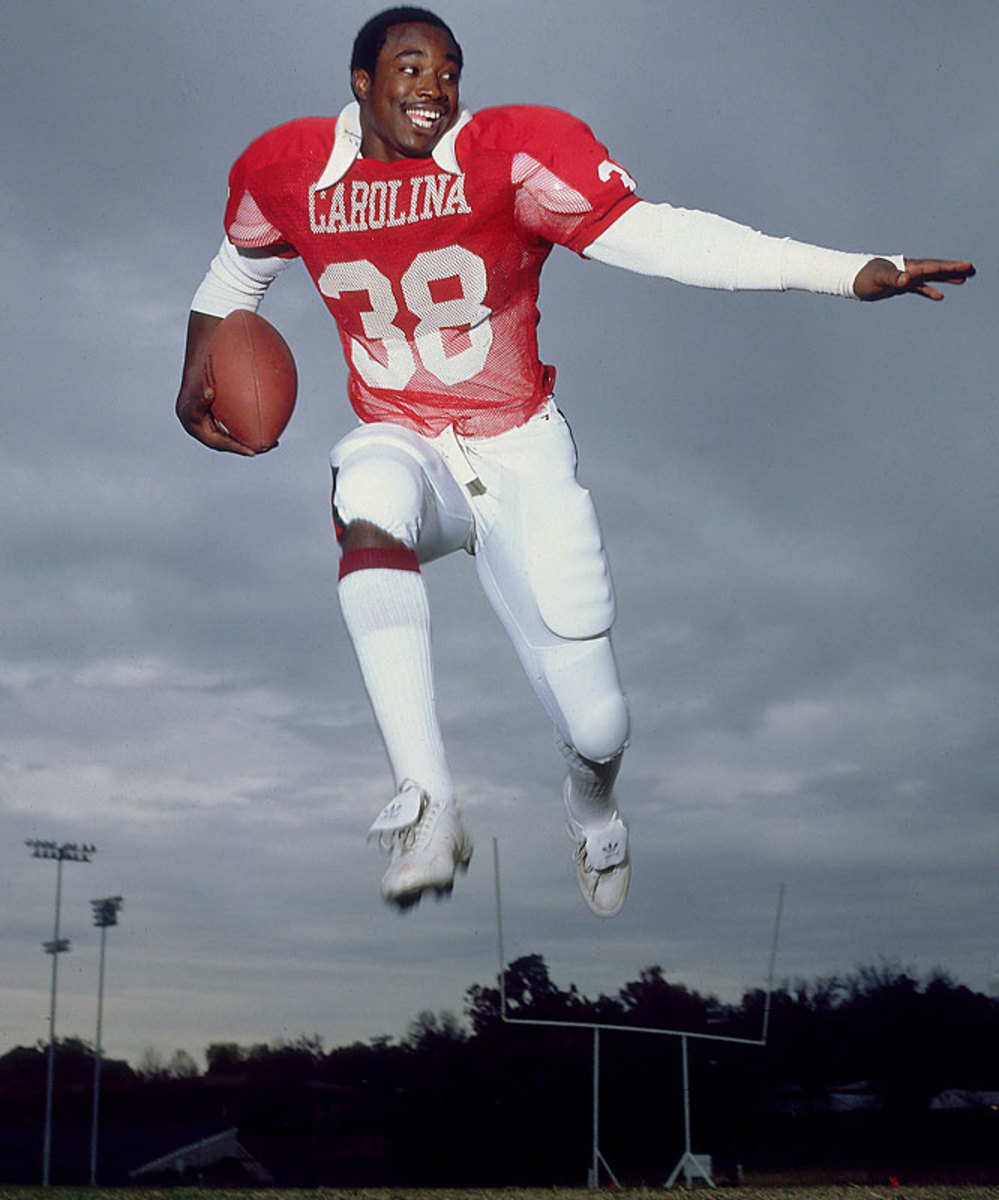
The best football player in Gamecock history, Rogers was a two-time All-America and won the Heisman in 1980. He had 27 games in which he rushed for 100 or more yards. — Runner-up: Sam Francis, FB, Nebraska (1934-36)
No. 39 — John Kimbrough, FB, Texas A&M (1938-40)
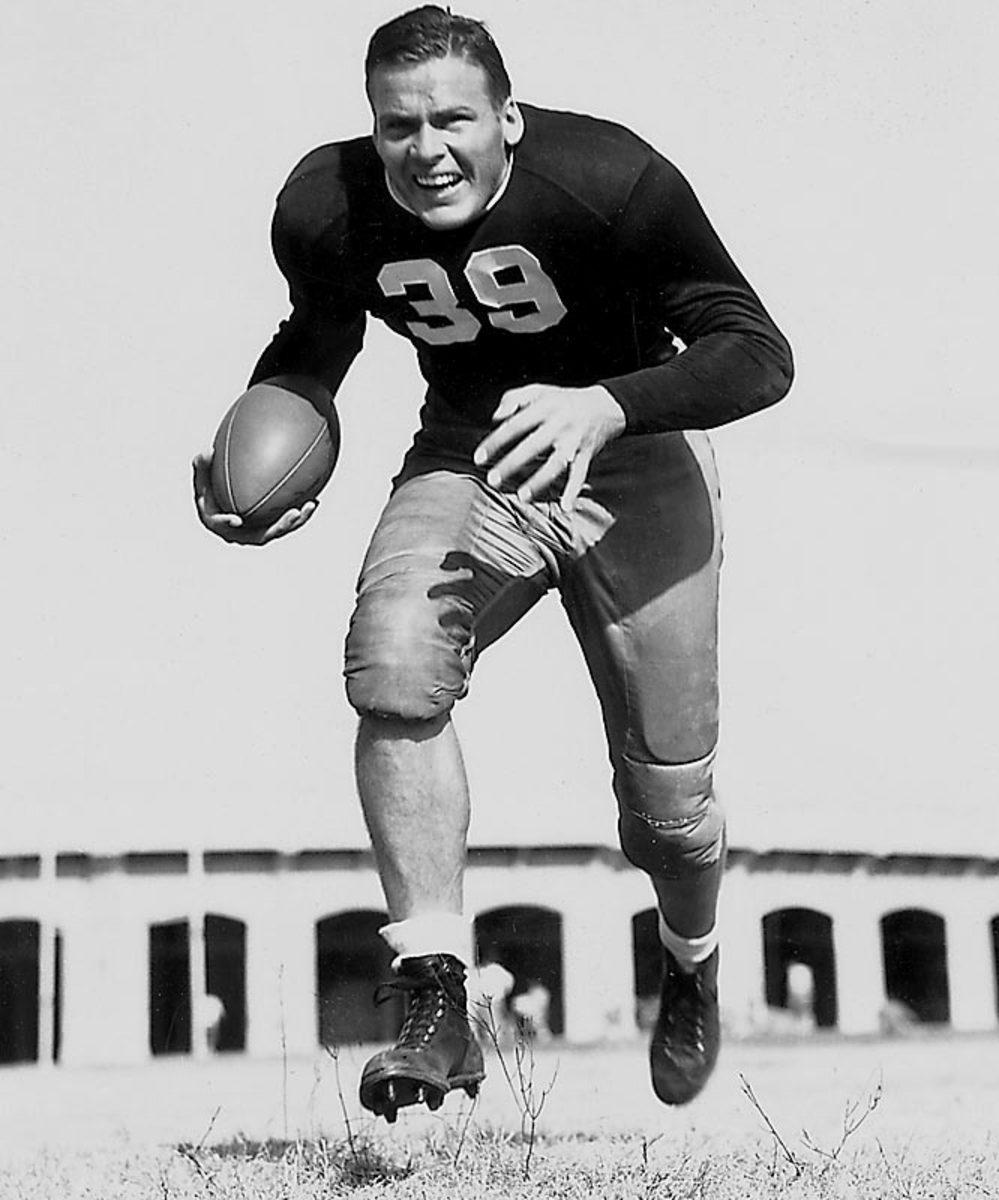
A two-time All-America, Kimbrough rushed for 152 yards and two touchdowns in A&M's 14-13 win over Tulane for the national championship. The following year he was the Heisman Trophy runner-up behind Tom Harmon. — Runner-up: Sam Cunningham, FB, USC (1970-72)
No. 40 — Howard Cassady, RB/DB, Ohio State (1952-55)
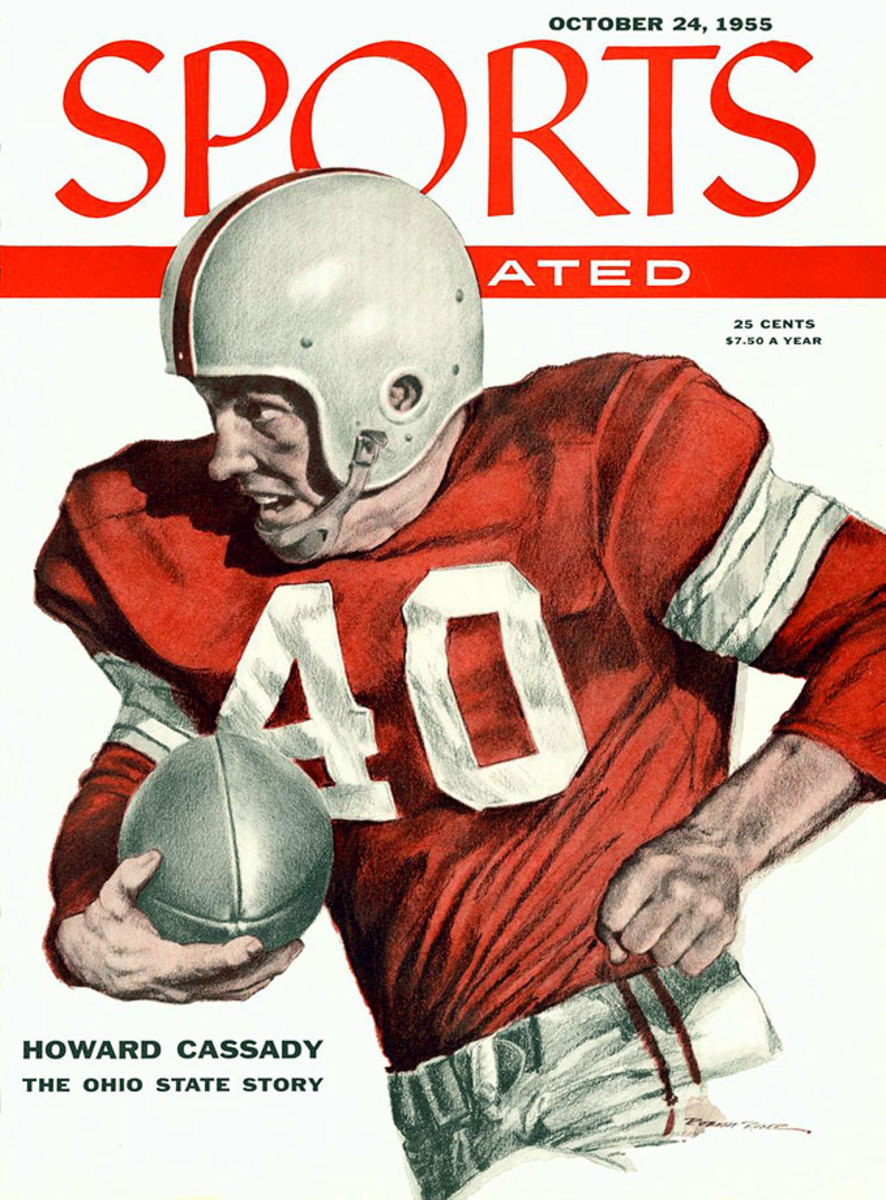
''Hopalong'' scored 37 touchdowns in 36 games and won the Heisman as a senior in 1955, the same year he was chosen Athlete of the Year by the Associated Press. The nickname came after his first game at Ohio State, when sportswriters who saw him play said he ''hopped all over the field like the performing cowboy,'' a reference to Hopalong Cassady. — Runner-up: Elroy Hirsch, RB, Wisconsin (1942)
No. 41 — Glenn Davis, HB, Army (1943-46)
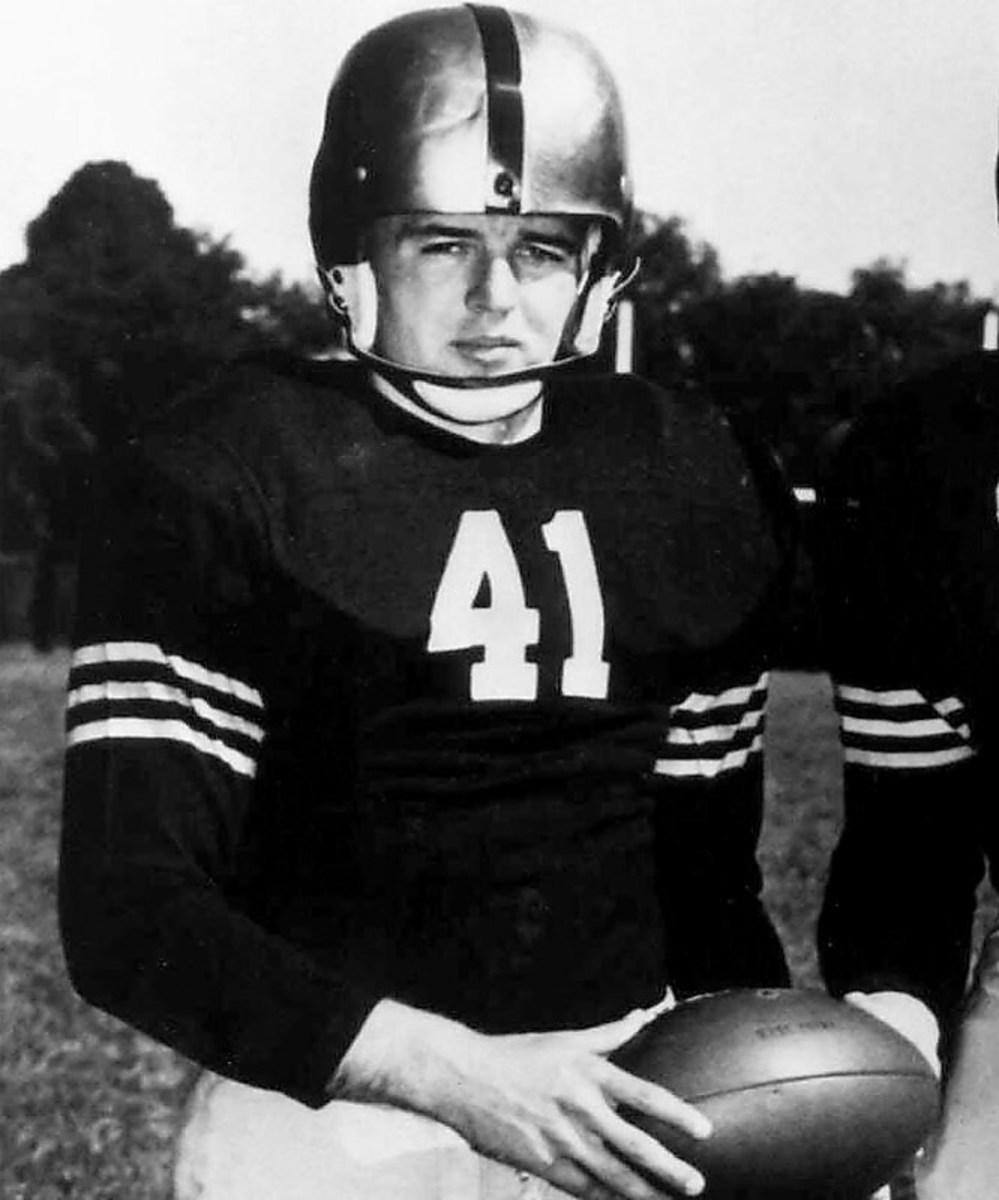
Davis, the famed Mr. Outside for Army, averaged almost one touchdown every nine plays. A three-time All-America, he scored 59 touchdowns during his career and won the Heisman in 1956. He finished second in the Heisman voting in 1954 and 1955. — Runner-up: Keith Byars, RB, Ohio State (1982-84)
No. 42 — Marshall Goldberg, FB/HB, Pittsburgh (1936-38)
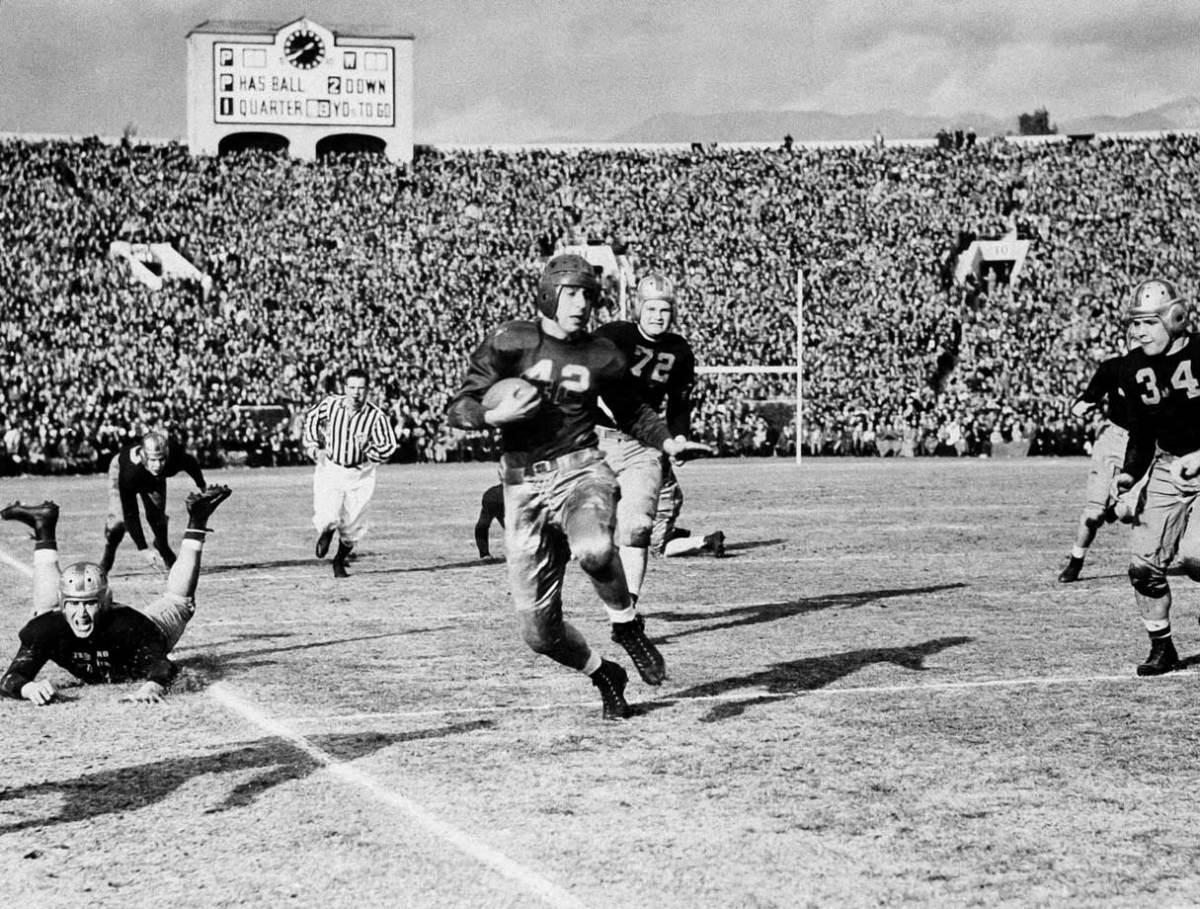
Goldberg was an All-America in 1937 (Pitt won a national championship that season) and 1938 and led the nation in rushing in 1936. He finished third in the Heisman voting in 1937 and was runner-up in 1938. — Runner-up: Ronnie Lott, S, USC (1977-80)
No. 43 — Terry Kinard, S, Clemson (1978-82)
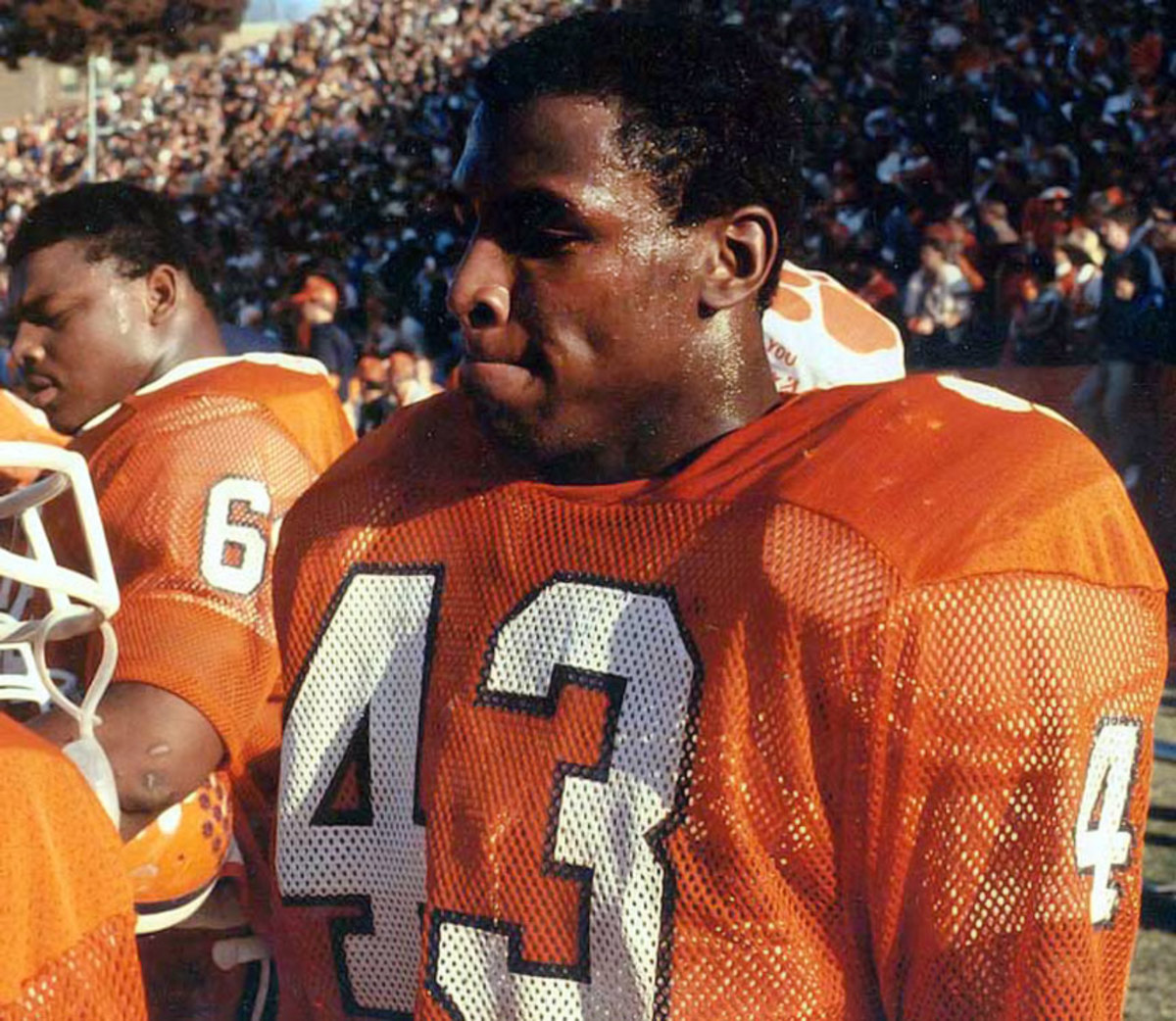
Kinard had 17 interceptions, 30 pass deflections, and 292 tackles during his college career. He led his team in tackles and was a consensus All-America in 1981 as Clemson won the national championship. Sports Illustrated picked him on its all-century team. — Runner-up: Bob Crable, LB, Notre Dame (1979-81)
No. 44 — Jim Brown, RB, Syracuse (1954-56)
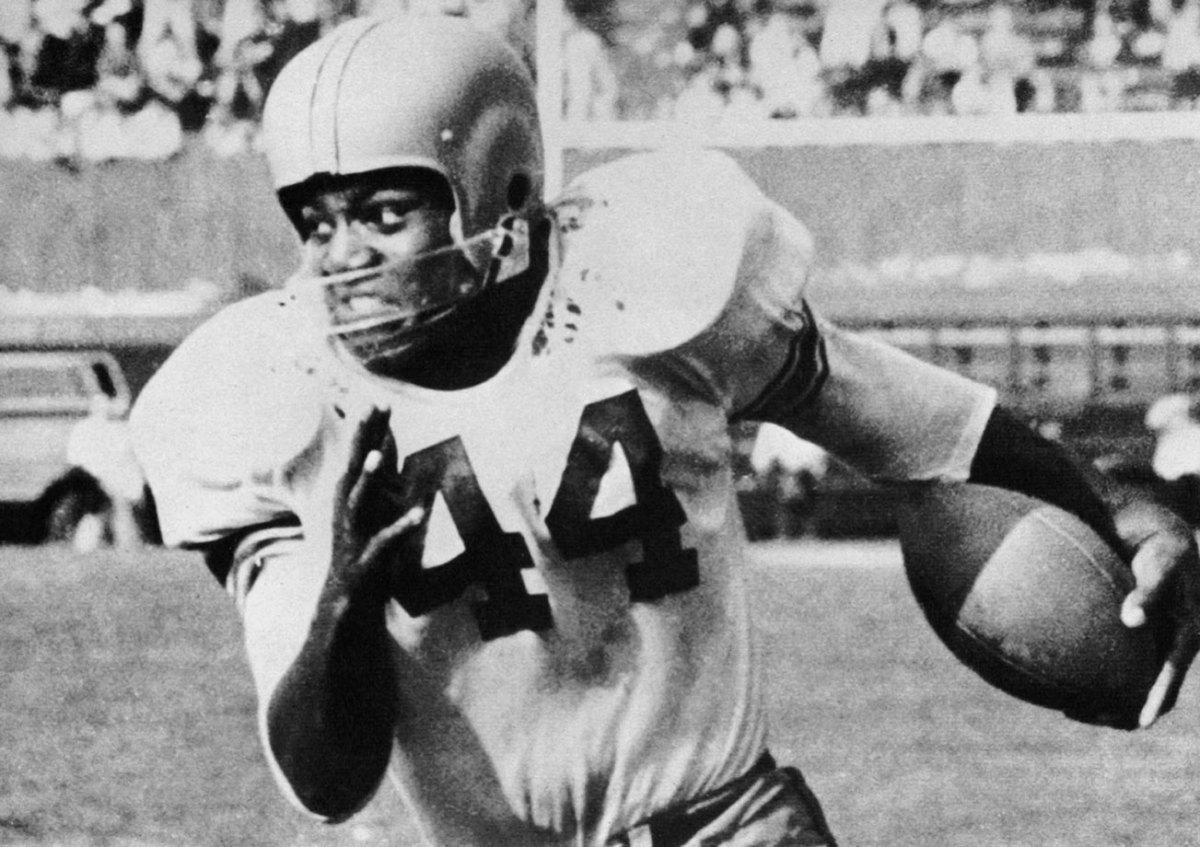
It is a number owned by Syracuse, and here is the man who started the legend. Brown was the perfect blend of power and speed. He set an NCAA record in 1943 by scoring 43 points against Colgate — six touchdowns and seven PATs — and was a unanimous All-America selection as a senior in 1956. — Runner-up: Ernie Davis, RB, Syracuse (1959-61)
No. 45 — Archie Griffin, RB, Ohio State (1972-75)
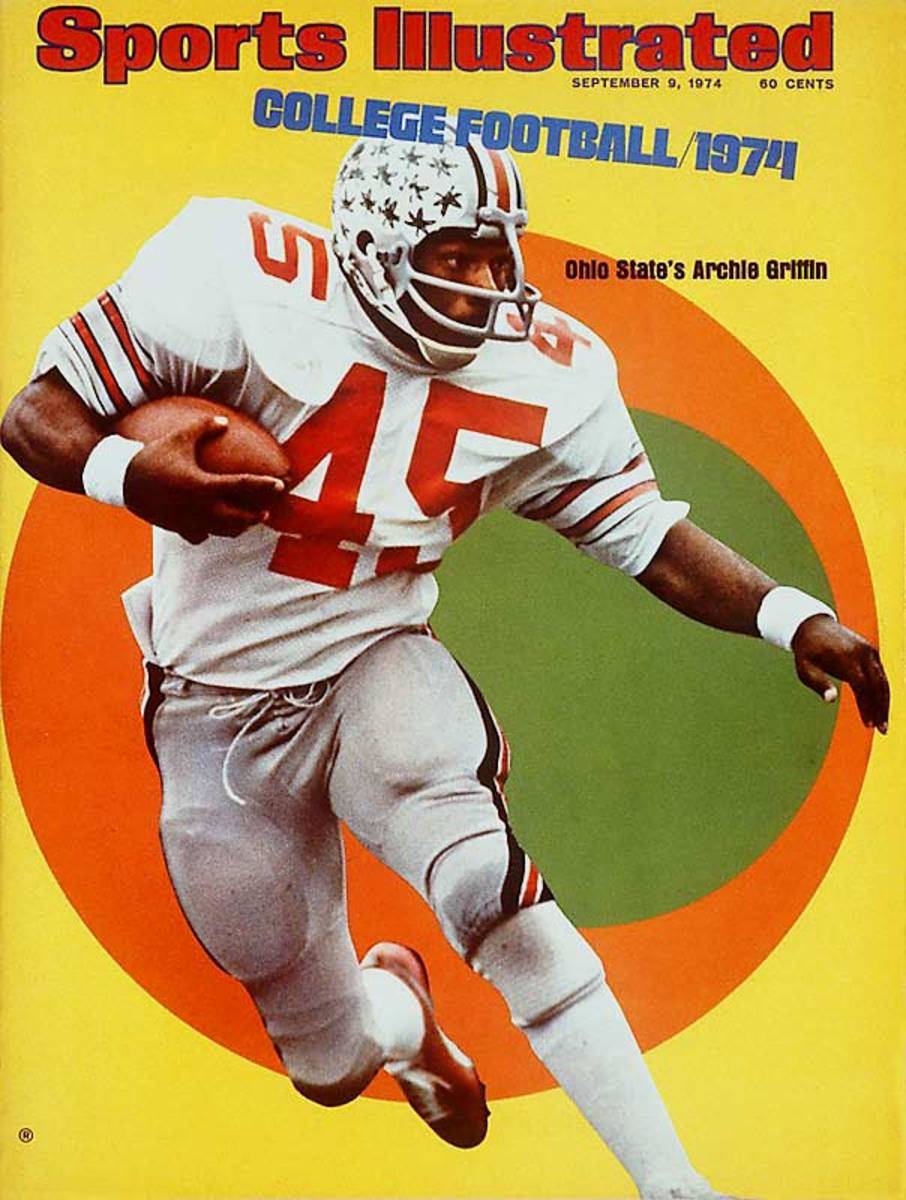
Where to begin: He's the only player to win the Heisman Trophy twice and start in a Rose Bowl four times. Griffin was a three-time All-America and set an NCAA rushing record with 31 consecutive 100-yard rushing games. He left school with 5,177 rushing yards, the most at the time. — Runner-up: Sammy Baugh, TCU (1934-36)
No. 46 — Bob Ferguson, FB, Ohio State (1959-61)
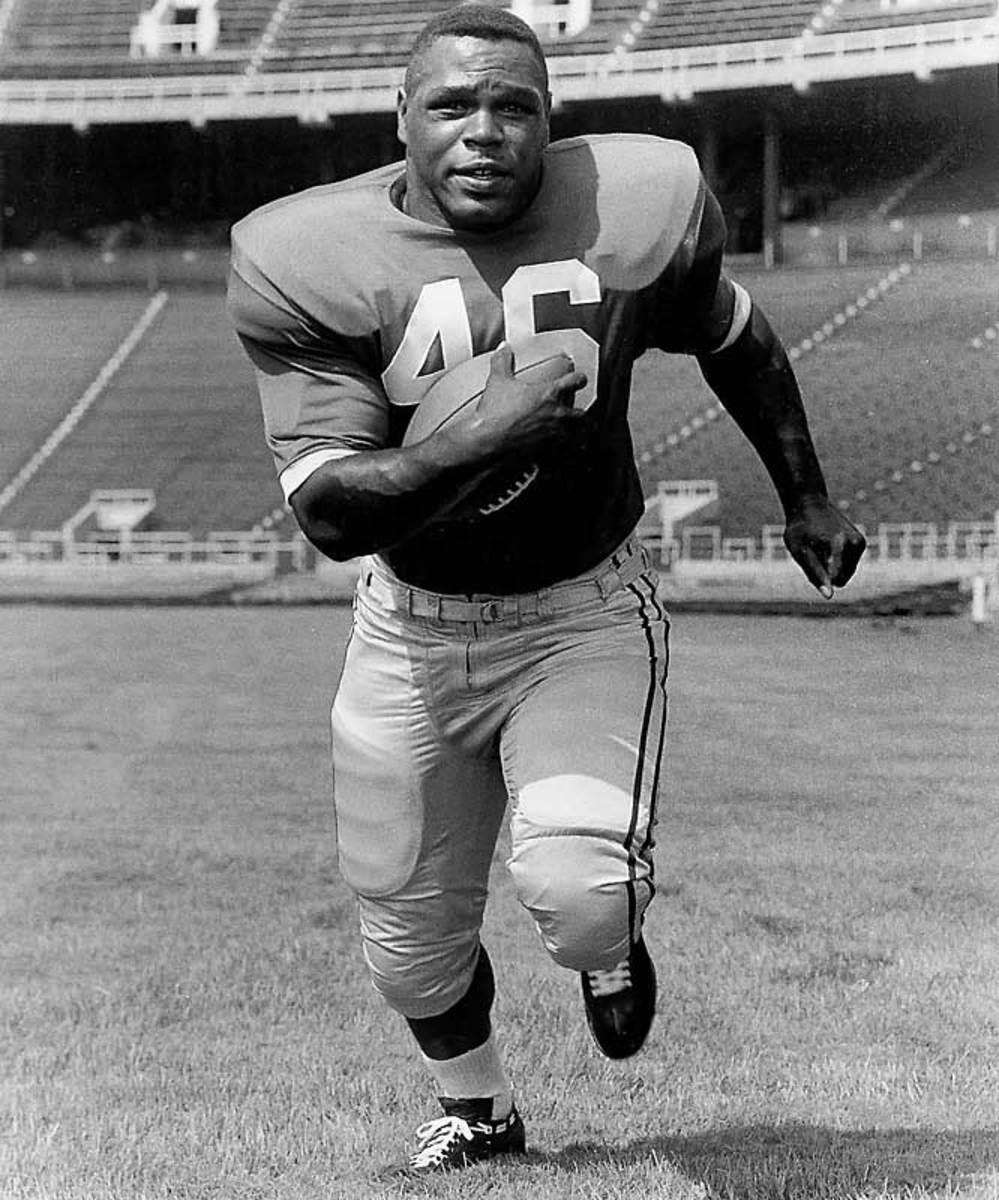
A two-time All-America and Heisman runner-up in 1961, Ferguson lined up alongside Paul Warfield and Matt Snell. He rushed for 2,162 yards and averaged more than five yards a carry. — Runner-up: Harry Newman, QB, Michigan (1930-32)
No. 47 — Bennie Oosterbaan, End, Michigan (1925-27)
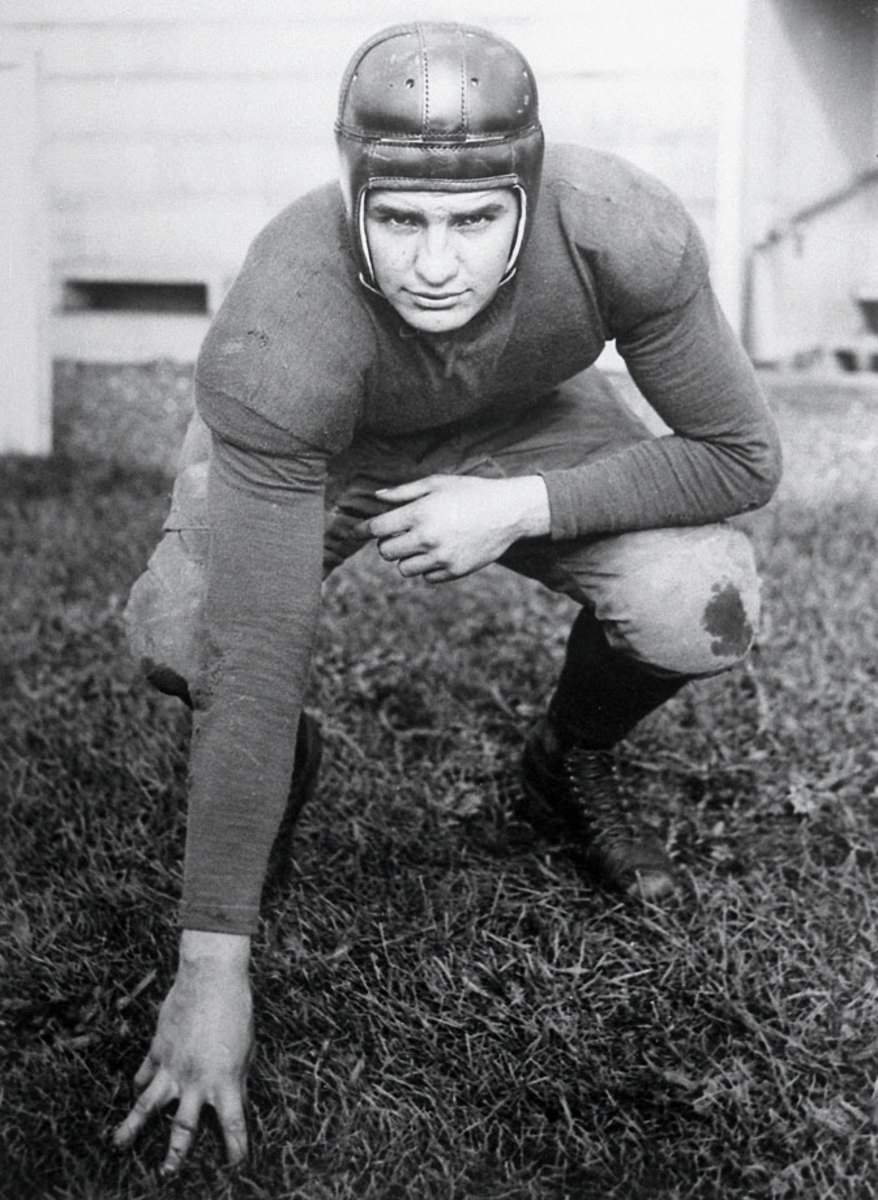
The ultimate Michigan man (he also lettered in baseball and later coached the team to a national title) was an All-America end three times and led the Big Ten in scoring in 1925 with eight touchdowns. — Runner-up: Michael Irvin, WR, Miami (1985-87)
No. 48 — Angelo Bertelli, QB, Notre Dame (1941-43)
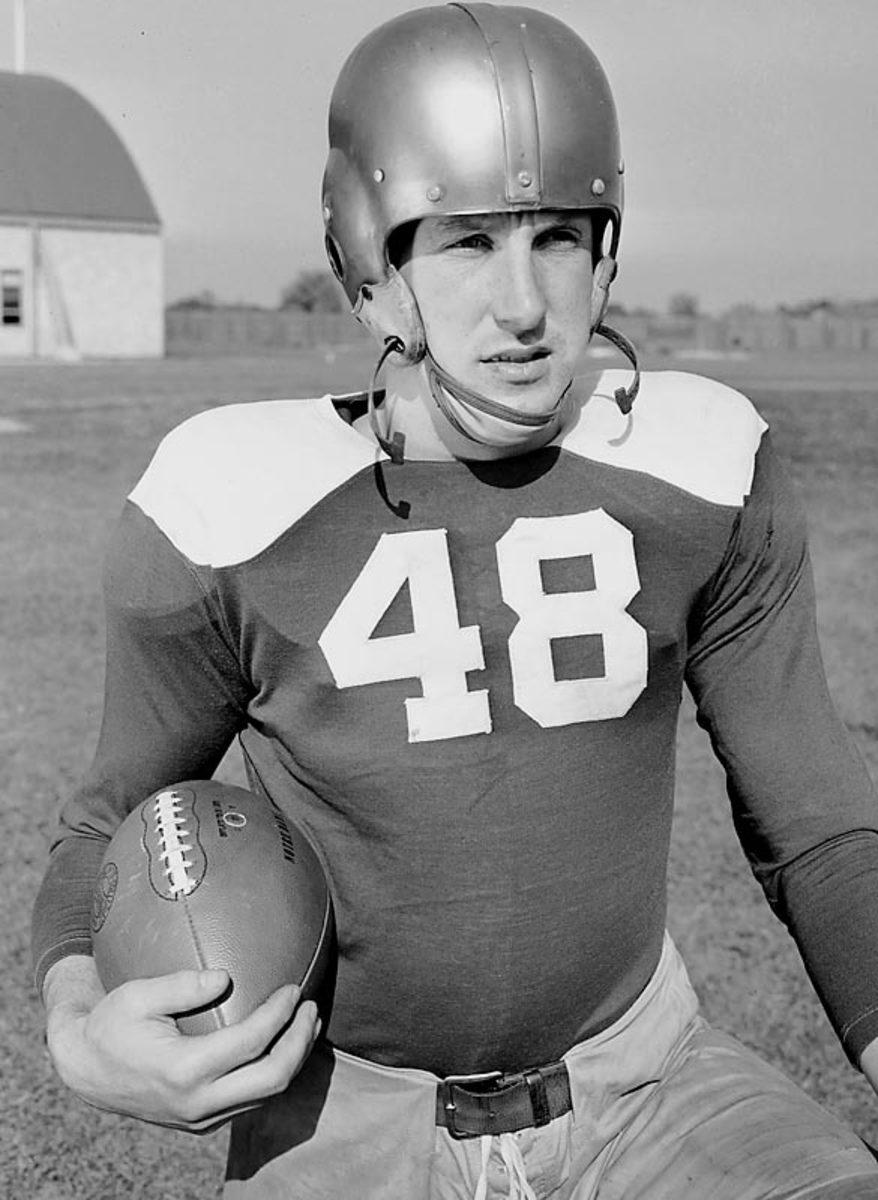
He was the first of Notre Dame's seven Heisman winners and ushered in the T-formation in South Bend. Bertelli won the Heisman in 1943, despite playing in only six of Notre Dame's 10 games. — Runner-up: Gale Sayers, RB, Kansas (1962-64)
No. 49 — Bob Chappuis, HB, Michigan (1942, 46-47)
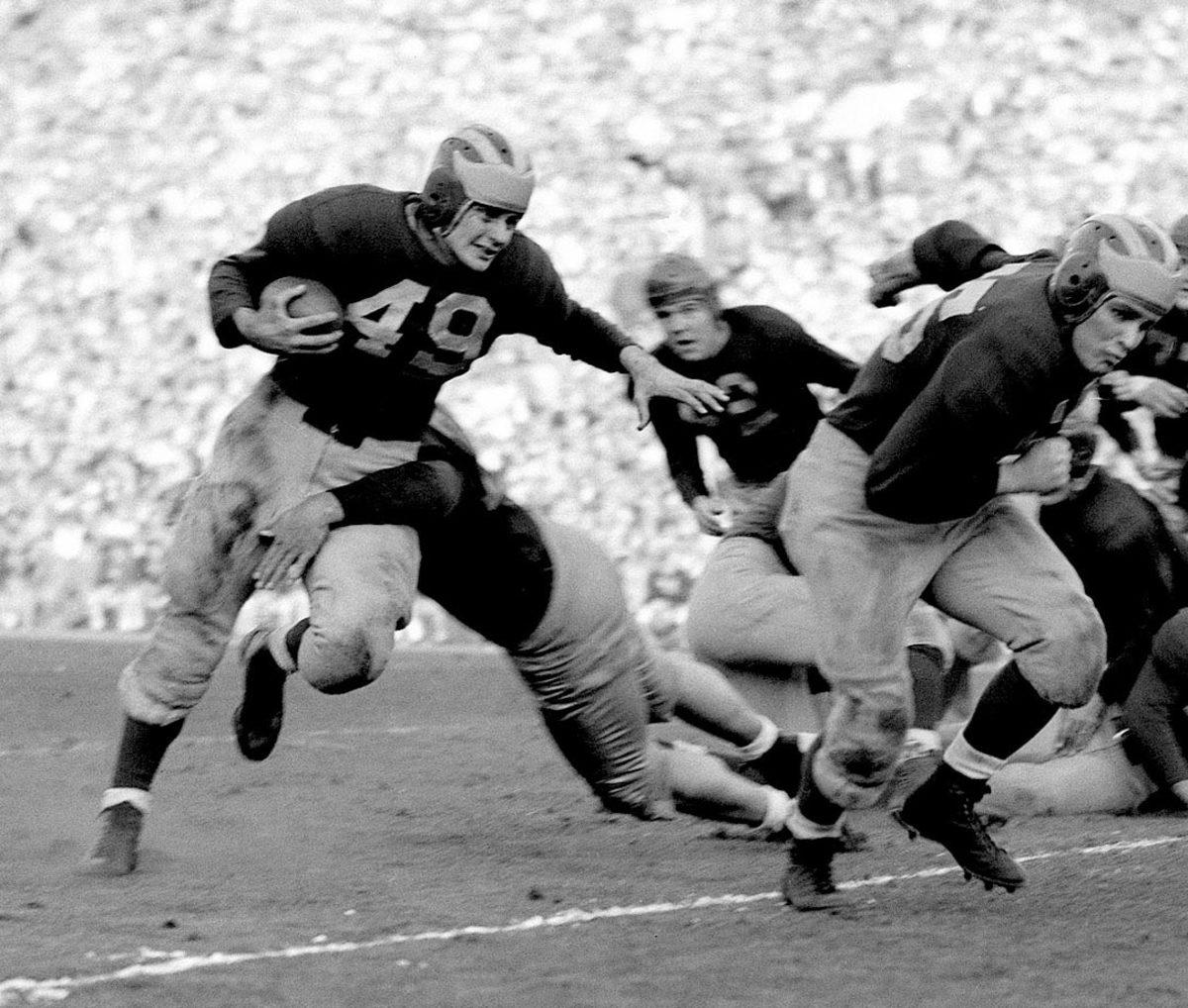
He returned from World War II to become a Wolverine legend. Chappuis led the Big Ten in total offense twice and helped lead Michigan to an undefeated season and 49-0 victory over Southern California in the 1948 Rose Bowl. — Runner-up: Bob Mathias, FB, Stanford (1948-50)
No. 50 — Dick Butkus C/LB, Illinois (1962-1964)
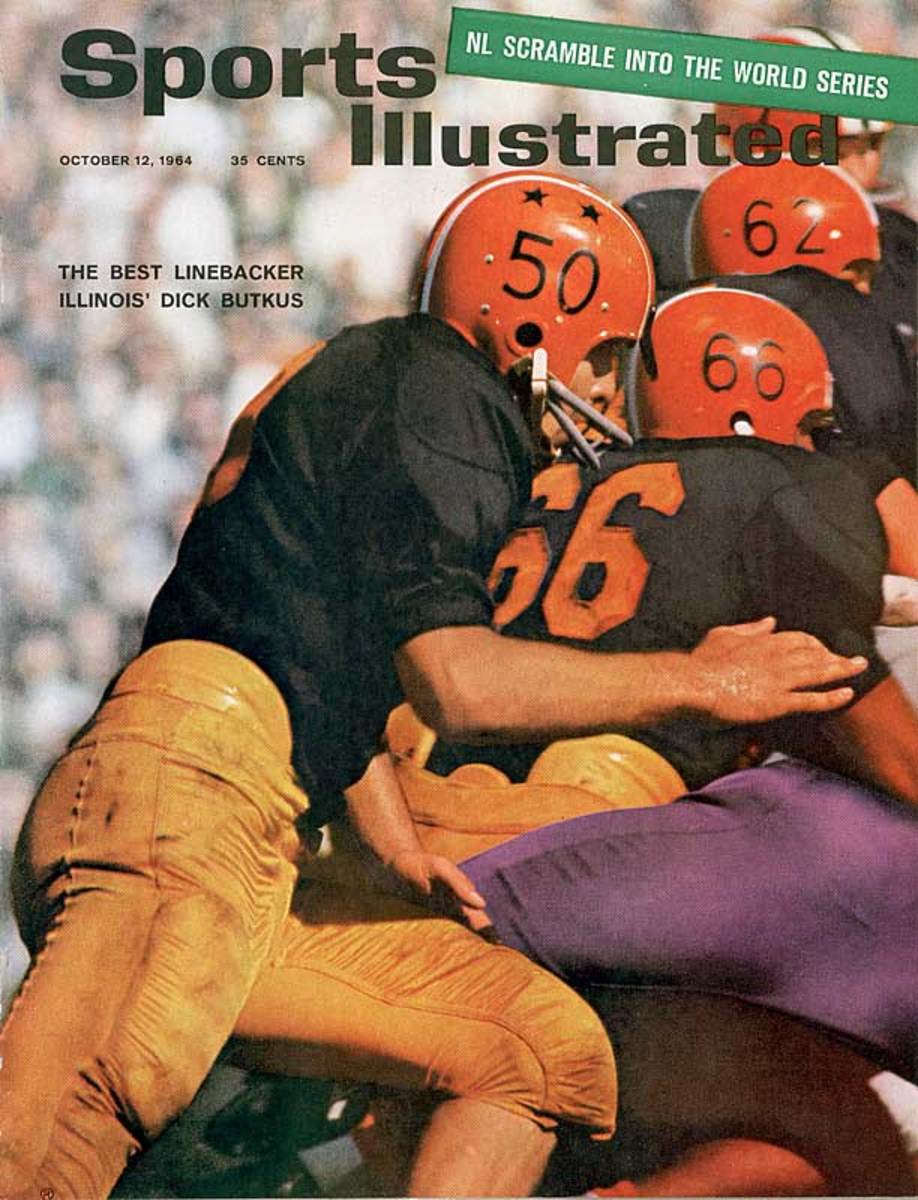
The conversation begins and ends here when discussing college football's greatest linebacker. Butkus was a consensus All-America in 1963 and 1964 and led Illinois to a Big Ten title and Rose Bowl victory in 1963. He finished third in the 1964 Heisman voting. The award for college football's top linebacker is named in his honor. — Runner-up: Dave Rimington, C, Nebraska (1979-82)
No. 51 — Kurt Burris, C, Oklahoma (1951-54)
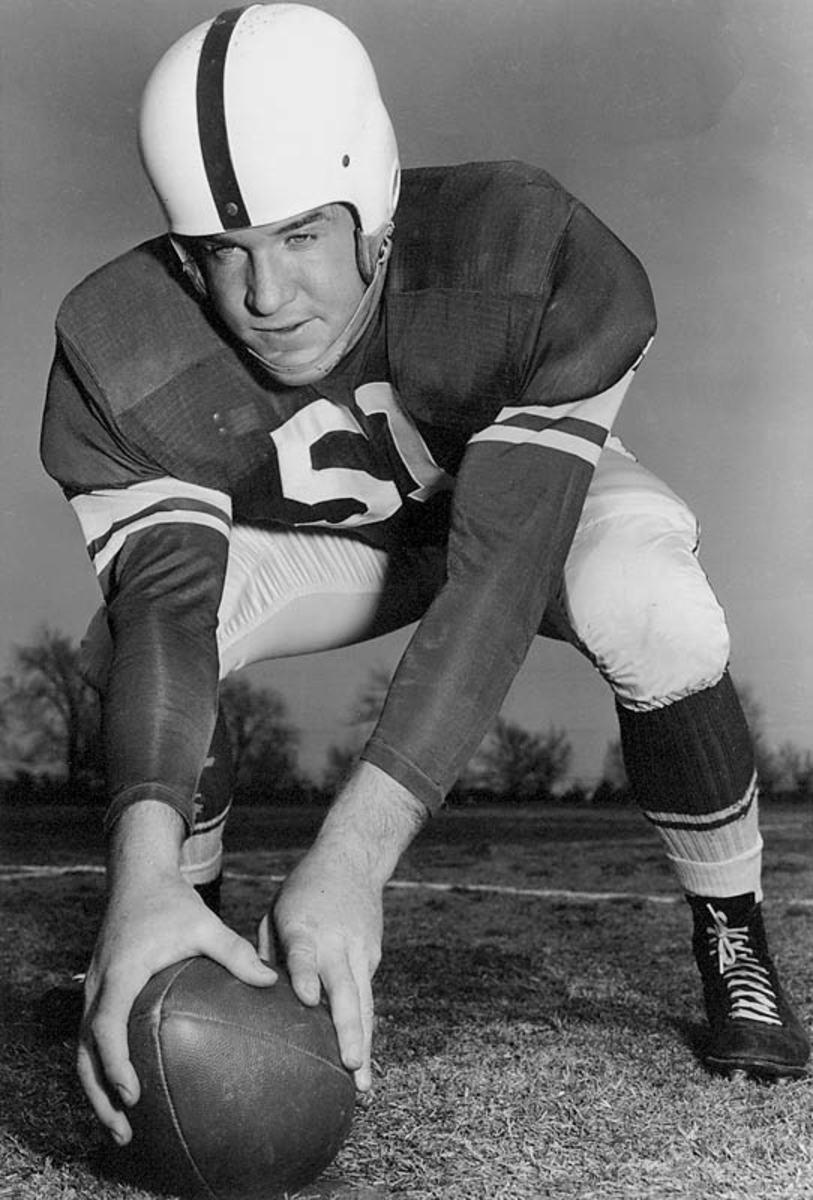
A center and linebacker, Burris was an All-America in 1954 and the runner-up to Alan Ameche for the Heisman. — Runner-up: Ken Houston, LB, Prairie View A&M (1964-66)
No. 52 — Harry Gilmer, QB/HB, Alabama (1944-47)
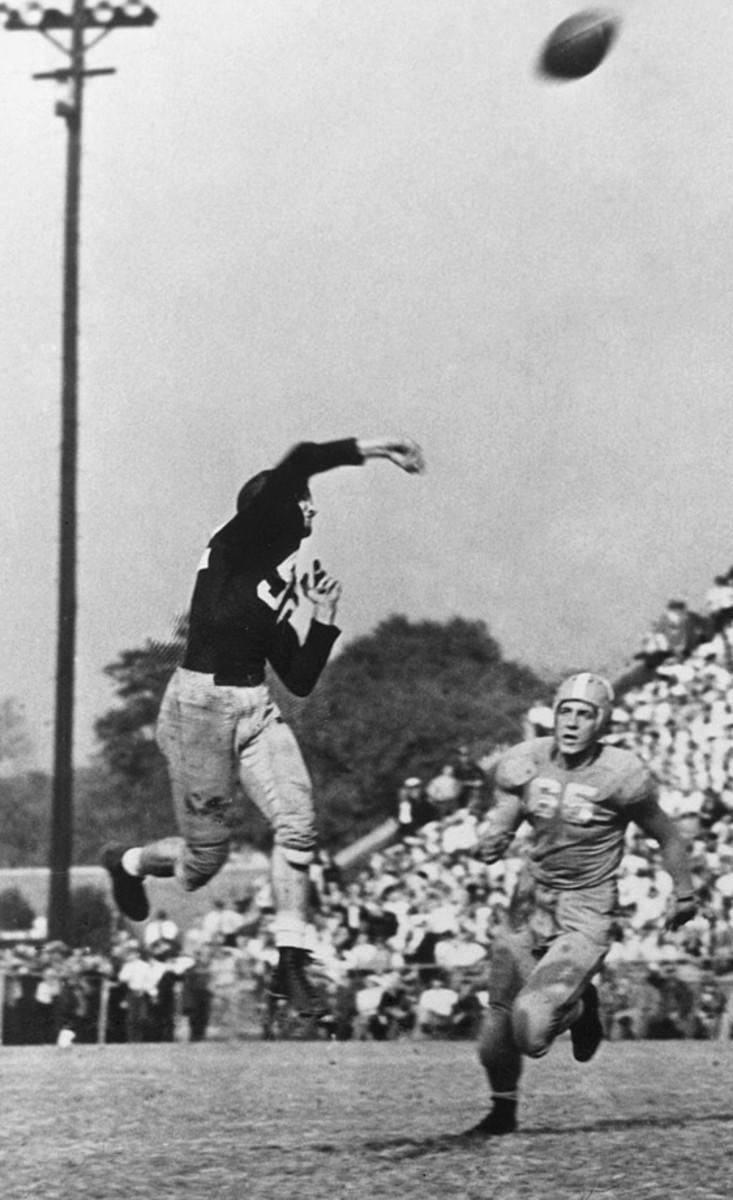
Gilmer ran and threw for more than 20 touchdowns and was also a special teams ace, averaging more than 28 yards on kickoff returns and more than 36 yards per punt. — Runner-up: Ray Lewis, LB, Miami (1993-95)
No. 53 — Randy Gradishar, LB, Ohio State (1971-73)
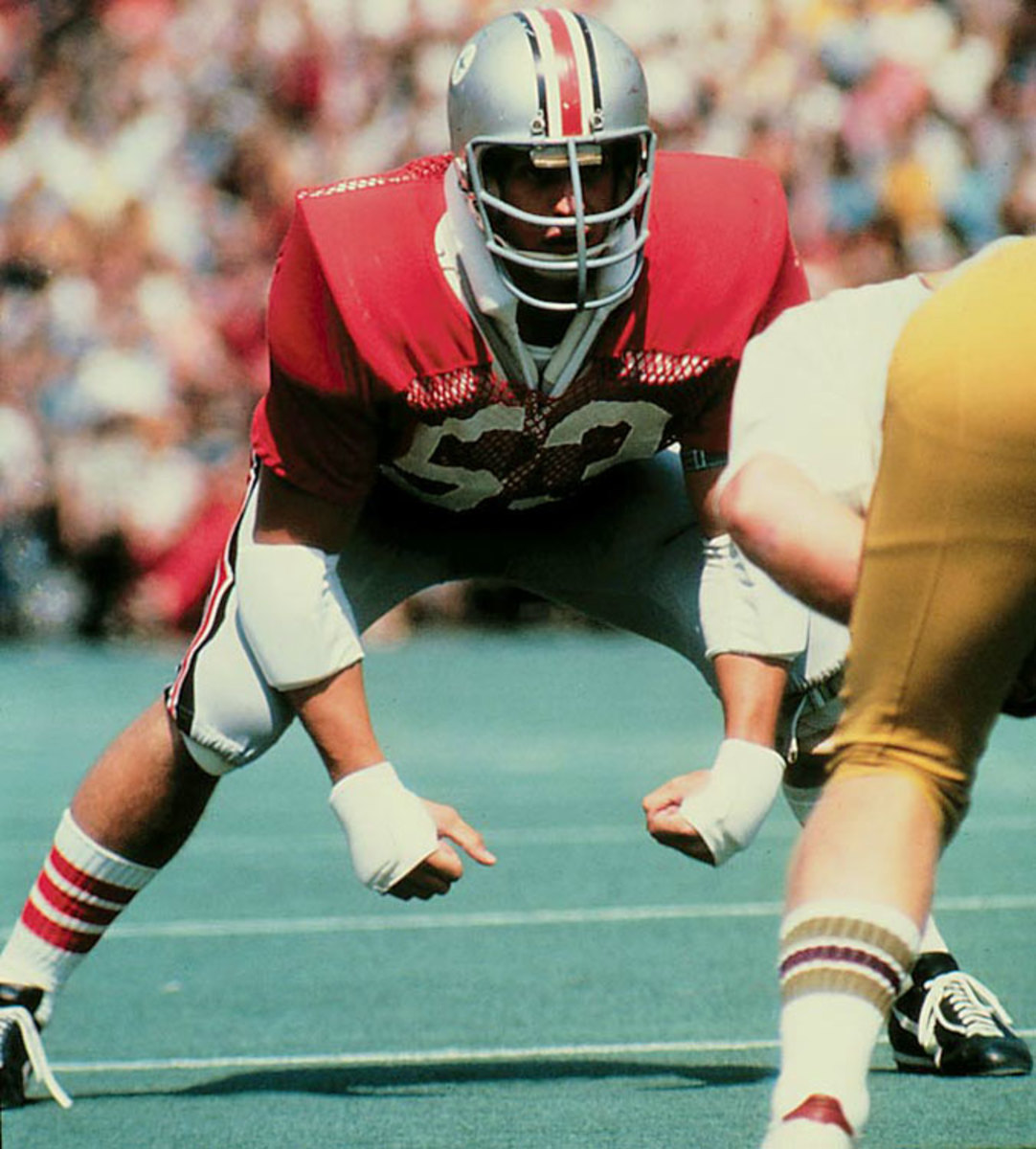
An All-America linebacker in 1972 and 1973, Gradishar led the Buckeyes to two Rose Bowls. — Runner-up: Clay Shiver, C, FSU (1992-95)
No. 54 — Lee Roy Jordan, LB, Alabama (1960-62)
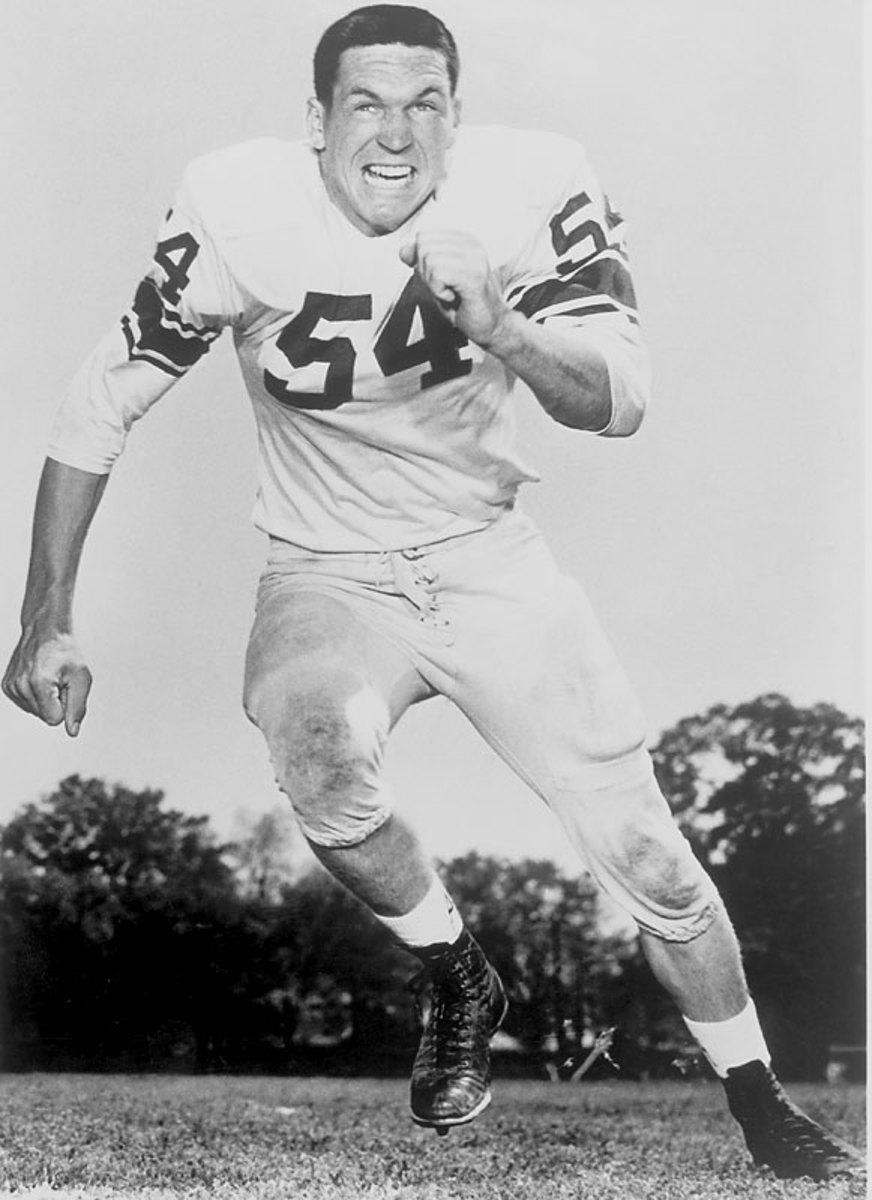
With his exceptional pass and run protection for Bear Bryant, Jordan helped Alabama finish 11-0 in 1961 and 10-1 in 1962. He famously made 30 tackles in a 17-0 victory over Oklahoma in the 1962 Orange Bowl and was named the game's most outstanding player. — Runner-up: Bruce Smith, HB, Minnesota (1939-41)
No. 55 — Marvin Jones, LB, Florida State (1990-92)
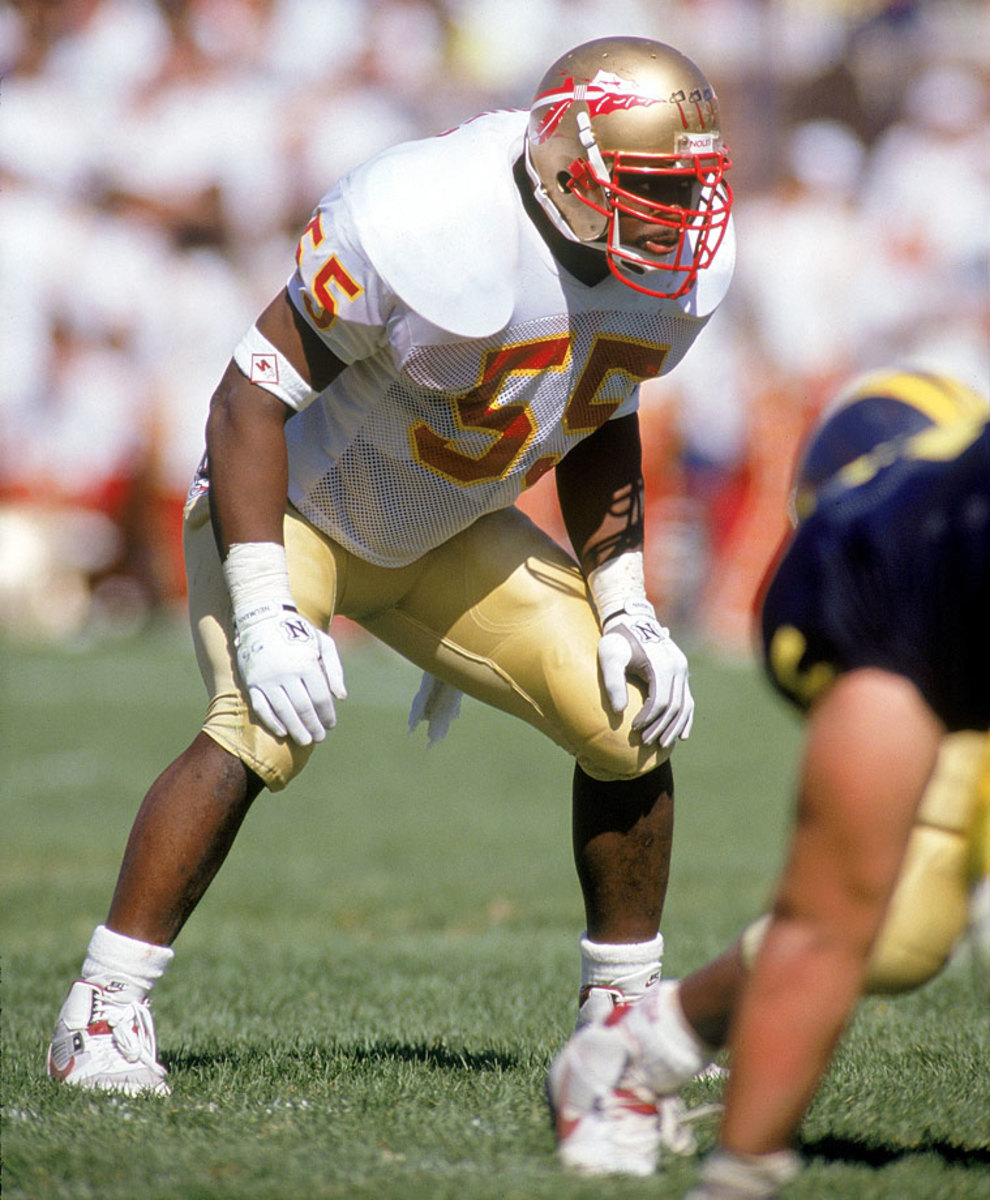
Few college linebackers were more dominant than ''Shade Tree,'' a three-time All-America who won the Butkus and Lombardi awards in 1992. — Runner-up: Bob Fenimore, HB, Oklahoma State (1943-46)
No. 56 — Micheal Barrow, LB, Miami (1988-92)
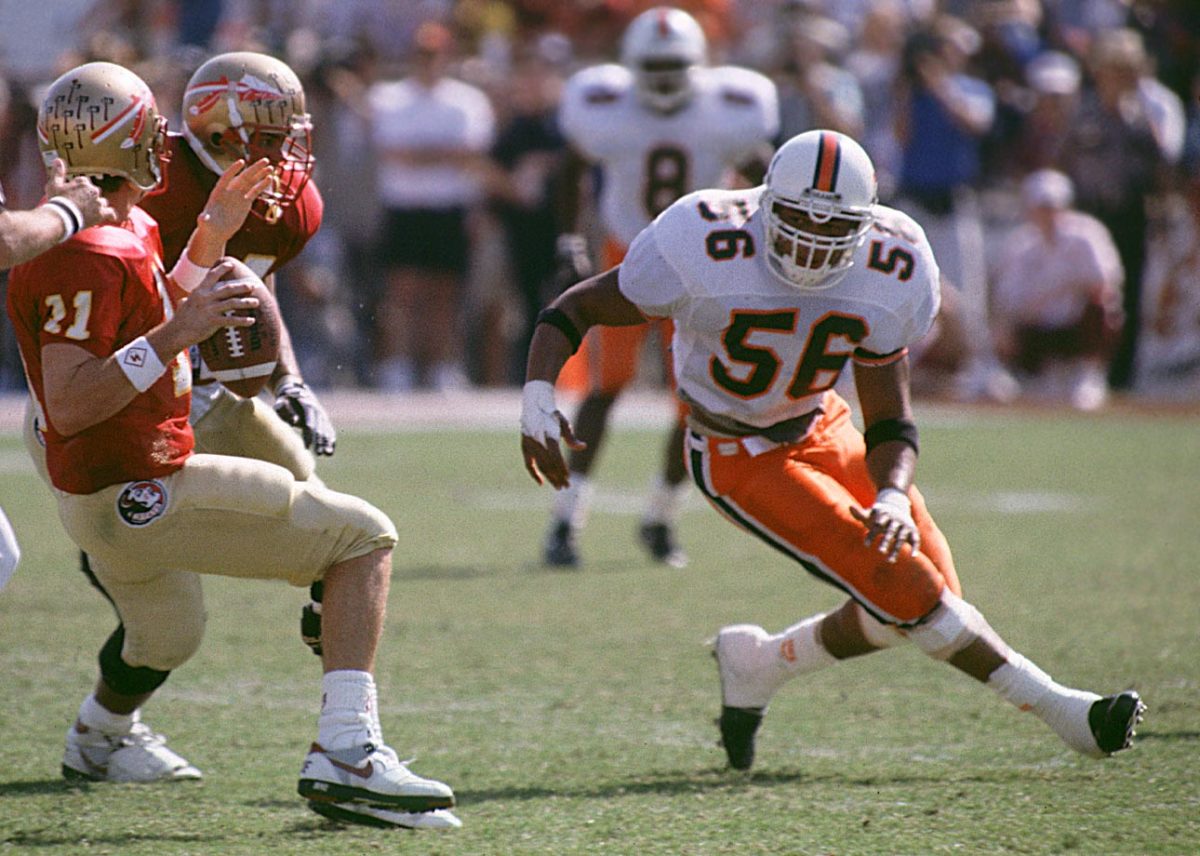
One of Miami's best linebackers, Barrow helped bring the school national championships in 1989 and 1991. He is now the school's linebacker coach. — Runner-up: Rudy Mobley, HB, Hardin Simmons (1942, 46)
No. 57 — Steve Kiner, LB, Tennessee (1967-69)
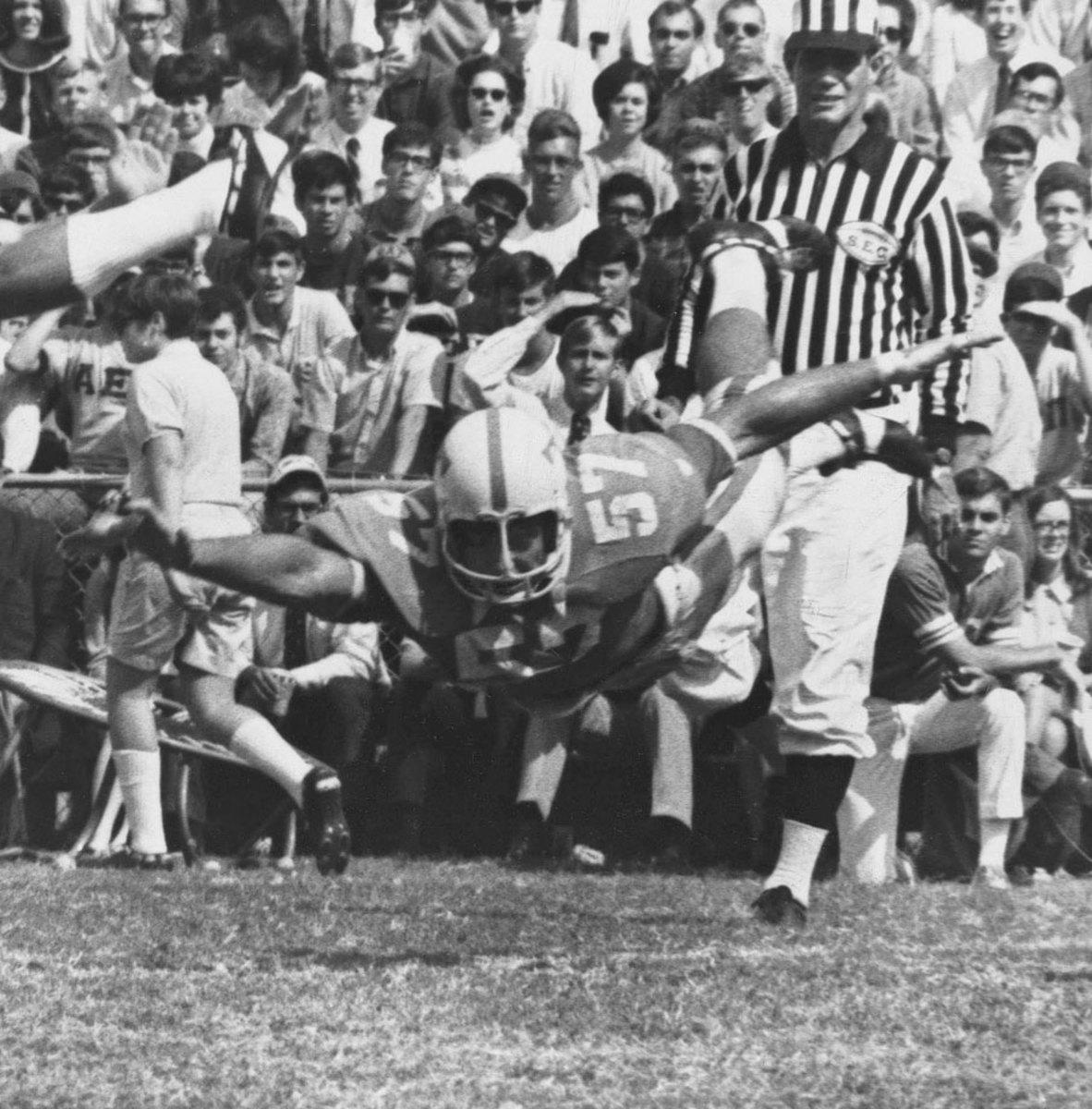
Arguably the best linebacker in Tennessee history, Kiner was the emotional base of his Volunteer teams. The Vols were 26-6-1 during his time in Knoxville. — Runner-up: Dwight Stephenson, C, Alabama (1977-79)
No. 58 — Peter Boulware, DE, Florida State (1994-96)
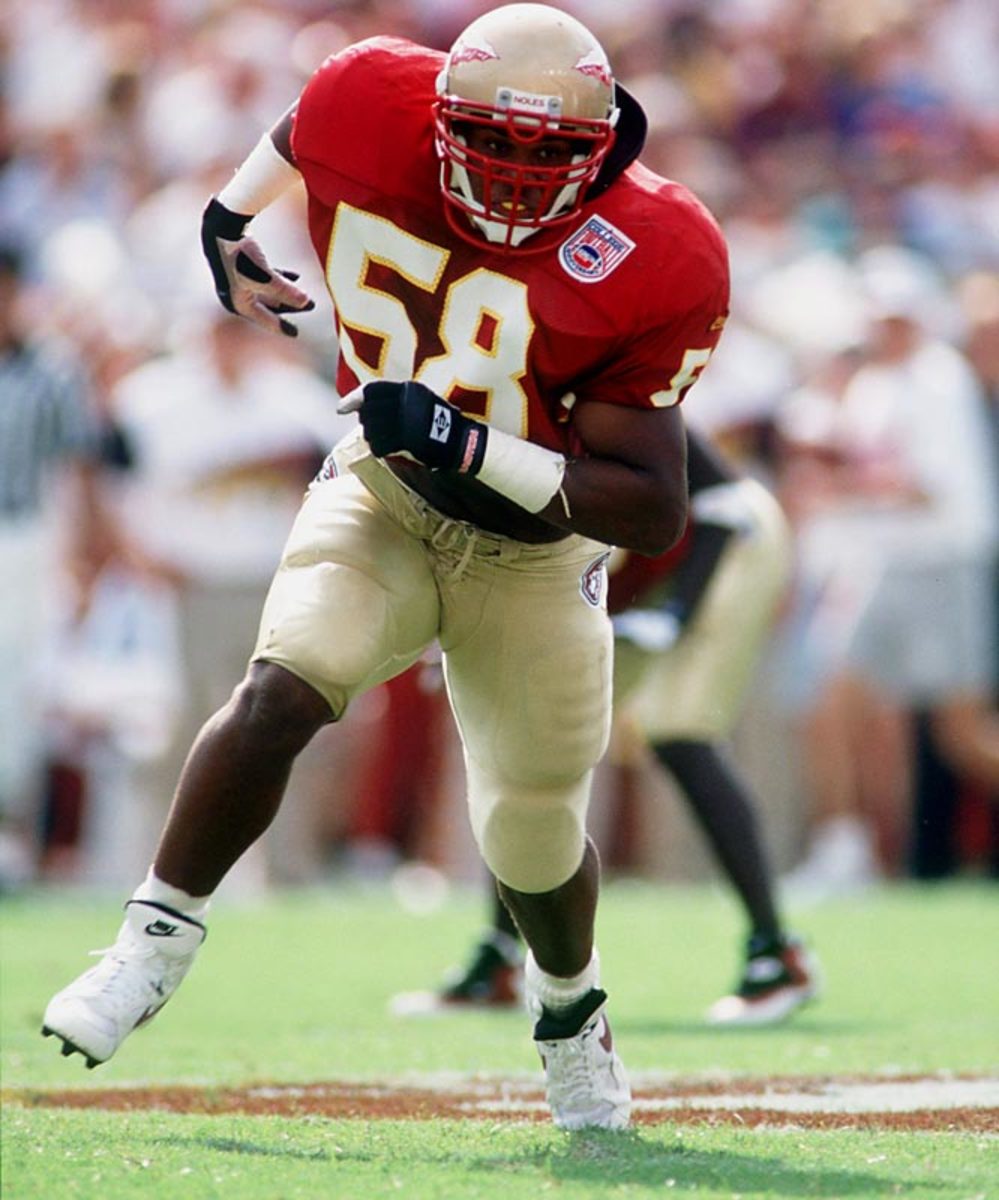
As a junior, Boulware finished with a school-record 19 sacks, 20 tackles for loss, seven forced fumbles and three fumble recoveries. His combination of strength and speed enabled him to cover tight ends as well as wide receivers. — Runner-up: Hoyt Winslett, E, Alabama (1924-26)
No. 59 — Alex Agase, G, Purdue and Illinois (1941-43, '46)
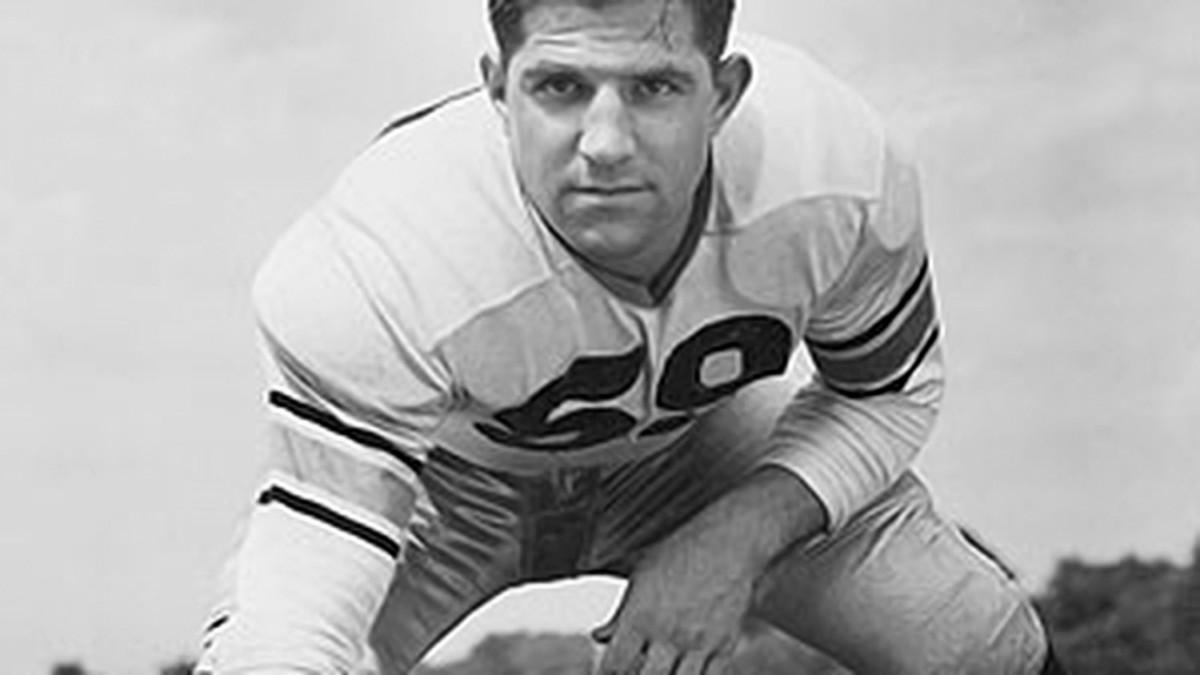
As an undersized guard (5-10,191 pounds), Agase's fearlessness and backbone made him a force on the line. He was an All-America in 1942, '43 and '46. — Runner-up: Vern Huffman, RB, Indiana (1933-36)
No. 60 — Tommy Nobis, LB/G, Texas (1963-65)
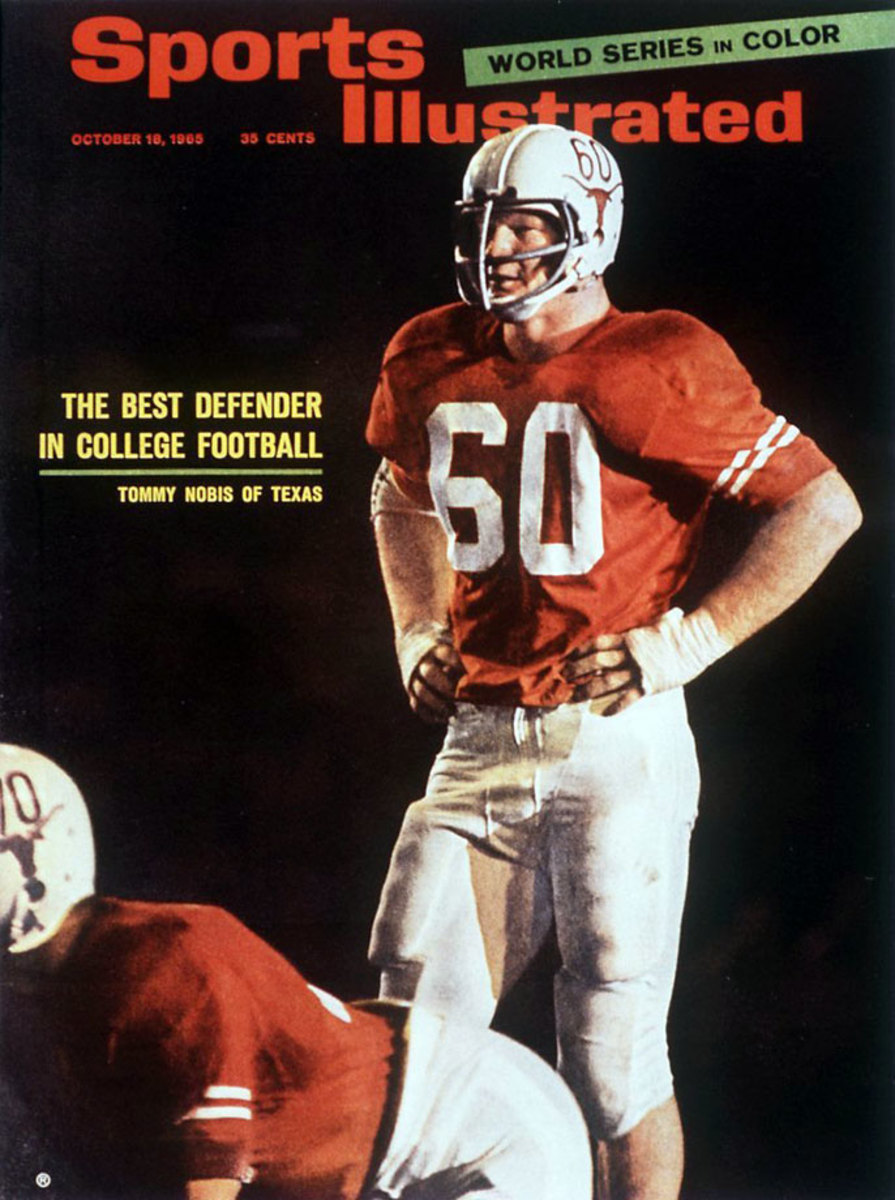
Nobis lived in the trenches and helped Texas to a perfect season and national title in 1963. He was a All-America in 1964 and 1965 and won the Outland Trophy as the nation's best interior lineman. — Runner-up: Chuck Bednarik, C/LB, Penn (1946-48)
No. 61 — Jim Lynch, LB, Notre Dame (1964-66)
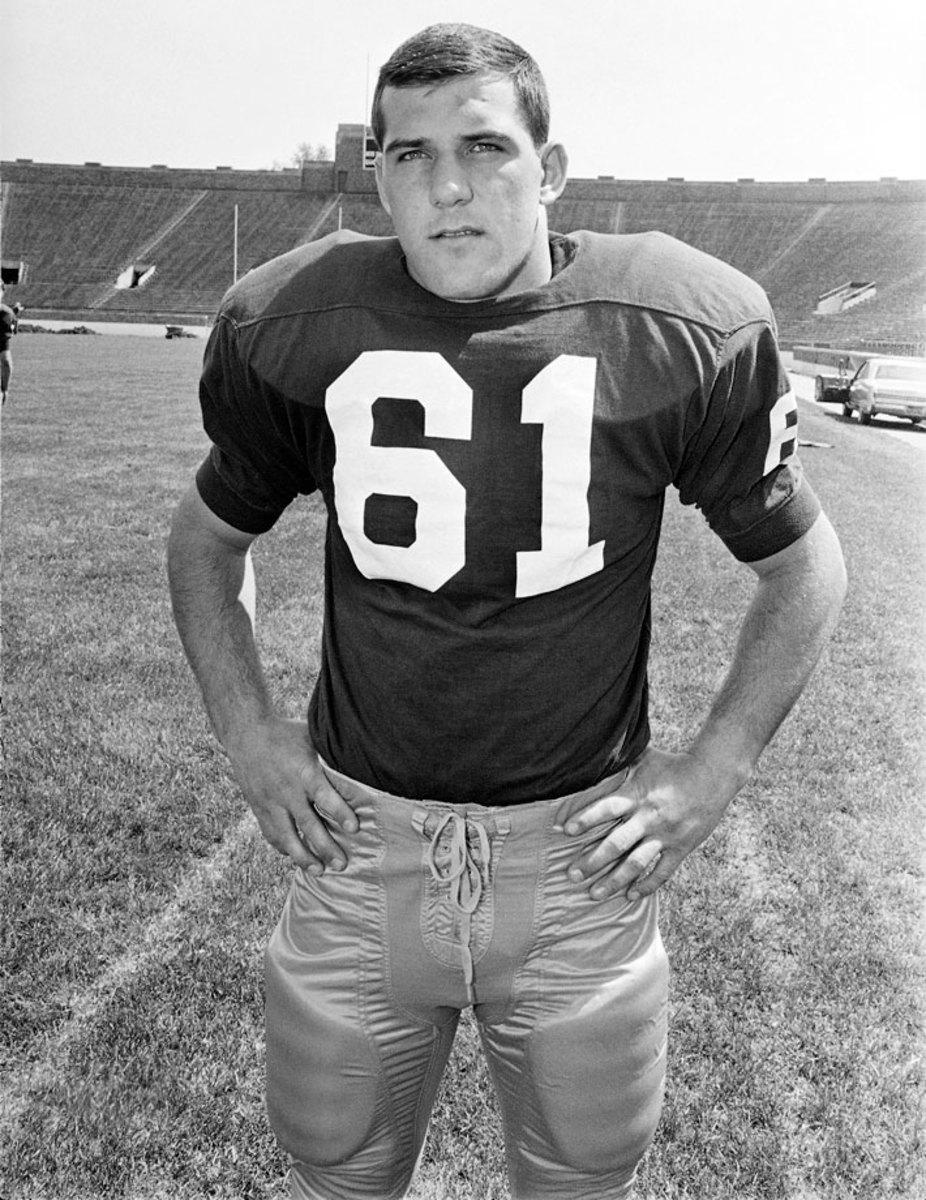
Lynch won the Maxwell in 1966 — awarded to the nation's best player — the same year the Irish won a national title. Ara Parseghian called him ''the best player I ever coached.'' — Runner-up: Bud McFadin, G/T, Texas (1948-50)
No. 62 — Jim Parker, G, Ohio State (1954-1956)
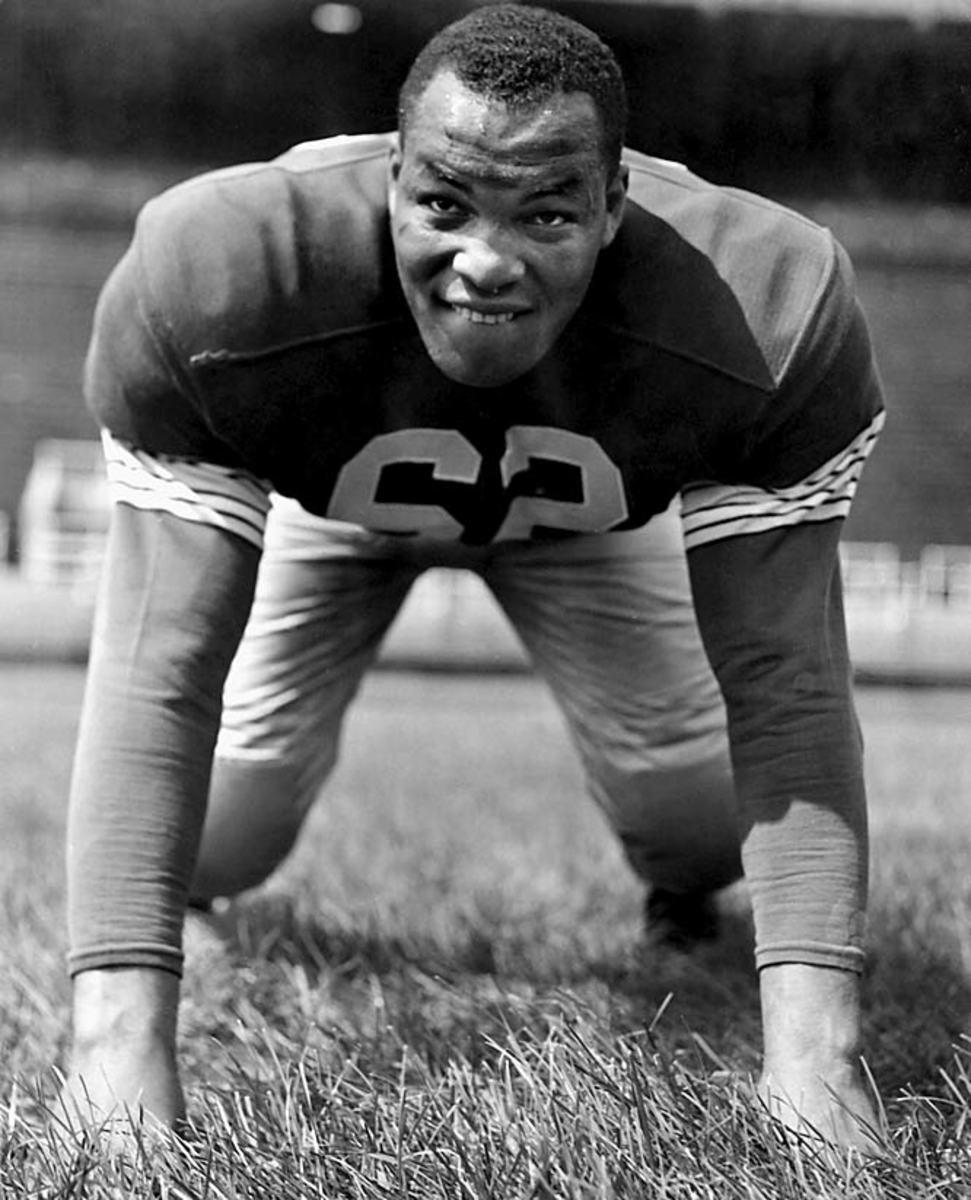
Parker started the great run of Outland winners at Ohio State when he nabbed the honor in 1956. He helped lead the way to an undefeated season and national championship in 1954. — Runner-up: Charley Trippi, HB, Georgia (1942, 45-46)
No. 63 — Mike Singletary, LB, Baylor (1977-80)
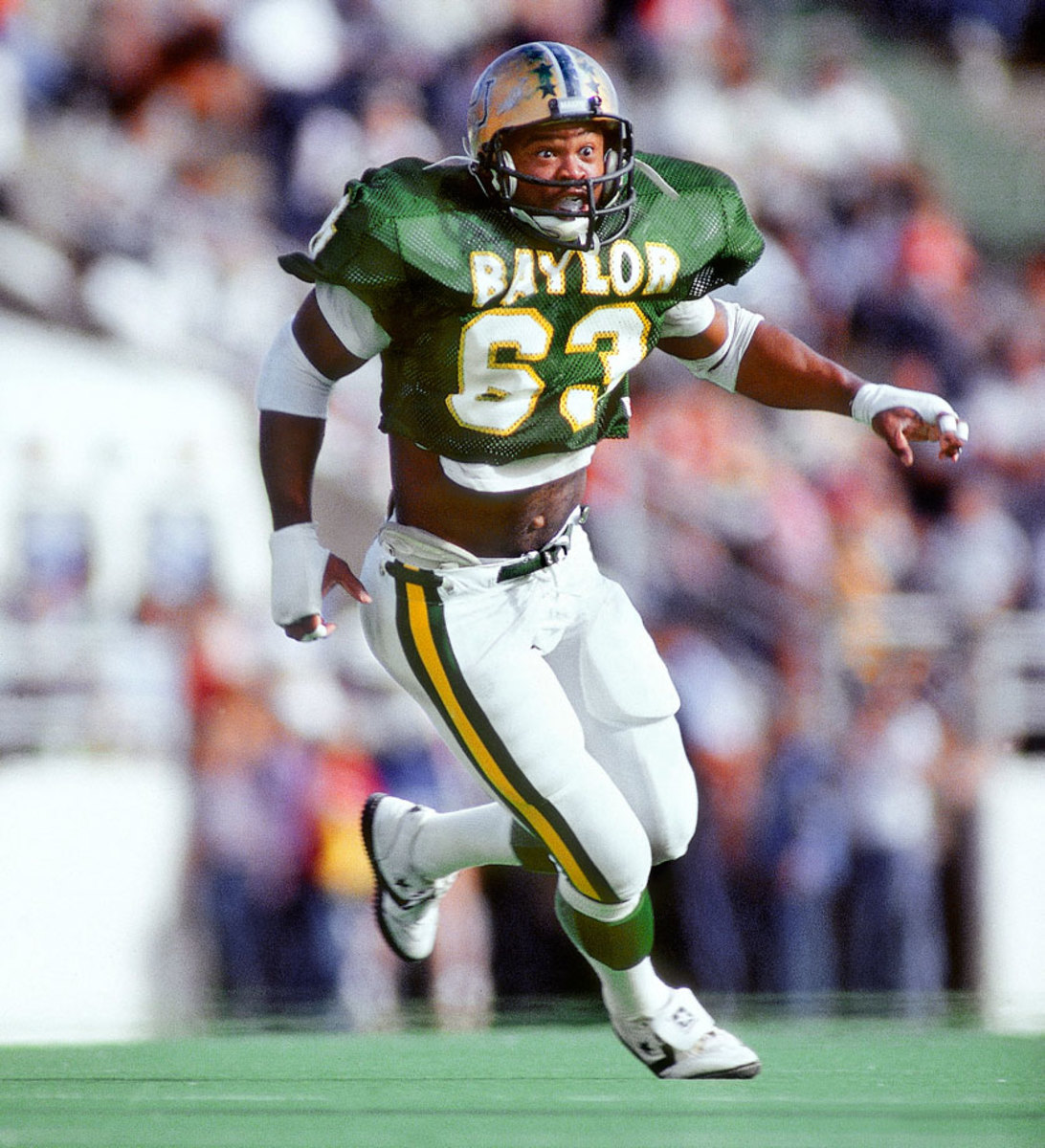
Singletary's bone-crunching tackles put him in the Baylor records books. He owns the school record for most tackles in a season (232) and most career tackles (662). In 1978 he had 35 tackles in a game against Arkansas. — Runner-up: Bill Shakespeare, HB, Notre Dame (1933-35)
No. 64 — Bob Brown, G, Nebraska (1961-63)
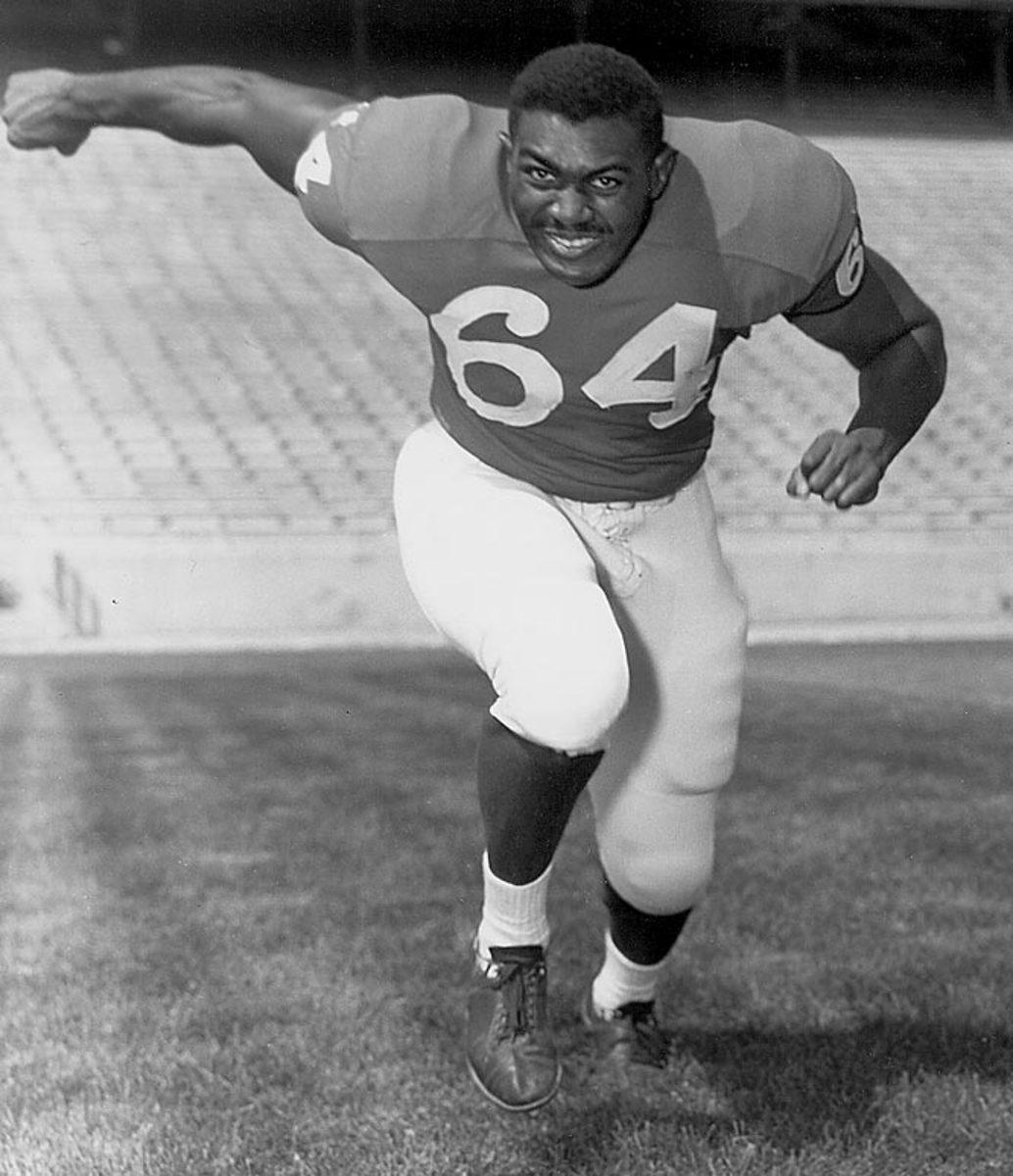
His 6-foot-5, 260-pound frame plowed through defenders. Brown was a unanimous All-America selection in 1963 as Nebraska finished 10-1 and won its first conference championship since 1940. — Runner-up: Jim Lachey, G, Ohio State (1981-84)
No. 65 — Greg Roberts, G, Oklahoma (1975-78)
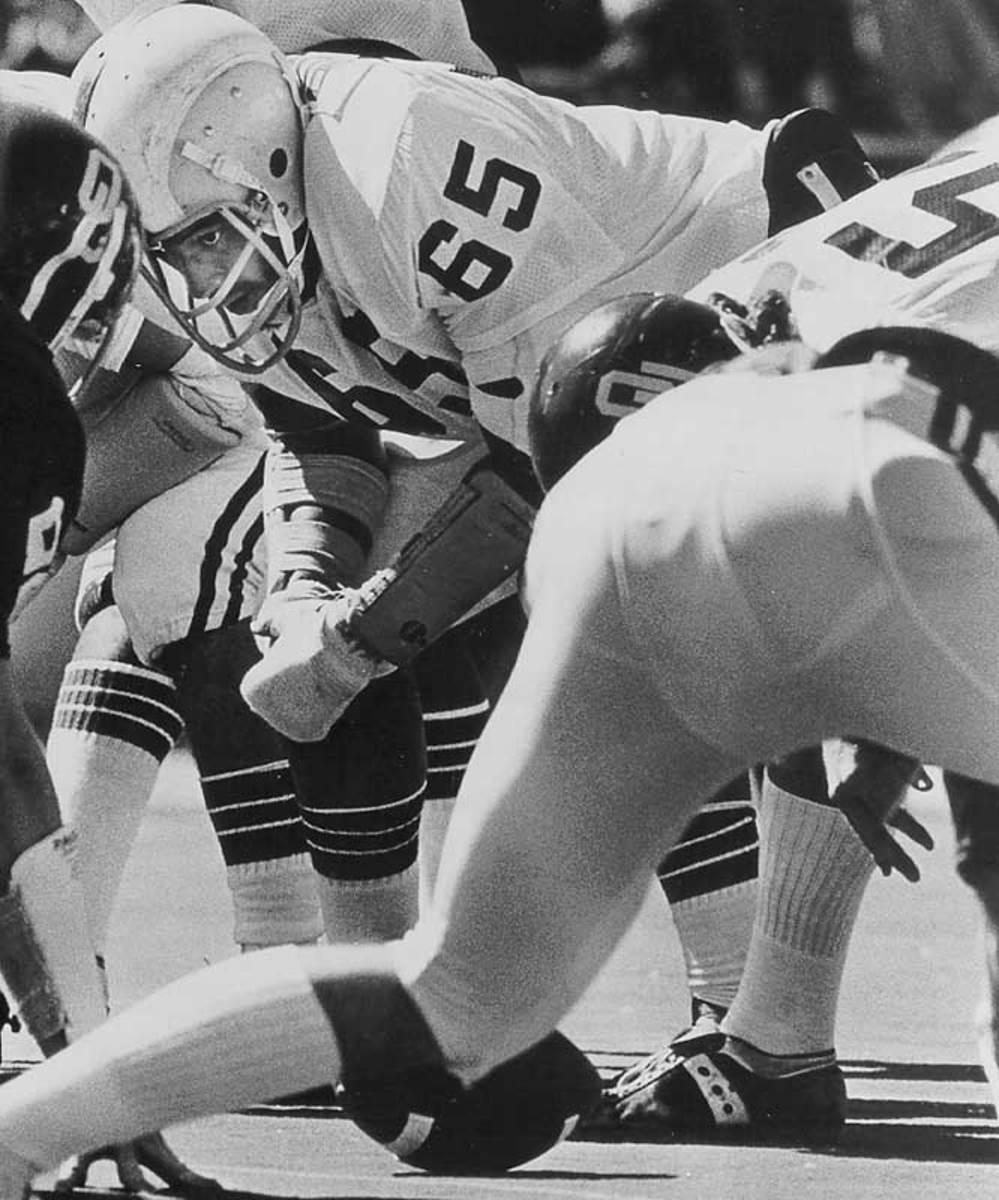
Oklahoma called the majority of the plays to the side of the 1979 Outland Trophy winner, and for good reason: That season OU led the nation in scoring, rushing and was second in total offense. He was the fourth Sooner to win the Outland. — Runner-up: Joe Schmidt, LB/G, Pittsburgh (1950-52)
No. 66 — George Gipp, HB, Notre Dame (1917-20)
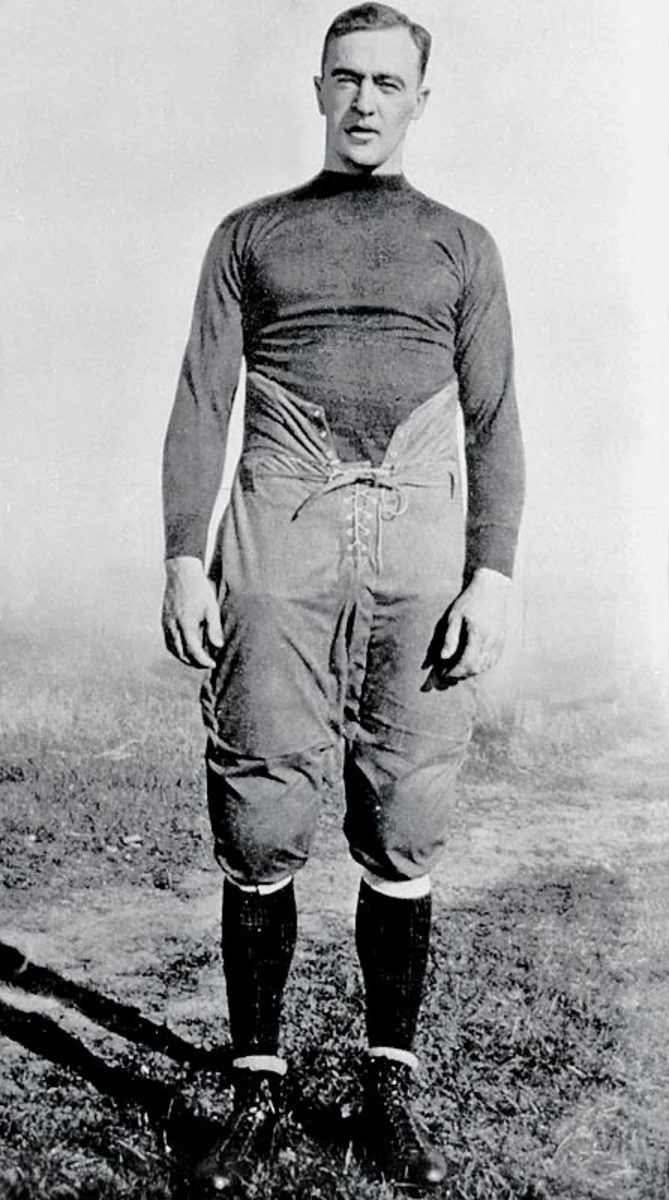
As Notre Dame's first All-America, Gipp led the Irish in passing and rushing in each of his last three seasons (1918, '19, '20). Coach Knute Rockne turned Gipp into a legend by invoking his name to the Notre Dame players at halftime of the 1928 Army game. — Runner-up: Granville Liggins, NG, Oklahoma (1965-67)
No. 67 — Russell Maryland, DT, Miami (1986-90)
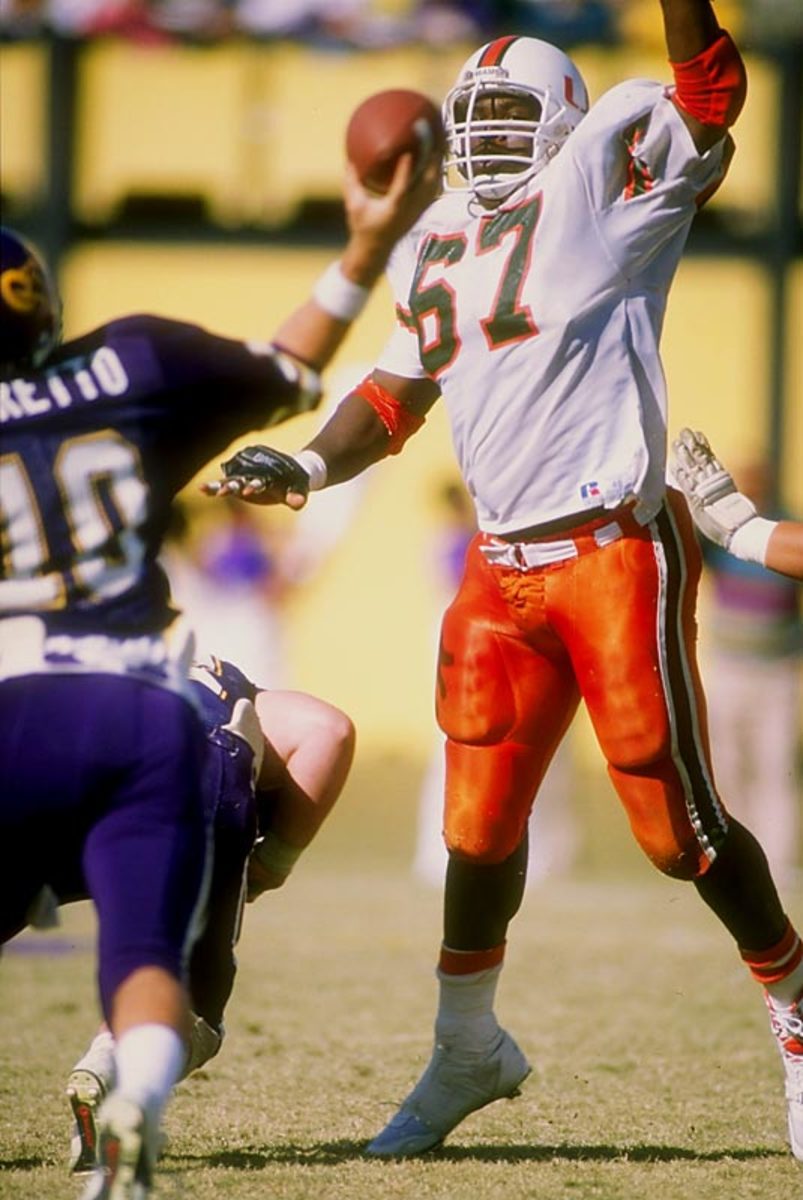
Maryland's dominance on the line earned him the 1990 Outland Trophy. He was the first overall pick in the 1991 NFL Draft. — Runner-up: Aaron Taylor, T, Nebraska (1994-98)
No. 68 — Mike Reid, DT, Penn State (1966, '68-69)
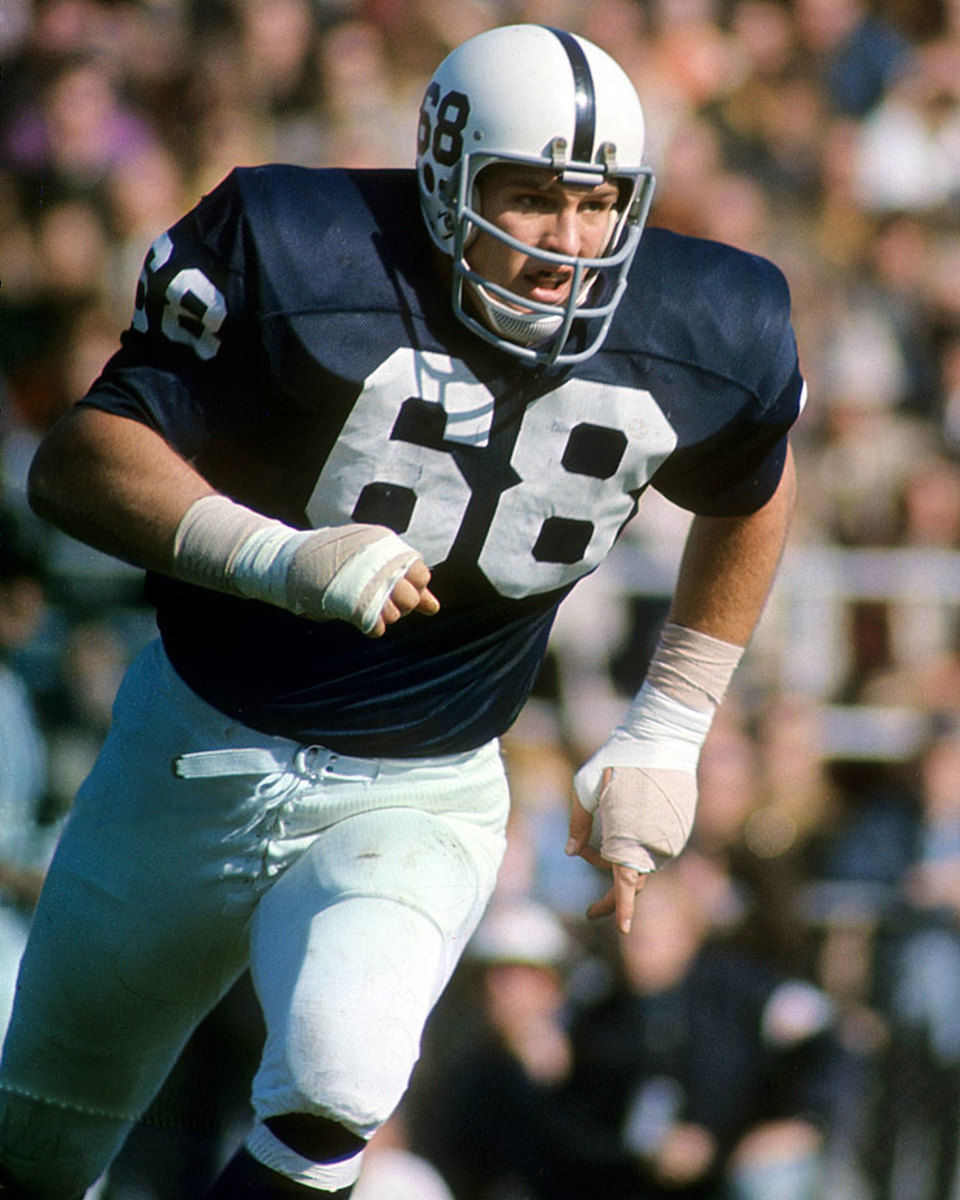
Reid's persistence and determination made him the anchor of the Nittany Lion defense. In 1969 he was a unanimous All-America selection, Outland Trophy winner and Maxwell Award recipient. — Runner-up: Jim Stillwagon, NG, Ohio State (1968-70)
No. 69 — Tom Brown, G, Minnesota (1958-60)
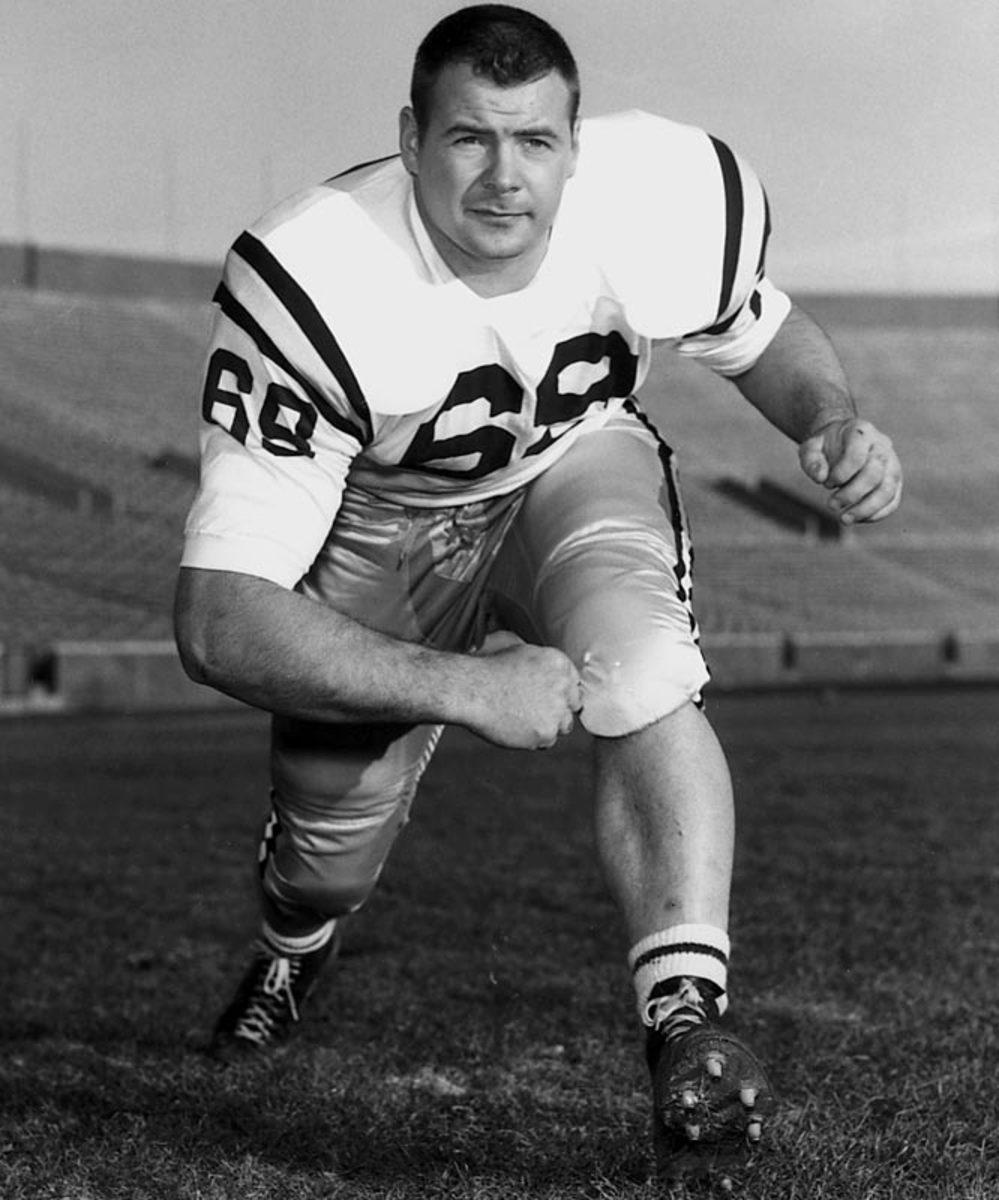
The 1960 Outland Trophy winner was nicknamed ''The Rock of Gibraltar'' for the stability he brought to the Gophers offensive line. He was part of a team that went from last place in the Big Ten the previous year to winning the national championship and gaining a trip to the Rose Bowl. He finished second in the Heisman voting, the highest-ever placement for an interior lineman. — Runner-up: Clyde Turner, C, Hardin-Simmons (1937-39)
No. 70 — Bob Gain, T/G, Kentucky (1947-50)
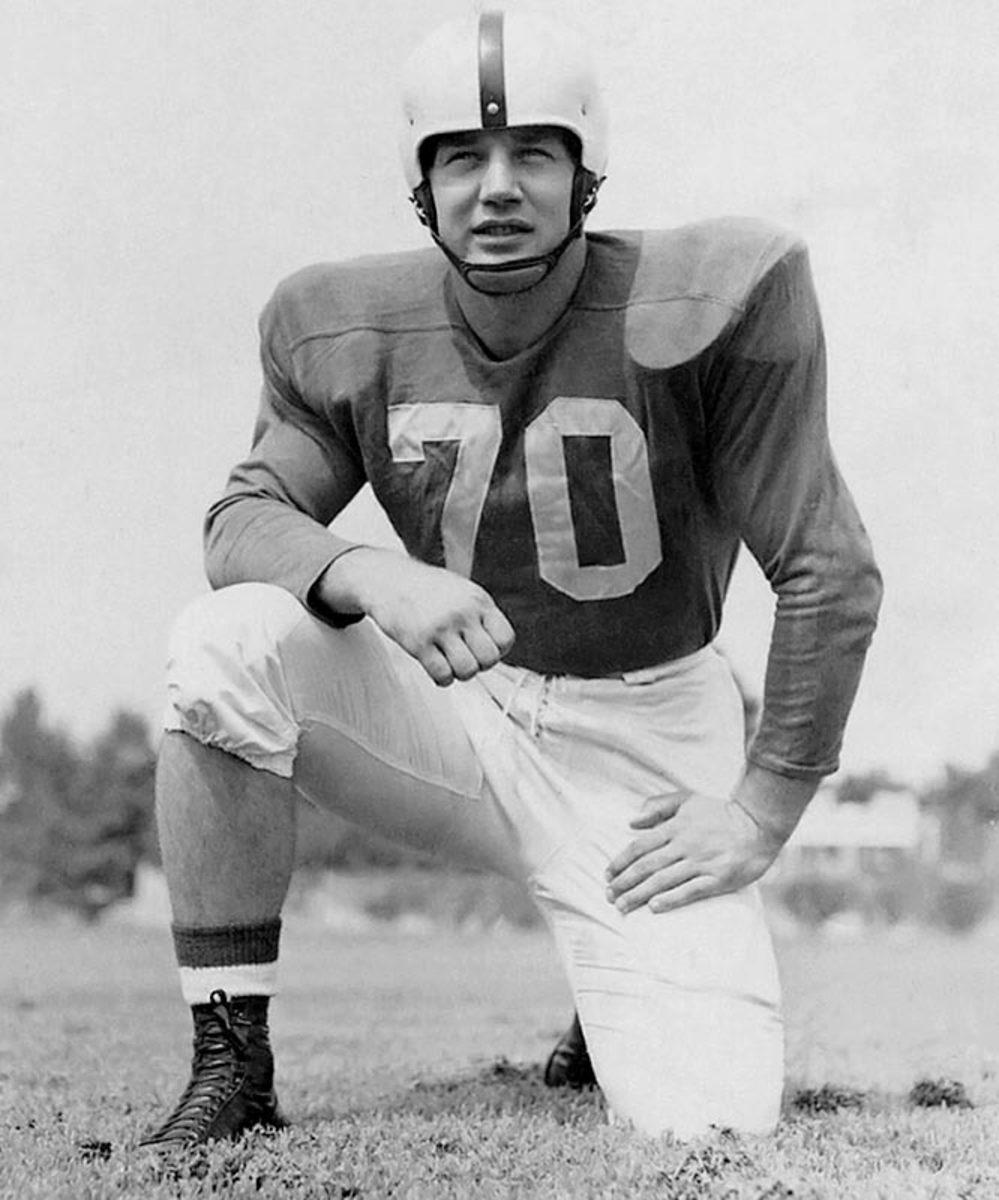
A two-way starter at tackle, Gain won the 1950 Outland Trophy while also serving as the Wildcats' placekicker. He helped Kentucky to a 10-1 regular-season record, its first Southeastern Conference title and a victory over Oklahoma in the Sugar Bowl. — Runner-up: Steve Niehaus, DT, Notre Dame (1972-75)
No. 71 — Merlin Olsen, T, Utah State (1959-61)
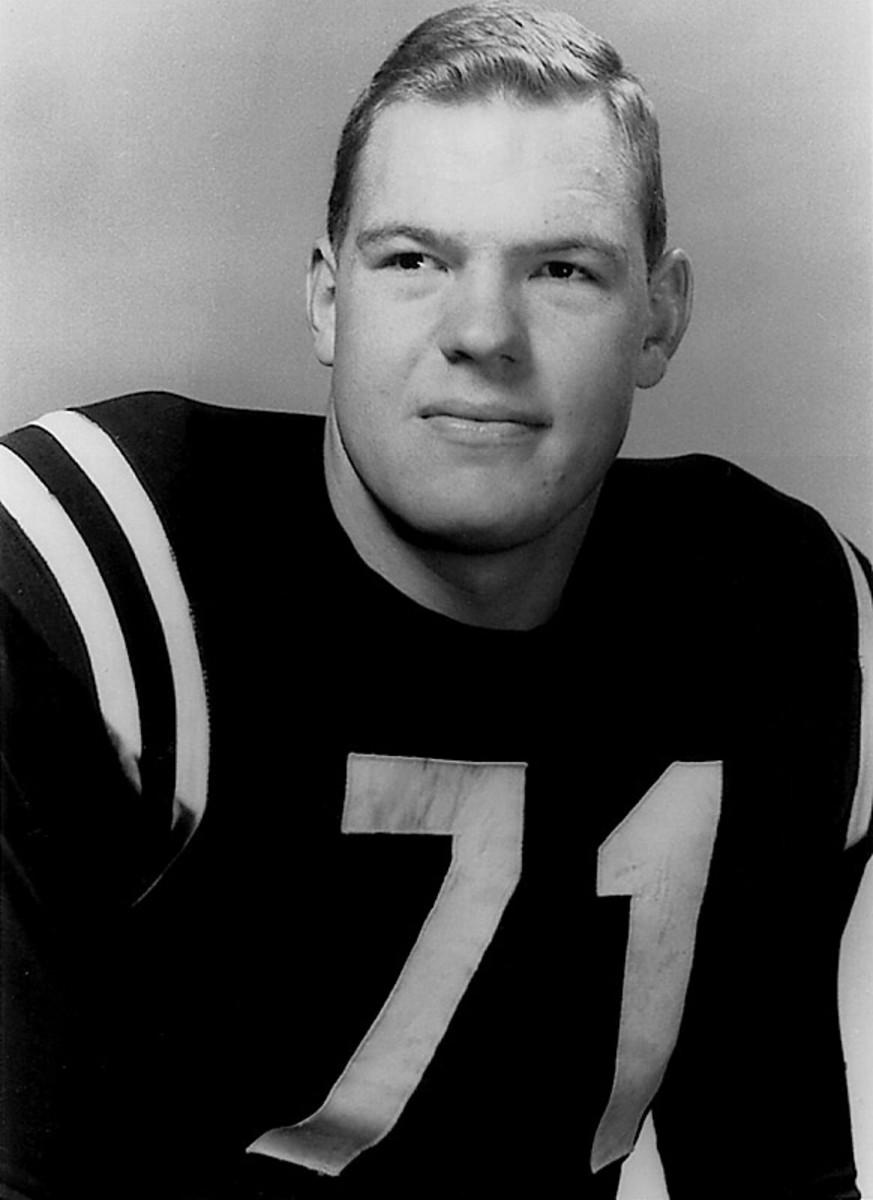
He was ''Fearsome'' even in college. Olsen was an All-America tackle at Utah State and winner of the Outland. — Runner-up: Tony Boselli, T, USC (1991-94)
No. 72 — Bronko Nagurski, FB/DT, Minnesota (1927-29)
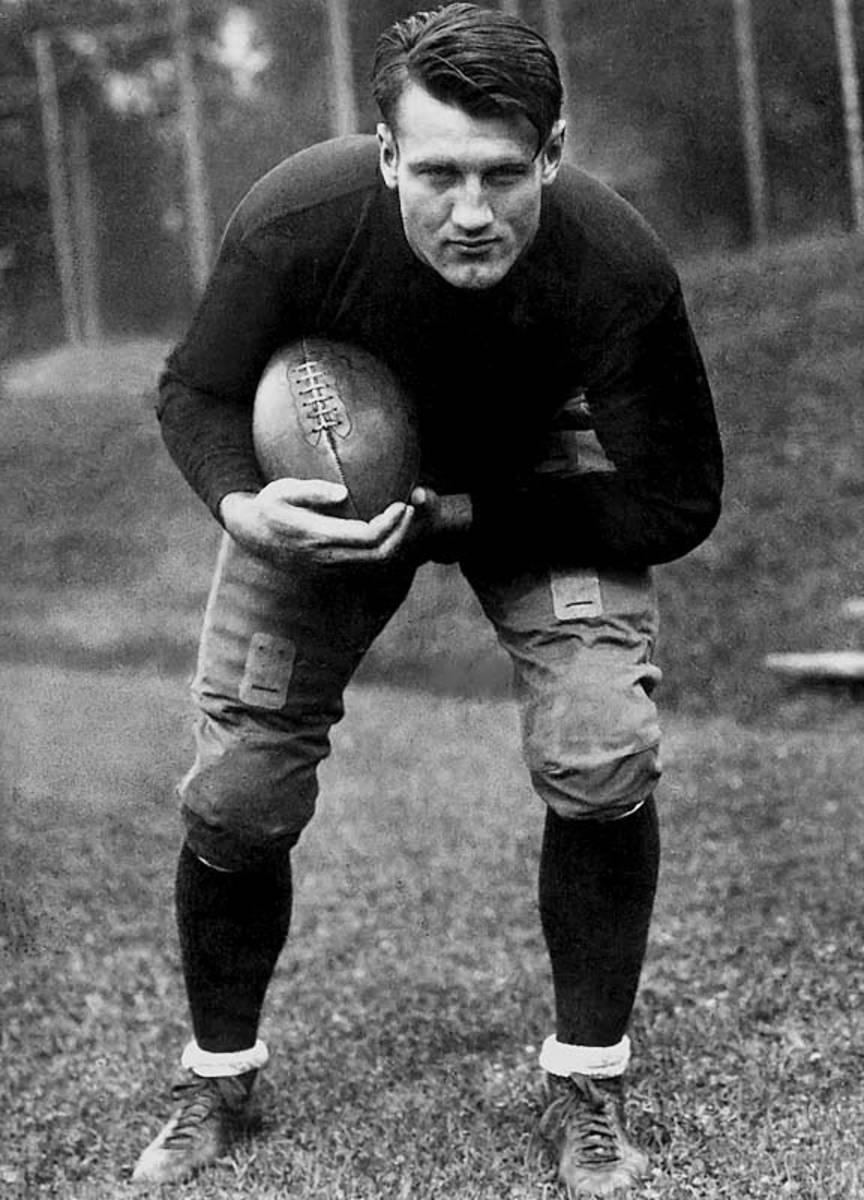
While his primary positions were fullback and defensive tackle, Nagurski also played defensive end, halfback and guard. He is the only athlete to be named All-America at two positions in the same year. — Runner-up: Bob Lilly, DT, TCU (1958-60)
No. 73 — John Hannah, G/T, Alabama (1970-72)
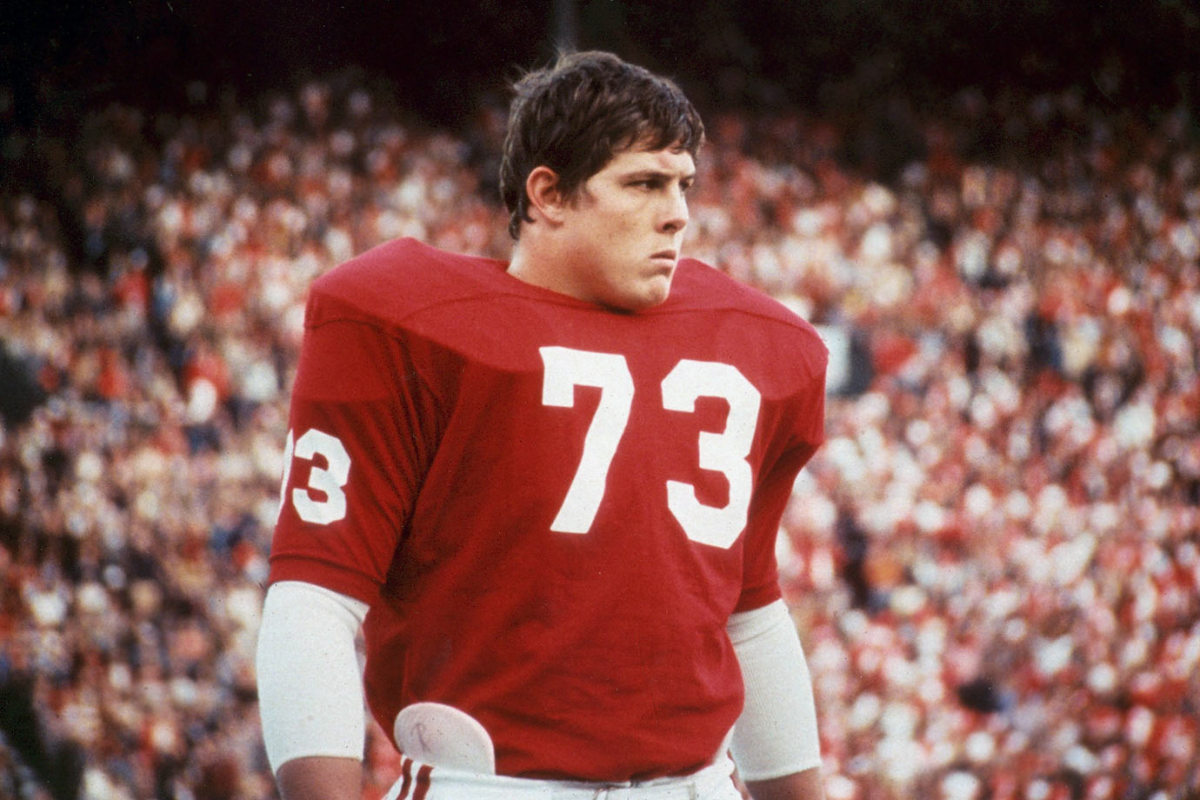
When God created the perfect tackle, he likely had Hannah, a two-time All-America, in mind. Said Bear Bryant, his coach at Alabama: ''In over 30 years with the game, he's the finest offensive lineman I've ever been around.'' — Runner-up: Mark May, T, Pittsburgh (1977-80)
No. 74 — John Hicks, T, Ohio State (1970, '72-73)
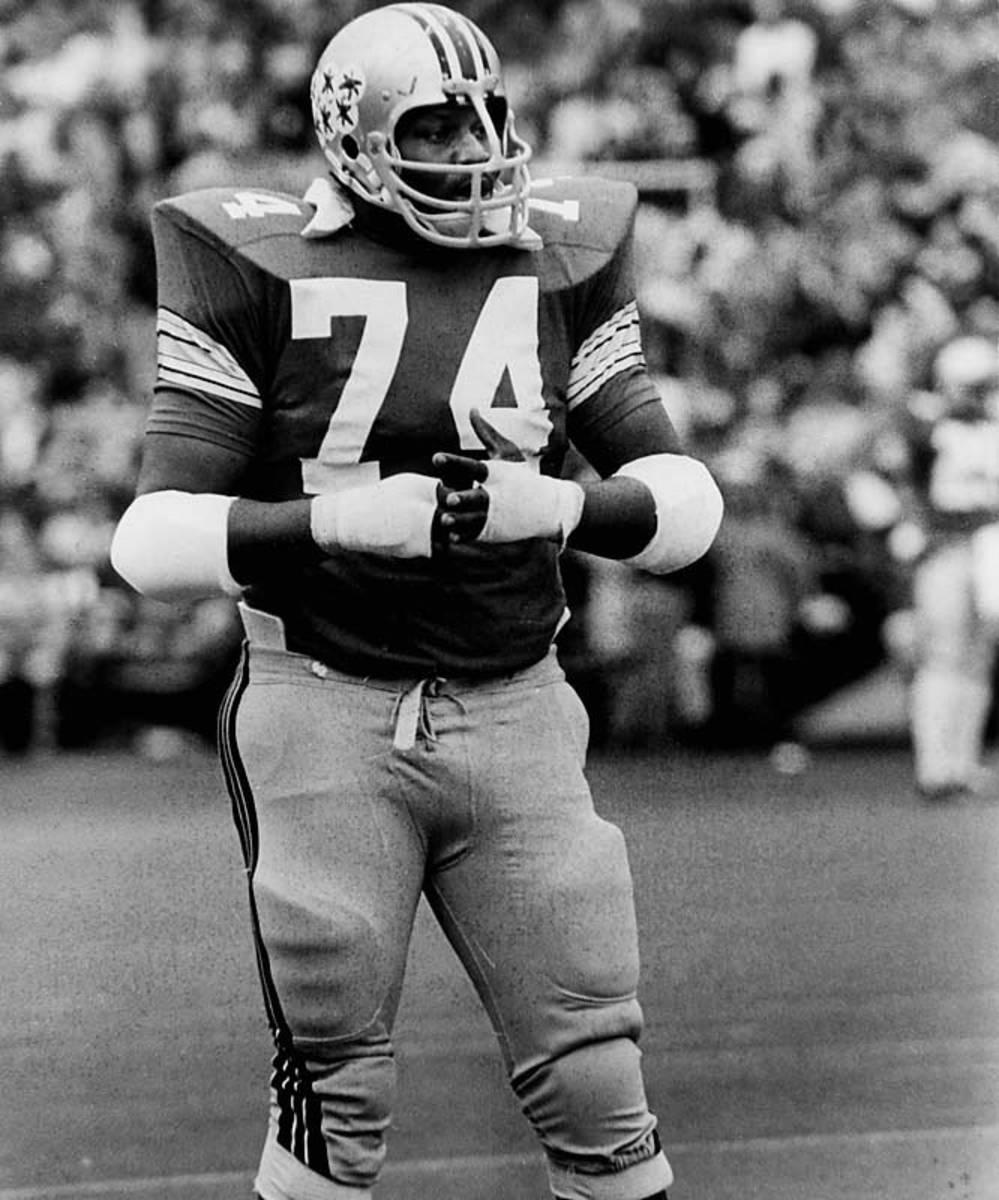
Yet another great Buckeye tackle, Hicks won the Outland and Lombardi Awards in 1973, and finished second in the Heisman voting. — Runner-up: Tracy Rocker, DT, Auburn (1985-88)
No. 75 — Orlando Pace, T, Ohio State (1994-96)
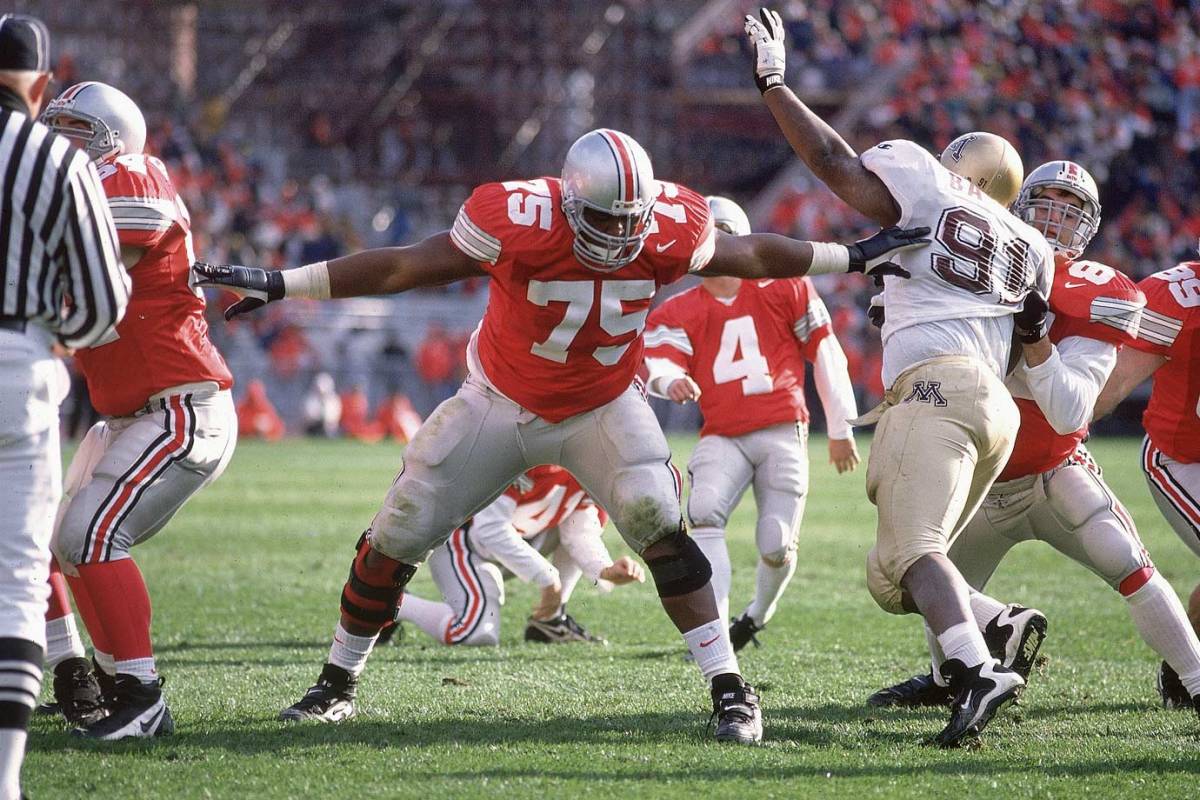
Pace's massive size, speed, strength and agility made him the ultimate lineman. He won the Lombardi Award in 1995 and '96 and the Outland in 1996. He finished fourth in the 1996 Heisman balloting, the best finish for a lineman since OSU's John Hicks was second in 1973. — Runner-up: Joe Greene, DE, North Texas State (1966-68)
No. 76 — Warren Sapp, DT, Miami (1992-94)
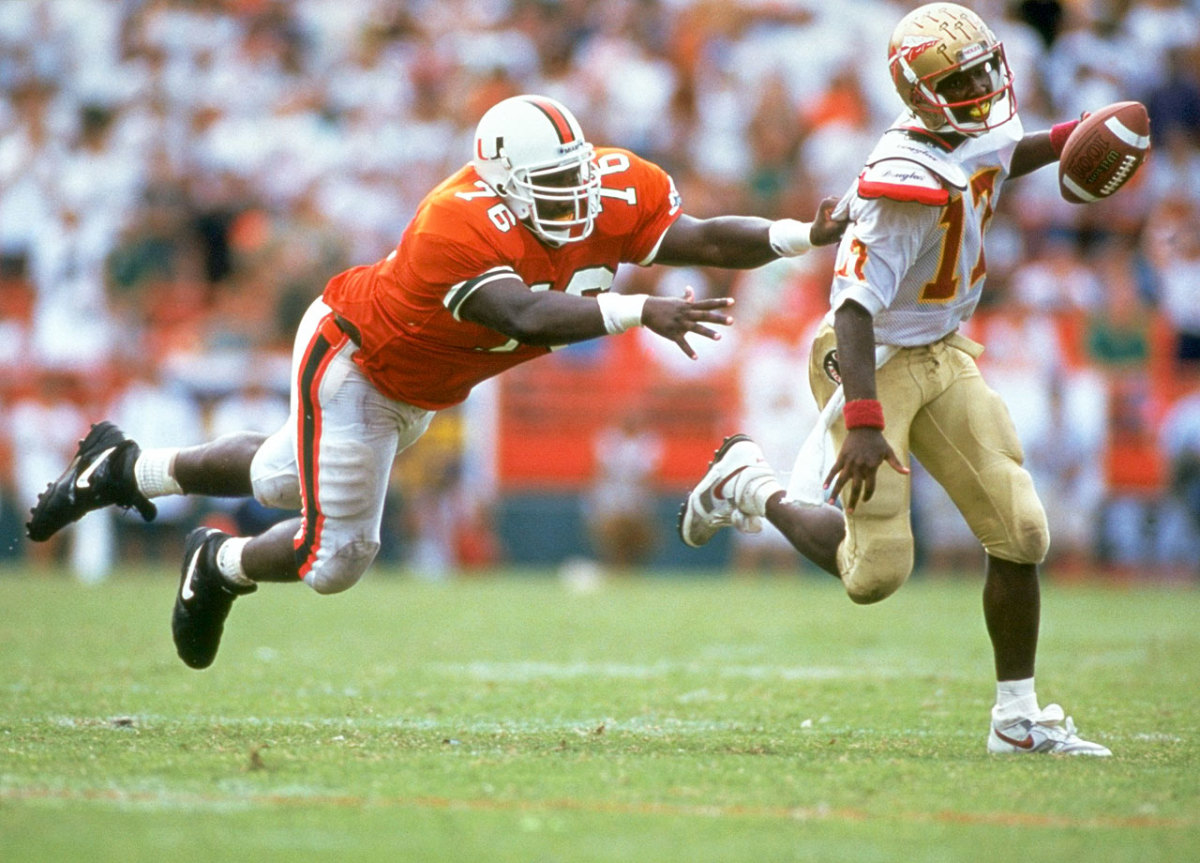
Sapp's never-ending motor helped propel him to the Nagurski Trophy, the Bednarilk Award and the Lombardi Award in 1994. — Runner-up: Carl Eller, T, Minnesota (1961-63)
No. 77 — Red Grange, HB, Illinois (1923-25)
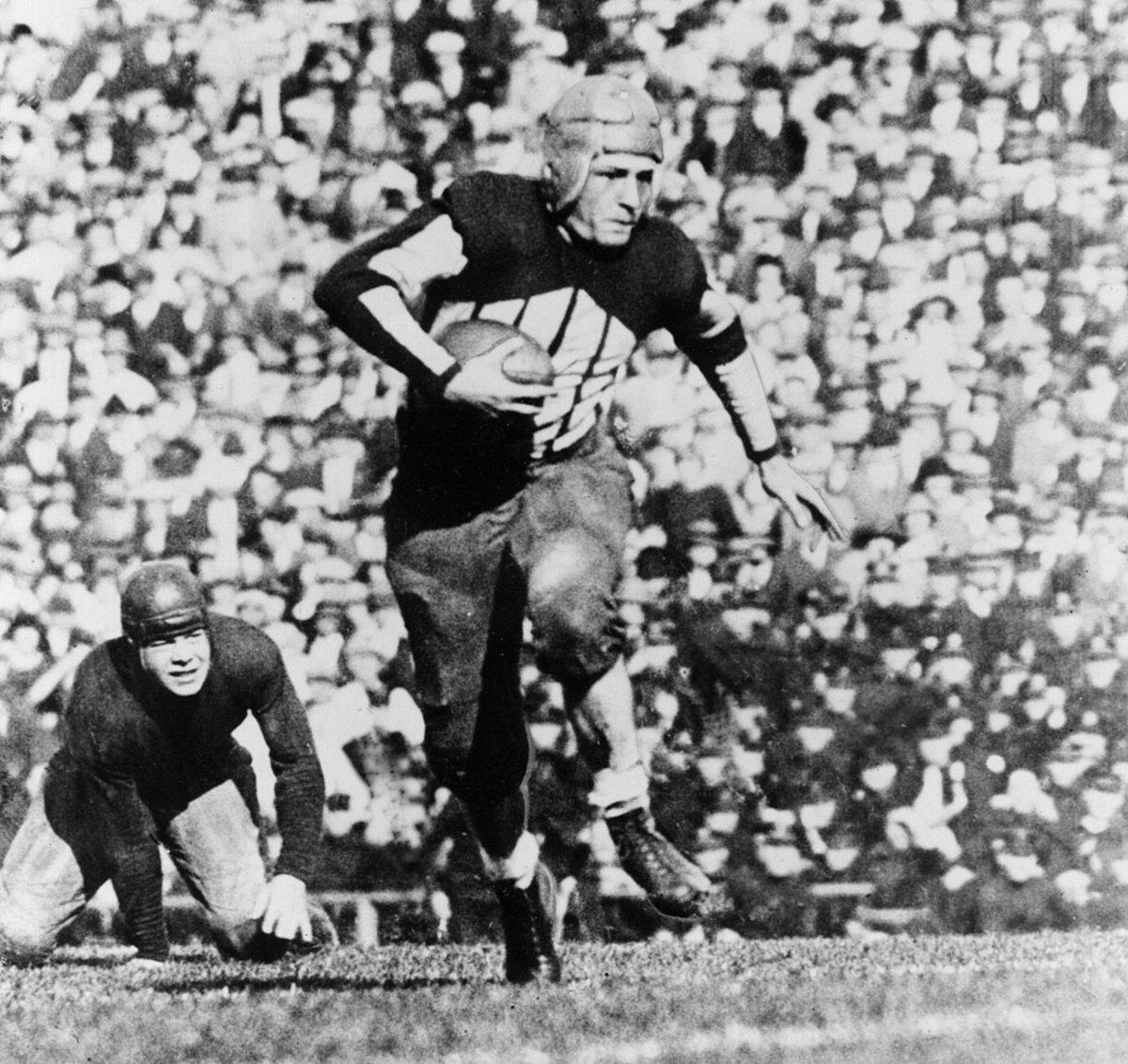
Nicknamed ''The Galloping Ghost'' for his elusiveness, Grange compiled mind-boggling statistics (20 games, 31 touchdowns and 3,362 yards) and marathon-like touchdown runs. — Runner-up: Ron Yary, T, USC, (1965-67)
No. 78 — Bruce Smith, DT, Virginia Tech (1981-84)
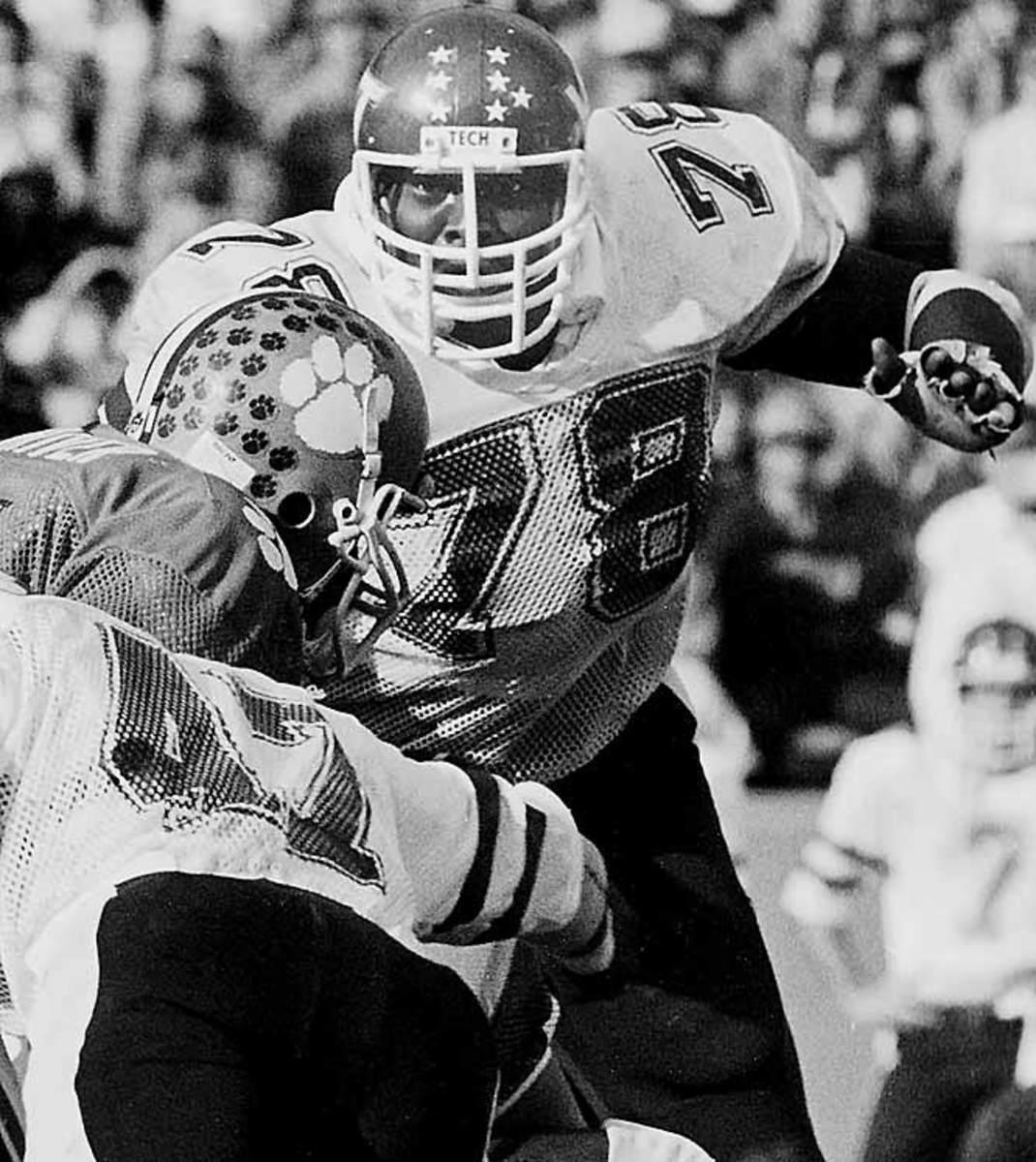
Smith's fury helped elevate Tech's program to prominence. He racked up 46 sacks in just more than three years and won the Outland as a senior. — Runner-up: Grenny Lansdell, QB, USC (1937-39)
No. 79 — Jonathan Ogden, OT, UCLA (1992-95)
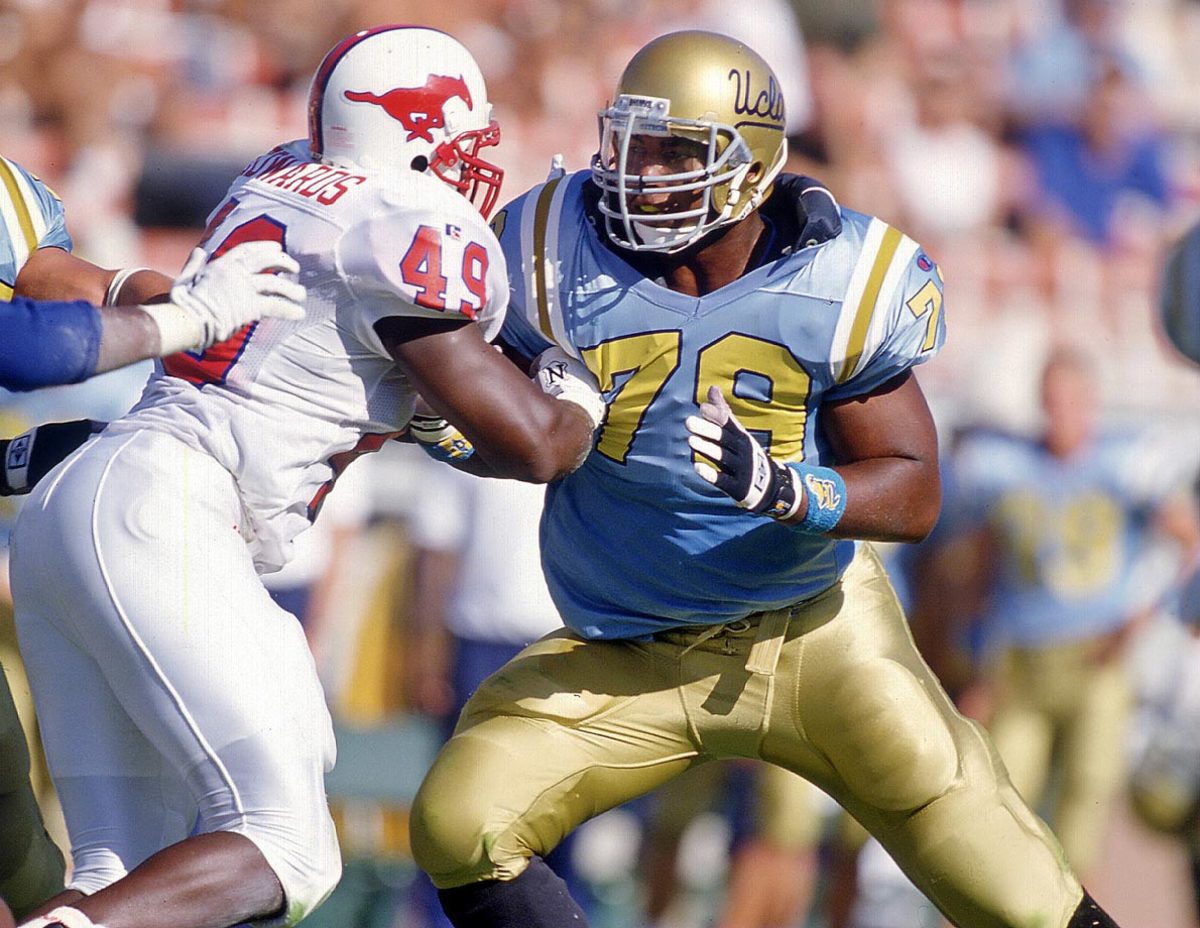
He’s one of the best offensive linemen to ever play in the Pac-10. Ogden started four years at left tackle for UCLA and also participated on the Bruins’ track & field team (shot put). In 1995, he earned first team All-America honors, was named the United Press International’s Lineman of the Year and was given the Outland Trophy, which is awarded to the nation’s best interior lineman. — Runner-up: Buck Buchanan, T, Grambling (1959-62)
No. 80 — Rick Bryan, DT, Oklahoma (1980-83)
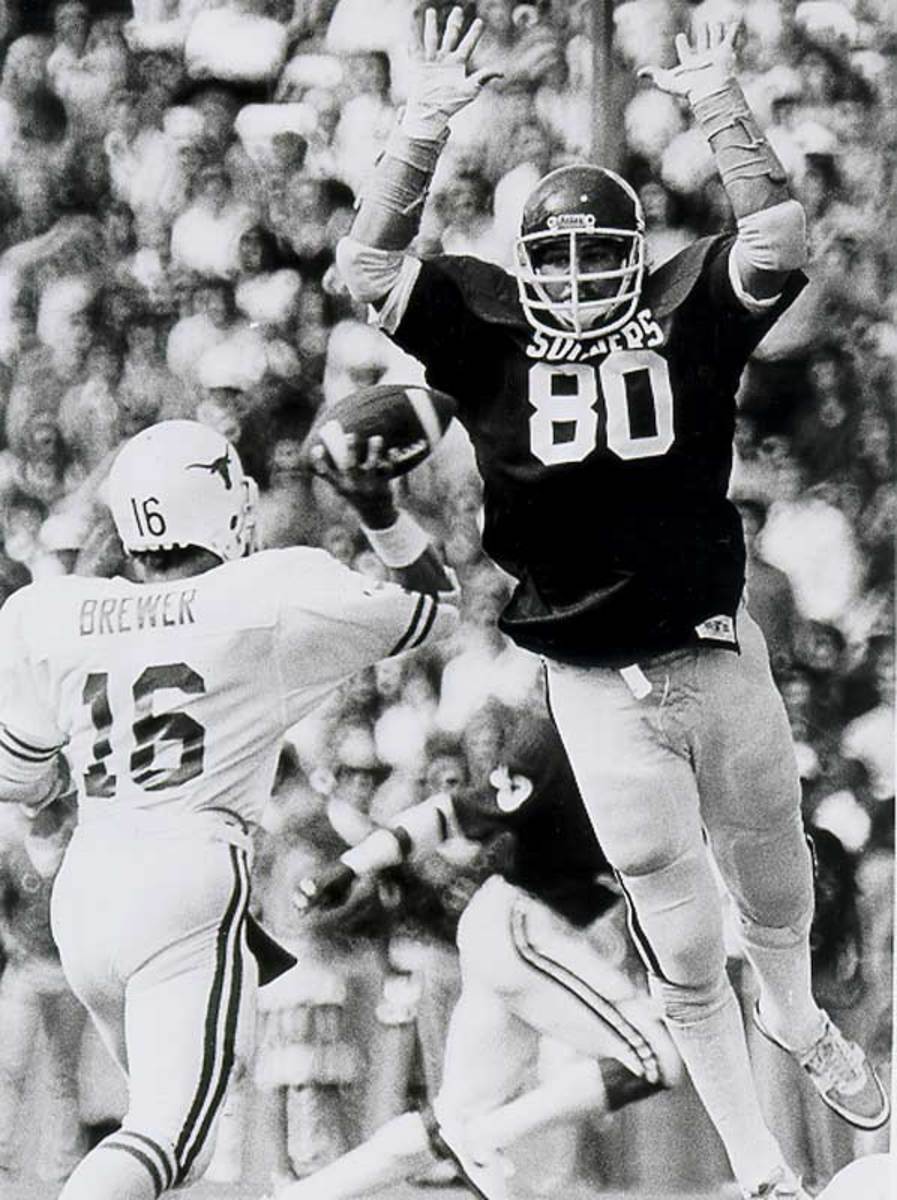
A consensus All-America in 1982 and 1983, Bryan was the Big Eight Defensive Player of the Year in 1982 and ranks in the top 10 among tackles at Oklahoma. — Runner-up: Donn Moomaw, C/LB, UCLA (1950-1952)
No. 81 — Tim Brown, WR, Notre Dame (1984-87)
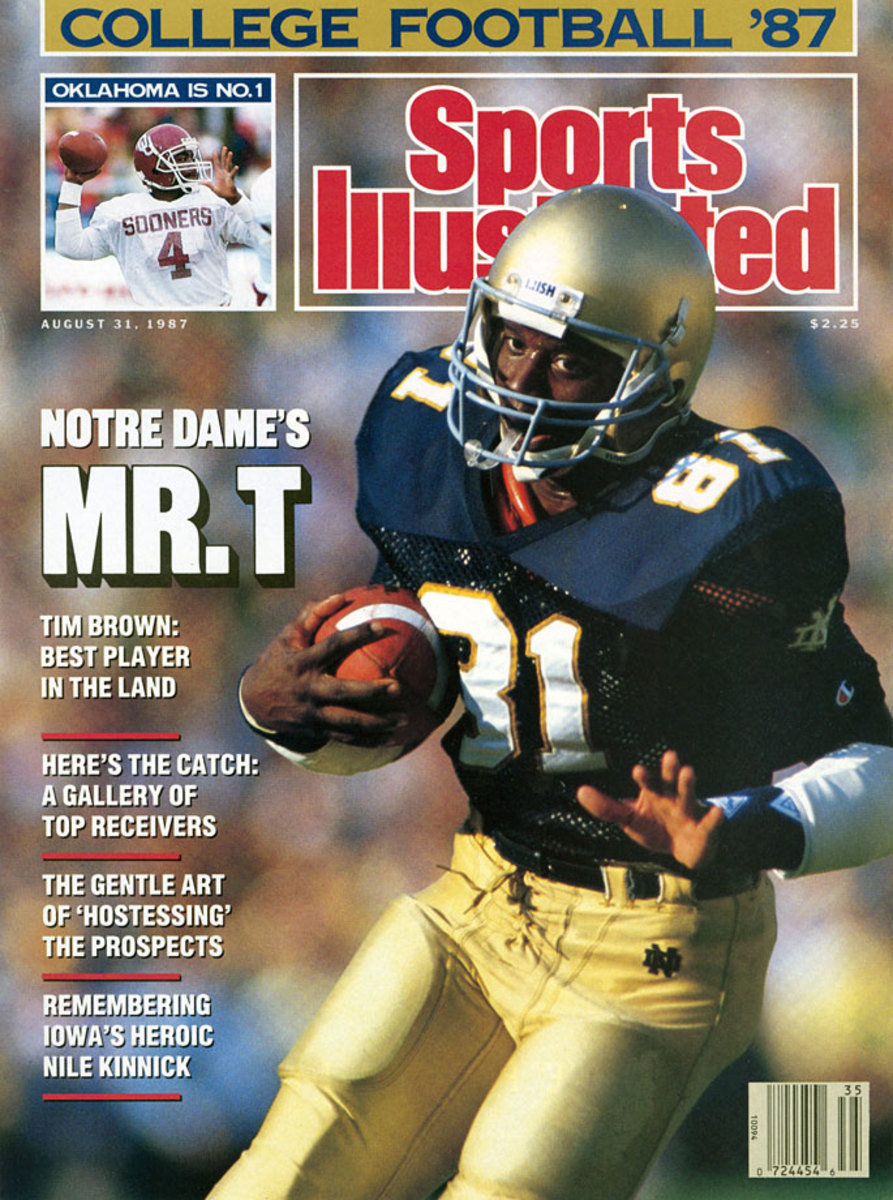
He is one of only three wide receivers to ever win the Heisman Trophy. Brown became the seventh Notre Dame player to take home the award as a senior in 2007, finishing the season with 1,847 all-purpose yards and seven touchdowns. The Dallas, Texas, native also excelled as a rusher and return man during his four-year college career. — Runner-up: George Connor, T, Holy Cross (1942-43) and Notre Dame ('46-47)
No. 82 — Leon Hart, TE/DE, Notre Dame (1946-49)
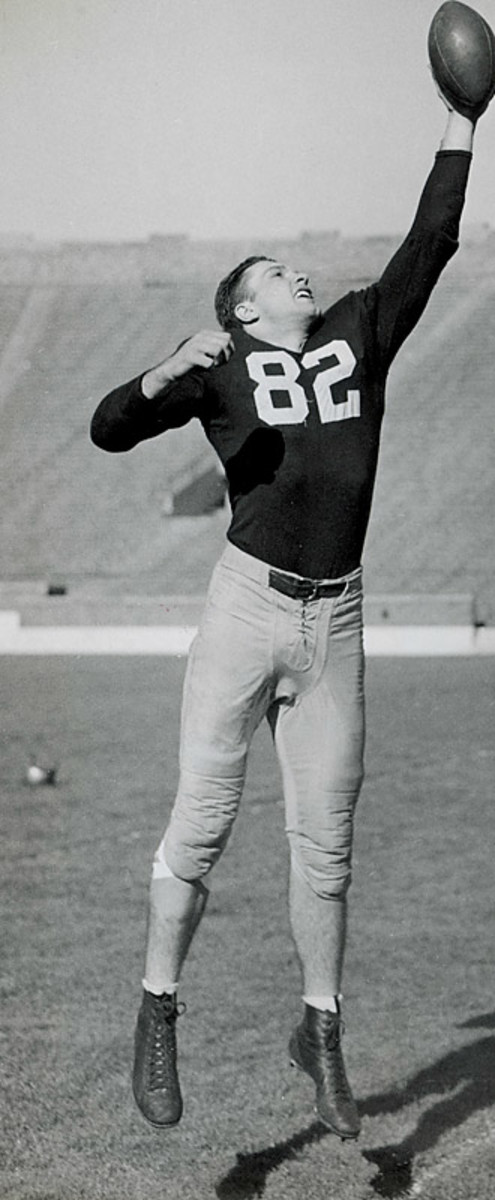
Hart never lost a game (36-0-2) during his time in South Bend. He was a three-time All-America and the winner of the 1949 Heisman. — Runner-up: Ozzie Newsome, TE, Alabama (1974-77)
No. 83 — Richard Wood, LB, USC (1972-74)
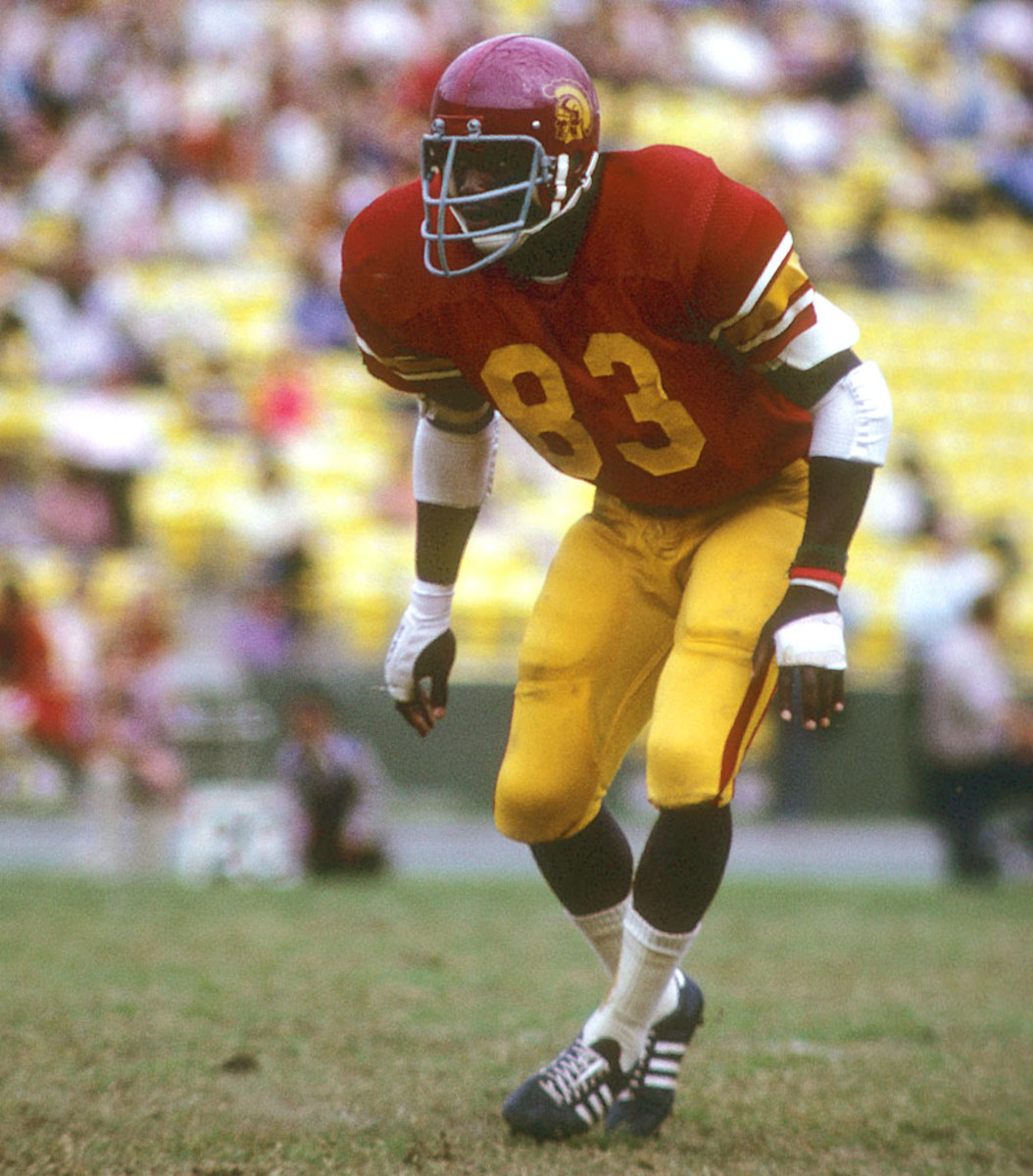
Wood won two national championships as a Trojan and did something that neither Reggie Bush, Matt Leinart, O.J. Simpson nor Lynn Swann ever did: He is USC's only three-time All-America. — Runner-up: Kellen Winslow, TE, Missouri (1975-78)
No. 84 — Jerry Robinson, LB, UCLA (1975-78)
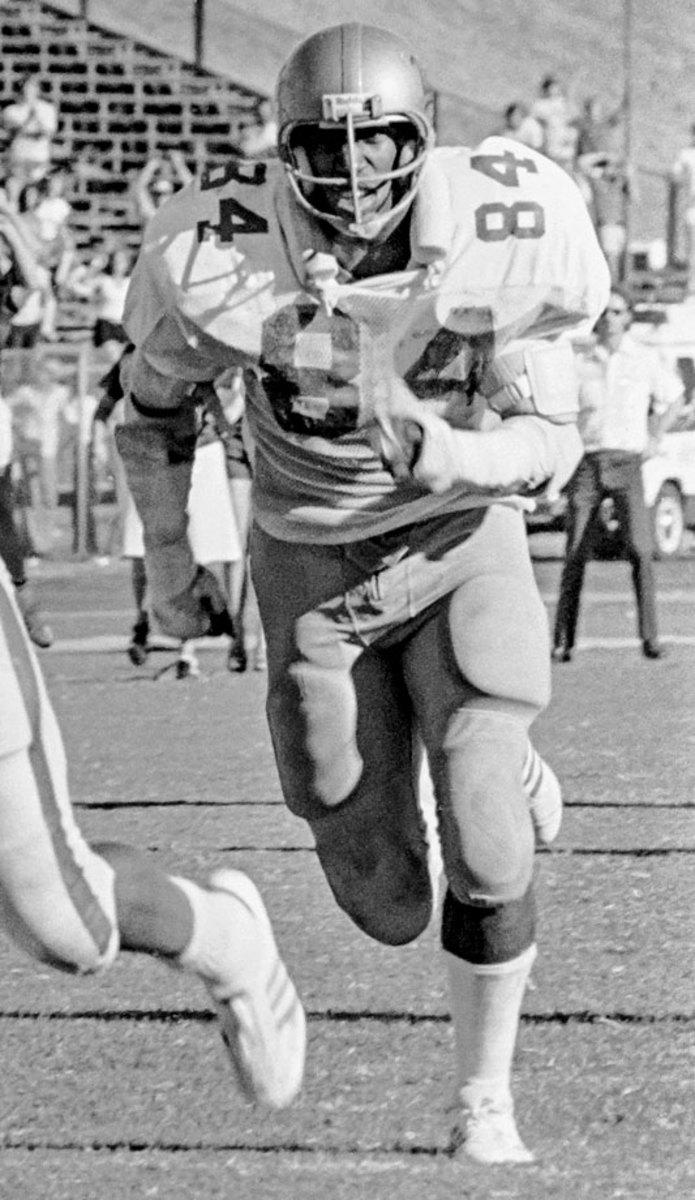
Robinson is one of a handful of players (along with Wood) who were named All-America in three different years. He set a school record for most tackles in one game with 28 against Air Force in 1976. — Runner-up: Abe Mickal, RB, LSU (1933-1935)
No. 85 — Jim Seymour, WR, Notre Dame (1966-68)
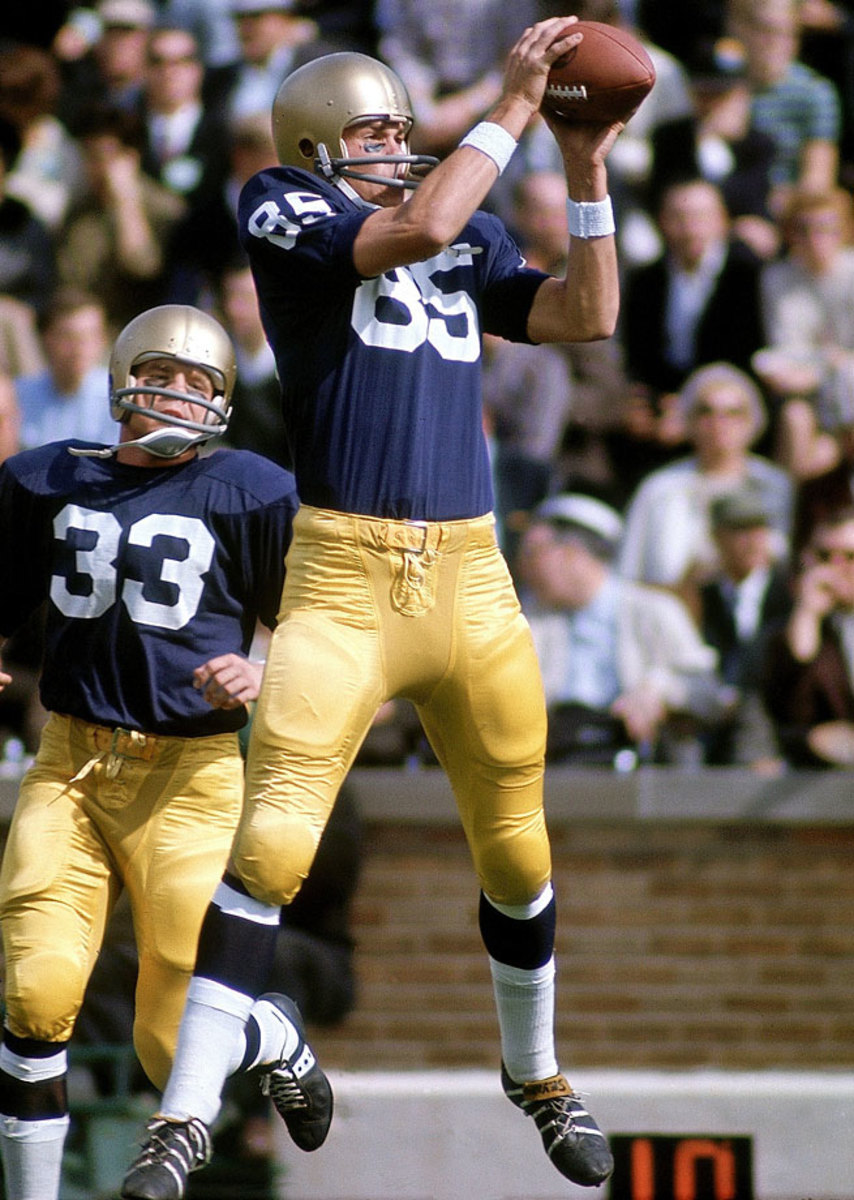
A two-time All-America selection (1967, '68), Seymour led the Irish in receiving for three seasons and holds the school's receiving record for pass receptions in a game with 13. — Runner-up: Jack Snow, WR, Notre Dame (1962-64)
No. 86 — Courtney Brown, DE, Penn State (1996-99)
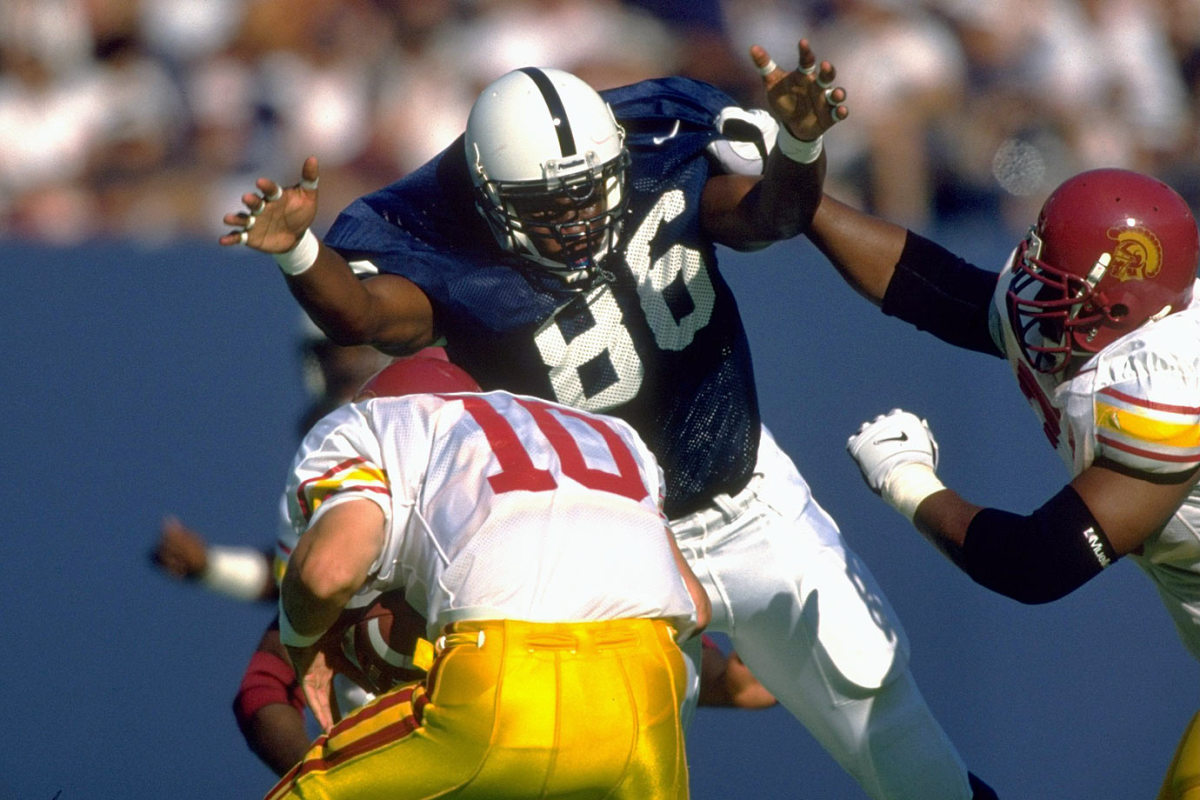
A first-team All-America and the Big Ten Defensive Player of the Year in 1999, Brown finished his Penn State career with 33 sacks and 70 tackles for loss. — Runner-up: Marlin McKeever, E, USC (1958-60)
No. 87 — Bill Carpenter, TE, Army (1958-59)
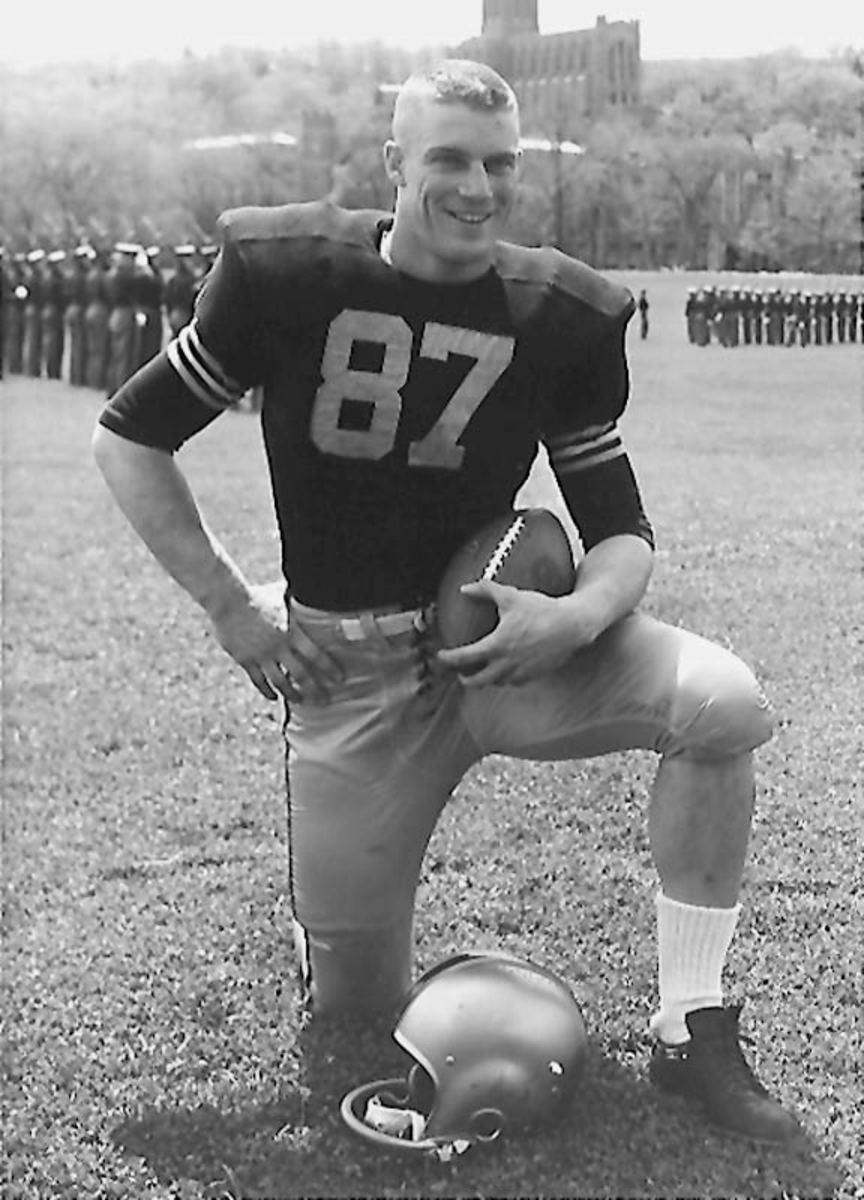
Before Carpenter made his living as a military officer, he made his mark on the gridiron. Nicknamed the ''Lonely End,'' Carpenter stood 20 yards away from his teammates when they huddled up. In 1959 he caught 43 passes for 591 yards and three touchdowns. — Runner-up: Chad Hennings, DE, Air Force (1984-87)
No. 88 — Keith Jackson, TE, Oklahoma (1984-87)
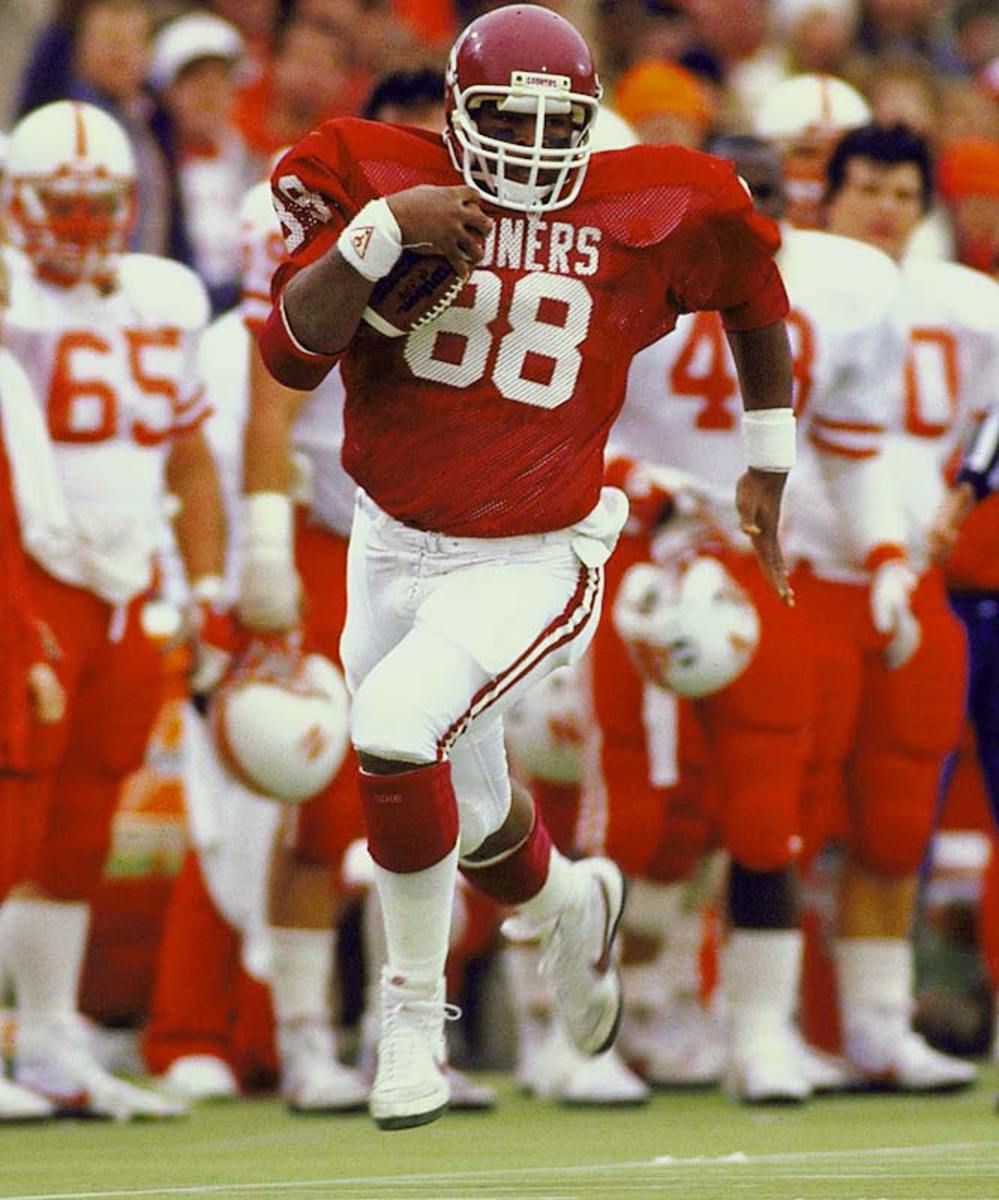
Jackson was a unanimous All-America selection in 1986 and '87. His speed and playmaking ability allowed him to pull in 62 passes for 1,470 yards in a run-heavy offense: Oklahoma was 42-5-1 during his time in Norman. — Runner-up: Jerry Rice, WR, Mississippi Valley State (1981-84)
No. 89 — Ross Browner, DE, Notre Dame (1973, '75-77)
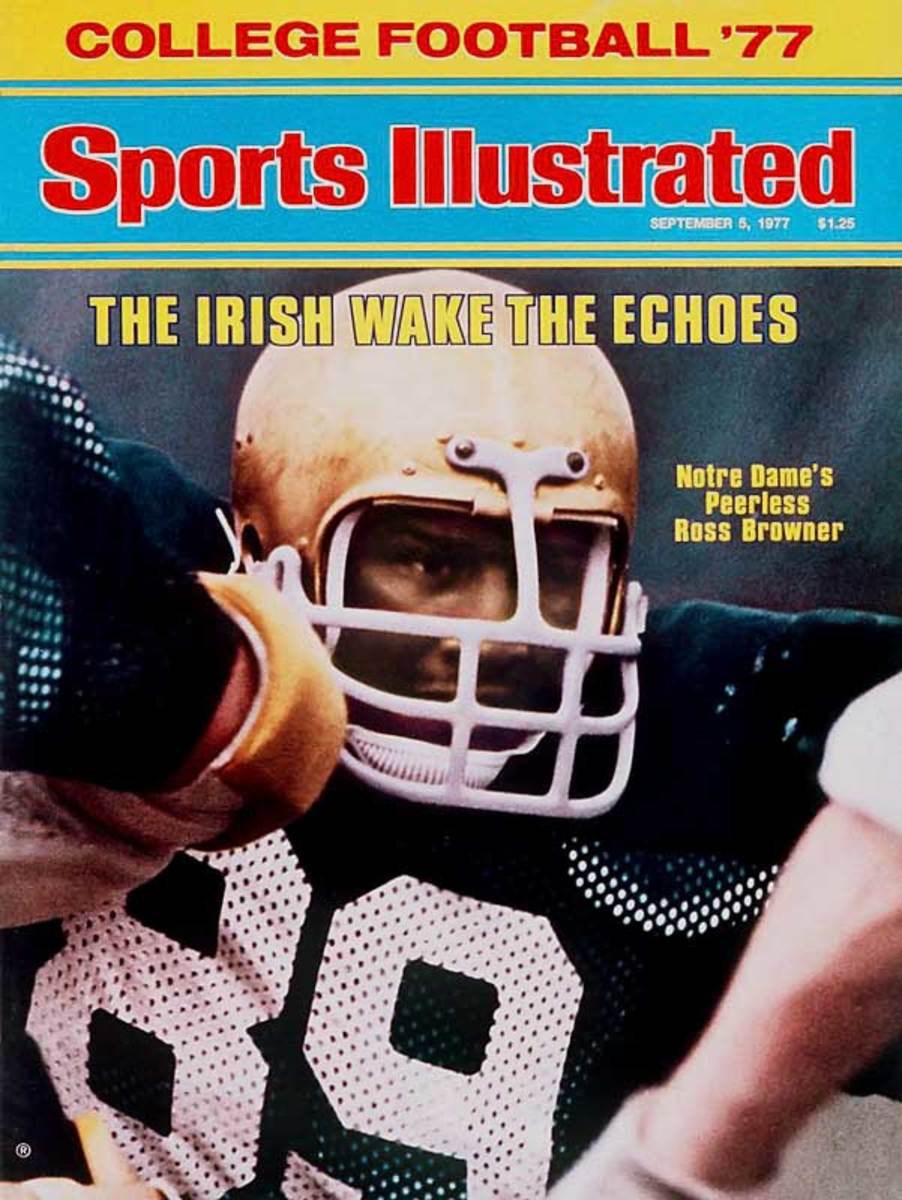
Browner's speed and strength earned him first-team All-America honors in two seasons. He helped lead the Irish to two national championships (1973, '77) and holds the record for most tackles (340) by a Notre Dame defensive lineman. — Runner-up: Barney Poole, E, Army and Ole Miss (1944-46, '47-48)
No. 90 — George Webster, LB, Michigan State (1964-1966)
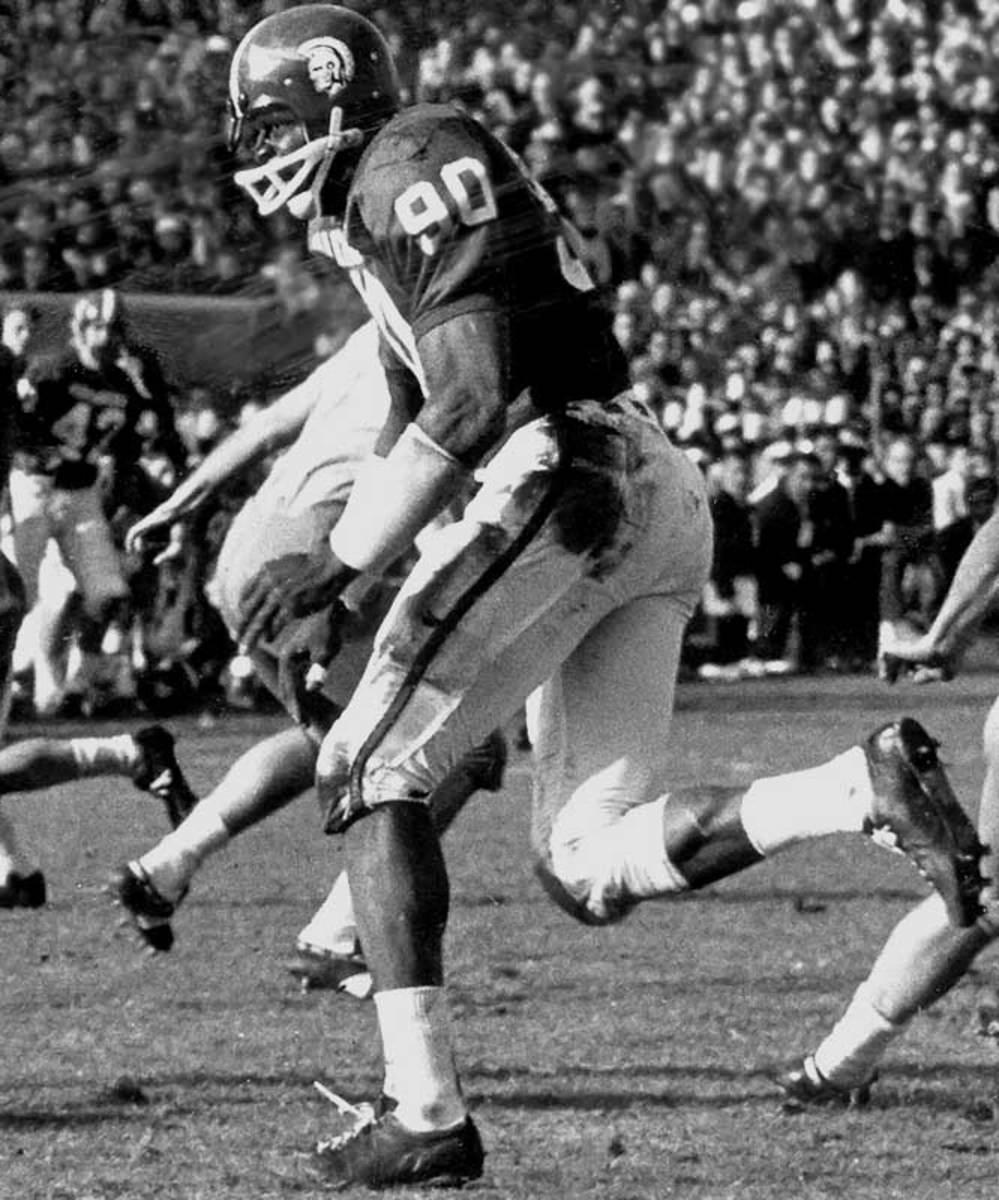
Webster was twice an All-America. During his time at Michigan State, the Spartans were ranked first in the nation in 1965 and second in 1966. Runner-up: Steve Emtman, DT, Washington (1989-91)
No. 91 — Doug Atkins, T, Tennessee (1950-52)
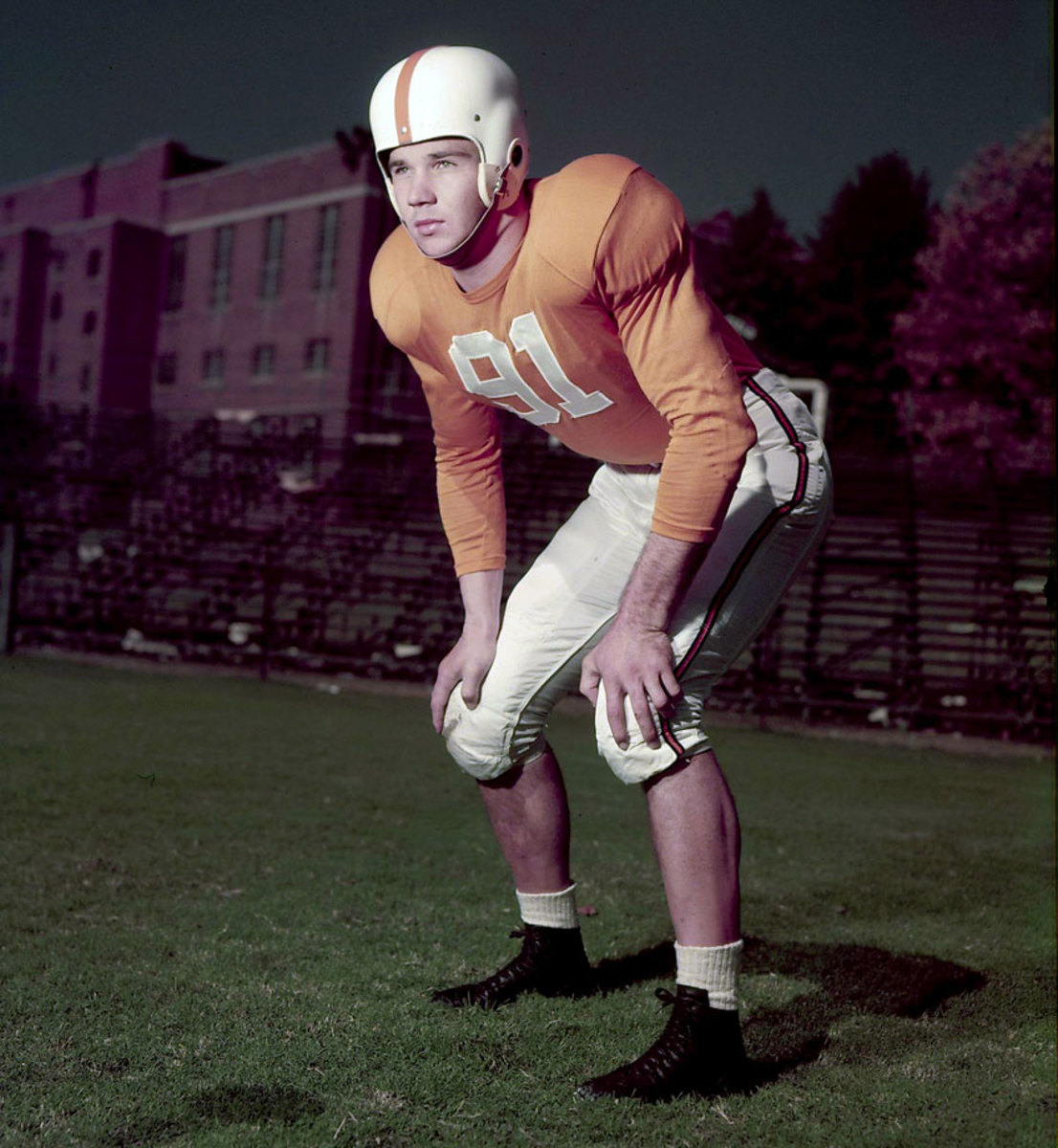
Atkins was an All-SEC player in his junior season after moving to defensive tackle from end. The Vols won a national championship in 1951, and led the nation in total defense during Atkins' All-America season in 1952. — Runner-up: Dewey Selmon, NG, Oklahoma (1972-75)
No. 92 — Tony Casillas, DT, Oklahoma (1983-85)
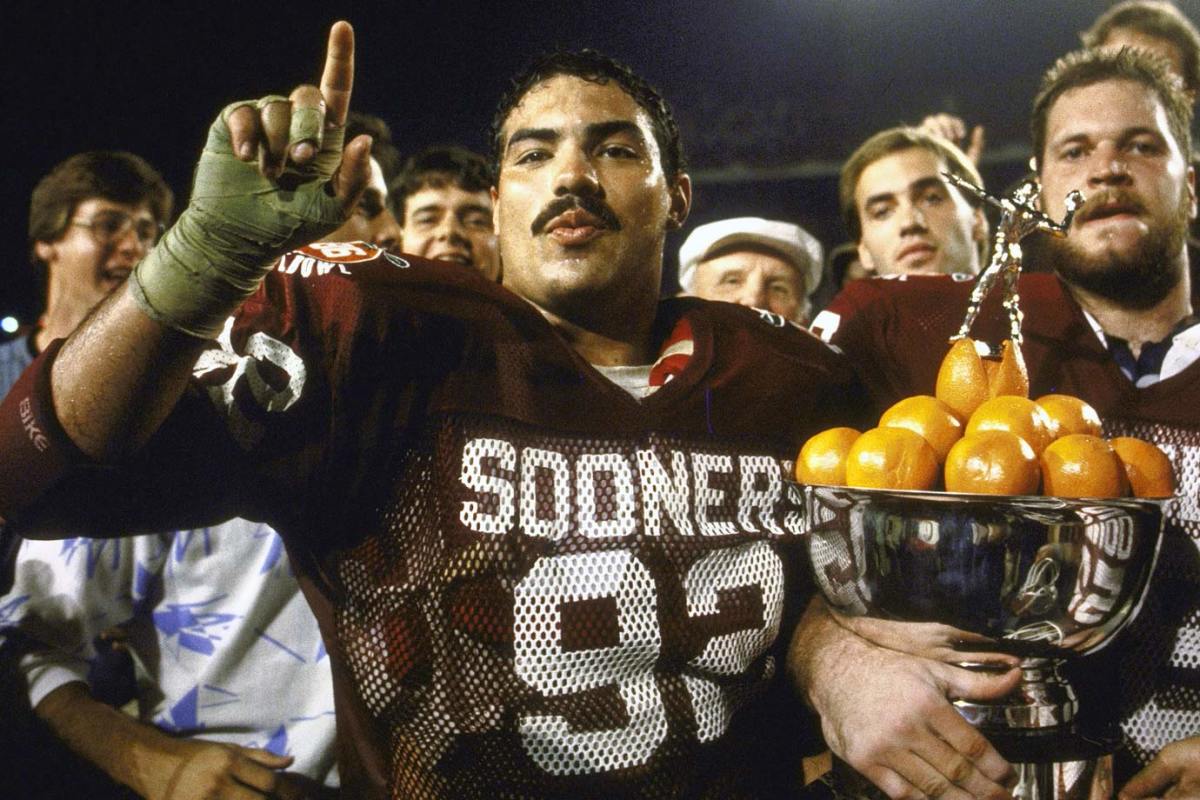
Casillas was a menace to quarterbacks. He won the 1985 Lombardi and helped the Sooners win a national title in '85. — Runner-up: Reggie White, DT, Tennessee (1980-83)
No. 93 — Lee Roy Selmon, DT, Oklahoma (1972-75)
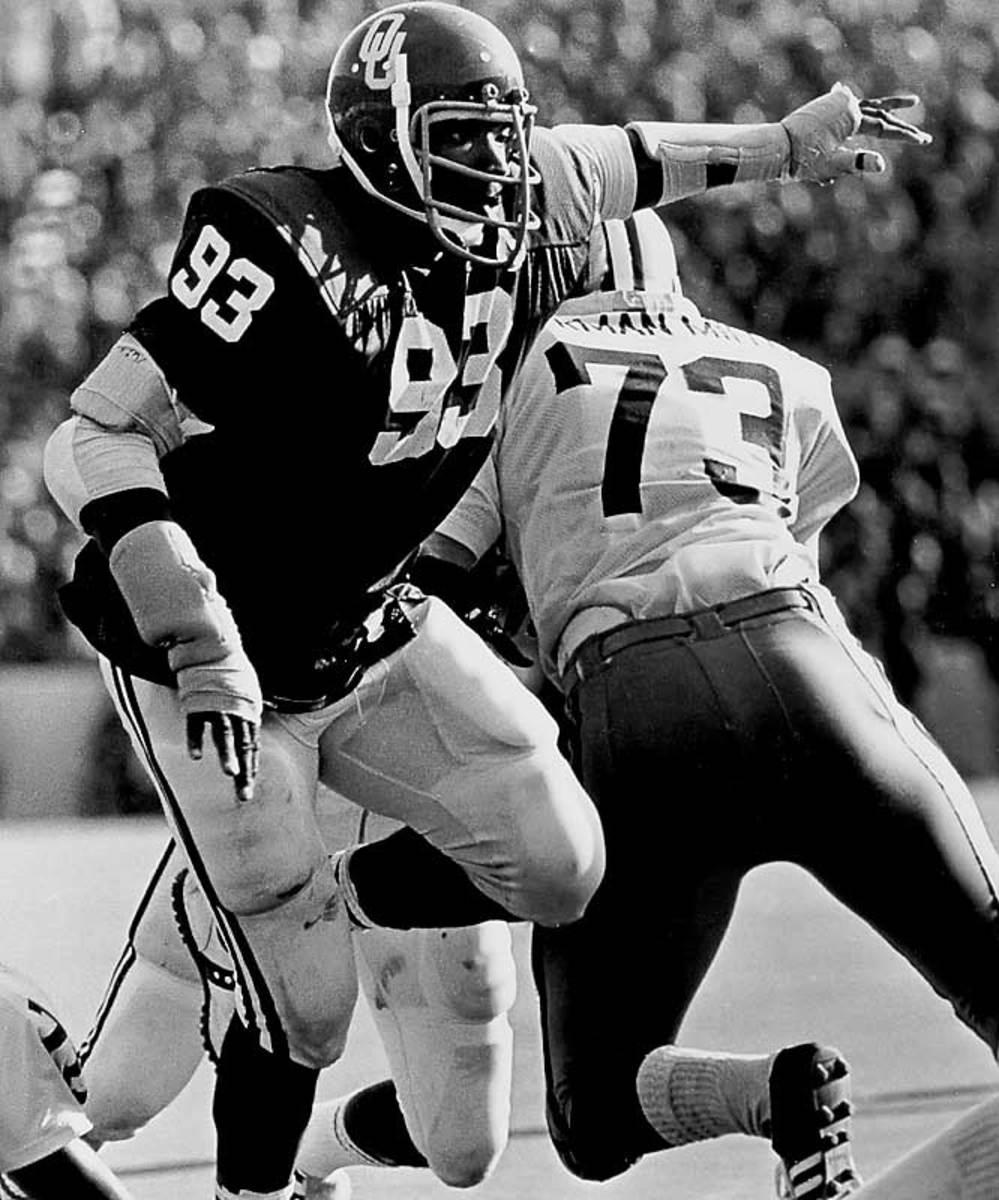
A consensus All-America in 1974 and '75, he and brother Dewey combined to give OU one of the best defenses in college football history. Lee Roy won the Lombardi and Outland in 1975. — Runner-up: Aundray Bruce, LB, Auburn (1985-88)
No. 94 — Randy White, DT, Maryland (1972-74)
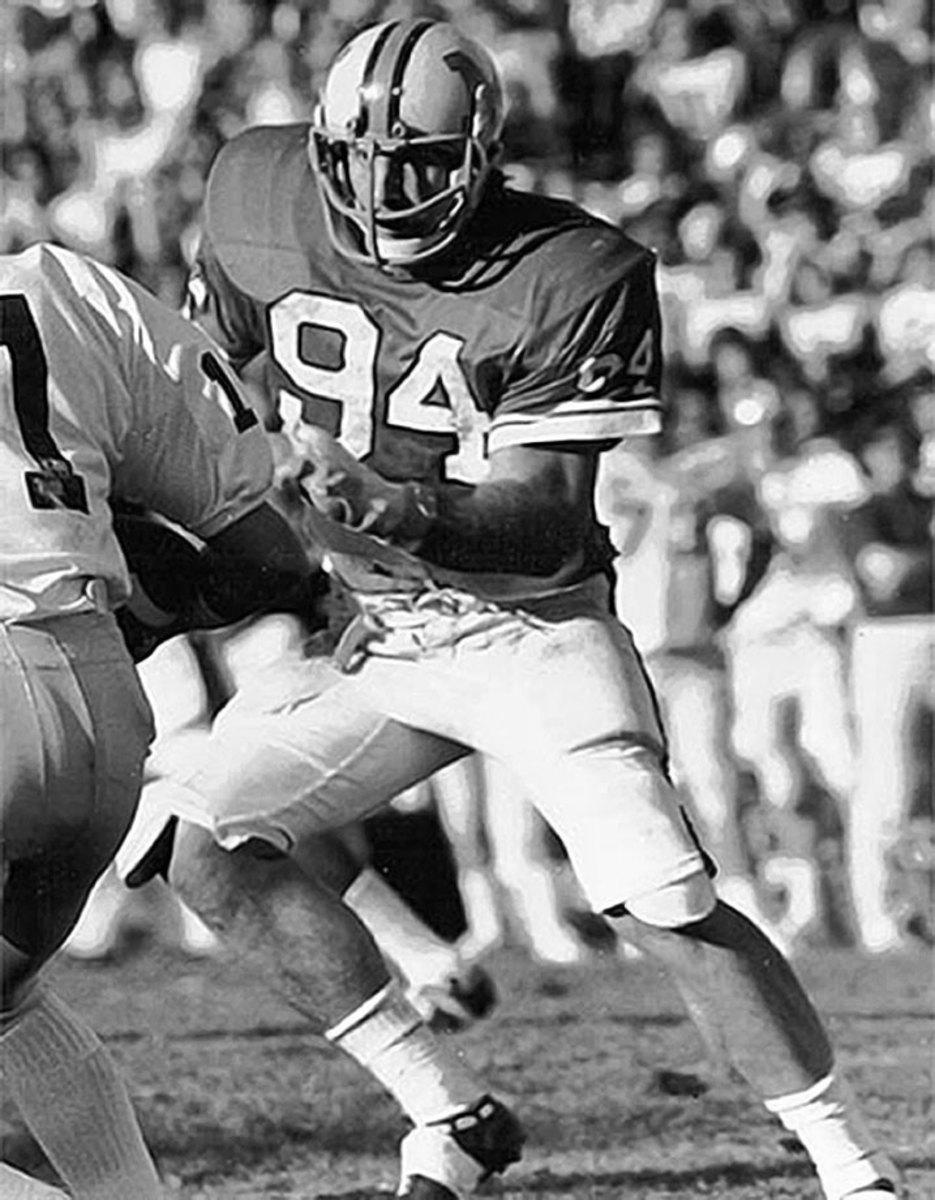
No player has ever been better for the Terps. White won the Outland and Lombardi awards in 1974 and was an All-America in 1973 and 1974. He holds Maryland's single-season record with 24 tackles for a loss in 1974. — Runner-up: Tony Franklin, K, Texas A&M (1975-78)
No. 95 — Bubba Smith, DE, Michigan State (1964-66)
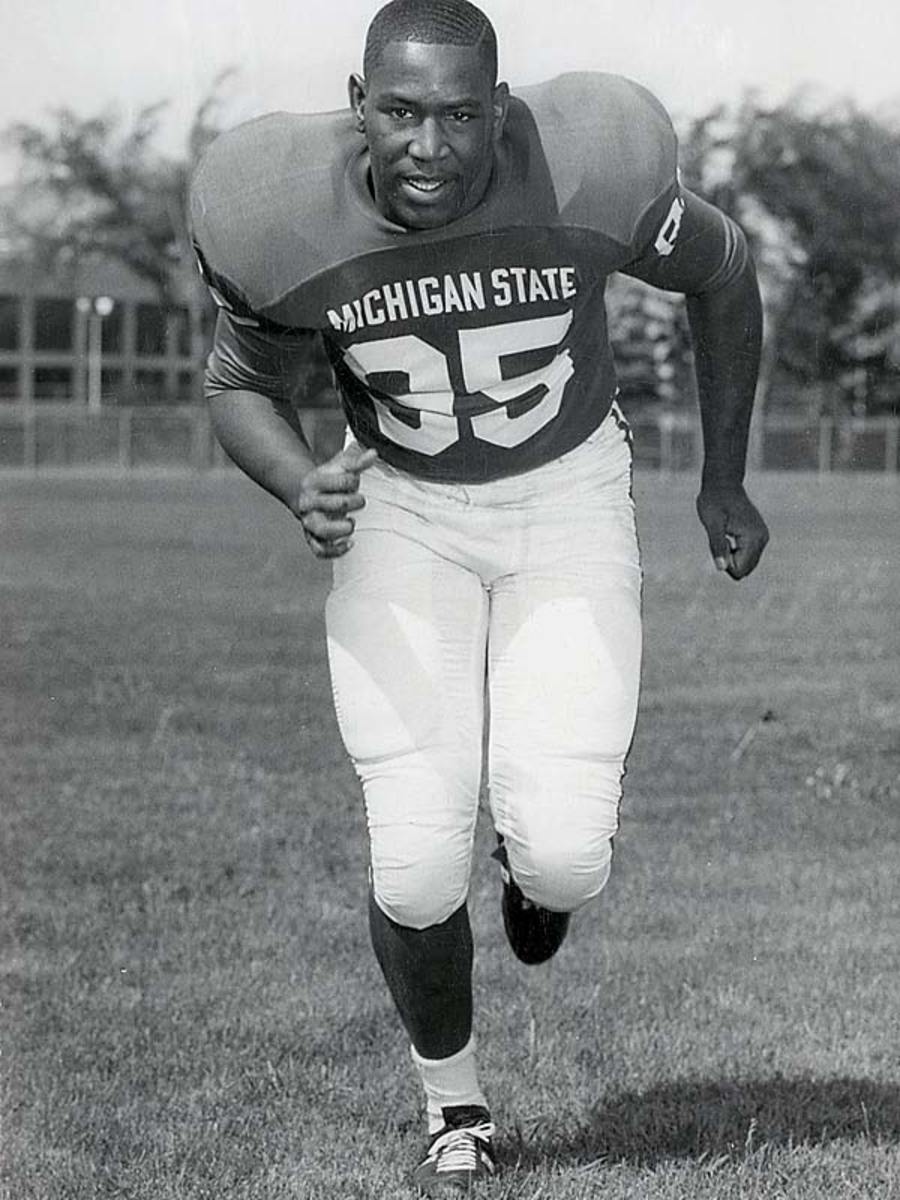
His strength, speed and agility made him a force at defensive end for the Spartans. Smith was a two-time All-America and was named the UPI Lineman of the Year as a senior (1966). — Runner-up: John Witte, T, Oregon State (1953-56)
No. 96 — Danny Stubbs, DT, Miami (1984-87)
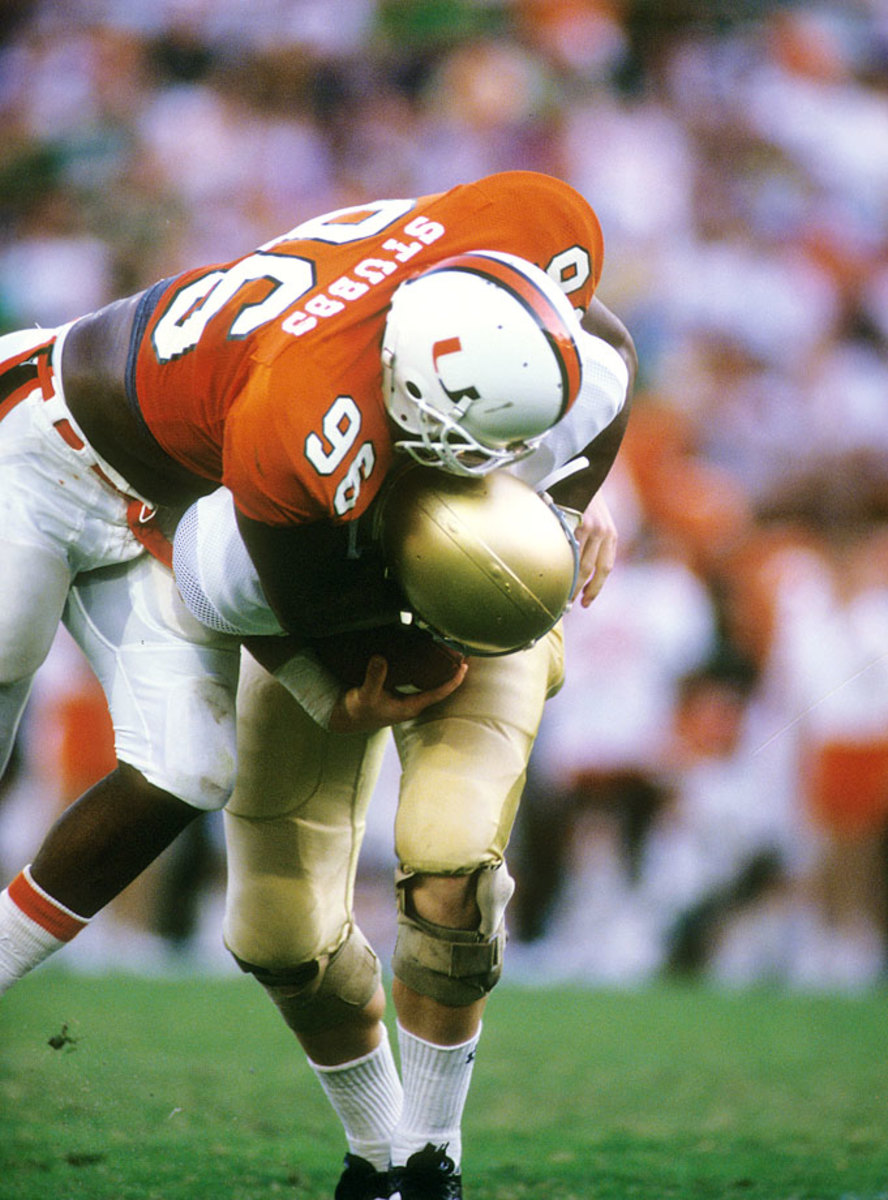
His 39.5 career sacks and 17 sacks during the 1986 season remain school records. Stubbs won the Outland in 1987, the same year Miami won its second national title. — Runner-up: George Andrews, DE, Nebraska (1976-78)
No. 97 — Cornelius Bennett, LB, Alabama (1983-86)
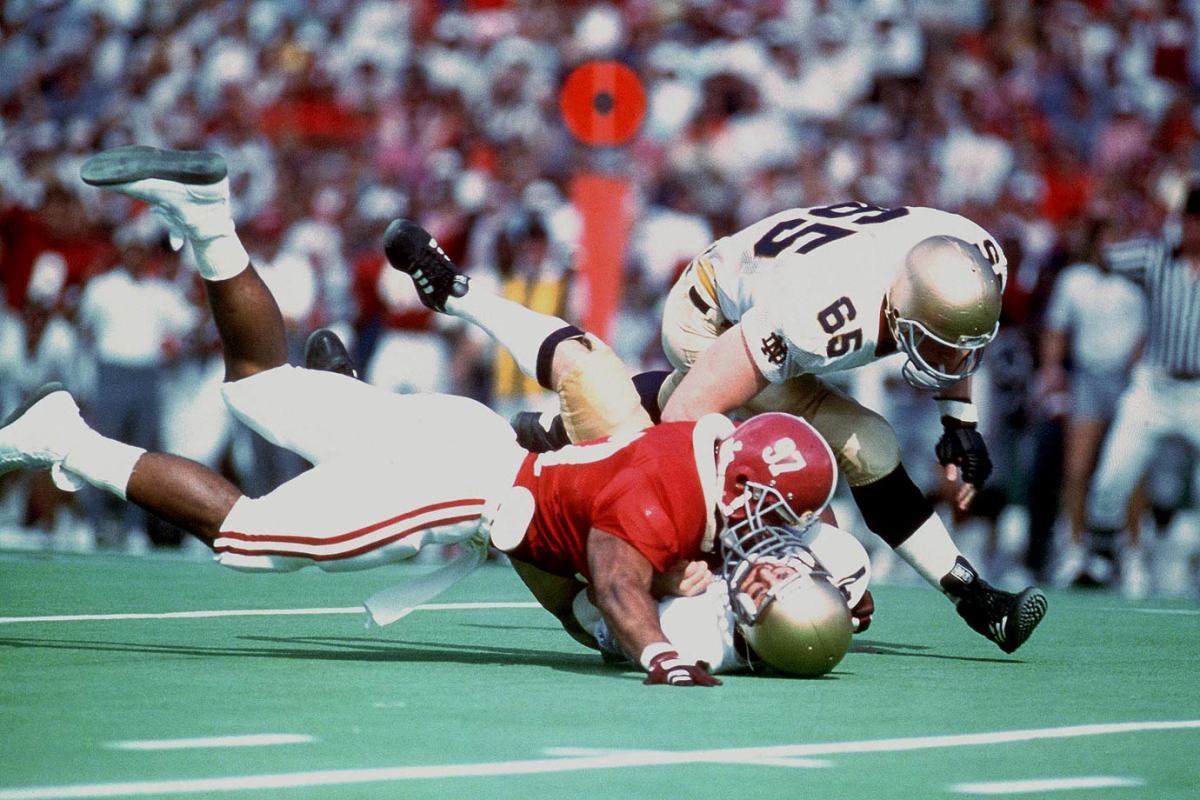
Bennett was elected as Alabama's ''Player of the Decade'' in the 1980s with good reason: He was a two-time All-America (1985 and '86) and won the Lombardi Award in 1986. — Runner-up: Tommie Harris, DT, Oklahoma (2001-03)
No. 98 — Tom Harmon, HB, Michigan (1938-40)
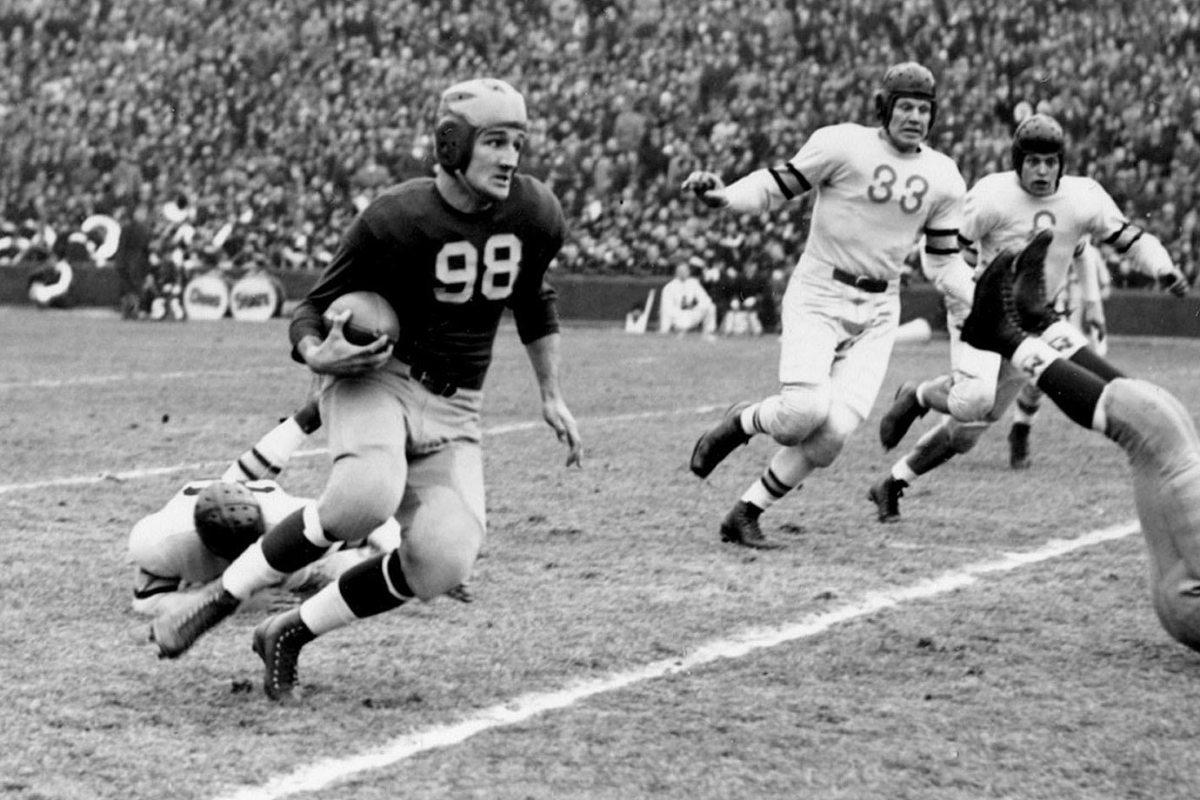
''Old 98'' was the first Michigan player to win the Heisman. He rang up more than 30 touchdowns in three seasons and led the nation in scoring in 1939 and 1940. Against California in 1940, he scored on runs of 94, 86, 70 and 65 yards. — Runner-up: Lawrence Taylor, LB, North Carolina (1978-80)
No. 99 — Hugh Green, DE, Pittsburgh (1977-80)
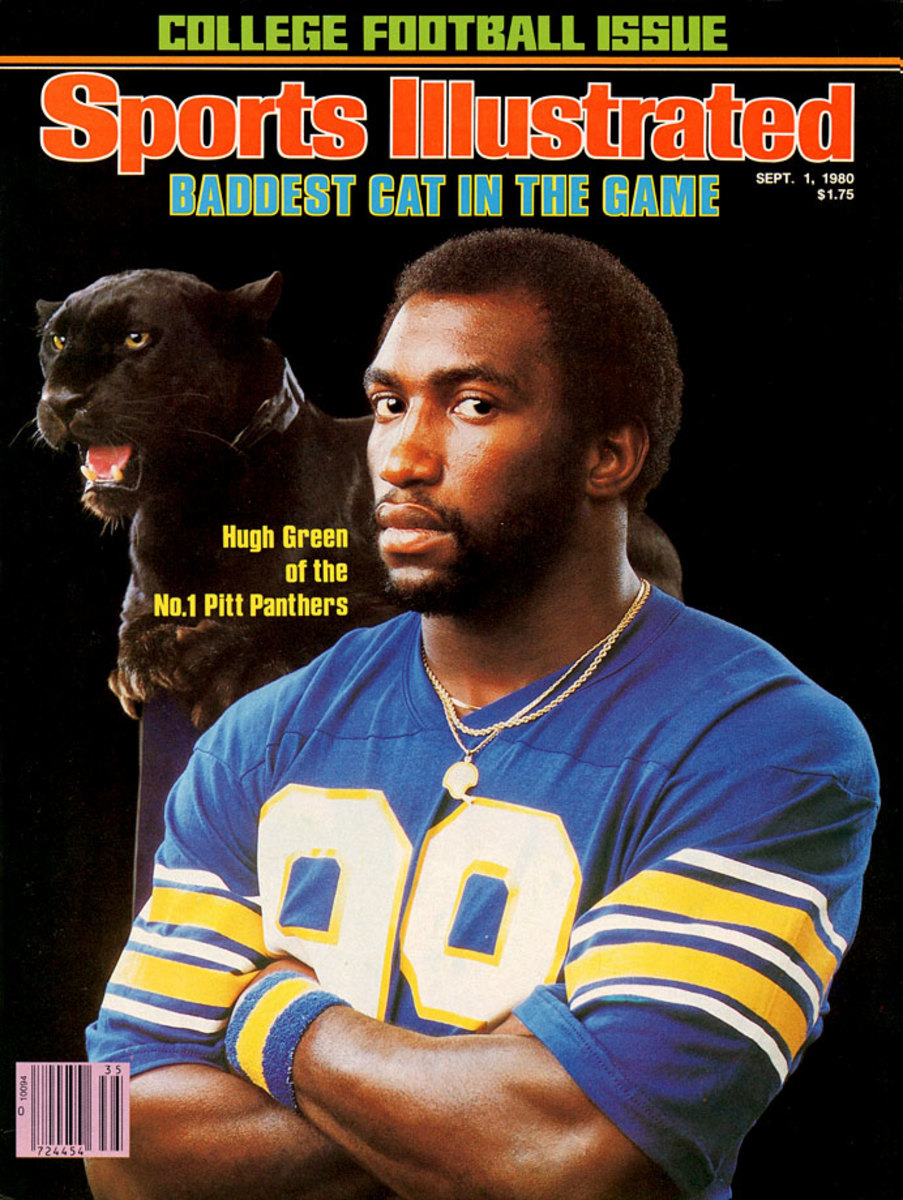
He finished second in the 1980 Heisman race and few lineman have been more dominant. During his college career, Green had 440 tackles and 50 sacks. — Runner-up: Jay Berwanger, HB, Chicago (1933-35)
 Add us as a preferred source on Google
Colin Becht is a college football producer for SI.com and CampusRush.com and has covered college football since 2013.