%20%20--%3E%0A%3Csvg%20version%3D%221.1%22%20id%3D%22Layer_1%22%20xmlns%3D%22http%3A%2F%2Fwww.w3.org%2F2000%2Fsvg%22%20xmlns%3Axlink%3D%22http%3A%2F%2Fwww.w3.org%2F1999%2Fxlink%22%20x%3D%220px%22%20y%3D%220px%22%0A%09%20width%3D%2239px%22%20height%3D%2240px%22%20viewBox%3D%220%200%2039%2040%22%20enable-background%3D%22new%200%200%2039%2040%22%20xml%3Aspace%3D%22preserve%22%3E%0A%3Cpath%20fill%3D%22%23FFFFFF%22%20d%3D%22M38.5%2C7H28.2v26h10.3V7z%22%2F%3E%0A%3Cpath%20fill-rule%3D%22evenodd%22%20clip-rule%3D%22evenodd%22%20fill%3D%22%23FFFFFF%22%20d%3D%22M26.1%2C25.5c0%2C5.8-4.1%2C7.5-12.9%2C7.5C3.9%2C33%2C0%2C31.2%2C0%2C25.2v-1.1h11.6%0A%09v2.4c0%2C0.7%2C0.1%2C1.4%2C1.2%2C1.4c1%2C0%2C1.2-0.4%2C1.2-1.3v-0.9c0-1.6-0.9-1.6-3.5-2.2C2.2%2C21.7%2C0%2C19.7%2C0%2C15.3v-0.9C0%2C9.3%2C5.5%2C7%2C12.9%2C7%0A%09c10.2%2C0%2C12.8%2C2.6%2C12.8%2C7.4v1.8h-11v-2.9c0-0.6-0.4-1.1-1.2-1.1c-0.6%2C0-1.2%2C0.4-1.2%2C1.1v0.9c0%2C1.5%2C0.9%2C2%2C3.3%2C2.5%0A%09c8%2C1.6%2C10.5%2C3.3%2C10.5%2C7.5V25.5z%22%2F%3E%0A%3C%2Fsvg%3E%0A)

00:58:49 |
Up Next

Transcript
All right.
Welcome to the show.
Others receiving votes.
I'm Pat 40 from Sports Illustrated, joined by my SI colleagues, Brian Fisher and Kevin Sweeney.
Uh, we have survived the Soresby saga.
We have gotten through the NBA draft.
It is officially the lull time between now and the start of college football, but there's always stuff to talk about.
So thank you for joining us on the show here.
Uh, we're gonna talk a little bit about the The congressional pushback on the Big 10 and the SEC.
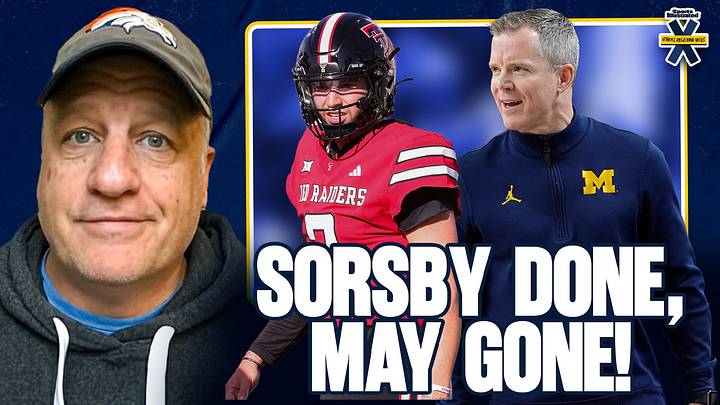
We will talk about Dusty May leaving Michigan.
We will put a bow of sorts on Brendan Soresby's.
Journey, um, maybe hit a couple of things and, and then a few words, uh, at the end about a giant loss in college sports that most people don't even really know who the person is.
But thanks for joining us, everybody.
Uh, let's get to it.
Uh, I, I found it interesting, we've now had a week of, of relative quiet.
From the Big 10 and the SEC after they got slapped by Maria Cantwell and members of the Senate Commerce Committee.
Uh, with the bill, the Protect College Sports Act, which passed through, uh, Markup and will go to the Senate floor most likely.
We'll see what happens there.
There can certainly still be alterations, but the changes the Big 10 and SEC specifically were looking for were, were rebuffed by the bill's authors, and Marie Cantwell had very pointed words for those leagues that basically said it's time to listen to someone else.
That they've gotten us into this position.
And I happen to agree with her completely in terms of, I think these are the, this is the aftershock still, 5 years later, being felt from realignment, and going and destabilizing the Big 12 and killing the Pac-12.
Uh, so we will see where this all Goes , but for now, the, the, the Big 10 and the SEC have been quite vocal for a while, guys, on, uh, uh, you know, saying they appreciate the work of the senators, but here's what this bill needs to have, and this is what needs to happen.
And now they've gone quiet.
Brian, what does that silence or near silence mean?
Well, I think for given that where we are in the calendar, I think a lot of means a lot of people are on vacation at this point, you know, I think that's the one thing that I, I, I take away from it, uh, in, in college athletics, uh, obviously we have media days coming up in July .
This is kind of like the time where, uh, you know, a lot of the college athletics, uh, apparatus, if you will, or, or the ecosystem, uh, does take off and so I think there's that, that is a fueling part of it.
I, I definitely, uh, you know, have some unreturned texts and, and, and calls, uh, from a few folks that I know are on vacation.
So I think that, that is part of it.
Uh, I'm, I'm not gonna deny that part.
But look, I, I, I think the Big 10 and the SEC did, have understood in terms of the optics of everything around this that, hey, we , we need to take a little bit of a different tact, and, uh, I, I, I think you're spot on on that, Pat, in terms of Their message is not getting through to those on Washington.
So, uh , I, I think they've retreated a little bit, regrouped a little bit.
I, I, I don't anticipate this is, um, you know, a silence that is going to last out of either conference , and, and I think they're certainly doing things behind the scenes, but, uh, this was definitely, um, both calendar-driven and the, uh, a bit of a realization that, uh, you know what, we need to change things up a little bit in terms of our actual PR strategy because, you know, frankly, a lot of people around college athletics, even outside of the Big 10 and the SEC are trying to, trying to get their, their minds around some, some of what This bill is ultimately gonna mean, um, coming out of markup.
Like, you know, is, is this going to essentially, uh, cement the conferences in terms of how we're, we're looking at them right now, you know, if, if you're a Boise State, some of those Pac-12 schools that are saying, all right, you know, one day I would love to be into the Big 12, or one day love to be in the ACC or or even the Big 10 or the ACC, is this actually gonna prevent me from doing that as a school?
Like there, there's still some things that everybody's kind of trying to , trying to come to grips with, and I think there's, there's some digestion of some of the changes that.
Came out of markup, certainly some, some lobbying, uh, going on behind the scenes and then also just, uh, you know, a natural point in the calendar as we kind of hit a really critical junction, uh, for this because, you know, that, that summer recess for Congress is coming up fast and furious, and we kind of have that 3 or 4 week window, and we have all the media days are coming up, all the commissioners will be speaking, a lot of the athletic directors will be there at, at places, they will be making comments about this bill.
So it's, uh, it's kind of a unique vantage point in the calendar to where, you know, things, things are slow right now, but they are gonna happen right around the corner.
I feel like it's been talked about a lot through the lens of realignment, but I think, as you, as you said, Brian, digest this bill, I think one of the things that comes to mind for me is like, think about how long and how arduous a process it is for anything to have gotten done in Congress to get to this point, and then think about a world where, um, You know, not, not all NCAA rules, but I mean, a significant portion of kind of the direction of college sports would be shaped by a piece of legislation that would theoretically need to be continually tweaked over time or passed through a legislative body that changes consistently.
Like, I think that's probably something that everybody's sort of realize like, oh yeah, we, we, we wanted this, and we still probably do want this.
I mean, the Big 10, the SEC notwithstanding, I think, for the, the, the, the overarching kind of college sports world, like, I think people would say, yes, if we can get this done, it's better than the alternative, but Yeah, I don't think people have really thought about the long-term consequences of it potentially getting through, and I think that's, that's an interesting, uh, interesting storyline to monitor.
I think, you know, as we head into this critical period, as , as Brian said, I think it'll be, it, it, it'll be fascinating to see if the Big 10 and SEC are able to kind of shape shift.
Um, I would imagine that behind the scenes, there are, there's a lot of work being done with some of those specific senators to, uh, say, hey, like , This isn't getting through without some, some real concessions, but to be clear, the SEC and the Big 10 are not dying in this bill.
It maybe prevents their continued encroach, it doesn't allow them to, uh, further suffocate the rest of Power 4, let alone the rest of, you know, college athletics as a whole, but like, I think if you're Greg Sankey, or Tony Pettitti, or some of these presidents, like, you gotta be careful because, uh, you know, as, as we've pointed out, like, The sentiment is not positive in Congress towards these, these two leagues at the moment, and if you're gonna come out of this with the most money, still, the most, the biggest brands, still the best TV deals, the best, you know, the best access to the playoffs, still, like, is it really worth going to the grave to try to prevent some of these other things, because, again, We have seen, especially in this political era, being the enemy of the US government is not a fun place to be.
And I wonder if the SEC and the Big 10 are are thinking like, yeah, do we really wanna be the heel right now?
It's an interesting, it's an interesting balance that they're, they're walking a very interesting line to walk over the next couple of weeks and months.
It's fascinating to me, um, and I do think.
The kind of groundswell backlash here has spread enough and gotten enough juice, and when you've got US senators, and you've got uh, a guy in Cody Campbell, who has the, the ear of the president of the United States, saying, basically, no, we don't have to listen to you right now.
Uh, that's a slap that I don't think they were ready for.
And this is an, an age-old problem in college sports is Some portion of the establishment becomes so arrogant that they don't really realize that the ground is shifting underneath them.
That's what happened to the NCAA for decades regarding amateurism.
And that's when all of a sudden they end up in court with that O'Bannon , like, oh gee, we might not be on the right side here.
And then every single thing that happened thereafter, and all of a sudden the Supreme Court's voting 9-0 against your business model.
Hmm, maybe we should have read the room a little better.
And I think with the Big 10 and the SEC they didn't read the room or, they didn't care about the room.
And the room has changed.
I, I talked to, you know, they had the Collegiate Commissioners Association meetings in Denver earlier in June, and I, I, I don't remember if it was last week or the week before now, the week, the days are running together.
But from what I was told, it was 30 to 2, conference-wise in there as far as this bill.
It wasn't close to a split, it wasn't even a third, it was 30 to 2.
And I think that was a reality check, as well.
And so, if you are the Big 10 and the SEC and so, yes, this bill would constrain the ability to have mergers, acquisitions to add teams.
I think they can live with that just fine.
I think they better live with that.
Look what they've already done.
But the other part of it too is, you know, the, the pooling of the meteorites, and that's where you're getting into, hey, we don't wanna give up our piece of the pie.
And while I understand that, and you're saying, that's something that, that we earned that advantage, Things are changing, and you have to be able to recognize you are part of a larger system.
And that's where the danger possibly comes in, of where they're just gonna say, well, we'll just do the Super League thing and get out.
Or if we're gonna try to have further conference realignment, we've got this small window of time to make something happen before.
Uh, this bill becomes law, if it becomes law.
Now, again, I think we're still fighting uphill here, and I think there is a lot of work being done behind the scenes by the Big 10 and the SEC to try to modify this bill in ways that then they can get behind.
But I, it is noteworthy to me that they have shut up.
And they have stopped trying the public power plays, and the stuff that, you know, they did with, to, to bully the college football playoff uh arrangement of like, well, We get most of the money, and we get all the decision-making power, or we're leaving.
And it's unbelievably , everybody went along with this, like, what, what, why?
I don't understand that, but that's a whole other issue.
Um, put the, the, how, how off-putting it was to force the, you know, the low-major and mid-major conferences to pay into the house settlement when their players are really not getting much of the house settlement.
You know, that ticked off the Horizon League and the Mid-American, and they, you know, the, the MAC, the MAAC and the Southland, and so on and so forth.
So, you know, if, if you push people around long enough, they get tired of it.
And this is the, I think, some of the blowback there.
And yeah, I, I cannot wait if we probably have, I don't know, maybe a month to see whether this bill's gonna become, gonna take a step further.
And well, it'll, it'll happen sooner than that in the Senate.
Well the whole thing would probably have to have a bow put on it by August 8th, I think, when the uh recess is.
But, uh, the next few weeks will be interesting to say the least , of what happens with this bill, where it goes, and who says what about it publicly versus privately.
Uh, we did have one person who piped up from the Big 10, uh, and kind of pulled in the happening on his campus, uh, the, the departure of Dusty May, basketball coach, Michigan, off of winning a national championship.
And the the interim president, Domenico Grasso.
had things to say.
Our current system is in dire need of clarity and equitable reform.
Coach May told me that among his reasons for leaving were uncertainties and pressures involving the transfer portal and NIL support for student athletes.
He and I agree that the future of college sports is headed in the wrong direction.
Uh, Grasso said that, while he acknowledged that the, the greater stability and clear national standards that would be, could be gotten from this bill, uh, that he has, there are deeply concerning provisions.
Uh, and among them, the most troubling are targeted limits on conference expansion realignment, as well as harmful restrictions on student-athletes' ability, ba ba ba ba ba ba ba.
We want what's best for the Big 10 and for Michigan.
We are not going to sacrifice competitive advantage that we've built for more than a century.
We stand ready to work with our legislatures, etc.
Uh.
To Kevin's point though, the, the bill does not kill Michigan.
It's sure that nothing can kill Michigan.
It doesn't kill the Big 10.
But the Dusty May departure is yet another inflection point, and some people want to decide, is this, you know, a bellwether sign of, of how bad it is or anything else.
Uh, Kevin, you wrote about this in the wake of, of Dusty's departure.
What, what's your takeaway there?
I mean, first of all, the , the Mavericks job is a very, very good NBA head coaching job, you know, respectfully to the Trail Blazers.
He didn't take the Trail Blazers job, he didn't take a one-year contract in Portland like Mike Inori did, like, he, he got a premier NBA job with an executive that has won won an NBA championship in Massiah Giri, with one of the best young players.
In the sport and Cooper Flagg with real stability and real money.
Like, this is, this will be a pay raise for Michigan, uh, even the Michigan contract that would have made him one of the highest-paid coaches in college basketball, right?
So, I, I, I do not blame Dusty May for taking this job.
It is an outstanding opportunity.
I think everybody who has been around Dusty, uh, would agree that he certainly has the temperament.
To be an NBA coach in a way that a lot of college guys don't.
Uh, he has handled, uh, you know, talent in a way that a lot of college coaches do not.
He is, you know, he, he, he fits the NBA in a lot of respects.
So this was not a surprise that he wanted one, or took one.
It was a little surprise that happened, you know, this year and, you know, on June, whatever it was, 20 something, but it, it was not a huge shock.
That being said, like, You can't tell this story, and Dusty has said this privately to a lot of people, um, you can't tell the story without acknowledging the fact that, like, it's just not that fun to be a college basketball coach on days that aren't game day right now, um, you know, there there have been lots of stories written and under my lead for my My story at SI about the, the, the, the, the departure was, you know, they're celebrating on the floor of the national championship and their assistant coaches are walking around going, we gotta get back to the locker room, we gotta get our phones, we gotta start texting people in the portal.
Like, and, you know, Matt Norlander from CBS wrote a Wonderful story with Dusty, the week after the title, um, where he's accepted, Dusty was accepting another award in Saint Louis and he's spending the entire day pacing around on the phone, uh, trying to recruit, trying to, trying to work the portal, right?
And Dusty wasn't opposed to the portal, Dusty wasn't opposed to NIL, Dusty wasn't opposed to tampering, like, Dusty was all in on um whatever it took to win, but it's also the reality that, like, He won the championship and barely got to celebrate the title, because he was worried about, he was so, you know, he, he, he was so worried about winning the next year, and knew that if he didn't, uh, recruit right now, he would put himself at a disadvantage, right?
And I think a lot of times we view that as like, oh man, this is, you know, this is, this is just the, the whiny coach complaining that, uh , you know, that that the championship put him, set him, set him back, like, you could see the , like, Stress and the lack of satisfaction he was feeling, and so, if you've already climbed the mountain, why would you keep going, keep trying to go back up?
Like, there, there, there isn't a lot of fun at the top, and I think he experienced that, and I think for college basketball, like, and this, this was really the angle that I took, like, We've built this new kind of elite generation of young coaches, right?
Todd Golden won a championship, Dusty May won a championship, Dan Hurley's got 2, Jon Shire, I think everyone agrees he's gonna get one soon, Tommy Lloyd's knocking on the door, um, and it was so critical that the sport could find those guys because, you know, the Coach K's and the Roy Williams and the Jay Wright's were all retiring.
And if all those guys head to the NBA, Well, good luck to college basketball, like, that, that, it would be a really bad sign to keep losing these guys from this generation, and quite frankly, you know, guys have always left for the NBA, John Calipari, Rick Pitino, Larry Brown, the list goes on and on, but there were always guys that stuck around because they believed in college basketball and they believed in doing something different than, you know, NBA like.
They believed in molding young people and being a part of, like, a critical point in their lives and, and everything that comes with college basketball, and The more we strip college basketball from that, the less reason Todd Golden has to stay at Florida, the less reason Dusty May has to stay at Michigan.
And so, That I think is the conversation that that needs to be had.
It's like, what can, what can college basketball do to make the calendar a little, little less unrelenting, um , and what can college basketball do to make sure that it maintains kind of the soul that has always guided it.
I think if you view every college basketball problem through the lens of , well, the product on the floor is good, which it is, it's incredible right now, um.
If you view it through that, if you only view problems in college basketball through that lens, you will probably lead yourself off a cliff, and that's, that's my general takeaway from this, but again, Dusty leaving is not a calamity to the sport, it's a rational reaction to getting an opportunity at an awesome NBA job.
Well, I, I think that that's just it, and I speak as a Dallas native and somebody who's definitely supported the Mavs over the years, um, look, this is a, a franchise reset and, and it's a good time to come in if you're a Dusty May.
I mean, these, these type of jobs just do not come open, uh, necessarily all that often, and this is part of a big reset there.
Uh, with the franchise, and not only do you have a marquee player in, in Cooper Flagg, but you're having a new arena, you know, you can live in a great city like Dallas with, you know, not the kind of pressures that you would have if you took a job like the Lakers or the Knicks or even, you know, Miami, some of those other big time NBA jobs.
You're gonna get paid well, you're gonna be part of a new front office setup that is going to probably not necessarily cater to your whims, but, you know, kind of take some.
Things off your plate while also listening to you and making you a part of that process.
Um, you know, I like it, it, it's in a very, very attractive job, and I don't think we can kind of overlook the fact that, look, that, that had to play a part of this.
This is, this is not him taking the Bulls job or, you know, some of these other ones, you know, that would probably cause me to say the alarm bells are ringing a little bit more than just taking this one.
So I think that's Uh, you know, important to kind of keep in mind, and I, I think, you know, selfishly from, from a college standpoint too, you know, you kind of unders wonder too if, you know, Dusty taking this job, he knows he can always go back to college, you know, if this does not work out, if this is a, a John Beilein situation where, where, all right, you know, he just, it just is not clicking there in Dallas, he can always go back to college, like he, you know, he, he, he walks in with the cachet of having that national title ring and frankly, Probably puts even more pressure on, you know, situations at Indiana and Ohio State and some of those other Big 10 jobs.
Like, all right, he, he's gonna be the Brad Stevens.
Like every time one of those jobs comes open, well, Dusty May might come back to college, you never know, you know, it's like that, that's the other thing that I was kind of thinking of, of, of when he took this job and, um, you know, Kevin, Kevin to your other points, like, it, it definitely seemed to wear on him for sure, just like after the, after the fact.
In the national, you know, you win the national title, you've, you've reached the peak of the profession in college, and then like you could, you could just see like in, in interviews, uh, and talking with folks around Dusty, like, you know, it, it was kind of draining and like, even a couple of weeks ago at, at the Big 10 meetings, like, you know, it seems like he was kind of just starting to get over, uh, kind of that, that, that hectic period where he's trying to rebuild his Roster and and starting to relax a little bit, uh, but he still didn't seem seem comfortable.
And so I think I wonder if that was kind of, you know, also a thing like, you know, maybe just for, for myself, for my family to kind of provide, uh, certain breaks built into, to the calendar to where I'm not constantly going 24/7.
Maybe this is just a, a nice time to, uh, take a break, jump off and, and, and, and go back to the NBA.
And so I think It's, it's gonna be fascinating to see, uh, you know, kind of longer term, but I, I, I, I just think there's the separation between this is a great job for him to take right now versus, all right, yes, there are larger things going on.
Probably a combination of the two, but, uh, I, I don't think we can discount at this point, the fact that this is a very attractive job for, for, to take the Mavs and especially at this point in the rebuilding process there in Dallas.
Yeah, I, I, I am a huge Dusty May admirer.
Um, this is a guy who's, he's a pretty self-made dude.
Um, I did a story a couple of years ago with when he was at Florida Atlantic on his roots in Southern Indiana, and I mean, he did not come up in an affluent area.
He didn't necessarily come up in the most stable.
Uh, family environment, and he made something out of himself, and he is a brilliant mind, uh, I think he's a basketball coach.
Uh, I think he has an incredible talent for, Interacting with people .
Um, so I'm happy for him to, to, for him to go do this, if this is what he wants to do.
And I think, yes, to, to you guys' point, this is something he absolutely wanted to do and was going to do inevitably, maybe a little faster and more abruptly than, than we thought.
But, um, I, I think everything you guys said is, is , is accurate, and especially Kevin, that, yes, that.
There are parts of the job that absolutely stink.
And if you have other options, and you already were predisposed to want to explore those options, well, and you have just won the national championship, you've done it.
Boy, I would think that the, the attraction of that new fresh start in a really good job in a different area of basketball that you've kind of always had your eye on, is incredibly attractive rather than trying to ramp yourself up to do it again.
But I was, I was kind of sad for him.
Watching him after winning that championship, there just was not a lot of satisfaction there, you know, and now part of that is just how even keel he is, but still, there was not, I just watching him, you never saw, like, it didn't seem like to me this moment of just like, Pure joy.
Because again, there's too much else going on.
Um, I think he'll do really well in the NBA.
I think you're right that his, his, his personality and mentality is well-suited to that league, where, you know, if you take Dan Hurley and put him on a team that's gonna lose 40 games a year, he would combust.
I just don't think he could handle it.
Um.
And, and everything else that you have to deal with, that, that I don't think would be a fit for him.
But I think, uh, I think Dusty cannon will handle that very well.
Um, the game does need, it needs some tweaks, no doubt about it.
The the, the, the, the, the calendar is a major problem.
And You know, the portal.
Uh, again, everybody's fine with the players making money.
The manner in which it happens and the manner of moving from school to school every year is the big issue, and we'll see whether Congress or anyone else can do something to, uh, to address that.
Uh, real quick, before we get to the subject that won't go away, uh, we do have, uh, more eligibility news and, and, oh, you know what, let's, before that, I wanna, I, I wanna hit Kevin on the draft real quick.
Just any takeaways from there that are applicable on a college sports podcast.
Yeah, I mean, beyond Dusty reuniting with Marez Johnson at at pick number 9, which I think was a bit of a surprise, I think the biggest thing that, you know, we'll continue to get talked about is, um, you know, the, the money in college really shaping decisions, uh, and there were very few guys that, um, stayed in the draft that didn't have, like, a clear, I'm going to be a first round pick, and, you know, 3 that did really, really felt the pain on, uh, On Tuesday night, Isaiah Evans was from Duke, was invited to the green room, um, he was wearing a $3 million brooch and then did not, uh, hope, hopefully that there's like a return policy on that.
Um, but either way, he, he, he ends up going in, in the early 30s, which means instead of making, like, $3 million next year, he makes, like, 1.3 million.
If Isaiah, I, I, if Isaiah Evans goes back to Duke, he's in the 2 to 3 range, if he goes in the portal, he's in the 5 to 7 range, probably, uh, for what he could have made.
Um, Henry Vasar from North Carolina, he falls into the 50s, a big part of that, let's be very clear, Henry Vasar would have been drafted in the 30s if he wanted to be.
He was attempting to steer himself.
Once he fell out of the first round, the goal was to steer himself to the Lakers, that did not happen.
The Hawks took him at 52.
Um, there's a lot of politics that go into the second round of the NBA draft , uh, but, yes, this is a guy who could have made millions in college, been a star, been a face of a Blue Blood program, and played for a coach in Mike Malone, who's been, you know, who spent his entire career building up Nikola Jokic, right?
Seems like that was a poor decision.
Malik Thomas at Arkansas, same thing, you know, would have been a multi-millionaire in college, instead, he's making, you know, 1.3 million in the NBA next year.
Um, it's not all about the money, but Like, the calculus has changed where it's no longer to me just, oh, well, you can make some money in college, so you don't have to rush, like, these, these guys could make, like, retirement money in college basketball.
Yeah, like, Malik Thomas has 4 years left with 55 5-year eligibility now.
Malik Thomas stays in college, he's gonna make between $10.
20 million dollars, and that's if the market doesn't keep exploding.
What if the market keeps going up, right?
Um, you know, Isaiah Evans would have 3 more years.
I'm not saying Isaiah Isaiah Evans needs to stay for 3, Coa Pete would have had 4 years, he goes 30, he's the 30th pick.
You go through, like, 20 to 30 in the NBA draft, it's, it's like, less than 50% of those guys make it to the 2nd contract, make it to the big dream money.
I think there's, there's a lot to be said for, let's bank all the money we need in college, where we know we'll be a star, where we know we'll keep getting paid.
And then, yeah, 21, 22, you wanna go roll the dice in the NBA, you wanna see if you can make it, you wanna see if you can go get the real money, you know, the, uh, the, the $10 million.
20 million dollars a year contract?
Yeah, great, go for it.
But it, it just felt like a lot of guys took a lot, took some big risks and are now putting themselves, you know, right on the fringes of the NBA from the moment they start their career.
Well, and especially Kevin, you know, you had your, your mock draft for next year, you know, you're looking at some of that, it's just not as deep of a class too, it's like, you know, that compounds some of those puzzling decisions like in Isaiah Evans, like, yeah, not only do you go back to school for a couple more million dollars, you know, but you could, you know, potentially play your way into being a, not only a lottery pick, you know, next year, given, given the depth of the draft, but, you know, maybe even higher, you know, like that you, you're talking about a leader.
on a team like Duke with some additional options, you know, Henry Vessel, another one, like he, you probably could have figured him as, as the lottery given the lack of, uh, you know, big men options there next year.
So like there's, you know, I, I think not only are, are they missing in terms of like the, the short term in terms of take the money, but like also looking long term and like, all right, well, next year, I actually have a better shot to land in a better situation for me as an NBA player.
So like, Uh, that, that's bad aging as well, you know, in terms of, uh, steering some of these decisions, and, you know, like, I mean, it was basically, you were a freshman, uh, you know, taken high in the draft this year, uh, cause you're part of this, you know, stellar class.
You're a transfer who was probably on the verge of running out of eligibility, maybe you just didn't want to come back to school or, you know, some of the Michigan guys, you know, all right, I've, I've won a title, I wanna go, go to the NBA and, uh, start my career there, or, you know, like you're, you're, you're just hanging on and you're like a super senior and like, yeah, maybe you get lucky and you do get drafted, like that's kind of like your, your.
Options at this point, uh, because so many people are returning to school, and, uh, I think that was notable.
The other thing too, from an NBA standpoint, like, these teams, uh, you know, coming up on the 1st and 2nd aprons and, and the amount of, uh, teams, you know, trying to get out of draft picks like nowadays , like that is definitely a thing that I think we, we definitely got to keep an eye on.
If you are one of those prospects that are considering maybe uh staying or going like your number of options at this point in terms of landing roster spots and all this, like, I, I, I think that's, that's gonna be a crunch that not only college basketball is having to deal with.
But the NBA is certainly coming around to, uh, having to sort out, and I, I, I think it's gonna be interesting moving forward in, in these next couple of years.
Are, are we gonna see even more trades of these draft picks?
Cause that, that, that stuck out to me on draft night was like the amount of, uh, wheeling and dealing that some of these GMs had to do just to stay under the, the, the aprons and all that, even with, you know, rookie salary guys, like you, you would have thought those would be even more valuable in today's NBA.
It didn't seem like that was the case for some of these teams trying to get into that really slim threshold, uh, to where, where they could make the cap work.
Yeah, just real quickly, Pat, the, the, the, you could not give away your late 2nd round picks.
I know there's the, the, the story that kind of made, made, made, made the rounds yesterday was that , uh, Narcisse Egoy, who is playing in the French 2nd division, he was drafted by the Clippers, I believe, 57th, um, and he is being stashed at Auburn, um, so he's going to play college basketball despite being drafted.
Like, the undiscussed part of that story, and really the main part of the story is the reason Narcisse Egoy got drafted was the fact that They didn't have to sign him, that they had no interest in signing him.
It was literally just to fill the spot.
They could not give away this draft pick.
Like, they, they literally could not find a team to give them, like, 100,000 to say, we would like to take, we would like to draft it, you know, 57 or whatever it is.
Like, Narciss Egoy was automatically eligible for the draft.
My understanding is Narcis Egoy had no idea this was coming.
He, he truly, like, experienced the meme in real life of being like, oh, me, like, I just got drafted, like, he had no expectation of this.
He will probably never be an NBA player, he may not start at Auburn.
Uh, but he is very large, he's a very large human being, he's 7 ft tall, 280 pounds, um, he rebounds like nobody's business, and, uh, the Clippers said, yeah, whatever, like, we'll , we'll own your rights if you, if you'd like, and you can go make your $1.8 million at Auburn.
So, yeah, that is the state of the second round, and it's only gonna get worse, because next year there's no seniors, because of the 5 for 5 for 5 change, the age-based eligibility, excuse me, uh, age-based eligibility, no seniors.
There could be like 10 Narcisse Egoys in the 2027 NBA draft.
Yeah, we, we will get to that in just a second, um, but they, I mean, you wanna talk about a bad decision.
A $3 million brooch is a bad decision.
That is, uh, that's incredible.
He was, he was running.
Come on, maybe this is one interesting element of the draft.
I, um, when I was writing a Jimmer Fredette book, however many years ago that was, and I was with him at the draft, and One of the things that hit home to me was the number of jewelry salesmen and middlemen between the jewelry salesmen and the players who populate the hotel lobbies, like, hey, you know, yeah, just come down, sit down with us for 30 minutes at 10:00 a.m. here, you know, and you can check out all our stuff, try it all out, and what do you think?
Can we get you, yeah, this looks good on you.
Can we get you to buy that?
Can we get you to buy this?
And these are guys , especially then, when there really was kind of amateurism.
It was like they were just about to get paid for the first time in their lives, and there were some of them that absolutely could not wait to start blowing money.
Um, so it's fascinating the, the, uh, not underground , but the adjacent economy that goes along with these sort of things.
So, I hope the $3 million brooch was just on loan, and, uh, and Isaiah can, can get his money back or just didn't pay any money there.
Uh, but Kevin, you brought it up.
All right, the, the eligibility ruling.
Uh, which went through the, the D1 council.
I don't know whether that was Wednesday or Thursday, at some point in time, uh, They are.
They've gone to a five-year age-based eligibility situation, which will theoretically close the window on the endless college career.
A major significant thing.
The fact that they want to do it and basically shut out the current seniors from getting an extra year, has created the predictable raft of lawsuits with more to come.
Uh, Kevin, you're, you're, I'm, I'm sorry, Brian, your reaction, first of all, to the ruling, and then B, how difficult is it gonna be to actually enforce in the here and now with that group of players?
Oh, we've already gotten lawsuits, uh, already filed.
There's gonna be plenty more on the way.
Uh, there's, there might even be, uh, some, some organizing in terms of getting a class action like this is.
Uh, the, and the, and the NCAA was understandably, uh, you know, they, they knew this was, was coming, you know, for a lot of us.
And so I think they were, were preparing for some additional billable hours, uh, this is why I think they've definitely focused on, you know, trying to get something done in Congress, uh, sooner rather than later, so they can hopefully, uh, stem off a little bit of this, but like, look, this was, was coming down the pipe, uh, we've, we've reported on this for, oh gosh, a couple of months now at this point, you know, the conversations have been ongoing.
Uh, for, for more than a year at this point, um, like this is something that was always kind of in the pipeline and, and moving down, and, uh, now we kind of finally have some, some formal resolution to this, and I think it's gonna be interesting to, like, you know, in the short term, like honestly, the, the first thing that popped into mind when, when, when the news did come out from, from the cabinet was like, um, all right, what are we gonna call these, these 5th year guys?
Like, are we gonna call them red shirts?
Should we call them like gray shirts?
I know that's a different term for, for coming into college, like what, what are we gonna, we need a term beyond senior at this point.
Uh, to describe some of these guys because, uh, let's face it, there's gonna be a lot of folks that are gonna look at this and say, all right, not only can I, you know, to Kevin's point earlier, not only can I be in school for 5 years and do away with some of the limitations and some of the roster management stuff that gets me shuffled around, um, you know, I, I could make 20 to $25 million you know, if you stay all 5 years, if you're a good prospect, if you're a good player, maybe you're kind of not one of those type of guys that is, is gonna be, say, a first-rounder in the NFL or the NBA, you can make really good money and, and even in, in the non.
Revenue sports.
I mean, look at, look at the softball players, you know, like, uh, Najari Candy, you know, at, at Texas Tech, like if she had another year to where she's making another 1 or 2 million million, like to, to, to have that come out, like I, I think it's gonna be fascinating to see the ripple effects from, uh, the eligibility decisions and, and, and moving forward, what, what happens, uh, in terms of roster management.
I know there's a lot of folks around there that have, uh, been furiously studying, all right, how are we grandfathering these guys in?
Can we, can we kind of nudge some others out so we still have some room.
I think, uh, you know, unfortunately, not only does the Past class of, of, uh, you know, current guys that, uh, had this come into effect afterwards, uh, kind of get impacted, but like there, there's gonna be some high schoolers that are gonna get crunched out and sent down to lower levels compared to what they were maybe were thinking, uh, about where they were gonna land in college.
So, um, you know, it's one of those transition period type of things, and I think it's gonna be interesting to see who, who takes advantage of some of these, these, um, you know, kind of, uh, gray areas where you, where you can, uh, you know, adjust things in terms of the roster, adjust things in terms of the eligibility and, and make sure that guys.
You know, are coming in, uh, to, uh, to, to college at the right time and, and fill your roster spots, but, uh, for, for the most part, I think everybody expected this to come down the pipe at some point.
They're, they're glad it's finally here, but, uh, there's, there's definitely, uh, going to be some, uh, second-order effects in terms of lawsuits, in terms of, uh, schools having to adjust to this, and, and I think we'll, we'll all be, um, you know, seeing how everybody does it over these next couple of months as well.
I think the long term, it's like a no brainer.
Um, I, I've seen some pushback, like here and there, or, you know, they shouldn't get rid of medical red shirts, like, no, no, like this is so much better and so much cleaner a system to operate in than the, the, the current status quo, and Quite frankly, I think the NCAAA needed a big shift, if nothing else, to um avoid long term the, the, the tide of lawsuits.
They couldn't keep going with a waiver model, given the waiver model is what got them in this mess in the whole, you know, in, in the first place.
So, yeah, well, I feel bad for the, you know, guy in the future that.
An ACL 2 different times and misses, you know, 2 seasons, and only plays 3, they would have gotten a 4th , whatever.
Like, for the most part, very few players will play less than 4 years of college if they spend 5 years there, and, you know, many will get an additional benefit, some won't, and, and I think that's totally OK.
Now, the one thing I, I do wonder, and maybe, you know, you guys have an answer for this from, from your reporting, like, I know the NCAA is, is big on touting now that they can get stuff done quickly that they've, they've streamlined the processes.
Could, could, could they not have slowed this one down until like September , until after everybody was in school?
I made that exact same point with somebody at the NCAA.
Like, why did you say I start talking about this like right at the time where you knew this was gonna cause trouble and like some of that was, you know, like the cabinet meetings and when they have things in person and all that, and like it was just, all right, this is a natural thing to bring up at this point.
Uh, to get it done by, you know, kind of where it takes into effect in August, but like, I, I, I, I said the exact same thing to, no, no less than 3 people, like, could you slow the roll like a month or two, you know, they could have, they could, they could have literally had this meeting, and like, you know , we probably need to do a little bit more research on like the second order effects, and then we'll just, we'll, we'll schedule another meeting for, I don't know, September 5th, you know, right after the ad drop date, you know, like, like.
Like wouldn't that have solved the , solved, solved some of these problems?
Now, it seems more basketball than football at the moment, the, uh, the lawsuits are, are hitting, I'm sure football will, will, they'll they'll come too, but yeah, I, I, it seems like there there's a chance they can enforce this.
I also think, like, to be clear, do I feel a bit of a a a a twinge of regret for the 2022 high school graduate that, you know, only gets 4 years to play for, you know, 44 seasons of competition.
Sure, but, like, they didn't lose anything.
Like, they got the 4 years that everybody else got, they got those 4 years in the most lucrative time anyone's ever played college athletics, like, these, these are not, like, grandiose victims of this process.
They they, they, they, they not, this is not like they should be.
grateful for what they have, but, like, this is not like a punishment.
It's simply like, we're changing the rules going forward and you're not part of that change, like that, like, sorry, that's, like, that's how the life, that's how life works.
Rules change.
Sometimes you miss the cut.
It's the, it's the way of the world.
It is, timing is timing, and that, I, yes, I am, I am not going to spend one second crying for anybody that may be on the wrong side of the timing of this.
Uh, go back.
My middle son, who was a swimmer at Georgia, had his career ended by COVID, when they canceled the NCAA championships that March, and there was no do-over, no extra year then.
He didn't get an extra year.
Nobody in that winter.
The sport group got the extra year that the spring sports people did, and then the football people did, and then that started the cycle we're in now.
That and waivermania, which has just been ruinous, I think, and that all stemmed from Largely, there were some certainly some legitimate waivers.
But there was also a lot of really cynical manipulation of the process by schools, or lawyers or whoever that would convince somebody that, you know what, just say you got a sick relative, and you need to be closer to home, and that's why you have to be eligible immediately.
Uh, and, and then it became, look how terrible the NCAA is for what they've done to this young man by not letting him suit up and catch passes from Drake May.
Just throwing out an example.
Uh, you know, they, they, there was real, I think, just vilification of the nameless, faceless bureaucracy of the NCAA in order to try to get a competitive advantage and get a player in uniform and get him playing right away.
So, I won't miss any of that.
I think, yes, if we can make this an actual clean, resolute, no gray area.
Window of this is your eligibility, everybody's better off.
So, let's, let's just hope we, we continue to, to move forward to that and eventually, we're not reading about lawsuits 3 times a week.
But speaking of lawsuits, we got the man who's been in the headlines for 2 straight months, Brendan Soresby, we'll put a bow on that.
Uh, Got absolutely body slammed by the NFL, a, a, a, an unsparing letter that basically said, uh, no, we're not having a supplemental draft for you.
And we don't like your approach to this alleged supplemental draft, and we think you need to go get your act together, as opposed to coming into our league immediately.
Uh, There will be a legal challenge to that.
Jeffrey Kessler's already said this violates the CBA.
Now, he's not even a member of the NFLPA, so I don't really know how that's gonna work, but never, never discount Jeffrey Kessler coming up with, uh, a, a reason to sue and, and possibly win.
But I thought the repudiation there brought home to Seemingly, everybody outside of one crackpot judge in Texas, the Brendan Soresby Circle, and Texas Tech University, that this was a really bad situation he got himself into.
And there are major repercussions for it and consequences from it.
And, Yeah, supplemental draft has let a lot of miscreants get drafted, but this is different.
When you are a gambler, and you're a quarterback.
No league in the world is gonna say, yeah, come on, don't worry about that, you know, youthful mistake, no, no , no, no, no.
They're gonna approach this like it's radioactive, and this, I think is the best thing for Brendan Soursby, is it gives him a chance to step back to not be in this white-hot microscope, to make sure he's got his life in order off the field, and then go to the combine in February.
And say, look, I'm, I'm healthier, I'm wiser, I understand things better.
Take a chance on me or draft me, you know.
Um, so I, I, I just think this is better for all involved in the, the, I, I think that he himself and the people around him did him a disservice by just trying to make this a rush to play football.
That's what it was all along.
It's gonna be college football, it's gonna be a supplemental draft.
No, no, no, no, no.
Step back.
Get your house in order.
Come back again .
Thoughts, Brian?
Well, I think the NFL has finally given him a, a year-long suspension.
Like this is, this is what it is, you know, in, in effect.
And, uh, you know, I, I think you're right.
You know, I think this could be good for, for Brennan to like realize, look, this, this is a serious thing and And the NFL has certainly some self-interest in this.
Like this is something that they want to understand, like there needs to be a line, a hard line when it comes to gambling, and, um, you know, they've, they've certainly those players that have, you know, been, been in the NFLPA that have had issues, they've been suspended basically for, for a year, you know, like there's the Calvin Ridley's of, of the world, you know, like they've they've had, there's a process involved in that, and I think it's the NFL also saying like, look, We, we, we, we don't want this, this case associated with our league, you know, the, the optics are bad, um, you know, what is actually happening and, you know, what actually happened, uh, with, with Brendan Soarsby was bad, like there, there, there needs to be some sort of consequences here and, um, that's, that's kind of what they , they said in terms of, uh, the, uh, the ultimate, uh, punishment here.
So I think for, for the most part, um, you, you look at, at, at You know, Brennan himself, like what, what is he going to do next?
I, I think that is the next kind of part of this, this case, if you will, and, uh, to me that the interesting thing is, you know, will he go play junior college football, you know, will he go play in NAIA and, and just, you know, light it up, just to show that he, he, he, he's fresh, he could, uh, keep up with the grind of football if you will, um, you know, will, will he, you know, sit around at Texas Tech?
And, and just be part of the team on the sideline.
Like I, I think that truthfully, from an NFL standpoint, if you're a team saying, all right, he, he served his due, he was a great teammate, you know, you're, you're gonna talk with all those people during the draft process, you're gonna say, all right , how, how was, how was Brennan, you know, backup tight end at Texas Tech coming out for the draft?
Like, oh, he was great, you know, like he, he helped me, he learned, he taught me the playbook this way.
Like that, that could actually help, you know, Brendan, you know, in terms of the NFL evaluation of who he is as a person, which is the big question mark at this point, and, and his talent, uh, moving forward.
So I think that's gonna be the big thing, um, for him is if he can stay around, you know, Texas Tech, if he's just a regular student, if he can, you know, work on his recovery, um, you know, play, you know, do, do things that are part of a team at, at the same time.
I, I, I think, you know, at some point you got, you do have to kind of face the music and this is, uh, this is him finally hearing the sounds, right?
You know, like the, the music has started playing, and, uh, now, now it's gonna be up to him, and, uh, you know, he, he's got some decisions to make moving forward, but, um, you know, the, the timing would definitely was not everybody's fault.
Uh, I'm sure Jeffrey Kessler is, uh, you know, You know, biting at the, the apple in terms of trying to get, get another lawsuit filed against the NFL.
He's definitely an NFLPA lawyer.
He's won against the NFL before.
Um, you know, I, I, I don't doubt that he's going to have something to say on this matter in court.
Um, but at the same time, I think for Brendan Sosby, At least this kind of says, all right, you want, the, the door has been slammed a little bit, a little bit harder, and now you've got to reflect on what's going to happen over these next 7 or 89 months in terms of actually you, you know, you are the one that has to kind of take charge now and, um, has he gotten into some bad advice?
Maybe, um, you know, is, is this where he wanted to end up?
Absolutely not.
But at this point, you know, he has to come to the realization.
that in order for him to move forward, in order for him to kind of actually face this music and and these punishments, um, he's he's he's got to do something, uh, that's not what he wanted to do, uh, in terms of going through the supplemental draft, and I think that's gonna be the, the fascinating next, uh, part of this case is what he ultimately decides to do, and, um, you know, frankly, we, we haven't even heard from him, like, you know , it would be nice for him to actually come out and say, look, You know, this, this is what happened, um, and frankly, this is, this is why I wanted to go through this route.
This is why I wanna go to the NFL draft.
This is why I wanna go return to Texas Tech.
It wasn't, maybe he could say it wasn't just about money, we, we know there was, you know, 5 to $6 million dollar reason why, uh, you know, he, he did want to go to Texas Tech, but, you know, at the same time, um, you know, for, for, for a lot of people involved in this case, I, I think this could provide a little bit of closure in terms of, all right, now, now we can all kind of move forward, kind of how this, this should have happened if, if there was not a judge involved, uh, 2 or 3 months ago.
Yeah, I, I don't even think it, like, hurts his draft stock.
If anything, it probably helps, like, the supplemental draft is a weird place to be, um, you know, not, not every team is gonna wanna bring another quarterback into the room that they're gonna have to roster, um, you know, two months before the season, not even for the NFL, you know, for, for, for, for, you know, these teams by the time a draft would have taken place, like.
I don't know, to me, like, his draft stock will be better served by being in the main pool of quarterback candidates, and so, to me, that's, I, I, I don't think this is bad news for Brendan Soarsby beyond just, you know, like he lost again, you know, that, that's the reality.
Um, that being said, I love the NAIA idea.
I think it'd be so much fun.
Um, we, we, the Last Chance U, you know, on Netflix, the, the junior college route.
Oh, he can make a ton of money, probably, honestly, if he did like a docuseries.
No, let's, let's ship him off to Montana Tech.
The, the Ordiggers are a great program.
They've got a terrific offense, uh, and let's make all the NFL scouts.
And general managers make the trip to Butte.
That would be, that would be awesome stuff.
So, and, I mean, I don't know of a book that's offering NAIA odds, so he, no risk there, you know, he couldn't bet on his games anymore.
There we go, gentlemen, no, no NAIA, no Duke, no Canada even.
Come on, take the medicine.
Take the medicine, sit out the season.
I mean, if you.
If, if he has been in recovery for an, for an addiction, as he said he had, that he's probably heard the phrase that's used in uh in uh Alcoholics Anonymous amongst others, we tried to find an easier, softer way.
That would be trying to find an easier, softer way.
Step up, accept the consequences, we'll see you at the combine.
Hope that you have a healthy six months here.
Don't go play in Butte.
I mean, it's, it's not the worst thing in the world if he's like, uh, you know, labeled the scout team quarterback at Texas Tech or whatever, and like you just turn over that practice film.
Like, I mean, Texas Tech should have a pretty good defense this year.
So going up against them, like in terms of your actual draft stock on the field, it's not the worst idea in the world, uh, to actually remain there in Lubbock and just go up against.
Scout team and turn that footage over to to scouts and look, they, they will be rolling through, you know, and you prove you're a member of the team, you know, you're actually supportive there on game day and, and you have made those strides to recovery like that.
That could be the best of both worlds, and not only does he face the punishment, but he actually gets something out of this, um, this whole saga.
All right, we're gonna wrap uh with this, and forgive me, this is, might be a little bit self-indulgent and a little bit of a soliloquy, but, uh, it has been A very difficult couple of weeks in the city of Louisville for people who uh know Kenny Klein, who was the media relations director there for 40 freaking years.
And the basketball SID in that time.
Um, He, uh, he died Thursday night.
Um, I was at the hospital with about 100 other people at the end.
And they did something called a, an honor walk, which I was not familiar with.
And that is if you're gonna donate your organs.
Um, you show up and show support, and, and they bring Kenny through, and it's basically his last act, and everybody stands there silently, and it's very, Powerful, um, jarring thing, and, um, You know, they took him down to the, the operating room.
And frankly, you know, you are listening to the beep of his machinery, and then there is no more beep, and he goes in the operating room, and he donates his organs, and that's a fantastic thing, and I'm glad.
Uh, Kenny's able to, uh, to hopefully help some other people live.
Because this guy lived, um, just, just an incredible person, and, and like, there are probably people out there that are already tired of hearing about Kenny Klein, they don't know who he is.
But every successful athletic department has an unsung hero.
And he was absolutely that guy for Louisville for 4 decades, and then spent the last 2 years doing basketball work with Rick Pitino at Saint John's.
And Like the number of times that Kenny helped project either a positive.
Uh, face on Louisville Athletics, or helped circle the wagons and keep things together during the myriad scandals and crises, and really was the glue that held that place together on numerous occasions.
And I think you can ask a lot of people, who was Louisville Athletics?
And there are people that will say, Denny Crum, and they'll say Rick Pitino, and Howard Schneliber , and they won't be wrong, but the real correct answer is Kenny Klein, because of the impact that he had.
And Uh, I'll tell one funny personal story, um.
So, like, in 2001 or 2002 or 2003 or something, Louisville got this idea to put billboards all over town, uh, proclaiming itself the best college sports town in America .
I'm a columnist for the Louisville Courier Journal.
I'm a contrarian, and I'm like, no, that, that ain't right.
That is, uh, there is no way Louisville is the best college sports town in America.
It's too big a city, you know, bah bah bah bah bah bah bah.
Um, so I write the column, people are mad about it, as expected.
Uh, it appeared like on a Friday, I go to cover, I, I did say, I said in the column, if Louisville can claim anything, we have this breakfast place called Lynn's Paradise Cafe.
Phenomenal omelets.
I said Louisville can proclaim itself the best omelet town in America.
I go to the stadium, people are mad at me.
Uh, I sit down in my seat, uh, and all of a sudden, Kenny appears next to me with an omelet on a plate.
It's like, here, you like omelets?
Here's an omelet.
We also think this is a really good college sports town.
And that was his way, like, there's no animosity, there's no paranoia, there's no aggression, there's no meanness in this guy.
Like the most genuinely.
Kind, um, helpful, professional, fun.
Dude, you're ever gonna see.
And that's why Rick Pitino brought him.
To Saint John's.
Like, Kenny had retired, and Rick's like, no, I need you up here.
First of all, we need a little bit of help in that area, but secondly, you're just fun, and I wanna be around fun people.
And it's hilarious.
I'm turning on the Major League Baseball playoffs, Yankee Stadium.
Rick Pitino's sitting there in like the 5th row with Kenny Klein, of course.
And Kenny's having the time of his life, you know, helping, helping out up there, and Um, Kenny died, uh, in a, a, a, of a choking incident at a restaurant.
Um, just a horrible, you know, random, terrible, traumatic thing.
And Rick was there, and my heart goes out to Rick Pitino, obviously, to Kenny's family, and everybody else knew him, but Rick has had an unbelievable number of tragedies in his life.
Um, You know, he lost a son in 1987, during the Big East Tournament, an, a, an infant son.
He lost two brothers-in-law in horrible tragedies in 2001.
1, Don Vogt was hit by a taxi, and the other, Billy Minardi, was in the 9/11 tragedy.
Uh, I think a lot of people knew about Billy Minardi, but not about the other.
And, and this too, I, I just, that's a lot of random, really random stuff to deal with in your life.
Um.
Anyway, but they.
The number of people, and you, you, like you, you, 100% approval rating for Kenny Klein, and you can see it if you're on social media.
It's just, it is, it's overwhelming, it's, it's heartwarming.
I wish maybe Kenny had been able to hear all of it beforehand, but just the best of the best.
Um, so, I don't know if you guys have anything to add or any reactions there, and then we're gonna get to a, a story that Kenny would, would like to close this thing.
Well, you're right, Pat.
I mean, he, he was the best of the best, and, um, you know, I think about all the, all the time you spent with Kenny.
I mean, even just, um, gosh, this past spring, um, you know, seeing him there at Saint John's, I was in, in certainly the Big East Regional, uh, there with them and, uh, you know, he, he was the life of the party and also, you know, could, could shoot you straight on, on anything, you know, and, and like, I mean, I, I just think about the, the, the warmness and generosity of, of Kenny, like, I mean, if there was, you know, like I remember the first time I met him, I was just coming through Louisville, you know, kind of randomly, I was like, hey, uh, you know, you know, known Kenny.
A little bit, you know, via messages and all that, but like, you know, I hadn't really interacted truly with him.
I was like, hey, I'm, you know, I'm coming through town, you know, is, you know, anybody around.
He's like, come on down, like, you know, and, and gave me the the grand tour of, you know, Louisville athletics, and that was just who he was on some, you know, random day, uh, just because I was coming through town and Um, you know, certainly he, the, the, the moments, I think certainly away from the court, uh, are the ones I'll, I'll definitely cherish with him, and, uh, you know, you're right, Pat.
I mean, like every, every, every athletic department has somebody like Kenny, that everybody has that universal, you know, 100% approval rating.
And, uh, that, that was Kenny, not just at Louisville, but like, you know, throughout college athletics.
I mean, um, you know, the SIDs that I know.
Um, you know, held him in such high esteem, you know, the, the the administrators, the athletic, you know, like, you know, Rick Pitino of, of all people, you know, um, you know, it was somebody who, who dragged him out of retirement.
Um, and, and, and, and not only did, did he do that because, you know, he wanted Kenny around, but like Kenny had a, had a blast, you know, there at Saint John's and, and going through all that and going to Yankee Stadium.
I mean, going through just the experiences and and living in Rick's house, you know, at times, you know, like that, that to me, um, you know, was, was everything about Kenny and, uh, he, he will be dearly and sorely missed and, um, you know, it's just a, a, a shot in the shot in the gut, um, you know, to hear the news of the last couple of weeks and, uh, everything that he's, he's gone through and, um, you know, sending all the best certainly to, uh, you know, his wife and his kids and and the rest of his family.
Yeah, I spent like an hour reading tributes from across the college sports world, Louisville sports world, etc.
like, I think the thing that stood out to me, stands out to me most is like, he's, you know, the ultimate selfless guy, like, it never wanted it to be about him, uh, wanted to, was obsessed with kind of putting his best foot forward for others, and I think, uh, certainly college sports needs more of those people, um, and this world needs more of those people, so, uh, rest in peace to Kenny.
Yeah, yeah, that, I mean, like, I, I was in San Diego when they beat Kansas on the last second shot, and he was so happy to tell everybody the Dylan Darling story, and, hey, you know, we'll get him for you outside the locker room, we'll do, you know, that's Kenny.
Let me help somebody else have their moment, um, just remarkable.
Um, so, but anyway, a little tribute to Kenny here, there's, um, A fan, a soccer fan from the Netherlands, um.
Uh, uh, it seems to be in the United States for the World Cup, couldn't get the full context of this, but he, Pulled off uh what should be physiologically impossible.
He was at a bar, he ordered 26 pints.
And he carried them all himself without use of a container.
To a table without spilling a drop.
He basically just bear hugged all 26, pressed them together, picked them up and got them over the table.
It was only like 10 ft.
He really actually, like, the degree of difficulty was unnecessary.
You could take 2 and put them down and go back 13 times and get it all done in like a minute and a half.
But uh still, an impressive feat of, of, of strength, of agility, uh, commitment to the cause, whatever.
And there appeared to be 6 of these Netherlands guys, so that's 4 each, and then 2 guys get 5.
So they were, they were going, they were, they were in full World Cup form there.
Uh.
I think we've all heard about the Scots, we've heard about the Aussies, uh, but don't sleep on the Netherlands or Belgium, I think when it comes to drinking, drinking their way through North America here on this, uh.
On this World Cup swing.
So, great stuff.
Congratulations to them.
Uh, thanks for listening to the podcast.
Uh, we'll be back next week, and, uh, we'll talk to you all later.