%20%20--%3E%0A%3Csvg%20version%3D%221.1%22%20id%3D%22Layer_1%22%20xmlns%3D%22http%3A%2F%2Fwww.w3.org%2F2000%2Fsvg%22%20xmlns%3Axlink%3D%22http%3A%2F%2Fwww.w3.org%2F1999%2Fxlink%22%20x%3D%220px%22%20y%3D%220px%22%0A%09%20width%3D%2239px%22%20height%3D%2240px%22%20viewBox%3D%220%200%2039%2040%22%20enable-background%3D%22new%200%200%2039%2040%22%20xml%3Aspace%3D%22preserve%22%3E%0A%3Cpath%20fill%3D%22%23FFFFFF%22%20d%3D%22M38.5%2C7H28.2v26h10.3V7z%22%2F%3E%0A%3Cpath%20fill-rule%3D%22evenodd%22%20clip-rule%3D%22evenodd%22%20fill%3D%22%23FFFFFF%22%20d%3D%22M26.1%2C25.5c0%2C5.8-4.1%2C7.5-12.9%2C7.5C3.9%2C33%2C0%2C31.2%2C0%2C25.2v-1.1h11.6%0A%09v2.4c0%2C0.7%2C0.1%2C1.4%2C1.2%2C1.4c1%2C0%2C1.2-0.4%2C1.2-1.3v-0.9c0-1.6-0.9-1.6-3.5-2.2C2.2%2C21.7%2C0%2C19.7%2C0%2C15.3v-0.9C0%2C9.3%2C5.5%2C7%2C12.9%2C7%0A%09c10.2%2C0%2C12.8%2C2.6%2C12.8%2C7.4v1.8h-11v-2.9c0-0.6-0.4-1.1-1.2-1.1c-0.6%2C0-1.2%2C0.4-1.2%2C1.1v0.9c0%2C1.5%2C0.9%2C2%2C3.3%2C2.5%0A%09c8%2C1.6%2C10.5%2C3.3%2C10.5%2C7.5V25.5z%22%2F%3E%0A%3C%2Fsvg%3E%0A)
‘Living a Lie’: Gary Woodland Opens Up on Battle With PTSD
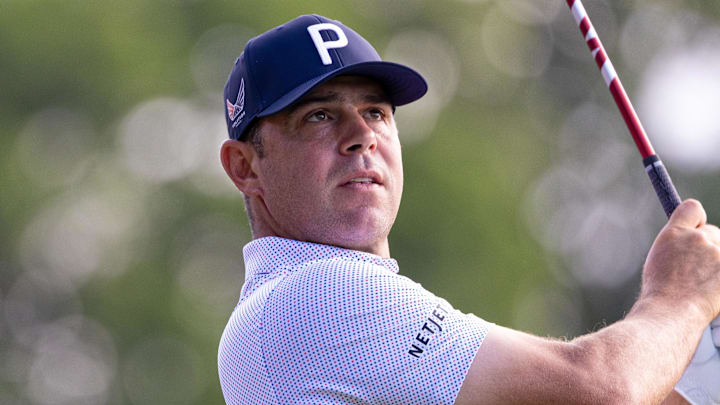
Nowadays, when Gary Woodland plays in a PGA Tour event, he often hears words of encouragement from fans and fellow competitors, glad to see he’s back playing and, more importantly, healthy again.
But he feels like he’s “living a lie.”
“I can’t waste energy anymore hiding this,” Woodland said, with his eyes welling, “and I’m blessed with a lot of support out here on the Tour. I appreciate that love and support. But inside, I feel like I’m dying.”
In an interview with Golf Channel’s Rex Hoggard, Woodland revealed he’s been battling post-traumatic stress disorder (PTSD) in the aftermath of a life-saving procedure to remove a lesion on his brain in September 2023.
The effects, such as seizures, he had from the brain lesion have gone away for the 41-year-old, but it’s been a year since he was diagnosed with PTSD, and over two years since he returned to the PGA Tour.
He’s still chasing his golf dreams, having played five times in 2026, missing three cuts. But the struggles inside the ropes stretch beyond his scorecard. One example occurred at the Procore Championship in Napa Valley last September.
“I was hypervigilant,” the 2019 U.S. Open champion said, describing a common PTSD symptom. “A walking scorer startled me, got close to me from behind. I pulled my caddie and said, ‘You can’t let anybody get behind me.’ Next thing you know, I couldn’t remember what I was doing. My eyesight started to get blurry.”
Standing in the fairway, Woodland felt he couldn’t hit his next shot, and his caddie, Brennan Little said, ‘Let’s go in.’
Woodland, though, wanted to fight through it, as he was there with the U.S. Ryder Cup team, of which Woodland was a vice captain, preparing for the matches at Bethpage Black later that month.
“I went into every bathroom to cry the rest of the day,” Woodland said. “When I got done, I got in my car and got out of there. There are days when it’s tough—crying in the scoring trailer, running to my car just to hide it. I don’t want to live that way anymore.”
The PGA Tour has since implemented enhanced security measures for Woodland in an effort to make him more comfortable on the course. And he recalled a story from the WM Phoenix Open, where a security guard pulled Woodland aside after the final round.
“He told me he was a combat vet, who battled PTSD,” Woodland said, “and he said being with me that week brought back a lot of memories of himself. He could see my brain analyzing, searching for threats the whole time I was playing, and I wasn’t aware of that.”
The guard then gave Woodland some advice: PTSD is going to take time to heal from and to take every day for what it’s worth. But the most important lesson was, “I don’t care how strong you think you are, you can’t do this on your own.”
Woodland acknowledges that his struggles aren’t just affecting him.
“This has been harder on my family and my team because they just want to help,” Woodland said. “They want to make it go away, and that’s not how this battle goes. But their love and support is what’s gotten me through it.”
Doctors have suggested avoiding high-intensity environments, which professional golf certainly is. However, he’s not shelving his clubs.
“In an ideal world, I’m probably not playing,” the four-time winner said. “But in an ideal world, I don’t have this. This is my dream.”
Now, his career serves a bigger purpose: to help people and let them know they’re not alone. And fulfilling that mission also aids his recovery.
“I want to live my dreams and be successful out here,” Woodland said. “But I want to help people, too. I realize now I’ve got to help myself first–and hopefully this is the first step in doing that.”
More Golf from Sports Illustrated
 Add us as a preferred source on Google
Max Schreiber is a contributor to the Breaking and Trending News team at Sports Illustrated, covering golf. Before joining SI in October 2024, the Mahwah, N.J., native, worked as an associate editor for the Golf Channel and wrote for RyderCup.com and FanSided. He is a multiplatform producer for Newsday and has a bachelor's in communications and journalism from Quinnipiac University. In his free time, you can find him doing anything regarding the Yankees, Giants, Knicks and Islanders.