%20%20--%3E%0A%3Csvg%20version%3D%221.1%22%20id%3D%22Layer_1%22%20xmlns%3D%22http%3A%2F%2Fwww.w3.org%2F2000%2Fsvg%22%20xmlns%3Axlink%3D%22http%3A%2F%2Fwww.w3.org%2F1999%2Fxlink%22%20x%3D%220px%22%20y%3D%220px%22%0A%09%20width%3D%2239px%22%20height%3D%2240px%22%20viewBox%3D%220%200%2039%2040%22%20enable-background%3D%22new%200%200%2039%2040%22%20xml%3Aspace%3D%22preserve%22%3E%0A%3Cpath%20fill%3D%22%23FFFFFF%22%20d%3D%22M38.5%2C7H28.2v26h10.3V7z%22%2F%3E%0A%3Cpath%20fill-rule%3D%22evenodd%22%20clip-rule%3D%22evenodd%22%20fill%3D%22%23FFFFFF%22%20d%3D%22M26.1%2C25.5c0%2C5.8-4.1%2C7.5-12.9%2C7.5C3.9%2C33%2C0%2C31.2%2C0%2C25.2v-1.1h11.6%0A%09v2.4c0%2C0.7%2C0.1%2C1.4%2C1.2%2C1.4c1%2C0%2C1.2-0.4%2C1.2-1.3v-0.9c0-1.6-0.9-1.6-3.5-2.2C2.2%2C21.7%2C0%2C19.7%2C0%2C15.3v-0.9C0%2C9.3%2C5.5%2C7%2C12.9%2C7%0A%09c10.2%2C0%2C12.8%2C2.6%2C12.8%2C7.4v1.8h-11v-2.9c0-0.6-0.4-1.1-1.2-1.1c-0.6%2C0-1.2%2C0.4-1.2%2C1.1v0.9c0%2C1.5%2C0.9%2C2%2C3.3%2C2.5%0A%09c8%2C1.6%2C10.5%2C3.3%2C10.5%2C7.5V25.5z%22%2F%3E%0A%3C%2Fsvg%3E%0A)
Gary Woodland Played His Way Back to the Masters, but His Fight Continues Beyond Golf
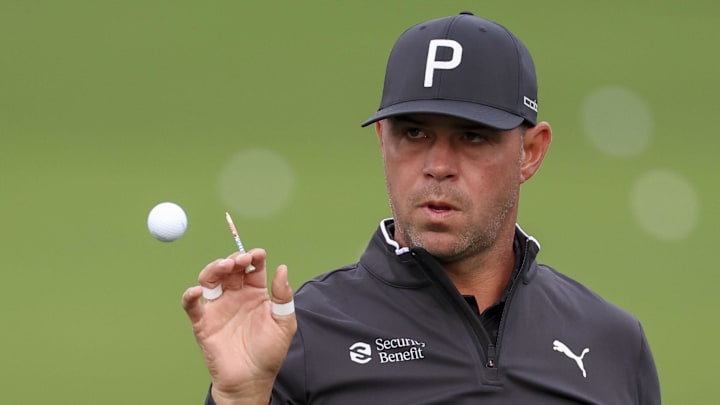
AUGUSTA — Saying his goal was not to get emotional, Gary Woodland couldn’t help it Tuesday when talking about his return to Augusta National for the Masters.
The 2019 U.S. Open champion who had brain surgery in 2023 for a benign tumor has been battling the aftereffects of that and acknowledged a month ago that he suffers from PTSD and is especially sensitive to his surroundings.
That makes things difficult on a golf course filled with people and one of those episodes occurred two weeks ago at the Houston Open, where he went on to win but had his struggles along the way.
“I had a big battle Friday of Houston,” Woodland said Tuesday during an Augusta National news conference. “I got hypervigilant on the 9th hole, and I battled the last 10 holes thinking people were trying to kill me. I have security with me. The [PGA] Tour’s been amazing.
“But I talked to Tour security that night and I told them what I was going through, and every time I looked up on the weekend, my security team was behind me. Last year I didn’t talk to Tour security. I fought this on my own. It was awful. Turning around and knowing that I’m safe, having somebody there with me, it’s the only reason why I won two weeks ago.”
The victory, the fourth of his PGA Tour career, got him in the Masters after missing a year ago. Woodland had been exempt through 2024 due to his 2019 U.S. Open win.

But in the aftermath of his brain surgery, it was remarkable enough that Woodland returned to golf, even if his game did not always come along. Winning at all was never guaranteed and thus neither was getting to the Masters.
“I’m emotional from the standpoint I know how close I probably was to never being back here, and I’m very proud of myself for earning my way back,” Woodland said.
“I’m in a different spot than I’ve been in a long time. Coming back in ’24 I was still fresh from surgery. I just didn’t know what the future held. Now I know the fight I’m in.
“I’m not going to get emotional, but I know what I’m battling every day. People ask me how was the win? The one thing I know is having this brain tumor and having PTSD, it doesn't matter if I win or lose. It doesn’t care. I had a tough time last week battling this stuff. A lot of stimulation comes with winning, stuff I hadn’t seen in a long time.
“It’s a big week for me this week. The fans are very close on the tee boxes. There’s a lot going on. There’s probably not a safer golf tournament in the world, so I’m happy for that, but it’s still a battle in my head if I'm safe or not. That’s a tough pill to swallow.”
How Woodland will try to feel safe while playing the Masters
Woodland said he has issues with people being too close to him, which is a product of his PTSD. Thus he feels a sense of calm when he notices security personnel that he knows or that his caddie, Brendan Little, points out during a round.
To that end, Woodland consulted with PGA Tour personnel as well as Augusta National officials for some level of comfort this week. It helps that at Augusta National, there are fewer people inside the ropes.
“It’s given me purpose, golf has, for sure. When I was diagnosed with this brain tumor three years ago, my number one thought was I wasn't going to let this thing win,” Woodland said. “I’ve dreamed of being a professional athlete since I was a little kid, and I would do everything in my power to live that dream for my childhood self.
“Golf has given me something a lot more to fight for than just myself and my family. I love being out here. I love the guys. I love competing. And the thought of losing that is hard.
“There’s been times where if I was going to be able to do it, but I was going to fight and give it everything I had. There’s definitely times even this year where physically I think my game is as complete as it’s ever been. I think it’s more complete than when I won in '19 at the U.S. Open. But there’s been times where I didn’t know if I’d have the mental stamina to get through a week.
“I fought hard earlier this year with some struggles, and that’s hard, that’s a hard pill to swallow that this thing could be taken away from me for something that’s out of my control.
“Houston was a big step in the right direction, just from a confidence standpoint, that even with hard days, I can still compete.”
More Masters Coverage from Sports Illustrated
 Add us as a preferred source on Google
Bob Harig was a senior writer covering golf for Sports Illustrated. He has more than 25 years experience on the beat, including 15 at ESPN. Harig is a regular guest on Sirius XM PGA Tour Radio and has written two books, “DRIVE: The Lasting Legacy of Tiger Woods” and “Tiger and Phil: Golf’s Most Fascinating Rivalry.” He graduated from Indiana University where he earned an Evans Scholarship, named in honor of the great amateur golfer Charles (Chick) Evans Jr. Harig, a former president of the Golf Writers Association of America, lives in Clearwater, Fla.
Follow bobharig