%20%20--%3E%0A%3Csvg%20version%3D%221.1%22%20id%3D%22Layer_1%22%20xmlns%3D%22http%3A%2F%2Fwww.w3.org%2F2000%2Fsvg%22%20xmlns%3Axlink%3D%22http%3A%2F%2Fwww.w3.org%2F1999%2Fxlink%22%20x%3D%220px%22%20y%3D%220px%22%0A%09%20width%3D%2239px%22%20height%3D%2240px%22%20viewBox%3D%220%200%2039%2040%22%20enable-background%3D%22new%200%200%2039%2040%22%20xml%3Aspace%3D%22preserve%22%3E%0A%3Cpath%20fill%3D%22%23FFFFFF%22%20d%3D%22M38.5%2C7H28.2v26h10.3V7z%22%2F%3E%0A%3Cpath%20fill-rule%3D%22evenodd%22%20clip-rule%3D%22evenodd%22%20fill%3D%22%23FFFFFF%22%20d%3D%22M26.1%2C25.5c0%2C5.8-4.1%2C7.5-12.9%2C7.5C3.9%2C33%2C0%2C31.2%2C0%2C25.2v-1.1h11.6%0A%09v2.4c0%2C0.7%2C0.1%2C1.4%2C1.2%2C1.4c1%2C0%2C1.2-0.4%2C1.2-1.3v-0.9c0-1.6-0.9-1.6-3.5-2.2C2.2%2C21.7%2C0%2C19.7%2C0%2C15.3v-0.9C0%2C9.3%2C5.5%2C7%2C12.9%2C7%0A%09c10.2%2C0%2C12.8%2C2.6%2C12.8%2C7.4v1.8h-11v-2.9c0-0.6-0.4-1.1-1.2-1.1c-0.6%2C0-1.2%2C0.4-1.2%2C1.1v0.9c0%2C1.5%2C0.9%2C2%2C3.3%2C2.5%0A%09c8%2C1.6%2C10.5%2C3.3%2C10.5%2C7.5V25.5z%22%2F%3E%0A%3C%2Fsvg%3E%0A)
Masters Contenders Know Conditions Will Only Get Tougher at Augusta National
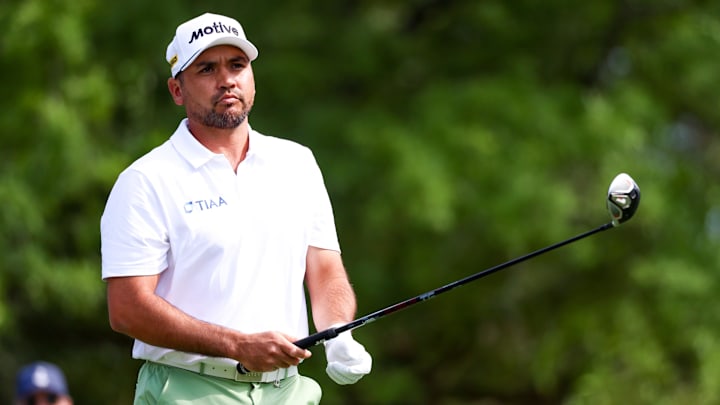
AUGUSTA — Jason Day stood on a podium and peered across Augusta National’s 18th green toward the massive scoreboard in the distance, noticing several red numbers and wondering just how many there might be by the end of the week.
The weather has been a dream for meteorologists and those charged with setting up the home of the Masters, a combination that does not always materialize in early April in this part of the world.
Getting the ideal firm, fast major-championship setup is almost always at the whims of Mother Nature, and for one of the rare occasions, such conditions have been delivered.
Day felt good about the 69 he shot that trails leaders Rory McIlroy and Sam Burns by two shots as he looked down the first fairway where he offered an example of what is to come.
“You start seeing the purple change,” said Day, who is playing in his 15th Masters. “That's when you know when you start seeing that tinge of purple [in the grass], that’s when you know it’s starting to get firm and fast.
“Yesterday was a dramatic difference in the way the course was playing. It was softer, a lot softer, a lot slower. Now you’re starting to see things roll out a little bit more. Like, I mean ... there are certain locations where you have to miss and sometimes you just got it suck it up.”
Shane Lowry was more direct.
“I think this could be the toughest Masters we’ve played in a while,” said the 2019 British Open champion, who shot 70. “You look at the forecast. They can do whatever they want with the golf course this weekend.
“I think over the last few years we’ve had a day every year where it’s been raining or it’s been heavy rains. It’s kind of helped us a little bit, but I think before the week is out, it’s going to get very, very crusty around here.”

Rain, especially considerable amounts, makes for a different test, one that often brings the field together. It is easier to keep the ball in the fairway, easier to keep it on the green.
When it runs fast, poorly struck shots run into the rough or the pine straw. And approach shots don’t hold as much as they do if the greens are damp.
And even well-struck shots are not exempt from bad bounces. Patrick Reed, who eagled both first-nine par-5s, hit what he thought was a perfect 7-wood shot to the 15th from 263 yards, only to see hit it on the green and bounced over and into the water that is near the 16th hole.
That led to a bogey on a hole he might have expected to birdie.
“That was a head-scratcher for me,” said Reed, the 2018 Masters champion who shot 69. “I didn’t see that going that far, but if I have 7-wood or closer into that green, especially to that pin, I’m going to go for it every day.
“I do not like that 60-, 70-, 80-yard wedge shot to that flag, and especially today with it being more forward, I knew if it went over the green, we would be fine. Didn’t really think I was going to go 30 yards over the green.
“[The course] definitely has the teeth in it to make it really, really tough. I mean, the greens are already getting firm, crusty, and bouncy. 17 is always one of the firmest greens on the golf course. You could tell when you are walking on it and trying to fix a ball mark—I actually broke one tee on the hole trying to fix a ball mark.
“You already know it’s going to get crusty. You know it’s going to get fast, and it’s going to take a lot of patience. You’re going to have to hit the ball solid and put the ball in the right spots. When you do, be patient and try to minimize errors.”
Xander Schauffele, who has five top-10 finishes in eight Masters starts, figures he is going to be a bit more careful as the tournament progresses.
“They’re doing what they want with the greens,” he said. “That’s the beauty about this place. I do feel when Rory won last year I feel like they were pretty slick as well. Then dating two, three years back maybe it’s gone the direction where it’s got a little bit more of the brown in them, that sort of slickness.
“Just got to adjust. I think adjusting is going to be the big thing. Positioning yourself is really important, too.”
Asked what he learned in his opening-round 70, Schauffele said: “Potentially attack it less to be honest. Less attack and a little more conservative. I mean, there is some nice scores up there early from what I can see right here. You’ve got to be driving it really far to have a shorter club in or got to be hitting your spots.”
A "much more tactical test" awaits
The weekend forecast calls for high temperatures in the 80s. It will be relatively cool when play begins Friday morning, which might give some players pause as well.
But in general, the expectation is that Augusta National is not going to get any easier. And it might be as difficult as anyone has seen it in recent memory.
“The course is only going to get drier and firmer and faster as the week goes on,” said defending champion McIlroy, adding: “I think when the greens get that firm, you really have to think about where the best miss is, and distance control is very important, but also, missing it left, missing it right.
“When the greens get like this, it’s not going to be soft. So when the greens do get firm like this, it makes it a much more tactical test, and you really have to think about things.
“As you guys know, I’ve said for the last few years I’ve started to really relish that type of golf. I really want to excel at that type of golf.”
More Masters Coverage from Sports Illustrated
 Add us as a preferred source on Google
Bob Harig was a senior writer covering golf for Sports Illustrated. He has more than 25 years experience on the beat, including 15 at ESPN. Harig is a regular guest on Sirius XM PGA Tour Radio and has written two books, “DRIVE: The Lasting Legacy of Tiger Woods” and “Tiger and Phil: Golf’s Most Fascinating Rivalry.” He graduated from Indiana University where he earned an Evans Scholarship, named in honor of the great amateur golfer Charles (Chick) Evans Jr. Harig, a former president of the Golf Writers Association of America, lives in Clearwater, Fla.
Follow bobharig