%20%20--%3E%0A%3Csvg%20version%3D%221.1%22%20id%3D%22Layer_1%22%20xmlns%3D%22http%3A%2F%2Fwww.w3.org%2F2000%2Fsvg%22%20xmlns%3Axlink%3D%22http%3A%2F%2Fwww.w3.org%2F1999%2Fxlink%22%20x%3D%220px%22%20y%3D%220px%22%0A%09%20width%3D%2239px%22%20height%3D%2240px%22%20viewBox%3D%220%200%2039%2040%22%20enable-background%3D%22new%200%200%2039%2040%22%20xml%3Aspace%3D%22preserve%22%3E%0A%3Cpath%20fill%3D%22%23FFFFFF%22%20d%3D%22M38.5%2C7H28.2v26h10.3V7z%22%2F%3E%0A%3Cpath%20fill-rule%3D%22evenodd%22%20clip-rule%3D%22evenodd%22%20fill%3D%22%23FFFFFF%22%20d%3D%22M26.1%2C25.5c0%2C5.8-4.1%2C7.5-12.9%2C7.5C3.9%2C33%2C0%2C31.2%2C0%2C25.2v-1.1h11.6%0A%09v2.4c0%2C0.7%2C0.1%2C1.4%2C1.2%2C1.4c1%2C0%2C1.2-0.4%2C1.2-1.3v-0.9c0-1.6-0.9-1.6-3.5-2.2C2.2%2C21.7%2C0%2C19.7%2C0%2C15.3v-0.9C0%2C9.3%2C5.5%2C7%2C12.9%2C7%0A%09c10.2%2C0%2C12.8%2C2.6%2C12.8%2C7.4v1.8h-11v-2.9c0-0.6-0.4-1.1-1.2-1.1c-0.6%2C0-1.2%2C0.4-1.2%2C1.1v0.9c0%2C1.5%2C0.9%2C2%2C3.3%2C2.5%0A%09c8%2C1.6%2C10.5%2C3.3%2C10.5%2C7.5V25.5z%22%2F%3E%0A%3C%2Fsvg%3E%0A)
Rory McIlroy Wasn’t Great in Round 1 at the Masters, but His Score Was
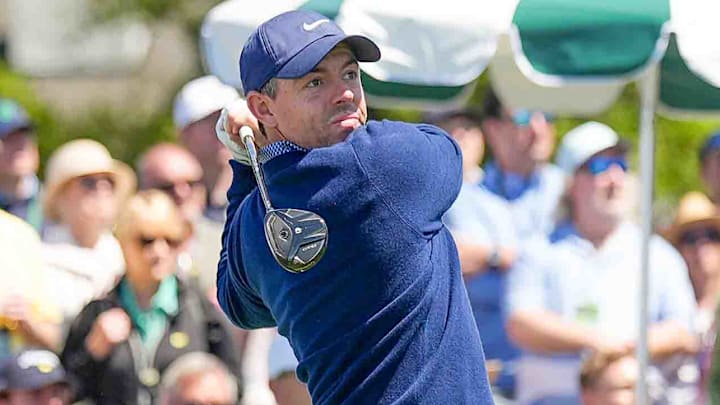
AUGUSTA — Rory McIlroy played the first round of the Masters like a guy who knows how to win here, because he has. He wasn’t great, but his score was. His drives were not precise, but his thinking was. He shot a 67 that might have been a 77 two years ago.
Certain former champions post great scores at Augusta National time and again, no matter how they hit it, because the memory bank is always open. Nicklaus. Couples. Spieth. Langer. Mickelson. Woods. They don’t necessarily win a second Masters—but they post better scores, relative to the field, than they would just about anywhere else that week.
Rory McIlroy just played one of those rounds.
“Absolutely,” McIlroy said. “Honestly, I couldn’t have got a lot more out of my round. I feel like I leaned heavily on my experience out there to do that.”
Everything McIlroy said earlier this week was on display Thursday. He played with the emotional stability that comes with a permanent seat at the champions’ dinner. He was nervous on the first tee, but he found that reassuring. He sprayed some shots, especially on the front nine—“pretty scrappy,” he said of his play—but he didn’t panic. His most important adjustment was not adjusting.
“I didn’t hit the ball very well the first seven holes, and sometimes here that would lead me to get tentative and a little guide-y,” McIlroy said. “I kept swinging, just trusting that I’m going to find it eventually. So maybe that was a little bit different.”
It was a lot different. McIlroy has played great rounds at Augusta National before, but he has probably never played one quite like this.
McIlroy sprayed some shots but his mind saved more
He pulled his drive on No. 5 and grimaced when he saw where that ended up behind some trees. If there is any hole on the course where a wayward drive usually means bogey, this is it. McIlroy hit a low draw from 133 yards out that rolled onto the green. He two-putted for par.
He hit his drive on the par-5 eighth to the right, leaving him 269 yards from the hole. From there, he used his Ph.D. in Augusta National.
“It was probably a perfect 5-wood number, but out of that first cut, the ball usually spins a little more with the fairway woods,” McIlroy said. “So I choked down on a 3-wood. Where that hole location is, in the back right, it was really a decision of, ‘O.K., do you get it up around the hole knowing that it might go over the back, or do you leave yourself that 35-yard shot up the green where it cambers quite a lot right to left?”
McIlroy was not hitting the ball well. It would have been so easy to leave himself that 35-yarder. But he knew from experience that what seems like the safe play there is actually the riskier one. He hit the choked-down 3-wood to 24 feet and two-putted for birdie.
He spoke afterward of “the little mini-goals like not compounding errors—like today, hitting it in trees and trying to be a hero.” He certainly hit it into enough trees to prove the point.
On 15, McIlroy hit his drive left again. He was under a tree again. He punched out and hit a wedge to 29 feet. His putt trickled into the cup. The roar was so loud that fans behind the 17th green knew exactly who had done what.
If McIlroy wins this Masters, the retrospectives will spend zero seconds and no words on how he played the 17th hole Thursday. It will go down as just another par in a six-birdie round. But it was revealing.
After a good drive, McIlroy had 129 yards to a back-right pin. When players have a wedge in the fairway, they almost always think birdie. As McIlroy waited to hit, there was a back-to-front breeze. As he stood over his ball, the wind picked up. As he swung, the wind died down completely. McIlroy’s shot ended up pin high.
If McIlroy had tried to compensate for the wind and stick it close, he would have ended up long—the one place he did not want to be. Instead, he hit a shot that was going to be good no matter what the wind did.
“I think winning a Masters makes it easier to win your second one,” he said. “I do. It’s hard to say, because there’s still shots out there that you feel a little bit tight with, and you just have to stand up and commit to making a good swing and not worry about really where it goes.”

As McIlroy played the 18th hole, 2023 champ Jon Rahm was playing the nearby 9th. Rahm was 3 over on the tee. He piped a 351-yard drive. His wedge landed pin high but had too much spin on it, leaving him a 32-foot uphill birdie putt. He hit it long, missed the downhill comebacker, and walked off with a maddening bogey he could not afford to make.
The year that Rahm won here was one of the worst weather Masters of all-time. Rahm got the worst of it and still won. But the way he won might not have filled the memory bank as well as a win in typical Masters weather would.
Even if you forget the tradition and lore and sandwich obsession and mystical qualities of this event, Augusta National is a fascinating golf course. Some great players find it perpetually vexing. Some play exceptionally well for a week, win, and never play well again.
Only a few find comfort in the contours and the quirks. They know they can win and they know how to do it, no matter how they are swinging the club. Rory McIlroy is one of the few. He sounds like a guy who will stick around the leaderboard—this weekend, and for many years to come.
More Masters Coverage from Sports Illustrated
 Add us as a preferred source on Google
Michael Rosenberg was a senior writer for Sports Illustrated, covering any and all sports. He writes columns, profiles and feature stories and has covered almost every major sporting event. He joined SI in 2012 after working at the Detroit Free Press for 13 years, eight of them as a columnist. Rosenberg is the author of “War As They Knew It: Woody Hayes, Bo Schembechler and America in a Time of Unrest.” Several of his stories also have been published in collections of the year’s best sportswriting. He is married with three children.
Follow rosenberg_mike