%20%20--%3E%0A%3Csvg%20version%3D%221.1%22%20id%3D%22Layer_1%22%20xmlns%3D%22http%3A%2F%2Fwww.w3.org%2F2000%2Fsvg%22%20xmlns%3Axlink%3D%22http%3A%2F%2Fwww.w3.org%2F1999%2Fxlink%22%20x%3D%220px%22%20y%3D%220px%22%0A%09%20width%3D%2239px%22%20height%3D%2240px%22%20viewBox%3D%220%200%2039%2040%22%20enable-background%3D%22new%200%200%2039%2040%22%20xml%3Aspace%3D%22preserve%22%3E%0A%3Cpath%20fill%3D%22%23FFFFFF%22%20d%3D%22M38.5%2C7H28.2v26h10.3V7z%22%2F%3E%0A%3Cpath%20fill-rule%3D%22evenodd%22%20clip-rule%3D%22evenodd%22%20fill%3D%22%23FFFFFF%22%20d%3D%22M26.1%2C25.5c0%2C5.8-4.1%2C7.5-12.9%2C7.5C3.9%2C33%2C0%2C31.2%2C0%2C25.2v-1.1h11.6%0A%09v2.4c0%2C0.7%2C0.1%2C1.4%2C1.2%2C1.4c1%2C0%2C1.2-0.4%2C1.2-1.3v-0.9c0-1.6-0.9-1.6-3.5-2.2C2.2%2C21.7%2C0%2C19.7%2C0%2C15.3v-0.9C0%2C9.3%2C5.5%2C7%2C12.9%2C7%0A%09c10.2%2C0%2C12.8%2C2.6%2C12.8%2C7.4v1.8h-11v-2.9c0-0.6-0.4-1.1-1.2-1.1c-0.6%2C0-1.2%2C0.4-1.2%2C1.1v0.9c0%2C1.5%2C0.9%2C2%2C3.3%2C2.5%0A%09c8%2C1.6%2C10.5%2C3.3%2C10.5%2C7.5V25.5z%22%2F%3E%0A%3C%2Fsvg%3E%0A)
In Mexico, One of Greg Norman’s Finest Designs Continues to Delight
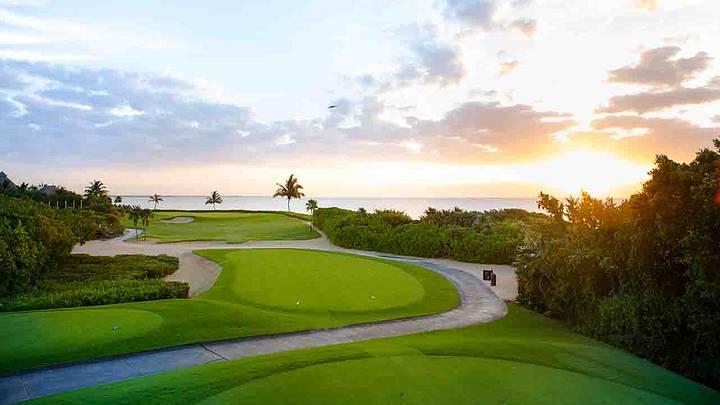
MAYAKOBA, Mexico — Greg Norman, the architect, can at times be as controversial as Greg Norman, the player. His designs have been cussed and discussed with his name disassociated with various layouts in Arizona, Texas and Florida, his reputation going from birdie to triple bogey.
But the one thing most golfers and others in the golf business agree on is that the El Camaleón design in the massive Mayakoba development, opened by Norman in 2006, is one of his best and most interesting anywhere, requiring very little upkeep or changes since it first burst on the public golf scene.
“Because Greg got it right the first time,” says legendary teacher Jim McLean, whose name is on a golf school on the property and is himself a regular visitor to the resort. “There has been some new grass on the greens and some sand in the bunkers, but nothing major on the course because it was good from the start.”
In fact, par-72 El Camaleón (translated chameleon in Spanish), is the only course in North America to have hosted a PGA Tour event (from 2007 to 2022), a LIV Golf event (2023-24) and an LPGA event (its second was won earlier this month by Nelly Korda). Next year it hosts the Latin American Amateur Championship with the winner getting a spot in the 2027 Masters.
The reason the Norman design can host the best professionals and amateurs in the world, along with 50 weeks of resort play, is because of the variety within the hole layouts.
If asked to describe El Camaleón in one or two words, you might settle on “Shark,” thinking of the architect, or maybe “varied,” but that hardly does this golf adventure justice.
One round, many scenes
The course rolls through tropical jungle, mangroves and freshwater canals with boats en route to the luxury Banyan Tree Resort, not to mention stretches of Riviera Maya oceanfront, giving players a venue that changes character from one part of the property to the next.
Each time the golfer might think they have arrived at the course’s dominant feature, just a few holes later it changes again. A chameleon indeed.
A case in point is both the par-4 1st hole and par-5 18th hole where players tee off with thick trees guarding both sides of the fairway. A straight drive is rewarded and there are plenty of out-of-bounds areas, as Korda found out late Sunday with the comfort of a five-shot lead in her win..

The mangroves portion of the course begins on Nos. 2 and 3, both par-4s before the par-3 4th offers a brief view of Cozumel and the water in the distance.
It’s back to the mangroves, then the jungle for Nos. 5 and 6 and so the pattern continues: jungle, mangroves, water, in various order.
It’s rare to have a signature hole on the front nine, but once again the Norman course defies convention. The par-5 7th hole has a huge cenote, a natural cave feature in the middle of the fairway. While pros may power their shots over it, it’s very much in play for the amateurs who make up the majority of the rounds there.
After a direct transition from jungle to mangrove on Nos. 13-14, the Caribbean Sea makes its most dramatic appearance on the par-3 15th hole. It’s 155 yards from the professional tees with the green directly backing the water and the sandy beach. It’s not uncommon for golfers to see beachgoers watching their shots and even retrieving a ball if it goes into the sand.

The turf on 15 and everywhere else on the fairways and tees is paspalum, a grass often found in coastal and tropical golf environments because of its salt tolerance.
Much more than golf at Mayakoba
While the course is certainly unique, the entire resort facility, covering 595 acres, is no less special.
There are four luxury properties here including the largest, the Fairmont Mayakoba at 404 rooms, geared to families with two kids clubs and ample beach. There is the Rosewood with a large residential pool program and the newest hotel, the Alila, which reopened in February 2026 after a renovation and has 183 rooms.
Banyan Tree is the most luxury-driven project, a brand with five-star outposts all over the world. Many of the 163 rooms here have direct views of the ocean with private plunge pools, if you’re tired of the salty stuff after a while and want a freshwater oasis.
Both the Banyan Tree and Rosewood offer riverboats to your rooms if hustling past a lobby with multiple suitcases in tow or riding a bumpy golf cart isn’t your style. Plus, you glide past several holes of the Norman course if you want an advance view from a unique angle.

Each of the hotels has multiple restaurants with offerings from steak to seafood and highly regarded sushi, along with several shops and spas overlooking the serene surroundings.
A nice course in dramatic ocean surroundings which can never fully describe El Camaleon. “It’s more like Jurassic Park,” my guide told me. In one brief trip you can see deer, raccoons, monkeys, crocodiles, turtles and coatimundi (a raccoon-type animal native to the area), all moving around the property with little concern for the human guests.
Need two more words for El Camaleon and Mayakoba? Try “wild variety” or, better yet, “must visit.”
More Golf from Sports Illustrated
 Add us as a preferred source on Google
Art Stricklin is an award-winning golf writer based in Dallas and the president of the Texas Golf Writers Association. He spent more than a decade working for Texas newspapers. Stricklin is the author of 10 books, including, “Thanks for the Memories,” on the history of Northwood Club in Dallas, and “Links, Lore & Legends: The Story of Texas Golf.” He has become one of Texas’ foremost experts on golf history and travel, having witnessed a countless number of professional and amateur golf tournaments in the state. His work has been published in regional, national and international titles, including Sports Illustrated, Connoisseur Golf, Golf Magazine, Texas Monthly, Global Golf Post, D Magazine and Texas Golfer Magazine. Email: astrick@flash.net; Twitter: @artstricklin