%22%3E%0A%3Cpath%20d%3D%22M0%208.18159V8.13964C0%203.66075%203.4929%200.314697%207.97179%200.314697C11.2759%200.314697%2013.4996%201.91954%2014.7583%204.21668L10.6256%206.63968C10.0696%205.56978%209.27245%204.81456%207.90885%204.81456C6.22009%204.81456%205.09775%206.29354%205.09775%208.08719V8.12915C5.09775%2010.0801%206.25156%2011.4542%207.90885%2011.4542C9.32489%2011.4542%2010.1116%2010.678%2010.7409%209.56617L14.8737%2011.9053C13.615%2014.129%2011.5066%2015.9541%207.78298%2015.9541C3.62926%2015.9541%200.0104894%2012.8283%200.0104894%208.18159H0Z%22%20fill%3D%22white%22%2F%3E%0A%3Cpath%20d%3D%22M15.8389%200H20.7059V15.6394H15.8389V0Z%22%20fill%3D%22white%22%2F%3E%0A%3Cpath%20d%3D%22M21.9216%209.86001V9.81805C21.9216%206.32515%2024.4285%203.67139%2027.9424%203.67139C32.0961%203.67139%2034.0262%206.5664%2034.0262%2010.1222C34.0262%2010.3845%2034.0262%2010.6782%2034.0052%2010.9404H26.4844C26.8306%2011.9683%2027.6382%2012.5033%2028.6872%2012.5033C29.5682%2012.5033%2030.292%2012.0942%2031.0682%2011.3075L33.68%2013.3844C32.5262%2014.8843%2030.8689%2015.9333%2028.341%2015.9333C24.502%2015.9333%2021.9111%2013.5103%2021.9111%209.8705L21.9216%209.86001ZM29.5892%208.77962C29.4843%207.66777%2028.813%207.01744%2027.9634%207.01744C27.1138%207.01744%2026.5683%207.69924%2026.4215%208.77962H29.5892Z%22%20fill%3D%22white%22%2F%3E%0A%3Cpath%20d%3D%22M33.9229%203.94397H39.0206L40.9087%209.81792L42.8177%203.94397H47.8525L43.1219%2015.7233H38.664L33.9333%203.94397H33.9229Z%22%20fill%3D%22white%22%2F%3E%0A%3Cpath%20d%3D%22M47.5476%209.86001V9.81805C47.5476%206.32515%2050.0545%203.67139%2053.5684%203.67139C57.7221%203.67139%2059.6521%206.5664%2059.6521%2010.1222C59.6521%2010.3845%2059.6521%2010.6782%2059.6311%2010.9404H52.1104C52.4565%2011.9683%2053.2642%2012.5033%2054.3131%2012.5033C55.1942%2012.5033%2055.918%2012.0942%2056.6942%2011.3075L59.306%2013.3844C58.1522%2014.8843%2056.4949%2015.9333%2053.967%2015.9333C50.1279%2015.9333%2047.5371%2013.5103%2047.5371%209.8705L47.5476%209.86001ZM55.2152%208.77962C55.1103%207.66777%2054.439%207.01744%2053.5894%207.01744C52.7398%207.01744%2052.1943%207.69924%2052.0475%208.77962H55.2152Z%22%20fill%3D%22white%22%2F%3E%0A%3Cpath%20d%3D%22M60.8477%200H65.7146V15.6394H60.8477V0Z%22%20fill%3D%22white%22%2F%3E%0A%3Cpath%20d%3D%22M66.8474%2012.3143V12.2724C66.8474%209.93326%2068.5781%208.6326%2071.3053%208.6326C72.2913%208.6326%2073.55%208.84239%2074.064%209.06266V8.87385C74.064%207.80396%2073.4032%207.18509%2071.9032%207.18509C70.7074%207.18509%2069.7005%207.44732%2068.6725%207.84591L67.8124%204.61524C69.1655%204.10127%2070.7074%203.75513%2072.7423%203.75513C75.1234%203.75513%2076.6653%204.24812%2077.6932%205.27606C78.5743%206.15715%2078.91%207.28999%2078.91%208.97875V15.6394H74.043V14.4646C73.2248%2015.3457%2072.134%2015.9226%2070.676%2015.9226C68.4313%2015.9226%2066.8369%2014.6429%2066.8369%2012.3248L66.8474%2012.3143ZM74.1059%2011.3073V10.8144C73.8227%2010.7095%2073.4032%2010.6255%2072.9941%2010.6255C72.0291%2010.6255%2071.4941%2011.2025%2071.4941%2011.9262V11.9682C71.4941%2012.65%2071.9871%2013.101%2072.606%2013.101C73.4661%2013.101%2074.1059%2012.4192%2074.1059%2011.2969V11.3073Z%22%20fill%3D%22white%22%2F%3E%0A%3Cpath%20d%3D%22M80.3679%203.94398H85.2349V5.5698C85.9901%204.60479%2087.1649%203.66077%2088.8117%203.66077C91.2767%203.66077%2092.8186%205.28659%2092.8186%207.91938V15.6289H87.9516V9.48227C87.9516%208.47531%2087.3537%207.8984%2086.6195%207.8984C85.8852%207.8984%2085.2244%208.47531%2085.2244%209.48227V15.6289H80.3574V3.93349L80.3679%203.94398Z%22%20fill%3D%22white%22%2F%3E%0A%3Cpath%20d%3D%22M93.9316%209.88095V9.839C93.9316%206.13631%2096.1554%203.67135%2098.9245%203.67135C100.697%203.67135%20101.683%204.43706%20102.438%205.2762V0.0106201H107.305V15.65H102.438V14.213C101.641%2015.0731%20100.75%2015.9227%2098.9665%2015.9227C96.1344%2015.9227%2093.9316%2013.4578%2093.9316%209.88095ZM102.543%209.80753V9.76557C102.543%208.61176%20101.704%207.66773%20100.592%207.66773C99.4804%207.66773%2098.6413%208.59078%2098.6413%209.76557V9.80753C98.6413%2010.9823%2099.4804%2011.9054%20100.592%2011.9054C101.704%2011.9054%20102.543%2010.9823%20102.543%209.80753Z%22%20fill%3D%22white%22%2F%3E%0A%3Cpath%20d%3D%22M0.0314663%2028.238V28.196C0.0314663%2023.7171%203.56633%2020.3711%208.29696%2020.3711C10.8668%2020.3711%2012.9437%2021.2312%2014.5695%2022.6368L11.7584%2026.0248C10.7724%2025.1856%209.68153%2024.7136%208.43331%2024.7136C6.48232%2024.7136%205.06628%2026.2136%205.06628%2028.2485V28.2904C5.06628%2030.4093%206.54526%2031.8672%208.6431%2031.8672C9.50321%2031.8672%209.97523%2031.7414%2010.3528%2031.5211V30.0212H7.78298V26.8115H15.0415V33.7553C13.4157%2035.0874%2011.1395%2036%208.42282%2036C3.75513%2036%200%2032.8742%200%2028.2275L0.0314663%2028.238Z%22%20fill%3D%22white%22%2F%3E%0A%3Cpath%20d%3D%22M16.3936%2031.7098V24.0002H21.2605V30.1469C21.2605%2031.1539%2021.8584%2031.7308%2022.5927%2031.7308C23.3269%2031.7308%2023.9877%2031.1539%2023.9877%2030.1469V24.0002H28.8547V35.6957H23.9877V34.1328C23.243%2035.0978%2022.0577%2035.9789%2020.4109%2035.9789C17.946%2035.9789%2016.4041%2034.3531%2016.4041%2031.7203L16.3936%2031.7098Z%22%20fill%3D%22white%22%2F%3E%0A%3Cpath%20d%3D%22M29.9355%2032.3707V32.3287C29.9355%2029.9897%2031.6663%2028.689%2034.3935%2028.689C35.3794%2028.689%2036.6381%2028.8988%2037.1521%2029.1191V28.9303C37.1521%2027.8604%2036.4913%2027.2415%2034.9913%2027.2415C33.7956%2027.2415%2032.7886%2027.5037%2031.7607%2027.9023L30.9006%2024.6716C32.2537%2024.1577%2033.7956%2023.8115%2035.8305%2023.8115C38.2115%2023.8115%2039.7534%2024.3045%2040.7814%2025.3325C41.6625%2026.2135%2041.9981%2027.3464%2041.9981%2029.0351V35.6958H37.1311V34.521C36.313%2035.4021%2035.2221%2035.979%2033.7641%2035.979C31.5194%2035.979%2029.9355%2034.6993%2029.9355%2032.3812V32.3707ZM37.1941%2031.3637V30.8708C36.9109%2030.7659%2036.4913%2030.6819%2036.0822%2030.6819C35.1172%2030.6819%2034.5823%2031.2589%2034.5823%2031.9826V32.0246C34.5823%2032.7064%2035.0753%2033.1574%2035.6941%2033.1574C36.5542%2033.1574%2037.1941%2032.4756%2037.1941%2031.3533V31.3637Z%22%20fill%3D%22white%22%2F%3E%0A%3Cpath%20d%3D%22M43.4561%2024.0004H48.323V26.3604C48.9839%2024.7766%2050.0538%2023.7486%2051.9838%2023.8325V28.9932H51.4698C49.4139%2028.9932%2048.323%2030.1261%2048.323%2032.7169V35.6958H43.4561V24.0004Z%22%20fill%3D%22white%22%2F%3E%0A%3Cpath%20d%3D%22M52.3398%2029.9373V29.8954C52.3398%2026.1927%2054.5635%2023.7277%2057.3327%2023.7277C59.1159%2023.7277%2060.0914%2024.4935%2060.8466%2025.3326V20.067H65.7136V35.7064H60.8466V34.2694C60.0494%2035.1295%2059.1578%2035.9791%2057.3747%2035.9791C54.5426%2035.9791%2052.3398%2033.5142%2052.3398%2029.9373ZM60.9515%2029.8639V29.822C60.9515%2028.6682%2060.1123%2027.7241%2059.0005%2027.7241C57.8886%2027.7241%2057.0495%2028.6472%2057.0495%2029.822V29.8639C57.0495%2031.0387%2057.8886%2031.9618%2059.0005%2031.9618C60.1123%2031.9618%2060.9515%2031.0387%2060.9515%2029.8639Z%22%20fill%3D%22white%22%2F%3E%0A%3Cpath%20d%3D%22M67.2148%2020.0564H72.2497V23.1612H67.2148V20.0564ZM67.2988%2024.0003H72.1657V35.6958H67.2988V24.0003Z%22%20fill%3D%22white%22%2F%3E%0A%3Cpath%20d%3D%22M73.2976%2032.3707V32.3287C73.2976%2029.9897%2075.0283%2028.689%2077.7555%2028.689C78.7415%2028.689%2080.0002%2028.8988%2080.5142%2029.1191V28.9303C80.5142%2027.8604%2079.8533%2027.2415%2078.3534%2027.2415C77.1576%2027.2415%2076.1507%2027.5037%2075.1227%2027.9023L74.2626%2024.6716C75.6157%2024.1577%2077.1576%2023.8115%2079.1925%2023.8115C81.5736%2023.8115%2083.1155%2024.3045%2084.1434%2025.3325C85.0245%2026.2135%2085.3602%2027.3464%2085.3602%2029.0351V35.6958H80.4932V34.521C79.675%2035.4021%2078.5842%2035.979%2077.1262%2035.979C74.8815%2035.979%2073.2871%2034.6993%2073.2871%2032.3812L73.2976%2032.3707ZM80.5561%2031.3637V30.8708C80.2729%2030.7659%2079.8533%2030.6819%2079.4443%2030.6819C78.4793%2030.6819%2077.9443%2031.2589%2077.9443%2031.9826V32.0246C77.9443%2032.7064%2078.4373%2033.1574%2079.0562%2033.1574C79.9163%2033.1574%2080.5561%2032.4756%2080.5561%2031.3533V31.3637Z%22%20fill%3D%22white%22%2F%3E%0A%3Cpath%20d%3D%22M86.8181%2024.0002H91.6851V25.6261C92.4298%2024.6611%2093.6151%2023.717%2095.2619%2023.717C97.7269%2023.717%2099.2688%2025.3429%2099.2688%2027.9757V35.6852H94.4018V29.5385C94.4018%2028.5316%2093.8039%2027.9547%2093.0697%2027.9547C92.3354%2027.9547%2091.6746%2028.5316%2091.6746%2029.5385V35.6852H86.8076V23.9898L86.8181%2024.0002Z%22%20fill%3D%22white%22%2F%3E%0A%3Cpath%20d%3D%22M99.8779%2034.2797L101.525%2031.521C102.941%2032.4021%20104.525%2032.8217%20105.857%2032.8217C106.329%2032.8217%20106.56%2032.7168%20106.56%2032.4336V32.3916C106.56%2032.1608%20106.35%2032.0035%20105.164%2031.7098C102.207%2030.9861%20100.392%2030.1889%20100.392%2027.7659V27.7239C100.392%2025.1541%20102.448%2023.717%20105.49%2023.717C107.42%2023.717%20109.329%2024.21%20110.734%2025.0701L109.192%2027.9652C107.944%2027.2834%20106.455%2026.8743%20105.469%2026.8743C104.997%2026.8743%20104.787%2027.0002%20104.787%2027.2414V27.2834C104.787%2027.5246%20105.049%2027.6715%20106.224%2027.9652C109.182%2028.6889%20110.955%2029.5071%20110.955%2031.9091V31.9511C110.955%2034.4999%20109.045%2035.9789%20105.878%2035.9789C103.612%2035.9789%20101.546%2035.402%2099.8779%2034.2901V34.2797Z%22%20fill%3D%22white%22%2F%3E%0A%3Cpath%20fill-rule%3D%22evenodd%22%20clip-rule%3D%22evenodd%22%20d%3D%22M120.368%204.36764C126.191%20-1.45588%20135.632%20-1.45588%20141.456%204.36764C147.279%2010.1912%20147.279%2019.6324%20141.456%2025.4559L130.912%2036L120.368%2025.4559C114.544%2019.6324%20114.544%2010.1912%20120.368%204.36764ZM123.009%207.55761C122.948%207.86849%20122.916%208.39718%20122.916%209.14566V10.4189C122.916%2011.1832%20122.948%2011.7198%20123.013%2012.0267C123.078%2012.3317%20123.278%2012.6168%20123.617%2012.8762C123.956%2013.1376%20124.403%2013.3316%20124.958%2013.4623C125.512%2013.593%20126.1%2013.6583%20126.837%2013.6583C127.573%2013.6583%20128.217%2013.591%20128.769%2013.4524C129.322%2013.3158%20129.761%2013.1178%20130.086%2012.8604C130.411%2012.6029%20130.605%2012.3178%20130.666%2012.0069C130.728%2011.6961%20130.759%2011.1674%20130.759%2010.4189V9.14566C130.759%208.38134%20130.728%207.84473%20130.662%207.53781C130.597%207.23287%20130.397%206.94972%20130.058%206.68834C129.72%206.42696%20129.272%206.23291%20128.718%206.10223C128.163%205.97154%20127.536%205.90619%20126.839%205.90619C126.102%205.90619%20125.459%205.97352%20124.906%206.11213C124.352%206.24875%20123.914%206.44677%20123.589%206.70418C123.265%206.9616%20123.071%207.24673%20123.009%207.55761ZM128.276%2024.8638C131.876%2024.8638%20133.557%2024.2064%20133.557%2021.862V21.858V21.3155C133.557%2019.6581%20132.516%2018.971%20129.252%2018.3136C128.278%2018.1136%20127.908%2017.9136%20127.908%2017.3136V16.9414C127.908%2016.6543%20128.177%2016.5117%20128.413%2016.5117C128.749%2016.5117%20128.918%2016.7137%20128.918%2016.9414V18.1136H133.391V17.3988C133.391%2015.4563%20132.347%2014.4266%20128.177%2014.4266C125.15%2014.4266%20122.896%2015.3414%20122.896%2017.3711V17.7433C122.896%2019.5155%20123.805%2020.3155%20127.201%2021.0303C127.28%2021.0472%20127.355%2021.063%20127.427%2021.0781C128.329%2021.2674%20128.647%2021.3341%20128.647%2021.9174V22.2897C128.647%2022.6619%20128.546%2022.8045%20128.142%2022.8045C127.67%2022.8045%20127.637%2022.5471%20127.637%2022.262V21.2897H122.894V21.7471C122.894%2024.149%20124.476%2024.8638%20128.276%2024.8638ZM134.424%2024.5569H138.925V14.7355H134.424V24.5569ZM135.955%2013.5019H138.925V6.06064H136.092V9.411L134.193%206.06064H131.359V13.5019H134.193V10.1199L135.955%2013.5019ZM127.269%2012.152C127.204%2012.2688%20127.055%2012.3262%20126.825%2012.3262L126.827%2012.3282C126.604%2012.3282%20126.459%2012.2767%20126.398%2012.1757C126.336%2012.0748%20126.305%2011.8074%20126.305%2011.3758V7.90068C126.305%207.51852%20126.352%207.28684%20126.445%207.20962C126.538%207.13239%20126.675%207.09279%20126.851%207.09279C127.059%207.09279%20127.198%207.14031%20127.265%207.23734C127.332%207.33239%20127.366%207.55416%20127.366%207.90068V11.3203C127.366%2011.7579%20127.334%2012.0352%20127.269%2012.152Z%22%20fill%3D%22white%22%2F%3E%0A%3C%2Fg%3E%0A%3Cdefs%3E%0A%3CclipPath%20id%3D%22clip0_15232_3331%22%3E%0A%3Crect%20width%3D%22146%22%20height%3D%2236%22%20fill%3D%22white%22%2F%3E%0A%3C%2FclipPath%3E%0A%3C%2Fdefs%3E%0A%3C%2Fsvg%3E%0A)
Tribe Backstop Best - Cleveland Indians' Five Best All-Time Catchers
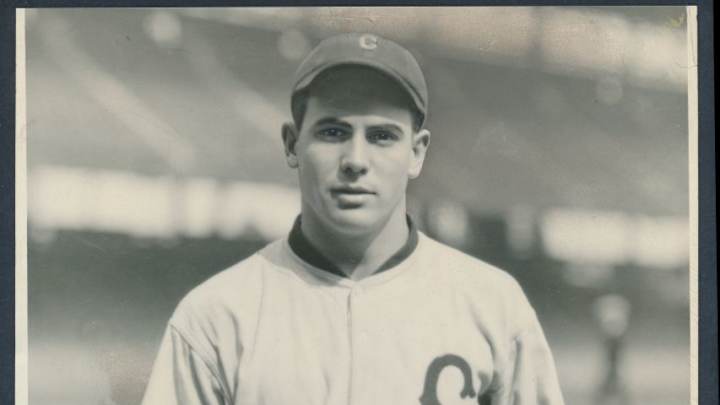
The first of a series ranking the Indians' best all-time players at each position.
The top five players at catcher, first base, second base, shortstop and third base will be ranked, and the top 15 outfielders, 25 starting pitchers and 10 relief pitchers.
Only players who were with the Indians for at least four seasons -- or players with three Cleveland seasons but at least two All-Star Game selections -- are considered.
The Indians' top five all-time catchers (seasons with the Indians in parentheses):
5. LUKE SEWELL (1921-32, 1939)
Sewell was the younger brother and longtime Indians teammate of Joe Sewell, one of Cleveland's best-ever shortstops and a Hall of Famer.
Luke Sewell was a top-notch catcher defensively and a good-enough hitter at a position from which -- during his era -- not much was expected offensively.
The 20-year-old Sewell caught three games for the 1921 Indians, then averaged 42 games behind the plate for them over the next four campaigns. He then caught 108 games per season in the next seven years. Sewell was traded to the Washington Senators following the 1932 season and went on to complete a 20-year big league career, including a 16-game stint with Cleveland in 1939.
Sewell played 978 games for Cleveland, including 941 behind the plate. He threw out 48 percent of baserunners attempting a stolen base, about five percent better than the American League average during those seasons. With the Indians, he led AL catchers in assists and caught stealings three times, in double plays twice, and in games caught and caught stealing percentage once.
The right-handed hitting Sewell had a .259 batting average in 3,195 at bats during his Cleveland career. He totaled 171 doubles, 34 triples and eight home runs. He had 388 RBI, 381 runs scored and 41 stolen bases. He didn't draw many walks (263) nor did he strike out often (196). Brother Joe struck out at the second-lowest rate of any qualifying player in major league history: once every 62.6 at bats.
Luke Sewell was ninth in the American League Most Valuable Player voting in 1927, when he hit .294 with 27 doubles, six triples, no homers, 53 RBI and 52 runs scored in 470 at bats. He led the AL in four catching categories defensively.
In 1928, Sewell placed 12th in the MVP tally. He hit .270 with 16 doubles, nine triples, three homers, 52 RBI and 52 runs in 411 at bats, and was first in three defensive categories behind the plate.
4. VICTOR MARTINEZ (2002-09)
The case could be made that Martinez -- still the Tigers' primary designated hitter -- should be higher on this list because he was probably the best-hitting catcher in Indians history. His work behind the plate, however, drops him in this estimation. Martinez was sometimes complimented for his handling of pitchers, but overall, he was generally regarded a subpar catcher defensively.
Martinez caught a combined 49 games to begin his big-league and Indians careers in the 2002-03 seasons. He averaged 132 games and 127 starts at catcher over the next four years. He was behind the plate for just 55 games in an injury-laden 2008 campaign. After catching 52 games and playing 47 at first base over the first four months of the 2009 season, Martinez was sent to the Boston Red Sox on July 31 -- just before the trade deadline -- for pitchers Justin Masterson, Nick Hagadone and Bryan Price.
In 821 games with Cleveland, including 684 at catcher, the switch-hitting Martinez hit .297 with 191 doubles, two triples and 103 home runs in 3,035 at bats. He had 518 RBI and 413 runs scored, and posted a .369 on-base percentage and .463 slugging percentage.
Martinez threw out 24 percent of base-runners attempting to steal, about five percent below the league average.
A three-time all-star with Cleveland, Martinez finished seventh in the MVP voting in 2007, when the Indians won the AL Central title, then defeated the Yankees three games to one in an AL Division Series before yielding a 3-1 lead to the Red Sox and losing the Championship Series, 4-3.
Martinez hit .301 in 562 at bats over 147 games (121 at catcher) in 2007, with 40 doubles, 25 homers, 114 RBI and 62 walks. He was 6-of-17 (.353) with a double, homer and four RBI in the division series, singling twice and driving in two runs in Cleveland's 6-4 series-clinching win at Yankee Stadium. Then, against Boston for the AL pennant, Martinez was 8-of-27 (.296) with a double, homer and three RBI.
In 2005, when the Indians were in playoff contention until the final weekend, Martinez finished seventh in the AL with a .305 batting average. He was 10th (108) in RBI in 2004, seventh (114) in 2007 and fifth (108) in 2009 when he was hitting .284 with 67 RBI before he was traded to Boston.
Twice with the Indians, Martinez was second in the AL in games caught, and he led the league's catchers with 61 assists in 2004.
3. SANDY ALOMAR (1990-2000)
Alomar is the Indians' current first base coach and the older brother of Hall of Famer Roberto, who played for Cleveland from 1999-2001.
Considered one of baseball's premier prospects, Sandy Alomar broke into the big leagues by playing eight games for the San Diego Padres in 1988-89. He was traded with promising infielder Carlos Baerga and veteran outfielder Chris James to Cleveland for star outfielder-first baseman Joe Carter following the 1989 campaign.
Alomar made an immediate impact for the Indians, being voted by the fans as the American League's starting catcher in the All-Star Game, and then winning the AL Rookie of the Year award and Gold Glove award as the league's best defensive catcher. He hit .290 with 26 doubles, two triples and nine homers in 445 at bats, with 66 RBI and 60 runs.
Alomar made six all-star teams with the Indians, including when he was voted a starter in 1991 and 1992, despite missing a combined 184 games in those seasons, and hitting .238 in a combined 483 at bats with two homers and 33 RBI.
From 1991 through 1995, Alomar averaged just 70 games played and 239 at bats a season. In 1995, he played in 66 games but helped the Indians win the AL Central Division title by batting .300 with 10 homers and 35 RBI in 203 at bats. He played in 13 of 15 postseason games, hitting .220 (9-of-41) with four doubles, a triple and three RBI as the Indians swept the Red Sox, three games to one, in a division series; bested the Mariners, 4-2, to win their first AL pennant in 41 years; and lost to the Braves, 4-2, in the World Series.
Alomar set up the Indians' 7-6 Game 3 World Series win -- cutting the Braves' series lead to 2-1 -- with a run-scoring double that tied the game 6-6 in the bottom of the eighth inning at Jacobs Field (now Progressive Field).
Alomar finally enjoyed a healthy season in 1996 and began another string of three straight All-Star Game selections (though not as a starter).
In 1997, Alomar fashioned a remarkable season featuring one clutch hit after another and his usual expert handling of the pitching staff. During the regular season, he played 125 games and hit .324 in 451 at bats. He slugged 37 doubles and 21 home runs and drove in 83 runs.
In the middle of the campaign was the All-Star Game at Jacobs Field. Alomar stole the show before the Cleveland fans, clouting a two-run home run in the bottom of the seventh inning to snap a 1-1 tie and give the American League a 3-1 win.
Alomar's dream campaign was capped by his postseason feats, as the Indians eliminated the defending World Series champion Yankees, 3-2, in the division series; bested the Orioles, 4-2, in the championship series; then lost to the Marlins, 4-3, in the World Series, which ended with the Indians' 11-inning, 3-2 Game 7 loss at Florida -- a game they led 2-1 going to the bottom of the ninth inning.
Alomar slugged one of the most dramatic homers in Cleveland history in the fourth game of the division series against the Yankees at Cleveland. Trailing in the best-of-five series, two games to one, the right-handed hitting Alomar lined an opposite field solo homer with two outs in the bottom of the eighth inning to tie the game 2-2. He hit it off the pitcher who would become not only baseball's best closer ever, but arguably its best-ever postseason pitcher, Mariano Rivera. The Indians won 3-2 in the bottom of the ninth and then won the decisive Game 5 at Jacobs Field, 4-3, to advance to the ALCS.
The championship series featured more Alomar dramatics. His walk-off single in Game 4 drove in Manny Ramirez with two outs in the bottom of the ninth to give the Indians an 8-7 win at Jacobs Field and a 3-1 series lead. Alomar had three hits and four RBI in the game.
Alomar then totaled 10 RBI in the World Series. He played in all 18 games in the 1997 postseason, hitting .274 (20-of-73) with two doubles, five homers, 19 RBI and 12 runs.
After a solid 1998 campaign in which he played 117 games, Alomar's injury problems returned, and he totaled just 134 games in 1999 and 2000 combined. Alomar then signed as a free agent with the White Sox. He played seven seasons and for five teams after his Cleveland departure, completing a 20-year career.
Alomar appeared in 985 games with the Indians, including 950 at catcher. He was considered a strong all-around performer behind the plate, ably handling all of the mental and physical aspects of the position. He threw out 31 percent of potential base-stealers, about two percent above the league average over those years.
Alomar hit .277 as an Indian, with 194 doubles, eight triples and 92 home runs in 3,409 at bats. He totaled 453 RBI and 416 runs. Alomar never drew more than 25 walks in a season.
Cleveland made the postseason in five of Alomar's last six seasons with the team. He played in 49 of 52 postseason games, hitting .214 with nine doubles, one triple, five homers, 28 RBI and 17 runs in 173 at bats.
2. STEVE O'NEILL (1911-23)
Steve O'Neill, a superb defensive catcher and pesky hitter, made his big league debut during the summer that he turned 20, playing nine games for the Cleveland Naps. The team was named after Hall of Famer Napoleon Lajoie, who was Cleveland's second baseman from 1902-14 and its manager from 1905-09. The team became known as the Indians in 1915.
O'Neill shared the Naps' catching duties from 1912-14, playing an average of 79 games a season. He became the regular in 1915, beginning a nine-year stretch with the Indians in which he averaged 124 games played, including 122 at catcher.
A right-handed hitter, O'Neill played in 1,365 games for Cleveland before he was traded to the Red Sox prior to the 1924 season. His 1,340 games caught are the second-most in team history. With Cleveland, O'Neill hit .265 with 220 doubles, 33 triples and 11 homers in 4,182 at bats. He totaled 458 RBI and 394 runs and drew 491 walks. Those were pretty solid offensive numbers considering that the bulk of O'Neill's Cleveland career was during the "deadball era" -- when a variety of factors made baseball a lower-scoring game than it would soon become -- and that catchers weren't expected to provide much offense.
With the Naps/Indians, O'Neill threw out 47 percent of baserunners attempting to steal, compared to the league average of about 44 percent.
O'Neill had a banner season in 1920, when the Indians went 98-56 to win the American League pennant and defeated the Brooklyn Robins, five games to two, in the best-of-nine World Series. He hit .321 with 39 doubles, five triples and three homers in 489 at bats, with 55 RBI, 63 runs and 69 walks. O'Neill caught 148 of the 154 games, including 145 starts.
O'Neill hit .333 (7-of-21) in the World Series, with three doubles, two RBI and four walks. He had a pair of RBI doubles in the Indians' 3-1 series-opening win at Brooklyn. His expert work behind the plate helped pitchers Duster Mails and Stan Coveleski close out the series with Games 6 (1-0 win) and 7 (3-0 win) shutouts, respectively, in Cleveland.
In 1922, O'Neill was sixth in the Most Valuable Player voting, as he batted .311 in 392 at bats, with 27 doubles, four triples, two homers, 65 RBI and 73 walks.
With Cleveland, O'Neill led the AL in games caught twice, and was first among catchers in double plays five times and in assists twice.
O'Neill's 17-year playing career ended in 1928. He began a 14-year big league managing career when he replaced pitching legend Walter Johnson during the 1935 season with the Indians holding a 46-48 record. O'Neill guided Cleveland to a 36-23 record the rest of the way and a third-place finish in the 8-team AL. He managed the Indians two more years, going 80-74 (fifth place) in 1936 and 83-71 (fourth) in 1937. O'Neill managed the Tigers to the World Series championship in 1945.
O'Neill is not to be confused with Francis J. "Steve" O'Neill, the Indians' principal owner from 1978-83.
1. JIM HEGAN (1941-42, 1946-57)
Hegan was an average offensive performer for his position during an era when not many catchers were run-producers.
But he expertly handled one of baseball's all-time great pitching staffs, an ability that made him one of the American League's most indispensable players for a decade. When the Indians' starting rotation was the famed "Big Four" of Hall of Famers Bob Feller, Bob Lemon and Early Wynn and all-star Mike Garcia, the man behind the plate was Hegan. He was also the catcher when Herb Score began his big league career with spectacular seasons in 1955-56. Score, though, was sidelined for most of the 1957 season after being hit in the face by a line drive and was never the same after injuring his arm in 1958.
Hegan made it to the Indians in the final month of the 1941 season shortly after he turned 21, then played 68 games in 1942. He missed the next three years while serving in the U.S. Coast Guard during World War II.
Hegan caught 86 games when he rejoined the Indians in 1946, and then led the American League in games caught in each of the next three seasons. He was second in the league in games caught in three more seasons with Cleveland, and is the Indians' all-time leader in career games caught with 1,491.
The right-handed hitting Hegan played in 1,526 games overall for the Indians. He batted .230 with 171 doubles, 45 triples and 90 home runs in 4,459 at bats. Hegan had 499 RBI, scored 526 runs and drew 456 walks as an Indian.
Cleveland's last World Series championship was in 1948. Hegan was brilliant behind the plate, leading the AL in games caught and the league's catchers in assists, putouts and double plays. Hegan also had one of his best hitting campaigns. He hit .248 in 472 at bats with 21 doubles, six triples and 14 homers. He drove in 61 runs, scored 60, drew 48 walks and even had six of his 15 career stolen bases.
The Indians and Red Sox had tied for first place in the AL with 96-58 records. Hegan had an RBI and run scored in the pennant-deciding playoff game won by the Indians, 8-3, in Boston's Fenway Park. He hit .211 (4-of-19) with a homer and five RBI as Cleveland won the World Series, four games to two, over the Boston Braves.
The Indians went 111-43 to win the AL pennant in 1954, setting an American League record for wins that would stand for 44 years. Hegan hit .234 in 423 at bats, with 12 doubles, seven triples, 11 homers, 40 RBI and 56 runs. The Indians were then, stunningly, swept in the World Series by the New York Giants.
Cleveland traded Hegan to the Tigers prior to the 1958 season. He played for four teams over three years to close his career.
With the Indians, Hegan led AL catchers in games caught, assists, caught stealing percentage, putouts and double plays three times each, and in fielding percentage twice.
Hegan's son, the late Mike Hegan, played 12 major league seasons and then was a longtime radio and television announcer for Indians games.
 Add us as a preferred source on Google