
Seattle Mariners Catcher, Manager Discuss League-Wide Changes to Strike Zone
In this story:
SEATTLE — The current MLB strike zone has been in place since 1996. The zone itself has remained unchanged for a generation, but there have been adjustments to rules and protocols that have changed how umpires call and see the strike zone.
The league has implemented a new protocol this season that has had an interesting effect for the Seattle Mariners and all 29 other teams.
The Athletic's Keith Law, Jayston Stark and Eno Sarris released an article on May 1 detaling a change to the "buffer zone" around the strike zone. The buffer area, which was two inches from the edge of all four sides of the zone before this year, is meant to give umpires more leeway on calls behind the plate, which helps in their evaluations. This season, that buffer zone was shrunk from two inches to 0.75 inches.
The shrunk buffer zone is a part of a newly-agreed upon collecting bargaining agreement between the MLB and the MLB Umpires Association from 2024 winter meetings. The buffer zone shrank, in part, so umpires would have less margin for error and be more accurately graded and judged on their calls.
Two inches to 0.75 of an inch doesn't seem like a huge change. But that distance can be the difference between a game-sealing strikeout or a walk.
The strike zone is being called smaller (& more by the book) this year as you can see from this viz from @ProspectSavant. MLB changed how umpires are judged, reducing the buffer zone by 60%. Per game impact is small but there will be thousands fewer called strikes by end of year. pic.twitter.com/puwBVYjuG1
— Eno Sarris (@enosarris) May 2, 2025
Players interviewed for the article said they've felt the strike zone has gotten smaller. An anonymous league source said in the article that MLB officials talked to all 30 managers during winter meetings. Both Los Angeles Dodgers skipper Dave Roberts and San Diego Padres manager Mike Shildt both were unaware of the changes in the article. Seattle's manager, Dan Wilson, can also be added to that list of club heads.
"Yeah, just kind of found out," Mariners manager Dan Wilson said in a pregame media scrum Friday. "A strike zone's a strike zone. It's hard to kind of quantify in a short time what it means, but we'll see how it plays out. I think when you look at, offensively, what we've done, our guys have such a great concept of the strike zone. And I think that's one of the things that they do so well. And I don't anticipate that changing."
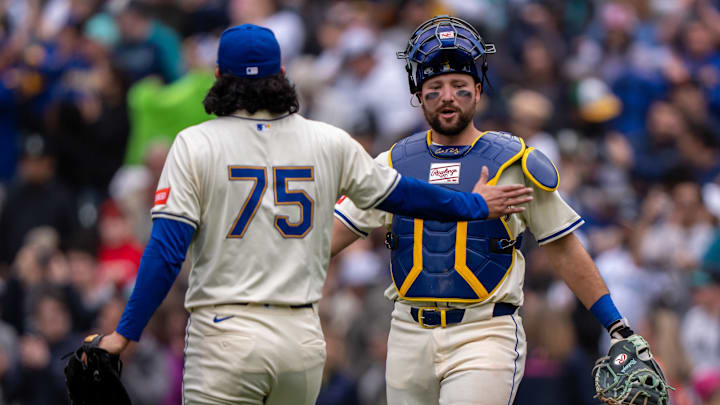
Seattle's Platinum Glove-winning catcher Cal Raleigh also found out about the new buffer zone for the first time after the article. He said he "knew something was up" during the season but didn't know for sure until reading the story. He also said the new buffer zone doesn't change how the Mariners will approach pitching and catching and that there hasn't been any real group discussion about it.
"They have been a lot more tight. But with that new rule, makes sense," Raleigh said. " ... I didn't know until the article. I mean, I knew something was up but I didn't know anything that was official until that article came out. ... Everything really just stays the same. Just really just noticed that a lot more, they're a lot tighter than they have been in the past."
Cal Raleigh converting low % strikes into strikes. FAST moves back into the zone. With today’s zone just getting it back to the edges is not enough. pic.twitter.com/MAHQYUbjPR
— Jerry Weinstein (@JWonCATCHING) April 10, 2025
Some team officials in the The Athletic's article have gone as far as to speculate that the construction of their roster could change. But Seattle isn't worrying about the shorter buffer zone.
"Everybody's having to deal with it, so it's an even playing field," Raleigh said. "It's not like it's against us or anything else. It is what it is, so just kind of got to deal with it right now."
The buffer zone won't change anything the Mariners do in-game, and it won't result in any obvious advantage or disadvantage since every team is dealing with it. But Raleigh did express frustration that no one was told about the changes.
"Pretty business as usual," Raleigh said. " Just wish they would have communicated that with us. ... They should just tell us. Not that it changes anything, but at least you tell the guys. Because they told us before it was a two-inch buffer zone. And now they're switching to that three-quarters of an inch buffer zone. You'd rather just hear it from the horse's mouth."
Most players and managers are aware of the changes now, even if they weren't before the season began. And Raleigh, who's one of the best pitch-framers in baseball, has been and will continue to navigate the strike zone for Seattle's starting rotation.
Related Stories on Seattle Mariners
BAD LUCK AND A POOR START PLAGUES MARINERS IN 6-3 LOSS TO BLUE JAYS: The Mariners dropped the first of a three-game series against the Blue Jays despite several opportunities to take advantage. CLICK HERE
MARINERS SLUGGER LUKE RALEY PROGRESSING WELL FROM OBLIQUE INJURY: The Mariners starting outfielder/first baseman is feeling good over a week after being placed on the injured list, per team general manager Justin Hollander. CLICK HERE
MARINERS GM GIVES EXCITING UPDATE ON TEAM ACE LOGAN GILBERT: The 2024 All-Star is nearing a return to the mound, per Mariners executive Justin Hollander. CLICK HERE
Follow Seattle Mariners on SI on social media
Continue to follow our Inside the Mariners coverage on social media by liking us on Facebook and by following Teren Kowatsch and Brady Farkas on "X" @Teren_Kowatsch and @RefuseToLosePod. You can subscribe to the "Refuse to Lose" podcast by clicking HERE.
 Add us as a preferred source on Google