
Marlins Pinching Pennies for No Reason with Calvin Faucher Arbitration Win
In this story:
Major League teams like the Miami Marlins don’t like to go to arbitration hearings. It isn’t even about the risk of losing the hearing. It’s about the relationship with the player.
During a hearing the player makes his case for the salary he’s asking for. The team is put in the position of telling the arbitration judge why that player isn’t worth it. It can be a brutal showdown that sours the team’s relationship with the player down the road.
In some cases, the hearing is understandable. The Detroit Tigers and pitcher Tarik Skubal were more than $10 million apart before they went to arbitration. Skubal won and will be paid $32 million in 2026, the largest one-year arbitration salary in MLB history. The two-time American League Cy Young winner is worth it.
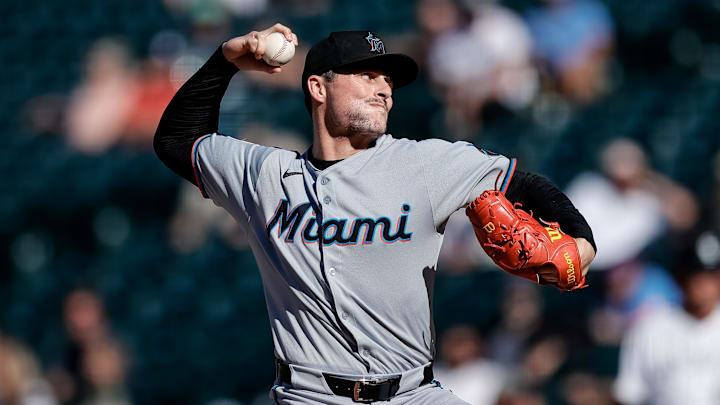
On Saturday, MLB.com’s John Feinsand reported that the Marlins beat pitcher Calvin Faucher in his arbitration hearing. He’ll be paid $1.8 million in 2026. Faucher was asking for $2.05 million.
One has to ask if its worth the risk of souring the relationship with a first-year arbitration player to save $250,000?
What Are the Marlins Doing?

Miami only spent money on three Major League free agents — Christopher Morel, Pete Fairbanks and Chris Paddack, the last of which was signed earlier this week. The trio will cost the Marlins less than $20 million in 2026 and all are on one-year deals.
Faucher, on the other hand, led the Marlins in saves last season with 15. No one is going to confuse him with the more experienced Fairbanks. But, Miami is tied to Faucher for at least two more years. In fact, most of Miami’s talented roster is either arbitration eligible or pre-arbitration. That didn’t include pitchers Edward Cabrera and Ryan Weathers, who were arbitration-eligible players traded in January to, theoretically, avoid paying them down the road.
The reliever is a different animal. He comes cheap because of what he’s done to this point in his career. The arbitration formula relies on a number of factors, and how Faucher has played to that point is one of them. His performance last season was encouraging. He rescued the Marlins bullpen at times. His performance hints at an upward trajectory for the next few years.
By holding the line over $250,000, it makes the Marlins look, well, cheap, and they already have that reputation. It’s one thing to build around youth and manage costs. It’s quite another to take a pitcher to arbitration over $250,000. And, yes, it takes two to agree to a deal. Faucher shoulders some of the blame here, too. But it’s not like he was asking for Skubal money. He was asking for $250,000 more than the Marlins wanted to pay him.
Miami won. But the franchise has to ask itself if that victory was worth it.
Recommended Articles
 Add us as a preferred source on Google